Box Lacrosse vs Field Lacrosse
Rink or field, six or ten, speed or space. A coach’s breakdown of how the two games really differ, and which one fits your game.

LaxDrip is reader supported. When you buy through links on this page we may earn a commission at no extra cost to you. How we review.
I’ve been in the lacrosse world for more than a decade, and the other day a young player asked me something I hear all the time: what’s the actual difference between box lacrosse and field lacrosse?
Lacrosse keeps growing all over the world, and it’s one of the fastest-growing sports in America. But the game splits into two very different animals: box and field.
Field lacrosse is king in the States, from the fields around Virginia Beach to the high school powerhouses in upstate New York. Box lacrosse, the indoor game, grew up in Canada, where kids head to the local rink once the ice comes out each spring.
Played in a hockey rink with boards. Faster, more physical, more goals. Around 60,000 players in Canada.
Played on a big grass or turf field. More space, set positions, more strategy. Over 400,000 players in the US.
Let’s break down box vs field lacrosse piece by piece. By the end, you’ll know both games inside and out, and you’ll have a better feel for which one fits you.
Box vs field lacrosse at a glance
| Aspect | Box lacrosse | Field lacrosse |
|---|---|---|
| Playing surface | Indoor, covered hockey rink | Outdoor, grass or turf field |
| Size | About 200 ft x 85 ft | 110 x 60 yards |
| Goal size | Smaller, about 4 x 4 ft | Larger, 6 x 6 ft |
| Players per team | 6 (5 runners + goalie) | 10 (3 attack, 3 middies, 3 defense, goalie) |
| Game length | 3 x 20-minute periods* | 4 x 15-minute quarters |
| Pace | Fast, physical, shot clock | Open, tactical, more running |
| Top pro league | NLL | PLL |
*Canadian minor, junior and senior box plays three 20-minute periods. The NLL plays four 15-minute quarters.
What is box lacrosse?
Box lacrosse, also called indoor lacrosse, started in Canada in the 1930s. Rink owners needed something to fill their arenas in the summer, so the game moved off the field and into the hockey boards.
The result? A faster, more physical version of the sport, built for a tight, enclosed space. You’re picking and rolling, battling in the crease, and getting a shot off in a phone booth.
Box is still the main game in Canada, and it’s catching on fast in other countries, including the United States. More and more American field players run box in the off season because it sharpens your stick skills and your hands in tight like nothing else.
The unique spin on the game and its nonstop pace have built a growing fan base around the world.
What is field lacrosse?
Field lacrosse is the traditional form of the game, and the style of play is a lot different from the indoor version.
It’s played outdoors on a much bigger field, about the size of a football or soccer field. That means more running, more transition, and plays that develop over longer distances. The game is generally more open than box.
Field lacrosse is huge in the United States, from youth programs and high school all the way up through college and the pros.
Read more: Lacrosse positions: attack, midfield, defense
Differences between box lacrosse vs field lacrosse
Here’s where the two games really split apart.
Gameplay environment
The most obvious difference is where you play. Box lacrosse’s tight space makes for an intense, high-tempo game. Field lacrosse gives you room to run sets, slide packages, and long transition plays.
That’s why people call field lacrosse a war of tactics and box lacrosse a battle of speed and power.
Field is a war of tactics. Box is a battle of speed and power.
Team size and positions
In box lacrosse, teams are smaller: six players on the floor at a time, including the goalie. In field lacrosse, each team has 10 players on the field at once.
Box positions are more fluid, with guys playing both ends. Field lacrosse has specialized positions like attackmen, midfielders, and defensemen.
With fewer players on the floor, box players have to do a bit of everything and switch between offense and defense on the fly.
Game duration and structure
Game length is another big difference. Most box lacrosse, like Canadian minor and junior ball, runs three 20-minute periods. Field lacrosse is split into four 15-minute quarters.
Read more: I wrote a detailed guide on how long lacrosse games are.
Scoring systems
Box lacrosse usually sees more goals per game. The smaller playing area, the shot clock, and the nonstop pace mean the ball finds the back of the net more often.
Field lacrosse is more deliberate. You’ll see fewer goals, but they usually come from longer, more developed possessions.
Equipment differences
The basic gear is similar in both games, but there are some key differences.
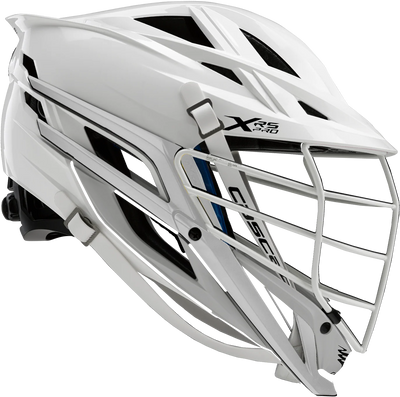
Box players wear more protection because of how physical the game is. You’ll see box-specific helmets, bigger rib and kidney coverage, and heavier arm pads. Sticks are different too. Box sticks are shorter, and there are no long poles on the floor.
 Box helmetCascade CBX$199.99 at BattleLax
 Shoulder padsMaverik Charger 2026$74.99 at BattleLax
 GlovesMaverik M6 Glove$115.99 at BattleLax
 Arm padsMaverik M6 Arm Pads$79.99 at BattleLax
Tactical and rule differences
The rules also change a bit between field and box. The big ones: box uses a shot clock and cross-checking is part of the game, while field gives you offsides rules, long poles, and more room to settle into your sets.
Read more: Rules of lacrosse
Major leagues and competitions
Both games have their own top pro leagues:
- The National Lacrosse League (NLL) is the top professional league for box lacrosse, with teams in both Canada and the US.
- The Premier Lacrosse League (PLL) is the top pro league for field lacrosse. Major League Lacrosse (MLL) used to be the big name, until it merged into the PLL in 2020.
Both leagues put on great games that pull in fans from all over the world.
See it live
Want to see the two games side by side? Here’s a quick breakdown from YouTube.
More videos: The rules of box lacrosse explained · The rules of field lacrosse explained
Which one’s better? Box vs field lacrosse
After all those differences, I still can’t give you one answer, because both games are a blast in their own way.
Box lacrosse is fast, physical, and played in tight quarters, where your hands and toughness win the day. Field lacrosse is played in open space with specialized positions, and it rewards smart team play and conditioning. The rules give each one its own vibe.
As a coach, I love both. And if you’re a field player, my best advice is to play some box. Nothing builds stick skills, inside finishing, and toughness faster.
People also ask
What is the difference between box lacrosse and regular lacrosse?
Box lacrosse is played indoors on a smaller surface and is faster and more physical. Field lacrosse, which most people think of as regular lacrosse, is played outdoors on a bigger field with a more strategic approach.
Is box lacrosse or field lacrosse more popular?
Field lacrosse is more popular in the United States, with over 400,000 players. Box lacrosse is the main game in Canada, with around 60,000 players.
What are the 4 different types of lacrosse?
The four types usually listed are men’s field lacrosse, women’s field lacrosse, box lacrosse, and college lacrosse, each with its own rules and format.
What is the box in field lacrosse?
In field lacrosse, the “box” usually means the substitution box on the sideline, where players come on and off the field during play.
What are the major leagues for box and field lacrosse?
The National Lacrosse League (NLL) is the top league for box lacrosse. The Premier Lacrosse League (PLL) is the top league for field lacrosse, after Major League Lacrosse (MLL) merged into it in 2020.
Box lacrosse vs field lacrosse gives you two very different experiences. Box brings fast, physical play indoors, while field is all about strategy and teamwork on a bigger field. Both have passionate followings, with box thriving in Canada and field leading the way in the US.