Understanding Offside in Lacrosse
The most explained rule on every youth sideline, broken down in the simplest words: count to three and four, and you'll never get flagged.
Always keep at least 3 players in your offensive half and 4 (goalie included) in your defensive half.
Lose the ball if you have it. If you don't, the player usually sits for 30 seconds.
There is no doubt that lacrosse is an amazing sport. However, the game gets confusing when it comes to understanding the rules of offsides in lacrosse. I have had countless interactions with people, explaining how offsides works in lacrosse, usually a parent in a folding chair on the sideline of a U12 game wondering why the ref just threw a flag. In this article, I will break down offsides in lacrosse and its rules in the simplest words.
What are offsides in lacrosse?
Offsides in lacrosse is all about numbers, not about where the ball is. Each team puts 10 players on the field, and under the men's and boys' rules (from USA Lacrosse, the NFHS and the NCAA), a team has to keep at least three players in its offensive half and at least four players, goalie included, in its defensive half at all times.
As the Westfield High School lacrosse program puts it, offsides is "when one team has more than 6 players on the offensive end of the field at any time and/or when one team has more than 7 players on the defensive end of the field at any time." This rule has two sides: the midfield line, and which end of the field you have too many players on.
Crossing the midfield line
The field is divided into halves by the midfield line (the centerline). A lot of people believe a player is offside if he crosses the centerline before the ball does. That's not the rule. Players can cross the midfield line any time, with or without the ball, as long as the team still has three players up and four back.
That's why you'll see a long pole carry the ball over midfield on a clear while a short-stick middie hangs back across the line. The pole "went," the middie "stayed," and the numbers still work. If the pole goes and nobody stays, that's offside.
Somebody goes, somebody stays. It's the first thing I teach every middie and every pole, and it's the call I hear coaches yelling from Syracuse to Virginia Beach.
Offensive offside vs. defensive offside
Players can be called offside at either end of the field, and it doesn't matter whether they touch the ball or not. There are two versions:
- Offensive offside: If a team has more than six players in its offensive half, it is called offensive offside. This usually happens when a defenseman or middie crosses midfield without a teammate staying back.
- Defensive offside: If a team has more than seven players (goalie included) in its defensive half, it is called defensive offside. This usually happens when an attackman drifts back over the midfield line to help on a clear or a ride.
Read more: Rules of lacrosse · Lacrosse gear & equipment
 BallsPearl X Greaseless Lacrosse Balls$19.99 at BattleLax
 Ball bagMaverik Speed Ball Bag$34.99 at BattleLax
 ScorebookBrine Lacrosse Scorebook$15.99 at BattleLax
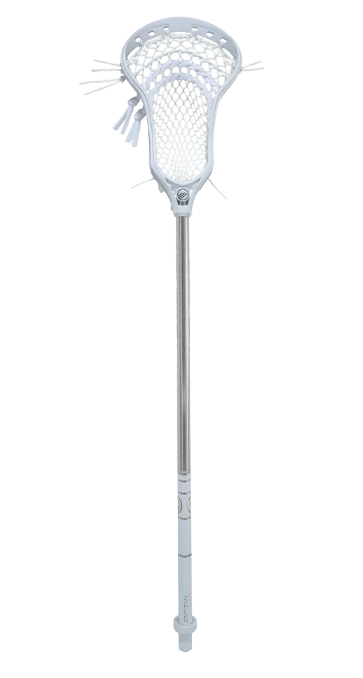 Complete stickMaverik Optik 2 Alloy Complete$99.99 at BattleLax
Positions and players involved
All lacrosse teams have 10 players on the field at any given time, and all of those players can be called for offsides. You might think, "How is this possible?" since all lacrosse players have their dedicated positions. Well, the rules apply to all the players. However, some positions are riskier than others for offside violations. Let's break down the offside risk for each position.
One more spot where offsides gets called constantly at the youth level: the faceoff. Until possession is called, the attackmen and defensemen have to stay behind their restraining lines and only the wings and the FOGO can release on the whistle. Leave early and it's a flag.
Now that you know what offsides are and which positions carry the highest risk, let's compare offsides in men's lacrosse with offsides in women's lacrosse. (Read more: player positions and their roles in lacrosse.)
Offsides in men's lacrosse vs. offsides in women's lacrosse
The idea behind offsides is similar in both men's and women's games: don't stack one end of the field. The big difference is where it's called. Men's offsides is counted at the midfield line. Women's lacrosse plays 12 a side, and offsides is called at the restraining lines: a team can have no more than seven players over the restraining line in its attacking end and no more than eight (goalie included) in its defensive end.
Penalties for offsides
Players who are found violating offsides face a penalty for a technical foul. As laid out in the USA Lacrosse and NFHS rulebooks:
In short: if the team that's offside has the ball, it turns the ball over to the other team. If the team that's offside doesn't have the ball, the player usually serves a 30-second penalty (or the official may play the advantage and let the play continue).
Note: Offsides on its own is never more than a technical foul. Separate misconduct, like an unsportsmanlike or flagrant foul, is what earns longer penalties, up to a multi-minute non-releasable penalty or an ejection.
Common misconceptions
The following are some of the most common misconceptions about offsides in lacrosse:
- Players are only called offsides if they touch the ball.
- Only attackmen and midfielders can be called offsides.
- A player is offside if he crosses the midfield line before the ball.
None of these misconceptions hold up. Offsides is about the count on each end, and any of the 10 players can cause it.
Impact on gameplay
Offside rules impact both teams:
- It prevents players from cherry-picking. Players cannot camp near the opponent's goal, which keeps the game fair.
- It encourages players to focus on the ball and make smart moves, rather than simply stacking the field against the opponent's defenders.
- It provides equal opportunities for all players to play fast breaks and counter-attacks.
- It builds strategy around good positioning, timing, and teamwork.
Comparison with other sports
Let's compare lacrosse's offsides rule with other popular sports.
| Sport | How offside works |
|---|---|
| Lacrosse (men's) | Too many players on one end: more than 6 in the offensive half or more than 7 in the defensive half. |
| Soccer | An attacker can't be closer to the goal line than the ball and the second-to-last defender when the ball is played to him. |
| Ice hockey | An attacking player can't enter the offensive zone before the puck crosses the blue line. |
| Field hockey | No offside rule since 1996. |
| Football | Called at the line of scrimmage when a player is beyond it at the snap. |
The comparison shows that offside rules differ a lot among sports. Lacrosse's version is unique because it's about head count, not about getting ahead of the ball. (Related: field hockey vs. lacrosse and lacrosse vs. rugby.)
Strategies to avoid offsides
On that note, let's talk about some strategies to avoid offsides:
- Teamwork and communication: When a pole or middie pushes the ball over midfield, somebody yells "I'm home!" or "I've got it!" and stays back. Make it loud.
- Player's position awareness: Attackmen need to know where the midfield line is on every ride, and defenders need to know who's staying before they go.
- The right timing: On faceoffs and quick restarts, don't leave early. Wait for the whistle or for possession to be called.
Evolution of offsides rules
Ever since the offsides rule was introduced in lacrosse, it has changed over the years. In the early days of lacrosse, there was no offsides rule and players could move freely around the field. As the game was organized in the late 19th and early 20th centuries, offside rules were introduced to keep teams from gaining an unfair advantage by stacking one end of the field. Modern rules focus on the player count in each half and on restarts like faceoffs, and officials can play the advantage when a flag would hurt the team that was fouled. (Read more: when is the lacrosse season.)
People also ask
What are lacrosse offsides?
In men's lacrosse, a team is offside when it has more than six players in its offensive half or more than seven players (goalie included) in its defensive half. In other words, you must always keep at least three players on offense and four on defense.
Is there offside in boys' lacrosse?
Yes. Boys' lacrosse uses the same offside rule as the men's game. Girls' lacrosse also has an offside rule, but it is called at the restraining lines instead of the midfield line.
What is offensive offside in lacrosse?
Offensive offside happens when a team has more than six players in its offensive half of the field, usually because a defender or midfielder crossed over without a teammate staying back.
What is defensive offside in lacrosse?
Defensive offside happens when a team has more than seven players, goalie included, in its defensive half of the field, usually because an attackman drifted back over the midfield line.
What is the penalty for offsides in lacrosse?
Offsides is a technical foul. If the offending team has the ball, possession goes to the other team. If the offending team does not have the ball, the player usually serves a 30-second penalty.
Now that you know all about offsides in lacrosse, you won't get confused anymore while playing or watching the game. Three up, four back. Every time.