How Does Lacrosse Scoring Work?
One goal, one point, with a twist in the pro game. Here's what counts as a goal, the types of goals, the PLL's 2-point arc and how overtime works.

In college, high school and youth lacrosse, every goal counts for one point, no matter how it's scored.
In the PLL, a goal shot from behind the 2-point arc, 15 yards from the cage, counts for two.
How does a lacrosse team win? It's an obvious question: you win by scoring more than the other team. But have you ever wondered exactly how lacrosse scoring works?
I have, so I'm here to answer your questions.
Lacrosse scoring can seem confusing at first, but don't worry, I'll break it down. By the end of this article, you'll know how scoring in lacrosse works and the rules behind it.
Let's look at how teams score and how many points they get.

We may receive a commission if you make a purchase through a link on this page at no cost to you. This helps us keep this site free & we appreciate your support!
What makes a goal in lacrosse?
A goal is scored when the whole ball crosses the goal line into the other team's net. It's pretty simple, but there are a few things you should know:
- The ball has to be shot with the stick. You can't kick it or throw it in with your hand.
- There's a circle around the goal called the crease. Offensive players can't step into it, but they can reach in with their stick to play a loose ball. Think of it as the goalie's bubble.
So as long as the ball crosses the goal line without a rule violation, it's a goal. Want a goal for the backyard? Check out our list of the best lacrosse goals.
How many points is a goal in lacrosse?
Unlike sports where different shots are worth different points, lacrosse keeps it simple. In college, high school and youth lacrosse, every goal is worth one point. There are still a few different types of goals, though.
Types of goals in lacrosse
Goals can come in a few different situations. Knowing them will help you follow the scoreboard.
Field goals
This is your standard goal, scored during regular play. Field goals come from individual skill, teamwork and sharpshooting, and they're worth one point.
Extra-man goals
Extra-man goals, also called man-up goals, happen when a team has a player advantage because the other team is serving a penalty. They're also worth one point.
This is a big strategic moment. The offense has an extra player on the field, and good teams move the ball fast to find the open shooter before the penalty runs out.
Free-position goals
In the women's game, a major foul inside the scoring area can earn the fouled player a free-position shot from the 8-meter arc. A goal off a free position feels like a bonus, but it still adds one point to the scoreboard.
What about 2-point goals in lacrosse?
Most goals are worth one point, but some pro leagues use a 2-point goal to add excitement. Major League Lacrosse used a 2-point line for years, and today the Premier Lacrosse League (PLL) does it with its 2-point arc.
In the PLL, a goal shot from behind the arc, 15 yards from the goal, counts for two points. The rule rewards long-range shooters and makes outside shooting a real weapon.
College, high school and youth lacrosse don't use the 2-point goal. In the pro game, though, it changes how the game flows, especially when a team is down and needs to make up ground fast.
Read more: Who shot the fastest lacrosse shot?
How does lacrosse scoring work?
Scoring in lacrosse is straightforward. Each goal is worth one point, and the team with the most points at the end of the game wins.
Most goals come from attackmen and middies shooting the ball into the other team's cage, and the ball has to fully cross the goal line to count. The goalie on the other end plays a huge part in the final score too.
Sharp shooting, smart ball placement and strong teamwork lead to more goals. But some things, like an offensive player stepping in the crease or a team being offside, are violations that can wipe a goal off the board.
For official scorekeeping, check out the NFHS boys' lacrosse scorer guidelines.
Every goal counts the same. That's why every possession matters.
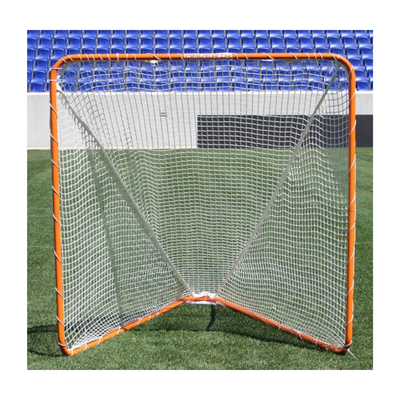 Backyard goalMaverik Practice Lacrosse Goal$134.99 at BattleLax
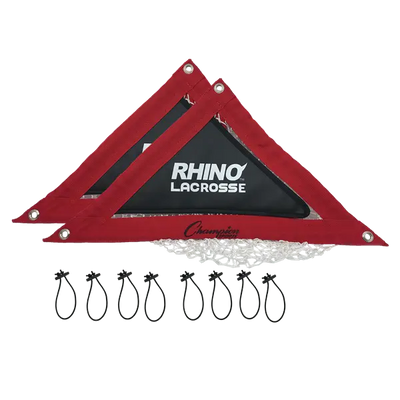 Shooting targetsChampion Rhino Corner Targets$46.99 at BattleLax
 Game ballsPearl X Greaseless Balls (3-pack)$19.99 at BattleLax
 RebounderChampion Sports Deluxe Rebounder$270.00 at BattleLax
Gameplay scenarios that impact scoring
What happens when the score is tied? This is the most exciting part. Here's how overtime and game-winners work.
Sometimes the score is still tied after regulation. In those nail-biters, the game goes to overtime.
The overtime format depends on the league, but it's usually short periods of sudden-victory play. The moment one team scores, the game is over.
That goal is special. It's the make-or-break moment between winning and losing.
Pro tip: If you're ever watching a close lacrosse game, keep an eye out for overtime. It's pure adrenaline, and nothing beats a packed rink in Ontario or a high school playoff game in Virginia Beach when it goes to sudden victory.
Rules and regulations related to lacrosse scoring
Like every sport, lacrosse has a few rules to keep scoring fair.
- An offensive player can't be in the crease when the ball crosses the goal line. If they are, the goal doesn't count.
- In the men's college and high school game, after a team gains possession in its defensive half, it has 20 seconds to clear the ball past midfield and 10 more seconds to get it into the offensive box. Failing to do so is a turnover. College men also play with an 80-second shot clock.
- Legal stick checks can knock the ball loose, but illegal checks like slashing are penalties.
- An attacker has to put the ball in with the stick. Kicking it in or throwing it in with a hand doesn't count.
- Technical fouls lead to 30-second penalties or turnovers, while personal fouls are 1 to 3-minute penalties in the box.
Read more: How does offside work in lacrosse? and What are the rules of lacrosse?
How lacrosse scoring compares to other sports
If you know soccer or hockey, you'll see lacrosse scoring has a lot in common with them, plus a few twists.
Like soccer and hockey, lacrosse has goalies, a goal, and points scored when a player sends the ball (or puck) into the other team's net.
What sets lacrosse apart is its pace and intensity. Goals come fast, and because each one is worth a single point, every goal matters.
- Soccer usually has fewer goals, so each one feels huge.
- Hockey scoring is similarly fast-paced, with added wrinkles like power plays and shootouts.
Here's a quick comparison:

| Sport | Points per goal | Typical scoring | Ties |
|---|---|---|---|
| Lacrosse | 1 (2 behind the PLL arc) | Lots of goals, fast pace | Sudden-victory overtime |
| Hockey | 1 | A handful of goals | Overtime, then shootouts in many leagues |
| Soccer | 1 | Low scoring | Draws, or extra time and penalty kicks in knockouts |
People also ask
How do you score points in lacrosse?
You score by shooting the ball into the other team's goal, with the whole ball crossing the goal line. Each legal goal is worth one point.
How does scoring work in lax?
Lacrosse keeps it simple: every goal is worth one point, and the team with the most goals at the end wins. The exception is the pro game, where the PLL awards two points for goals shot from behind its 2-point arc.
Where is the 2-point line in lacrosse?
In the Premier Lacrosse League (PLL), the 2-point arc sits 15 yards from the goal. College, high school and youth lacrosse don't use a 2-point line.
How do you keep score in lacrosse?
Track each legal goal as one point for the team that scored it. Official scorebooks also log who scored, who assisted, saves, penalties and timeouts.
How does a team win in lacrosse?
A team wins by scoring more goals than the other team. If the game is tied after regulation, it goes to sudden-victory overtime, and the first goal wins.
Lacrosse scoring isn't just about putting the ball in the net. It's about understanding the different types of goals and the rules that decide when one counts. Learn them, and you'll never be confused by the scoreboard again.