Comprehensive Guide: How to Play Lacrosse for New Players
Positions, gear, the six skills every player needs, how offense and defense work, penalties and the drills that'll make you better. Everything a new player (or new lax parent) needs.
Three attack, three middies, three defense and a goalie. Women's teams play twelve.
Faceoffs, cradling, checking, passing, catching and shooting. Master the stick first and everything else follows.
Lacrosse is a team sport where players use sticks with mesh nets at one end to carry and pass the ball to teammates. Its origins are in Native American communities, dating back nearly a millennium, when it was also used as a training ground for warriors from many nations. (Here's the full story of where lacrosse originated.)
Interested? Well, this article will teach you how to play lacrosse. The game gained popularity and was first formalized in Canada in 1867, long after early versions were observed and recorded by French Jesuit missionaries.
We will explore the players' positions, required equipment, play techniques, strategies for offense and defense, penalties and their types, and how you can improve your lacrosse game by following the drills and exercises at the end. I've taught this game to a lot of first-timers, from youth clinics in Virginia Beach to new players in upstate New York and kids coming over from hockey in Ontario, and this is the order I teach it in.
Lacrosse player positions
There are 4 player positions in lacrosse, and the total count of players per side in the men's field game is 10:
- Goalie (1)
- Defenders (3)
- Midfielders (3)
- Attackers (3)
The goalie's role is to defend the net and stop shots. Midfielders switch between attack and defense, attackers try to score, and defenders guard the goal. Stick passes are used to advance the ball, opponents' movements are restricted by the rules, and goals are scored by shooting the ball into the opposing team's goal. Get the full breakdown in our guide to lacrosse positions.
Read more: How long is a lacrosse game?
Required equipment to play lacrosse
The following is the required equipment to play boys' and men's lacrosse:
- Lacrosse stick
- Lacrosse helmet
- Lacrosse mouthguard
- Lacrosse shoulder pads
- Lacrosse arm pads
- Lacrosse gloves
- Lacrosse cleats
- Athletic cup
- Optional equipment: rib pads and additional padding
Girls' and women's lacrosse is lighter on gear: a stick, goggles and a mouthguard are required, with soft headgear optional (here's why women lacrosse players don't wear helmets). Not sure where to start? Our lacrosse equipment guide walks through all of it.
Men's lacrosse sticks range in length from 40–42 inches for "short" sticks to 52–72 inches for "long" sticks. For goalies, the stick ranges from 40–72 inches, with a head that can be 10–12 inches wide. For women lacrosse players, field player sticks run from 35.5 to 43.25 inches in length. (More on lacrosse shaft lengths and the best women's lacrosse sticks.)
The ball is about 2.5 inches in diameter and is made of solid rubber (see how hard lacrosse balls are). That's why helmets are required in the boys' and men's game, and why gloves, mouthpieces, shoulder pads and arm pads are a must to avoid potential injuries.
Read more: The lacrosse lifestyle
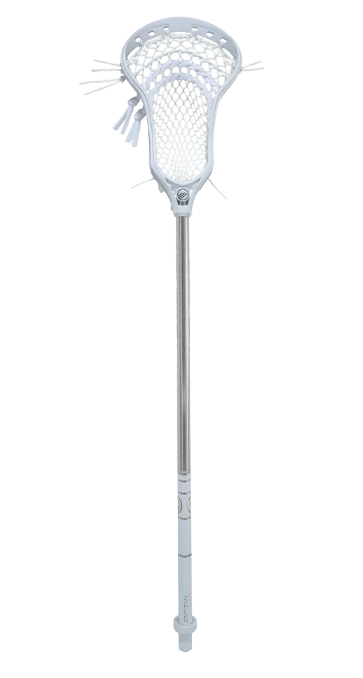 Complete stickMaverik Optik 2 Alloy Complete$99.99 at BattleLax
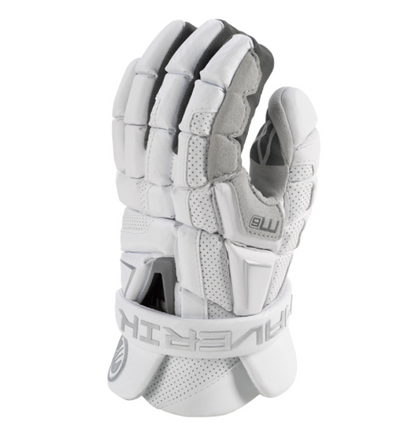 GlovesMaverik M6 Player Glove$115.99 at BattleLax
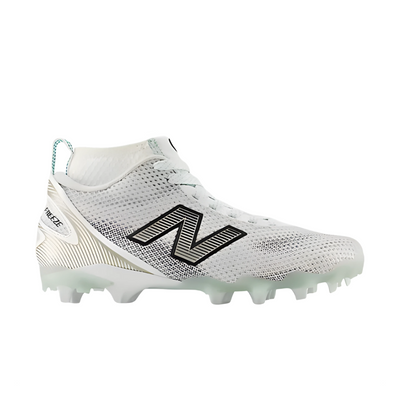 CleatsNew Balance FreezeLX v5 Mid$129.99 at BattleLax
 BallsPearl X Greaseless Lacrosse Balls$19.99 at BattleLax
Lacrosse play techniques
The following 6 are the essential lacrosse play techniques you'll use every time you step on the field.
Faceoff in lacrosse
Two players from opposing teams use their sticks to vie for control of the ball when the official places it between their stick heads at the beginning of each quarter or after a goal is scored. That's the specialist's job; here's what FOGO means.
Read more: Best faceoff heads
Cradling in lacrosse
In lacrosse, cradling is the technique of rhythmically rotating the stick to keep the ball in the pocket while you run. The first thing I tell new players: it's wrists, not arms. Keep the top hand loose and the stick near your ear.
Read more: Practice rebounders for lacrosse
Checking in lacrosse
Checking is the legal use of a lacrosse stick or body contact to dislodge the ball from an opponent's stick or impede their movement. Body checking is part of the boys' and men's game (with age limits at the youth level); here's more on whether lacrosse is a contact sport.
Read more: Lacrosse protection gear
Passing in lacrosse
Passing requires a solid grip and a smooth motion to accurately pass the ball to teammates. Step toward your target, top hand drives through, bottom hand pulls in. Hit your teammate's stick side, up by the ear.
Read more: Best heads for middies
Catching in lacrosse
Catching is putting the stick in the right position to safely receive passes. Give your teammate a target, then "give" with the ball as it hits the pocket, like catching an egg.
Read more: Training aids for lacrosse
Shooting in lacrosse
To score goals, shooting requires a quick release and perfect aim. Pick a corner before you wind up, and shoot to where the goalie isn't.
Read more: Portable goals for shooting
Every great player I've coached got there the same way: thousands of reps of wall ball. The stick skills come first; the strategy comes after.
Strategies for how to play lacrosse
There are two main kinds of strategies used in lacrosse: offensive strategies and defensive strategies.
Offensive strategies in lacrosse
Lacrosse offense includes a variety of plays to open up scoring chances. These include the "fast break," which takes advantage of quick transitions to surprise opponents, or "settled offense," in which players hold the ball to set up organized attacks. It takes a combination of picks, cuts, and ball movement to get past defenses and find open shooting lanes. The following are the best-known offensive strategies in lacrosse.
Defensive strategies in lacrosse
Defense in lacrosse is centered on stopping the opponent's offense and defending the goal. Some of the tactics are sliding to double-team ball carriers, zone defense, and man-to-man coverage. Defenders use checks to knock the ball loose and intercept passes. Blocking scoring attempts and recovering possession for counterattacks need effective communication and positioning. (A good pole helps; see our best defensive lacrosse heads.) The following are the best-known defensive strategies in lacrosse.
Faceoffs, clearing and transition
What are faceoff techniques in lacrosse?
Faceoffs in lacrosse are essential for winning possession at the start of each quarter and after goals. To secure the ball, players use a variety of grips and moves, such as the clamp, rake, or plunger. Controlling the faceoff X and establishing momentum requires a combination of strength, speed, and timing.
Clearing the ball
In lacrosse, "clearing the ball" refers to the defensive team moving the ball from its defensive end into its attacking end. While passing or carrying the ball upfield, players beat the opposing ride with outlet passes and by winning ground balls. Effective collaboration, communication, and coordination are required to move the ball from the defense to the attackers.
What is transition play in lacrosse?
Transition play in lacrosse refers to the quick switch from defense to offense or vice versa. It happens on a change of possession or a speedy breakaway. To capitalize on those moments and either create or take away scoring chances, players must quickly adjust their positions and speed. Just remember to keep your numbers right, or you'll get flagged for offsides.
Penalty rules and consequences
Now that you have learned how to play lacrosse, it is time to look at the penalty rules and their consequences. In field lacrosse, there are two kinds of fouls:
- Personal fouls (like slashing, tripping, cross-checking or illegal body checks) send the player to the penalty box for one to three minutes, and his team plays a man down. Upon receiving five personal fouls, a player is out of the game.
- Technical fouls are minor infractions like holding, illegal screens, interference, crease violations and offsides. If the team that committed the foul has the ball, it loses possession. If it doesn't, the player serves a 30-second penalty.
The following are some of the penalty types and their consequences.
The consequences go beyond the clock:
- Numerical disadvantage: Your team plays man-down defense while the other team runs its extra-man offense.
- Momentum shift: A bad penalty at the wrong time can swing a whole game.
Importance of teamwork and communication on the field
The importance of teamwork and communication in lacrosse is huge. It forms the basis of the game and affects every pass, goal, and defensive play. Teams with strong chemistry can outperform more talented individual players by creating a strong, cohesive presence on the field. On defense especially, if you're not talking, you're not playing.
Conditioning drills and exercises for lacrosse players
Lacrosse is all about quickness, agility, and explosive power. To optimize your training, you should work all three into your routine. You can build your conditioning with box variations, corner-to-corner runs, mirror drills, sprints, T-drills, squats, and burpees, among other excellent exercises.
The following are some of the best conditioning drills for lacrosse players:
- Interval sprints
- Agility ladder drills
- Cone drills
- Medicine ball throws
- Shuttle runs
- Plyometric exercises
By performing these drills and exercises, you are bound to have an improved game.
Read more: Best training drills for lacrosse
How to improve stick skills
Lacrosse requires players to have good stick-handling and cradling skills. Keep your hands loose and work the stick with your wrists. Practice controlling and guiding the ball with two hands as you find what works best to keep it in your stick.
A skilled lacrosse player is developed by learning the rules, improving fundamental abilities, and improving general fitness. The following are some of the best practices lacrosse players use to improve their stick skills:
- Practice regularly
- Focus on fundamentals
- Wall ball drills (no wall? a lacrosse rebounder works)
- Work on both hands
- Play small-sided games
- Get feedback
- Be patient and persistent
Want to keep a stick in your hands all day? Mini sticks count too. Check out the best lacrosse mini sticks.
Tips for staying safe and preventing injuries while playing lacrosse
It is important to stay mindful of the game and be aware of your surroundings while playing. Talk to your coach about your goals and any concerns about your skills and fitness; clear communication can help you reach your goals and address any worries you have.
Taking breaks and allowing your body and mind to rest is crucial for maintaining performance and preventing burnout or fatigue. Keep yourself hydrated.
Wear protective gear like gloves and helmets to protect yourself from potential injuries on the field. Use warm-up and stretch routines to keep your body ready for games. Additionally, it is essential to report any injuries, regardless of their severity, to ensure proper care and treatment. Remember to respect and follow the rules of the game to ensure fair play and sportsmanship. (Parents often ask: is lacrosse dangerous?)
Resources for further learning and development in the sport
Through books, game film, and online courses, players can learn the skills needed for success as well as the mental side of the game. First, familiarize yourself with the rules. After that, watch other people play the sport, either live or on a stream. If possible, practice with a coach as you learn the required skills. Next, put in the work, preferably with a group or team. If you follow the list below, your learning and development in lacrosse will improve.
- Online courses and training programs
- Coaching clinics and workshops
- Books and publications
- Video analysis and instructional videos
- Lacrosse camps and clinics
- Online communities and forums
- Professional development courses
- National governing bodies and associations
Read more: Lacrosse terms and slang · When is lacrosse season? · Best beginner & youth sticks
People also ask
How many player positions are there in lacrosse, and what are they?
Lacrosse has four player positions: goalie, defender, midfielder and attacker. A men's field lacrosse team has ten players per side: three attackers, three midfielders, three defenders and one goalie.
What equipment is necessary to play lacrosse, and what are some optional items?
Boys and men need a stick, helmet, mouthguard, shoulder pads, arm pads, gloves, cleats and an athletic cup. Girls and women need a stick, goggles and a mouthguard. Optional items include rib pads and additional padding.
What are some key offensive strategies in lacrosse?
Offensive strategies in lacrosse include the fast break, settled offense, isolation plays, off-ball movement and transition offense, each designed to create scoring opportunities and outmaneuver the defense.
How are penalties in lacrosse classified, and what are their consequences?
In field lacrosse, penalties are personal fouls, which put a player in the penalty box for one to three minutes, and technical fouls, which cost a 30-second penalty or possession. Box lacrosse uses minor, major, misconduct and match penalties.
Like all sports, learning how to play lacrosse takes skill, patience, and a genuine knack for the game. Stay dedicated, hit the wall, and anyone can become a skilled lacrosse player.