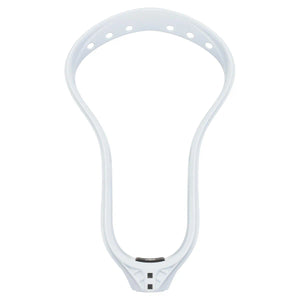
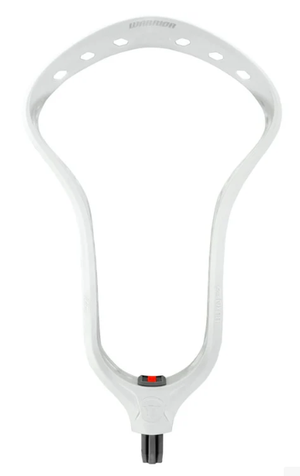
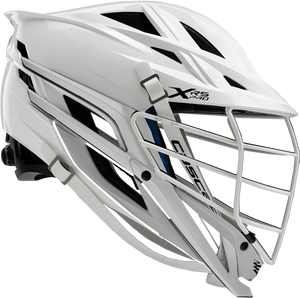
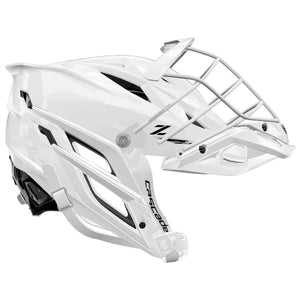
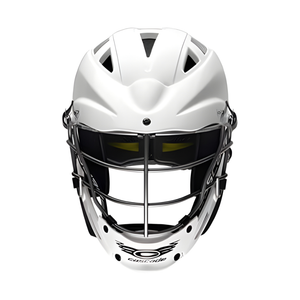
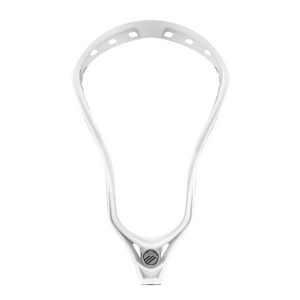
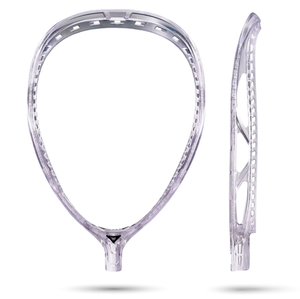
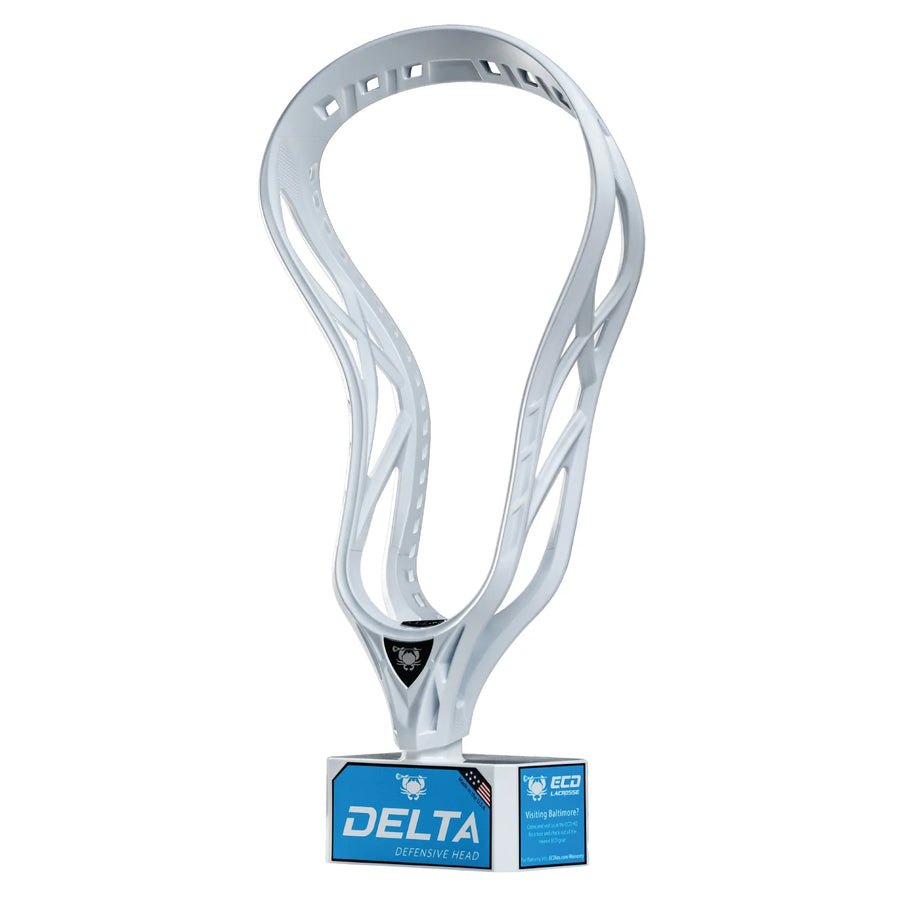
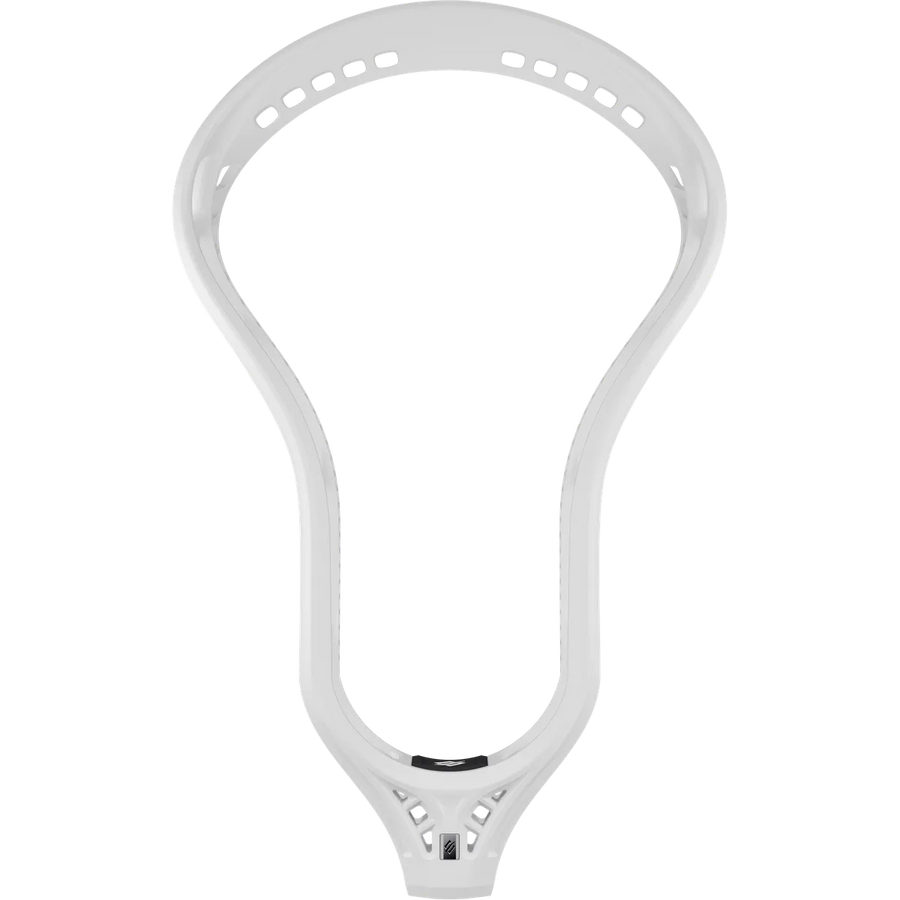
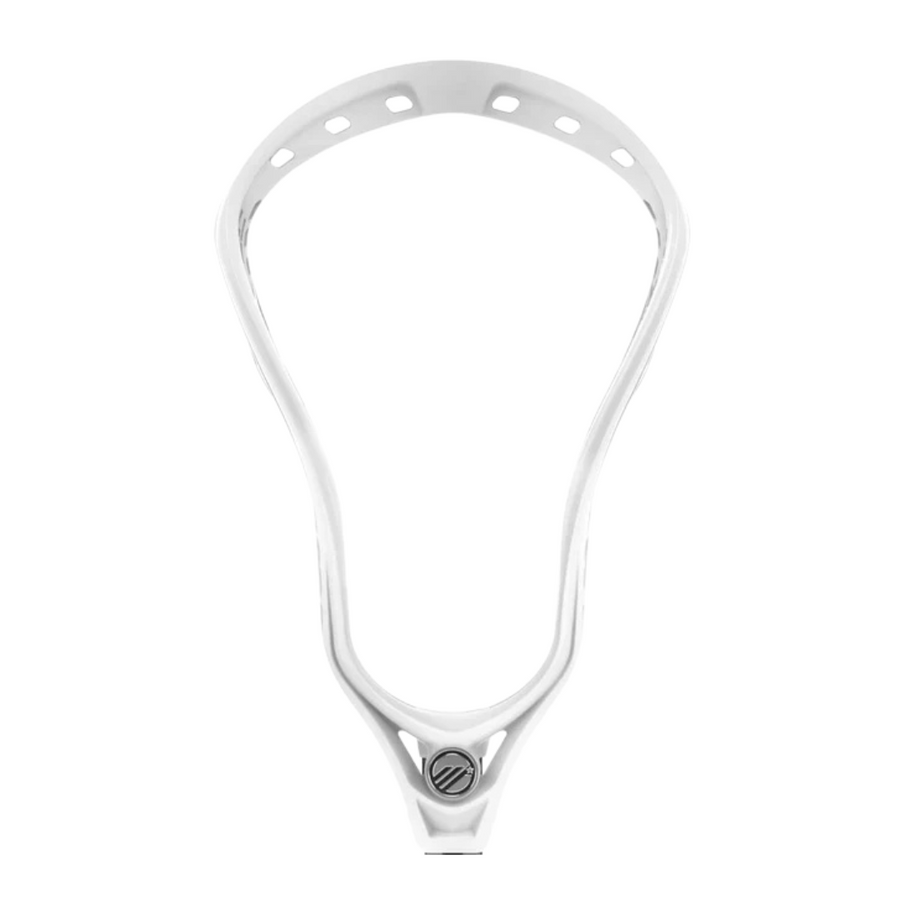
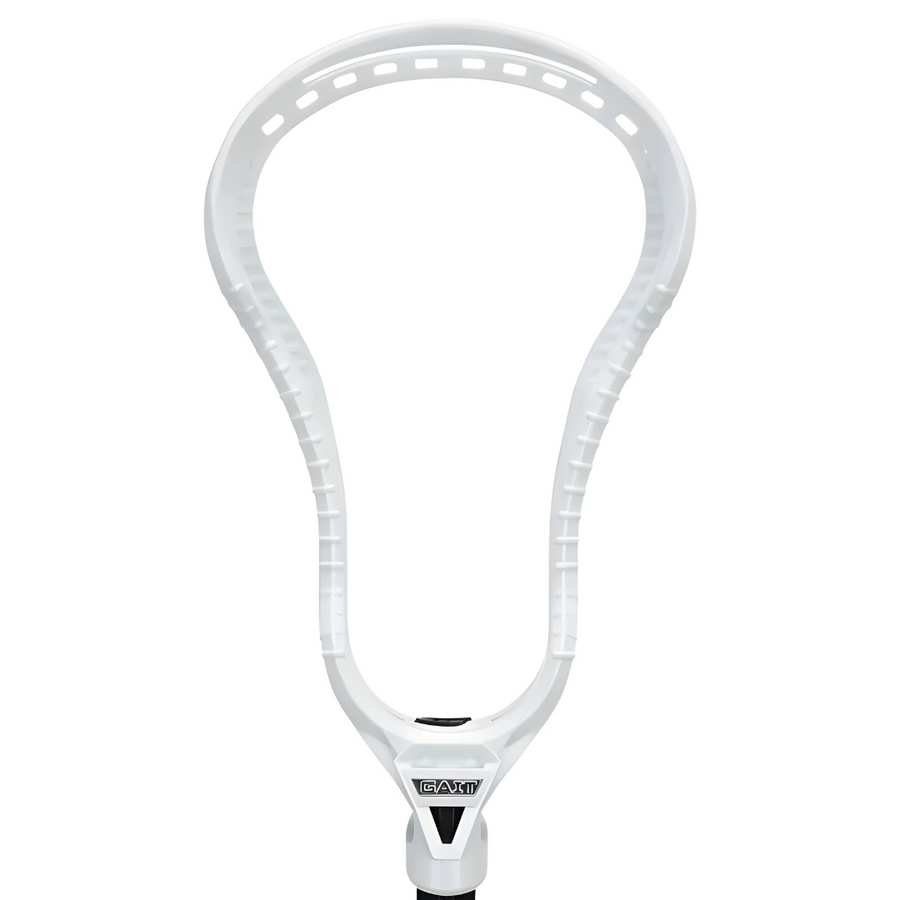
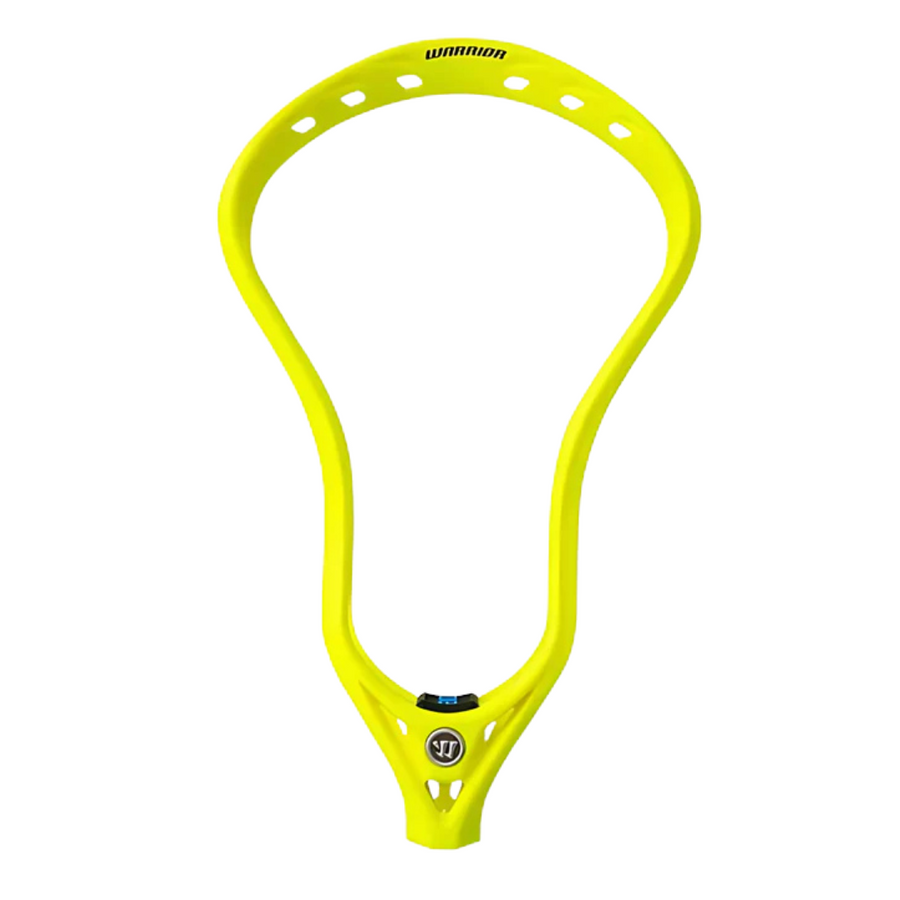
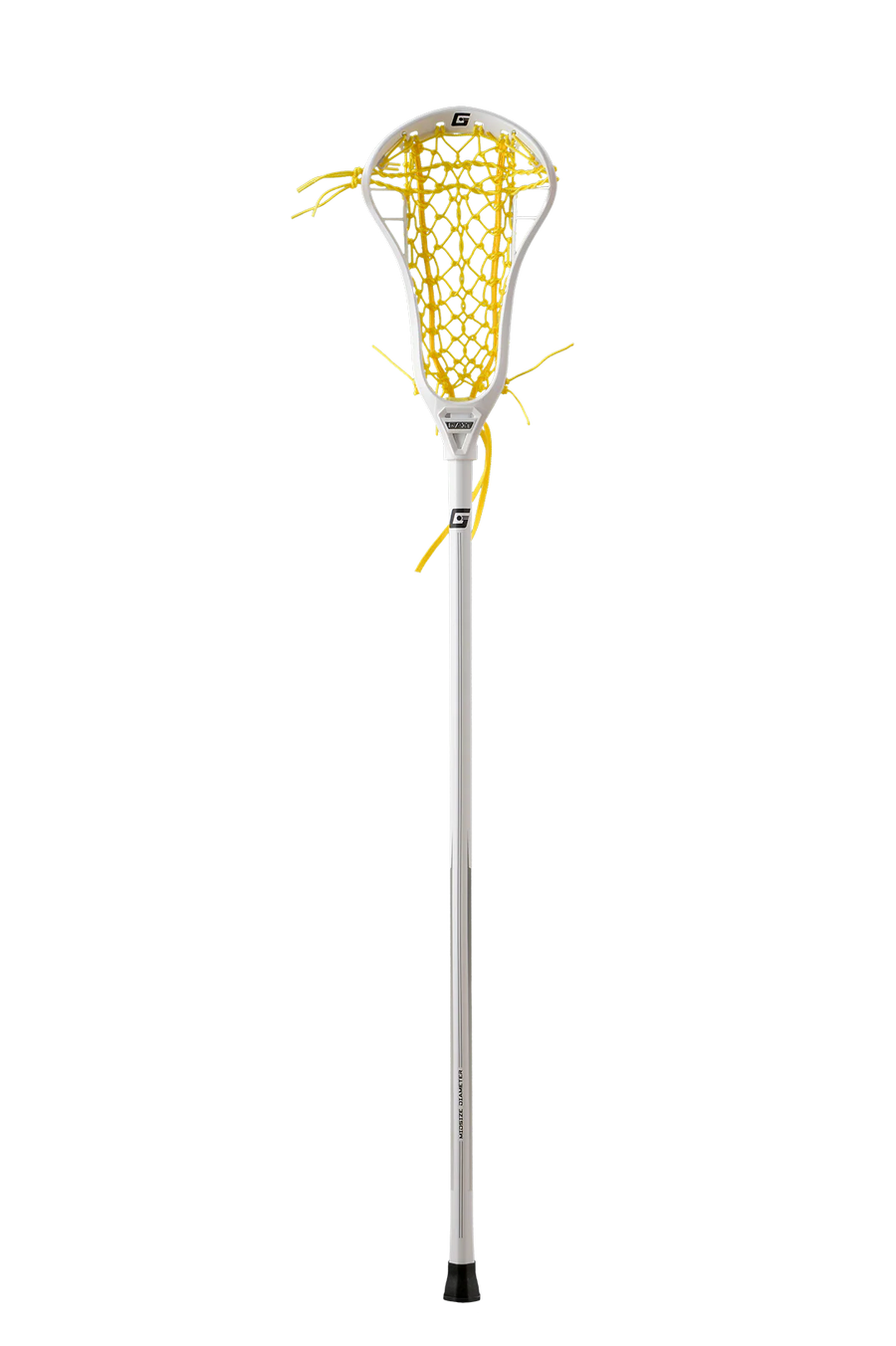
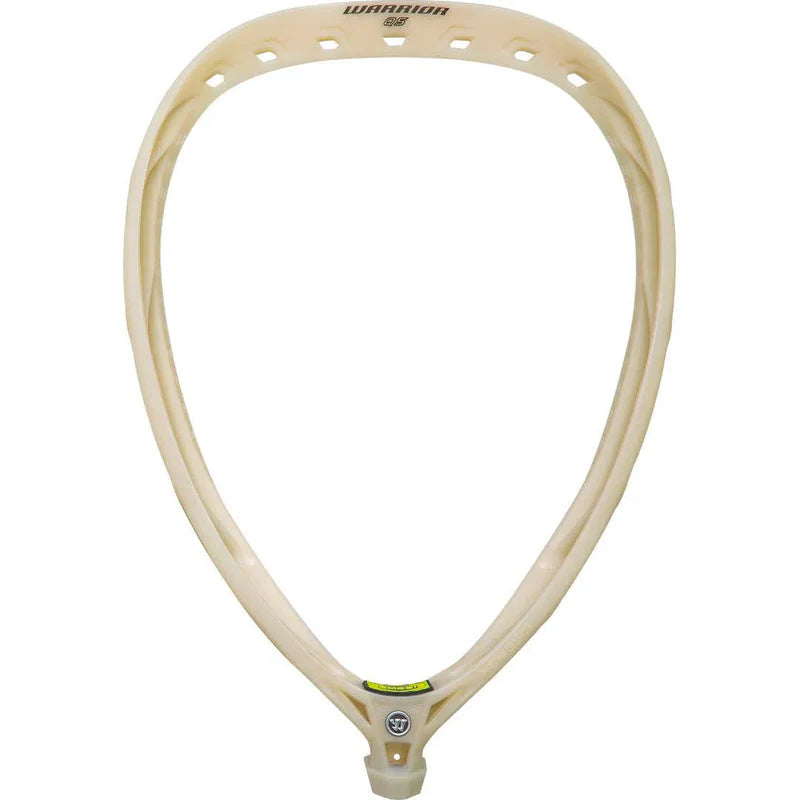
A high-level faceoff head built to dominate at the X and on the offensive end, with a full offset, a 45-degree scoop and warp resistance that snaps back after every draw.
DRDave Rathmanner · Heads · Updated June 26, 2025 · 7 min read
ECDWeapon XFaceoff head
Released2019Faceoff
LaxDrip take: a faceoff head that flexes every way you need on the clamp, snaps back into shape and still plays like a real offensive head. Give it time to break in before game day.
We may receive a commission if you make a purchase through a link on this page at no cost to you. This helps us keep this site free & we appreciate your support!
Overview
When I was deciding which faceoff head to buy, I ended up going with the ECD Weapon X, and I couldn’t be happier with that decision.
Though it’s marketed as a faceoff head, it performs well all over the field. It has all the great features of a typical offensive head, including a tight face shape, full offset, an amazing scoop and plenty of sidewall holes so you can customize your pocket however you like.
From a faceoff perspective, the Weapon X holds its shape extremely well, and you can flex it in a variety of ways, which makes it a great option for every style of facing off. Its asymmetric sidewalls let it flex easily without losing strength or durability.
I’ve watched a lot of guys take the X, from summer clinics in upstate New York to Virginia Beach travel teams to box kids out of Ontario, and the ones who stay on the field after the whistle need a head that does both jobs. That’s where the Weapon X shines. (New to the position? Here’s what FOGO means in lacrosse.)
This ECD Weapon X review covers everything you need to know about this elite head so you can decide if it’s the right choice for you.
The Weapon X has a fairly tight face shape and a full offset.
The bottom half of the head is about as pinched as it can legally be, hovering just over the 3-inch requirement. From there it flares out pretty sharply until you get closer to the scoop, where it measures around 6.5 inches. (Curious about the rules? See what makes a lacrosse stick illegal.)
The narrow face and full offset are other things that make this a great head for playing offense. The narrow face makes it easy to string a consistent pocket with good hold, which serves you well carrying the ball, dodging and shooting.
If you’re used to playing with offset heads, the Weapon X should feel natural. Many other faceoff heads have no offset, or a small one that can feel funky if you’re used to an offset head.
Scoop
My favorite part of the ECD Weapon X might be the scoop. It sucks up ground balls from all kinds of angles with ease.
It’s slightly rounded with an angle of around 45 degrees, so it’s easy to pick up ground balls without getting the butt end of your stick close to the ground.
I’ve had no trouble scooping balls even when my head is nearly perpendicular to the ground or the ball isn’t centered on the scoop. On a 50/50 ball off the whistle, that’s the difference between possession and a long day on the wings.
Throat
Like a lot of faceoff-specific heads, the Weapon X has a throat plug to increase durability and reduce head wobble. The plug should fit all standard shafts except solid carbon fiber shafts. (Need a handle? See our best faceoff shafts.)
The throat is also shorter than standard, which gets your top hand closer to the ball. That gives you more power and control, a big advantage over players using standard-length throats.
Stringing Holes
The ECD Weapon X has plenty of stringing holes, so you can customize your pocket however you like. In total, there are 6 top string holes, 15 sidewall holes per side and 4 bottom string holes.
Most of the sidewall holes are oval-shaped and pretty large. The top 3 sidewall holes on each side are more rectangular, so you can wrap the string around them a few times if you want. Pick your mesh with our best lacrosse mesh guide.
Flexibility, Flex Type and Warp Resistance
What makes the ECD Weapon X one of the best faceoff heads available is the variety of ways it flexes and its outstanding warp resistance, two things that usually work against each other. A lot of that comes from the asymmetrical sidewall design, which lets it flex where needed while keeping its rigidity and strength.
Out of the box, it’s actually pretty stiff compared to some other heads, like the Brine Dictator. Once you start facing off with it, though, it breaks in nicely and gets more flexible.
Once it’s broken in, it flexes almost any way you need. It does a great job of collapsing down on the ball, letting you pinch the ball in the back of the stick so you can push it forward or exit behind easily. Most heads primarily face flex or oblique flex. The Weapon X can do both.
It crushes down on the clamp and snaps right back. That’s the rare combo every FOGO is looking for.
A lot of faceoff heads that are great at collapsing on the ball have one major issue: durability. They warp easily, which makes them hard to use on offense. A great example is the Nike CEO. It’s arguably one of the best faceoff heads ever made, but it warps so badly that it quickly becomes useless for the rest of the field.
The Weapon X has amazing warp resistance. After every faceoff, it snaps back into place. After 3 months with mine (at the time of first writing), there was barely any warping.
Who Is the ECD Weapon X Best Suited For?
If you take faceoffs, the ECD Weapon X is a great choice, whether you’re a FOGO or stay on the field for offense.
Its warp resistance and the way it crushes down on the ball make it competitive with any faceoff head for pure facing off. Its great scoop, tight face and full offset make it more than competent on the offensive end. (Two-way middie? Compare it with our best heads for middies.)
If you need a faceoff head for a game tomorrow, though, the Weapon X may not be the best option right out of the box, since it takes a bit to break in. Ideally, you’d have time to take practice faceoffs to break it in and get used to the feel.
Pros and Cons of the ECD Weapon X
Here are the best parts and biggest drawbacks to consider if you’re deciding whether to buy one.
Pros
Great for offense: the full offset and tight face shape make it a real two-way head
Great warp resistance: it holds its shape and snaps back into place after every faceoff
Flexes in multiple ways: once broken in, it grabs the ball on face flex or oblique flex, great for pinch and pops
Throat built for faceoffs: a shorter throat gets your glove closer to the head, and the throat plug adds strength and stops rattling
Plenty of stringing holes: nicely sized holes so you can customize your pocket
Amazing scoop: the angle and shape make ground balls easy without getting super low
Cons
Heavier than some alternatives: 5.6 oz vs. 4.37 oz for the StringKing Mark 2F
Takes time to break in: not a head to take game faceoffs with right out of the box
Original version not sold at Battle Lax (the Weapon X 2.0 is)
I’ve used my personal Weapon X for around 3 months. I haven’t taken a ton of faceoffs with it, but definitely 100+, which should give you a good idea of how little it warps. I’ll keep updating this page so you can see how the warping changes over time.
What’s the Difference? Cascade R, Cascade S, and Cascade XRS
Three Cascade lids that get mixed up all the time. Here’s what separates the R, the S and the XRS, and which one belongs on your head.
CSConnor Stifel · Updated June 26, 2025 · 6 min read
Top drip score9.5/ 10
LaxDrip verdict: the R is the value pick, the S is the step up for serious players, and the XRS is the pinnacle. Today’s version, the XRS Pro, is at Battle Lax.
We may receive a commission if you make a purchase through a link on this page at no cost to you. This helps us keep this site free & we appreciate your support!
Choosing the best Cascade lacrosse helmet
When selecting a helmet, it’s important to choose the right one for your needs and budget. Cascade offers three models that are often confused: the Cascade R, the Cascade S, and the Cascade XRS. Let’s break them down so you can make an informed decision.
Every spring I see the same thing at equipment check, from youth programs in Virginia Beach to high school teams in upstate New York: parents who bought the wrong lid, or a helmet that doesn’t fit. A helmet is the one piece of gear you don’t cheap out on and don’t guess the size on. (Here’s our guide to the best lacrosse helmets across every brand.)
SevenTech Liner System designed for energy transfer management
Wide customization options in colors and designs
Effective ventilation for player comfort
The Cascade R is a well-rounded helmet, ideal for players at the high school and college level, offering a balance of protection, style, and customization.
Protection: Advanced impact management with the SevenTech liner system, engineered to handle high-impact forces.
Customization: A wide array of color and design options, so players can match team colors or personal style.
Comfort: Good airflow and ventilation that keep players cool and comfortable even during intense play.
Design: An aggressive, distinctively Cascade look that conveys speed and power.
Pros
Popular at every level, from high school to pro
Adjustable fit for different head sizes and shapes
Robust construction for durability and longevity
Most affordable option
Cons
May lack some of the newer technology found in later models
The Cascade R is a testament to Cascade’s dedication to safety and style. It’s not just a piece of protective equipment; its custom options make it a fashion statement on the field, while its aggressive design reflects the power and speed it’s built for.
At Battle Lax: the original Cascade R isn’t listed, but Battle Lax carries the R-series Cascade CPV-R ($175.00) and, for younger players, the Cascade CS-R Youth ($129.99).
VisionBar and XFlo Ventilation for improved sight and breathability
The Cascade S is designed for top players, focusing on top-notch protection, comfort, and visibility.
Protection: A combination of three liner technologies for comprehensive impact absorption across a wide range of impact intensities.
Customization: More limited options than the Cascade R, with more focus on performance than looks.
Comfort: Designed to fit a wide range of head sizes and shapes comfortably, optimizing balance and feel.
Design: Sleek and streamlined, with a focus on improved vision and breathability.
Pros
Elite-level protection, suitable for high-level play
Enhanced ventilation and visibility
Superior comfort that reduces distractions
Cons
Slightly higher price, reflecting its advanced features
Less emphasis on custom looks
The Cascade S is a standout choice for serious lacrosse players. Its focus on superior protection, plus enhanced comfort and visibility, makes it a helmet that not only protects the player but also helps their game. Since you see the whole field better, it’s a favorite of middies who have to track the ball through traffic.
At Battle Lax: the Cascade S isn’t listed, but its closest option there is the Cascade SL ($279.99).
The R gets you on the field, the S gets you seen, and the XRS is what the pros are wearing. Buy the one that fits your head first and your wallet second.
3) Cascade XRS
Drip score 9.5/10
Key features:
Tri-liner interior combining reactive foam, a variable-dimension puck system, and a tough liner material
360º fit optimized for a range of head shapes and sizes
New ventilation system for cooling
Vision system that increases peripheral vision by 22%
The Cascade XRS is the peak of lacrosse helmet technology, designed for elite and professional players who want the ultimate in protection, comfort, and style.
Protection: The newest advancements in helmet safety, with unparalleled protection even at the highest levels of play.
Customization: A high degree of customization, so players can tailor both the look and fit to their exact preferences.
Comfort: Known for exceptional comfort and fit, thanks to a fitting system that adapts to different head shapes.
Design: A state-of-the-art design that looks great and performs, with better protection and visibility.
Pros
The highest level of protection and comfort in Cascade’s line
Ideal for pro and elite players who want the best helmet technology
Sophisticated design that improves visibility and performance
Cons
The highest price of the three, reflecting its premium features
The Cascade XRS stands as a symbol of Cascade’s innovation and commitment to player safety at the highest levels. It combines cutting-edge technology with sophisticated design, making it the premier choice for players who demand the absolute best in protective equipment. (Read our full Cascade XRS Pro review.)
At Battle Lax: Battle Lax carries the current Cascade XRS Pro ($339.99) in White/White, Navy, Matte Black, Metallic Orange, and Black, with a Tri Liner System, VisionBar facemask, ProFit fit system, and a lightweight shell. Stock has been low on some colors, so check your size.
Choosing the right helmet means weighing your level of play, your budget, and your needs for protection, comfort, and looks. The Cascade R offers excellent value for most players, the S adds advanced features for more serious players, and the XRS is the pinnacle of helmet technology for top-tier athletes. Each model brings its own strengths, so every player can find the right helmet for their style and level.
We may receive a commission if you make a purchase through a link on this page at no cost to you. This helps us keep this site free & we appreciate your support!
Overview
The Gait D2 T (Transition) is a bold new addition to Gait’s latest line of defensive heads. I ran it through the work I give every pole I coach, from Virginia Beach club defenses to box-raised D-men out of Ontario: approach-and-check drills, ground balls on the run, and long outlet passes to start the clear.
Key Details
Brand
Gait
Position
Defense
Cost
$119.99 unstrung
Level
All Levels
Legality
NCAA & NFHS
Year released
2024
Colors
White
Product Specs
Spec
Details
Weight
Average
Pocket Location
Mid-low
Stiffness
Stiff
String Holes
Above average (high customization)
Release Year
2024
Face Shape
Slightly narrow
Ground Pickup
Wide
Ball Release
Late
Ease of Use
Intermediate to Advanced
Position
Defense · LSM · D-middies
Gender
Men’s
Spread on Shot
Normal / average spread
Level of Play
All levels
Battle Lax doesn’t carry Gait heads right now. If you’re shopping for a defensive head at Battle Lax, our picks are the Maverik Tank 2.0 ($109.99), built for close D, and the Maverik Havok 2.0 ($109.99), a great fit for LSMs and transition poles.
Defense Head Ranking: Drip Meter
Each row ranked between 0 and 10.
Category
Bar
Score
Accuracy of Shot and PassPassing accuracy is impressive for a stiff, defensive head. The narrowest face gives the best shot accuracy of the D2 series.
8
CheckingA huge checking advantage over traditional heads with its new can openers and impact ridges. This head grips onto players’ sticks during pulls, pushes, and slashes.
10
Cradling Performance / Ball SecurityThe rigid, sharp angles along all sidewalls help deflect checks on the head and increase ball security.
9
CatchingA narrow face requires a higher skill level to make consistent catches.
7
Ground Pick-Up PerformanceGreat at picking up ground balls, with a super wide scoop that funnels the ball into its secure narrow pocket.
8
Faceoff PerformanceFar too rigid to recommend for faceoffs. The flat offset angle requires you to get lower to the ground.
6
StringabilityAn above-average number of stringing holes allows a very versatile pocket setup.
10
Durability (Material and Thickness)Extremely durable: thick walls all around, with material removed only where engineers found it could go without losing strength. Impacts are distributed throughout the head.
9
Drippiness / Aesthetics / Brand IntegrityGait is a respected brand known for innovative heads, though the ban of the original Gait D’s can opener disappointed many players.
9
CostGreat value. Innovation usually comes at a price, but this head brings never-before-seen features at a reasonable price.
The Gait D2 head series was released in January 2024, and the Gait D2 Transition is one of our favorite releases to date for physical, defense-first players. These heads are designed for men’s high school, college, and pro leagues.
Defensemen, long stick middies, and defensive middies should consider this head because of its sidewall impact ridges and legal “mini can openers.” (Here’s more on the positions in lacrosse.)
Accuracy of Shot and Pass
The Gait D2 T has a throat and face width slightly narrower than average, allowing for more accurate shots and passes, more consistency, and a tighter spread.
This head has the fastest shot speed of the Gait D2 series, but it isn’t meant to be an attack head. If you’re looking for the best attack heads, click here. With its mid-low pocket, you can’t wind back super far; instead, you need to be more aware and deliberate with your shots and passes.
Compared side by side, the Gait D2 T is narrower and more accurate than the Gait D2 C. However, if you prefer an easier-to-use head that still has the can openers, go with the Gait D2 C.
Catching and Cradling
The mid-low pocket of the Gait D2 T keeps the ball more secure, since its center of gravity is closer to the player. The rigid sidewalls resist impact, keeping the ball stable when you take checks. Any defensive player who likes pushing transition down the field will love this head, hence the name “Transition.”
The narrow face and throat require more force to dislodge the ball. The trade-off: players must be more skillful to catch the ball consistently. The Gait D2 T has the smallest catching area of the series, since it’s narrower than both the Gait D2 C and Gait D2 GB.
Checking
Checking is where the Gait D2 T shines. Don’t be fooled: this head has “rounded” impact ridges on the front face that can really leave a mark when you land a check. The ridges concentrate the force and make the face of the head more “grippy.” The Gait D2 is a great set of heads for checking and yard sales.
A rare 10/10 for checking. Pull or push, there’s a can opener ready to latch on.
This head earns a very rare 10/10 for checking thanks to its new upper and lower mini can openers. Whether you’re pulling or pushing, there’s a set of can openers that can latch onto an attackman’s stick. The head is very rigid to deliver maximum force on every check. (Want more on what’s legal? Read what makes a lacrosse stick illegal.)
If the mini can openers aren’t for you, the Gait D2 GB (ground ball) has impact ridges with no can openers, for a more traditional head.
This head is made from some of the strongest materials on the market and is built to last. Warping and bending are unlikely thanks to the rigid material and structural support built into the sidewalls. This head is truly built to be a weapon. Pair it with one of the best defense lacrosse shafts.
Ground Pick-Up and Faceoffs
The Gait D2 T has a flat scoop, which performs much more consistently across different surfaces. However, players need to get lower to the ground to pick up balls. The rigidity of the head lets players “stab” at ground balls, and a new cutout on the scoop keeps it functional while reducing weight and drag. The scoop has been refined to funnel balls in quickly.
The mid-low pocket takes just a little more time for ground balls to settle than a higher pocket like the STX Hammer 1K. In return, the lower pocket gives you more security, a major reason to pick the Gait D2 T over the other Gait D2 series heads.
The Gait D2 T is designed for defense, so players looking for a faceoff head should check out our best faceoff heads article.
Final Remarks
We love the Gait D2 series, and the Gait D2 T the most of the three. We predict this head will set a new standard for defensive players and help balance an offense-dominated game. The impact ridges and mini can openers might take some getting used to, but they’ll make any player a force to be reckoned with.
A lightweight, stiff, narrow attack head that was a game changer in 2017. Is it still worth buying today? Here’s what we found on the field.
CSConnor Stifel · Updated June 26, 2025 · 6 min read
StringKingMark 2AAttack head · Narrow · Stiff
Drip score7.4/ 10
LaxDrip verdict: great vertical cradle, checks and ground balls, but catching and shot power need work. Its successor, the Mark 3V, is the better buy today.
We may receive a commission if you make a purchase through a link on this page at no cost to you. This helps us keep this site free & we appreciate your support!
Overview
I recently had the chance to try the StringKing MARK 2A attackman head, which launched in 2017. Although it was a game changer back then, I gave it another go and did extensive testing on the field to check whether a MARK 2A is still worth buying all these years later. Here is my in-depth review, covering everything from its pros and cons to its performance in every part of the game.
I put it through the same work I give every attackman I coach, whether it’s a kid from a Virginia Beach club team or a box player from Ontario learning the field game: inside finishes, time-and-room shots from 12 yards, catches on the run, and getting rid of it under a check.
Key Details
Brand
StringKing
Position
Attack / Offense
Cost
Unstrung $99.99 · Strung $159.99
Level
Universal
Legality
NCAA & NFHS
Year released
2017
Colors
Unstrung: White
Raw
Black
Strung: White/White
Raw/White
Black/White
Black/Black
Product Specs
Spec
Details
Weight
4.56 ounces
Pocket Location
Mid-low
Stiffness
Stiff
String Holes
Sidewall: 29 on each side | Top Holes: 6
Release Year
2017
Face Shape
Narrow
Ground Pickup
Narrow
Ball Release
Late
Ease of Use
Intermediate and Advanced
Position
Offense
Gender
Male
Spread on Shot
Slightly right for right-handers, slightly left for left-handers
Level of Play
All
Battle Lax doesn’t carry the Mark 2A anymore, but it does carry its successor, the StringKing Mark 3V ($119.99), along with two of the alternatives we name below: the Maverik Optik Force ($109.99) and the ECD Mirage 3.0 ($109.99).
StringKing MARK 2A Head Ranking: Drip Meter
Each row ranked between 0 and 10.
Category
Bar
Score
Accuracy of Shot and PassIt showed subpar practical performance with slower shot speeds and dispersion issues, so you’ll need practice to maximize its potential.
7
CheckingOne of the best features of the MARK 2A is its checking ability because of the rounded scoop and larger offset.
8
Cradling Performance / Ball SecurityVertical cradling performance was good on the field.
7.5
CatchingThe narrow face requires a higher skill level to make consistent catches. The ball often rebounds.
6
Ground Pickup PerformanceGreat at picking up ground balls, with a rounded scoop and a flatter angle that funnels ground balls into its secure narrow pocket.
8
Faceoff PerformanceThe head has enough flex and warp resistance for faceoffs. The larger, flat offset angle will require you to get lower to the ground.
8
StringabilityAn above-average 29 sidewall stringing holes allows for a very versatile pocket setup (low, mid, and high).
8.5
Durability (Material and Thickness)A durable attack head built with a stiff plastic that appears to be ordinary.
7
Drippiness / Aesthetics / Brand IntegrityThe MARK 2A looks like it’s on the cheaper side. There is no uniqueness to it.
6.5
CostThe pricing is fine for the unstrung head, but the strung head is expensive relative to its utility.
7.5
Total
7.4/10
Pros/Cons of Head
Pros
Lowered side profile
Lightweight head
Rounded, stiff, and flatter scoop
Larger offset
Multiple pocket customization options
Good with vertical cradling
No head rattle thanks to the lock bolt design
6-month durability warranty
Cons
Ordinary plastic material
Kind of a late release
4 useless sidewall holes around the throat on each side
The StringKing MARK 2A head was launched for attack and offensive players in 2017. This offensive head is geared toward players who prefer lightweight, stiff heads. Isn’t that what all attackers look for? It has a low to mid-low pocket with a narrow face because of the lowered sidewall profile. (Not sure which head fits your position? Start with our best attack lacrosse heads.)
Interestingly, I noticed there was no head rattle (at least initially), thanks to its lock bolt feature. For a head launched in 2017, that was a great feat. Nevertheless, there is much more to the MARK 2A attackmen head that you should know.
Accuracy of Shot and Pass
The StringKing MARK 2A has a narrow throat and face width. In theory, that makes it easier to control the direction and speed of passes thanks to a quicker release. The lowered side profile and pocket help with vertical control.
It’s all good on paper. However, when I took it to the field, it felt a little underwhelming (or should I say, you need some good practice sessions with the MARK 2A). Since I’m a right-handed shooter, my shots went a little right of the target line. I’m guessing the same will happen to lefties in the other direction.
Although it was quick enough to release the ball, the shot speed was not what I expected. Despite the 29 sidewall holes on each side, I found the MARK 2A underpowered and a little dispersive with shots. Nothing that can’t be corrected with some good muscle and a little extra practice. (Need to dial in your pocket? Here are the different types of lacrosse pockets.)
Offensive players looking for a head with a better balance of power and accuracy may prefer alternatives such as StringKing’s newer Mark 3V, the Maverik Optik Force, or the STX Surgeon.
Catching and Cradling
As mentioned earlier, the MARK 2A features a narrow throat and face shape. It has a well-defined narrow channel that lives up to StringKing’s claim of unmatched vertical cradling. With a narrow profile and low pocket, the margin for error isn’t there.
On the field, I found the MARK 2A less convincing at catching than other attack heads. Either you catch and cradle with perfection, or you get some practice regaining possession. It took me a while to figure out catching with the MARK 2A. I had to work on ball retention because 7 out of 10 times, the ball rebounded. Instead of settling in snug, it tended to roll upward.
However, I must commend the vertical cradling. It was on point. Because it’s so light, intermediate and advanced players will get easy one-handed cradling and more agility dodging defenders while keeping control of the ball. If you’re not used to a narrow profile, though, it will be less forgiving. A good trade-off, in my opinion, would be a slightly wider attack head like the STX Surgeon 900.
On paper it’s a sniper’s head. On the field, it’s a head that rewards the kid who already has soft hands.
Checking
The MARK 2A has a rounded scoop with a larger offset. With the increased surface area, it improves checking with a better angle of attack when making contact with an opponent’s stick. This larger offset allows for more precise checks, increasing the chances of dislodging the ball from the opponent.
The head is lightweight, but its stiffness and durability let players go all in on intense checks, especially when you’re riding a defenseman trying to clear. On the field, I found it to be good on checks. The slightly pinched face gave me a tighter grip on the ball, and when I went in for a check, it was difficult for my opponents to hold onto it. They lost the ball 5 out of 7 times.
A good trade-off, in my opinion, would be any offensive head with an aggressive offset, such as the STX Surgeon 900 or ECD’s Mirage line (now the Mirage 2.0 and the Mirage 3.0).
Ground Pick-Up and Faceoffs
The rounded scoop shape of the MARK 2A makes for efficient ground ball pickups. It has a flatter scoop, so you might need to bend and get low to the ground, and it may take some practice to make your pickups swift. However, the flatter angle helps you get under the ball more easily.
In my experience on the field, this head holds up well on faceoffs. I found the MARK 2A flexible enough and warp-resistant at the X. Although the MARK 2A offers multiple mesh and pocket options, a low pocket is going to be your best shot on faceoffs. (Specialists should still check our best faceoff heads.)
Final Remarks
The StringKing MARK 2A offers a lightweight, stiff design for offensive players but struggles with catching due to frequent rebounds, and shot and pass accuracy take practice. However, it excels at checking with its rounded scoop, though you may need to adjust to its low, flat ground ball angle.
Consider alternatives like the StringKing Mark 3V, STX Surgeon, Maverik Optik Force, or ECD Mirage 3.0 for a better balance of power and accuracy. For the full field, see our best lacrosse heads and newest men’s lacrosse heads, and pair your head with one of the best lacrosse shafts.
Product Review: ECD Impact Goalie Head w. Elite Pocket
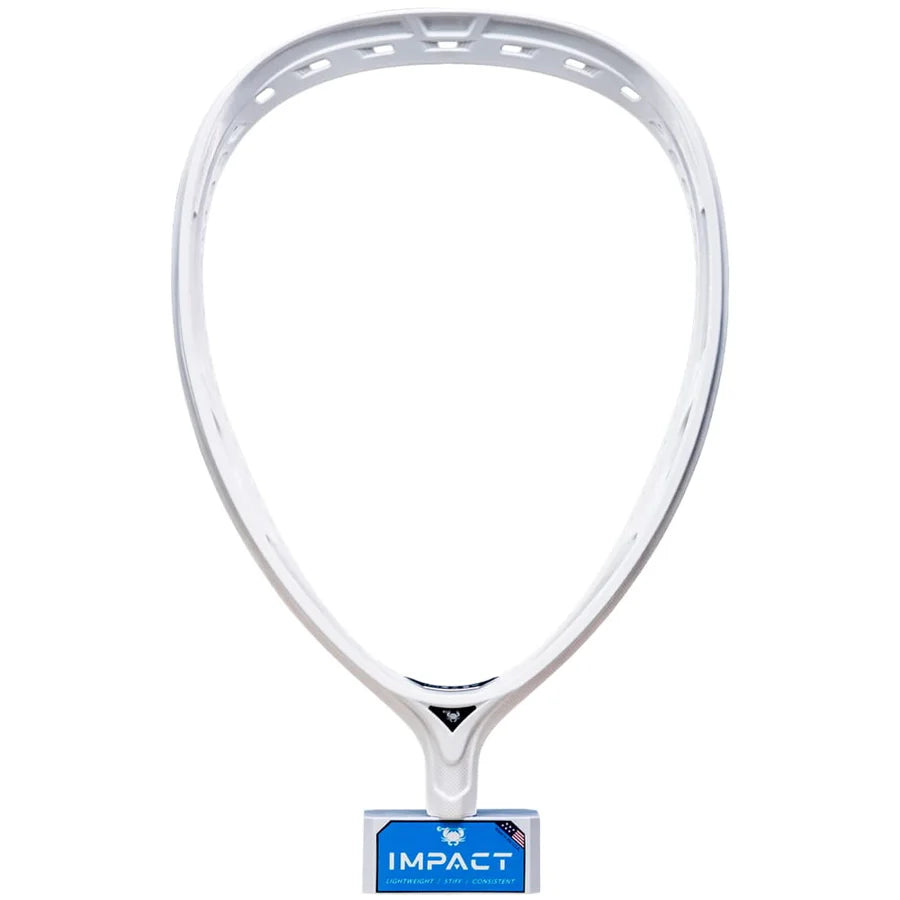
Two years in development with GoalieSmith, built from ECD’s SL-105 plastic and pre-strung by the pros. A cage head made to save the unsavable.
CSConnor Stifel · Updated June 26, 2025 · 6 min read
Drip score9.4/ 10
LaxDrip verdict: a utility-rich stiff head for men’s and women’s goalies of all levels, with a pro-strung pocket that controls rebounds and outlets clean.
We may receive a commission if you make a purchase through a link on this page about the ECD Impact goalie head at no cost to you. This helps us keep this site free & we appreciate your support!
Overview
Lacrosse goalies are a different breed of players who do not fear 80, 90, or even 100-mph balls coming at them (see the fastest lacrosse shot ever recorded). Goalies must consistently read the shooter’s mind to stop goals. The right lacrosse head makes all the difference, which is why we are here to break down why the ECD Impact Goalie Head with Elite Pocket might be the head for you.
Designed and revised for over two years, the Impact Goalie was released in 2022. ECD collaborated with GoalieSmith to finetune the Impact Goalie’s head and stringing. It is a prestrung elite pocket goalie head built with a proprietary light and stiff plastic, SL-105. This head features an optimized face shape, a responsive head, and a comfortable ergonomic throat for players of all levels.
Any keeper who’s stood in the cage for a Virginia Beach summer tournament, a Section III playoff in upstate New York, or got peppered by box shooters back in Ontario knows the head is half the battle. I put this one through the same work I give every goalie I coach: arc drills, hip and stick-side bounce shots, and live clears under a ride.
Lacrosse head ranking. Each row ranked between 0 and 10.
Category
Bar
Score
Ground Pick-Up PerformanceThe wide head allows for pick-ups over large areas; however, the size can also be cumbersome.
6
Shooting PerformanceThe wide head makes pinpointing shots difficult and lacks aerodynamics, causing slow releases.
4
Cradling Performance / Ball SecurityBalls are easily knocked out, and the large head is nowhere near as agile as a typical non-goalie head.
5
CatchingOptimized for catching, this head excels at catching fast shots on goal and passes from teammates.
10
Stringability / Strength of Pocket / CustomizabilityThe pre-strung head is sturdy and can withstand the fastest shots.
9
Durability (Material and Thickness)This head is built to withstand high-velocity shots, making it one of the most durable.
9
Faceoff PerformancePlayers won’t even attempt faceoffs with this head because of its clunky and rigid nature.
2
CostMore expensive than most heads, but the high-quality materials justify the price.
5
PassingThe size makes passing harder and slower.
7
Drippiness / Aesthetics / Brand IntegrityECD is well known for its high-quality heads and durability, and this head is no different.
9
TotalGreat overall score, which may seem lower compared to other positions due to the specialized nature of the goalie’s head.
66/100
Pros/Cons of Head
Pros
Elite pocket strung by professionals
Optimized face shape
Durable stiff plastic SL-105
Depth in the pocket for rebounds
Easy ground ball pick-ups
A good channel for outlets
Adjustable bottom string
Cons
Cradle release is late
Customization requires trial and error to find the perfect setup
Intro
Goalies hold one of the toughest positions on the field and need gear just as strong as them. Goalies look for a responsive head that is easy to handle, has ample saving space, good whip, and accurate, smooth releases. Pair it with the right protection from our lacrosse goalie gear guide.
The prestrung ECD Impact Goalie (Made in the USA) offers all these attributes. It is a utility-rich stiff head for men and women goalies of all levels.
Head
The shape of the Impact Goalie is not just for show. It is engineered to save the unsavable. The optimized wide face shape offers more saving area and stability. The prestrung elite pocket is deep enough to have rebound control. Whereas the reinforced scoop offers consistent and accurate release with no break-in time.
The low-density durable plastic SL-105 results in an above-average stiffness.
Face Shape, Shooting, and Pocket Location
The Impact Goalie has a wide face shape and deep pockets. The Impact Goalie head gives you the perfect balance with its mid-pocket location and depth to control rebounds and accurate releases.
The elite pocket is pre-strung with HeroMesh by professional stringers of ECD.
Cradling, Passing, and Catching
The primary purpose of a goalie stick is to catch high-speed incoming shots and pass the ball with accuracy, and the Impact Goalie performs effectively on this front. There is good stiffness in the scoop thanks to the proprietary light and durable SL-105 plastic.
Passing and catching feels natural and controlled because of the strategic pocket placement. However, the cradling feels average because of the depth of the pocket.
Flexibility and Ground Ball Pick-Up
The ECD Impact Goalie Head has just the right amount of flexibility in the scoop to pick up ground balls efficiently but maintains its rigidity when blocking hard shots on goal. The head responds with the agility that goalies need.
Defensive Capability
The pocket depth and semi-soft mesh make the Impact Goalie a force to be reckoned with. The lightweight but stiff head does not compromise its defensive capabilities at all.
The defensive abilities of this goalie stick allow goalies to control the game and make crucial stops. With the right skill set, the ECD Impact Goalie can help turn defensive plays into offensive opportunities. Wondering what else a keeper can do in the crease? Read can a lacrosse goalie use his hands.
Stringing and Number of Holes
The in-house exclusive HeroStrings are used to string the elite pocket of the Impact Goalie. It is a semi-soft mesh that controls shots and rebounds well (more on hard mesh vs. soft mesh). It is strung on the advised pattern of GoalieSmith.
The ECD Impact Goalie has 7 holes on the top and 20 sidewall holes on each side. These 47 holes ensure a fine-tuned tension and responsiveness of the pocket, giving you a goalie stick that feels like an extension of your body.
The introduction of an adjustable bottom string allows players to tune their heads to their liking.
Material, Durability, Flexibility, and Weight
The team at ECD engineered a durable and lightweight plastic, SL-105, exclusively for the Impact Goalie. This low-density material can endure high-velocity shots on the frame of the head.
The Impact Goalie weighs 11.5 ounces, slightly heavier due to its more sturdy construction. Put it on a proper goalie handle from our best lacrosse goalie shafts list.
Customization, Appearance, and Aesthetics
Beyond performance, the ECD Impact Goalie Head catches the eye with its minimalistic design. The ergonomic throat enhances the control and comfort of handling the stick.
Although it is a prestrung elite pocket head, unstrung versions are also available. The unstrung head allows you to tailor the look and feel of your stick to match your style and preferences. You have the option to either string it in all white or the Black Striker pattern. Stringing your own? Here’s how to break in lacrosse mesh.
Stiff, durable and built for 60 minutes of slap checks, ground ball scrums and takeaways. The best heads for close D, LSMs and D-middies.
DRDave Rathmanner · Updated July 29, 2025 · 16 min read
Top pick#1D head
Maverik Havok 2: stiffer and lighter than the original, with a 4-strut sidewall, a tight throat and a pointed Ground Control scoop. Built for LSMs and D-poles.
We may receive a commission if you make a purchase through a link on this page about the best defensive lacrosse heads at no cost to you. This helps us keep this site free & we appreciate your support!
While defensemen and long stick middies (LSMs) can technically use any head, there are some specifically designed for these hard-hitting positions that can give players an advantage. This guide goes over the best defensive lacrosse heads and explains what you should look for when choosing one.
Defensemen need stiff and durable heads that can withstand 60 minutes of hard checks, shot deflections, and ground ball scrums. Many defensive players also prefer wider heads that give them more surface area to intercept passes and check opponents’ sticks.
Whether you’re a cover pole in a Virginia Beach summer league, an LSM pushing transition for a Section III team in upstate New York, or a box defender from Ontario moving to the field game, your head has to hold its shape on every slide, every lift and every scrum on the end line. Not sure which D role fits you? Brush up on lacrosse positions.
13 Best Defensive Lacrosse Heads
To find the best defensive lacrosse heads, I started out by considering 16 of the top options on the market. After researching their weight, face shape, stiffness, and other factors, as well as reading customer reviews, I was able to narrow my list down to 13. Below you will find the best lacrosse heads for defensemen and LSMs, including what each is best for.
The Havok 2.0 is perfect for throwing hard checks as a defender. Maverik designed it with Duratough material that doesn’t warp on impact. Although it’s lighter than the original, weighing 5.2 oz, it’s noticeably stiffer than its predecessor.
Moreover, the pinched sidewall and 4-strut design created a tighter throat, which helped me win more ground balls without losing control. It reduced unwanted flex when landing slap checks.
It has 20 sidewall holes, enough for pocket customization. The top holes are wide enough for double loops, and the lower ones allow pocket depth adjustment for a clean release. I strung a mid-high pocket, which improved my catching, and sending outlets on the run felt smoother.
However, the face shape is not wide enough to scoop the ball on the run. Hence, I don’t recommend it to beginners. Regardless, the pointed Ground Control scoop enhanced groundball pickups. It smoothly directs the ball into the pocket.
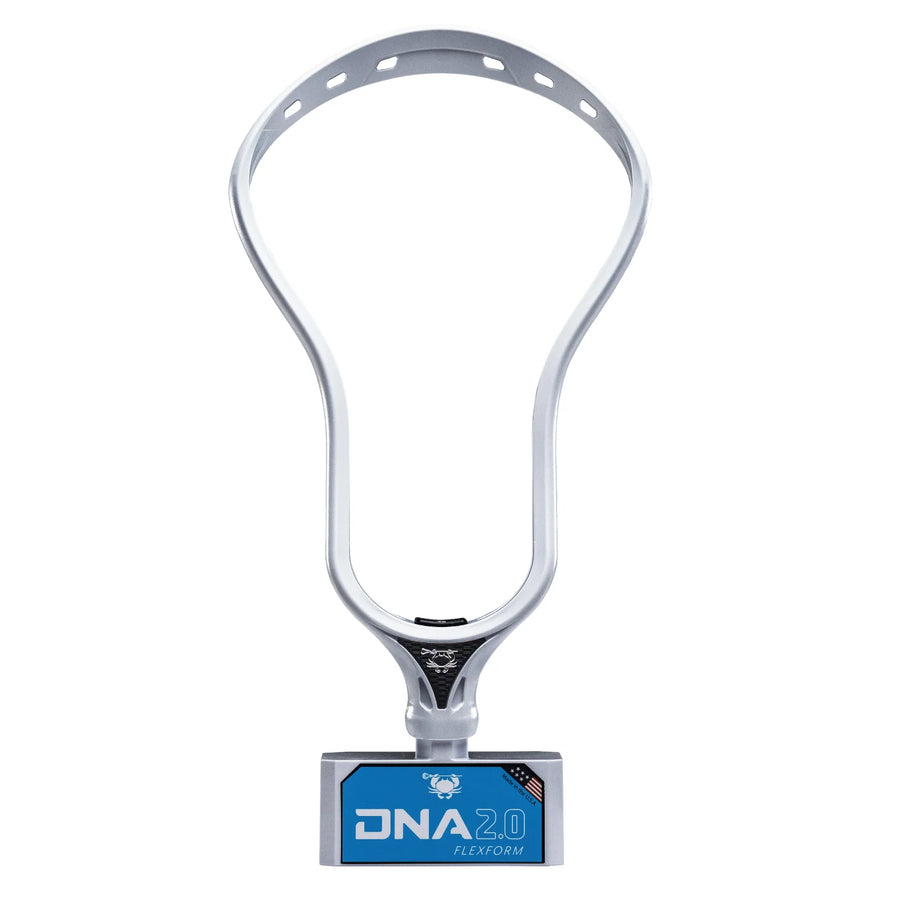
ECD DNA 2.0 is the most reliable defensive head on my list. Ryan Drenner also used it for a whole season. The Flexform material is durable and weather-resistant. It weighs 5.5 oz, half an ounce less than the original.
Besides, I liked how easily its rounded scoop shape caught the ground ball after disrupting the opponent. I strung a mid pocket using the added sidewall holes, which gave me a tight channel and great hold for fast outlets. Moreover, its shorter throat adds stability while cradling and gives me a controlled feel.
However, if you prefer a wider face for intercepting passes, opt for a more traditional defensive head like the ECD Delta.
Nevertheless, the pinched sidewalls are stiff, balanced, and built to take a beating without losing shape. I could easily throw impactful checks, and this head doesn’t even warp while battling difficult situations.
Heads up: the DNA 2.0 was showing out of stock at Battle Lax when we last checked. If it’s still sold out, the ECD Delta is in stock.
I have been using the Stallion series for different positions, and 2023’s 1K is worth investing in for D-middies. At 4.84 oz, it’s still lightweight, especially for how solid it felt. I was impressed with the durability and strength-to-weight ratio, although it looks chunky.
It has a classic two-strut sidewall design, and the C-channel along the back rail adds stiffness for impactful checking. Yet, there is minimal flex in the middle for easy cradling in traffic.
Besides, it has a wider face shape. Hence, I effortlessly scooped groundballs, even from an awkward angle. Still, it’s structured enough to push out quick outlet passes after a turnover.
Furthermore, 16 sidewall holes are enough to get a clean channel with a decent hold and a smooth release. However, it didn’t give me variable options for pocket customization. Thus, if you don’t prefer a mid-high pocket, opt for the Maverik Havok 2. Full breakdown in our STX Stallion 1K review.
I have been using the ECD Delta for over a year, and it hasn’t lost stiffness. Despite weighing 5.6 oz, it doesn’t feel heavy, and the X-strut design resists warping while throwing hard checks.
Besides, its wide face profile and pinched side rails provided exceptional shooting and passing accuracy. The larger surface area also enables me to intercept passes from variable angles. Its shorter and narrower throat profile also helps maintain possession against opponents’ checks.
The Delta’s slightly curved scoop with flat edges easily funnels the ball into the pocket, even on the run. I cleanly picked up ground balls without slowing down, even though I checked the ball loose near the crease.
Moreover, its mid-high pocket held the ball tightly while cradling it in traffic. Initially, the pocket felt stiffer and frequently popped the ball out, but the issue resolved after the break-in period. Thus, if you prefer a flexible head, go for the Stallion 1K. More in our ECD Delta review.
Battle Lax also lists a Graphene version of the Delta ($129.99) on the same product page.
I delivered impactful checks with the Mark 3V for six months, and it didn’t warp even in summer. Its widely spaced sidewalls with multiple struts are extremely rigid. The ultra-stiff plastic absorbed the impact when I threw hard poke checks or jammed my hands during a slide.
The pinched sidewalls and shorter throat give me exceptional control when clearing. I smoothly cradled through pressure without the ball rattling out. It’s not a pure defensive head, but it gives me the confidence to push upfield in transition or after a clean takeaway.
Moreover, its wider face effortlessly picks up ground balls during fast breaks. Even with a lot of traffic, I could scoop on the run without stabbing or missing. I also loved the rounded scoop. Although the ultra-stiff plastic makes defensive clamps difficult, the curved scoop is perfect for winning the ball.
At 4.5 oz, it’s lightweight, making it suitable for elite D-middies and aggressive LSMs. Yet, I would not suggest it to beginners looking for a more forgiving head. See our full StringKing Mark 3V review.
Gait D2 is the newest defensive lacrosse head on my list, and it has a better shape than the Gait D. Although it doesn’t have the sharp can-opener hooks that got the original Gait D banned, it easily dislodges the opponent. Similarly, it has several ridges along the inner sidewalls and a unique cutout under the scoop. Hence, it felt stiffer when absorbing impact.
Otherwise, its face profile is wide and angular, perfect for knocking down passes or scooping on the run. Moreover, the flares near the scoop open it up just enough for ground balls without feeling sloppy.
Still, the throat is longer and more squared-off than most heads I have used. It affected my hand placement, resulting in lower shooting speed and reduced torque while checking.
Regardless, I strung a mid-high pocket using its unevenly spaced sidewall holes. It gave me consistent holds and easy outlets. The offset and aggressive return shape let the ball sit high and tight despite lacking the traditional D-head’s deep channel.
Battle Lax doesn’t currently list the D2 Ground Ball, but it carries its sibling built for transition poles, the Gait D2 Transition ($119.99).
07. STX Hammer 1K Best features: stiffness & durability
STXHammer 1KDefense & LSMs
Sidewall holes15ScoopSpeed ScoopPocketMid/high to highBest forDefensemen & LSMs
STX’s newest defensive lacrosse head, the Hammer 1K, stands out on this list due to its unmatched stiffness and durability. It improved upon our previously top-ranked defense head, the Hammer 900, with its increased stiffness and shape retention thanks to improved EnduraForm plastic. It also doesn’t seem like it will have any of the same issues with breaking frequently that the older Hammer Omega had.
The STX Hammer 1K has a nice face shape for both defensemen and LSMs. It is pretty pinched towards the throat but gradually widens towards the scoop, giving it good ball control but still being wide for intercepting passes and laying checks.
As far as the offset goes, it is pretty high up on the head, making it great for a mid/high to high pocket, which is typically the preference for defensemen.
The Hammer 1K also has STX’s amazing Speed Scoop that is specifically designed to perform better on long poles. This makes ground balls a breeze, and the InnerLock technology makes stringing easier and keeps your strings tighter.
The biggest downside is that there are only 15 sidewall holes on each side. While I haven’t run into any issues with stringing it, if you prefer more sidewall holes, you may want to look elsewhere.
Overall, the new STX Hammer 1K is a great option for any D player, including close defenders and LSMs. It should hold up well for even the hardest of checkers and perform well in transition. Read our full STX Hammer 1K review.
The StringKing Mark 2D checks in next on our list of the best lacrosse heads for defense, and for very good reason. It is one of the lightest heads to make this list at an impressive 5.2 oz. Even better, unlike many other light heads, it has above-average stiffness and durability.
We’ve found that the scoop on the Mark 2D is great for ground balls. Its sharp angle, along with the dramatic forward cant shape of the head, allows you to easily scoop balls even when your butt end is still high in the air.
The head shape and numerous stringing holes make it easy to string a high pocket with good hold and smooth release. Like most other StringKing heads, the Mark 2D strings up beautifully and the range of pocket options is limitless.
The Mark 2D also has a locking bolt mechanism in the throat that helps secure your head more than just a traditional screw, helping to eliminate head rattle and movement during checks.
Overall, this is a great head for both defensemen and LSMs due to its light weight, stiffness, face shape, and scoop design.
Battle Lax now carries the next generation, the StringKing Mark 3D ($119.99).
09. Maverik Havok Best features: tight pinch & scoop
MaverikHavokLSMs & D-middies
Weight5.25 oz (2.0)ScoopGround ControlPocketMid to mid/highBest forLSMs & D-middies
The original Maverik Havok was one of the most popular LSM heads on the market, and the Havok 2.0 is even better.
The Havok 2.0 has a tighter face shape than the original that still opens up towards the scoop. We found a Havok 2.0 strung up with a nice mid to mid/high pocket with a tight channel gives great hold and a smooth release.
The Havok 2.0 only weighs 5.25 oz, making it one of the lightest D/LSM heads on the market today. It is 3.25 oz lighter than the original. It also has an extra sidewall strut to help increase the stiffness compared to the first version. The new version of the Havok also has more stringing holes than the original, something that was a big complaint with the 1.0.
The Havok 2.0 also has the Ground Control scoop that has a sharp angle, making it easy to snag ground balls without having to get your butt end close to the ground. The way the top half of the head cants forward also helps with scooping balls.
If you are an LSM, D middie, or defenseman who likes to push transition, the Havok 2.0 is a great option due to its face shape, light weight, and scoop. More traditional defensive players who prefer a wider, stiffer head may want to look at alternatives such as the STX X20 or Maverik Tank 2.0.
The STX X20 is the newest head in one of the longest-running head lines in the game, the Xcalibur series.
The X20 features the classic wide face shape that the Xcalibur and X10 had. This makes it great for knocking down passes and having more surface area for checks but makes it a bit harder to string and provides less hold. If you end up going with the X20, we recommend stringing as tight of a channel as possible to account for the wide face shape.
One of the best benefits of the X20 is that it is very stiff even though it only weighs 5.2 oz, making it one of the lightest defense heads available. It also has STX’s amazing Speed Scoop, which makes picking up groundballs a breeze, especially on a long pole.
Overall, if you are a defenseman who doesn’t carry the ball much and prefers wide heads, the X20 is one of the best options available.
11. ECD Rebel Defense Best features: tight pinch & stiffness
ECDRebel DefenseLSMs & transition D
PinchNarrowWarranty6 monthsPocketMid to mid/highBest forLSMs & transition D
The defensive version of the ECD Rebel head line comes in next on our list. Compared to other D heads, the ECD Rebel Defense has a pretty narrow pinch, making it an especially attractive option for LSMs and defensemen who carry the ball in transition a lot. It also is very stiff while being right in the normal weight range of most D heads.
As with most ECD heads, the Rebel Defense has more stringing holes than most comparable options, making it easy to string whatever your preferred pocket is. With that being said, the high offset makes mid to mid/high pockets ideal for the Rebel D.
We did find some customers reporting that their Rebel Defenses broke after using them for a while, though this seems to be pretty rare and the head comes with a 6-month warranty.
Overall, if you’re a defenseman or LSM that prefers a head with a narrower pinch, the ECD Rebel Defense is a solid choice. Full details in our ECD Rebel Defense review.
Battle Lax doesn’t currently list the Rebel Defense. Its in-stock ECD defensive option is the ECD Delta; see the full ECD collection.
12. Warrior Evo QX2-D Best features: durability & stiffness
WarriorEvo QX2-DAdvanced D & LSMs
ResinTherma-LOC+ThroatRemovable lockPocketMid-to-high / highBest forAdvanced D & LSMs
Warrior’s Evo QX series includes both an offensive (QX2-O) and defensive head (QX2-D). Just like the QX2-O is one of our favorite heads for attackmen and middies, the QX2-D is an amazing option for defensemen and LSMs.
The Evo QX2-D has a tighter face shape than the original QX-D, making it a great option for advanced defensemen and LSMs. It features the new Therma-LOC+ Resin, making it very stiff and durable even in high temperatures.
The updated sidewall strut design also makes it stiffer than the original head, which was already very stiff. This means when you’re out there playing summer ball, your head won’t turn into a noodle, making it hard to lay checks and scoop the ball.
The max offset is very high up on this head, making it great for those D guys that love mid-to-high or high pockets. Overall, if you prefer Warrior heads and don’t mind a narrow face shape, the Evo QX2-D is an awesome choice.
We couldn’t confirm a live QX2-D listing at Battle Lax. Check the Warrior collection for current Warrior heads.
Pros
Therma-LOC+ Resin keeps it stiff in high temperatures
Narrow face shape
Removable throat lock
Cons
Hard to say how it holds up over time since it’s so new
Maverik released the newest edition of their popular defensive lacrosse head, the Tank 2.0, in late 2020, and it is still one of the top choices of elite college defensemen.
As the name suggests, this head is quite literally a tank. It is super stiff, helping it deliver hard checks without being too heavy. The wide face shape makes intercepting passes easy and gives more area for laying checks. The Tank 2.0 includes an improved scoop as well, which makes grabbing GBs a breeze after you check the ball out of someone’s stick.
On the downside, the wide face shape makes it harder to string a narrow channel. This can make it harder to achieve good hold, making carrying the ball in transition potentially difficult.
Like many other defense heads, the Tank 2.0 is designed primarily for a mid-to-high or high pocket. Using a dropped top string is a good way to achieve a tight channel in a high pocket with the Tank 2.0.
If you prefer a wide defense head that will hold up for multiple seasons, you won’t be disappointed with the Maverik Tank 2.0.
If the heads above are too expensive, there are some great clearance and cheaper lacrosse heads that you could consider.
STX X10
This is the updated version of one of STX’s most popular defensive heads ever, the XCalibur. Its stiffness, durability, and wide face shape make it an attractive option for traditional long poles.
Another great budget defense head is the Brine King II ST, the stiffer version of the popular King II head. It features a narrow pinch compared to many other D heads, making it a good option for LSMs and D middies.
Last on our list of the best cheap defensive lacrosse heads is the Adidas Blockade. Much like the King II ST, it features a narrow face shape, helping improve control while still being stiff enough to lay hard checks.
What to Look for in a Lacrosse Head for Defense or LSM
With so many lacrosse heads designed for defense on the market today, it can be difficult to decide which to pick. To help, I’ve listed out 7 things you should consider when choosing which to go with.
1) Stiffness & Durability
First and foremost, you need a strong head that is durable enough to last through thousands of checks. As a defenseman, you need to be confident that your head won’t break, warp, or flex too much when delivering poke and slap checks over the course of the game.
It’s important to consider how heads hold up over the course of an entire season or multiple seasons. Even if a head feels very stiff when it is brand new, it could still become flexible after a lot of use or in hot weather. Read (or watch) customer reviews to get a sense of the long-term stiffness and durability of the head.
2) Weight
Typically, the heavier a head is, the more durable and stiff it is. More recently, however, companies have developed advanced plastics that are very light but just as strong (if not stronger) than “traditional” bulky defensive heads.
Assuming the stiffness and durability are equal, most players prefer a lighter head because they can throw faster checks, react faster, and move around the field faster.
Most new defensive heads on the market today weigh around 5.2 oz to 5.6 oz. Any head in this range should feel pretty normal on your D-pole. Once you get into heads over 6 oz, your stick may start to feel top heavy.
3) Face Shape
The next thing to consider when choosing a defensive head is what kind of face shape you want. In the past, defensemen almost always preferred very wide heads that gave them more area to intercept/deflect passes and for laying checks.
Recently, there has been an influx of defensive heads more geared towards advanced players, LSMs, and D middies. These heads typically have a narrower face shape, especially towards the throat of the head, that allows for better control of the ball.
As you’ll see in the reviews above, there is no one “best” face shape when it comes to defensive heads for lacrosse. My advice is to try out a wide head as well as a more pinched defensive head to see which you are more comfortable with.
4) Scoop
I think having a good scoop is more important for defensemen than any other position. Why? Mainly because your head is attached to a long defense shaft that makes it more difficult to achieve a low angle with the ground when scooping.
Whereas attackmen and middies can bend down a few inches to achieve a low enough angle to scoop a ball, defensemen often have a higher angle due to their shaft length. Having a more angled scoop can help you gobble up ground balls easily without having to bend completely over, which would likely slow you down considerably.
5) Pocket Placement
The design of your head, especially the placement of the offset on it, is the main factor in where your pocket should go. The part of the stick with the largest offset (or where your head is closest to the ground when holding it horizontally) is where its ideal pocket is.
Most defensive heads have an offset around the top half of the head, leading to mid-to-high pockets. While this is often beneficial for defensemen since it leads to more hold and whip, which is ideal when using a full-length defense shaft, if you are used to a low or mid/low pocket, you may want to look for a head with an offset closer to the throat. (Here are the different types of lacrosse pockets.)
6) Stringing Holes
Though not as important as the other factors in this list, you should also make sure that the head you choose has a sufficient amount of stringing holes so you can customize your pocket to fit your game. This is most likely to be a problem with older heads, as most new heads developed nowadays do have numerous stringing holes to work with.
7) Strung vs. Unstrung
Lastly, you will have to decide whether you want to buy a head that is strung or unstrung. I personally always buy unstrung heads because I like to string them myself to fit my preferences.
If you don’t know how to string or don’t know someone that does, however, going with a strung head could be a good option. This is especially true if the site you buy heads from strings them themselves instead of coming with (notoriously bad) factory string jobs. Battle Lax offers custom pre-strung heads for exactly that reason.
High School & College Head Rules
NFHS (high school) rules for lacrosse head dimensions started to match NCAA (college) rules starting in 2018. Previously, high school heads could be narrower towards the throat but had to be wider towards the scoop, and vice-versa for college heads. Now that both organizations have the same set of rules, any head that meets NCAA rules is legal for NFHS as well.
Here are the rules for heads:
Minimum width of 6″ at the widest part of the head
Minimum width of 3.5″ on front and back of the head at 5″ up from throat of the head
Minimum width of 3″ at 3″ up from throat of the head
Minimum width of 3″ at 1.25″ up from throat of the head
If you are buying a head that was released in the past 2 years, you shouldn’t have to worry about it meeting these regulations. If you are buying a head from 2017 or before, you should check to see if it meets NCAA specs. If it does, it should also meet current NFHS rules. If not, then it is likely illegal for both high school and college since the new NFHS rules went into effect in 2018.
A Note About the Gait D Head
The original Gait D head (the head with “hooks”) has not been legal since January 1, 2023. Gait worked with retailers to let players trade in illegal heads, and the newer Gait D2 drops the hooks entirely.
We take our ratings seriously and only recommend products that we would use ourselves.
To come up with our ratings for each product, we test the product ourselves whenever possible, review product specifications (weight, number of stringing holes, etc.), and read customer reviews/talk to lacrosse players we know that use the product.
When testing heads, we bring them to a field and test for passing, catching, shooting, scooping ground balls, and checking, all with a standard pocket to reduce the number of variables.
When it’s not possible to extensively test a product ourselves, we spend extra time talking to real customers who have used the product for a while themselves.
If you ever have any feedback for any of the products listed on this page or have a recommended addition, please contact us and let us know!
People Also Ask
How Do I Get Better at Lacrosse Defense?
Improve your lacrosse defense by using a stiff and durable head, practicing checks and ground ball scrums, and choosing a wider head for better interception and stick checks.
How to Pick a Lacrosse Head?
Choose a lacrosse head based on its stiffness, durability, weight, face shape, scoop design, pocket placement, and the number of stringing holes to suit your playing style. For every position, see our best lacrosse heads guide.
What Is a Lacrosse Defender?
A lacrosse defender uses a stiff and durable head, often with a wider face, to perform checks, intercept passes, and control ground balls, playing a crucial role in protecting their team’s goal.
What Should I Look for in a Defensive Lacrosse Head?
Look for stiffness, durability, weight, face shape, scoop design, pocket placement, and adequate stringing holes when choosing a defensive lacrosse head.
What Are the Rules for Lacrosse Heads in High School and College?
Lacrosse heads must meet specific width requirements at various points to be legal for high school and college play, with current rules aligning since 2018.
Other Products to Consider Alongside Your New Defense Head
If you opt to go with an unstrung head, you’ll need mesh and strings. Below you can find some of my top choices for both full string kits as well as just mesh. You can also check out our Best Lacrosse Mesh Guide to learn more.
ECD and StringKing have moved on to newer mesh generations since this list was first written, so we’ve linked the current Hero 4.0 and Type 5 versions at Battle Lax. Browse everything in mesh & stringing.
Two years in development with GoalieSmith, built from ECD’s SL-105 plastic and pre-strung by the pros. A cage head made to save the unsavable.
CSConnor Stifel · Updated July 30, 2025 · 6 min read
Drip score9.1/ 10
LaxDrip verdict: a utility-rich stiff head for men’s and women’s goalies of all levels, with a pro-strung pocket that controls rebounds and outlets clean.
We may receive a commission if you make a purchase through a link on this page about the ECD Impact goalie head at no cost to you. This helps us keep this site free & we appreciate your support!
Overview
Lacrosse goalies are a different breed of players who do not fear 80, 90, or even 100-mph balls coming at them (see the fastest lacrosse shot ever recorded). Goalies must consistently read the shooter’s mind to stop goals. The right lacrosse head makes all the difference, which is why we are here to break down why the ECD Impact Goalie Head with Elite Pocket might be the head for you.
Designed and revised for over two years, the Impact Goalie was released in 2022. ECD collaborated with GoalieSmith to finetune the Impact Goalie’s head and stringing. It is a prestrung elite pocket goalie head built with a proprietary light and stiff plastic, SL-105. This head features an optimized face shape, a responsive head, and a comfortable ergonomic throat for players of all levels.
Any keeper who’s stood in the cage for a Virginia Beach summer tournament, a Section III playoff in upstate New York, or got peppered by box shooters back in Ontario knows the head is half the battle. I put this one through the same work I give every goalie I coach: arc drills, hip and stick-side bounce shots, and live clears under a ride.
Lacrosse head ranking. Each row ranked between 0 and 10.
Category
Bar
Score
Ground Pick-Up PerformanceThe wide head allows for pick-ups over large areas.
10
Shooting Performance ExemptThe wide head makes pinpointing shots difficult and lacks aerodynamics, causing slow releases.
10
Cradling Performance / Ball SecurityBalls are easily knocked out, and the large head is nowhere near as agile as a typical non-goalie head.
6
CatchingOptimized for catching, this head excels at catching fast shots on goal and passes from teammates.
10
Stringability / Strength of Pocket / CustomizabilityThe pre-strung head is sturdy and can withstand the fastest shots.
9
Durability (Material and Thickness)This head is built to withstand high-velocity shots, making it one of the most durable.
9
Faceoff Performance ExemptPlayers won’t even attempt faceoffs with this head because of its clunky and rigid nature.
10
CostMore expensive than most heads, but the high-quality materials justify the price.
7
PassingFor a goalie head, the elite pocket allows for fluid clearing passes.
10
Drippiness / Aesthetics / Brand IntegrityECD is well known for its high-quality heads and durability, and this head is no different.
10
TotalGreat overall score, which may seem lower compared to other positions due to the specialized nature of the goalie’s head.
9.1/10
Intro
Goalies hold one of the toughest positions on the field and need gear just as strong as them. Goalies look for a responsive head that is easy to handle, has ample saving space, good whip, and accurate, smooth releases. Pair it with the right protection from our lacrosse goalie gear guide.
The prestrung ECD Impact Goalie (Made in the USA) offers all these attributes. It is a utility-rich stiff head for men and women goalies of all levels.
Head
The shape of the Impact Goalie is not just for show. It is engineered to save the unsavable. The optimized wide face shape offers more saving area and stability. The prestrung elite pocket is deep enough to have rebound control. Whereas the reinforced scoop offers consistent and accurate release with no break-in time.
The low-density durable plastic SL-105 results in an above-average stiffness.
Face Shape, Shooting, and Pocket Location
The Impact Goalie has a wide face shape and deep pockets. The Impact Goalie head gives you the perfect balance with its mid-pocket location and depth to control rebounds and accurate releases.
The elite pocket is pre-strung with HeroMesh by professional stringers of ECD.
Cradling, Passing, and Catching
The primary purpose of a goalie stick is to catch high-speed incoming shots and pass the ball with accuracy, and the Impact Goalie performs effectively on this front. There is good stiffness in the scoop thanks to the proprietary light and durable SL-105 plastic.
Passing and catching feels natural and controlled because of the strategic pocket placement. However, the cradling feels average because of the depth of the pocket.
Flexibility and Ground Ball Pick-Up
The ECD Impact Goalie Head has just the right amount of flexibility in the scoop to pick up ground balls efficiently but maintains its rigidity when blocking hard shots on goal. The head responds with the agility that goalies need.
Defensive Capability
The pocket depth and semi-soft mesh make the Impact Goalie a force to be reckoned with. The lightweight but stiff head does not compromise its defensive capabilities.
The defensive abilities of this goalie stick allow goalies to control the game and make crucial stops. With the right skill set, the ECD Impact Goalie can help turn defensive plays into offensive opportunities. Wondering what else a keeper can do in the crease? Read can a lacrosse goalie use his hands.
Stringing and Number of Holes
The in-house exclusive HeroStrings are used to string the elite pocket of the Impact Goalie. It is a semi-soft mesh that controls shots and rebounds well (more on hard mesh vs. soft mesh).
The ECD Impact Goalie has 7 holes on the top and 20 sidewall holes on each side. These 47 holes ensure a fine-tuned tension and responsiveness of the pocket, giving you a goalie stick that feels like an extension of your body.
The introduction of an adjustable bottom string allows players to tune their heads to their liking.
Material, Durability, Flexibility, and Weight
The team at ECD engineered a durable and lightweight plastic, SL-105, exclusively for the Impact Goalie. This low-density material can endure high-velocity shots on the frame of the head.
The Impact Goalie weighs 11.5 ounces, slightly heavier than the average head due to its more sturdy construction. Put it on a proper goalie handle from our best lacrosse goalie shafts list.
Customization, Appearance, and Aesthetics
Beyond performance, the ECD Impact Goalie Head catches the eye with its minimalistic design. The ergonomic throat enhances the control and comfort of handling the stick.
Although it is a prestrung elite pocket head, unstrung versions are also available. The unstrung head allows you to tailor the look and feel of your stick to match your style and preferences. You have the option to either string it in all white or the Black Striker pattern. Stringing your own? Here’s how to break in lacrosse mesh.
Pros/Cons of Head
Pros
Elite pocket strung by professionals
Optimized face shape
Durable stiff plastic SL-105
Depth in the pocket for rebounds
Easy ground ball pick-ups
A good channel for outlets
Adjustable bottom string
Cons
Cradle release is late
Customization requires trial and error to find the perfect setup
We may receive a commission if you make a purchase through a link on this page about the newest men’s lacrosse heads at no cost to you. This helps us keep this site free & we appreciate your support!
Every year, the lacrosse equipment, especially the heads, gets upgraded based on the demands of the players and the market. It is quite exhaustive to research each head separately without having any proper mechanism to compare them. Therefore, I have created a list of the newest men’s lacrosse heads so that you guys can easily browse through the upgrade.
Whether you’re a pole running the alley in a Virginia Beach summer league, a Section III attackman in upstate New York, or a kid coming up through box in Ontario who needs a tighter channel for the field game, the right head changes everything. Every head below got the same treatment: wall ball, shooting from up top and on the doorstep, ground balls, and live reps with someone slapping at your gloves. Not sure where you fit? Start with our guide to lacrosse positions.
Best Newest Men’s Lacrosse Heads
The following is the list of the best newest men’s lacrosse heads:
Drip score9.4/10Weight5.6 ozPocketMidStiffnessStiffString holes10 top | 25 each sideReleased2023PositionTransition LSM / D-pole
Made by the legends of the lacrosse game, the Gait D2 series is an upgrade of the original Gait D series. The Gait D2 T was launched in 2023 for offense-minded transition LSM and D-pole players who play the game from end to end. LSMs are positioned for fast breaks, supporting the defense, and initiating offensive plays. And the Gait D2 T helps them in doing so.
The Gait D2 T has a high pinch with a narrower face profile. It has a mid-pocket location. The ball easily scoops in during catching and stays snug while cradling. It has a total of 50 sidewall stringing holes that help with the tightness of the mesh to shoot powerful shots.
The team at Gait has applied 3 proprietary technologies to this upgraded head. The first one is the Elevated Impact Ridges. These ridges help with dislodging the ball from an opponent’s pocket. From the looks of it, I found these ridges strategically positioned along the sidewalls to create additional pressure points.
Second is the Ball Dislodgement Technology. Here I noticed a raised section of the top rail. While on the field, I found the pull and push checks to be more successful than some of the comparable midfield heads like the Maverik Tactik 3.0.
Lastly, the application of the Air Scoop technology has reduced friction during the ground balls and face-offs. I could literally come in from any angle to pick up the ball.
The build is sturdy. Although it does not have a tapered rail, I felt confident about its stiffness, flexibility, and warp resistance. More color options would have been good.
Coach’s note: if you’re the pole who picks up the ground ball and pushes it past the box, this is your head. For more pole options, see our best defensive lacrosse heads and best defense shafts.
Weight4.84 ozPocketMidStiffnessStiffString holes6 top | 16 each sideReleased2023PositionMidfield
STX released the first Stallion head in 2005. After 18 years, they have released the last variant of the Stallion series, the 1K™ Gold. This head is designed specifically for elite, all-around midfielders. Except for some cosmetic upgrades for more stiffness and shape retention with EnduraForm plastic, I could hardly notice any differences between the Stallion 900 and 1K.
The Stallion 1K aids midfielders with transition play, offensive playmaking, defensive responsibilities, and ground balls. It has a slightly narrow face profile and a mid-pocket location for easier catching and cradling. The Stallion 1K™ Gold has the deepest legal offset that conforms with the NFHS and NCAA rules and regulations (here’s what makes a lacrosse stick illegal).
While on the field, it provided impressive feedback on ground balls to me. I could come at the ball from any angle. The Speed Scoop technology made the pickups swift as I did not face any friction and drag on the head. It also performed well with the checks. Although the design is a bit beefy over the rails, the curved scoop protects the strings to the maximum extent.
Despite the lower number of stringing holes, the ball sat snug just fine. I thought it would rebound for high-speed catching but I was wrong. While releasing, I felt a good snap as if my energy was transferring to the ball.
Functionality wise its performance was right on par. Nonetheless, the overall appearance of the head looks cheap. It feels as if something is missing. For the full breakdown, read our STX Stallion 1K review.
Battle Lax doesn’t currently list the Stallion 1K Gold. Browse the STX collection or the full men’s heads lineup for in-stock midfield heads.
Weight4.9 ozPocketMid-LowStiffnessStiffString holes6 top | 17 each sideReleased2023PositionAttack / Midfield
The much-awaited Warrior Evo QX2-O was released in 2023. The Evo QX2-O builds upon the legacy of its predecessor, the original Evo QX-O. In sports, the upgrades often go left and right but the QX2-O was right on point. Having used the original Evo offense head, I instantly noticed a clear difference in the performance and build.
It has a narrow face shape with a higher pinch. The mid to low pocket location facilitates precise ball placement and retention. It is ideal for sharpshooters looking to score goals or set up teammates. However, offense players who are used to high pocket locations won’t find it suitable.
The Evo QX2-O performs exceptionally well in catching, cradling, and shooting. Its narrow throat and face width allow for snug ball retention during checks. The sidewall design of the Evo QX2-O further contributes to ball security. Although, I feel the sidewall stringing holes are low. These should have been 20 for multiple string options.
The Evo QX2-O excels in functionality and sturdy build. It has improvements in stiffness, sidewall truss orientation, and diffuser scoop design. They have used a proprietary hybrid thermoplastic resin called Thermal-LOC to further increase the stiffness by 50% while maintaining a lightweight profile at 4.9 oz. You will feel it if you have ever played with the original Evo.
The application of a scoop diffuser reduced drag on ground balls. Interestingly, it comes with an optional throat plug called LOC-Throat to further increase the control, stability, and performance of the head.
Battle Lax doesn’t currently list the QX2-O. In stock right now: the original Warrior Evo QX-O ($99.99) and the newer Warrior Evo V ($99.99).
Weight4.4 ozPocketMid-LowStiffnessStiffString holes10 top | 24 each sideReleased2022PositionAttack
An attack head manufactured under the guidance of Gary and Paul Gait surely wouldn’t disappoint. Based on the success of the original Torq, they decided that it was time to fill in the loopholes and make the Gait Torq 2 outclass its predecessor. Hands down, I must commend the versatility of the stringing holes and their impact on the performance.
It has a narrow face profile, more than the traditional narrow face profile of offense heads. This makes the catching easy, cradling with confidence, and shooting bullseyes. The mid-to-low pocket location ensures supreme ball control, allowing players to execute sharp passes and shots with ease. It has a higher pinch for better control. The rounded scoop’s curvature helps with effortless ground pickups.
Gait Lacrosse claims that Torq 2 is the lightest and stiffest offense head. I can affirm this claim to be true. It only weighs 4.4 oz with a long strut of 24 string holes on each side. Hold on, they are not done yet. To put the icing on the cake, they added stringing ribs and made the rail sidewalls tapered for great accuracy and ball security.
A tapered sidewall is a design feature in attack heads where the sidewall of the lacrosse head gradually decreases in thickness from the top to the bottom. I would like to address that the addition of stringing rib does not make it illegal. It is completely legal and conforms with the rules. Shopping more offense heads? See our best attack lacrosse heads.
Battle Lax now carries the next version, the Gait Torq 3 ($99.99).
05. StringKing Mark 2V Chrome Dyed Most stringing holes
StringKingMark 2V Chrome DyedAttack / Midfield
Weight4.5 ozPocketMidStiffnessStiffString holes6 top | 29 each sideReleased2023 (Chrome Dyed) | 2017 originalPositionAttack / Midfield
The StringKing Mark 2V has been a staple in offensive sticks since it first dropped in 2017, and the Chrome Dyed run released in 2023 gives it a fresh finish without changing what made it popular. It’s a versatile head built for attackers and offensive middies who want a mid pocket and a tight, consistent channel.
The headline here is stringing freedom. With 29 holes on each sidewall, you can set the pocket just about anywhere you want, high for a quick release or lower for more hold. That’s a stringer’s dream, but it also makes it a head that takes some know-how to dial in.
At 4.5 oz, it’s light without feeling flimsy. The stiff build held its shape on ground balls and through checks, and the tapered sidewall helps funnel the ball into the same spot shot after shot. For the money, it’s one of the better values among the offensive heads on this list.
Weight4.7 ozPocketLowStiffnessStiffString holes6 top | 20 each sideReleased2022PositionAttack
The ECD Ion VOLT LE ZAP is a collaboration between ECD and ZAP. Launched in 2022, this head was designed for elite offensive players. The narrow face profile and low pocket location of the Ion VOLT LE ZAP display exceptional accuracy while passing and shooting. It feels like threading the needle with its tight face shape accuracy.
The rail of the ECD Ion VOLT LE ZAP is designed for low-pocket location. It has a higher pinch that remains tight at the top as well. Generally, the narrower the face shape, the better the ability to catch and cradle. The ECD Ion VOLT LE ZAP performed right on expectations for me.
The offset scoop shape and aggressive sidewall design of the Ion VOLT LE ZAP facilitate high-speed shots. The patented Diamond Plastic (see-through) not only makes it lightweight but also causes less drag because of the aerodynamic rail geometry. It felt like a second skin to me. Despite this, the velocity was somewhat low.
The curved scoop shape and low pocket design of the Ion VOLT LE ZAP helped me with easy ground ball pickups. It has the right amount of flexibility and warp resistance, however, this is by no means a midfield or a defense head. There is a high chance of breakage if you are going for the faceoffs with this head (FOGOs, check our best faceoff heads).
Its rigid construction and sturdy build provide players with the confidence to deliver hard hits without compromising performance. ECD offers specialty screws for grip and lock as well. Despite these minor drawbacks, the Ion VOLT LE ZAP remains an excellent choice for offensive players. It is to a great extent comparable with the Maverik Optik 3.0. Want the standard version? Read our ECD Ion head review.
The VOLT LE ZAP was a limited edition. Battle Lax carries the standard ECD Ion ($119.99), which shares the same shape and Diamond plastic.
Weight5.25 ozPocketMid-HighStiffnessStiffString holes6 top | 20 each sideReleased2022PositionLSM / Defense
The Maverik Havok 2.0 is built for elite LSMs and defense players who look to wreak havoc on the field with their dominating play style. The Havok 2.0 is an upgraded version of the original Maverik Havok. Released in the latter half of 2022, this head was made to dominate the ground ball battle and defensive play.
It has a tight face shape and lightweight design that makes it a formidable weapon for players who like to set up the game for attackers. As with most midfield heads, it also features a mid-high pocket for quick releases. On the field, I found it to be consistent in ball security and accurate in passing. However, it requires a certain degree of expertise to do so. If you are a beginner, it might not respond to your play style.
I received good feedback with catching and cradling. Most of the mid-high pocket heads have an issue with the ball’s security. It tends to roll up instead of scooping in. Whereas, with Havok 2.0, I had the right amount of snug for a quick release.
The same was the case with checks. I threw in some pretty harsh checks, nonetheless, my success rate with turnovers was over 80%. The narrow throat and face profile retained the ball and ensured that possession remained firmly in my control.
The curved scoop shape makes it effortless to scoop up ground balls. This will give players an edge in crucial ground ball battles. However, it might take a scratch or two off the ground balls. The head has a rigid yet flexible construction for optimal durability. Maverik has placed 4 struts on the rail so that the head does not pinch in. It can easily withstand the intense gameplay.
While it may come with a higher price tag and require some skill to master, the Havok 2.0 delivers where it counts.
Weight4.95 ozPocketMidStiffnessStiffString holes6 top | 18 each sideReleased2022PositionAttack / Midfield
The ECD Mirage 2.0 Graphene is designed for the world’s best shooters. Building on the success of the original Mirage 2.0 (weighing 5.15 oz), ECD went with Graphene, the world’s lightest and stiffest material, for the Mirage 2.0 Graphene. Launched in 2022, this head is still a nightmare for defenders and goalies.
The Mirage 2.0 Graphene has an aggressive deep offset along with a tight face profile and mid-pocket location. This helps the attackers with an improved release, more power behind the shots, pinpoint accuracy, and the ability to quickly adjust to the playing style of opponents. Although there were not any major updates to it, I could instantly feel the lightness and stiffness of this head.
On the field, it gave me good feedback with accuracy when shooting and passing. Its mid-pocket location provided an excellent balance of control and power to me. I am not exaggerating but it felt like firing cruise missiles that hit the bullseyes each time I attempted. The pocket location and strategically placed struts enhance its overall performance and feel.
Unlike most attack heads that have a low pocket, the mid-pocket of the Mirage 2.0 Graphene works well with catching, cradling, and even checking. The ball stays snug with minimal chances of turnovers. This head will surely surprise you with how well it reacts to ground balls.
The ergonomic flare around the throat feels good. I performed maneuvers one-handed with ease. It did not loosen up my grip and control over the head. Designing is the same, however, it is only offered in the original graphene color. You won’t get many options there.
All in all, if you want to be an apex shooter who wants to find the back of the net, the Mirage 2.0 Graphene is what you should go for. Full details in our Mirage 2.0 Graphene review.
Weight4.9 ozPocketMid-LowStiffnessStiffString holes6 top | 17 each sideReleased2021PositionAttack / Midfield
Launched in 2021, Warrior discontinued the traditional EVO number series and introduced a much-refined head series QX for both offense and defense. The Evo QX-O is pretty much identical to the Evo 5 in design and structure except for a few key differences.
Built with a Therma-Loc resin (high heat endurance), Evo QX-O’s bottom rail design suggests a mid to low-pocket placement that helps with high-speed accurate shots and controlled passes. It has somewhat of a slightly more pinched throat. The slightly wide face profile contributes to consistent and quick releases.
The introduction of the proprietary Sym-Rail has helped the Warrior team to cut off excess weight and make it lighter and stiffer than its predecessors. The optional LOC-Throat feature is introduced to eliminate head wobble. Though you will need to screw it in.
The Evo QX-O has ample pocket depth for catching and cradling safely. The pocket keeps the ball snug. The head’s improved curved scoop shape helped me with the ground balls. Because of the rigid yet flexible construction, I threw some basic checks without compromising durability. I would not recommend it for aggressive and punishing checks as well as faceoffs with this head.
However, in the latest developments, most of the offense heads are increasing the sidewall stringing holes to improve the customization and feedback for players. Whereas with the QX-O, I felt them to be lower. Instead of 17, these could have been at least 20 for a more tightly knit stringing pattern. Having said that, the overall performance of the Warrior Evo QX-O was good on the field.
Pros
Specialized Design
Lightweight and Stiff
Heat Endurance
Great Value for Money
Good Scoop
6-Month Warranty
Cons
Lower Customization
Stringing Holes Placement is not Parallel to the Head
Weight4.76 ozPocketMid-LowStiffnessStiffString holes4 top | 16 each sideReleased2018PositionAttack
This is the third generation head of the Nike Vapor series that was launched in 2018. So it is kind of an older head but its performance is still relevant to attackers. Unlike its predecessors, the Vapor Elite caters to a wide range of playing styles. I felt good responsive feedback during a vise-like hold.
The high pinch shape of the Nike Vapor Elite has improved accuracy tremendously. Whereas the deep offset profile provides excellent ball control and power, allowing for precise passes and powerful shots for the offensive play. The narrow face profile and high pinch shape of the head contribute to enhanced control, allowing players to control the ball with pinpoint accuracy for passing and shooting.
The Nike Vapor Elite did not disappoint me on the field with the easy ball retention and keeping the ball snug during catch and cradle. The mid-to-low pocket location provides a balanced feel for catching and cradling. The scoop angle of the head ensures that offensive players can get low to the ground without sacrificing stability or control during ground balls even with one hand. Thanks to its deep offset, the ball scoops in easily.
The head’s sturdy build with the hyper-tough polymer ensures longevity. It is stiffer than all of the Nike offense heads. However, I feel that the strings on the lip of the scoop are exposed. There is no proper protection for it. Also, with the fat bottom rail design, tightness of the strings might be an issue for some. More in our Nike Vapor Elite review.
Battle Lax doesn’t carry Nike lacrosse heads. For a similar deep-offset attack head, check the ECD Ion or the Maverik Optik Force.
Pros
Versatile
Sturdy Build
Ample Stiffness and Flexibility
Deep Offset
Lightweight
Cons
No Lip Protection for Strings
Fat Bottom Rail (Tightness of Stringing Might be Compromised)
We may receive a commission if you make a purchase through a link on this page about the best women’s lacrosse heads at no cost to you. This helps us keep this site free & we appreciate your support!
Your lacrosse head is the one piece of equipment you can’t skimp on before taking the field. Year after year, lacrosse companies implement the newest tech in heads that provide even better hold and accuracy than the season prior, making it all the more important to upgrade to keep the edge on your opponents.
Whether you’re running club ball in Virginia Beach, playing for a Section III program in upstate New York, or coming up through the field game in Ontario, the girls who win draws and finish in tight all have one thing in common: a head they trust. To help you find your fit, we’ve researched the best women’s lacrosse heads on the market to find the 13 top options, including heads for each position.
Best Women’s Lacrosse Heads
We’ve scoured the market to find the best of the best when it comes to women’s lacrosse heads. We pored over endless player feedback, technical specifications, and everything in between to narrow down our list to the 13 best women’s heads currently available.
The STX Exult Pro head checks in first on our list of the best lacrosse heads for women. To start, the Exult Pro is very, very light. It’s actually the lightest Exult head that STX has ever created. Unlike some other elite women’s heads that use bulkier materials, the Exult Pro Elite is designed for minimal weight without sacrificing durability.
The Exult Pro head has a few other new features that set it apart from the older Exult heads as well as most other options on the market. First off, it uses DropRail technology to drive the ball to the sweet spot and maximize control. In our testing, we felt like the ball was constantly sitting right where we wanted it and it had a smooth, consistent release.
The Exult Pro head also includes STX’s beloved Speed Scoop that makes ground balls a breeze and a ton of stringing holes that make it easy to string a variety of pockets.
Lastly, the Exult Pro head has “shoulders” towards the scoop of the head that are supposed to help grab the ball. While we haven’t been able to test it out on a draw ourselves yet, they seem like they would work well. The head might not, however, be stiff enough to hold up for girls that take most of the draws for their teams since it’s so lightweight.
Overall, the STX Exult Pro is an elite option for competitive midfielders. It’s lightweight, durable, and has all of the features that advanced women players have come to expect in their heads.
ECD’s Diamond plastic is super light but stays stiff no matter the weather
Tight face shape w/ narrow pinch that flares out towards scoop
The ECD Infinity Pro head is another great option for advanced women’s players of any position, replacing the older Infinity model for the 2023 season.
The biggest difference between the Infinity Pro and the original Infinity is the Pro uses ECD’s patent-pending Diamond plastic that is 10% lighter than ECD’s standard plastic. Despite it being so light, it’s still one of the stiffest heads we’ve tested and is designed to maintain that stiffness even on those hot summer days.
Like other heads on this list, the ECD Infinity Pro has a dramatic offset that drives the ball into the sweet spot of your head, giving you more control and accuracy.
One of my favorite things about this head is the number of sidewall holes. This makes it easy to string up any kind of pocket, whether you prefer mesh, leathers, or anything else.
Overall, the ECD Infinity Pro head is an amazing option for advanced women’s players of any position. It’s stiff, lightweight, and designed to give great control of the ball.
Pros
Lightweight yet stiff
Good for any position
Dependable ball positioning
Tons of stringing holes for limitless pockets
Cons
Few long-term reviews
Only available in clear plastic (for those who don’t like that)
STX’s Crux Pro further cements the epic change in the women’s game with the explosion of offset heads to provide players with more control on the field. While the Crux Pro can be used for any position (like any women’s head besides goalie heads), it is specifically designed for attackers. Its tight face shape, light weight, and minimal sidewall design all make it ideal for those who like to go to goal.
The Crux Pro prioritizes quick offensive play as its 10° design and progressive mesh pocket positions the ball in a broken in sweet spot that allows for improved ball retention and movement. The integrated top string and STX’s beloved SpeedScoop provide superior abilities when the ball hits the deck as well making this the perfect stick to turn loose possessions into offensive breaks.
Note that the 10° design means that you will have to get a compatible 10° shaft (see our best women’s lacrosse shafts). Additionally, this head skews to the more expensive end of the pricing spectrum but it is built for the long haul.
The Crux Pro is a great investment for any offensive-oriented player out there looking for the next generation tech that can give them an edge on the field. For the full breakdown, read our STX Crux Pro head review.
Performance Mesh Runner System drives ball to sweet spot
Ground Control scoop makes ground balls easy
The upgraded version of the older Maverik Ascent, the Ascent+, comes in next on our list of the best women’s lacrosse heads thanks to its aggressive release angle, tight face shape, light weight, and great shaft. The Ascent+ may as well be sent down by the midfield gods as it is clearly built and designed for play between the arcs.
A 22° release angle makes the Ascent+ the ultimate middie weapon with great accuracy and harder shots. Coupled with the Performance Mesh Runner System, you can rest assured that the ball will go straight to the sweet spot and stay there.
Like many of the other top-tier women’s lacrosse heads, the Ascent+ does lean into the pricier end of the head spectrum. We’ve also found it a little harder to find in stores (both physical and online) since its release. Additionally, it has a blind spot when it comes to durability since it’s a newer head, though it is very stiff and we expect it to hold up very well.
The Ascent+ is a worthy investment for any midfielder looking to elevate their game to the next level.
Drip level4.8/5PocketsTraditional, full meshIdeal positionAttackers
15° bottom rail allows for deeper pockets & drives ball to sweet spot
Strung by Stylin Strings
Great face shape
Trusted by UNC Women’s Lacrosse
Epoch changed the women’s lacrosse head game when it released the Purpose. The patented 15° bottom rail allows for a deeper pocket and drives the ball to the sweet spot of the head, giving you more control and a more consistent release.
The 15° offset is much more dramatic than the typical 10° bottom rail of most heads. Players used to heads with less angled bottom rails may find that the Purpose takes some getting used to, but once you do, it should only be beneficial to your game, mainly by providing you more control of the ball.
In 2019, UNC Women’s Lacrosse signed a multi-year deal with Epoch for them to be the exclusive supplier of equipment to the renowned team, a huge vote of confidence in Epoch’s products.
On the downside, I have found some reviews online saying that the Purpose broke easily, more so than most of the other heads on this list. Also, because of the aggressive shape of this head, I don’t recommend it for beginner and even some intermediate girls.
The STX Fortress 700 hits our list as the first head on it designed with defenders in mind. Strike Plates at the scoop shoulder are a highlight as they increase exertion in checks, ensuring enough power to take the ball away from opponents or at least knock them off course.
Reinforced sidewalls also provide the durability and stability you need to withstand the wear and tear of defensive play. STX’s patented SpeedScoop is great for ground balls (hopefully which result from your solid checks). Once you pick up the ball, the Fortress 700’s deep offset provides good hold for turning a solid defensive effort into an offensive break.
The rub with the Fortress 700 is that its prioritization of defensive attributes provides less offensive specific elements and adds to the overall weight of the head.
Still, the Fortress 700 is, in our opinion, the best head for defenders currently on the market. It is stiff, allows for a deep pocket, has a great scoop, and has a tight face shape for a defensive head, giving great control of the ball.
Pros
Defensive-minded design
Prioritizes durability for defensive wear and tear
If you prefer mid pockets with a quick release, the Gait Air 2 is easily the best choice, in our opinion. Unlike many other advanced heads that have a very aggressive cant forward towards the top of the head, the max offset in the Air 2 is closer to the middle of the head, creating a sweet spot there instead of higher up.
This allows for an extremely quick release, making the Air 2 an awesome option for attackers and midfielders that like to cut towards goal often.
With the benefits of the quick release come some downsides, however. Mainly, the Gait Air 2 has less whip than heads that have a higher sweet spot and more aggressive offset. If you regularly shoot from the outside, you’re probably better off going with a different head.
One other benefit of the Gait Air 2 worth mentioning is that it has some sidewall holes towards the middle of the sidewall instead of just at the bottom like most women’s lacrosse heads. This allows for the pocket to begin at the middle of the sidewall, creating an artificially deeper pocket, in a sense.
Overall, the Gait Air 2 is one of the best options for those that primarily value a quick release. It was used by former Northwestern star Izzy Scane and numerous other college players for good reason.
Exaggerated scoop angle for extra shot & pass snap
Runway pocket for maximum control
Multiple sidewall holes for stringing customization
Nike’s Lunar Fly is another solid option on the market for those looking for an angled stick with customizable options when it comes to stringing. The 10° angle couples with its mesh runner string job to provide superior passing and shooting control, giving equal voice to accuracy and force.
This is yet another head that drives the ball to the sweet spot and proves dependable for any offensive player looking for a head that excels at quick ball movement.
If you prefer to experiment with pockets beyond the default mesh runner, the Lunar Fly employs numerous sidewall holes that make for near endless options to personalize your pocket.
Some negative feedback has been levied against the Lunar Fly’s factory string job with users complaining about loose sidewall strings that deteriorate far too fast. Thankfully this does not disrupt the integrity of the frame itself and you can always restring the head.
The Lunar Fly is a solid option for players in attacking roles that like to (or know someone who can) restring their heads when needed.
Sidewall design allows extra deep pocket on backside
The Gait Draw-M is one of the newest draw-specific heads on the market and it’s arguably the best. At first glance, the Draw-M looks shaped like a normal women’s lacrosse head but if you look closer, you’ll notice plastic notches on each side towards the bottom of the scoop.
These help in a few ways. To start, they give you more leverage on draws, allowing you to push the ball to where you want more easily. Next, they drive the ball toward the center of the channel, allowing for more accuracy on draws.
Also, because of the way the sidewalls are designed with sidewall holes towards the back of the head, the Draw-M allows for a deeper pocket on the backside of the head during draws.
While the Gait Draw-M isn’t as good for the field as advanced women’s lacrosse heads, it’s still a pretty good option. If you take the draw and stay on, you shouldn’t have any issues passing, shooting, or doing anything else.
Overall, if you take most of the draws for your team, the Gait Draw-M is a great option to consider.
Just like there are faceoff-specific heads in the men’s game, there are now draw-specific heads in the women’s game thanks to STX creating the Axxis.
The Axxis’ unique design and shape provide for an unmatched ball grab and fit into an opponent’s head during the draw. The Draw Claw technology uses raised shoulders that hook onto the ball during draws, allowing you to push it wherever you want it to go. At full speed, the reinforced scoop takes retention on the draw to the ground making this a great stick to consider for midfielders who regularly take draws.
The main knock on the Axxis Draw is what makes it so unique: this is such a specialized stick that it doesn’t match up to more-typical heads for field play. Additionally, the Axxis runs a bit on the expensive end like many other advanced girls heads.
Still, if you find yourself taking draws regularly, the STX Axxis Draw is a head well worth your consideration.
Next up is the Gait Whip, an offensive-oriented head that excels in the midfield and attack thanks to its Curved Offset Technology. The traditional string job creates a narrow channel for additional hold and accuracy. If you like a lot of whip in your heads, the Gait Whip is a great option.
The Whip’s scoop is also one of the best in the game, making ground balls a breeze.
The knock on the Whip is that its string job is not for everyone. This can be restrung of course, but if you are looking for a mesh pocket or mesh runner pocket and don’t know how to restring your head (or don’t have someone that can do it), this head may be worth skipping. There also aren’t many long-term customer reviews yet.
Still, the Gait Whip is one of the more affordable head options on our list and a great candidate for any player who values play between the arcs just as much as attacking the cage.
Battle Lax carries the updated Gait Whip 2 Flex Mesh Complete Stick ($299.99), which comes with a flex mesh pocket instead of a traditional one.
Tight pinch towards throat provides better control with a wide scoop for easier catching
Minimum sidewall height allows for deepest legal pocket allowed
The STX Crux 400 is a great option for intermediate players who are transitioning from youth/beginner sticks to the elite options listed above.
Like the Crux Pro, this head is built specifically for attackers. It has a similar face shape as the Crux Pro, especially with its narrow throat that provides great control, but has a wider scoop that makes for easier catching.
Despite it having a less-aggressive offset than most of the elite options listed above, the Crux 400’s sidewall height just meets the minimum requirements, allowing for the deepest legal pocket if strung correctly.
Overall, the STX Crux 400 head is an awesome option for attackers making the transition from the youth game/from just starting out to higher levels of play. It has many of the same features as elite women’s sticks but still prioritizes development.
The STX Exult 400 is another great head for intermediate players and those looking to save. Designed after the Exult 600 head, the Exult 400 is designed especially for midfielders but can really be used for any position.
It is pretty stiff (making it a good option for defenders) but is light enough that it won’t weigh you down on the offensive end of the field. For midfielders, it has reinforced corner ledges that help grab onto the ball during draws.
The Exult 400 features a medium-level offset that helps girls get used to the shape of more advanced heads. The all-mesh pocket gives a consistent, accurate release that is easy to adjust should anything go wrong.
Pros
Pretty stiff & lightweight
Face shape & offset are great for transitioning to elite heads
The 13 options outlined in this list are only the tip of the iceberg for women’s heads currently on the market. To help you navigate the heads beyond this list, here are some things worth considering before checking out.
1) Offset
The expansion of offset or angled options has drastically changed the women’s game in the past few years. Offset heads provide more control and allow for harder passes and shots. These offset heads provide a deeper pocket for better ball retention and drive the ball to the “sweet spot” of the head.
Something to consider when looking at offset heads is that they may influence your purchase of the shaft to go with them. This is something to keep in mind if you need to purchase a shaft too.
2) Face Shape
It seems like no two heads are alike when it comes to shape, but these are not aesthetic decisions. The face shape is extremely influential to how the head performs.
Different positions on the field value different shapes. For instance, attacking and midfield players want a tighter face shape with a narrower pinch to promote a channel that provides better ball retention and more consistent shots. A defensive player may value a wider head for increased surface area to help with interceptions, checks, and scoops.
Additionally, draw specialists want to find a head that is geometrically designed to fit into an opposing head and prioritize “grabbing” a ball on the draw.
3) Scoop
It goes without saying how important groundballs are at any level of the sport. You want to find a head with a rounded scoop that allows you to scoop up balls with ease. Different heads provide different angles of scoop that benefit different styles of play and positions on the field.
Additionally, you may want to find a head with an inset string design to the scoop to help protect the pocket integrity at the top to ensure a long shelf life to your top string. It may be worth testing out a few of your teammates’ heads to see what type of scoop (flatter, rounder, etc.) feels the best for you.
4) Stiffness & Durability
Women’s lacrosse heads are not a cheap investment, so it is important to find a head with a stiff and durable design.
Stiffness is important especially in scooping groundballs. Flimsy heads often bend to the side when attempting to pick up groundballs, making it difficult. Stiffness also helps keep a dependable structure to the pocket which means consistency to ball position in your stick.
Durability is in the name: with a head that breaks the bank, you want it to last well beyond one season. Reinforced sidewalls and lightweight but tough material will ensure a long shelf life for your head.
5) Pocket Type
If you are looking for a pre-strung head, the pocket type is extremely important to consider especially if you have a pocket type that you are used to. Traditional pockets using leathers and strings have become less popular since the rule change in 2018 allowing women to use mesh in their pockets.
One of the most popular pocket types is a traditional/mesh hybrid pocket called a mesh runner. Mesh runner pockets create more connection/feel between the head and ball but are still pretty similar to traditional pockets.
There are also full mesh pockets which are much easier to maintain, adjust, and customize for non-experienced stringers. A well-strung women’s mesh pocket can perform just as well as any traditional or mesh runner pocket. Not sure which mesh to pick? See hard mesh vs. soft mesh and the different types of lacrosse pockets.
6) Customer Reviews
Always consider the customer reviews and player feedback available for a product before clicking to buy. Some of the heads on the list lack a lot of feedback at this time thanks to them being relatively new to the market.
Be sure to check customer reviews (as we’ve done to create this guide) before pulling the trigger on any women’s lacrosse head. Do your own research and look for feedback wherever you can because a head is an investment not to take lightly.
And as always, be sure to pay it forward: leave your own feedback for purchased gear, and don’t be afraid to amend it as you use it more and more.
7) Budget
Sticking to a budget when purchasing a head is easier said than done. Women’s lacrosse heads can run quite expensive especially if they’re pre-strung. But, a head is not something to go cheap on. Cheaper girls lacrosse heads often don’t last nearly as long as elite heads.
A cheaper head may save you money upfront but is likely to end up costing you more when you have to replace it after just a year or less. Pricier heads have a sturdier construction and make themselves a worthy investment with durability that can be measured in multiple seasons.
We take our ratings seriously and only recommend products that we would use ourselves.
To come up with our ratings for each product, we test the product ourselves whenever possible, review product specifications (weight, materials used, etc.), and read customer reviews/talk to lacrosse players we know that use the product.
When testing women’s lacrosse heads, specifically, our resident women’s player, Emily, brings them to a field and tests for passing, catching, shooting, scooping ground balls, and checking.
When it’s not possible to extensively test a product ourselves, we spend extra time talking to real customers who have used the product for a while themselves.
If you ever have any feedback for any of the products listed on this page or have a recommended addition, please contact us and let us know!
Other Women’s Lacrosse Gear Guides
Here are some of our other women’s lacrosse guides that you may be interested in:
We may receive a commission if you make a purchase through a link on this page about the best lacrosse goalie heads at no cost to you. This helps us keep this site free & we appreciate your support!
I was never much of a gear snob when I played goalie in college, except when it came to my head. It was the most important piece of equipment to me. I needed to trust that it would be consistent, reliable, and durable throughout the duration of the season.
But back then, my options for goalie heads were slim and I’d spend hours pulling on my strings trying to get my pocket just perfect because there were barely any sidewall holes to work with. Ask any old-school keeper from Ontario box to Virginia Beach to upstate New York and they’ll tell you the same story.
Luckily, there are now many more goalie heads designed for all ages and skillsets. This guide goes over the best goalie heads on the market to help you find the right fit.
Best Lacrosse Goalie Heads
With all the options out there today, it’s crucial to take the time to find the right goalie head for your game. We researched the top goalie heads on the market and broke down their specs to identify the best options for various situations.
The original STX Eclipse was one of the most popular goalie heads ever made. There’s a reason it was used by goalies of all levels for over 15 years. The Eclipse 2 is an upgrade on this near-perfect design, and is now the most popular goalie head on the market. It is used by elite high school and college players as well as countless youth players across the nation.
The Eclipse 2 comes with a new throat that gives players a more comfortable and secure grip. STX also doubled the amount of stringing holes for increased stringing customization. With its offset design, this head makes quick work of ground balls and throws crisp outlet passes.
The Eclipse 2 is also relatively lightweight but holds its stiffness well over time, even during those hot summer tournaments. The Eclipse 2 is perfect for goalies of all levels and is our #1 recommended option.
Drip level4.9/5Weight11.5 ozThroatExtra long w/ some grip points + thinnerHolesManyReleased2022Price$109.99
ECD finally launched their first goalie head in 2022 with the Impact and it did not disappoint. The ECD Impact is arguably the best goalie head on the market thanks to its combination of high stiffness, light weight, ideal face shape, and ergonomic throat.
Starting with stiffness and weight, the ECD Impact is one of the lightest goalie heads on the market but maintains good stiffness even on hot days. There are cutouts throughout the head to help reduce the amount of plastic needed, reducing weight even more.
Though the throat doesn’t have a large lip like the Nemesis QS (coming up below), it is longer and thinner than most other goalie heads and has subtle notches that provide a great feel. Our resident goalies here at Lax Drip really like how the Impact feels in cage, especially with how thin it is.
Regarding the face shape, the ECD Impact is somewhere between the Eclipse 2 (little flair) and the Nemesis 3 and QS (a lot of flair). We’ve found it to do well at limiting rebounds and it also makes for a great, tight channel if strung correctly.
Overall, the ECD Impact goalie head is one of the best options available and we think you’ll be very happy if you go with it.
Want a step up? Battle Lax also carries the ECD Impact Diamond ($149.99).
Drip level4.8/5Weight10.9 ozThroatStandard (no special grip)HolesManyReleased2020
StringKing entered the goalie head arena with the Mark 2G in early 2020, immediately vaulting it towards the top of our goalie head rankings. The Mark 2G is extremely light at under 11 oz but still features plenty of surface area and has good stiffness.
Like many other StringKing heads, the Mark 2G comes equipped with 42 sidewall holes creating limitless stringing options.
The head features a shortened low-profile throat. For players who prefer not to hold the throat of the head, this may be a great fit. Otherwise, goalies may find themselves using tape to make up for the lack of grip since it’s shorter and doesn’t have as much of an ergonomic design like the Eclipse 2 does. (Here’s how to tape a lacrosse stick if you go that route.)
This head is perfect for goalies who want to branch out from the mainstream goalie head brands and have complete pocket customization. The Mark 2G also comes with a 6-month warranty should it break.
Warrior came out with the updated version of their popular Nemesis 3 with the Nemesis QS. The QS stands for “quick save” and many of the changes Warrior implemented will help you do just that.
To start, the QS features an ergonomic throat that is designed to give you a better grip of the head when in cage. It has a little raised lip at the very bottom which provides good leverage for your thumb and fingers.
The face shape is similar to the Nemesis 3 but it stays stiffer over time based on our experience. This is largely due to the new Therma-Loc+ thermoplastic resin.
The Warrior Nemesis QS features many stringing holes, making it easy to get the perfect pocket for those long outlet passes. Another great thing about the Nemesis QS is that it is legal for both the men’s and women’s games unlike the Nemesis 3.
Gait broke into the goalie head scene in 2022 with the GCG Command Goalie head. While it’s not our favorite goalie head, it’s a solid option without any glaring weaknesses.
The first thing you’ll notice with the GCG Command is that it is pretty stiff. It uses all-weather nylon that helps it maintain that stiffness even in high temperatures.
The face shape of the GCG is pretty standard. It has a slight flair, similar to the ECD Impact. It has pretty thick sidewalls which help with stiffness but add some extra weight.
One of the best parts about the Gait GCG Command Goalie head is the throat design. It feels great in gloves thanks to its extra length and well-placed cutouts.
On the downside, there aren’t a ton of sidewall holes on the GCG Command. While this likely won’t be an issue for most goalies, if you have a very specific pocket you like to string, it may be more difficult in this head.
Overall, the Gait GCG Command is a solid option. While it’s not our top recommendation, it’s a good all-around head that will work for most goalies.
Drip level4.4/5Weight11.8 ozThroatErgonomic design for improved gripHolesBelow-averageReleased2019
Next up on our list of the best lacrosse goalie heads is the Under Armour Command Goalie. At 11.8 ounces, the Command Goalie Head is heavier than most of its competitors but will retain durability throughout the harshest weather conditions in the off-season. This head was built to last.
One of the biggest downsides of the Command is that it features far fewer stringing holes than its competitors, possibly leading to difficulty stringing for some players. It does, however, come with Under Armour’s Glide+ Scoop Technology that makes snagging ground balls a breeze.
We recommend this head for middle school to high school level goalies who need a head that will last year-round.
It can be hard to decide which goalie head is the best with so many available. Here are some of the most important things to consider when deciding:
1) Weight
Every ounce counts when you’re in the cage. Being able to move your head quickly can mean the difference between a goal and a save. On the other end, ultralight heads can wear down and become too flexible much faster than the bulkier alternatives.
2) Stiffness
Nothing’s worse than thinking you’ve made a save only to realize the ball bent your head back and deflected into the goal. If you notice you’re giving up too many deflections in practice, you might want to consider a stiffer head.
Keep in mind that a more rigid head will be harder to scoop up ground balls and press into the ground for low shots.
3) Throat Design
When you’re waiting for your opponent to wind up for a shot, you don’t want to worry about your hand placement on the stick. Choose a head that’s comfortable and fits your preferred hand placement.
4) Stringing Holes
Lacrosse is unique in that players get to customize their equipment to their style of play. Advancements in stringing technology have allowed goalies to handle the ball like midfielders and make precise outlets. You shouldn’t have to adapt your technique to the limits of your equipment.
The more stringing holes you have, the more you can customize your stick to meet the needs of your game. (New to stringing? Start with how to break in lacrosse mesh.)
5) Customer Reviews
Before you buy a head, check out what other people are saying about it. Better yet, try it out! Do your research and make sure you know what to expect before stringing it up. Some heads just aren’t a good match for your playing style.
Note: Don’t be afraid to try something new. It’s tempting to feel loyal to a certain brand or specific head. The original Eclipse was the only head I wanted to use in high school. However, goalie gear has come a long way over the years. Don’t be afraid to branch out and try something new. There’s plenty of good options for any kind of player. You might be surprised to find something better.
How We Rate Goalie Lacrosse Heads
We take our ratings seriously and only recommend products that we would use ourselves.
To come up with our ratings for each product, we test the product ourselves whenever possible, review product specifications (weight, number of stringing holes, etc.), and read customer reviews/talk to lacrosse players we know that use the product.
When testing goalie heads, we bring them to a field and give them to our resident goalie head reviewer (and ex-college goalie) Dan. He tests the heads for making saves, outlet passes, carrying the ball, trapping and scooping balls, and checking.
If you ever have any feedback for any of the products listed on this page or have a recommended addition, please contact us and let us know!
Products to Consider Alongside Your Goalie Head
Here are some products you may want to consider alongside your new goalie head to help take your game to the next level.
StringKing Grizzly 2 Goalie Lacrosse Mesh Kit: Need to string up your new unstrung head? This mesh kit features some of the lightest goalie mesh available. See what’s in stock in goalie mesh at Battle Lax.
Warrior Goalie Nutt Hutt Tool Box: Want to protect your gems but find a traditional cup uncomfortable? Then the Warrior Nutt Hutt is just what you need. It’s more comfortable and protective than a normal cup helping you move around the cage better. Shop cups and compression shorts at Battle Lax.
Brine Goalie Pants: If you want even more protection for your legs, goalie pants from Brine are the perfect solution. They feature pads around the hips and thighs, helping you worry less about getting hit so you can focus on the game. Battle Lax carries the Brine Triumph Goalie Pants.
STX Valor Lacrosse Goalie Shin Guards: Tired of bruises covering your shins after practice and games? These shin guards from STX can protect your legs without limiting your mobility between the pipes. Browse goalie shin guards at Battle Lax.
Lacrosse Goalie Gear Guide: See all of our top picks for goaltender gear including sticks, equipment, and more.
Best Lacrosse Goalie Shafts: Need a new shaft along with your new goalie head? Compare our favorite goalie shafts to complete your stick.
Best Lacrosse Goalie Chest Protectors: Since 2022, all lacrosse goalies have been required to wear a chest protector that meets the NOCSAE ND200 standard. See options in this guide.
 Battle Lax: ECD Weapon X 2.0 Unstrung Lacrosse Head$99.99