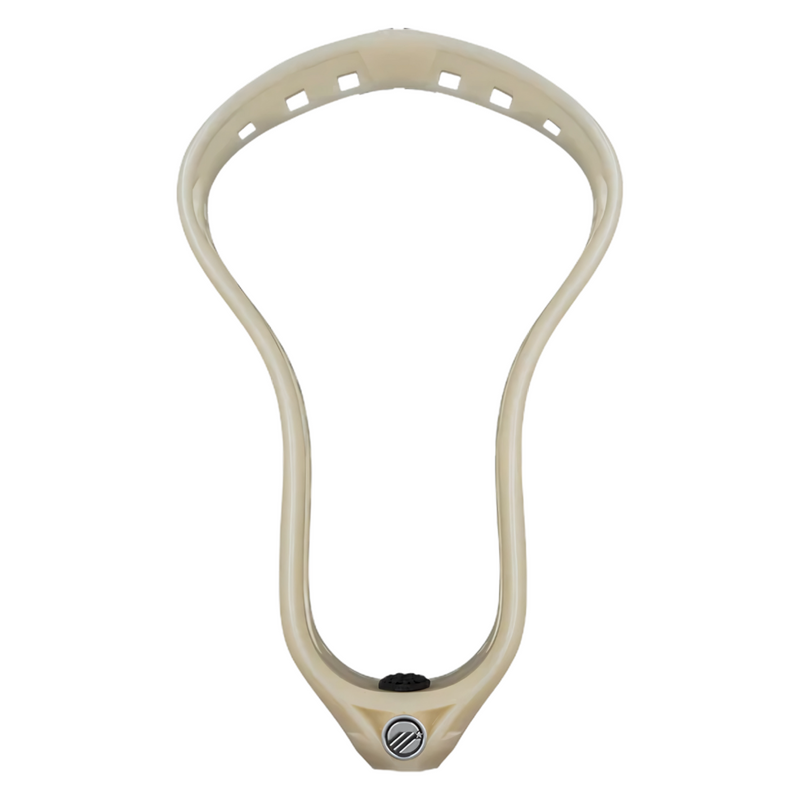
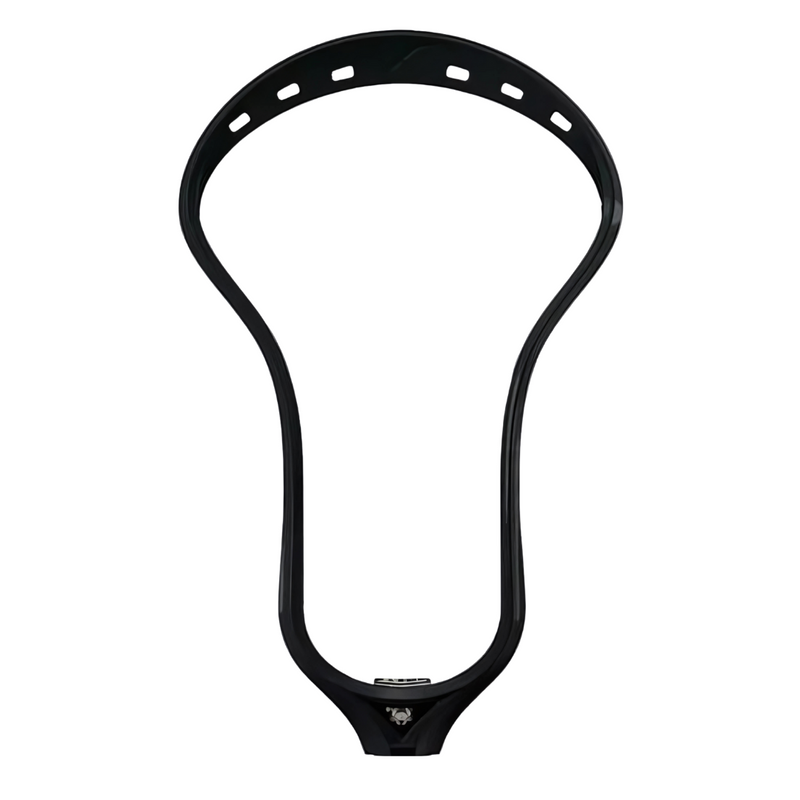
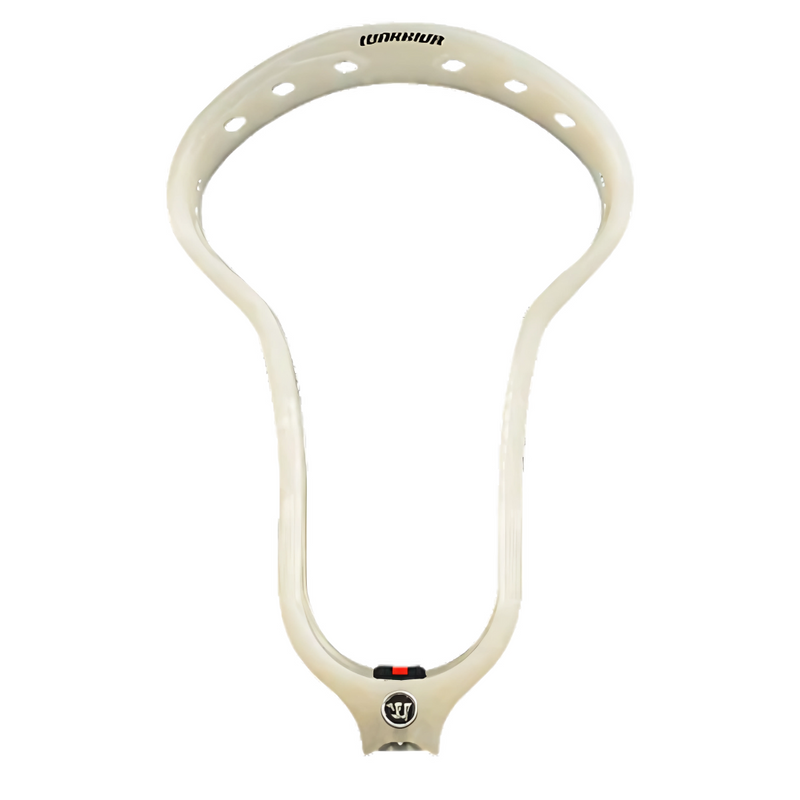
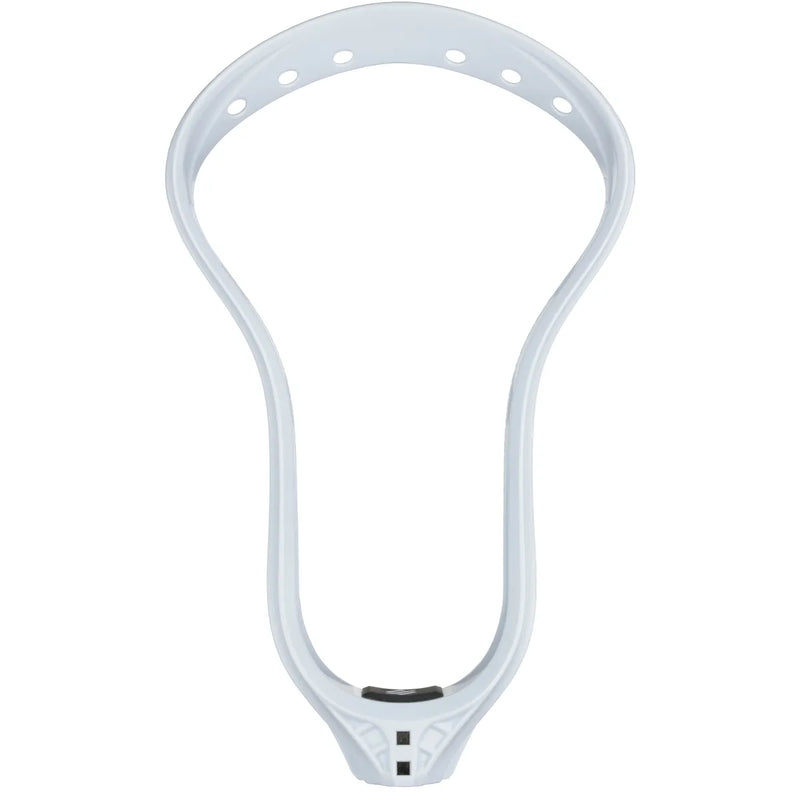
We may receive a commission if you make a purchase through a link on this page about the Maverik M6 glove review at no cost to you. This helps us keep this site free & we appreciate your support!
Palm, Fit, & Mobility
After years of coaching, from box floors up in Canada to summer turf in Virginia Beach, I can tell you the first thing I look at on a kid’s gear is his gloves. Not the head, not the shaft. The gloves. If a player can’t feel his twig, nothing else matters. His cradle gets sloppy, his stick protection falls apart in traffic, and he’s dropping GBs he should be winning.
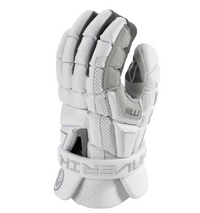
That’s why the new CONNEKT PALM on the M6 is the headline here. Maverik built this glove as the next step from the M5, which was already one of the most popular gloves in the game. They kept the classic fit players already liked and rebuilt the palm for a more precise feel on the stick. They also claim a 30% durability improvement, and that matters. Palms are always the first thing to go. Anyone who has watched a glove blow out in the first month of the season knows the pain.
Mobility is the other big piece. The M6 uses DuraStretch panels that flex in three directions, so the glove moves with your hand instead of fighting it. When you’re rolling a dodge, protecting your stick top side, or snapping a quick feed off the crease, you want a glove that doesn’t restrict your wrists. A stiff glove makes players cradle like robots, and I’ve seen it slow down a lot of otherwise good stick skills.
Cuff, Ventilation, & Moisture Control
The adjustable cuff is something I really like. You can run it closed for more wrist and forearm protection, or open it up in a flared fit for more range of motion. That gives you real flexibility based on how you play:
Closed fit: a good choice for defensemen, LSMs, and anyone who lives in the alley taking and giving checks.
Flared fit: better for attackmen and middies who want to move their wrists freely on the dodge and shoot.
Heat is the other thing nobody talks about until it’s July in Virginia Beach and the kids are playing three games in a weekend. The M6 has FlowCool venting on the back of the hand to let heat out, and a QuickDry liner that helps sweat evaporate faster. A glove that stays drier keeps its feel deeper into a game, and it keeps your bag from smelling like a locker room after a tournament. (If yours already does, here’s how to clean lacrosse gloves the right way.)
The M6 comes in White and Black. That’s it, which will disappoint players who want a loud colorway. But both are clean, and either one matches just about any uniform. Black is the safe pick that never looks out of place. White looks sharp and stands out when you’re dishing in transition.
Pros & Cons of the Maverik M6
Pros
New CONNEKT PALM improves stick feel
Palm durability improved by 30% over the previous model
DuraStretch panels give 3 way mobility
Adjustable cuff lets you choose protection or range of motion
FlowCool venting and QuickDry liner handle heat and sweat
This glove works for almost any field player, no matter which of the lacrosse positions you line up at. Attackmen get the feel they need for quick stick work around the crease. Middies get a glove that holds up through long shifts and plenty of transition running. Defensemen can run the closed cuff for extra protection while still being able to cradle and clear without fighting the glove.
If you wore the M5 and liked it, this is an easy upgrade. You already know the fit, and you get a better palm. It’s also a strong pick for high school and college players who want gear that matches how hard they play. Not sure on size? Check our lacrosse glove sizing chart before you order.
If you’re just starting out or your budget is tight, a cheaper glove will do the job while you’re learning the game. Our best lacrosse gloves roundup has options at every price. But if you play a lot and want gloves that last and feel right in your hands, the M6 is worth the money.
Final Thoughts
The M6 doesn’t try to reinvent the glove, and that’s a good thing. Maverik took a proven fit and fixed the part that matters most, the palm. Add the DuraStretch mobility, adjustable cuff, and good ventilation, and you have a glove I’d feel comfortable handing to just about any player I coach. At the current sale price, it’s a smart buy.
A stiff, accurate do-it-all midfield head with a mid pocket, Control Core and Ground Scoop tech. Here's how it plays from the cage to the defensive end.
CSConnor Stifel · Heads · Updated October 23, 2026 · 7 min read
Drip score8.7/ 10
LaxDrip verdict: a versatile, stiff midfield head that catches, cradles and scoops like a dream and checks better than most offensive heads. It gives up a little shot speed.
Ever since the Tactik 3.0 hit the shelves in 2022, I've wanted to try it. My interest really got piqued when I watched a video of Logan Wisnauskas using it.
Having used the Tactik 2.0 before, I noticed the big updates and improvements right away.
The Tactik series is built for all-purpose, do-it-all midfielders who like to create space and make plays with quick decisions. Like the Tactik 2.0, the 3.0 is ideal for short-range shooters and accurate passers.
But I think the new tech and upgrades make it the best offensive midfield head in the Tactik line for moving between offense and defense.
Coach's note: The two-way middie is the guy I trust most on the field, whether it's an upstate New York playoff game, a Virginia Beach summer tournament or a night in an Ontario box. He needs a head that feeds, shoots on the run and can still throw a check when the ball turns over. That's exactly the job the Tactik was built for.
Shot and Pass Accuracy
The Tactik 3.0 has a slightly tight throat and face. Thanks to the Level 3 Rail and the mid pocket, I could feel the head building power for precise shots and passes.
My shots were a little slower than I like as an attackman. But since this head is built for mid-range shooters, it wasn't a problem.
Compared to the Tactik 2.0, the 3.0 is a bit lighter at 5.1 oz. The weight difference was small for me, but I liked that Maverik didn't give up any stiffness or durability. It's made with Maverik's DuraTough plastic, which holds up to pressure and harsh weather, summer and winter.
I liked the stiffness, because it gave me confidence shooting in the offensive zone during intense play. I tried to bend the head with one hand, and it resisted warping well.
The release point is dialed in for super-quick plays. With the right skills, you'll be a threat to score or feed.
The Tactik 3.0 gave me excellent ball control, but I felt it lacked a little shooting power.
If you want a midfield head built for high-speed shooting, consider the STX Surgeon 700 or the stiffer StringKing Mark 3V Head ($119.99). But if control and feel are your priorities, the Tactik 3.0 is definitely worth a look.
Catching and Cradling
It's no exaggeration to say the Tactik 3.0 gave me superior ball control when catching and cradling. This is where Control Core technology shines. It gave me a great feel and responsiveness.
If you're not familiar with Control Core, it uses specific materials and design to cut down vibration and unnecessary ball movement in the head for a more controlled feel.
I consistently found a reliable catching spot in the mid pocket and felt stable cradling. The Level 3 Rail, with medium stiffness and support, struck a good balance between rigidity for consistent control and flex for handling.
The 3 struts placed in each sidewall added strength, durability and stability. Hands down, it beat my expectations in the catch-and-cradle department.
Checking
The Tactik 3.0 was a strong performer in checking situations. Its stiff build let me throw punishing, aggressive checks. The stiff build and curved scoop worked really well together, and I won 8 out of 10 checks, which was pretty impressive.
As a middie, a stiffer head is crucial, unlike the StringKing Mark 2, which falls short on checks because it's more flexible.
The stiffness, plus the Level 3 Rail's stiffness and durability, let me make aggressive plays and win possession. I liked the funnel-shaped scoop, which helped me keep the ball in the tight channel and made it tough for opponents to get it back.
Thanks to the light weight and the somewhat flatter offset, I could throw quick stick checks and win the ball with minimal wind-up. For an offensive midfield head, checking this well is a nice bonus.
The Tactik 3.0 has a curved scoop with Ground Scoop technology, and I noticed the upgrade right away. The scoop funneled the ball toward the mid pocket, and the head's width let me scoop even the toughest bounces.
The scoop angle meant I had to crouch a little lower to scoop cleanly, but I never worried about the ball bouncing off the head.
What impressed me most was the head's balance of rigidity and flex. It stayed rigid enough to hold its shape and stay stable, but flexed enough to absorb impact and avoid warping.
That said, the Tactik 3.0 isn't designed for faceoffs, so I wouldn't use it to take draws. See our best faceoff heads instead.
Shop the Tactik 3.0 and midfield gear at BattleLax
Yes. It's built for do-it-all midfielders, with a mid pocket, great accuracy and enough stiffness to check.
How much does the Maverik Tactik 3.0 weigh?
About 5.1 oz, a little lighter than the Tactik 2.0.
Can you face off with the Tactik 3.0?
It's not designed for faceoffs, so we don't recommend it for taking draws.
When did the Maverik Tactik 3.0 come out?
In 2022.
Where can I buy the Maverik Tactik 3.0?
BattleLax carries the Tactik 3.0 for $109.99.
Final Remarks
I found the Maverik Tactik 3.0 incredibly easy to catch and scoop with. Based on my experience, mid-range shooters will love how it performs. Catching, cradling, passing, shooting and scooping, this head won't let you down on the field.
A light, stiff attack head with tons of sidewall holes, a tight face and a low offset built for dodgers and feeders. Here's everything you need to know, plus where to get the newest Optik today.
CSConnor Stifel · Heads · Updated October 23, 2026 · 6 min read
Best forAttackdodgers & feeders
LaxDrip verdict: a light, stiff, durable attack head with a great scoop and a low offset for a quick, smooth release. BattleLax carries the newer Optik Force.
I may receive a commission if you make a purchase through a link on this page at no cost to you. This helps me keep this site free & I appreciate your support!
Overview
One of our top-rated attack heads: light, strong, loaded with sidewall holes and a tight face shape.
Of all the attack heads we've reviewed here at LaxDrip, the Maverik Optik 2.0 has long been one of our favorites, and Maverik has kept building on it with the Optik 3.0 and now the Maverik Optik Force Head.
The updated version of the original Optik has everything you want in an attack head: light weight, high stiffness and durability, a great scoop and an offset that makes for a nice low to mid-low pocket.
If you're a dodging and feeding attackman, the Optik 2.0 is one of the best heads you can play with, in my opinion.
This review covers everything you need to know about this awesome head so you can decide if it's right for you.
Coach's note: I've seen the Optik in the hands of a lot of X attackmen, from upstate New York to Virginia Beach. Guys who live behind the cage and feed the crease love a low pocket that sits tight on the dodge and comes out clean on the dump. Ontario box shooters like it for the same reason: quick hands in tight spaces. If that's your game, the Optik line is worth a look.
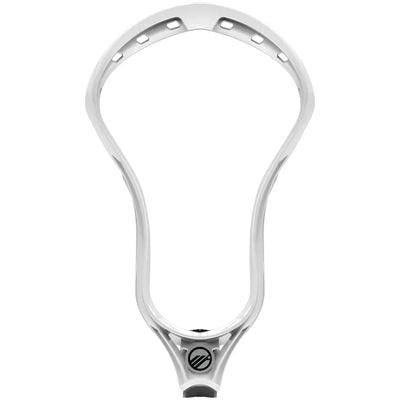
The Optik 2.0 has a fairly tight face shape. It's very pinched toward the throat and gradually widens until about three-quarters of the way up the head, where it flares out more dramatically.
Its max offset is around the bottom third of the head, which makes it ideal for low to mid-low pockets. A lot of attackmen prefer those because they're great for one-handed cradling and give you a quick, smooth release.
X-Rail Technology in the sidewall struts adds stiffness while cutting weight. It looks like Maverik cut out material in other spots compared to the original Optik to drop the weight even more. And the Duratough material keeps the head stiff even on hot summer days.
Scoop
When I tested my buddy's Optik 2.0, the scoop felt great. Ground balls were a breeze no matter what angle I came at the ball from or where it was along the scoop.
The scoop has a pretty sharp angle, so it's easy to grab GBs without getting the butt end of your stick super close to the ground.
If I had to pick the Optik 2.0's biggest flaw, it would probably be the number of stringing holes.
There are still a good amount (16 sidewall holes per side), but not quite as many as other elite heads today. That's especially true toward the top of the head, where the first 5 holes are pretty big and take up a lot of space.
It may take a bit to figure out how to string your ideal pocket in the Optik 2.0, but I don't think the slightly smaller number of sidewall holes is a reason to skip this head. Grab the ECD Hero 4.0 Complete Kit ($34.99) and get to work.
One more thing about the sidewall holes: they have Maverik's Tension Lock technology, which lets you pull the mesh closer and tighter to the sidewalls.
Tight face shape: The narrow face, especially toward the throat, gives you good hold, accuracy and consistency.
Stiff and durable: Many attack heads give up stiffness and durability to be light. Not the Optik 2.0. Its advanced design gives you more stiffness with less material.
Great scoop: As mentioned above, the scoop makes ground balls easy from all kinds of angles.
Variety of colors: Choose from white, black, gray and blue.
Cons
Fewer stringing holes: 16 per side is less than many newer elite heads, and the top holes are large.
Not for faceoffs: It isn't designed for the X.
Older model: Maverik has since released the Optik 3.0 and the Optik Force.
Who is the Maverik Optik 2.0 best for?
The Optik 2.0 has been at the top of our best attack heads list for a reason: it's best for attackmen, especially those who like to initiate the offense.
The max offset low on the head makes for a great low pocket for one-handed cradling and a smooth, quick release. The stiffness and durability also make sure it won't bend on ground balls or when you get checked.
It's also a solid choice for middies who like lower pockets. The one exception is faceoff middies, since this head isn't known or designed for faceoffs (see our favorite faceoff heads).
Yes. It's light, stiff and durable, with a tight face and a low offset that's great for one-handed cradling and a quick release.
How much does the Maverik Optik 2.0 weigh?
About 4.75 oz, which makes it one of the lighter attack heads out there.
What pocket is best for the Optik 2.0?
A low to mid-low pocket, since the max offset sits around the bottom third of the head.
Can you face off with the Maverik Optik 2.0?
It's not built for faceoffs. Look at a dedicated faceoff head instead.
Does BattleLax carry the Maverik Optik 2.0?
BattleLax carries the newer Maverik Optik Force head and the Optik 2 Alloy Complete Stick.
Final word
The Maverik Optik 2.0 is light, stiff and durable, with a tight face, a great scoop and a low offset built for dodging and feeding. If that's how you play, the Optik line belongs in your bag, and the newer Optik Force is the one you can grab today.
A high-level faceoff head built to dominate at the X and on the offensive end. Here's how it plays, how it holds up and where to get the newest Weapon X today.
CSConnor Stifel · Heads · Updated November 19, 2026 · 7 min read
Best forFOGO& two-way middies
LaxDrip verdict: a faceoff head that flexes every way you need, snaps back after every draw and still plays great on offense. Give it time to break in. BattleLax carries the newer Weapon X 2.0.
I may receive a commission if you make a purchase through a link on this page at no cost to you. This helps me keep this site free & I appreciate your support!
Overview
A high-level faceoff head designed to dominate both at the X and on the offensive side of the field.
When I was deciding which faceoff head to buy a few months ago, I went with the ECD Weapon X, and I couldn't be happier with my decision. It's marketed as a faceoff head, but it performs well all over the field.
It has all the great features of a typical offensive head: a tight face shape, full offset, an amazing scoop and plenty of sidewall holes so you can customize your pocket however you like.
At the X, the Weapon X holds its shape extremely well, and you can flex it in a variety of ways, which makes it a great option for every style of facing off. Its asymmetric sidewalls let it flex easily without giving up strength or durability.
This ECD Weapon X review covers everything you need to know about this elite head so you can decide if it's the right choice for you.
Coach's note: I've watched faceoff guys battle at the X from the box barns in Ontario to the high school fields in upstate New York and Virginia Beach, and the ones who win the possession game all say the same thing: the head has to clamp, pinch and pop, then snap right back for the next draw. A FOGO who can also carry it to the cage is gold. That's exactly what the Weapon X was built for.
Heads up: ECD has since released the Weapon X 2.0, and that's the version BattleLax carries now. Read our full ECD Weapon X 2.0 review to see what changed.
The Weapon X has a fairly tight face shape and full offset.
The bottom half of the head is about as pinched as it can legally be, hovering just over the 3-inch minimum. From there, it flares out pretty sharply until it reaches about 6.5 inches near the scoop.
The narrow face and full offset are also what make this a great offensive head. The narrow face makes it easy to string a consistent pocket with good hold, which serves you well when you're carrying the ball, dodging and shooting.
If you're used to offset heads, the Weapon X should feel natural. Many other faceoff heads have no offset or only a small one, which can feel funky if you're used to offset heads.
Scoop
The scoop might be my favorite part of the ECD Weapon X. It sucks up ground balls from all kinds of angles with ease.
It's slightly rounded and sits at an angle of around 45 degrees, so you can pick up ground balls without getting the butt end of your stick close to the ground. That matters at the X, where the draw usually turns into a ground ball scrum.
I have no trouble scooping balls even when my head is nearly perpendicular to the ground or the ball isn't centered on the scoop.
Throat
Like a lot of other faceoff-specific heads, the Weapon X has a throat plug to add durability and reduce head wobble. The plug should fit all standard shafts except solid carbon fiber ones. Pair it with a dedicated faceoff shaft like the StringKing Composite 3 Pro Faceoff Shaft ($159.99).
The throat is also shorter than a standard throat, so you can get your top hand closer to the ball. That gives you more power and control, a big advantage over players using standard-length throats.
Stringing Holes
The ECD Weapon X has plenty of stringing holes, so you can customize your pocket however you like. In total, there are 6 top string holes, 15 sidewall holes per side and 4 bottom string holes.
Most of the sidewall holes are oval and pretty large. The top 3 sidewall holes on each side are more rectangular, so you can wrap the string around them a few times if you want. Need fresh mesh? Grab the ECD Hero 4.0 Semi-Hard Mesh ($24.99), and see our best lacrosse mesh guide and how to break in lacrosse mesh.
What makes the ECD Weapon X one of the best faceoff heads available is how many ways it flexes and its outstanding warp resistance, two things that usually work against each other. A lot of that comes from the asymmetrical sidewall design, which lets it flex where it needs to while keeping its rigidity and strength.
Out of the box, it's actually pretty stiff compared to some other heads, like the Brine Dictator. Once you start facing off with it, though, it breaks in nicely and gets more flexible.
Once it's broken in, it flexes in almost any way you need. It does a great job collapsing down on the ball, so you can pinch the ball in the back of the stick and push it forward or exit behind easily. Most heads mainly face flex or oblique flex, but the Weapon X can do both.
A lot of faceoff heads that collapse well on the ball have one major issue: durability. They warp easily, which makes them hard to use on offense. A great example is the Nike CEO. It's arguably one of the best faceoff heads ever made, but it warps so badly so quickly that it's useless for the rest of field play.
The Weapon X has amazing warp resistance. After every faceoff, it snaps back into place. After 3 months of use (as of when I first wrote this), mine has barely any warping.
If you take faceoffs, the ECD Weapon X is a great choice, whether you're a FOGO or you stay on the field for offense. Its warp resistance and the way it crushes down on the ball make it competitive with any faceoff head for pure facing off. Its great scoop, tight face shape and full offset make it more than capable on the offensive end.
If you need a faceoff head for a game tomorrow, though, the Weapon X may not be the best option straight out of the box, since it takes a bit to break in. Ideally, give yourself time to take practice draws, break it in and get used to the feel.
Here are some of the best parts and biggest drawbacks of the ECD Weapon X to consider if you're deciding whether to buy one.
Pros
Great for offense: As mentioned a few times, the Weapon X is great on offense thanks to its full offset and tight face shape.
Great warp resistance: Compared to most other faceoff heads, it holds its shape much better and always snaps back into place.
Flexes multiple ways: Once it's broken in, it flexes on the ball in almost any way. It "grabs" the ball really well, which makes it great for pinch and pops.
Throat built for faceoffs: The shorter throat gets your glove closer to the head, and the throat plug adds strength and keeps the head from rattling.
Lots of stringing holes: Plenty of nicely sized holes so you can customize your pocket.
Amazing scoop: The scoop's angle and shape make it easy to pick up ground balls from all kinds of angles without getting super low.
Cons
Heavier than some alternatives: At about 5.6 oz, the Weapon X is heavier than lighter faceoff heads like the StringKing Mark 2F. See our lightest lacrosse heads.
Takes time to break in: This isn't a head you'll want to take game draws with right away, since it needs some time to break in.
Keep in mind I'd been using it for about 3 months at this point. I hadn't taken a ton of faceoffs with it, but definitely 100+. This should give you a better idea of how little it warps.
I'll try to update this page over time so you can see how the warping changes.
Shop faceoff gear at BattleLax
BattleLax carries the newest Weapon X, plus these faceoff heads and add-ons.
Yes. It holds its shape extremely well, flexes in multiple ways once it's broken in and snaps back after every draw, which makes it one of the best faceoff heads around.
Can you use the ECD Weapon X on offense?
Yes. Its tight face shape, full offset and great scoop make it a legit offensive head, so it works for faceoff middies who stay on the field.
How much does the ECD Weapon X weigh?
About 5.6 oz, which is heavier than some lighter faceoff heads.
Does the Weapon X need to be broken in?
Yes. It's fairly stiff out of the box. Take practice draws with it before you use it in a game.
Does BattleLax carry the ECD Weapon X?
BattleLax carries the newer ECD Weapon X 2.0, plus faceoff heads like the Warrior Burn FO and Gait Faceoff Stiff and the StringKing Composite 3 Pro Faceoff shaft.
The best cheap lacrosse heads for attack, midfield, defense and goalie that give your wallet a break without hurting your game, plus what to look for and what's in stock at BattleLax.
CSConnor Stifel · Heads · Updated November 24, 2026 · 13 min read
Cheapest head$89.99
LaxDrip verdict: clearance heads like the Surgeon 700, King 2 and X10 still play great. Want new? Most quality heads at BattleLax run about $99.99, and the Warrior Burn FO is $89.99.
We may receive a commission if you make a purchase through a link on this page at no cost to you. This helps us keep this site free & we appreciate your support!
A lacrosse stick without a head is just a fancy, overpriced shower rod. There's no better way to say it: the head is the most important part of your stick. It's your connection to the ball, and it matters as much to a lacrosse player as a glove does to a baseball player.
With importance comes price, though, and a head can easily become a budget-breaker if you don't take the time to find good deals.
To help you out, we've done the legwork to find cheaper, quality heads worth your consideration. This guide covers the best cheap lacrosse heads available that give your wallet some relief at a time when relief isn't easy to come by.
Coach's note: I've seen it in every program I've been around, from the box barns in Ontario to the high school fields in upstate New York and Virginia Beach: the kid with last year's head and a good pocket outplays the kid with the newest head every time. You don't need the shiniest gear. You need a head that fits your position, strung right, and a lot of wall ball.
Best Cheap Lacrosse Heads
The head is the meatball to lacrosse's spaghetti, and there are a ton of options out there, with just as many that earn the "cheap" label. Many retailers put heads on clearance to make room for newer models.
We've done the heavy lifting, combing through cheap heads for attackmen and middies, defensemen and goalies to find the value that helps your wallet and your game. Tap a head to jump to its review.
BattleLax doesn't carry these older models, so each button goes to the closest head BattleLax has in stock.
Cheap Attack & Midfield Heads
1) STX Surgeon 700 Best for attack
Drip level 4.6/5Brand STXWeight 5.55 ozThroat Short, with plugStringing holes 20 per sidewall, 7 on top
STX released the Surgeon 700 in 2018 as a premium head built to take a leap forward in on-field control and durability. It proved both over its run, and it's since become an affordable, discounted, but still top-shelf option.
STX built the Surgeon 700 for improved stiffness and toughness that holds up in extreme temperatures and weather. The scoop-enhanced tip and throat plug give you confidence in the stick's feel and in tight quarters.
As stiff as the Surgeon 700 is, that rigidity doesn't carry over to the string game. A huge number of sidewall holes and an added "Channel Lock" point at the very top let you customize your stringing and place your pocket exactly where you want it.
The major on-field knock is weight. The Surgeon 700 sits on the heavy end for an attack head, and the throat plug may not fit carbon fiber shafts.
It's an older head, but the Surgeon 700 is still quality at its price and worth a look for attackmen who don't want to break the bank.
Pros
Improved toughness and durability
Easy to form different pockets
Great scoop makes ground balls a breeze
Reduced head rattle
Cons
Heavy for an attack head
Older generation head (2018)
Throat plug may limit your shaft choice
BattleLax pick: BattleLax doesn't carry the STX Surgeon 700. For an attack head in the same price range, go with the Warrior Evo V Unstrung Head ($99.99).
Drip level 4.6/5Brand STXWeight 5.0 ozThroat StandardStringing holes 14 per sidewall, 6 on top
Another STX head, the Stallion U 550 is one of the older heads out there, but it's still going strong.
The Stallion U 550 is all about flex thanks to its dual sidewall design. It gives you the leverage for hard checks and tight ground balls while keeping your scoop and shot stable. A mid-high to high pocket gives you more whip and hold, which makes it a great utility weapon for a box-to-box middie who also shoots a lot.
The flip side of that flex is some cracking and warping with extended use. The dual sidewalls have a shelf life and can crack on a hard check or a big bend on a ground ball. Warping is more of an issue for FOGOs, since one too many scrums at the X can leave the head a bit lopsided.
Still, the Stallion U 550 has stayed relevant for years for a reason. It's an affordable, high-level head for middies who love a good poke check as much as ripping a top-corner shot.
Pros
Versatile enough for multiple positions
Great for mid to mid-high pockets
Stays stiff in all weather
Decently light
Cons
Older generation head
Sidewall cracking issues
Warps with prolonged faceoff use
BattleLax pick: BattleLax doesn't carry the STX Stallion U 550. For a two-way middie head, go with the Warrior Evo QX-O Head ($99.99).
Drip level 4.4/5Brand StringKingWeight 4.94 ozThroat StandardStringing holes 19 per sidewall, 6 on top
As a long pole who dabbled at LSM and appreciates a good poke check, I couldn't pass up putting the StringKing Mark 1 on this list.
In stark contrast to the Stallion 550, the Mark 1 is an ultra-stiff head that puts consistency in play and feel above everything else. That stiffness pairs with an aggressive scoop that makes ground balls a breeze.
It's stiff and durable, but still light, at just under 5 ounces, which makes it a solid box-to-box option, especially for an LSM.
The rub is that it's not a great faceoff head. Ultra-stiff isn't what you want when you're trying to plunge on a faceoff. Early Mark 1s also had an adhesive issue with the ball stop, which StringKing has mostly fixed.
Overall, the Mark 1's consistency and stiffness make it a great option for long poles who want to leave a lasting impression on their man, and for shorties who value quick ball movement and feeding around the crease.
Pros
Ultra-stiff construction for consistency
Rounded scoop is great for ground balls
Versatile stringing
Lightweight and durable
Cons
Adhesive issues on early ball stops
Too stiff for many faceoff guys
BattleLax pick: BattleLax doesn't carry the StringKing Mark 1. For a stiff, light head in the same price range, go with the ECD DNA 2.0 Unstrung Head ($99.99).
Drip level 4.4/5Brand BrineWeight 5.2 ozThroat Standard length, with throat plugStringing holes 17 per sidewall, 6 on top
We round out the offensive list with the classic Brine King 2, which has had a long run on the field for good reason.
The King 2 adds sidewall and topside reinforcement to keep the head's shape rigid in any weather. That gives you dependable, consistent scooping and throwing, which makes it a great pick for attackmen and middies.
A lock throat cuts down on rattle and pairs with a more pinched throat for ball security, whether you're in a full cradle or a one-handed dodge. Those features also give you a quick-snap release that's great for fast ball movement.
The main knock is that it's a bit heavy for an attack head, which is the price you pay for durability. The lock throat also doesn't fit every shaft (mainly carbon fiber), so do some extra research before adding it to your arsenal.
Overall, the King 2 is a great, versatile head for attackmen, middies and LSMs alike, and you can often find it discounted.
Pros
Scoop design for easier ground balls
Sidewall and topside reinforcement for rigidity
Pinched design improves control
Throat plug minimizes rattle
Cons
Heavy for an attack head
Doesn't fit certain shafts
BattleLax pick: BattleLax doesn't carry the Brine King 2. For a versatile head for attack and midfield, go with the Gait Mustang Unstrung Head ($99.99).
Drip level 4.6/5Brand STXWeight 5.4 ozThroat ShortStringing holes 13 per sidewall, 4 on top
STX enters the fray on the defensive end with the X10, the perfect weapon in your war on attackmen's ribs and forearms.
An ultra-stiff build checks hard and scoops better than the competition, which makes it a great addition for any pole. Its wider surface area also makes it an intrusive force in the passing lanes.
The mid-high pocket and defensive chops make this head a force for turning defense into offense, with quick outlet passes up to your middies.
The X10 is an older head that debuted in 2012, and long-term use has exposed some bending and warping problems.
Still, it's a great head to consider, especially for top-of-the-box poles who like to chop down passes and slam checks on charging middies.
Pros
Extra stiff for harder checks
Wide face helps you intercept passes and lay checks
Good for mid-high to high pockets
Cons
Older generation head (2012)
Bends and warps with prolonged use
BattleLax pick: BattleLax doesn't carry the STX X10. For a stiff defense head, go with the Gait Torq 3 Unstrung Defense Head ($99.99).
Drip level 4.4/5Brand BrineWeight 6.2 ozThroat Standard, with throat plugStringing holes 17 per sidewall, 6 on top
The defensive counterpart to the Brine King 2, the King 2 ST (ST stands for stiff) is another affordable top-shelf head from Brine.
It adds even more stiffness to an already rigid design, so every check and scoop is as reliable as the hundred before it.
The same throat lock as the King 2 eliminates the rattle that can mess with a pole's feel for the ball and gives you confidence in your control.
Like the King 2, though, the ST is heavy even for a defensive head, at well over six ounces. The lock throat also doesn't fit every shaft, so do some research before you buy.
Overall, with the added weight, this is a solid, durable head for a close pole who doesn't mind the extra heft.
Pros
Good scoop for ground balls
Sidewall and topside reinforcement for rigidity
Stays stiff in any weather
Throat plug minimizes rattle
Cons
Heavy even for defense
Doesn't fit certain shafts
BattleLax pick: BattleLax doesn't carry the Brine King 2 ST. For a tough, stiff defense head, go with the Maverik Tank 2.0 Defense Head ($109.99).
Drip level 4.2/5Brand AdidasWeight 5.85 ozThroat ShortStringing holes 15 per sidewall, 6 on top
Our last defensive pick comes from… Adidas? For real? Yes, your eyes aren't deceiving you. The Blockade is an Adidas head and our last great affordable option for D poles.
It's a pretty standard defensive head with plenty of sidewall space to customize its hold. The real positive is how much of a blank canvas it is for dressing up your pocket.
Reinforced sidewalls add stiffness, while some flex along the scoop gives you maneuverability on tight ground balls.
The main knock is that it's an Adidas head. As well known as the company is, its run in lacrosse was short, and Adidas has since stepped back from the sport, so don't expect updates or support.
Still, the Blockade is one of the more affordable heads on our list and a great traditional option for a backup pole or a young player cutting his teeth on the defensive end.
Pros
Balances flex, weight and durability
Reinforced sidewalls for stiffness
Recessed channels along the top protect your strings
Heavily discounted
Cons
Older generation head
Adidas is no longer in lacrosse
BattleLax pick: BattleLax doesn't carry the Adidas Blockade. For an affordable D head that's still supported, go with the Gait Torq 3 Unstrung Defense Head ($99.99).
Drip level 4.4/5Weight 11.3 ozThroat Standard length, with some grip pointsStringing holes ManyReleased 2014
The Brine Eraser 2 is an ultra-affordable option at a position where specialized gear can break the bank. It strings easily for a goalie head and lets you customize your pocket, which is huge for a keeper who likes to start the break.
The drawback is durability. Heavy in-season use will likely wear it out. Users have reported warping and even full breakage after just a few months.
The Eraser 2 is a decent option as a backup head or for a player just dipping his toes into life in the cage.
BattleLax pick: BattleLax doesn't carry the Brine Eraser 2. For an affordable goalie head you can order today, go with the Warrior Nemesis Lite Goalie Head ($99.99).
Drip level 4/5Weight 12.6 ozThroat Ergonomic, for better grip and wrist mobilityStringing holes AverageReleased 2013
The STX Shield really pushes the limits of "affordable," but given what goalie heads cost, it's relatively cheap.
It's a light head that's shown real accuracy on those all-important outlet passes. Reinforcement along the head adds sturdiness that won't back down from a hard shot.
On the market for years now, the STX Shield is a trustworthy weapon for a keeper between the pipes, with real reliability at a relatively cheap price.
BattleLax pick: BattleLax doesn't carry the STX Shield. For a sturdy goalie head, go with the ECD Impact Goalie Head ($109.99).
Want a head you can order today? These are the most affordable heads BattleLax carries right now. Take faceoffs? The Warrior Burn FO Head ($89.99) is the cheapest of the bunch. See our best faceoff heads for more.
Prices and stock change, so check the product page before you order.
How to Choose a Cheap Lacrosse Head
Every year brings another wave of cheap heads discounted or put on clearance to make room for that season's new crop. That floods the market with options, which is a very good problem to have.
You need the right tools to find a head that's not only affordable but fits your game and position. Here's what to consider when choosing the head that works best for you.
Your position
This is the biggest key to the whole equation, because it shapes every other category. Different positions need different things from a head, so think about yours before you click buy.
Below, we point out which features suit attack, middie, defense or goalie as we run through what to consider.
Shape
Shape is the first thing you'll notice scrolling through thumbnail after thumbnail of heads. It's the literal structure of the head from top to bottom.
As a rule of thumb, attackmen and anyone carrying the ball for long stretches want more pinch. That helps ball retention, which is at a premium for offensive players.
Defensemen prefer wider heads that give them more surface area for laying checks and knocking down passes. See our best defensive lacrosse heads for more.
Weight
Weight says a lot about what a head is built for. Attackmen want lighter heads so they can move the stick quickly without the extra heft.
Heavier heads lean toward defense, because extra weight usually means more durability and stiffness. Why does that matter to a D pole? All those checks and ground balls demand a sturdy, stiff head that stays rigid under constant use.
Durability
Durability goes hand in hand with flex and stiffness, and how you value them comes down to your position.
As we covered under weight, a heavier head is usually stiffer and lasts longer. That's a must for long poles, since constant checking can eventually warp a head until it's useless if it doesn't have the stiffness the position needs.
Attackmen spend less time checking, so some flex isn't a bad thing. It can help cushion hard passes and plunging on tight ground balls, but it costs you some lifespan.
In the end, attackmen have to accept that being the guy who rips net may come with an actual price: the number of heads you'll buy over your career.
Stringing holes
Keep two things in mind with stringing holes: how many there are and how wide they are.
The number matters for customizing your pocket's shape and position. If you string your own sticks, more is definitely better. Read up on the different types of lacrosse pockets and pick up fresh mesh from our best lacrosse mesh guide.
Hole width matters just as much if you're a double-wrapper who likes extra torque on your sidewall strings. A head like the Brine King 2 gives you a bit more clearance for extra sidewall security.
Scoop
It seems like every head now has some special angle or system on the scoop to help with ground balls, so the small details are what make one stand out.
Shape is one of the main things to look at. Rounded scoops make ground balls easier, especially when you come at the ball from an angle instead of straight on.
Stiffness matters extra for you long poles. A more rigid scoop makes those poke checks sting a little more and gives you the durability the position needs.
Throat plug
This feels like a newer thing to consider when buying a head: a lock or plug in the throat that stabilizes the head, cuts down on rattle and improves control and feel.
Head rattle used to be solved with extra tape, but companies are finally fixing it at the source. A throat plug is a great feature if you want extra sturdiness and dependability in your head. Still taping? Here's how to tape a lacrosse stick.
Be careful, though: locks and plugs aren't one-size-fits-all, and a mismatch can mean buying a new shaft too. Make sure your new head is compatible with the shaft you plan to use.
Most often, throat plugs don't work with solid carbon fiber shafts. Go with a metal or hollow carbon fiber shaft if you want to use a throat plug.
Customer reviews
Last but not least, always check customer reviews and player feedback before you buy. Clearance heads are usually older products, so there's plenty of feedback out there.
Still, do your own research and dig through every forum you can, because a head is an investment you shouldn't take lightly.
And as always, pay it forward. Leave your own feedback on gear you buy, and update it as you use it more.
Complete Your Stick
Here are some other guides that can help you finish your new stick:
Older models like the STX Surgeon 700, StringKing Mark 1 and Brine King 2 often show up on clearance. At BattleLax, quality current heads like the Warrior Evo V, Gait Mustang and ECD DNA 2.0 run around $99.99, and the Warrior Burn FO is $89.99.
Are cheap lacrosse heads worth it?
Yes, if you pick the right one for your position. Many discounted heads were premium heads a season or two ago and still play great.
What should I look for in a cheap defense head?
A wide face, plenty of stiffness and a durable scoop. Heavier heads are usually stiffer and hold up better to constant checking.
Do throat plugs fit every shaft?
No. Throat plugs usually don't fit solid carbon fiber shafts. Use a metal or hollow carbon fiber shaft instead.
Where can I buy cheap lacrosse heads?
BattleLax carries attack, defense, faceoff and goalie heads starting around $89.99. You can also look for used gear; see our guide on where to buy used lacrosse gear.
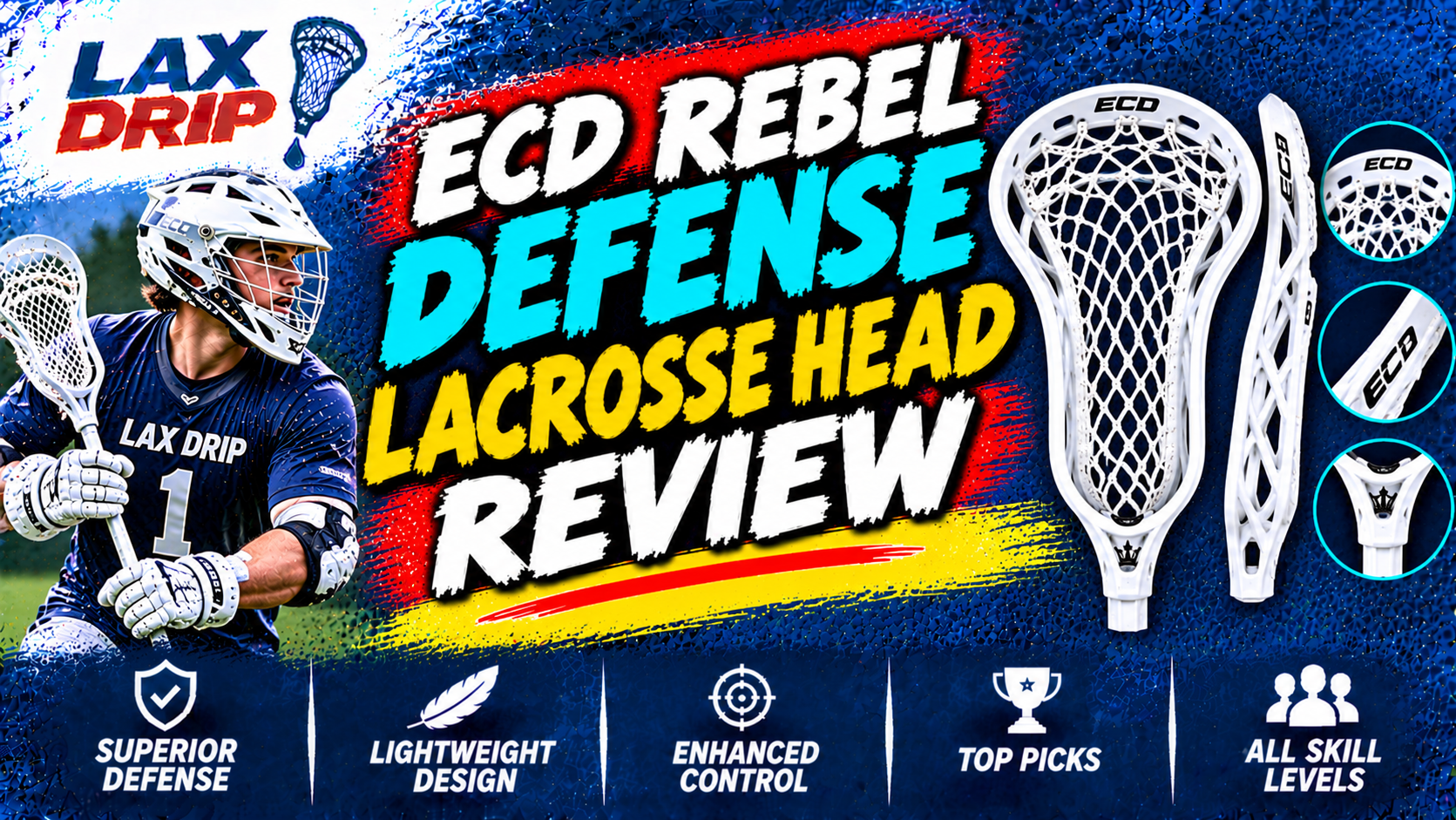
ECD's stiff, hand-strung defense head and the Rebel Defense CF5 complete stick, tested on checks, ground balls, catching and outlets, with its Drip Meter rating and the head to buy today.
CSConnor Stifel · Heads · Updated October 22, 2026 · 7 min read
Drip meter9.0/ 10
LaxDrip verdict: a stiff, durable D head that eats ground balls, takes punishing checks and comes hand strung with a mid pocket. It's on the heavy side with fewer sidewall holes. Can't find one? ECD's newer Delta is in stock at BattleLax.
LaxDrip is reader supported. When you buy through links on this page we may earn a commission at no extra cost to you. How we review.
East Coast Dyes (ECD) has been one of the best lacrosse brands in the game since 2012. The Rebel Defense CF5 complete stick is built for beginner defensemen, or as ECD calls them, Rebels.
Instead of a standard machine string job, this stick is hand strung by pros, with a pocket built to handle punishing checks, ground balls and hard outlet passes.
The Rebel Defense CF5 pairs a stiff, pinched head with ECD's carbon fiber octagonal shaft and a sandpaper grip, and it's strung with semi-hard Hero Mesh 2.0.
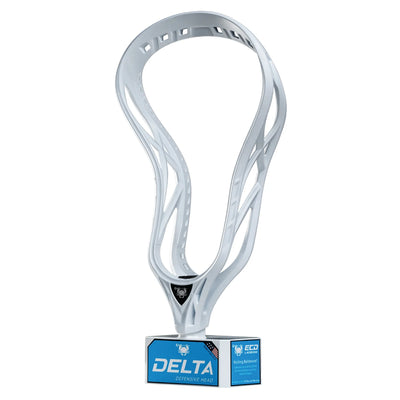
BattleLax pick: BattleLax doesn't carry the Rebel Defense. ECD's newer D head, the ECD Delta ($109.99), is the one they stock. It's lighter, stiffer and has a more aggressive scoop.
Key Features and Specifications
Brand
East Coast Dyes (ECD)
Position
Defense
Level
Beginner to advanced
Weight
About 6.2 oz
Stiffness
Stiff
Pocket
Mid (customizable)
String holes
18 per sidewall, 6 top
Released
2018
Legality
NCAA and NFHS, all levels
Price
$249.99 complete (at launch)
Colors
All Black
All White
Spec
Rebel Defense
Face shape
Pinched throat, wide scoop
Ground pickup
Wide scoop
Ball release
On time
Ease of use
Great for beginners
Spread on shot
Minimal, it's a sharpshooter
Level of play
All
LaxDrip Official Drip Meter Ranking
We rate each category from 0 to 10. The ECD Rebel Defense scores a 9.0/10 overall.
Ground ball pickup10/10
Shooting / accuracy7/10
Cradling / ball security7/10
Catching10/10
Stringability / pocket strength10/10
Durability / checking10/10
Faceoffs6/10
Cost10/10
Passing10/10
Drip / looks / brand10/10
Total9.0/10
Who's This Stick Made For?
The Rebel Defense CF5 is an entry-level elite complete stick for beginner and advanced beginner defensemen. ECD launched it in late 2018, and it's hand strung by pros in the USA for accuracy and consistency.
Coach's note: I've handed young poles their first real stick from upstate New York to Virginia Beach, and up in Ontario where the box kids learn to take a hit before they learn to throw one. A beginner D-man doesn't need gimmicks. He needs a stiff head, a pocket that holds and a pole he trusts. Get those right and he can focus on footwork and approach.
The Head
The Rebel Defense has a rounded, wide scoop and a tight face. Defensemen want stiff heads that can take checks and hard ground ball pickups, and the Rebel D just doesn't bend. That stiffness is perfect for entry-level players.
Shooting, Face Shape and Pocket Location
The Rebel D has an aggressive pinch and a tight face, which gives you extra snap and a lot of control when the game gets intense. It's a sharpshooter, and you can string it a bunch of different ways.
The max offset sits toward the middle of the head, so you can string a mid pocket with a consistent kick point.
Cradling, Passing and Catching
It has a roundish scoop and refined rails. The mid pocket gives you a good mix of ball security, a quick release on passes and enough depth to control the ball while you're working on D.
That makes it versatile. You can catch, cradle and pass efficiently, which is exactly what you need to pick off a pass and start the clear.
Flex, Ground Ball Pickup and Faceoffs
The head is stiff with uniform flex. It doesn't bend, even when you lean your body weight into it.
It's built for defense, but you can also string an elite mid-high pocket. That helps on ground balls and in the midfield, and for the odd time you carry it across and get a look at the cage. It's no faceoff head, though.
Defense, Checking and Knocking the Ball Loose
Years after its release, the Rebel D is still a high-performing defensive head. The mid pocket, wide scoop and stiff build make a perfect combo for D.
It takes punishing checks and slashes without flinching. With this stick in your hands, you can commit fully to winning the ball every time it's on the ground.
Stringing Holes
The Rebel D has 18 sidewall holes on each side and 6 top holes, 42 in all. You can string a mid or mid-high pocket. If you want more holes or a low offset, though, the Rebel D might not be for you. Want to string your own? Grab the ECD Hero 4.0 Semi-Hard Mesh ($24.99) or the ECD Hero 4.0 Complete Kit ($34.99).
Materials, Durability and Weight
The Rebel D is built to take a beating and hold up. The head is stiff, durable plastic, and the CF5 shaft is carbon fiber.
Customization and Looks
The head has an aggressive pinch through the pocket that flares out toward the scoop. Unlike most entry-level sticks covered in colors and logos, it has a clean, minimalist look. If you like sleek gear, this is the one. You can also buy the shaft and the unstrung head separately.
Head Pros & Cons
Pros
Elite mid pocket
Hand strung by pros
Stiff build
Durable and long lasting
Consistent kick point
Semi-hard Hero Mesh 2.0
Cons
Fewer sidewall holes
On the heavy side at about 6.2 oz
The Shaft
The Rebel Defense complete comes on ECD's CF5 carbon fiber shaft. It's on the stiff side, which gives you more power on checks and long outlet passes.
Shape and end cap
It has a standard octagonal shape with an integrated end cap that protects the shaft from wear and tear.
Length
The shaft is 52 inches, a little short of the 60-inch pole most college and high school defensemen use, which makes it easier for younger players to handle.
Colors and grip
It comes in all black or all white with a minimalist ECD logo and a sandpaper grip.
Pros
Octagonal shape
Easy to grip and handle
Light
Integrated end cap
Cons
No adjustable butt end
BattleLax pick: BattleLax doesn't carry the CF5 shaft. For an ECD carbon D pole they stock, go with the ECD Carbon 4.0 Defense Shaft ($199.99).
Shop the Rebel D alternatives at BattleLax
BattleLax doesn't carry the Rebel Defense, but they have ECD's newer D head and everything you need to build a defense stick around it.
The Rebel Defense is ECD's defense head, sold on its own or as the Rebel Defense CF5 complete stick, which pairs it with a carbon fiber pole and hand-strung Hero Mesh. It came out in late 2018.
Is the ECD Rebel Defense good for beginners?
Yes. It's stiff, forgiving on ground balls and comes hand strung with a mid pocket, so beginner and advanced beginner defensemen can pick it up and play right away.
How many stringing holes does the Rebel Defense have?
It has 18 sidewall holes on each side and 6 top holes, 42 in all. That's plenty for a mid or mid-high pocket, but low-pocket fans may want more options.
ECD's newer defense head is the ECD Delta. It's lighter, stiffer and has a more aggressive scoop, and BattleLax carries it.
Final Verdict
The ECD Rebel Defense is a stiff, durable defense head that wins ground balls, takes punishing checks and comes with a pro-strung mid pocket that's ready to play. It's a little heavy and has fewer sidewall holes than some, but it earns its 9.0/10 on the Drip Meter, especially for beginner and advanced beginner poles.
16 attack heads tested for face shape, weight, stiffness, pocket placement and scoop, plus budget picks, the head rules and the heads you can order today at BattleLax.
CSConnor Stifel · Heads · Updated October 22, 2026 · 16 min read
Top pickGAIT
Coach's pick: the Gait Mustang for its big sweet spot, durability and fast shots. Outside shooters should also look hard at the StringKing Mark 3V. Both are in stock at BattleLax.
We may receive a commission if you make a purchase through a link on this page about the best attack lacrosse heads at no cost to you. This helps us keep this site free & we appreciate your support!
A good head and string job matters more for attackmen than any other position on the field.
Attackmen carry the ball, run the offense, dodge one-on-one against poles and shoot all game long. An attack head needs the right balance of durability and light weight, with a face shape that helps your control and accuracy.
To find the best attack heads, I started with 25 options built for attack or offense in general. I looked at what college players use and what sells best, read customer reviews and hit my local lax shops to get them in my own hands. The result is the 16 best attack heads below, including where each one shines and where it falls short.
Coach's note: I've coached attackmen from upstate New York to Virginia Beach, and plenty of box kids up in Ontario who could hide the ball in a phone booth. The best ones never blamed the head. They found one they trusted, strung it the same way every time and lived on the wall. Pick the head that fits how you play, not the one your favorite pro uses.
Heads up: BattleLax carries a lot of these heads, including the Gait Mustang, Optik Force, Torq 3, Mark 3V, Kinetik 3 and Burn XP2-O. For the rest, I point you to the closest head they stock, and you'll find the full list below.
"Buy" goes to the head on BattleLax. "Alt" goes to the closest head BattleLax has in stock. See what the top college programs are playing in the NCAA men's lacrosse rankings.
Best attack lacrosse head reviews
1. Gait Mustang Lacrosse Head Top pick
[wpdatatable id=426]
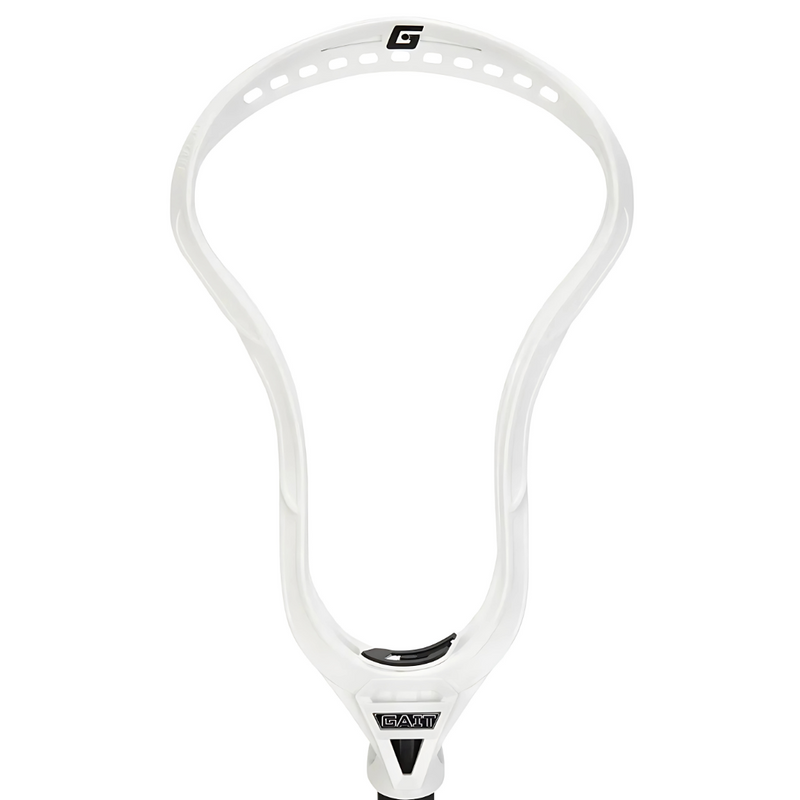
The Gait Mustang has been in my bag of attack heads for two years, and the plastic still doesn't have a mark on it. The wider face and stiff top give you a bigger sweet spot, so it's easier to catch and control passes in traffic.
The pinched sidewalls cut down on spread and make your feeds more accurate. I ripped some long-range shots with it, and it shot faster than the Maverik Optik Force.
It's stiff, so it doesn't give much on checks and doesn't soak up impact well. Still, it helped me hang onto the ball under pressure. The slightly curved, less pinched throat feels secure cradling in tight spaces.
The aggressive scoop and rounded edges make ground balls easy, even in traffic. Gait's Critical Cavity Technology also cuts weight and protects your top lace.
The mid-high pocket and max offset give you great control and feel. It's a chunky-looking head, but the Mustang gives you the perfect mix of stiffness and durability.
See it liveNorthern Soul Sportswear on YouTube
Pros
Slightly flexible sidewalls absorb checks
Fast long-range shots
Very durable
Lots of sidewall holes
Cons
A little heavy
Doesn't absorb impact well
At BattleLax: In stock now. Grab the Gait Mustang ($99.99) straight from BattleLax.
Nike built the Surge Elite with stiff Powerfoam plastic, which makes it great for attackmen. At about 4.7 ounces, it shoots fast and passes accurately.
The slightly pinched sidewalls set up a mid-high pocket and gave me great control for quick releases. The ball stayed centered whether I was feeding on the run or shooting from outside.
The deep offset and aggressive scoop funnel the ball right into the pocket, and the narrow throat and pinched face kept it locked in when I was cradling in traffic.
The rounded scoop helped me pick up ground balls from all kinds of angles without having to get too low.
It felt too stiff the first few games, but once it broke in, it was really responsive on quick feeds and checks. It's not as forgiving as the Nike Lakota 3, but its durability and consistent shooting put it among the top attack heads out there.
See it liveNorthern Soul Sportswear on YouTube
Pros
Fast shots
Minimal spread
Deep offset for easy cradling
Cons
Long break-in
BattleLax pick: BattleLax doesn't carry the Nike Surge Elite. For a stiff, light attack head they stock, go with the StringKing Mark 3A ($119.99).
3. Maverik Optik Force Lacrosse Head Most accurate
[wpdatatable id=428]
Next up is the Maverik Optik Force, the successor to the Optik 3. At about 4.85 ounces, the Force-tech plastic has an outstanding strength-to-weight ratio. It's stiff and durable but light.
The shorter throat and honeycomb ball stop let you choke up for powerful releases, and my shots stayed accurate even from distance. It doesn't shoot quite as fast as the Nike Surge Elite, though.
The quick release and responsiveness let me deliver fast feeds on the run, so it's a great attack head if you value accuracy over raw speed.
I strung it with a mid-low pocket using StringKing Type 5 mesh, which gave me better control and cradling than a low pocket. The pinched rails kept the ball locked in on quick stick work and dodges.
The face is wide enough to catch passes easily. The tapered edges made side-angle pickups a little tricky, but the aggressive scoop still cleaned up ground balls with two or three guys swarming.
See it liveNorthern Soul Sportswear on YouTube
Pros
Great strength-to-weight ratio
Consistent release
High-quality plastic
Sharp ball stop
Cons
Not as fast a shooter as some
Side-angle ground balls are tricky
At BattleLax: In stock now. Grab the Maverik Optik Force ($109.99) straight from BattleLax.
Gait gave the Torq 3 a noticeably different face shape and design than the Torq 2. At about 4.5 ounces, it's one of the lightest attack heads out there, so your stick work takes less effort and your dodges and feeds get quicker.
The wider face is great for crease attackmen who want a quick release and fast shots. The shape also helps you control the ball in fast-paced offense, so it's less likely to get knocked loose.
The moderately angled, parallel sidewalls held the ball well, and the tighter channel kept it secure through constant checks. I cradled through traffic with ease and scored plenty on the run. The lower walls don't flex much, though, which can lead to the odd off-center shot with a little rattle.
It's stiffer than the Torq 2 but a little softer than the Maverik Optik, so it has some give. That makes it less likely to crack on impact and helps it hold its shape when you shoot.
See it liveTotal Lacrosse on YouTube
Pros
Light and durable
Well-spaced sidewall holes
Wide face for easy catching
Little to no spread
Cons
Stiff pocket
At BattleLax: In stock now. Grab the Gait Torq 3 ($99.99) straight from BattleLax.
5. StringKing Mark 3V Lacrosse Head Best for outside shooters
[wpdatatable id=430]
As an outside attackman, I count on fast, accurate shots from the perimeter, and I love the optimized throat on the Mark 3V. It keeps the ball from getting stuck and gives you a smooth, controlled release.
The ultra-strong plastic is extremely durable and warp resistant. Even with rough use, it held its shape and stiffness in extreme temperatures.
StringKing's strut design keeps the sidewalls stiff enough to absorb impact and cut down on unwanted flex, so the release stays consistent and predictable.
The secure locking bolt cut down on head rattle and gave me a solid connection to the shaft. It has 32 sidewall holes for a ton of stringing options, but I saw some spread on long shots with a shallow mid pocket.
So I strung it mid-high for even more power. Younger players should change up the pocket depth to avoid losing the ball in traffic, since the stiff profile is less forgiving when you're cradling through a crowd.
Otherwise, it's a great head for high-level outside attackmen who want durability and speed.
See it liveLacrosseMonkey on YouTube
Pros
Extremely durable and weather resistant
Stiff strut design absorbs checks
Consistent ground balls
32 sidewall holes
Cons
Pocket depth needs adjusting for young players
Some spread on long shots
At BattleLax: In stock now. Grab the StringKing Mark 3V ($119.99) straight from BattleLax.
I've used the ECD Mirage 2.0 for two years, and it's a really versatile head. Even years after its release, it's still one of the top picks for attackmen and offensive middies. The face is nicely pinched for tight ball control.
It's heavier than most heads on this list at about 5.0 ounces, but the plastic is durable and weather resistant. Other than a few crease marks, it showed no wear even after constant practice.
The deep offset holds the ball well and gives you a smooth release on passes and shots. The well-spaced stringing holes set up a mid to mid-high pocket. I bought it pre-strung and love how easily it generates power on outside shots and step-downs.
The pocket holds the ball higher, which gives you better control shooting on the run. If you like a lower pocket for dodging or feeding from X, go with the Maverik Optik Force.
Either way, the stiff top rail and wider face add shot speed and keep the head from warping during the game.
See it liveTop String Lacrosse on YouTube
Pros
Durable and weather resistant
Warp resistant
Generates power on outside shots
Cons
Heavy
Fewer sidewall holes
BattleLax pick: BattleLax doesn't carry the ECD Mirage 2.0. Its successor, the ECD Mirage 3.0 ($109.99), is the one they stock.
The Maverik Kinetik 3 is an exciting update for offensive players. It has a slightly narrower face than the Kinetik 2, which is one of my all-time favorite shapes.
What I love most is how versatile it is. It's labeled for outside shooters, but it's just as good for crease work and quick catch-and-shoots. The narrow channel keeps the ball snug, so I'm confident winding up or faking inside.
Duratuff plastic keeps the Kinetik 3 stiff, even in extreme conditions. Trust me, it held up fine at 106°F. The curved scoop funnels the ball into the pocket when you're fighting for it around the crease.
The Tension Lock let me string a well-defined channel for maximum hold, and the shorter throat with two screw holes locks the head on tight. No wobble at all.
See it liveECD Lacrosse on YouTube
Pros
Narrow profile for control
Tension Lock for easier stringing
Warp resistant
Durable Duratuff plastic
Cons
Less surface area for off-angle catches
Expensive
At BattleLax: In stock now. Grab the Maverik Kinetik 3 ($109.99) straight from BattleLax.
The STX Stallion Prism is built for attackmen and offensive middies who like a balanced head. It came out in 2025 in two bold looks, neon "slime" and fully clear, and it turns heads on the field.
At about 5.3 to 5.4 ounces, it's heavier than the Stallion 1K, thanks to thicker sidewalls. That extra weight actually made my shots more accurate, and the shorter throat gives you good hand placement for shots from range.
The stiff sidewalls absorb impact well, and the moderately wide face gives you great control on ground balls and catches. I strung a mid pocket, which gave me a good balance of hold and a quick, clean release for feeds and close-range shots.
Pros
Great shot accuracy
Stands-out look
Short throat for better hand placement
Stiff walls absorb impact
Cons
Expensive
A little heavy
BattleLax pick: BattleLax doesn't carry the STX Stallion Prism. BattleLax doesn't carry STX heads. For a light, pinched attack head they stock, go with the ECD Ion ($119.99).
The Optik 3.0 was Maverik's elite attack head before the Optik Force came along, and it's still a great head if you can find one.
Compared to the Optik 2.0, which used to be our highest-rated attack head, the 3.0 has a shorter throat for more control cradling one-handed, more sidewall holes (20 on each side) and a little more stiffness.
It has a tight pinch through most of the head, which gives you more control dodging and more accuracy shooting and passing. The extra stringing holes and Maverik's Tension Lock make it super easy to string.
With a low offset, it's great for low or mid-low pockets. If you like a mid-high pocket, go with something else.
Overall, it's an amazing attack head, with a great face shape, plenty of stiffness and a short throat that helps one-handed cradling.
See it liveECD Lacrosse on YouTube
Pros
Light
Stiff and durable
Tight face shape
Short throat for one-handed cradling
Cons
Not great for mid-high pockets
BattleLax pick: BattleLax doesn't carry the Maverik Optik 3.0. The newer Maverik Optik Force ($109.99) replaced it, and that's the one they stock.
The STX Surgeon 900 makes the list for its light weight, narrow face and stiff plastic.
It's one of the lightest heads ever made, at only about 4.4 ounces, and it's surprisingly stiff for how light it is. It's not quite as stiff as some bulkier, heavier attack heads like the ECD Rebel Offense, though.
The face is narrow all the way up. It pinches tight until about halfway, then flares toward a scoop that's still pretty narrow. That makes it great for carrying the ball, whether you're dodging from X, coming off the wing or going down the alley.
STX also gave it the Speed Scoop, which is great for ground balls at any angle and hangs slightly over the top string holes so your strings don't get in the way.
See it liveGopherLax 5 on YouTube
Pros
Extremely light
Narrow face
Great scoop
Cons
Not as stiff as some
BattleLax pick: BattleLax doesn't carry the STX Surgeon 900. BattleLax doesn't carry STX heads. For a super-light attack head they stock, go with the ECD Ion ($119.99).
If you want an attack head with a slightly wider face, the StringKing Mark 2A is a great option.
It pinches toward the throat but starts flaring out lower than a lot of heads. That helps you catch, but you give up a little hold depending on your string job.
It has a traditional offset toward the throat, so it's easy to string the low pockets that are great for one-handed cradling. Like most StringKing heads, it has a ton of sidewall holes, too.
It's pretty stiff for how light it is and should hold up well over a season. The flat scoop is good on ground balls and helps with a quicker, more accurate release.
If you want an attack head with great stringing options and a great strength-to-weight ratio, the Mark 2A is a solid choice.
See it liveRedStarLacrosse on YouTube
Pros
Lots of sidewall holes
Great scoop
Very light
Low offset for one-handed cradling
Cons
Wider face than some
BattleLax pick: BattleLax doesn't carry the StringKing Mark 2A. Its successor, the StringKing Mark 3A ($119.99), is the one they stock.
The Epoch Integra Z-One is another great attack head thanks to its light weight and tight face. It has one of my favorite face shapes on this list.
It pinches through most of the head, then flares toward the scoop, which helps with ball control and accuracy.
Epoch did a great job with the sidewall holes. There are larger holes up top for your top string, lots of smaller holes through the middle, and bigger ones again toward the throat.
The max offset sits low, so it's a good head for low pockets, which a lot of attackmen like.
On the downside, Epoch seems to have given up a little stiffness to make it lighter. It's not flimsy, but if you want a really stiff head, it might not be for you.
Pros
Tight face
Smart sidewall hole layout
Pretty light
Cons
Not as stiff as some
Not great for mid-high pockets
BattleLax pick: BattleLax doesn't carry the Epoch Integra Z-One. For an offensive head they stock, go with the Adrenaline Automatic Offensive Head ($99.99).
The Burn XP2-O is the offense head in Warrior's Burn line, and it has a tight face that works for any offensive player.
It's built for outside shooters but plays well all over the field. It flexes in specific spots to generate more power on big shots.
That flex takes some getting used to and can cause some trouble on ground balls, but the Therma-Loc plastic helps keep it from going soft in the heat.
It has a pretty dramatic offset toward the throat that it holds until about two-thirds up the head, so you can string almost any pocket. If you're an attackman who likes anything from a low to a mid pocket, it's a solid choice.
You can also get it with the built-in Warp pocket. I like to string my own, but the Warp pocket has gotten better over the years. It also has a removable Loc-Throat to cut down on head rattle, and you can take it out if you don't want the extra weight.
See it liveLacrosseMonkey on YouTube
Pros
Tight face
Great for outside shooting
Strings almost any pocket
Loc-Throat cuts head rattle
Cons
More flex than most (built for outside shooting)
At BattleLax: In stock now. Grab the Warrior Burn XP2-O ($119.99) straight from BattleLax.
The ECD Rebel Offense is a great pick for attackmen and middies. It's stiff, pretty light and has a great face shape.
It pinches toward the throat and starts flaring a little lower than many offensive heads, and the scoop is a little narrower than most.
My favorite part is the stringing flexibility. The max offset is in the middle of the head, so you can string anything from mid-low to mid-high. Like most ECD heads, it has plenty of well-placed stringing holes, and I found a sidewall pattern I liked right away.
The scoop picks up ground balls from all kinds of angles and has a slight lip so your top string doesn't get in the way. Overall, it's a versatile head that should work for most attackmen.
Pros
Works with lots of pocket placements
Stiff for an offensive head
Lots of stringing holes
Great face shape
Cons
A little heavier than some
BattleLax pick: BattleLax doesn't carry the ECD Rebel Offense. For a versatile ECD offensive head they stock, go with the ECD Mirage 3.0 ($109.99).
If you liked the Proton Power, Super Power or Ultra Power, you'll love the Hyper Power, the next head in that series.
Like the Ultra Power, it has STX's Power Ramp geometry, with a traditional offset toward the throat that comes back forward toward the scoop. The idea is to push the ball down and forward so you can wind up more and hold the ball in the head longer for extra shot speed. It's unique, so it takes some getting used to.
The Power Ramp also makes high-angle ground balls easier. You don't have to drop your butt end as low since the scoop is already angled forward.
Compared to the Ultra Power, the Hyper Power has a tighter face that's closer to a Stallion. It works at any position, but we recommend it for players who like a mid to mid-high pocket.
Pros
Very stiff and durable
Great on ground balls
Power Ramp adds shot speed and accuracy
Cons
Not as many long-term reviews
A little heavier than some
BattleLax pick: BattleLax doesn't carry the STX Hyper Power. BattleLax doesn't carry STX heads. For a head that likes a mid to mid-high pocket, go with the Maverik Havok 2.0 ($109.99).
The Warrior Evo QX2-O is part of Warrior's popular Evo line. The O stands for offense, and that's exactly who it's built for.
It improves on the original QX-O with a tighter face, more stiffness and a better scoop. The face is similar to the Evo 5 and QX-O, with a pinched throat that opens up to a wide scoop, but the QX2-O is a little more pinched for better control.
It's even stiffer than the QX-O. The Therma-Loc+ plastic and updated strut design make it one of the stiffest offensive heads out there. Warrior also rounded out the scoop and trimmed extra material, so it's lighter than the last version.
Like most attack heads, it's built for low to mid-low pockets, which are great for one-handed cradling and quick feeds, and it has lots of stringing holes. Some players say the sidewall holes end early, so you may have to tie off sooner than you'd like.
Pros
Very stiff
Nice face shape
Throat lock eliminates rattle
Cons
Can be tricky to string
BattleLax pick: BattleLax doesn't carry the Warrior Evo QX2-O. For Warrior's newer Evo head they stock, go with the Warrior Evo V ($99.99), or the original Evo QX-O ($99.99).
Looking for a cheaper head? There are some solid options. Just because a head is cheaper doesn't mean it's bad. A lot of the time, it's an older model stores are clearing out for the new releases. More in our cheap lacrosse heads guide.
STX Surgeon 700: The older version of the Surgeon from 2017. It has a very similar face to the Surgeon 900 but is a lot heavier. Even so, it's very stiff for an attack head and has the Speed Scoop for ground balls.
Brine King 2: Another 2017 head and a cheaper option if you want to save a few bucks. It's pretty heavy for an attack head at around 5.2 ounces, but it's durable with a decent face shape.
Brine RP3 II X: Designed with Rob Pannell, this head has a lot of what attackmen look for. It's pretty light at about 4.9 ounces and built mainly for low pockets, though the face is wider than a lot of attack heads.
Epoch iD Vision: Built for players around U14. The face is a little wider than higher-level attack heads, but it's a much better option than most youth and intermediate heads, and it's designed for a low to mid-low pocket.
BattleLax pick: BattleLax doesn't carry these older heads. For an attack head that won't break the bank, the Gait Mustang ($99.99), Gait Torq 3 ($99.99) and Warrior Evo QX-O ($99.99) are all under $100.
What to look for in an attack lacrosse head
With so many attack heads out there, it's hard to pick. Here's what matters most.
1. Face shape
Most attackmen like a narrow face, especially in the bottom half of the head. A tight pinch keeps the ball in your stick, which is huge when you're carrying the ball a lot. There are exceptions. Crease attackmen may want a wider head to catch passes easier, and newer players may want a wider face until they're confident catching.
2. Weight
Weight is probably next. Lighter heads are easier to handle and help you shoot faster since your stick moves faster. I consider any offensive head under 5 ounces light, and anything under about 4.6 ounces extremely light. See our lightest heads and shafts.
3. Stiffness and durability
Stiffness doesn't matter as much on attack as it does on D, but it still counts. You don't want a head that bends sideways every time you scoop a ground ball. Stiff heads also hold their shape when you get checked, so your passes and shots stay consistent. Don't just judge a brand-new head. Read reviews to see how it holds up, since some heads feel stiff new but go soft in the heat or break after some use.
4. Pocket placement
Pick a head built for the pocket you like. Look at the side profile and find the max offset, where the bottom rail sits lowest. Most attackmen like a low pocket for one-handed cradling, so look for a max offset toward the throat. If you want more whip, a head built for a mid pocket might be better.
5. Scoop
Make sure you like the scoop. A good one gives you confidence picking up ground balls at any angle. More angled or curved scoops let you pick up the ball with your stick higher off the ground, while flat scoops make you bend over more, which can slow you down.
6. Stringing holes
Unlike when I played in high school, most heads now have plenty of stringing holes, but it still varies. Check the number and size of the sidewall holes to make sure they'll work with your stringing pattern.
7. Strung vs. unstrung
A few years ago, I'd have told you to always buy unstrung and string it yourself or have someone do it. These days, brands like ECD and StringKing put out much better string jobs, so strung heads are a real option. Just research whether players like the string job, and stay away from shallow factory pockets.
High school and college head rules
Since 2018, NFHS (high school) head rules have matched NCAA (college) rules. Before that, high school heads could be narrower at the throat but had to be wider at the scoop, and vice versa for college. Now any head that meets NCAA rules is legal in high school too. Here are the width rules:
At least 6" wide at the widest part of the head
At least 3.5" wide, front and back, at 5" up from the throat
At least 3" wide at 3" up from the throat
At least 3" wide at 1.25" up from the throat
Any head released since 2018 should meet these rules. If you're buying a head from 2017 or earlier, check that it meets NCAA specs. If it does, it's also legal under current NFHS rules. If not, it's likely illegal for both. Read more: What makes a lacrosse head and pocket legal?
How we rate attack lacrosse heads
We take our ratings seriously and only recommend gear we'd use ourselves. To rate each head, we test it ourselves whenever we can, dig into the specs (weight, stringing holes and so on), and read reviews and talk to players we know who use it.
When we test attack heads, we take them to the field and pass, catch, shoot, scoop ground balls and take checks, all with a standard pocket to cut down on variables. When we can't fully test a head, we spend extra time talking to players who've used it for a while. If you have feedback or want us to add a head, let us know!
Mesh and gear to go with your new head
If you buy unstrung, you'll need mesh and strings. Here are my top picks, all at BattleLax. Check out our best lacrosse mesh guide for more.
Prices and stock change, so check the product page before you order.
People also ask
What is the best lacrosse head for attack?
Our top pick is the Gait Mustang for its big sweet spot, durability and fast shots. The Maverik Optik Force, StringKing Mark 3V and Maverik Kinetik 3 are right behind it, and all four are in stock at BattleLax.
What face shape is best for attackmen?
Most attackmen like a narrow face, especially in the bottom half of the head, because a tight pinch helps you hold the ball while dodging. Crease attackmen and newer players may prefer a slightly wider face for easier catching.
How much should an attack head weigh?
Anything under 5 ounces is light for an offensive head, and under about 4.6 ounces is extremely light. Lighter heads move faster, which helps your shot and stick work.
What pocket is best for attack?
Most attackmen like a low or mid-low pocket for one-handed cradling and protection. If you want more whip on your shot, a mid pocket is a good middle ground.
Are all attack heads legal for high school and college?
Since 2018, NFHS and NCAA head rules match, so a head that meets NCAA specs is legal in high school too. Older heads from 2017 or earlier may not meet the current rules, so check before you play.
12 faceoff heads tested at the X for flex, warp resistance, throat length and how they play when you stay on, plus how to break one in and keep it legal.
CSConnor Stifel · Heads · Updated October 21, 2026 · 16 min read
Top pickMAV
Coach's pick: the Maverik Logik Force for pure FOGOs, with DuraFlex plastic that snaps back after every clamp. Staying on? Look at the ECD Weapon X 2.0 or StringKing Mark 2F.
We may receive a commission if you make a purchase through a link on this page about the best faceoff heads at no cost to you. This helps us keep this site free & we appreciate your support!
I played middie my whole career and loved every part of the game: offense, defense, transition. But my favorite part, and probably what I was best at, was facing off.
Before every high school season, I went to Alex Smith's faceoff camps to sharpen my craft and get hundreds of live reps right before the season started.
That's where I first realized how much a good faceoff head matters. Alex, like a lot of faceoff guys back then, used an OG Blade. Warrior had discontinued it, so I searched eBay every day until I finally found one for under $200.
I remember being shocked at how much easier it was to face off with and the edge it gave me. The way it flexed on the ball was unlike anything I'd felt, and I could pinch and pop like never before.
Warrior brought the OG Blade back a few years ago, but there's been a wave of faceoff-specific heads since then that are even better. This guide breaks them down so you can find the best faceoff head for your game.
Coach's note: I've watched faceoff guys come up from upstate New York, Virginia Beach and the box leagues in Ontario, and the best ones all had the same thing in common: they lived on the line. The head matters, and I'll tell you which ones are worth it below. But a hundred whistles a day with a buddy and a ball will win you more draws than any plastic on the market. Pick a head, break it in and get your reps.
Heads up: BattleLax carries most of the heads on this list, including the Logik Force, Weapon X 2.0, Burn Formula, Mark 2F, Mark 2F Stiff and Burn FO Recovery. For the rest, I point you to the closest head they stock, and you'll find the full in-stock list below.
Our top picks
When I was buying my latest faceoff head, I started with the most popular options on the market. After reading and watching countless reviews and heading to my local lax shop to feel them for myself, I narrowed it down to the 12 below, with who each one is best for and what matters most, like warp resistance and flex.
I use "FOGO" (face off, get off) and "FOSO" (face off, stay on) a lot. If you mainly just face off for your team, any of these heads will work. If you stay on and play offense, pick one marked for FOSOs. And if terms like "oblique flex" and "face flex" are new to you, check out the how to choose section below the reviews.
A price goes to the head on BattleLax. "Alt" goes to the closest faceoff head BattleLax has in stock.
Best faceoff head reviews
1. Maverik Logik Force Lacrosse Head (2025) Best for FOGOs
Best for: FOGO
[wpdatatable id=459]
I've been running the Maverik Logik Force for a month, and it does exactly what a FOGO needs. The DuraFlex plastic gives it a balanced flex profile that takes pressure without warping too easily, so it snaps right back after the clamp and exits clean after a win.
The honeycomb texture on the rails adds extra grip when you're locked up with your man, and the narrow throat gave me excellent ball control.
The sidewall holes are spaced out more near the throat, but the mid-low pocket grips well on the clamp and lets go clean on the exit.
I also liked the slightly rounded scoop. It's not too aggressive, but it gets under the ball easily, even in heated tie-ups. The three-strut design keeps it from losing its shape, so I didn't see much warping after a ton of reps.
At about 4.8 ounces, it's lighter than the Nike CEO 2 and more durable than the old Maverik LOCK. It's the best pick for intermediate and advanced FOGOs who want speed and control at the X.
Pros
Sturdy DuraFlex plastic
Light
Asymmetrical sidewalls for oblique flex
Hollowed-out ball stop
Cons
Sidewall holes spaced out at the throat
A little tricky to string
At BattleLax: In stock now. Grab the Maverik Logik Force ($109.99) straight from BattleLax.
2. STX X-IT Flex Lacrosse Head (2024) Best for FOSOs
Best for: FOSO
[wpdatatable id=460]
The STX X-IT Flex is one of my top picks for FOSOs. The softer lower sidewalls and stiffer upper section make it easy to pinch and reverse clamp.
The Trap Tech ridges grip the ball well and keep it secure on the exit, so I could hang onto it in 50/50 scrums. The Reflex plastic snaps back into shape rep after rep.
The Speed Scoop glides under the ball without catching on turf or grass. I rarely had the ball pop out after a scoop, and the way it funnels the ball into the pocket makes ground balls smooth, even on the run.
The short throat lets you choke up for better control in tie-ups and quicker exits. It held its shape well, even after a lot of reps in the heat, which is a must for a FOGO head.
I did see some spread on long-range shots, so I used the 28 sidewall holes to tweak my pocket for more speed. Still, the mid pocket kept the ball secure after a win and made quick passes easy. Going from the X to offense felt natural.
See it liveGKL+ on YouTube
Pros
Reflex plastic flexes and holds up
Keeps its shape
Lots of sidewall holes
Stiff top and flexible sides for better shooting
Cons
Some spread on long shots
A little heavy
BattleLax pick: BattleLax doesn't carry the STX X-IT Flex. For a flexible faceoff head they stock, go with the Gait Faceoff Flex ($119.99).
3. ECD Weapon X 2.0 Lacrosse Head (2024) Best transition head
Best for: FOSO
[wpdatatable id=461]
Next up is the ECD Weapon X 2.0, which is even tougher than the original. The hybrid flex design gives you clean clamps and keeps you in control on second-move battles. The shorter throat also sped up my reactions in tie-ups and got me out faster.
The asymmetrical sidewalls flex enough to twist out of tough locks without losing the ball. The left side has a little of that Burn FO feel. It's one of the best transition heads for players who want a light head with some flex but don't love a traditional flex.
The rounded scoop picks up ground balls smoothly, even at full speed. It has fewer sidewall holes than some heads, but it can hold a deep pocket, so you still get plenty of whip.
It comes in two versions. The Natural is more flexible, which helps on exits but gives up some consistency in tough battles, so it's worth a try for newer faceoff guys. If you want a tougher head and better shot speed for staying on, go with the bone version.
See it liveGKL+ on YouTube
Pros
Easy pinching and reverse clamping
Durable and warp resistant
Two versions with different flex
Shorter throat for faster reactions
Cons
A little heavy
Fewer stringing options
At BattleLax: In stock now. Grab the ECD Weapon X 2.0 ($99.99) straight from BattleLax.
4. Warrior Burn Formula Lacrosse Head (2024) Best for shooting
Best for: FOSO
[wpdatatable id=462]
Most faceoff heads give up shooting accuracy for flex, but Warrior says this one does both. After using it, I can tell you Warrior built the Burn Formula for FOSOs who need a balance of control and shooting.
The first thing I noticed was how much stiffer it is than the Burn FO Recovery. It flexes well on the clamp but snaps back fast and holds its shape. The Therma-Loc+ plastic feels tougher than past Warrior FO heads, and I got great shot speed with plenty of whip.
The curved scoop and wider face made it easier to rake or pluck the ball out of scrums. On exits, I could put the ball where I wanted without losing control.
The mid pocket and pinched face felt natural cradling. I could protect the ball without it rattling around, even with a pole on me.
At about 5.3 ounces, it's a little heavier than the Logik Force. It's not sluggish, but if you like a lighter head, the Nike CEO 2 or the Logik Force is a better pick.
See it liveGKL+ on YouTube
Pros
Therma-Loc+ plastic holds its shape
Resists warping
Accurate, fast shots
Extra screw holes for shaft adjustment
Cons
No traditional throat plug
At BattleLax: In stock now. Grab the Warrior Burn Formula ($99.99) straight from BattleLax. There's also a Burn Formula Stiff ($99.99) if you want more backbone.
The Nike CEO 3 kept what worked in the CEO line but stiffened the sidewalls and tightened the face. I liked that it didn't warp as fast as the CEO 2, even after a year of reps. The shorter throat gave me plenty of leverage, and the zero-friction scoop made knee-down ground balls easier.
Nike also added a predictable flex point so it snaps back right after hard clamps. It took about two weeks to break in, though, and the stiffer build made some finesse moves tougher early on.
I loved how the narrow face kept the ball locked in after a win, and it shoots really well. The stiffer sidewalls soak up checks well, too, at about 4.9 ounces.
The mid pocket sat right where I wanted it, and the tighter channel kept my shots accurate without too much whip. Ground balls were mostly clean, but the steeper scoop angle popped the ball off the plastic on uneven turf.
Because those stiffer sidewalls take a while to break in, beginners should go with the StringKing Mark 2F instead.
See it liveNorthern Soul Sportswear on YouTube
Pros
Accurate, fast shots
Durable and light
Zero-friction scoop
Cons
Long break-in
Not for beginners
BattleLax pick: BattleLax doesn't carry the Nike CEO 3. For a FOSO head they stock that's easier for newer players, go with the StringKing Mark 2F ($99.99).
The StringKing Mark 2F was one of my final two when I was buying my last faceoff head. If it had just a little more offset, I probably would have gone with it.
It's also what I see most elite college and high school faceoff guys using lately.
Like the Weapon X, it has great warp resistance, plenty of stringing holes and a scoop that makes ground balls a breeze.
One of my favorite features is how thin the plastic is. That makes it really easy to flex your head under your opponent's sidewall, grab the ball and drag it out.
Even with thin plastic, it's super durable and warp resistant. It snaps back into place after every faceoff, so it's another great option for staying on and playing offense.
It takes some getting used to and some breaking in, since it doesn't crush down on the ball quite like the Weapon X or Nike CEO. For some players, it may resist flexing the way they're used to.
Overall, it's a great choice for FOGOs and FOSOs, which is why so many top college faceoff guys use it. I came really close to buying it, and I know I would've been happy.
See it liveJustin Inacio on YouTube
Pros
Very light
Great warp resistance
Good on offense
Lots of stringing holes
Short throat
Thin profile gets under other heads
Cons
Doesn't face flex well
Takes time to break in
At BattleLax: In stock now. Grab the StringKing Mark 2F ($99.99) straight from BattleLax.
After all my research, I ended up buying the ECD Weapon X, mainly for its offense and warp resistance.
My final two were the Weapon X and the Mark 2F, and the Weapon X's full offset was the deciding factor. I carry the ball a lot and often start the offense, so a full offset gives me the hold and release I'm used to.
The offset can take some getting used to at the X if you're coming from a head with little or no offset.
Besides the offense, it's an amazing faceoff head. It takes some time to break in, but once it does, it flexes just about any way you want. A lot of that, plus the warp resistance, comes from the asymmetrical sidewalls, which let the bottom sidewall flex up into the ball while the top collapses down.
The FlexForm plastic snaps back into shape after every faceoff. Compared to heads like the CEO and Burn FO, it doesn't warp easily and holds up much better over time. You won't be passing and shooting with a crooked head, which is huge.
See it liveGKL+ on YouTube
Pros
Great for offense
Full offset
Great warp resistance
Has a throat plug
Lots of stringing holes
Amazing scoop
Cons
Heavier than some
Takes time to break in
BattleLax pick: BattleLax doesn't carry the ECD Weapon X. Its successor, the ECD Weapon X 2.0 ($99.99), is the one they stock.
The Nike CEO wasn't built to be a faceoff head. Nike originally made it for attackmen who like a really tight pinch. It just turned out the sidewall design made it amazing at the X, and it's been the most popular faceoff head since the OG Blade.
The way the struts are designed lets the head collapse on itself, which creates great face flex. You can pinch the ball securely in the throat even while the rest of the head bends back.
If you're a pure FOGO who doesn't have to worry about offense, it's one of the best options. The way it flexes and grabs the ball is unmatched.
On the downside, this head warps a lot and isn't very durable. The top quickly starts bending forward and to the side, which makes it really hard to use on offense, and you may have to worry about it being legal.
If you just want a head to face off with, the CEO is one of the best. Just be ready to keep bending it back into shape and buying replacements once it breaks or warps beyond use.
See it liveThe Official Beast Lab presented by Greg Gurenlian on YouTube
Pros
One of the most popular faceoff heads ever
Very flexible
Best face flex of any head
Great for grabbing 50/50s
Cons
Warps very easily
Breaks easily
No shortened throat
BattleLax pick: BattleLax doesn't carry the Nike CEO. For a very flexible faceoff head they stock, go with the Gait Faceoff Flex ($119.99).
The newest member of the STX Duel family is the best one yet, in my opinion.
The Duel 3 has the same general shape as the original, but the Reflex plastic holds its shape longer, and it has a straight throat instead of the Duel 2's angled throat, which a lot of faceoff guys didn't like.
It also has STX's Speed Scoop, one of the best in the game, plus a shortened throat with a throat plug and sidewalls built to flex on the ball.
It's one of the best heads for staying on and playing offense, thanks to its offset and shape retention. It also has a lot more stringing holes than earlier Duels, so you can customize your pocket.
Plenty of college and pro faceoff guys, like Joe Nardella, have used it and like it.
Pros
Tougher than the Duel and Duel 2
Great warp resistance
Good on offense
Short throat with plug
Cons
Not as much long-term feedback as older heads
BattleLax pick: BattleLax doesn't carry the STX Duel 3. For an all-around FOSO head they stock, go with the Warrior Burn Formula ($99.99).
I'll keep this one short, since most of what I said about the regular Mark 2F applies to the stiff version too.
If you like a stiffer head at the X or you also play LSM or D, the Mark 2F Stiff is your best bet. It has the same warp resistance and shape as the regular 2F but uses a stronger plastic to stay stiffer.
Warrior teamed up with Trevor Baptiste to create the Burn FO, which quickly became one of the best faceoff heads on the market. In 2022, Warrior released the Burn FO Recovery, and it's a huge improvement.
Like the Burn FO, the Recovery face flexes on top and flexes obliquely on the bottom, but it grabs the ball much better. With the original, you almost had to fully clamp to pinch the ball. The Recovery pinches it without a full clamp.
The plastic is another big upgrade. It's a little more flexible than the original but holds its shape much better, snapping back after every faceoff.
If you liked the original Burn FO, you'll love the Recovery. Same face shape, but it flexes better and the plastic is much better. If you didn't like the original, the shape may still not be for you, but it's a huge improvement.
Pros
Great warp resistance
One of the few heads that face flexes well
Flexible right out of the bag
Short throat with plug
Cons
Pretty heavy
Wide face
Not much offset
At BattleLax: In stock and on sale. Grab the Warrior Burn FO Recovery ($89.99) straight from BattleLax. The original Burn FO ($89.99) is there too.
Once the original CEO took over the faceoff market, Nike released an update meant to fix a lot of its problems.
It definitely fixed a lot of the durability issues, but the CEO 2 doesn't flex quite as well, or the same way, as the original.
Like the Burn FO, it has a pretty wide throat, which makes it harder to grab the ball, and it face flexes some but not nearly as much as the original.
Still, if you're tired of going through a CEO every couple of months, the CEO 2 is a good option. It feels similar enough to the original that switching should be easier than going to a totally different head. Give yourself time to make the switch, ideally in the offseason.
Pros
More durable than the original CEO
Decent warp resistance
Short throat
Cons
Not as flexible as the original CEO
Wide face
BattleLax pick: BattleLax doesn't carry the Nike CEO 2. For a durable faceoff head they stock, go with the Warrior Burn FO ($89.99).
With so many heads out there, it's hard to know which is best for you. Here's what I looked at when I picked my latest head and built this list.
1. Face flex vs. oblique flex
If those terms confused you, here's what they mean. They matter most when you pinch and pop.
Most heads flex at an oblique angle, meaning they bend a little sideways when you pinch the ball. When you lift your left hand for a pinch and pop, the throat still bends back some, but the head mostly flexes so the throat ends up to the left of the rest of the head.
Face flex is when the throat moves mostly straight back, perpendicular to the head, instead of sideways. A head needs a very specific sidewall design to face flex.
Which is better? There's no right answer. It comes down to what you're used to. If you've played with oblique-flexing heads, you'll probably do better with another one, and the same goes for face flex.
2. How much you stay on the field
If you're staying on, you need a head that's decent on offense and defense. If you face off and get off, it matters a lot less. Good FOSO heads have at least some offset and good warp resistance, so they don't bend so much that it's hard to pass, catch and shoot.
3. Your faceoff style
If you like to pinch and pop, you need a head with some flex. If you're more of a power clamper or like to push guys off the ball, go stiffer.
4. Durability and warp resistance
You bend your head a ton at the X, so durability is a big deal. Read reviews and guides like this to see how heads hold up after hundreds of reps. Some heads, like the Nike CEO, are amazing at the X but break and warp so easily you'll be buying a new one every few months, and that gets expensive fast.
5. Throat length
Last, look at the throat. The closer your top hand is to the head, the more control and power you have. You can't put your hand on the plastic, so a shorter throat gives you an edge. Here's more on the head rules.
Breaking in your faceoff head
It's really important to break in your faceoff head before you use it in a game. By that, I mean loosening it up so it flexes the way you clamp and pinch. Even the most flexible heads are a little stiff out of the wrapper. Depending on the head, it can take anywhere from 50 to 500 reps before it flexes the way you like. Break it in first so you're used to how it plays and confident it'll bend when you need it to.
Here are the most common ways to break in a faceoff head and which ones are worth it:
1. Boil your head: not recommended (usually)
If you've ever dyed a head in boiling water, you probably noticed it was more flexible after. That can help with a very stiff head, but for any head on this list, I don't recommend it because it's not necessary. Your head will break in over time, and boiling it can weaken the plastic.
2. Bake your head: not recommended
Like boiling, baking your head softens the plastic, and I don't recommend it for the same reasons. If you really want to soften a head without doing it the natural way, boil it before you bake it.
3. Just face off with it: recommended
My favorite way to break in a faceoff head is to just take a bunch of faceoffs with it. Every head softens up over time, especially faceoff heads, since they're designed to flex over the ball. You'd be surprised how much it loosens up after just 50 to 100 reps.
A note about warping
As your head breaks in, it'll probably warp a bit. Usually that's not a bad thing, up to a point. When you flex your head the same way over and over, the plastic starts to bend that way naturally, so you don't have to flex it as much to pinch the ball.
Think of it like this: if your top sidewall sits 2 centimeters over the ball when it's brand new, that's 2 centimeters you have to clamp or flex down to pinch it. If it warps so it's only 1 centimeter over the ball, you have to move less, and your odds of winning the clamp go up.
Warping gets bad when your head is hard to pass and catch with or becomes illegal. When that happens, bend it back toward its original shape as much as you can, use a softball or something similar to keep the throat wide, or buy a new head.
Keeping your faceoff head legal
As your head warps, you may need some help keeping it wide enough to be legal and to let the ball pop out the back easily. When I play, I stick a baseball or softball in the throat of my head every time I come off the field. It works well, and it isn't hard to get used to the width changing a little during the game.
Popular things to keep your head in shape:
Baseball
Softball
Hockey puck
Block of wood
ECD and Warrior have also made tools for this. ECD's comes with the Weapon X, a rounded block that slides into your throat. Warrior sells the Wedge, which slides into the throat too.
Make a habit of bending your head back toward center after faceoffs, too. If you pinch and pop a lot, your head will start bending to the left when you look at the face. As soon as the ball leaves my stick after a faceoff, I push the left side back to center so it's straight and ready for offense.
Mesh: A soft, light mesh helps the ball pop out clean after a win. The ECD Hero 4.0 Semi-Soft Mesh ($24.99) is a great place to start.
Warrior Wedge: The tool from above that keeps your head legal between shifts.
Tape: I always tape the top quarter or so of my shaft for a better grip at the X. Any athletic tape works, but lacrosse tape like StringKing Lacrosse Tape ($4.99) holds up better.
Faceoff gear in stock at BattleLax
Want a head you can order today? These are the faceoff heads and gear BattleLax carries right now.
We take our ratings seriously and only recommend gear we'd use ourselves. As a faceoff guy, I know how hard it is to judge a faceoff head from a manufacturer's description.
To rate the heads on this page, we tested them ourselves, dug into the specs (weight, stringing holes and so on), and read reviews and talked to players we know who use them. We took at least 500 faceoff reps with each head to see how it breaks in, warps over time and performs at the X.
You win a faceoff when you or your team gains possession of the ball off the faceoff.
What are the best faceoff heads for FOGOs?
The Maverik Logik Force, Nike CEO, StringKing Mark 2F and Warrior Burn FO Recovery are all great picks for pure FOGOs.
How do you break in a faceoff head?
Take a lot of faceoffs with it. Most heads loosen up in the way you flex them after 50 to 100 reps, and fully break in after a few hundred.
Tying it up
I hope this guide helps you find your next faceoff head. If you have questions or want to share your experience with a head, drop a comment below or contact me.
16 heads that pass, shoot, scoop and check well enough to play both ends of the field, plus what to look for in a middie head.
CSConnor Stifel · Heads · Updated October 15, 2026 · 14 min read
Best overallTactik 3.0
Coach's pick: light, very stiff and loaded with stringing holes, the Maverik Tactik 3.0 handles a mid-low to mid-high pocket and plays both ends of the field.
We may receive a commission if you make a purchase through a link on this page about the best lacrosse heads for middies at no cost to you. This helps us keep this site free & we appreciate your support!
As a middie myself, I know how important it is to find a head that does everything well.
Middies are unique. We play both ends of the field and everything in between. Your head has to pass and shoot well, but it also has to be stiff enough to play defense and win ground balls. Whether you run the alley in Virginia Beach, play summer box in Ontario or take the wing on faceoffs in upstate New York, you need a head that can do it all.
To help my fellow middies, I put together this guide to the best middie heads out there, plus what to look for when you choose one.
To build the list, I started with 39 heads made for middies or for offense in general. Then I narrowed it down by reading customer reviews, looking at what's popular at the college and pro levels, and checking out as many heads as I could at my local shop. What I ended up with is the 16 best heads for middies, plus 4 budget options.
Heads up: BattleLax doesn't stock every head on this list. When one isn't available, I point you to the closest head they do carry, often the newer version of the same model.
"Buy" goes straight to the head at BattleLax. "Alt" goes to the closest head BattleLax has in stock.
The best lacrosse heads for middies
1. Maverik Optik Force Best for O-middies
[wpdatatable id=548]
Maverik took three years to upgrade the Optik 3, and the Optik Force came out in 2024. It's the lightest and most durable head in the Optik line for offensive middies at just 4.8 oz.
Even with noticeably thinner sidewalls, the Force material held its shape. I cradled through traffic easily because the shorter throat with its honeycomb design resists warping and unwanted flex.
It also gave me better hand positioning than the Optik 3 for controlled passes and quick releases. The slightly tapered scoop takes some getting used to when you attack ground balls from an angle.
The mid-low pocket placement gives you smooth cradling and fast ball movement, so dodging and transition play feel effortless. You can customize the pocket with its 20 sidewall holes.
The StringKing Mark 3V keeps the wide face of its predecessor but trims down to just 4.5 oz, making it one of the lightest options for offensive middies.
It's extremely stiff, which gives you consistent ball control and accurate passing. The lack of flex makes it tougher for beginners to cradle in traffic, but the sidewalls don't warp and they absorb checks easily.
The wide face and pinched sidewalls give you fast shooting and accurate passing. Even shooting on the run, I didn't get any unwanted whip or drag on my release.
Its 32 sidewall holes let me string a mid pocket that cradled securely and helped me generate more power without extra effort. It's the perfect head for elite middies. Read my full StringKing Mark 3V review.
The STX Duel 3 is built for faceoff specialists, but I wanted to see how it played after the draw. The short throat and deep offset handle quick clamps easily, and I could pop the ball out without trouble. The mid-pocket placement still let me cradle securely when dodging defenders.
STX engineered flex points that give you a subtle flex for a consistent release. Once I had possession, the slightly flared face gave me enough control to push in transition.
It doesn't have the tightest hold like a pure offensive head, but the stiff sidewalls kept it from wobbling. I loved the shot speed and accuracy, with enough stiffness to generate power without losing control.
At 4.9 oz it's durable, and it's a great head for middies who take the occasional draw.
Pros
Quick clamps and clean exits
Engineered flex points for a controlled release
Stiff sidewalls for high-speed shooting
Durable for occasional draws
Cons
Doesn't have the tightest ball hold
Limited stringing options
BattleLax pick: BattleLax doesn't carry the STX Duel 3 right now. For a faceoff head that holds up in transition, check out the Warrior Burn FO ($89.99).
I've taken plenty of reps with the ECD Weapon X 2.0, and its Bone version is the better fit for transition middies.
It has enough flex to win clamps and handle 50/50s, but it's stiff enough to win ground ball battles. It's a little heavier at 5.1 oz, but the Flexform plastic holds its shape.
The asymmetrical sidewalls let you react quickly, and I had no trouble controlling the ball on exits. The mid-low pocket gave me quick releases on passes, with no awkward hold to slow down a break.
It's not the fastest shooter, but the release is consistent and I didn't have to change my mechanics. It's one of the best heads for middies who push transition.
The Warrior Burn Formula surprised me as a true faceoff-and-stay-on (FOSO) head. Unlike most faceoff heads that give up shooting accuracy for flex, it has a balanced profile that resists warping.
I didn't love the sidewall hole pattern, but the stiffer sidewalls and mid-pocket design gave me solid control carrying the ball. Thanks to the Blade Rail technology, I cradled upfield easily and started fast breaks.
The ball settled into the mid pocket better than the Weapon X 2.0, which helped me go smoothly from clamp to pass. The rounded scoop reduces drag, so you can scoop cleanly on the run, even in tie-ups.
At 5.3 oz, it still generates power when you feed teammates, without an unstable release. The Therma-Loc+ plastic held up well, and I liked the extra screw holes for shaft security.
The Maverik Logik Force is another great faceoff middie head with a balance of flex and shape retention. Its honeycomb-textured rails gave me more grip on clamps and clean exits without excessive warping.
The narrow throat gives you great ball security, especially when you're taking checks. The wider spacing of the sidewall holes near the throat makes the first stringing job a little tricky, though.
I strung a mid-low pocket that released ground balls quicker than the Weapon X 2.0. Its subtle flex threw some of my passes off-center, but my short-range shots were accurate.
If you need more stiffness, try the StringKing Mark 2F Stiff or the Warrior Burn Formula Stiff. The smooth, rounded scoop gave me reliable ground ball pickups and held up to rough use, though I noticed some stress marks near the throat after a few months.
The ECD Delta Graphene is one of the best heads for defensive middies. At 5.6 oz, it's one of the lightest defensive heads I've used, and the X-shaped strut design keeps it stiff and durable. It helped me throw some powerful checks.
The moderately wide face makes it easy to pick off passes and catch from every angle, and the curved scoop funnels ground balls smoothly, so you win more scrappy plays.
Its narrow throat gives you a secure hold, so it absorbs checks and keeps control under pressure.
It creates a stiff mid-high pocket that doesn't shift much, but the release is consistent. If you're a beginner, a slightly more flexible head might be easier to learn with.
Pros
Light but extremely stiff
Delivers powerful checks
Funnels ground balls into the pocket
Durable and weather-resistant
Cons
Stiff pocket with little shift
Less forgiving for beginners
BattleLax pick: BattleLax doesn't carry the ECD Delta Graphene right now. For a stiff, defensive-minded head, check out the Maverik Tank 2.0 ($109.99).
The Maverik Tactik 3.0 ties for the best overall head for middies, and for good reason. It's one of (if not the) best all-around midfield heads out there.
It's light, very stiff and has a ton of stringing holes so you can build your pocket exactly how you like it. It's an upgrade on our previous top-rated middie head, the Tactik 2.0.
The 3.0 uses Maverik's CoreControl technology, which puts weight where it matters most for more control, more stiffness and less weight. Its level 3 bottom rail makes it great for a mid-low to mid-high pocket, which is what a lot of middies want.
The great stiffness-to-weight ratio makes it work on both offense and defense, and the scoop makes ground balls a breeze. The face is more pinched than the Tactik 2.0, tighter toward the throat and opening up toward the middle of the head. You'll be very happy with this one.
The STX Stallion 1K, released in 2023, ties the Tactik 3.0 as the best head for middies in our opinion.
Compared to the older Stallion Omega, the 1K is much less prone to breaking and much lighter, and you notice it when you shoot. Compared to the Stallion 900, it's stiffer and holds its shape better thanks to improved EnduraForm plastic.
It still has STX's Speed Scoop, which is great for ground balls and has a slight lip that covers the top string holes so they don't get in the way when you scoop. The face has a narrow pinch on the bottom half and gradually opens toward the scoop.
It only has an average number of stringing holes, but they're well placed, and Innerlock technology makes stringing the inside rail easier and more secure. The biggest downside is that it's not great for low or mid-low pockets, since the offset sits toward the middle and top of the head. It's an awesome option for middies who like higher pockets and shoot from outside or on the run.
Pros
Stiff and durable
Great Speed Scoop
Lightweight
Great face shape
Cons
Not great for low pockets
BattleLax pick: BattleLax doesn't carry the STX Stallion 1K right now. For the other pick for best overall, check out the Maverik Tactik 3.0 ($109.99).
The Nike L3, the latest head in the popular Lakota line, quickly became one of the top choices for college midfielders.
It has a smooth face shape that isn't too pinched, which makes it a great option for offensive middies, D-middies and LSMs alike.
It's extremely easy to string even though it only has an average number of sidewall holes, thanks to the wider face and smooth flare. The offset sits toward the middle of the head, so it's great for anything from a mid-low to mid-high pocket.
The only real drawback is that it's not the best if you like a very tight face. If that's you, look at the Maverik Kinetik or the ECD Mirage. Otherwise, it's a versatile head you won't be disappointed in.
Pros
Very light
Easy to string
Stiff
Works for a variety of positions
Cons
Wider face than some alternatives
BattleLax pick: BattleLax doesn't carry the Nike L3 right now. For a versatile, easy-to-string all-around head, check out the Warrior Evo V Head ($99.99).
If you're an outside shooter who likes a high pocket, the Maverik Kinetik 2.0 may be your best option. When I'm not facing off, it's my head of choice.
The first thing you'll notice is the unique shape: a tight pinch through most of the head and an aggressive flare toward the scoop. The scoop is still just over the 6" minimum, so it's narrow compared to others.
It has a gradual offset until about three-quarters of the way up, where it cants forward at a sharp angle. That's a big part of why it's so good for outside shots. I haven't used a radar gun to confirm it, but it feels like I get a few extra mph on my shot.
Compared to the original Kinetik, the 2.0 has a more rounded scoop, a slightly tighter face and is easier to string. BattleLax carries the newer Kinetik 3.
Pros
Helps increase shot velocity
Tight pinch through the head
Great for high pockets
Relatively light
Cons
Not great for low or mid-low pockets
BattleLax pick: BattleLax doesn't carry the Maverik Kinetik 2.0 right now. For its successor, the Kinetik 3, check out the Maverik Kinetik 3 ($109.99).
If you like the Proton Power, Super Power or Ultra Power, you'll love the STX Hyper Power, the next head in that series.
Like the Ultra Power, it uses Power Ramp geometry, with a traditional offset toward the throat that comes back forward toward the scoop to add power. It's designed to boost shot speed by pushing the ball down and forward, so you can wind up more and hold the ball longer. It's unique, so it may take some getting used to.
The Power Ramp also makes high-angle ground balls easier, since the scoop is already angled forward and you don't have to get your butt end as low.
Compared to the Ultra Power, it has a tighter face that's closer to a Stallion.
Pros
Very stiff and durable
Great for ground balls
Power Ramp adds shot speed and accuracy
Cons
Unique feel takes time to get used to
BattleLax pick: BattleLax doesn't carry the STX Hyper Power right now. For a stiff offensive head built for shooters, check out the Warrior Burn XP2-O ($119.99).
The "V" in Mark 2V stands for versatile, and that's exactly what it is. It's designed mainly for middies but works at almost any position: attack, O-middie, D-middie, LSM or defense.
It's light, stiff and has more stringing holes than any other head on this list. It also has one of the most popular scoops in the game, with rounded edges that won't stab into the ground and pick up ground balls at all kinds of angles.
It has an amazing stiffness-to-weight ratio, one of the stiffer heads here at just 4.7 oz. If you like very pinched heads, look elsewhere. It isn't wide, but it's wider than some others on this list.
It also has a locking bolt to reduce head rattle, and customer reviews say it works well. StringKing has since replaced it with the Mark 3V.
Pros
Tons of sidewall holes
Very stiff but light
Great scoop
Locking bolt reduces head rattle
Cons
Wider face than some options
BattleLax pick: BattleLax doesn't carry the StringKing Mark 2V right now. For its successor, the Mark 3V, check out the StringKing Mark 3V ($119.99).
ECD revamped the original Mirage to make the Mirage 2.0, arguably the best head for outside shooters out there.
Like the original, it has an aggressive face with a tight pinch through most of the head, and a higher offset than most middie heads, which makes it great for a mid-high to high pocket.
The biggest upgrade is the scoop. It used to be one of the main complaints about the original, and on the 2.0 it's one of the best features. The face is also slightly tighter, giving you a bit more control and hold, which matters a lot for dodging middies.
If you're an outside shooter, you'll love it. BattleLax carries the newer ECD Mirage 3.0.
Pros
Great for mid-high pockets
Aggressive face shape
Lots of stringing holes
Cons
Heavier than some alternatives
Not the best for low pockets
BattleLax pick: BattleLax doesn't carry the ECD Mirage 2.0 right now. For its successor, the Mirage 3.0, check out the ECD Mirage 3.0 ($109.99).
The Warrior Evo QX2-O is a member of the popular Evo family, and the "O" stands for offense.
It upgrades the original QX-O with a tighter face, more stiffness and a better scoop. Its face shape is similar to the Evo 5 and QX-O, with a pinched throat that opens up to a wide scoop, but it's slightly more pinched for better ball control.
Like the QX-O, it's very stiff, which makes it a great option for middies who play both ends. The Therma-Loc+ hybrid plastic and updated strut design make it even stiffer, and Warrior rounded the scoop and cut unnecessary material to make it lighter.
It's one of the few heads here built for a lower pocket, since its max offset sits toward the throat. There are plenty of stringing holes, though some players say the sidewall holes end early, which can make you tie off sooner than you'd like.
Pros
Very stiff
Nice face shape
Throat lock eliminates head rattle
Cons
Can be tricky to string
Not great for mid-high to high pockets
BattleLax pick: BattleLax doesn't carry the Warrior Evo QX2-O right now. For the original Evo QX-O, check out the Warrior Evo QX-O ($99.99).
The ECD Rebel Offense is a great choice for both attackmen and middies. It's stiff, light and has a great face shape.
It has a pretty narrow pinch at the throat and starts flaring out a little lower than many offensive heads. The scoop is slightly narrower than most too.
One of my favorite parts is the stringing versatility. The max offset sits toward the middle of the head, so you can run anything from a mid-low to mid-high pocket, and there are plenty of stringing holes.
The scoop picks up ground balls from all kinds of angles and has a slight lip so your top string doesn't get in the way. On the downside, some online reviews mention it breaking quickly. It doesn't seem common, but it's worth knowing.
Pros
Good for a variety of pockets
Stiff for an offensive head
Lots of stringing holes
Cons
A few reports of breaking
BattleLax pick: BattleLax doesn't carry the ECD Rebel Offense right now. For a stiff, light ECD offensive head, check out the ECD Ion ($119.99).
STX Stallion U 550: An older Stallion with many of the same features and a similar face shape to the Stallion Omega, but much cheaper. It has a good stiffness-to-weight ratio and is durable.
StringKing Mark 1: With the Mark 2 and Mark 3 lines out, the Mark 1 is much cheaper. It's a bit heavy but holds up well and has a ton of stringing holes for all kinds of pockets.
Brine King 2: A popular head when it came out in 2017, and now you can often find it discounted. It has a nice face shape and is durable, but it's a little heavy at 5.2 oz.
Epoch iD Vision: Designed for players around the U14 age group. Its face is a little wider than higher-level middie heads, but it's a better option than most youth and intermediate heads.
With so many heads that work for middies, it can be hard to choose. It depends on your style and preferences, so here are seven things to consider.
1. Face shape
Most attackmen want very narrow heads and most defensemen want wider ones, but there's no single face shape most middies go for. Some heads on this list are pinched like attack heads, and others are wider. Less advanced players should go wider to help with catching, and D-middies often like wider heads for more surface area on checks. More advanced players should look for a narrower pinch for control and accuracy.
2. Weight
Assuming strength and durability are equal, lighter is usually better. A lighter head moves faster, which adds shot speed. For middie heads, anything under 5 oz is light, and heads over about 5.5 oz are noticeably heavier. Pair a light head with a light, strong shaft from our best lacrosse shafts guide and you've got a great middie stick.
3. Stiffness and durability
Even the lightest head won't work if it's a noodle or breaks all the time. Unless you take faceoffs, look for a stiff head that won't flex on scoops or checks, and one that stays stiff over time. A lot of heads start stiff but soften up in the heat.
4. Pocket placement
Find a head built for the pocket you want. The easiest way to tell is to look for the max offset, where the bottom rail sits lowest. Heads like the Kinetik have a high offset, great for high pockets. Heads with a lower offset, like the Warrior Evo 5, are better for low to mid-low pockets. Most middies, me included, like a mid to high pocket for a little more whip on the run and from outside, but it's personal preference.
5. Scoop
Middies spend a lot of time in transition and on the wings for faceoffs, so you pick up a lot of ground balls. Look for a nicely rounded scoop. Scoops that are more angled let you pick up the ball at a higher angle, while flat scoops make you bend over more and slow you down.
6. Stringing holes
Back in the day, heads often had 10 sidewall holes or fewer, which limited the pockets you could string. Most heads now have 15 or more, but it's still worth checking that there are enough and that their size and shape fit how you string.
7. Strung vs. unstrung
I used to always recommend unstrung so you could string it yourself or have a buddy do it. But brands like ECD and StringKing now offer much better factory string jobs, so strung heads are a real option. If you go strung, research whether players like the stringing, and avoid the shallow, low-quality factory pockets at all costs.
High school and college head rules
NFHS (high school) head dimension rules started matching NCAA (college) rules in 2018. Before that, high school heads could be narrower at the throat but had to be wider at the scoop, and vice versa for college. Now that both use the same rules, any head that meets NCAA specs is legal in high school too:
Minimum width of 6" at the widest part of the head
Minimum width of 3.5" on the front and back of the head at 5" up from the throat
Minimum width of 3" at 3" up from the throat
Minimum width of 3" at 1.25" up from the throat
If you buy a recently released head, you don't need to worry about these specs. If you're buying a head from 2017 or earlier, check that it meets NCAA specs. If it doesn't, it's likely illegal in both high school and college.
How we rate middie lacrosse heads
We take our ratings seriously and only recommend gear we'd use ourselves. Whenever possible, we test the product ourselves, review the specs (weight, number of stringing holes and more), and read customer reviews and talk to players we know who use it.
When testing heads, we take them to the field and test passing, catching, shooting, ground balls and checking, all with a standard pocket to cut down on variables. When we can't test a head extensively, we spend extra time talking to players who've used it for a while. If you have feedback or a head you think we should add, let us know.
People also ask
How do you pick a lacrosse head?
Look at face shape, weight, stiffness, pocket placement, scoop, stringing holes, and whether it's strung or unstrung. Then pick based on your position and style of play.
How do you become a good middie in lacrosse?
Work on passing, shooting, ground balls and defense, and build the speed and endurance to play both ends of the field.
When did the Stallion 1K come out?
The STX Stallion 1K was released in 2023.
How is a middie head different from heads for other positions?
Middie heads are built to be versatile, balancing offense and defense. They usually suit a mid to high pocket for quick releases and good ball control, while attack heads lean toward precision and defense heads toward durability and checking.
How do stringing holes affect a lacrosse head?
More stringing holes give you more ways to customize your pocket's depth, placement and channel, which can improve ball control and release speed.
Mesh and strings for your new head
If you go with an unstrung head, you'll need mesh and strings. Here are my top picks at BattleLax:
The heads worth your money at attack, midfield, defense, goalie and faceoff, with specs, pros and cons for every one.
CSConnor Stifel · Updated October 15, 2026 · 14 min read
LaxDrip is reader supported. When you buy through links on this page we may earn a commission at no extra cost to you. How we review.
Your lacrosse head is the single most important piece of equipment when it comes to performance. Sure, helmets and pads are important for safety, but your lacrosse head helps determine how well you pass, shoot, catch, pick up ground balls, check, and much more.
There are countless lacrosse heads on the market today, and walking into a shop staring at a wall of plastic makes it hard to know which one is right for you. Whether you learned the game in a box rink up north, on the fields around Virginia Beach or firing wall ball against a brick wall in upstate New York, the first piece of gear every good player gets picky about is the head.
To find the best lacrosse heads, I read countless customer reviews, studied which heads players at the college and pro levels were actually carrying, and went to my local shops to feel the heads in my own hands. Any references to stiffness, weight and other metrics are measured against heads in that category. The bar for “above average” stiffness is a lot higher for a d-pole head than it is for a faceoff head. As new heads come out, I'll update this guide when one earns a spot.
Attack heads live and die on two things: how fast the ball comes out and how well you can protect it with a pole draped on your hands. Everything here is built for guys who play behind the cage, dodge from X and finish on the doorstep. We ranked 12 heads here. For the full breakdown, read our best attack heads guide.
1. StringKing Mark 3V Top pick
A stiff, weatherproof shooter's head with more stringing holes than you'll know what to do with.
Position AttackWeight 4.5 ozPrice $119.99
If you've played a March game in upstate New York or a sleety tournament up north, you know what cold does to plastic. The Mark 3V holds its shape in extreme weather, and that's the first thing I tell any attackman shopping for a head he'll use from the first frozen practice all the way to summer ball. At 4.5 oz with an ultra strong plastic build, it's light without feeling flimsy.
The mid pocket and wider face make it a confident head to catch and cradle with, and it's accurate from distance when you step into a time and room shot. With 8 top string holes and 32 sidewall holes, you can string whatever pocket you shoot best with. The trade off is stiffness. In tight spaces it doesn't give much, and it takes extra strength to clamp with, so this isn't the head for taking draws.
Specs: Wide face shape, mid-pocket location, 8 top string holes, 32 sidewall holes, tapered throat design.
See it liveLacrosseMonkey on YouTube
Pros
Durable enough to maintain shape under extreme weather
New ultra-strong plastic build
Good long-distance shooting accuracy
Secure cradling with mid-pocket design
Ample stringing options for customization
Cons
Very stiff to cradle in tight situations
Requires extra strength for clamping
Who it’s for: Attackmen and shooters who want one head that stays true in any weather and can be strung exactly to their release.
Light, extremely stiff and built to rip from the outside.
Position AttackWeight 4.85 ozPrice $109.99
The Optik Force is the head I'd hand an attackman who wants stiffness without carrying extra weight. At 4.85 oz it's light, and it's extremely stiff for that weight, so it doesn't flex on you when you load up from the outside. The short throat keeps your top hand close to the ball, which helps when you're cradling one handed coming around the cage.
It's set up for a low to mid low pocket with 6 top string holes and 20 sidewall holes, and it handles ground balls and cradling well. Out of the wrapper you'll want to spend time on the pocket to get the hold right, and the face runs a touch wider than some attack heads. If you like a pinched face for stick protection, keep that in mind.
Specs: Low to mid-low pocket location, 6 top string holes, 20 sidewall holes, extremely stiff, short throat design.
See it liveNorthern Soul Sportswear on YouTube
Pros
Lightweight and extremely stiff
Accurate long-distance shooting
Multiple sidewall holes for customization
Better ground-ball control and cradling
Stylish honeycomb ball stop design
Cons
Requires pocket customization for optimal control
Slightly wider face may not be optimal for some players
Who it’s for: Attackmen and offensive middies who shoot from range and like a low release point. Be ready to put some work into the stringing.
An attack only head with max offset and a scoop that eats ground balls.
STXSurgeon 1KAttack head
Position AttackWeight 4.83 oz
STX built the Surgeon 1K for one guy: the attackman. At 4.83 oz it has a light feel, and the maximum offset and redesigned face are there for one reason, accuracy. When you only get a half second look at the cage from the crease, that's what you're paying for.
The Speed Scoop is one of the best parts of this head. Loose balls behind the cage or on a ride come up clean and fast. The knock is price. It sits on the higher end, so make sure you're actually playing attack before you spend on a head that was designed only for it.
Specs: Redesigned face shape, maximum offset, Speed Scoop design.
See it liveTop String Lacrosse on YouTube
Pros
Lightweight feel
Enhanced shooting accuracy
Great for ground balls
Exclusively for attack-minded players
Cons
Higher price point
Who it’s for: Dedicated attackmen who want accuracy and quick ground ball pickups. Two way middies should look elsewhere. BattleLax doesn't stock this exact head right now. The button below takes you to their men's heads so you can grab the closest current option.
A forgiving, lightweight attack head that catches everything and shoots straight.
Position AttackWeight 4.5 ozPrice $99.99
Not every attackman has soft hands yet, and that's where the Torq 3 earns its spot. The wider face makes catching easy, which helps when feeds come in hot or off target. At 4.5 oz it's light and durable, and it showed no spread on shots, so the ball goes where you point it.
The well spaced sidewall holes give you room to work on your pocket. The lower walls offer minimal flex, so off centered hits can make the head rattle a little. It isn't a deal breaker, but you'll feel it on a bad catch.
Specs: Wider face profile, moderately angled and parallel sidewalls, reduced weight.
See it liveTotal Lacrosse on YouTube
Pros
Lightweight and durable
Well-spaced sidewall holes for pocket customization
Wide face for easy catching
No spread on shots
Cons
Lower walls offer minimal flex, which can sometimes result in slight rattling on off-centered hits
Who it’s for: Younger and developing attackmen who want a head that's forgiving on catches and still accurate on the finish.
A narrow, warp resistant head for players who value control over a big catching area.
Position AttackPrice $109.99
The Kinetik 3.0 runs a slightly narrower face than a lot of heads in this group, and you feel it right away in stick protection. A narrow face keeps the ball locked in when you're dodging through traffic. Maverik built it with Duratuff material, it resists warping, and the shorter throat with dual screw holes keeps it locked onto your shaft.
The Tension Lock feature is a nice touch for guys who string their own sticks, since it helps the stringing hold. The flip side of a narrow face is less surface area on angled catches, so bad feeds are tougher to pull in. It's also on the pricier side.
A tough, pinched attack head with a smooth release and a high pocket.
ECDMirage 2.0Attack head
Position AttackWeight 5.0 ozPrice $109.99 (ECD Mirage 3.0)
At 5.0 oz the Mirage 2.0 carries a little more weight than the lightest heads here, and you get durability back for it. It's weather resistant, it fights off warping, and the stiff top rail holds up when a pole is hacking at your stick. The pinched face and deep offset give you hold and a smooth release.
It's built around a high pocket, so think catch and shoot. There are fewer sidewall holes than on some heads, which limits how far you can take a custom pocket.
Specs: Pinched face, deep offset design, high pocket placement, stiff top rail.
See it liveTop String Lacrosse on YouTube
Pros
Durable and weather-resistant
Warp resistance
Offers a smooth release
Cons
Heavier than some alternatives
Fewer sidewall holes for customization
Who it’s for: Attackmen who play through contact and want a head that holds up for a full season. Heads up: BattleLax now stocks the ECD Mirage 3.0, the updated version of this head, so that's where the button below takes you.
A tight, stiff attack head made for a low pocket and one handed cradling.
MaverikOptik 3.0Attack head
Position AttackPrice $109.99 (Maverik Optik Force)
The Optik 3.0 is a pure attack shape: tight pinch, low offset and a stiff, durable build that stays light. The shorter throat moves your top hand up toward the ball, and that makes one handed cradling around the crease feel natural.
With 20 sidewall holes on each side you've got plenty of stringing options, as long as you stay low. It isn't great for mid to high pockets, so if you like the ball sitting higher, look at something else.
Specs: Shorter throat, 20 sidewall holes on each side, tight pinch, stiff, low offset.
See it liveECD Lacrosse on YouTube
Pros
Lightweight
Stiff & durable
Tight face shape
Shortened throat gives more control when one-handed cradling
Cons
Not great for mid-to-high pockets
Who it’s for: Attackmen who string a low pocket and protect the ball one handed when they dodge. Heads up: BattleLax now stocks the Maverik Optik Force, the updated version of this head, so that's where the button below takes you.
The lightest head on this list, with a narrow face and a great scoop.
STXSurgeon 900Attack head
Position AttackWeight 4.4 oz
At 4.4 oz, the Surgeon 900 is the lightest head in this guide. Light heads are fast through the air on a quick stick and easy to cradle for a full 60 minutes. The narrow face gives you control, and the EnduraForm plastic and Speed Scoop make ground balls come up quick.
Going this light costs you some stiffness. It isn't as stiff as some alternatives, so a big shooter who wants zero give in the head will feel it.
Specs: Narrow face shape, EnduraForm plastic, Speed Scoop.
See it liveGopherLax 5 on YouTube
Pros
Extremely light
Narrow face shape
Great scoop
Cons
Not as stiff as some alternatives
Who it’s for: Quick, skilled attackmen who want speed and feel over stiffness. BattleLax doesn't stock this exact head right now. The button below takes you to their men's heads so you can grab the closest current option.
A very light attack head with a great scoop and endless stringing options.
StringKingMark 2AAttack head
Position AttackPrice $119.99 (StringKing Mark 3A)
The Mark 2A is very light and gives stringers a ton of sidewall holes to play with. The face is pinched toward the throat and flares out lower, with a traditional offset. That low offset helps a lot when you're cradling one handed coming off a dodge.
The flat scoop is a real strength on ground balls. The face runs wider than a lot of attack heads, which makes catching easier but gives up a little stick protection.
Specs: Slightly wider face shape, pinched towards throat, flares lower, traditional offset, numerous sidewall holes, flat scoop.
See it liveRedStarLacrosse on YouTube
Pros
Many sidewall holes
Great scoop
Very light
Low offset helps w/ one-handed cradling
Cons
Wider face than alternatives
Who it’s for: Attackmen who like to customize their pocket and want a light head that's easy to catch with. Heads up: BattleLax now stocks the StringKing Mark 3A, the updated version of this head, so that's where the button below takes you.
A stiff, durable shooter's head with an aggressive scoop.
Position AttackPrice $99.99
The Mustang is built tough. It's durable and stiff, and the aggressive scoop is designed for high speed shooting. The wider face with slightly pinched side rails gives you a good catching area, and 6 top holes plus 18 side holes leave your stringer plenty of room.
The trade off is weight. It's heavy, and you'll feel that on long possessions and quick sticks.
Specs: Wider face profile, slightly pinched-in side rails, aggressive scoop, 6 top holes, 18 side holes.
See it liveNorthern Soul Sportswear on YouTube
Pros
Aggressive scoop design for high-speed shooting
Durable and stiff
Many side holes for pocket customization
Cons
Heavy
Who it’s for: Shooters who want a sturdy head and don't mind carrying the extra weight.
A feature packed offensive head built for consistent throws.
Position AttackPrice $119.99
Warrior loaded the XP2-O with tech. The SPINE TRACK design and deep channel keep your throws consistent, and the Thermaloc+ material and X-TRUSS build help the head hold its shape. Maximum offset and a wider face with a high pinch and flare give you hold, and 20 side holes give you room to string.
The rounded, ridged scoop takes some getting used to, so beginners may struggle with it on ground balls. It's also slightly expensive.
Specs: Wider face with high pinch and flare, maximum offset, deep channel, rounded scoop with ridges, 20 side holes, Thermaloc+ material, X-TRUSS technology.
See it liveLacrosseMonkey on YouTube
Pros
SPINE TRACK design for consistent throws
Protecting diffusers and thermaloc+ built
Cons
Slightly expensive
Scoop design may cause trouble for beginners
Who it’s for: Experienced offensive players who want consistency on every pass and shot.
An accurate, weather tough shooting head that needs a break in.
NikeSurge EliteAttack head
Position AttackWeight 4.7 oz
The Surge Elite uses the Lakota 3 face profile, a narrow throat and a mid high pocket, and the result is an accurate head for high speed shooting. At 4.7 oz with PowerForm material, it's weather resistant and warp resistant, and there are plenty of sidewall holes to customize your pocket.
Plan on a long break in period, and beginners may find it too stiff. BattleLax doesn't carry it right now, so I've linked their men's heads wall below where you can grab the closest current option.
Middies need a head that does everything. Catch on the run, scoop in traffic, shoot on the move and survive a full game of sliding and clearing. These heads balance stiffness, weight and a scoop built for transition. We ranked 5 heads here. For the full breakdown, read our best middie heads guide.
13. Maverik Tactik 3.0 Top pick
Our top midfield head: stiff, light and great on ground balls.
Position MidfieldPrice $109.99
The Tactik 3.0 is the head I'd want on a two way middie. Maverik's CoreControl technology gives it a great stiffness to weight ratio, so it's very stiff for how light it is. That matters when you're scooping in a scrum, taking a check on the run and shooting on the next stride.
The level 3 bottom rail works for a mid low to mid high pocket, the face is more pinched than the Tactik 2.0, and there are a ton of sidewall holes. My one gripe is that those holes are a bit small, so bring patience to the stringing job.
Specs: CoreControl technology, level 3 bottom rail, great stiffness-to-weight ratio, great scoop, more pinched face than Tactik 2.0.
See it liveTop String Lacrosse on YouTube
Pros
Very stiff
Relatively light
A ton of sidewall holes
Great scoop
Cons
Sidewall holes are a bit small
Who it’s for: Two way midfielders who need a stiff, light head that does a little of everything.
A stiff, lightweight midfield head with one of the best scoops around.
STXStallion 1KMidfield head
Position Midfield
The Stallion 1K is stiff and durable while staying lightweight, and the Speed Scoop is amazing. In the midfield, winning the loose ball is half the job, and this head makes it easier. The face pinches narrow and opens toward the scoop, which gives you hold and still lets you catch on the run.
The offset sits toward the middle to top of the head, so it suits mid and high pockets. If you string low, this isn't your head.
Specs: Speed Scoop, narrow pinch that opens toward scoop, Innerlock technology, offset toward middle to top of head.
See it liveNorthern Soul Sportswear on YouTube
Pros
Stiff & durable
Speed Scoop is amazing
Lightweight
Great face shape
Cons
Not great for low pockets
Who it’s for: Middies who string a mid to high pocket and win a lot of ground balls. BattleLax doesn't stock this exact head right now. The button below takes you to their men's heads so you can grab the closest current option.
A light, stiff head that's easy to string and works almost anywhere.
NikeL3Midfield head
Position Midfield
The L3 is very lightweight, stiff and easy to string. The face shape is smooth and on the wider side, with the offset toward the middle, so it handles a mid low to mid high pocket without much fuss.
That versatility is why it works for a variety of positions. The wider face gives up a little stick protection compared to a pinched attack head.
Specs: Smooth face shape, wider face, smooth flare, offset toward middle, average number of sidewall holes.
See it liveECD Lacrosse on YouTube
Pros
Very lightweight
Easy to string
Stiff
Good for a variety of positions
Cons
Wider face shape than alternatives
Who it’s for: Middies and utility players who move around the field and want one head that does the job. BattleLax doesn't stock this exact head right now. The button below takes you to their men's heads so you can grab the closest current option.
A budget friendly all rounder with plenty of stringing holes.
RC1Lacrosse headMidfield head
Position MidfieldWeight 4.9 oz
Not everybody needs a top shelf head, especially a kid in his first couple of seasons or a player who goes through heads fast. The RC1 is budget friendly at 4.9 oz, with a mid pocket, average stiffness and a wider face. It strikes a good balance between flex and stiffness.
With 23 sidewall holes on each side, there's lots of room to restring. The cons are real though: the mesh quality could be better, the cradling hold is average, and it isn't a faceoff head.
Specs: Mid pocket location, average stiffness, 6 top string holes, 23 sidewall holes on each side, wider face shape.
Who it’s for: Players on a budget and all rounders who want a dependable head they can restring. BattleLax doesn't stock this exact head right now. The button below takes you to their men's heads so you can grab the closest current option.
The CEO 3 is a stiffer, durable head with a mid pocket, a slightly wide face and a shorter throat. It shoots with sharp accuracy and speed, and the strong side rails give you holes to customize your pocket. It's versatile enough for a middie who also takes faceoffs.
Expect a long break in period. The throat edges can feel uncomfortable, and it's not very forgiving for beginners.
Strong side rails with multiple holes for pocket customization
Versatile for midfielders and face-off specialists
Cons
Long break-in period
Uncomfortable throat edges
Less flexible for beginners
Who it’s for: Middies who take some draws and want one durable head for both jobs. BattleLax doesn't stock this exact head right now. The button below takes you to their men's heads so you can grab the closest current option.
Poles need stiffness first. Your head has to hold its shape on every check, come up with the ground ball in a scrum and launch the outlet on the clear. We ranked 6 heads here. For the full breakdown, read our best defense heads guide.
18. STX Hammer 1K Top pick
Our top defense head: very stiff, very durable and great on ground balls.
STXHammer 1KDefense head
Position Defense
The Hammer 1K is about as stiff as defensive heads get, and that's what you want when you're throwing checks all game. The improved EnduraForm plastic is durable, the InnerLock technology locks it onto the shaft, and the Speed Scoop makes ground balls in traffic a lot easier.
The face is pinched toward the throat and widens toward the scoop, with a high offset for a mid high to high pocket. With 15 sidewall holes on each side, you get fewer stringing options than with the competition.
Specs: Improved EnduraForm plastic, pinched toward throat, high offset, Speed Scoop, InnerLock technology, 15 sidewall holes on each side.
See it liveNorthern Soul Sportswear on YouTube
Pros
Very stiff
Durable
Great scoop
Nice face shape
Cons
Fewer sidewall holes than competitors
Who it’s for: Close defensemen and LSMs who check hard and want a head that won't bend. BattleLax doesn't stock this exact head right now. The button below takes you to their men's heads so you can grab the closest current option.
A light defensive head with a sharp scoop and tons of stringing holes.
StringKingMark 2DDefense head
Position DefenseWeight 5.2 ozPrice $119.99 (StringKing Mark 3D)
At 5.2 oz the Mark 2D is very light for a defensive head, with above average stiffness. The sharp angle scoop and dramatic forward cant make it a ground ball machine, and the locking bolt in the throat keeps it secure on the shaft.
It's built for a high pocket with good hold. If you want a low pocket, it's hard to string one in this head.
Specs: Sharp angle scoop, dramatic forward cant, above-average stiffness, locking bolt in throat, numerous stringing holes, high pocket.
See it liveRedStarLacrosse on YouTube
Pros
Very light
Above-average stiffness
Great scoop design & head shape for ground balls
Tons of stringing holes
Cons
Hard to string a low pocket in it
Who it’s for: Defensemen and LSMs who play fast in transition and scoop a lot of ground balls. Heads up: BattleLax now stocks the StringKing Mark 3D, the updated version of this head, so that's where the button below takes you.
A transition minded D head with a pinched face and a Ground Control scoop.
MaverikHavokDefense head
Position DefensePrice $109.99 (Maverik Havok 2.0)
The Havok plays more like a transition head than a traditional wide defensive head. The tighter pinch at the throat gives you more control when you're carrying the ball up on a clear, and the Ground Control scoop with a forward canting top half is great on ground balls. It's relatively light, too.
Defensemen who grew up with wide heads will need time to get used to the shape, and it isn't as stiff as some D heads.
Specs: Tighter pinch toward throat, opens toward scoop, decent stiffness, Ground Control scoop, forward canting top half.
See it liveECD Lacrosse on YouTube
Pros
Face shape helps give more control in transition
Great for ground balls
Relatively light
Cons
May take getting used to for D players used to wide heads
Not as stiff as some D heads
Who it’s for: Poles and LSMs who like to push the ball in transition. Heads up: BattleLax now stocks the Maverik Havok 2.0, the updated version of this head, so that's where the button below takes you.
A stiff defensive head that won't warp on hard checks.
ECDDeltaDefense head
Position Defense
The Delta is stiff and durable, with X shaped sidewall struts, and it doesn't warp on strong checks. The wider face and tighter throat give you a big target on slides. Ground ball pickups are smooth for a get and go clear, and it showed minimal spread on long shots.
Where it struggles is ground ball control in traffic. In a crowded scrum, the ball doesn't stay as settled.
Who it’s for: Close defensemen who check hard and like to push the ball after a pickup. BattleLax doesn't stock this exact head right now. The button below takes you to their men's heads so you can grab the closest current option.
A heavy, highly stiff defensive head that's game ready fast.
WarriorBurn XP2-DDefense head
Position DefenseWeight 5.6 oz
At 5.6 oz the XP2-D is the heaviest field head here, and it's highly stiff, which is exactly the point on defense. The thermalock hybrid build is durable and weather resistant, the offset gives you consistent performance, and the recessed stringing holes protect your strings when you check.
The deeper pocket needed minimal break in time. The scoop isn't a good fit for offensive middies, so keep this one with the poles.
Who it’s for: Close defensemen who want a heavy, stiff head that's ready for game day quickly. BattleLax doesn't stock this exact head right now. The button below takes you to their men's heads so you can grab the closest current option.
A durable 5.5 oz D head built for aggressive play.
Position DefenseWeight 5.5 ozPrice $109.99
The Tank 2.0 is built for aggressive defenders. At 5.5 oz it's durable and moderately stiff, with a moderately wide face and a rounded scoop that picks up ground balls smoothly. The low pocket gives you ball control and a quick release on outlet passes.
With 6 top string holes and 20 sidewall holes, there's room to string. The stiffness can make cradling in tight spaces harder, it's heavier than attack heads, and it isn't meant for offensive play.
In the cage you want a big catching area, stiff rails that hold up to hard shots and a throat you can control when you start the clear. We ranked 5 heads here. For the full breakdown, read our best goalie heads guide.
24. STX Eclipse 2 Top pick
Our top goalie head: stiffer, with an ergonomic throat and doubled stringing holes.
STXEclipse 2Goalie head
Position Goalie
The Eclipse 2 is the most popular goalie head across skill levels, and the updates explain why. It's stiffer than the original Eclipse, and the new ergonomic throat gives you more control when you're starting the clear. STX doubled the stringing holes, so you can customize your pocket however you like.
It's slightly heavier than some alternatives and more expensive than other options.
Specs: New throat design, doubled stringing holes, offset design.
See it liveECD Lacrosse on YouTube
Pros
Stiffer than the original Eclipse
Upgrade ergonomic throat gives you more control
Plenty of stringing holes so you can customize your pocket
Cons
Slightly heavier than some alternatives
More expensive than other options
Who it’s for: Goalies at any level who want a stiff, proven head with full pocket control. BattleLax doesn't stock this exact head right now. The button below takes you to their goalie heads so you can grab the closest current option.
An extremely light goalie head with 42 sidewall holes and a warranty.
StringKingMark 2GGoalie head
Position GoalieWeight Under 11 oz
Coming in under 11 oz, the Mark 2G is extremely light for a goalie head while keeping good surface area and good stiffness. Lighter in the cage means quicker hands to the corners. With 42 sidewall holes, you can string any pocket you want, and StringKing backs it with a 6 month warranty.
The shortened, low profile throat doesn't leave much room for your grip.
Specs: Extremely light, good surface area, good stiffness, shortened low-profile throat, 42 sidewall holes.
See it liveECD Lacrosse on YouTube
Pros
Extremely light
TONS of stringing holes
6-month warranty
Cons
Not much room for grip on throat
Who it’s for: Goalies who want quick hands and a custom pocket. BattleLax doesn't stock this exact head right now. The button below takes you to their goalie heads so you can grab the closest current option.
A stiff, lighter update with plenty of stringing holes.
WarriorNemesis 3Goalie head
Position GoaliePrice $139.99 (Warrior Nemesis 3)
Warrior added more struts along the sidewall on the Nemesis 3 and cut 1.1 oz compared to the Nemesis 2. It's stiff, pretty light and has many stringing holes.
It doesn't have an ergonomic throat design, so it won't feel as dialed in on clears as some newer heads.
Specs: More struts along sidewall, 1.1 oz lighter than Nemesis 2, stiff.
See it liveECD Lacrosse on YouTube
Pros
Stiff
Many stringing holes
Pretty light
Cons
No ergonomic throat design
Who it’s for: Goalies who want a stiff, lighter Nemesis. Heads up: BattleLax now stocks the Warrior Nemesis 3 (pre-strung), the updated version of this head, so that's where the button below takes you.
At 11.4 oz, the Nemesis Lite has very stiff rails, a rugged sidewall design and flared sidewalls. The triangular face gives you a large catching area at its widest point and narrows toward the bottom.
The throat end can be uncomfortable in your hands.
Specs: Very stiff rails, rugged sidewall design, flared sidewalls, triangular face shape, narrower bottom.
See it liveMandydeth on YouTube
Pros
Large catching area
Stiff and lightweight
Cons
Uncomfortable throat end
Who it’s for: Goalies who want maximum catching area in a stiff, lightweight head.
A firm, weather tough goalie head with a smoother throat.
STXEclipse 3Goalie head
Position GoalieWeight 15 oz
The Eclipse 3 weighs 15 oz and has a firm construction that's weather resistant and doesn't warp. STX refined the throat with a smoother design and a narrower grip for better hand placement, and added an updated strut pattern, an angled scoop and two screw holes in the throat.
It's a bulky head, and the pocket feels stiff.
Specs: Firm construction, refined throat design, narrower grip, updated strut pattern, angled scoop, two screw holes in throat.
See it liveNorthern Soul Sportswear on YouTube
Pros
Weather resistant and doesn't warp
Enduro Foam construction
Smooth throat for better hand placement
Cons
Bulky design
Stiff pocket
Who it’s for: Goalies who want a durable head and don't mind the bulk. BattleLax doesn't stock this exact head right now. The button below takes you to their goalie heads so you can grab the closest current option.
At the X you want flex for the clamp and warp resistance, so the head still works when you push the ball into transition. We ranked 6 heads here. For the full breakdown, read our best faceoff heads guide.
29. StringKing Mark 2F Top pick
Our top faceoff head: light, warp resistant and good on offense.
Position FaceoffPrice $99.99
The Mark 2F balances flex and warp resistance as well as any faceoff head out there. It's very light, the thin plastic helps it get under the other head on the clamp, and the excellent scoop helps you win the ground ball after the whistle. It also plays well on offense once you've got possession.
With many stringing holes you can set the pocket up for your technique. The shortened throat is the one thing some guys won't love.
Specs: Great warp resistance, many stringing holes, excellent scoop, thin plastic, shortened throat.
See it liveJustin Inacio on YouTube
Pros
Very light
Great warp resistance
Good offensive performance
Many stringing holes
Cons
Shortened throat
Who it’s for: FOGOs and faceoff middies who want to win the X and still be a threat going the other way.
A full offset faceoff head with a throat plug and an amazing scoop.
ECDWeapon XFaceoff head
Position FaceoffPrice $99.99 (ECD Weapon X 2.0)
The Weapon X uses FlexForm plastic, asymmetrical sidewalls and a full offset, and it holds up well against warping. It comes with a throat plug, has many stringing holes and an amazing scoop, and it's great for offense too.
It's heavier than some alternatives and takes time to break in.
Specs: Full offset, asymmetrical sidewalls, FlexForm plastic, throat plug, many stringing holes.
See it liveGKL+ on YouTube
Pros
Great for offense
Full offset
Great warp resistance
Has throat plug
Many stringing holes
Amazing scoop
Cons
Heavier than some alternatives
Takes time to break in
Who it’s for: Faceoff specialists who want a head that also works on the offensive end. Heads up: BattleLax now stocks the ECD Weapon X 2.0, the updated version of this head, so that's where the button below takes you.
A legendary faceoff head with the best face flex there is.
NikeCEOFaceoff head
Position Faceoff
The CEO is one of the most popular faceoff heads of all time. The sidewall struts are designed to collapse, the pinch is tight and the face flex is the best of any head. That's what helps you grab the ball on 50/50s.
That flexibility comes at a cost. It warps easily, which makes it hard to use on offense, it breaks easily and it doesn't have a shortened throat.
Specs: Sidewall struts designed to collapse, tight pinch, great face flex.
See it liveThe Official Beast Lab presented by Greg Gurenlian on YouTube
Pros
One of the most popular faceoff heads of all time
Very flexible
Best face flex of any head
Great for "grabbing" balls in 50/50s
Cons
Warps very easily, making it hard to use on offense
Breaks easily
Doesn't have shortened throat
Who it’s for: Pure FOGOs who only care about winning the clamp. BattleLax doesn't stock this exact head right now. The button below takes you to their men's heads so you can grab the closest current option.
Flexible sidewalls and an aggressive scoop built to win loose draws.
Position FaceoffPrice $99.99
The Burn Formula has flexible sidewalls to help you win loose draws and a stiff, slightly curved scoop for easy ground ball pickups. The shorter throat and mid low pocket make it pocket friendly.
Our reviewer had the top strings tear out early, and shooting speed was average.
An extremely flexible faceoff head that breaks in fast.
STXX-IT FlexFaceoff head
Position Faceoff
The X-IT Flex has an extremely flexible design with multi angle flex, so it breaks in quicker than most. The shorter throat gives you control, the reflex plastic is light and highly durable, and 28 sidewall holes give you plenty of stringing options.
The string hole patterns are uneven, and it's less effective when you need to deliver a strong check.
Who it’s for: FOGOs who want a flexible head that's ready to go fast. BattleLax doesn't stock this exact head right now. The button below takes you to their men's heads so you can grab the closest current option.
A hybrid flex faceoff head with engineered flex points for the clamp.
Position FaceoffWeight 5.15 ozPrice $99.99
At 5.15 oz, the Weapon X 2.0 uses a durable flex foam construction and a hybrid flex design with engineered flex points that give you better control during clamps. It's lightweight, and ECD offers two variants for different flexibility needs.
There's some spread on long shots, shooting speed is average, and it isn't stiff enough for powerful checks.
Having a hard time deciding what to look for in a head? It's a tough call, but if you know what to look for, it's not impossible. Finding a head designed for your position is the best starting point. From there you can narrow it down by budget, and then it comes down to your preferences. Here are 7 things I'd look at before you spend a dollar.
Face shape. This is what the head looks like straight on, and it's what guys mean when they talk about a head being pinched or wide. Wider heads are easier to catch with but give up some control and accuracy. Pinched heads hold the ball better and are more accurate, but they're harder to catch with.
Attack: Pinched, especially toward the throat, for control on the dodge and accuracy passing and shooting.
Midfield: Anything from very narrow to wide. If you're advanced or play mostly offense, go more pinched. If you run a lot of D middie or you're just starting out, go wider.
Defense: Wide heads for picking off passes and more surface area for laying checks. Some advanced poles go narrower for control in transition.
LSM: A touch more pinched than the average d-pole head for control in transition and accuracy passing and shooting.
Faceoff: Pinched enough to clamp with less movement, but not so pinched the ball gets stuck in the throat.
Weight. Some players treat weight as the most important factor, others barely notice it. Personally, I don't mind a slightly heavier head. Offensive players usually want a lighter head that moves and shoots faster. Defensive players often go heavier because heavier usually means stiffer and more durable.
Stiffness and durability. As weight goes up, stiffness and durability usually go up with it, because there's more material. I say usually because some brands are using advanced plastics to add stiffness without adding weight. When everything else is equal, take the head with the best stiffness to weight ratio. Poles need it most, since a flexy head takes the sting out of every check. The exception is faceoff guys, who often want flex for pinch and pops.
Ideal pocket placement. This one gets overlooked. Find the max offset, the spot where the bottom rail sits lowest when you look at the head from the side. If it's near the throat, the head wants a low pocket. If it's closer to the scoop, it wants a higher pocket.
Attack: Lower pockets for one handed cradling and a smooth release.
Midfield: Depends on the player. On the run and outside shooters may want a higher pocket for more whip and hold. Middies who dodge from X or carry a lot may want it lower.
Defense: Often a higher pocket for a bit more whip and control right after the scoop.
Scoop. If you've ever used a head with a bad scoop, you know how frustrating it is. The best scoops pick up ground balls from all kinds of angles and feel smooth doing it. A more angled or curved scoop lets you pick up the ball without getting the butt end of the shaft as low, which matters a lot for poles and LSMs carrying six feet of shaft.
Stringing holes. More holes means more ways to customize your pocket. Make sure the head has the holes you need for your ideal pocket, and that they're big enough for how you string. If you loop your top string around the first diamond a few times, you need a big top sidewall hole.
Strung vs. unstrung. In most cases I recommend buying unstrung and stringing it yourself or getting a buddy or a local stringer to do it. That way you get your pocket, not whatever the factory decided on. The exception is brands like East Coast Dyes and StringKing that let you pick your pocket style on prestrung heads. Before you buy strung, read a few reviews to see if people were happy with the string job.
High school & college head rules
NFHS (high school) rules for head dimensions started matching NCAA (college) rules in 2018. Before that, high school heads could be narrower toward the throat but had to be wider toward the scoop, and it was the other way around for college. Now that both use the same rules, any head that meets NCAA specs is legal for NFHS too.
Where it's measured
Minimum width
Widest part of the head
6″
5″ up from the throat (front and back)
3.5″
3″ up from the throat
3″
1.25″ up from the throat
3″
If you're buying a head released in the last couple of years, you shouldn't have to worry about it. If you're picking up an older head from 2017 or before, check that it meets NCAA specs. If it does, it should be legal under current NFHS rules too. If not, it's likely illegal for both. For the full rundown, read what makes a lacrosse stick illegal.
How we choose the best lacrosse heads
We take our ratings seriously and only recommend gear we'd use ourselves. To rate a head, we test it ourselves whenever we can, go through the specs (weight, stringing holes and so on), and read customer reviews and talk to players we know who carry it.
When we test, we take heads to the field and run passing, catching, shooting, ground balls and checking, all with a standard pocket so there are fewer variables. When we can't put serious time on a head ourselves, we spend extra time talking to real players who have used it for a season or more. If you have feedback on a head here or think we missed one, let us know.
Choosing mesh for your lacrosse head
If you go unstrung, you'll need mesh and strings to get your head game ready. ECD and StringKing are the two I trust most, and both come in semi hard (holds its shape, consistent in wet weather) and semi soft (deeper, easier to break in) options. Here's where I'd start:
Semi hard, all weather:ECD Hero 4.0 Mesh ($24.99). The newest version of the Hero line, built to stay consistent in rain and cold.
For pure shooters, the StringKing Mark 3V and Maverik Optik Force lead this list. Both are stiff, light and built to rip from distance, and both hold their shape when you load up on a time and room shot. If you play middie, the Maverik Tactik 3.0 is the shooting head I'd hand you.
Does a lacrosse head make a difference?
Yes, a big one. The head's shape, stiffness and stringing options decide your ball control, accuracy and the way you play. Two players with the same shaft and the same pocket will feel completely different sticks with different heads on them.
What is the best LSM head for lacrosse?
Start with the defense picks. The STX Hammer 1K stood out for stiffness and durability, and the StringKing Mark 2D (now the Mark 3D at BattleLax) gives you a lighter option with above average stiffness and a slightly more pinched face, which LSMs like for control in transition.
How tall is a lacrosse head?
A standard lacrosse head is typically between 10 and 12 inches tall, depending on the position and the brand. Goalie heads are the big exception and run much larger.
What should I consider when buying a lacrosse head?
Look at stiffness, weight, face shape, pocket placement, the scoop and the stringing holes. Those decide your control, accuracy and how long the head holds up. Start with heads built for your position, then narrow it down by budget and feel.
Should I buy a prestrung or unstrung head?
If you're newer to the game, prestrung gets you on the field fast. Once you know how you like to shoot, an unstrung head lets you or your stringer build a pocket around your release.
Final verdict
There's no single best head for everybody. The right head is the one built for your position and the way you play. If you're an attackman, start with the StringKing Mark 3V or Maverik Optik Force. Middies, the Maverik Tactik 3.0 is the one to beat. Poles should look hard at the STX Hammer 1K, goalies at the STX Eclipse 2, and faceoff guys at the StringKing Mark 2F.
Whatever you pick, get it strung right. A great head with a bad pocket is still a bad stick. Find a stringer you trust, throw a lot of wall ball and break it in before game day.
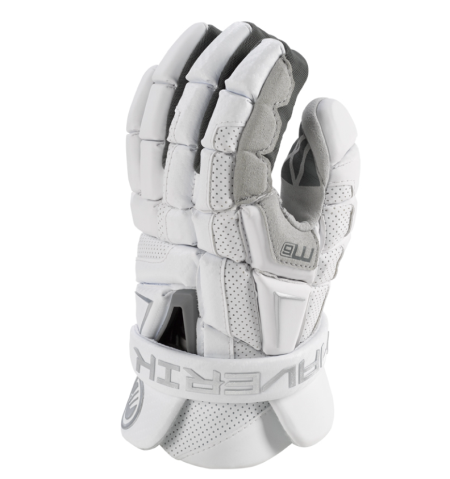
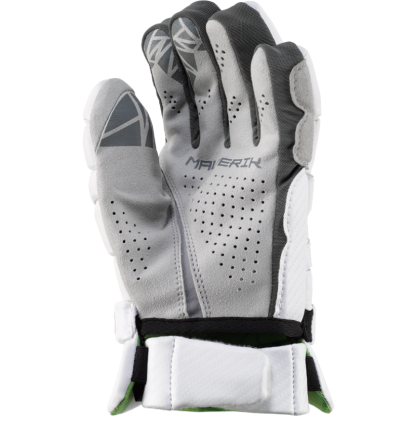
 Battle Lax: Maverik M6 Lacrosse Player Glove$115.99 (was $144.99)