Category: mens-heads

  • Warrior Burn Formula Lacrosse Head Review

    Warrior Burn Formula Lacrosse Head Review | LaxDrip
    Independent lacrosse gear reviews/Men’s · Women’s · Goalie

    Warrior Burn Formula Lacrosse Head Review

    Warrior says the Burn Formula is a faceoff head that can actually shoot. I took it to the X and then down the field as a FOSO to see if the formula finally works.

    Warrior Burn Formula lacrosse head review
    Drip score9.1/ 10
    LaxDrip verdict: a durable, warp-resistant FOSO head with a great scoop and accurate shooting. Shot speed and checking power are just average.
    Shop at BattleLax ($99.99)

    LaxDrip is reader supported. When you buy through links on this page we may earn a commission at no extra cost to you. How we review.

    Overview

    I'm an offensive middie, but I've always loved stepping into the FOSO role. So when I heard Warrior was marketing the Burn Formula as a faceoff head that excels at shooting, I had to test that claim. Most faceoff heads struggle to shoot accurately because of their flex, so this review was overdue.

    Warrior has been working on faceoff heads since the original Burn FO, but durability hasn't been their strong suit. So the question is: has Warrior finally found the right formula for a head that's durable, flexible and shoots well?

    Coach's note: The FOSO is the most valuable guy nobody talks about. Win the draw, push it, and if the short-stick slides late, finish it yourself. I've seen it win games from upstate New York to Virginia Beach, and every Ontario box kid who takes draws already thinks this way. You need a head that clamps like an FO head and shoots like a middie head. That's the test.

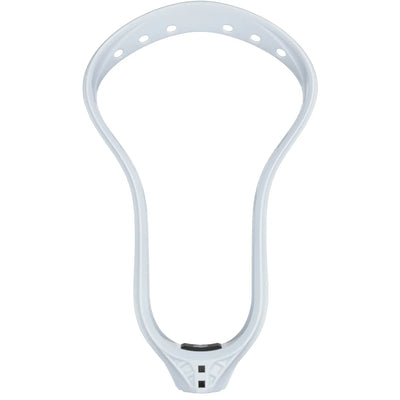
    Warrior Burn Formula lacrosse head

    Shop the Warrior Burn Formula at Battle Lax ($99.99)

    Key Features of the Warrior Burn Formula

    Before I share my experience with the new Burn Formula, here are the key features.

    [wpdatatable id=326]
    Brand
    Warrior
    Position
    Faceoff / FOSO
    Released
    2024
    Weight
    About 5.3 oz
    Material
    Therma Loc+
    Sidewall holes
    17
    Price
    $99.99 at BattleLax
    Colors
    • White
    • Clear

    Pros & Cons

    Pros
    • Build: Durable and light
    • Flex: A great balance of flex and stiffness
    • Shooting: Accurate
    • Response: Better responsiveness and warp resistance
    Cons
    • Shot speed: Lower than an attack head
    • Checking: Doesn't deliver powerful checks

    Shop the Warrior Burn Formula at Battle Lax ($99.99)

    Warrior Burn Formula Drip Rating

    I rate the Warrior Burn Formula a 9.1/10 on the Drip Meter.

    Warrior Burn Formula lacrosse head rating
    [wpdatatable id=327]

    Who's This Head Made For?

    The Burn FO and Burn FO Recovery were more FOGO heads with very flexible profiles. The plastic looks similar, but Warrior made big design improvements. So I'd call the Burn Formula a FOSO head.

    The Burn Formula is slightly thicker than the StringKing Mark 2F Head and has a wider scoop. It's stiffer, and it snapped right back into shape when I bent it.

    The throat length is nearly identical to the OG Burn FO. But Warrior removed the throat plug and added two extra screw holes on each side for versatility.

    I liked the throat plug, but the screws work better. It went right onto my ECD carbon shaft. If you need one, the ECD Carbon 4.0 Attack/Midfield Shaft ($124.99) is a solid match. The new scoop design impressed me too.

    Now let's see if it wins the 50/50s.

    See it live GKL+ on YouTube

    Shot and Pass Accuracy

    The Burn Formula has a longer throat and a wider face that pinches in the center and runs down straight with very little curve at the throat. The sidewalls are also stiffer than the FO Recovery's.

    That gave me better feedback and made it easier to aim. Playing FOSO, I could put the ball right where I wanted it. The face profile is solid for feeding and shooting.

    Warrior Burn Formula lacrosse head side profile

    The mid pocket gives you a good balance of control and quick release. It doesn't give you the lightning shot speed I get from a mid-high pocket in an attack head, though.

    Still, I liked how consistent the release was. Every shot went right where I aimed it.

    The sidewalls have 17 holes, so you can get creative with pocket depth. If you want a stiffer head for high-speed shooting, look at the StringKing Mark 2F Head or the Nike CEO 3, or the Burn Formula Stiff ($99.99).

    Shop men's heads at Battle Lax

    Catching and Cradling

    For catching and cradling, I found it one of the best faceoff heads for elite players.

    The pinched throat gives the ball a snug pocket feel, which is great for keeping control on quick moves and dodges. Once the ball is in, the stiffness and design give you strong, confident control. I felt secure even under heavy defensive pressure.

    The wider face also gives you a good surface for scooping ground balls on the run. Unlike the Burn Recovery, it doesn't warp and slides the ball right into the pocket.

    The rounded edges did deflect the ball sometimes, which made one-handed catches feel inconsistent. I had a few frustrating moments when the ball glanced off the sidewall instead of settling into the pocket.

    So if you're a beginner or you rely on catching quick passes on the run, the Burn FO or a good attack head is a better fit.

    Checking

    The Burn Formula is stiffer than its predecessor, but it's not super stiff. So I didn't get powerful checks out of it. With its flex profile, I had to put more force into my checks.

    Still, the sidewalls are sturdy enough to take a hit. Warrior added a strut to support the sidewalls and made them more horizontal than the Recovery's. That makes the side profile more durable and long-lasting, and the head holds its shape well.

    Warrior Burn Formula lacrosse head colors

    Elite faceoff man and PLL star Trevor Baptiste has praised the durability of the Therma Loc+ construction, which holds up better than other nylon heads that break easily in faceoff battles. At about 5.3 oz, the Burn Formula took a beating without losing its shape.

    So it may not be the ideal head for defensive or transition middies, but the durability of the flex profile is worth the money.

    Ground Ball Pick-Up and Faceoffs

    The scoop is the crowning glory of the Burn Formula. It's much more curved and rounded than the Burn FO's, which helped me a lot when making contact with the ball and using the scoop to flick it out from under my opponent.

    The ball rails aren't just a gimmick, either. They add warp resistance, which makes the head sturdier in tough tie-ups and faceoff battles. The Burn Formula never over-flexed or felt flimsy. It gave me the confidence to clamp hard without worrying about losing control.

    The slight stiffness also lets the head snap back quickly after it flexes. So I could transition smoothly into controlling the ball or running an exit even when I wasn't in an ideal position against my opponent.

    Some players may still miss the flex and smooth twisting of the Recovery. If that's you, compare it with the ECD Weapon X 2.0 Head ($99.99) too, and read our Weapon X 2.0 review.

    Shop the Warrior Burn Formula at Battle Lax ($99.99)

    Shop the Burn Formula and faceoff gear at BattleLax

    See our full list of the best faceoff heads too.

    GearWhy it's herePrice
    Warrior Burn Formula Unstrung HeadReviewed here$99.99
    Warrior Burn Formula Stiff HeadStiffer version$99.99
    Warrior Burn FO Recovery HeadMore flex$89.99
    Warrior Burn FO HeadOriginal Burn FO$89.99
    ECD Weapon X 2.0 HeadFO head alternative$99.99
    ECD Carbon 4.0 Attack/Midfield ShaftShaft pairing$124.99

    People also ask

    When was the Warrior Burn Formula lacrosse head released?

    In 2024, with better durability, flex and accuracy for faceoff players and offensive middies.

    What colors does the Warrior Burn Formula come in?

    White and clear.

    How much does the Warrior Burn Formula weigh?

    About 5.3 oz, so it's light but durable for intermediate and advanced players.

    What's special about the Burn Formula's scoop?

    It's much more curved and rounded than the Burn FO's, which makes ground balls and faceoff battles easier to win.

    Why is the Warrior Burn Formula good for FOSO players?

    A longer throat, a pinched face, stiffer sidewalls than the Recovery and a mid pocket give you accurate shooting and controlled cradling after you win the draw.

    Final word

    The Warrior Burn Formula is a FOSO head that pairs a durable build with elite features. The longer throat and pinched face help your accuracy, and the mid pocket balances control and quick release.

    The scoop is excellent for ground balls and winning faceoff battles, and the ball rails help guide the ball into the pocket for a secure hold when you're dodging defenders.

    Shot speed and checking power are a bit lower, but it gives you accurate shooting and controlled cradling.

    If you want more flex, try the Warrior Burn FO Recovery. If you want a stiffer head for high-speed shooting and strong checks, go with an offensive head like the StringKing Mark 3V Head ($119.99).
    Get the Warrior Burn Formula at Battle Lax

    At BattleLaxBurn Formula $99.99
    Buy now
  • STX Stallion 1k Lacrosse Head Review

    STX Stallion 1K Lacrosse Head Review | LaxDrip
    Independent lacrosse gear reviews/Men’s · Women’s · Goalie

    STX Stallion 1K Lacrosse Head Review

    The top of STX's elite midfield lineup, used by Nakeie Montgomery and built for the two-way middie. Here's how it plays from a two-way middie's point of view.

    STX Stallion 1K lacrosse head review
    Best for2-waymiddies
    LaxDrip verdict: a light, stiff, durable midfield head with a deep offset. The scoop and the number of stringing holes could be better. BattleLax doesn't stock it, so we point you to the StringKing Mark 3V.
    Shop at BattleLax ($119.99)

    We may receive a commission if you make a purchase through a link on this page at no cost to you. This helps us keep this site free & we appreciate your support!

    Overview

    The Stallion 1K continues the top of STX's elite midfield lineup. Nakeie Montgomery uses it, and it's a great fit for the two-way midfielder.

    Coach's note: The two-way middie is the hardest-working guy on the field. From upstate New York to Virginia Beach to the Ontario box leagues, I tell every middie the same thing: you need a head that can win a ground ball in the defensive end, take a check without folding, and still let you rip one on the run. That's the job the Stallion 1K was built for.

    STX Stallion 1K lacrosse head

    Heads up: BattleLax doesn't carry the Stallion 1K right now. The closest two-way middie head in stock is the StringKing Mark 3V Unstrung Head ($119.99).

    Shop the StringKing Mark 3V at Battle Lax ($119.99)

    Key Details

    Brand
    STX
    Position
    Midfield
    Level
    Intermediate to advanced
    Legality
    All levels of play
    Weight
    About 4.7 oz
    Cost
    $99.99 at launch
    Released
    2023
    Colors
    • White
    • Neon Yellow
    • Neon Green
    • Neon Pink

    Shape, Material and Scoop

    The Stallion 1K is built for two-way middies like Nakeie Montgomery, who uses this head. It's VERY similar to the Stallion 900, with a few differences. The face shape and stiffness are ideal for a two-way middie, and it has a deep offset for more control of the ball.

    At about 4.7 oz, the Stallion 1K is light for a two-way middie head compared to the ECD DNA 2.0 and the StringKing Mark 2T and 2V. As a two-way middie myself, I usually like my heads a little heavier because I get more durability when checking. I haven't had any of those issues with this head so far, thanks to the EnduraForm plastic.

    The Speed Scoop is decent but could definitely use some work. It didn't perform as well at higher angles as some other heads, mainly the StringKing Mark series. It still does very well at most other angles.

    Shop men's heads at Battle Lax

    Stringing

    Since the head is built to be versatile, pocket customization really matters, because different positions like different pocket shapes. Unfortunately, the Stallion 1K doesn't have as many stringing holes as other elite heads. There are 6 top string holes, 16 sidewall holes per side and 4 bottom string holes. Most elite heads these days have 20 or more sidewall holes.

    All the holes are fairly large, so you won't have trouble getting string through. That can affect the pocket, though, because the string has a lot of wiggle room in each hole. Still, I had little trouble getting the pocket I wanted. Could it use more stringing holes? Definitely. But you should be able to string just about any pocket in this head. Grab some ECD Hero 4.0 Semi-Hard Mesh ($24.99) and get to work.

    Pros and Cons of the STX Stallion 1K

    Pros
    • Durable: The EnduraForm plastic holds its shape game after game. It's a stiff head, and the extra material compared to the Stallion 900 seems to add some heft and stiffness.
    • Light: At about 4.7 oz, it's on the lighter side for midfield heads. If you want a lighter head, this one's for you.
    • Variety of colors: You get a choice of colors most other heads don't offer.
    Cons
    • Needs more sidewall holes: It could use more sidewall holes, with smaller holes.
    • Scoop could be better: It's not bad by any standard, but it doesn't do well at higher angles.

    Shop the StringKing Mark 3V at Battle Lax ($119.99)

    Who is the STX Stallion 1K best for?

    This head is best for the two-way middie, the defensive middie or the offensive-minded LSM. The scoop isn't the best I've used, but it'll get the job done.

    Offensive players can use it if they want a stiffer head that's still light. It could work for an attackman who likes a mid pocket, but other heads are better for a low pocket.

    As a two-way middie myself, I'd definitely use this head on the field. I'd pair it with the STX Sc-Ti X+ shaft, or a concave shaft like the Maverik Caliber 2026 Shaft ($129.99) from BattleLax.

    Read more: Best lacrosse heads for middies and our STX Stallion Prism review

    Want a closer look at the two-way head we recommend at BattleLax? Here's a breakdown of the Mark 3V.

    See it live LacrosseMonkey on YouTube

    Shop two-way middie heads at BattleLax

    BattleLax doesn't carry the Stallion 1K, but these heads and add-ons cover the same two-way role.

    GearWhy it's herePrice
    StringKing Mark 3V Unstrung HeadTwo-way middie head$119.99
    Maverik Tactik 3.0 HeadMiddie head$109.99
    Warrior Evo V HeadBudget middie head$99.99
    Maverik Tank 2.0 HeadD-middie / LSM head$109.99
    ECD Hero 4.0 Semi-Hard MeshMesh$24.99
    Maverik Caliber 2026 ShaftConcave shaft$129.99

    Shop the StringKing Mark 3V at Battle Lax ($119.99)

    People also ask

    Who uses the STX Stallion 1K?

    Nakeie Montgomery, the two-way midfielder, uses it.

    How much does the STX Stallion 1K weigh?

    About 4.7 oz, which is on the lighter side for a midfield head.

    What position is the STX Stallion 1K for?

    Two-way middies first, plus defensive middies and offensive-minded LSMs. Attackmen who like a mid pocket can use it too.

    How many stringing holes does the Stallion 1K have?

    6 top string holes, 16 sidewall holes per side and 4 bottom string holes.

    Does BattleLax carry the STX Stallion 1K?

    Not right now. The closest two-way middie head at BattleLax is the StringKing Mark 3V.

    Final word

    The STX Stallion 1K is a light, stiff, durable head built for the guy who plays both ends of the field. The scoop and stringing holes leave a little room to improve, but it'll handle just about any pocket and any role a middie throws at it. Want a two-way head you can grab today? Go with the StringKing Mark 3V Unstrung Head.

    Get the StringKing Mark 3V at Battle Lax

    BattleLax pickMark 3V $119.99
    Buy now
  • STX Eclipse 3 Lacrosse Goalie Head Review

    STX Eclipse 3 Lacrosse Goalie Head Review | LaxDrip
    Independent lacrosse gear reviews/Men’s · Women’s · Goalie

    STX Eclipse 3 Lacrosse Goalie Head Review

    STX took the critiques of the Eclipse 2 and built a stiffer, squarer successor. It costs more, so here's how it actually plays in the cage before you upgrade.

    STX Eclipse 3 lacrosse goalie head review
    Drip score9.1/ 10
    LaxDrip verdict: a stiff, sturdy, wide-face goalie head with a great bowl scoop and a longer throat. It's a bit heavy and tricky to string. BattleLax doesn't stock it, so we point you to the ECD Impact.
    Shop at BattleLax ($109.99)

    LaxDrip is reader supported. When you buy through links on this page we may earn a commission at no extra cost to you. How we review.

    Overview

    STX took the critiques of the Eclipse 2 and released a successor in 2023, claiming it's better and stiffer. It's also more expensive. So before you upgrade, check out this STX Eclipse 3 goalie head review.

    Despite the higher price, the Eclipse 3 is an upgrade. It's sturdier, stiffer and has an updated face profile. Top-level goalies like Maryland's Emily Sterling and PLL keeper Kyle Bernlohr have been seen using it.

    So let's see how it performs.

    Important note: This review was written with an experienced lacrosse goalie to give you authentic insight and a practical evaluation.

    Coach's note: I've coached keepers from upstate New York to Virginia Beach, and spent plenty of nights watching Ontario box goalies eat rubber. The good ones all say the same thing: they want a head that doesn't fold on a hard high shot and lets them rip a clear the length of the field. That's what STX was chasing with the Eclipse 3.

    STX Eclipse 3 lacrosse goalie head

    Heads up: BattleLax doesn't carry the Eclipse 3 right now. The closest goalie heads in stock are the ECD Impact Goalie Head ($109.99) and the Maverik Krease Unstrung Goalie Head ($129.99).

    Shop the ECD Impact Goalie Head at Battle Lax ($109.99)

    Key Features of the STX Eclipse 3 Goalie Head

    Before the review, here are the key features.

    [wpdatatable id=329]
    Brand
    STX
    Position
    Goalie
    Released
    2023
    Weight
    About 15 oz
    Material
    Endura foam plastic
    Face
    Wide, squarer profile
    Stringing holes
    18 sidewall, 7 top
    Colors
    • Black
    • White

    Pros & Cons

    Pros
    • Build: Stiff and sturdy
    • Throat: Longer throat for a better grip
    • Pick-ups: Slanted walls make ground balls easier
    • Saves: Strong sidewalls deflect shots
    Cons
    • Weight: Slightly heavy
    • Flex: Less forgiving for beginners
    • Stringing: Difficult to string

    Shop the ECD Impact Goalie Head at Battle Lax ($109.99)

    STX Eclipse 3 Drip Rating

    I rate the STX Eclipse 3 goalie head a 9.1/10 on the Drip Meter.

    STX Eclipse 3 goalie head rating
    [wpdatatable id=330]

    Who Is This Head For?

    Most goalie heads have rounder faces, which limits surface area. The Eclipse 3 is the newer option for goalies who like a squarer face profile.

    It's lighter, more rigid and sturdier than the Eclipse 2, which makes it a good fit for aggressive goalies. The Endura foam plastic is similar, but thicker walls and what STX calls 30% more stiffness make it better.

    Even though it weighs less than the previous version, it's still heavier than most goalie heads today. If you prefer a lighter, more flexible, rounder head, try the ECD Impact Goalie Head ($109.99). Read our full ECD Impact review.

    Now let's get into how it plays.

    Face Shape, Shooting and Pocket Location

    The Eclipse 3 sticks with the classic wide face goalies love, but it's tilted back slightly less than the Eclipse 2. That small change makes it feel sturdier, especially on hard saves.

    I've had shots hit the top plastic, and instead of bouncing out like they did with the Eclipse 2, this head does a better job of keeping the ball in. A few balls still popped out on tougher angles, but it's more controlled than the old version.

    STX Eclipse 3 goalie head side profile

    Clearing passes felt very accurate thanks to the stiff top section. The turned-in plastic can make dialing in the pocket tricky, but the centered channel gave me consistent, smooth releases.

    If you're used to rounder, more flexible goalie heads, though, I wouldn't upgrade from the Eclipse 2 to the Eclipse 3.

    Cradling, Passing and Catching

    The Eclipse 3 feels more balanced when cradling. The added stiffness gives you a steadier feel moving the ball in and out of the pocket. STX also tweaked the throat. It was rounder on the Eclipse 2, while the Eclipse 3 is squarer from the middle.

    That helped ball retention, especially under pressure when I needed to cradle quickly to avoid attackmen. The front of the plastic has no give, which makes for fast passing and catching.

    The new throat also gives you a longer stretch of plastic to grip. That extra length helps on quick outlet passes and lets you adjust your grip in fast transition.

    The thicker plastic at the scoop does make it a little top-heavy, which took some getting used to when catching. Otherwise, the improved channel and bowl-shaped scoop give you a clean release on quick outlets and full-field clears.

    Flexibility and Ground Ball Pick-Up

    The stiffer scoop is the highlight of the Eclipse 3. It's wider and shaped more like a bowl than a flat shovel. When you go down for a ground ball, it sits flat on the ground and doesn't lean forward like its predecessor did.

    The bigger surface area makes pick-ups easier from every angle. I even scooped ground balls from the side, and they funneled smoothly into the pocket.

    The head also has minimal flex in big ground ball moments, and it's noticeably stiffer around the scoop.

    That makes it great for low saves and stopping the ball dead, because the head stays on top of the ball.

    Shop men's heads at Battle Lax

    Defensive Capability

    The extra stiffness, especially in the scoop, makes a real difference when you're deflecting shots or controlling rebounds. The head is less likely to bend out of shape on saves, especially on shots off the top section.

    With other heads, I've had a 15-yard side-high shot miss the mesh, hit the plastic and rebound out.

    That doesn't happen as often with the Eclipse 3. It stays stiff enough to handle hard shots, so your clears start from a controlled save.

    STX Eclipse 3 goalie head colors

    Stringing and Number of Holes

    Stringing isn't the Eclipse 3's strong suit, because it's not straightforward. It has 18 sidewall holes and 7 top holes, but the plastic is slightly turned in, so the ball hit the plastic more than it did on the Eclipse 2.

    I restrung it with Memory 12 diamond mesh for a deeper pocket, and after that it was the most channeled stick I've used in a long time. Want a goalie mesh you can grab today? Try the ECD Impact Semi-Soft Goalie Mesh ($39.99).

    Material, Durability, Flexibility and Weight

    At about 15 oz, the Eclipse 3 is slightly lighter than the Eclipse 2. STX trimmed material around the struts to cut weight, and that didn't hurt durability, so it holds up well over a long season.

    The plastic is thicker, and the head doesn't warp or break easily, even with aggressive play. Most reviews say it's slightly stiffer at the top with the same flex in the middle.

    Personally, I think the middle flex has dropped a bit too. Pair it with a sturdy goalie shaft and you've got a setup that won't budge.

    Customization, Appearance and Aesthetics

    The Eclipse 3 has a sleek, shiny, metallic-looking ball stop that gives it a modern, stylish touch. I love how it looks. The black STX logo and the ball stop are the cosmetic highlights.

    The plastic surface is also smooth, which makes it much easier to dye. The Eclipse 2 had rough spots around the throat, but the Eclipse 3's finer plastic makes it a great goalie head for customizing.

    Shop goalie gear at BattleLax

    BattleLax doesn't carry the Eclipse 3, but these goalie heads and add-ons are in stock. Protect yourself too with one of the best goalie chest protectors.

    GearWhy it's herePrice
    ECD Impact Goalie HeadLighter, more flexible$109.99
    Maverik Krease Unstrung Goalie HeadStiff goalie head$129.99
    Warrior Nemesis Lite Goalie HeadBudget goalie head$99.99
    Maverik Krease Complete Goalie StickReady to play$199.99
    ECD Impact Semi-Soft Goalie MeshGoalie mesh$39.99
    Cascade TP-S Goalie Throat GuardGoalie add-on$39.99

    Shop the ECD Impact Goalie Head at Battle Lax ($109.99)

    People also ask

    When was the STX Eclipse 3 goalie head released?

    In 2023, with upgrades like more stiffness, a squarer face profile and better ground ball pick-ups than the Eclipse 2.

    What colors does the STX Eclipse 3 come in?

    Classic black and white.

    How much does the STX Eclipse 3 weigh?

    About 15 oz. That's lighter than the Eclipse 2 but heavier than many goalie heads on the market.

    How heavy is a goalie stick with the Eclipse 3?

    It depends on your shaft and stringing, but expect a full goalie stick in the high 20s to low 30s in ounces.

    Is the ECD Impact lighter than the STX Eclipse 3?

    Yes. The ECD Impact is lighter and more flexible, so it suits goalies who want a lighter, rounder head.

    Does BattleLax carry the STX Eclipse 3?

    Not right now. The closest options at BattleLax are the ECD Impact and the Maverik Krease goalie heads.

    Final word

    The Eclipse 3 sets a new standard with its stiffness, precision and durability. It's ideal for aggressive goalies and gives you better control and accuracy on clears. It's a little heavy, but its strengths outweigh the cons.

    Want a goalie head you can grab at BattleLax today? The ECD Impact Goalie Head is the lighter, more flexible pick, and the Maverik Krease Unstrung Goalie Head is the stiffer one. Compare more in our best goalie heads guide.

    Get the ECD Impact Goalie Head at Battle Lax

    BattleLax pickECD Impact $109.99
    Buy now
  • ECD Weapon X 2.0 Lacrosse Head Review

    ECD Weapon X 2.0 Lacrosse Head Review | LaxDrip
    Independent lacrosse gear reviews/Men’s · Women’s · Goalie

    ECD Weapon X 2.0 Lacrosse Head Review

    ECD's second-generation faceoff head promises flex to win the clamp and durability to survive the grind. We ran it for two weeks of draws, ground balls and checks to see if it delivers.

    ECD Weapon X 2.0 lacrosse head review
    Drip score9.4/ 10
    LaxDrip verdict: a light, durable FOGO-first head with great flex at the X and one of the best scoops out there. Shooting and checking are just average.
    Shop at BattleLax ($99.99)

    LaxDrip is reader supported. When you buy through links on this page we may earn a commission at no extra cost to you. How we review.

    Overview

    The ECD Weapon X 2.0 is the second head in the Weapon X series, following the original Weapon X from 2019. ECD has always put performance first when engineering heads, so I was excited to add it to my collection and bring you this review.

    Faceoff heads usually give you the flex to dominate the clamp, but they lack durability and don't survive the grind.

    I tested it for about two weeks to see if ECD got the balance between flex and durability right on the Weapon X 2.0.

    Coach's note: Whether it's a spring game in Syracuse, a summer tournament down in Virginia Beach or a box night in Ontario, the faceoff guy sets the tone. Win the draw and your offense gets the ball. Lose it and you're playing defense all night. You want a head that clamps, flexes and comes back to shape every single draw. That's the test I put this one through.

    ECD Weapon X 2.0 lacrosse head

    Shop the ECD Weapon X 2.0 at Battle Lax ($99.99)

    Key Features and Specs

    Here are the key specs before we get into the review.

    [wpdatatable id=291]
    Brand
    ECD Lacrosse
    Position
    Faceoff
    Released
    2024
    Weight
    About 5.15 oz
    Material
    FlexForm plastic
    Variants
    Stiffer (white/black) and softer (natural)
    Price
    $99.99 at BattleLax
    Colors
    • White
    • Black
    • Natural

    Pros & Cons

    Pros
    • Durable: Tough, flexible FlexForm construction
    • Light: About 5.15 oz
    • 50/50s: Engineered flex points help you win ground balls
    • Options: 2 variants with different flex
    Cons
    • Accuracy: Shots spray from distance
    • Shot speed: Average
    • Checking: Not stiff enough for powerful checks

    ECD Weapon X 2.0 Drip Rating

    I rate the ECD Weapon X 2.0 a 9.4/10 on the Drip Meter.

    [wpdatatable id=292]

    Who's This Head Made For?

    ECD markets the Weapon X 2.0 as a FOGO-first head. But its mix of flex and stiffness makes it work for players who stay on the field after the faceoff.

    The hybrid-flex design and shorter throat let you get your hand right on the ball. That closer grip means faster reactions on the clamp, and the asymmetrical sidewalls flex just enough to twist out of tough locks without losing control.

    The Weapon X 2.0 came out in 2024 in 2 variants. I liked the stiffer white one more than the natural one. ECD trimmed the number of sidewall stringing holes compared to the original Weapon X, but you can still string a similar low pocket. Pair it with the ECD Hero 4.0 Complete Kit ($34.99) if you're stringing from scratch.

    It's made of FlexForm plastic, which is very durable and weather-resistant, but still light at about 5.15 oz.

    See it live GKL+ on YouTube

    Shot and Pass Accuracy

    The Weapon X 2.0 gives shooters a nice balance of control and speed. The updated flex profile and design tweaks help shot execution. Still, I wouldn't recommend it for transition players or attackmen.

    It's a pure faceoff head with a slightly reduced offset that keeps the ball low in the pocket for quick releases. Shooting accuracy is solid, especially with a mid-low pocket. The ball channels smoothly and you get consistent follow-through.

    ECD Weapon X 2.0 lacrosse head strung

    Compared to heads like the StringKing Mark 3V, the Weapon X 2.0 has more whip potential because it handles a deep pocket well. But accuracy suffers if you string it too low, because the ball tends to hook on hard outside shots.

    The thinner bottom rail adds some snap to shot speed, but the softer flex, especially on the natural variant, can take some power off your shot. If you want a stiff, explosive release, this head gives up some pop compared to stiffer heads like the StringKing Mark 3V Head ($119.99).

    Shop men's heads at Battle Lax

    Catching and Cradling

    The scoop is nicely rounded and picks up ground balls easily after a clamp or in chaotic 50/50 scrums. Cradling securely is trickier, though, when you're transitioning straight out of a faceoff win, especially with a loose or low pocket.

    The white version has a nice balance of flex and stiffness with specific flex points. It's stiff enough for clean releases on passes and flexible enough to absorb the ball when you're catching in tight spaces.

    ECD Weapon X 2.0 lacrosse head side profile

    I also love its forgiving flex on quick moves when I got caught on the crease with an attackman. The gradual offset and short throat keep the ball secure after the initial clamp.

    The natural version, though, feels too soft, especially when you're cradling under heavy pressure. A buddy of mine who runs one complained about a slingshot effect when cradling, especially when transitioning to offense.

    I also had to adjust my stringing setup. The asymmetrical sidewalls create slightly uneven pocket tension, which sometimes affects ball hold when you're cradling fast.

    Checking

    At about 5.15 oz, the Weapon X 2.0 is lighter than the original, which cuts down on fatigue in long games. Despite the light weight and flex, the head is very durable.

    The natural version takes a little time to snap back to shape, but the FlexForm plastic holds up. The head didn't bend or crack even after hours of practicing reverse clamps and sweeps. It also has a protective lip to keep the mesh secure at the top.

    ECD Weapon X 2.0 lacrosse head pocket

    Where it falls short is impactful checking. The stiffer white version is a bit better, but I still needed extra force to throw a good check.

    The narrow throat and softer sidewall flex, especially on the natural variant, limit how hard it checks. It absorbs some energy on contact, so aggressive poke checks are less effective than with stiffer defensive heads like the STX Duel 3 or Maverik Lock.

    Shop the ECD Weapon X 2.0 at Battle Lax ($99.99)

    Ground Ball Pick-Up and Faceoffs

    Smooth ground ball pick-ups are the highlight of this head, and it's one of the best faceoff heads of 2024. The inset design gives you a more natural grip on the shaft and more control on clamps and counters.

    The rounded scoop makes loose-ball battles easier. Its smooth design cuts drag, so you scoop clean from almost any angle, and the concave profile sweeps the ball right into its low pocket on fast breaks.

    The flexible throat and asymmetrical sidewall rails give it excellent response in clamp battles and on second-move counters. In 50/50s, the flex profile makes it easier to torque and secure the ball without overextending.

    The natural version is super flexible at the X, which makes for smoother exits when you pop the ball forward or out to the wings. But if you rely on power clamps, it'll feel softer than competitors like the Nike CEO 3. Want something stiffer at BattleLax? Look at the Maverik Logik Force Head ($109.99). Finish the stick with a dedicated faceoff shaft like the StringKing Composite 3 Pro Faceoff Shaft ($159.99).

    ECD Weapon X 2.0 lacrosse head colors

    Shop the ECD Weapon X 2.0 at Battle Lax ($99.99)

    Shop the Weapon X 2.0 and faceoff gear at BattleLax

    GearWhy it's herePrice
    ECD Weapon X 2.0 Unstrung HeadReviewed here$99.99
    Maverik Logik Force HeadStiffer FO head$109.99
    Gait Faceoff Flex HeadFlexy FO head$119.99
    Warrior Burn FO HeadBudget FO head$89.99
    StringKing Mark 3V HeadStiffer middie head$119.99
    ECD Hero 4.0 Complete KitMesh and strings$34.99
    StringKing Composite 3 Pro Faceoff ShaftFaceoff shaft$159.99

    People also ask

    When was the ECD Weapon X 2.0 lacrosse head released?

    It came out in 2024 in two variants with different flex, for faceoff specialists at every level.

    What colors does the ECD Weapon X 2.0 come in?

    White, black and natural.

    How much does the ECD Weapon X 2.0 weigh?

    About 5.15 oz, so it's light but still durable for long games.

    What position is the ECD Weapon X 2.0 best for?

    It's built for faceoff specialists, but the hybrid-flex design makes it usable if you stay on the field after the draw.

    What makes the ECD Weapon X 2.0 unique?

    A hybrid-flex design with engineered flex points, durable FlexForm plastic, a rounded scoop that excels on ground balls and a shorter throat for better clamp control.

    Final word

    The Weapon X 2.0's updated sidewall structure balances stiffness and flex better than the OG Weapon X. It feels responsive without giving up durability. The stiffer white version gives you the best mix of flex and snap for reverse clamps, sweeps and quick resets, while the softer natural version is more forgiving.

    I prefer the stiffer version for its balanced flex points, and I'd recommend it for intermediate and advanced players. The natural version is the better pick for beginners. Either way, it's a 9.4/10 faceoff head that'll hold up all season.

    Get the ECD Weapon X 2.0 at Battle Lax

    BattleLax pickWeapon X 2.0 $99.99
    Buy now
  • ECD Delta Lacrosse Head Review

    ECD Delta Lacrosse Head Review (2026) | LaxDrip
    Independent lacrosse gear reviews/Men’s · Women’s · Goalie

    ECD Delta Lacrosse Head Review

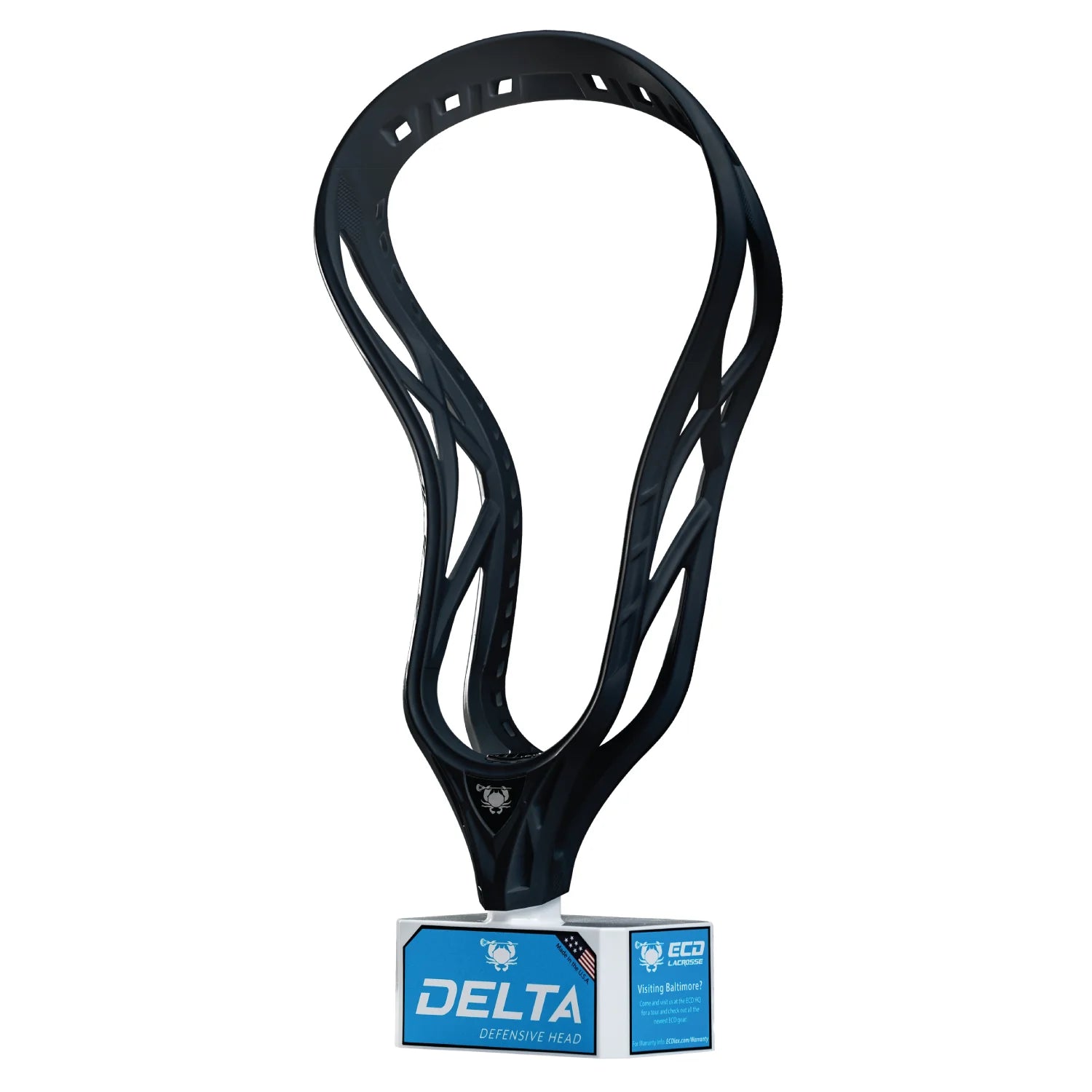
    ECD's newest defense head is lighter, stiffer and built to eat ground balls. Here's how the Delta held up after a few months of close D, checks and clears.

    ECD Delta lacrosse head review
    Drip meter8.5/ 10
    LaxDrip verdict: a light, rigid close D head with a ground ball scoop that does the work for you. It checks hard and holds its shape, but there's not much whip on long outlet passes.
    Shop at BattleLax ($109.99)

    LaxDrip is reader supported. When you buy through links on this page we may earn a commission at no extra cost to you. How we review.

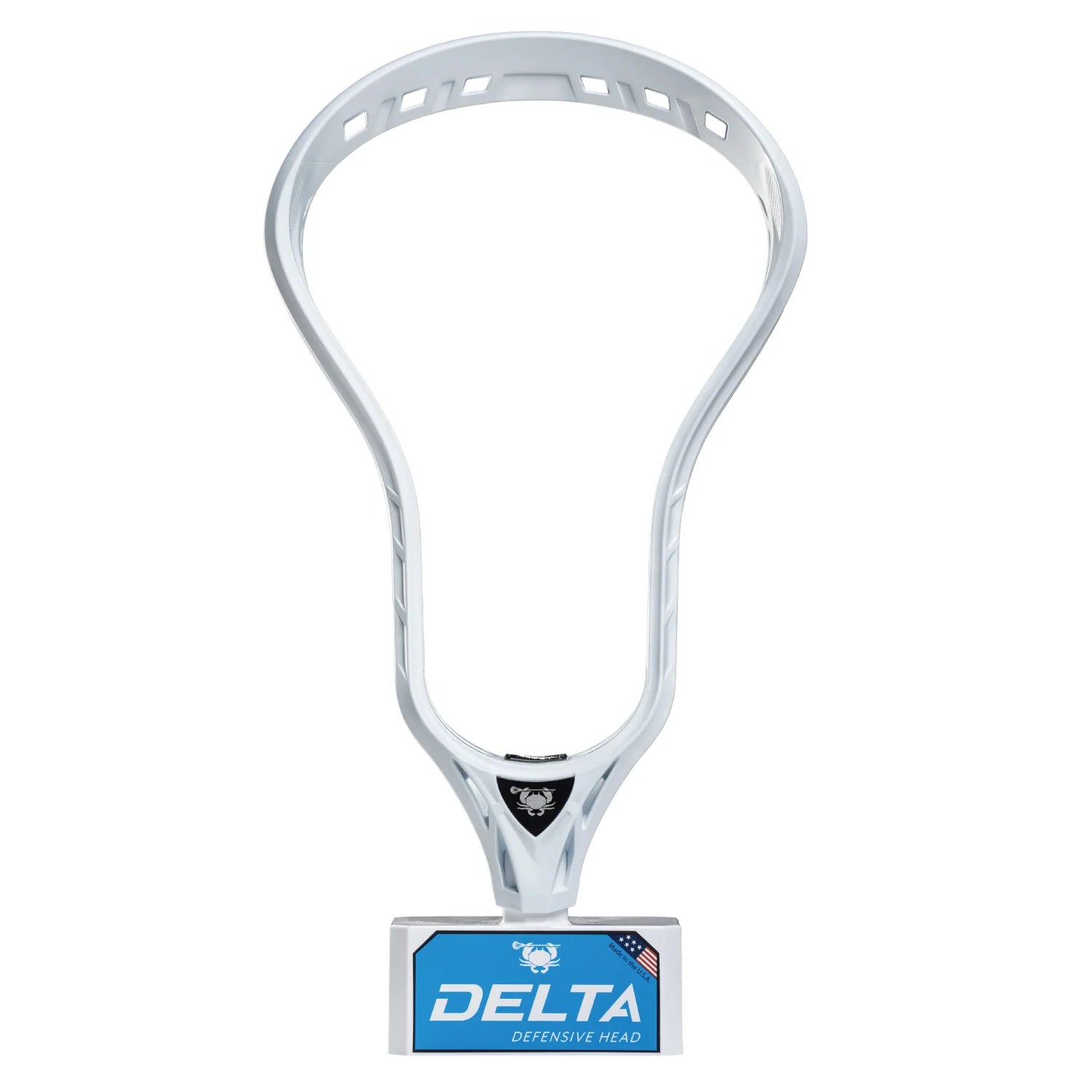
    ECD doesn't drop a new head unless they think the game needs one. So when they launched the ECD Delta for defense, I had to get my hands on it. Their first D head, the Rebel D, was already light, and they somehow made the Delta even lighter.

    It's also stiffer, with a more aggressive scoop. On paper, it looked like the perfect close D head. So I took it out to the field and put together this ECD Delta lacrosse head review to tell you if it really is the better close D head.

    Shop the ECD Delta at Battle Lax ($109.99)

    Key Features and Specifications

    Before we get into the review, here are the key specs.

    [wpdatatable id=197]
    Position
    Close D, LSM, SSDM
    Weight
    About 5.6 oz
    Stiffness
    Very stiff
    Pocket
    Mid-high
    Released
    2024
    Price
    $109.99 ($129.99 Graphene)
    Colors
    • White
    • Black
    • ECD Blue
    • Graphene

    Pros & Cons

    Pros
    • Very durable and stiff
    • Aggressive scoop for quick ground balls
    • Throws hard, effective checks
    • Light, with optimized struts for rigidity
    Cons
    • Not much flex or whip
    • Long-range shots are slower and can come off center

    ECD Delta Lacrosse Head Ranking

    I rate the ECD Delta lacrosse head an 8.5/10 on the Drip Meter.

    ECD Delta lacrosse head rating

    The ECD Delta's Drip Meter rating.

    [wpdatatable id=198]

    Who's This Head Made For?

    The Delta came out in 2024 as ECD's newest defense head after the Rebel D. ECD optimized the strut placement for rigidity and got the weight down to about 5.6 ounces, which makes it one of the lightest D heads they've made.

    The stiffness is what sold me on trying it, and it lives up to the hype for close defensemen, LSMs and SSDMs. It throws seriously hard checks, perfect for knocking the ball loose and scooping it right off your man's stick.

    But that's not all a defenseman needs. You've got to win ground balls too. So I ran it for a few months to see if that aggressive scoop was forgiving enough for quick pickups.

    Not sure which ECD head fits your game? ECD breaks down their whole lineup here.

    See it live ECD Lacrosse on YouTube

    Accuracy of Shot and Pass

    The Delta has a wider face that tapers into a tighter throat, which helps you start the fast break and hang onto the ball. The angled sidewalls create a slight pinch in the middle, and that gives you a stiff mid pocket built for quick, hard throws. I loved how fast it released on short outlet passes after a ground ball.

    ECD Delta lacrosse head scoop

    The redesigned scoop on the ECD Delta.

    I had a few off-center throws at first because the pocket was stiffer than I like, but it got better after the break-in. The moderately wide face also gave me a good balance of speed and accuracy.

    It has 6 top holes and 18 sidewall holes, so I could easily string a mid-high pocket for a lot more zip on my throws. My teammates were impressed with how accurate my feeds were.

    That said, the long-distance shooting speed was slower than other heads I've used. If you're a two-way guy who pushes in transition a lot, check out the ECD DNA 2.0 or the Maverik Tank 2.0 ($109.99).

    Catching and Cradling

    Unlike the Rebel D, the Delta has a wider face profile that's ideal for defense. It caught better for me, especially hard passes in tight spaces.

    The bigger surface area for picking off passes made my catching a lot more consistent. And the tighter throat keeps the ball snug when you're getting checked, so you're less likely to cough it up under pressure.

    ECD Delta lacrosse head strung

    The ECD Delta strung with a mid-high pocket.

    I also like the taller sidewalls for ball control while cradling. At first, I thought the ball would get stuck in the pocket and slow my release. But the Delta's design made for smooth cradling and quick releases.

    So if you're a newer player who struggles with cradling and losing ground balls to the other team, this one's for you. The stiff pocket takes some getting used to, but it'll really tighten up your ball control while you cradle.

    Checking

    The Delta is a light defense head with a very stiff build. That stiffness let me throw hard checks, strong enough to pop the ball right out of my man's stick. I did have to put more force behind my checks than usual, though, because it doesn't flex or whip much.

    The strut layout supports the sidewalls well and soaks up the impact when someone checks you back. It doesn't warp, either. The scoop held its shape all season.

    ECD Delta strut placement

    ECD optimized the strut placement for rigidity.

    The stiffness and wider face made it a little tougher to control the ball in traffic, but I loved how well it held its shape. I ran it through long summer practices with no signs of damage.

    ECD also makes the Delta in Graphene for extra strength. Considering how tough the standard Delta already is, though, I wouldn't pay the extra $20 for the Delta Graphene ($129.99) unless you're breaking heads every season.

    ECD Delta lacrosse head in black

    The ECD Delta comes in White, Black, ECD Blue and Graphene.

    See every Delta color at Battle Lax

    Ground Ball Pick-Up and Faceoff

    The Delta isn't a faceoff head, but it's unreal on ground balls. ECD calls it a ground ball machine, and they're not wrong. The scoop is curved with a flatter surface that funnels the ball right into the pocket. That stiffness is what makes it a poor fit at the X, though.

    Because of the aggressive scoop and protective lip, I tried it at the faceoff anyway, and it didn't meet my expectations. Ground balls were easy, but the head got stuck in tight spaces on loose draws.

    If you take draws and want more flex, go with the Nike CEO 3 or the Warrior Burn FO ($89.99).

    Coach's note: From the box guys up in Ontario to the poles I coached in upstate New York and the kids running clinics in Virginia Beach, the best defensemen I've seen all had one thing in common: they won ground balls. A stiff head like the Delta will hold up to a season of slashes, but it won't scoop the ball for you. Get low, run through it, and keep your top hand choked up. Do that and this head will make you look like an all-star.

    Shop the ECD Delta and alternatives at BattleLax

    BattleLax carries the ECD Delta in every color, plus the gear I'd pair it with and a couple of alternatives if your game is different.

    GearWhy it's herePrice
    ECD Delta Unstrung HeadThe head reviewed here (White, Black, ECD Blue)$109.99
    ECD Delta GrapheneThe Graphene version for extra strength$129.99
    Maverik Tank 2.0 HeadTwo-way defense head with more offensive pop$109.99
    Warrior Burn FO HeadFaceoff head if you take draws$89.99
    ECD Carbon 4.0 Defense ShaftCarbon defense pole to pair with the Delta$199.99
    ECD Hero 4.0 Semi-Hard MeshSemi-hard mesh for a defense pocket$24.99

    Shop the ECD Delta at Battle Lax

    People also ask

    What are the key features of the ECD Delta lacrosse head?

    The ECD Delta is a light (about 5.6 oz), very stiff defense head with an aggressive scoop for ground balls, a wide face that tapers to a tight throat, and a sidewall layout that strings up nicely with a mid-high pocket. It's built for close D, LSMs and transition defensemen.

    How does the ECD Delta perform on ground ball pickups?

    It's a ground ball machine. The redesigned scoop has a great return angle and funnels the ball straight into the pocket, even on choppy grass.

    When was the ECD Delta lacrosse head released?

    ECD launched the Delta in 2024 as its newest defense head after the Rebel D.

    What makes the ECD Delta ideal for defense?

    It's light and rigid, so you can throw hard checks without the head bending, and the aggressive scoop gets you on ground balls quickly. It holds its shape through a full season of contact.

    How does the ECD Delta perform for catching and cradling?

    Really well. The wide face gives you a big target on hard passes, and the tighter throat and taller sidewalls keep the ball locked in while you cradle under pressure.

    Is the ECD Delta Graphene worth the extra money?

    For most players, no. The standard Delta is already tough. The Graphene version costs $20 more at BattleLax for extra strength, so it's worth it mainly if you're cracking heads every season.

    Final Verdict

    The ECD Delta is one of the best defense heads out there, with serious stiffness for quick, hard outlet passes. I would have liked a little more flex, but the aggressive scoop makes ground balls easy.

    The strong sidewalls throw powerful checks, and the mid pocket keeps the ball locked in while you cradle. It's a tough head that soaks up contact and holds its shape, so it's a great fit for close D, LSMs and SSDMs.

    Want to see how it stacks up? Check out our list of the best defense lacrosse heads.

    Get the ECD Delta at Battle Lax

    Drip 8.5/10ECD Delta $109.99
    Buy now
  • Maverik Logik Force Lacrosse Head Review

    Maverik Logik Force Lacrosse Head Review | LaxDrip
    Independent lacrosse gear reviews/Men’s · Women’s · Goalie

    Maverik Logik Force Lacrosse Head Review

    Maverik's first new faceoff head in years, with DuraFlex plastic that snaps back after every clamp. Here's how the Logik Force held up after four weeks at the X.

    Maverik Logik Force lacrosse head review
    Drip meter9.3/ 10
    LaxDrip verdict: a pure FOGO head with great shape retention, a grippy honeycomb rail and quick exits. The hole spacing is awkward, and it only comes in bone.
    Shop at BattleLax ($109.99)

    LaxDrip is reader supported. When you buy through links on this page we may earn a commission at no extra cost to you. How we review.

    The hype for the Maverik Logik Force had been building for months, so when it dropped, I had to try it. Like most faceoff guys, I wanted to know if it holds its shape, gives you leverage at the X and stands up to pressure.

    After four weeks with it, I can say with confidence that it snaps back into shape fast. It only comes in bone, though, and Maverik's detailed design makes it tough to dye.

    Shop the Maverik Logik Force at Battle Lax ($109.99)

    Key Features of the Maverik Logik Force

    Before we get into the review, here are the key features.

    [wpdatatable id=372]
    Position
    Faceoff (FOGO)
    Level
    Intermediate to advanced
    Material
    DuraFlex
    Released
    Early 2025
    Color
    Bone only
    Price
    $109.99 at BattleLax
    Built with
    • Honeycomb rail texture
    • FlexRail
    • Force Tech bottom rail
    • Three struts

    Pros & Cons

    Pros
    • Balanced flex points to dominate the faceoff
    • Light, durable DuraFlex build
    • Flatter, less aggressive scoop for easier ground balls
    • Three-strut design resists warping
    • Narrow throat for excellent control
    Cons
    • Widely spaced sidewall holes
    • Not great with a high pocket

    Maverik Logik Force Lacrosse Head Ranking

    I rate the Maverik Logik Force a 9.3/10 on the Drip Meter.

    Maverik Logik Force lacrosse head rating

    The Logik Force's Drip Meter rating.

    [wpdatatable id=373]

    Who's This Head Made For?

    Maverik built the Logik Force to dominate faceoffs, with FOGOs in mind. After the Maverik LOCK, Maverik went years without a new faceoff head until the Logik Force came along as its successor.

    A few reviews I read said the design is a lot like the StringKing Mark 2F. Honestly, most faceoff heads share the same basic pinched shape. It's the flex profile that makes each one unique.

    The Logik Force has a textured honeycomb pattern on the inside of the rails. It's not just for looks. It adds grip on the clamp, and the balanced flex points help you win more loose balls.

    The hollowed-out ball stop is another smart touch. It's soft and slightly recessed, which gives you better feel when the ball is sitting in the pocket. Little details like these make it clear Maverik focused on function.

    That detail is bad news if you like to dye your heads, though, because it's going to be tough. Otherwise, it's one of the best faceoff heads for men.

    Accuracy of Shot and Pass

    The Logik Force has a narrow throat that still meets the minimum head width rules, so you get tight ball control on passes and shots. I loved how consistent my accuracy was threading passes and on quick-release shots.

    The narrow face makes clamping feel effortless, especially in 50/50 battles, and once I had the ball, the tight face kept it locked in. I strung it with a mid pocket, and the release point felt perfect. I could shoot with decent power and still keep my passes consistent.

    The sidewall holes are spaced out more near the throat, which makes it a little harder to string. I also tried a higher pocket, which gives you more whip on power shots but costs you control on quick passes.

    So it's not the fastest shooter out there. But the DuraFlex material snaps right back into shape, so your shot speed and accuracy stay consistent.

    If you need a head for all-around offense, I'd go with the Maverik Optik Force ($109.99), which is stiffer and gives you more stringing options. See also my Maverik Optik 2.0 review.

    Catching and Cradling

    The narrow throat and face make catching in traffic tougher. I had a hard time with mishandled or off-target passes during quick resets after a faceoff win. If you're a beginner still working on hand-eye coordination, go with the Nike CEO 2 or CEO 3 (see our best Nike heads).

    The tight face does funnel the ball into the pocket easily and keeps it secure through hard checks. The pinched sidewalls lock the ball in on S-cuts or when I'm fending off a long pole on the clear.

    Maverik Logik Force side profile

    The Logik Force's side profile.

    The sidewalls are flexible, but three well-spaced struts keep the head from warping when you're fighting off defenders after a win, so the ball didn't pop out even with regular checks.

    I did notice the ball shifting a little in a high pocket, especially cradling one-handed on the run. A mid pocket gave me a good balance of control and cradling, and the 17 sidewall holes let you customize your pocket.

    So I wouldn't recommend it for offensive middies. They're better off with the StringKing Mark 2F ($99.99) or the Nike CEO 2.

    Checking

    The Logik Force is less rigid than defense-focused heads like the ECD Rebel. The sidewalls aren't wide enough to throw the kind of checks that knock the ball loose.

    The flex points do give you lightning-quick exits once you win possession, so you can get into transition with very little resistance. That responsiveness gave me an edge in fast faceoff battles.

    The sidewall design, with the honeycomb pattern and fins, keeps the head from flexing too much, so it doesn't warp or lose its shape over time. The asymmetry is subtle, but it gave me enough rigidity to overpower opponents without losing the flex.

    The head holds its shape on aggressive checks but still has enough give for counters like the plunger or reverse clamp. It's less stiff than the Maverik LOCK, which was prone to snapping under heavy pressure.

    The Logik Force also feels a little lighter than the Nike CEO 2. I saw some stress marks near the throat after about 20 faceoff wins, but the DuraFlex material gives you a good mix of stiffness and flex.

    Curious how different head plastics flex? ECD breaks it down here.

    See it live ECD Lacrosse on YouTube

    Ground Pick-Up and Face-Off

    The faceoff performance is the highlight of the Logik Force, and it's impressive for intermediate to advanced players. The scoop is slightly rounded with a subtle point in the center. It's not overly curved, but it has enough angle to slide under the ball smoothly, even on bumpy turf.

    It doesn't catch the turf, either, so it was easier to rake or push through in scrappy battles. I would have liked some ridges inside the scoop for more grip when dragging the ball, though.

    Its flex profile handles the torque of a clamp battle while staying rigid enough to pop the ball out clean. The short throat let me get my hands close for better control on scoops and quicker exits from tie-ups.

    It snapped right back into shape after intense clamp battles, thanks to the DuraFlex material, and a mid-low pocket gave me a consistent hold and release going from a ground ball to a quick pass or shot.

    It's a well-designed head built to win you faceoffs. It's a pure FOGO head for intermediate and advanced players.

    Coach's note: I've watched faceoff guys from upstate New York to Ontario to Virginia Beach chase the newest head every season. A good head like this one helps, but string it for your hands and your moves, then live with it for a while. Fifty reps a day on the clamp and the rake will win you more draws than any plastic will.

    Shop the Logik Force and alternatives at BattleLax

    BattleLax carries the Logik Force, along with the other top faceoff heads it gets compared to.

    GearWhy it's herePrice
    Maverik Logik Force HeadThe head reviewed here$109.99
    StringKing Mark 2F Unstrung HeadThe faceoff head the Logik Force gets compared to most$99.99
    ECD Weapon X 2.0Another top faceoff head$99.99
    Gait Faceoff Flex HeadFaceoff head with even more flex$119.99
    Maverik Optik Force Unstrung HeadMaverik's stiffer head for all-around offense$109.99
    StringKing Mark 3V Unstrung HeadStiffer middie head$119.99

    Shop the Maverik Logik Force at Battle Lax

    People also ask

    When was the Maverik Logik Force released?

    Maverik released the Logik Force in early 2025. It was Maverik's first new faceoff head in years, following the Maverik LOCK.

    What colors does the Maverik Logik Force come in?

    It only comes in bone. The detailed design, including the honeycomb texture on the rails, also makes it tough to dye, so customization is limited.

    Is the Maverik Logik Force legal for NCAA and NFHS play?

    It's built for high school and college faceoff specialists. Head rules change from time to time, so check your league's current rulebook before game day.

    What pocket setup works best for the Maverik Logik Force?

    A mid or mid-low pocket works best, giving you good control and a quick release. A high pocket adds whip but costs you control on quick passes.

    Final Verdict

    I'd rate the Maverik Logik Force as one of the best faceoff heads out there, with excellent shape retention and flex. I loved the rounded scoop for smooth ground balls and rakes.

    The textured honeycomb rails are another smart upgrade that adds grip on the clamp, and the narrow throat and mid pocket give you tight control and a consistent release.

    It's flexible enough for quick exits and still holds up against warping in intense faceoff battles. It doesn't have the stiffness for defensive checks, but it's a top choice for intermediate and advanced players who want precision and speed at the X.

    If you want a stiffer head for middie play, try the StringKing Mark 3V (shop at BattleLax, $119.99).

    Get the Maverik Logik Force at Battle Lax

    Drip 9.3/10Maverik Logik Force $109.99
    Buy now
  • Review: STX Stallion Prism Lacrosse Head

    STX Stallion Prism Lacrosse Head Review | LaxDrip
    Independent lacrosse gear reviews/Men’s · Women’s · Goalie

    Review: STX Stallion Prism Lacrosse Head

    A clear (or neon slime) take on the Stallion 1K that's heavier, tougher and dead accurate. Here's whether the Prism plays as good as it looks.

    STX Stallion Prism lacrosse head review
    Drip meter8.8/ 10
    LaxDrip verdict: a durable, accurate middie head with great ground ball control and real pop on checks. It's a little heavy, the hole spacing is awkward, and it's no faceoff head.
    Shop the closest match

    LaxDrip is reader supported. When you buy through links on this page we may earn a commission at no extra cost to you. How we review.

    STX had a famous clear head back in the '90s, the Ice Sonic, but it was too stiff, too pricey and not durable enough. Now STX is back with another clear head. It mirrors the Stallion shape that Kyle Harrison made famous, and it's the talk of the town.

    My STX Stallion Prism review isn't about how good it looks, though. I spent about $125 to find out if it can actually shoot hard and cradle smooth while looking this good.

    BattleLax pick: BattleLax doesn't carry STX heads. The closest match they stock is the StringKing Mark 3V Unstrung Head ($119.99), the head I compare the Prism to below. Want something much lighter? Try the ECD Ion ($119.99). I've listed more alternatives at BattleLax below.

    Key Features of the STX Stallion Prism

    Before we get into the review, here are the key features.

    [wpdatatable id=388]
    Position
    Offensive / all-around middie
    Level
    High school to advanced
    Weight
    ~5.3 oz clear, ~5.4 oz slime
    Released
    2025
    Price
    About $125 unstrung
    Sidewall holes
    16, same layout as the 1K
    Built with
    • Clear or neon slime
    • Speed Scoop
    • Dual-strut sidewall
    • C-channel

    Pros & Cons

    Pros
    • Durable and stiff for accurate shooting
    • Excellent ground ball control
    • Throws powerful checks
    • Speed Scoop for easy ground balls
    Cons
    • Slightly heavy
    • Awkward hole spacing limits pocket options

    STX Stallion Prism Lacrosse Head Ranking

    I rate the STX Stallion Prism an 8.8/10 on the Drip Meter.

    STX Stallion Prism lacrosse head rating

    The Prism's Drip Meter rating.

    [wpdatatable id=389]

    Who's This Head Made For?

    The STX Stallion Prism is built for offensive middies and all-around players who like a balanced head like the Stallion 1K. It came out in 2025 in two bold colors: neon "slime" and fully clear.

    The slime version is a bright, opaque neon green that catches the light and almost glows, while the clear one is translucent and glossy, with a sleek, polished look. Both have an iridescent medallion and ball stop that finish off the look.

    At about 5.3 oz for the clear and 5.4 oz for the slime, the Prism is noticeably heavier than the Stallion 1K and ECD Ion, at about 4.8 and 4.4 oz. The extra weight comes from thicker sidewalls and less cutout work on the scoop and throat.

    It also has a touch more flex in the middle than the Stallion 1K, so it's a good fit for high school players who want a little give for smoother handling.

    Accuracy of Shot and Pass

    At first glance, the Prism looked almost identical to the Stallion 1K, aside from the look. Even with the same face width and pinched profile, though, the extra weight made my shot more accurate.

    The shorter throat gives you good hand placement for shots from range. It's a little less forgiving on off-angle shots, but the moderately wide face and thicker sidewalls give you great control on ground balls.

    It has just the right amount of flex for smooth handling, so I got good whip and power on accurate shots. The extra weight takes a little speed off long shots, but I'll take accuracy over raw speed. My shots barely sprayed, even on the run.

    I strung a mid pocket with ECD mesh, which gave me a good balance of hold and a quick, clean release. BattleLax carries ECD Hero 4.0 mesh ($24.99). Still, I agree with other reviewers that the 16 stringing holes are spaced a little wider than usual. STX uses the same layout as the 1K, but on the Prism it made my top string awkwardly tight and limited my pocket options.

    Even so, the mid pocket worked well for feeding teammates and shooting from close range, which makes it a great fit for attackmen and offensive middies.

    Catching and Cradling

    The Prism has a wider face, which is great for catching off-target passes. It gave me plenty of surface to snag the ball confidently without worrying about bobbles or skips, and it helped when I was handling quick, hard passes under pressure.

    The bulkier build made me feel like I had to adjust my timing compared to lighter heads like the ECD Ion, and the extra weight slowed down how fast I could go from catch to pass.

    STX Stallion Prism side profile

    The Prism's side profile.

    So if you want a more responsive head, something lighter and more flexible like the RC1 (for beginners) may suit your game better. At BattleLax, the ECD Ion ($119.99) is a light head that's quick in your hands.

    The mid pocket makes controlling the ball feel natural, especially at full speed. I could feel the ball sitting in the sweet spot, which helped me switch smoothly from vertical to horizontal cradles.

    The sidewalls are stiff and hold up well against big checks, but the ball didn't feel as locked in as I'd like in some high-pressure moments. I never lost possession, but I missed the "glued-in" feel I get from tighter heads like the StringKing Mark 3V, which BattleLax carries (shop the Mark 3V, $119.99).

    Still, I'd rank it as one of the best attack lacrosse heads for high school players who value control.

    Checking

    The tough, strong sidewalls are the highlight of the Prism. It throws powerful checks, strong enough to pop the ball out of an opponent's clamp. I could throw clean, aggressive checks without worrying about the head bending or losing its shape.

    The dual-strut sidewall design keeps it rigid, and you can feel that stiffness when you're battling for position or going all out on a ground ball. After the break-in period, I noticed a little flex in the middle, but it still had plenty of warp resistance.

    The classic C-channel reinforces the head, especially along the back rails, which makes the sidewalls even stiffer. So I didn't have to squeeze as hard to hold onto the ball when I was taking checks.

    The plastic is durable and showed no wear and tear after 2 months. Still, I think stiff sidewalls like these could crack in really cold weather, so be careful in early-season games.

    Read more: Top-rated offensive lacrosse heads

    Ground Ball Pick-Up and Faceoff

    Even with its aggressive scoop, I wouldn't use the Prism for faceoffs, even occasionally.

    It doesn't have the flex you need, so the sidewalls won't bend and snap back when you clamp. If you're a faceoff specialist, it's not for you. I'd go with a faceoff head like the Nike CEO 3 or ECD Weapon X, which BattleLax carries as the ECD Weapon X 2.0 ($99.99). See our list of the best faceoff heads for more.

    On the other hand, the Prism has a great scoop shape for clean ground balls. The Speed Scoop is a little shallower than the Stallion 1K's, but it's thinner and more curved, so it's less chunky.

    It glides under the ball with very little resistance, even on bumpy grass, and the curved sidewalls funnel the ball right into a mid pocket. Compared to heads like the Mark 3V, though, the Prism's scoop feels a little stiffer, and it can miss on the first try under heavy pressure.

    Coach's note: I've seen plenty of flashy heads come through programs from upstate New York to Virginia Beach to Ontario, and the ones that last are the ones that play, not just the ones that look good. The Prism does both. Just break it in before the first cold spring game, and keep it out of a freezing trunk overnight.

    Alternatives at BattleLax

    BattleLax doesn't carry STX heads, but these are the closest options they stock right now.

    GearWhy it's herePrice
    StringKing Mark 3V Unstrung HeadVersatile middie head with the "glued-in" hold I missed on the Prism$119.99
    ECD Ion Unstrung HeadMuch lighter head for quicker hands$119.99
    StringKing Mark 3A Unstrung HeadPinched attack head for more hold$119.99
    Warrior Evo V Unstrung HeadStiff head that throws hard checks$99.99
    ECD Weapon X 2.0Faceoff head, since the Prism isn't built for the X$99.99
    ECD Hero 4.0 Semi-Hard MeshThe ECD mesh I used for my mid pocket$24.99

    Shop the StringKing Mark 3V at Battle Lax

    People also ask

    When was the STX Stallion Prism released?

    STX released the Stallion Prism in 2025. It comes in a translucent clear version and a neon "slime" version and is built for offensive middies who want durability, stiffness and ground ball control.

    What colors does the STX Stallion Prism come in?

    Two: clear (translucent) and neon slime (bright, opaque green). Both have an iridescent medallion and ball stop.

    How much does the STX Stallion Prism weigh?

    My clear Prism weighed about 5.3 oz and the neon slime about 5.4 oz. The extra weight adds durability and shooting accuracy but takes a little off your shot speed.

    What is the difference between the STX Stallion Prism and the Stallion 1K?

    The Prism shares the 1K's shape and stringing hole layout, but it's heavier (about 5.3 oz vs. 4.8 oz) and has a bit more flex in the middle. It offers great ground ball control and durability but gives up some shot speed.

    Is the STX Stallion Prism good for faceoffs?

    No. It's too stiff for faceoffs. If you take draws, go with a dedicated faceoff head like the Nike CEO 3 or ECD Weapon X.

    Final Verdict

    The STX Stallion Prism has a lot in common with the Stallion 1K, but it's not identical. Beyond the look, I loved the little bit of flex in the middle, which gives you a subtle whip. It's nowhere near as rigid or as brittle as the old Ice Sonic.

    The wider throat and face helped me catch and scoop, while still giving me enough control cradling in traffic. Even with the awkward hole spacing, I strung a balanced mid pocket.

    Its stiff, heavier build makes it durable and lets you throw big checks, though it costs you a little shot speed and responsiveness. All in all, I'd call it a great head for transition middies.

    Check the StringKing Mark 3V at Battle Lax

    Prism · Drip 8.8/10Mark 3V Head $119.99
    Buy now
  • Nike Lacrosse Heads

    5 Best Nike Lacrosse Heads Reviewed (CEO, Lakota, Vapor) | LaxDrip
    Independent lacrosse gear reviews/Men’s · Women’s · Goalie

    Best Nike Lacrosse Heads for Middies and Attackers

    The CEO 2, CEO 3, Lakota 3, Vapor Pro and Vapor Elite tested on the field for faceoffs, middies and attack, plus the closest heads you can buy at BattleLax.

    Best Nike lacrosse heads
    Top pickCEO 2
    Coach's pick: the Nike CEO 2 for faceoffs, the Lakota 3 for middies and the Vapor Elite for attack. Buying new? The StringKing Mark 3V is a great all-around head at BattleLax.
    Shop at BattleLax

    We may receive a commission if you make a purchase through a link on this page about the best Nike lacrosse heads at no cost to you. This helps us keep this site free & we appreciate your support!

    Nike has been a household name in sports since 1964, with one of the strongest brands in the game. It built on its running shoe dominance with football cleats, apparel and hockey gear, and it got into lacrosse around 2009 through a partnership with STX. Before long, Nike heads, shafts and cleats were all over the field.

    Let's focus on the heart of the stick: the head. Heads are built for different positions and playing styles, and a good one has a huge impact on your control, accuracy and power. It's the difference between a fumbled pass and a laser.

    Picking a head comes down to a few things. Middies usually want a balanced head, while attackmen go for a stiffer head for shooting and catching. Today, I'm sharing my experience with the 5 best Nike lacrosse heads for faceoff guys, middies and attackmen.

    Heads up: BattleLax doesn't carry Nike heads. Under each one, I point you to the closest head BattleLax does stock, with the full list below.

    Our top picks

    Overview of the best Nike lacrosse heads

    Here's a quick overview of the Nike heads I took to the field for this review.

    [wpdatatable id=157]
    #HeadPositionBattleLax
    01Nike CEO 2FaceoffAlt
    02Nike CEO 3FaceoffAlt
    03Nike Lakota 3MiddieAlt
    04Nike Vapor ProMiddieAlt
    05Nike Vapor EliteAttackAlt

    "Alt" goes to the closest head BattleLax has in stock.

    Best Nike lacrosse head reviews

    1. Nike CEO 2 Lacrosse Head Best for faceoffs

    Nike CEO 2 Lacrosse Head
    [wpdatatable id=158]

    I picked up the Nike CEO 2 last spring after years of relying on the original. The CEO 2 is built specifically for faceoffs, and the first difference I noticed was the shorter throat. It lets me get my hand closer to the head for more power and control at the X.

    Its light build helps with quick dodges and cuts. The stock strings hold good tension in the pocket for accurate passes coming off the faceoff. I usually prefer a mid pocket, but its high pocket still gave me a good balance of ball control, cradling and passing.

    The CEO 2 is also a little stiffer, which helps on hard clamps and gives middies an edge. I liked the wider scoop for easy ground balls off loose faceoffs. It's not ideal for shooting, though, because of the stiffer pocket.

    It also has plenty of stringing holes to customize. The stock stringing is decent, but I swapped it for a stiffer setup for even more control. The break-in is short, so it's a good choice for high school players.

    Pros
    • Stiff
    • Customizable stringing
    • Easy break-in
    Cons
    • Expensive
    • Can fold in under pressure because of the stiff build

    BattleLax pick: BattleLax doesn't carry Nike heads. The closest stiff faceoff head they stock is the Gait Faceoff Stiff Head ($119.99).
    Shop the Gait Faceoff Stiff Head

    Read my in-depth Nike CEO 2 review.

    2. Nike CEO 3 Lacrosse Head Most durable

    Nike CEO 3 Lacrosse Head
    [wpdatatable id=159]

    Last season, ground balls chewed up a lot of my Nike heads, so durability became my top priority. I grabbed a new Nike CEO 3, known for its classic feel and toughness.

    At first, I worried the extra durability would hurt performance, but it didn't. The CEO 3 is built to outlast the CEO 2 and other options while staying consistent. It locks into my hands perfectly.

    The short throat lets me get my top hand super close for maximum control, and the zero-friction scoop is a big advantage. It helped me control ground balls off the faceoff. The flex is on point too, so I could build a nice deep pocket to trap the ball on the clamp.

    The CEO 3 is one of the best Nike lacrosse heads, with better plastic and an updated structure. It was stiffer than I like, though, and took longer to break in than other heads I've used. If you're a beginner, go with the CEO 2 or string the CEO 3 with a softer mesh for a deeper pocket.

    Pros
    • Tough and sturdy
    • Holds its shape in aggressive games
    • Better plastic structure
    Cons
    • Hard to break in
    • Tough for younger high school players

    BattleLax pick: BattleLax doesn't carry Nike heads. For a faceoff head they stock, go with the StringKing Mark 2F Unstrung Head ($99.99), or the Gait Faceoff Flex ($119.99) if you want more flex.

    Shop the StringKing Mark 2F Head

    Read my in-depth Nike CEO 3 review.

    3. Nike Lakota 3 Lacrosse Head Best for middies

    Nike Lakota 3 Lacrosse Head
    [wpdatatable id=160]

    The round scoop got me interested in the Nike Lakota 3 (L3), and it turned out to be a perfect fit for my game. It helped my ground ball pickups, tightened up my control and cut drag for a smoother, faster feel.

    It's a great option for middies. It's light, listed at 144 grams (about 5.1 ounces), so I got faster cradling and quicker dodges on offense.

    This head uses Nike's PowerForm material, which doesn't bend easily. It also cuts up in the back for a slimmer look and easier high-hand placement, so you don't give up any control on passes and shots on the run.

    The face shape is nice and simple, with 17 well-spaced holes that make it easy to build a pocket. It's perfect for a mid pocket, ideal for middies who need to balance ground balls with passing and shooting.

    The body is stiff and sturdy, but there's no string-protection lip. As an offensive middie, I saw a little more wear on my mesh. Overall, it's one of the best Nike lacrosse heads for elite attackmen and middies.

    Pros
    • Great for a mid to high pocket
    • Simple face shape
    • Very durable PowerForm material
    • Light
    Cons
    • Limited string holes
    • Expensive
    • No string-protection lip

    BattleLax pick: BattleLax doesn't carry Nike heads. For a light offensive head they stock, go with the Gait Torq 3 Unstrung Head ($99.99).

    Shop the Gait Torq 3 Head

    Read my in-depth Nike Lakota 3 review.

    4. Nike Vapor Pro Lacrosse Head Best all-around

    Nike Vapor Pro Lacrosse Head
    [wpdatatable id=161]

    Next up is the Nike Vapor Pro. It's not a new launch, but I keep it in my collection for offense. I like the design, the feel and the stiff build. I've used it at offensive and two-way middie, and it hasn't let me down yet.

    It's not the lightest head, but the weight shouldn't bother you. At about 5.2 ounces, it's right where you want it for quick shots from range, accurate feeds and cradling. The rounded scoop and angular sidewalls add to that balance and give you a wider channel and a more controlled grip on ground balls.

    The speed scoop is my favorite part. It gave me a quick release and powerful throws when the game was on the line. The Vapor Pro has plenty of sidewall holes for 7- or 9-diamond setups, so you can string the pocket to fit your game.

    The look holds up well, too, even though it doesn't have the latest bells and whistles. If you're an all-around player looking for a budget-friendly head, it's for you.

    Pros
    • Budget-friendly
    • Durable
    • Customizable pocket
    Cons
    • Lacks the latest bells and whistles
    • Slightly heavy

    BattleLax pick: BattleLax doesn't carry Nike heads. The closest middie head they stock is the StringKing Mark 3V Unstrung Head ($119.99).

    Shop the StringKing Mark 3V Head

    Read my in-depth Nike Vapor Pro review, or see our best attack lacrosse heads.

    5. Nike Vapor Elite Lacrosse Head Best for attack

    Nike Vapor Elite Lacrosse Head
    [wpdatatable id=162]

    The Nike Vapor Elite was one of my favorite heads when I was in high school. Its pointed stock scoop digs in and picks up ground balls effortlessly.

    It has a sleek silver accent on the throat, and well-placed cutouts cut weight without giving up strength. So it's stiff but weighs only about 4.7 ounces.

    Durability is another strength. Even after a season and a half, it kept its stiffness and showed no wear and tear. It's one of the best Nike heads for attackmen, offensive middies, dodgers and outside shooters who want a strong pocket.

    Stringing the sidewall is hassle-free thanks to all the sidewall holes. The four top and four bottom holes are big enough for leathers, and it works well with both traditional and mesh pockets.

    The stiffness gives you a strong foundation for cradling and shooting with power. It also makes the Vapor Elite less ideal for faceoffs. If facing off is your main job, check out the Nike CEO 2 or CEO 3 instead.

    Pros
    • Stiff and durable
    • Lightweight
    • Great for dodgers and shooters
    Cons
    • Not flexible enough for faceoffs

    BattleLax pick: BattleLax doesn't carry Nike heads. The closest attack head they stock is the StringKing Mark 3A Unstrung Head ($119.99).

    Shop the StringKing Mark 3A Head

    Read my in-depth Nike Vapor Elite review.

    Special editions of Nike lacrosse heads

    Special edition Nike lacrosse heads

    Nike has always offered special colors and special editions of its heads. For these heads, Nike also released black versions, which it calls "Special Colors."

    Alternatives at BattleLax

    BattleLax doesn't carry Nike heads, but here's what I'd grab new at BattleLax for each spot on the field.

    GearPositionWhyPrice
    Gait Faceoff Stiff HeadFaceoffReplaces the CEO 2$119.99
    StringKing Mark 2F Unstrung HeadFaceoffReplaces the CEO 3$99.99
    Gait Faceoff Flex HeadFaceoffMore flex at the X$119.99
    Gait Torq 3 Unstrung HeadMiddieReplaces the Lakota 3$99.99
    StringKing Mark 3V Unstrung HeadMiddieReplaces the Vapor Pro$119.99
    StringKing Mark 3A Unstrung HeadAttackReplaces the Vapor Elite$119.99
    StringKing Type 5x Mesh String KitStringingMesh and strings for any head$39.99

    Coach's note: I've played and coached from Ontario box to upstate New York and Virginia Beach, and I always tell players to keep a couple of heads in the bag: one strung for the X or the shot, one with a little more forgiveness. Whatever brand you pick, the head that fits your position and your pocket will beat the flashiest one on the rack.

    People also ask

    What should I consider when choosing a Nike lacrosse head?

    Think about your position (faceoff, middie or attack), where you want your pocket, stiffness, weight and stringing options. Each Nike head is built for something different, from shooting accuracy to ball control to durability at the X.

    What makes the Nike CEO 2 ideal for middies and faceoff specialists?

    Its shorter throat gives you a closer grip for more control and power at the X. The light build and high pocket balance ball control and passing, and with plenty of stringing holes and a short break-in, it's a good fit for high school players.

    How does the Nike CEO 3 differ from the CEO 2?

    The CEO 3 is more durable and stiffer than the CEO 2. It has a zero-friction scoop for better ground ball control and a short throat for maximum control on faceoffs. It takes longer to break in, so it's better suited to experienced players.

    Which Nike lacrosse head is best for middies?

    The Nike Lakota 3. It's light, uses Nike's stiff PowerForm material, and has a simple face with 17 stringing holes for a custom mid pocket. It helps with ground balls and gives you control on passes and shots on the run.

    What are the advantages of the Nike Vapor Pro?

    The Vapor Pro is built for offensive and two-way middies, with a rounded speed scoop and angular sidewalls for easy ground balls, a quick release and plenty of sidewall holes for a custom pocket. It's a little heavy, but it's durable and budget-friendly.

    Is the Nike Vapor Elite good for faceoffs?

    No. It's too stiff for faceoffs, but it's excellent for attackmen and offensive middies who want a strong pocket, powerful cradling and shooting. For faceoffs, go with the Nike CEO 2 or CEO 3.

    Final thoughts

    Nike has a head lineup with impressive variety and great quality across positions. The CEO 2, with its control, and the durable CEO 3, with its zero-friction scoop, are the best faceoff heads of the bunch. If you're a middie who wants a light head with a customizable pocket, go with the L3.

    The Vapor Pro and Vapor Elite are better for shooters, dodgers and offensive players. And if you want a budget-friendly all-around head, the Vapor Pro is the best Nike head for you. Defenders, check out our best defensive lacrosse heads.

    Personally, since I play all over the field, I keep a collection of heads. It lets me adjust to whatever the game needs.

    Shop all lacrosse heads at Battle Lax

    All-around pickStringKing Mark 3V Head
    Buy now
  • Nike CEO 2 Lacrosse Head Review

    Nike CEO 2 Lacrosse Head Review: Faceoff Tested | LaxDrip
    Independent lacrosse gear reviews/Men’s · Women’s · Goalie

    Nike CEO 2 Lacrosse Head Review

    A stiffer, short-throated faceoff head with a wide face and a steep scoop. Here's how the CEO 2 handled clamps, ground balls and shooting after more than a year of use.

    Nike CEO 2 lacrosse head review
    Drip meter7.8/ 10
    LaxDrip verdict: a durable faceoff head with a strong clamp, quick ground balls and accurate short-range shooting. It's stiff, it takes skill, and it won't win you any long-range shootouts.
    Shop the closest match

    LaxDrip is reader supported. When you buy through links on this page we may earn a commission at no extra cost to you. How we review.

    Faceoff guys have been raving about the Nike CEO 2, praising its design for better faceoffs and ground ball control. With a shorter throat, a wider face and a steeper scoop, it definitely looks the part. But does it perform on the field?

    To find out, I put the CEO 2 through an extensive test on the field. My review covers its strengths and weaknesses, from ground ball pickups to clamps to how effective it is overall.

    BattleLax pick: BattleLax doesn't carry Nike heads. The closest match they stock is the Gait Faceoff Stiff Head ($119.99), a stiff, durable faceoff head. If you want more flex, go with the Gait Faceoff Flex ($119.99). I've listed more alternatives at BattleLax below.

    Key Features and Specifications

    Here's a quick look at the specs before we get into the field test.

    [wpdatatable id=163]
    Position
    Faceoff / middie
    Level
    Intermediate to advanced
    Weight
    About 5 oz
    Sidewall holes
    About 17 per side, 8 on top
    Pocket
    Mid to high
    Successor
    Nike CEO 3
    Built with
    • Short throat
    • Wide face
    • Steep, angled scoop
    • Stiffer plastic

    Pros & Cons

    Pros
    • Good for faceoffs and middies
    • Accurate mid- to short-range shooting
    • Plenty of sidewall holes for a custom pocket
    • Angled scoop for easy ground balls
    • Strong, durable plastic
    • Good value for money
    Cons
    • Takes skill to use
    • Not built for long-range shooting
    • Less flexible

    Nike CEO 2 Lacrosse Head Ranking

    I rate the Nike CEO 2 a 7.8/10 on the Drip Meter.

    [wpdatatable id=164]

    Who's This Head Made For?

    I've had the Nike CEO 2 for over a year and put it through a lot of testing, so it's time I reviewed it. Since it came out, the CEO 2 has become one of the go-to heads in the men's faceoff market.

    As an OG CEO user, I noticed a slight shift in the design. Nike listened to players and made the head more durable and stiffer. It has harder plastic and a shorter throat to dominate at the X. It lost some flex in the process, though, and you know that can affect your game.

    Nike CEO series heads

    The Nike CEO series.

    So my Nike CEO 2 review focuses on the trade-off between stiffness and flex, and how that stiffness affects faceoff specialists.

    Read more: Best Nike lacrosse heads

    Accuracy of Shot and Pass

    It has a shorter throat with around 17 stringing holes on each sidewall and 8 across the top. With traditional stringing, that makes a mid to high pocket that's tight enough for controlled shots. It gave me a good balance between shooting and ground ball pickups.

    At the X, you want your hands and wrists lined up straight back, not angled (here's the USA Lacrosse boys' youth rulebook on faceoff positioning). The CEO 2's angled throat pushed my elbow into an awkward position when I was driving the ball, and over time that hurt my throwing accuracy. It was an easy fix, though.

    It was also harder to hit my backdoor exits because I had to rotate too much, which made it tough to get away from the guy across from me. I couldn't really figure out the engineering behind that.

    My mechanics improved after the break-in period, which wasn't too long. If you already know the CEO design, it won't bother you much.

    Nike CEO 2 strung

    The CEO 2 strung up.

    The face is wide enough that it never got in the way of quick passes. The shorter throat let me keep my hands close, which helped me pick up ground balls cleanly. It gave me an edge on close-range shots, but it wasn't the fastest from range.

    If you're a middie who likes quick passes and long-range shots, the Nike Vapor Pro, Maverik Optik 2.0 or STX Stallion 75 could be good trade-offs. At BattleLax, the Maverik Optik Force ($109.99) is the newest head in the Optik line.

    Catching and Cradling

    Along with the shorter throat, I liked the CEO 2's wider scoop. It's great for catching hard passes, especially the tricky ones with spin, and winning faceoffs got a lot easier.

    The wider face I mentioned gave me a bigger area to catch and snag loose balls in traffic. It did frustrate me now and then, though, because the ball bounced or got away from me on small mistakes.

    So I had to focus more on my technique when cradling. It wasn't just me, either. Other players said the same thing about the CEO 2, though some experienced players had no issues at all.

    Read more: Best faceoff heads

    The CEO 2 is one of the best faceoff heads out there with its strong clamp and flex, but there are some trade-offs. If you prefer flex with vertical cradling, try the StringKing Mark 2A. Its successor, the StringKing Mark 3A ($119.99), is at BattleLax.

    Checking

    The scoop is angled, and it performed exceptionally well for checking loose balls. It's also a bit steeper, so I didn't have to get as low to scoop.

    Nike CEO 2 throat and sidewall

    The CEO 2's throat and sidewall.

    The wider face gave me more surface area to make strong contact with my opponent's head on the clamp. Getting a tight channel was a bit of a challenge with the mid pocket.

    To fix that, I strung the mesh on the inside of the pocket and looped the sidewalls for extra grip. That gave me better ball control while keeping my pocket legal.

    The newer plastic makes the CEO 2's sidewalls stiffer than the original's, and they were great for throwing strong checks and knocking the ball loose. Even with the stiffness, it stays light at about 5 ounces.

    The strong plastic makes it less flexible, but I liked the extra durability and how little I felt checks. I also noticed it bends slightly on off-axis contact, and it never got full face flex, even after the break-in.

    Ground Pick-Up and Face-Off

    The CEO 2's scoop isn't as pointed at the top as the original CEO's, and it's slightly rounded on the back. That helped me get under the ball quickly and come up with clean ground balls. It does warp more easily, though, so it needs an occasional adjustment to hold its shape.

    Nike CEO 2 scoop

    The CEO 2's scoop.

    The CEO 2 is built specifically for faceoffs. It helps you clamp the ball tight at the X, but it makes the pocket a little wider than ideal for pure ground ball pickups. I strung it tighter for a deeper pocket with more grip.

    All in all, it's a durable faceoff head. The sidewalls were strong, and there was very little wear and tear after a full season. It's stiff, but the flex improved after the break-in period.

    Coach's note: I've coached faceoff guys from Ontario box to upstate New York and Virginia Beach, and the ones who win the most faceoffs know their head inside and out. Whatever head you pick, string it for the X first, take your reps every day, and don't switch heads mid-season chasing a fix your hands can make.

    Alternatives at BattleLax

    BattleLax doesn't carry Nike heads, but these are the closest faceoff and middie heads they stock right now.

    GearWhy it's herePrice
    Gait Faceoff Stiff HeadStiff, durable faceoff head, closest to the CEO 2's feel$119.99
    Gait Faceoff Flex HeadMore flex for pinch-and-pop FOGOs$119.99
    StringKing Mark 2F Unstrung HeadPopular faceoff head with a flexible build$99.99
    Warrior Burn FO HeadBudget-friendly faceoff head$89.99
    StringKing Mark 3A Unstrung HeadSuccessor to the Mark 2A I mention below$119.99
    Maverik Optik Force Unstrung HeadFollow-up to the Optik line for middies who shoot from range$109.99

    Shop the Gait Faceoff Stiff at Battle Lax

    People also ask

    Is the Nike CEO 2 a faceoff head?

    Yes. The Nike CEO 2 is a faceoff head from the CEO series. It followed the huge success of the original CEO, and Nike's newest faceoff head, the CEO 3, came out for the 2023 season.

    What makes the Nike CEO 2 ideal for faceoff specialists?

    A shorter throat, a wider face and a steeper scoop give you more control at the X and quicker ground ball pickups.

    How does the Nike CEO 2 perform on ground balls?

    Very well. The angled scoop lets you get under the ball quickly and come up with it clean, though the scoop can warp and need an occasional adjustment.

    What are the pros and cons of the Nike CEO 2 lacrosse head?

    The pros are strong faceoff performance, accurate mid-range shots, plenty of stringing holes and durable plastic. The cons are that it takes skill to use, isn't built for long-range shooting and isn't very flexible.

    Is the Nike CEO 2 suitable for all levels of play?

    Players at any level can use it, but it rewards good technique, so it's best for intermediate and advanced faceoff guys. It was built to NCAA and NFHS specs, but check your league's current rulebook, since head rules change from time to time.

    How durable is the Nike CEO 2 lacrosse head?

    Very durable. The strong plastic showed minimal wear and tear even after a full season.

    Final Verdict

    Overall, I liked the Nike CEO 2 at the faceoff position. The shorter, narrower throat lets you keep your hands close at the X for more control, though it can limit your shooting power. The sturdy, angled design makes it great for strong checks and easy ground balls off the faceoff.

    If you still want an alternative, check out the Nike Vapor Pro, Maverik Optik 2.0, STX Stallion 900 or StringKing Mark 2A. Want Nike's latest? Read my Nike CEO 3 review.

    Check the Gait Faceoff Stiff at Battle Lax

    CEO 2 · Drip 7.8/10Gait FO Stiff $119.99
    Buy now
  • Nike CEO 3 Lacrosse Head Review

    Nike CEO 3 Lacrosse Head Review: Faceoff Tested | LaxDrip
    Independent lacrosse gear reviews/Men’s · Women’s · Goalie

    Nike CEO 3 Lacrosse Head Review

    A stiff, short-throated faceoff head with a zero-friction scoop that wins faceoffs and still shoots. Here's how the CEO 3 held up over a full season.

    Nike CEO 3 lacrosse head review
    Drip meter8.3/ 10
    LaxDrip verdict: the best head in the CEO series, with strong control at the X, a sharp shot and season-long durability. Expect a long break-in and a throat that bites your fingers.
    Shop the closest match

    LaxDrip is reader supported. When you buy through links on this page we may earn a commission at no extra cost to you. How we review.

    Nike marketed the CEO 3 as its most durable faceoff head when it came out for 2023. It's stiffer and tougher than the CEO 2 and keeps the same CEO design, with an even shorter throat and a zero-friction scoop. I couldn't resist trying it out.

    In this review, I break down whether the Nike CEO 3 really improved shot speed and ground ball pickups while keeping its quality, or if it's just a cosmetic upgrade.

    BattleLax pick: BattleLax doesn't carry Nike heads. The closest match they stock is the StringKing Mark 2F Unstrung Head ($99.99), a faceoff head I recommend for players who want more flex. For a stiff faceoff head like the CEO 3, look at the Gait Faceoff Stiff Head ($119.99). I've listed more alternatives at BattleLax below.

    Key Features and Specifications

    Here's a quick look at the specs before we get into the field test.

    [wpdatatable id=165]
    Position
    Faceoff / middie
    Level
    Intermediate to advanced
    Weight
    About 4.9 oz
    Released
    2023 season
    Sidewall holes
    16
    Pocket
    Mid
    Built with
    • Short throat
    • Zero-friction scoop
    • Sidewall wedge
    • Stiff build

    Pros & Cons

    Pros
    • Very durable
    • Good value for money
    • Sharp shooting accuracy and speed
    • Strong sidewalls with plenty of holes for a custom pocket
    • Versatile for middies and faceoffs
    Cons
    • Long break-in period
    • Uncomfortable throat edges
    • Not flexible enough for beginners

    Nike CEO 3 Lacrosse Head Ranking

    I rate the Nike CEO 3 an 8.3/10 on the Drip Meter.

    [wpdatatable id=166]

    Who's This Head Made For?

    I'd used the Nike CEO and CEO 2 for a couple of years, so I was excited when Nike released the CEO 3 for the 2023 lacrosse season. Once I took it to the field, I could tell Nike had made it stiffer and more useful.

    The Nike CEO 3 is built for men's middies and faceoff specialists who need high performance and durability. It has a shorter throat, a zero-friction scoop and a stock mid pocket for easy ground balls and passing.

    I took it to the field to put together this detailed Nike CEO 3 review. The face width is close to the CEO 2's, but ball control and shooting accuracy are better, even on long-range shots.

    Nike CEO series heads

    The Nike CEO series.

    Accuracy of Shot and Pass

    Getting the CEO 3 lined up on my shaft was a pain at first because of the four-screw design, but it didn't let me down on the field.

    I liked the face profile. In practices and games, the ball stayed centered, backed up by the sturdy sidewalls. I got good feedback on shots and passes and a consistent release every time I moved the ball. The face width cut down on side-to-side movement, which helped my shooting under pressure.

    The sidewalls are stiff, with an added plastic wedge between the rails for more support. The top holes dropped from 8 to 4, but the 16 sidewall holes let me customize my pocket depth easily.

    The traditional mid pocket gave me a good balance of power, control and accuracy. My shots were faster and more accurate than with the CEO 2. I expected the stiffness to cause off-center shots, but it didn't. My accuracy was on point.

    This head will take a longer break-in for beginners, a couple of weeks. If you're new to lacrosse, and to the midfield in particular, consider a slightly more flexible head like the Nike CEO 2 or the StringKing Mark 2F ($99.99).

    Read more: Best Nike lacrosse heads

    Catching and Cradling

    The narrow throat took some getting used to when cradling, especially after playing with a wider head.

    The ball sat snug, though, so I was less likely to lose it on checks. The mid pocket kept the ball secure even when I was dodging quickly through defenders.

    The strong sidewalls didn't give at all on big checks. That's a real plus for keeping control and protecting the ball in tight spaces.

    I bobbled some catches early on, but that went away once I adjusted to the face. The throat was a bit uncomfortable, too. At times, the edge felt like it was digging into my fingers.

    I wouldn't recommend it for offensive middies who want a wider catching channel. The STX Stallion 700 is a better fit, with a bigger surface to secure the ball. At BattleLax, the StringKing Mark 3V ($119.99) is a great offensive middie head.

    Checking

    The Nike CEO 3 performed really well on checks. I used it for a whole season, and it showed very little wear and tear. It let me throw hard, powerful checks without much effort.

    It's light, at about 4.9 ounces, but incredibly durable, and it's impressive how it snaps back into shape after a big check.

    The CEO 3 handled the physical demands of high-level play, but I struggled a bit clamping loose balls. The face profile leaves less room for error.

    Otherwise, its durability is balanced with enough flex, so my checks had more pop without giving up control.

    Ground Pick-Up and Face-Off

    Nike CEO 3 scoop

    The CEO 3's zero-friction scoop.

    At the X, the CEO 3's flex profile and short throat gave me better control and warp resistance, and that gave me an edge over the guy across from me. For me, it's the best head in the series.

    Ground balls and faceoffs have always been a big part of my game, and with the CEO 3, I came up with a few ground balls in the midfield that I would have missed with my old head.

    The zero-friction scoop has a smooth design that cuts down drag on ground balls. It's decent for stand-up scooping, with a smooth entry, and even better for scooping off a knee, with quick pickups from any angle.

    Sometimes, though, the steeper scoop angle made the ball bounce off the head, especially on uneven, wet turf. My advice is to be careful on wet fields (good lacrosse cleats help too).

    Coach's note: From faceoff camps in upstate New York to Ontario box and Virginia Beach summer leagues, I tell every young FOGO the same thing: the head helps, but your hands win the faceoff. Take 50 reps on the clamp and the rake every day, and break the head in before the season starts, not during the first game.

    Alternatives at BattleLax

    BattleLax doesn't carry Nike heads, but these are the closest faceoff and middie heads they stock right now. Check out our full list of the best faceoff heads too.

    GearWhy it's herePrice
    StringKing Mark 2F Unstrung HeadThe flexible faceoff head I recommend above$99.99
    Gait Faceoff Stiff HeadStiff, durable faceoff head, closest to the CEO 3's feel$119.99
    Gait Faceoff Flex HeadMore flex for pinch-and-pop FOGOs$119.99
    Maverik Logik Force HeadMaverik's faceoff head$109.99
    Warrior Burn FO HeadBudget-friendly faceoff head$89.99
    StringKing Mark 3V Unstrung HeadFor offensive middies who want a wider channel$119.99

    Shop the StringKing Mark 2F at Battle Lax

    People also ask

    What are the key features of the Nike CEO 3 lacrosse head?

    The Nike CEO 3 has a stiff build, a short throat, a zero-friction scoop and a mid pocket. It weighs about 4.9 ounces and is built for faceoff players and middies.

    How does the Nike CEO 3 improve shooting speed and accuracy?

    Its stiff sidewalls and mid pocket keep the ball centered and cut down on side-to-side movement, so you get a faster, more accurate shot.

    Is the Nike CEO 3 lacrosse head suitable for beginners?

    Not really. It's less flexible and takes longer to break in, so it's a better fit for intermediate and advanced players.

    How does the Nike CEO 3 perform on ground balls?

    The zero-friction scoop reduces drag, so ground ball pickups are smooth and quick, especially off the faceoff. Be careful on wet, uneven turf, where the steeper scoop can bounce the ball out.

    When was the Nike CEO 3 released?

    Nike released the CEO 3 for the 2023 season. It followed the CEO 2.

    Final Verdict

    Overall, the Nike CEO 3 is a stiff, stable faceoff head that showed no signs of damage, even after a full season of hard games.

    Based on my time with it on the field, it's a good trade-off for middies. Its face profile improved my shot speed and accuracy and made ground balls easier.

    If you want a more flexible head that's easier to get comfortable with, go with the Nike CEO 2, the StringKing Mark 2F or the STX Stallion 700. The Mark 2F is in stock at BattleLax.

    Check the StringKing Mark 2F at Battle Lax

    CEO 3 · Drip 8.3/10Mark 2F Head $99.99
    Buy now