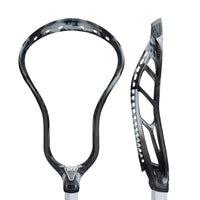
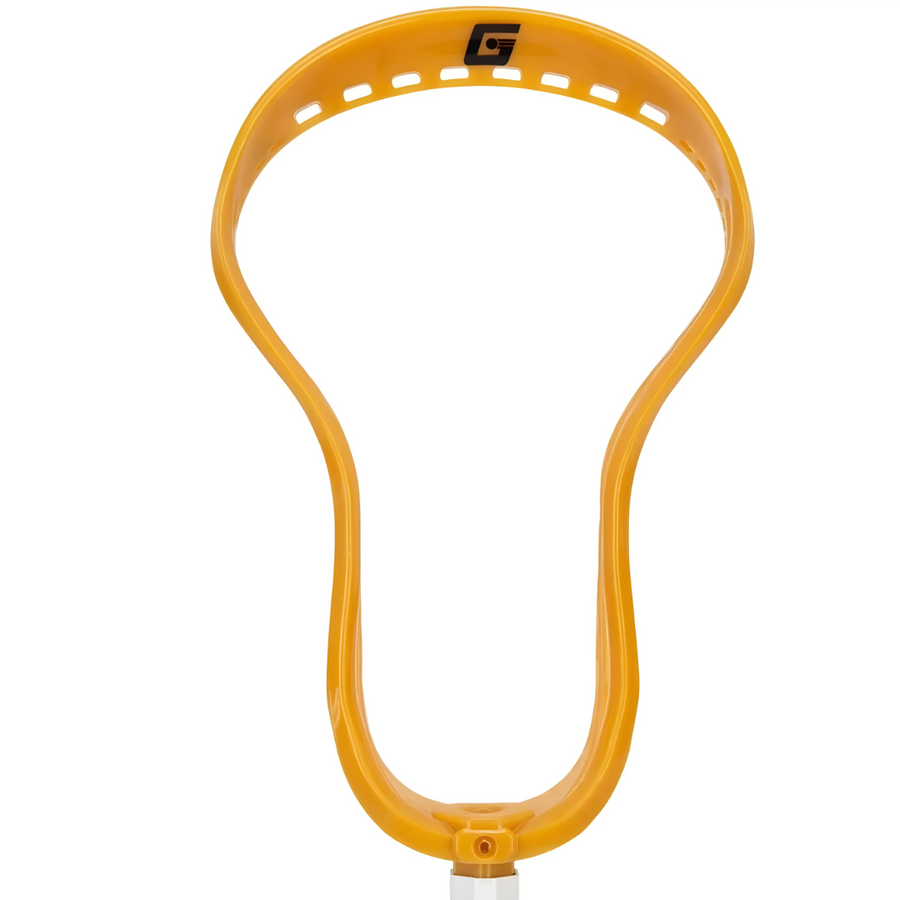
We may receive a commission if you make a purchase through a link on this page about the ECD Ion head review at no cost to you. This helps us keep this site free & we appreciate your support!
Shape, Material, & Scoop
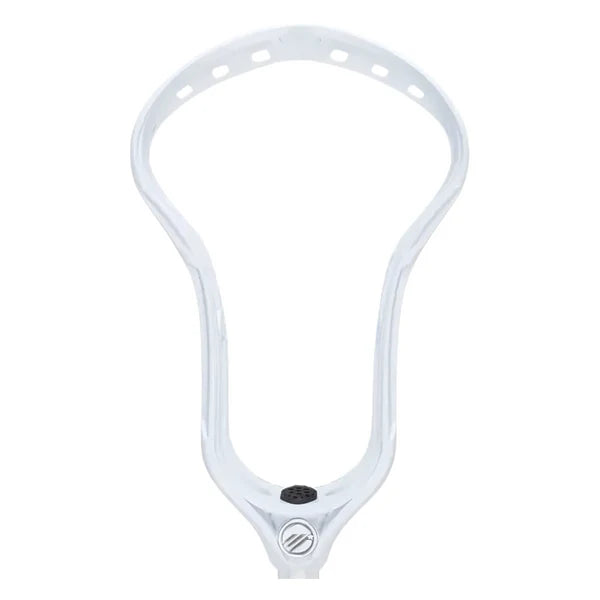
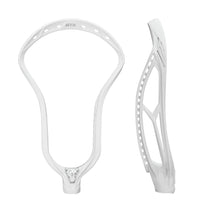
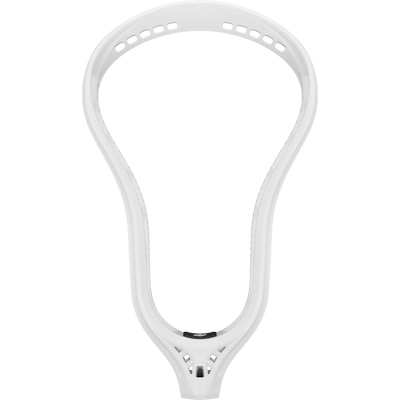
Most attackmen I've coached fall into one of two camps. Either they want a head that feels like an extension of their hand, or they want something with enough beef to hold up when a pole is hacking at their top side hand. The ECD Ion is built for the first camp, and it doesn't hide it.
Coach's note: I've watched the X attackmen I trust most, from upstate New York high school ball to Virginia Beach summer tournaments to the Ontario box kids who play field in the summer, and they all want the same thing: a head that gets out of the way. Quick hands, quick release, no wasted motion. That's the Ion.
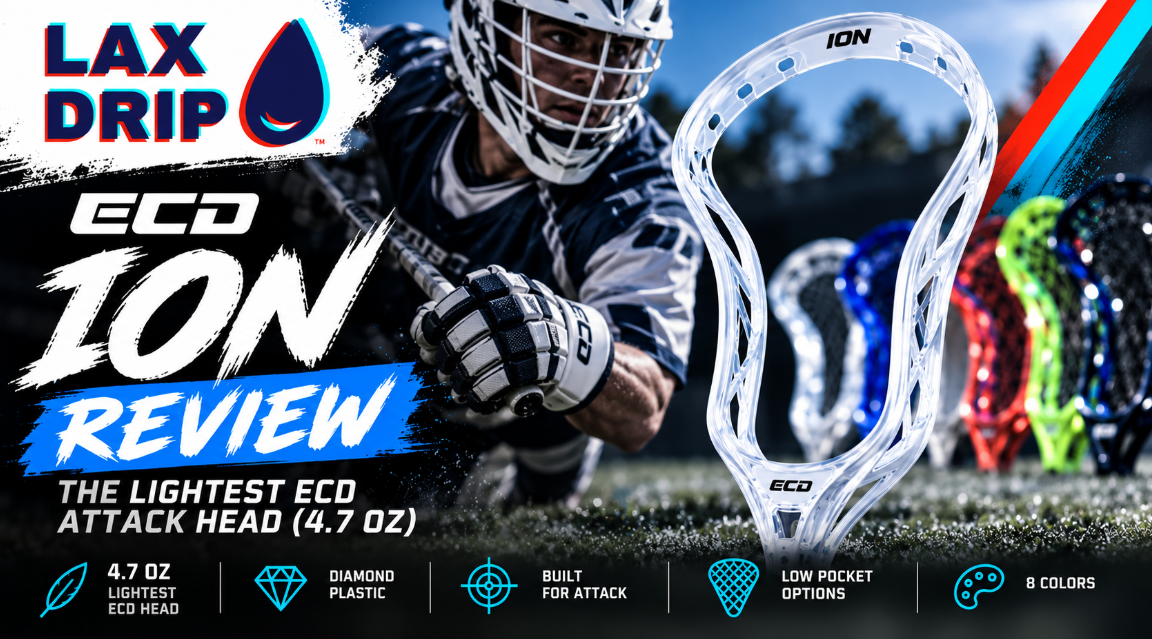
At 4.7 oz, this is the lightest head ECD makes and one of the lightest on the market. Light heads are fast through the air. When you're snapping off a split dodge or rolling back from X, a lighter head gets through the motion quicker and takes less effort to cradle through a full 60 minutes. It also helps your hands in tight spaces when you're feeding off the crease or hitting a cutter in the alley.
The face shape is tight, which is what you want on attack. A narrow face gives you better ball control and makes it harder for a defender to get a clean check on the ball. It also helps with accuracy. When you only get a half second look at the cage, a head that tracks where you point it matters.
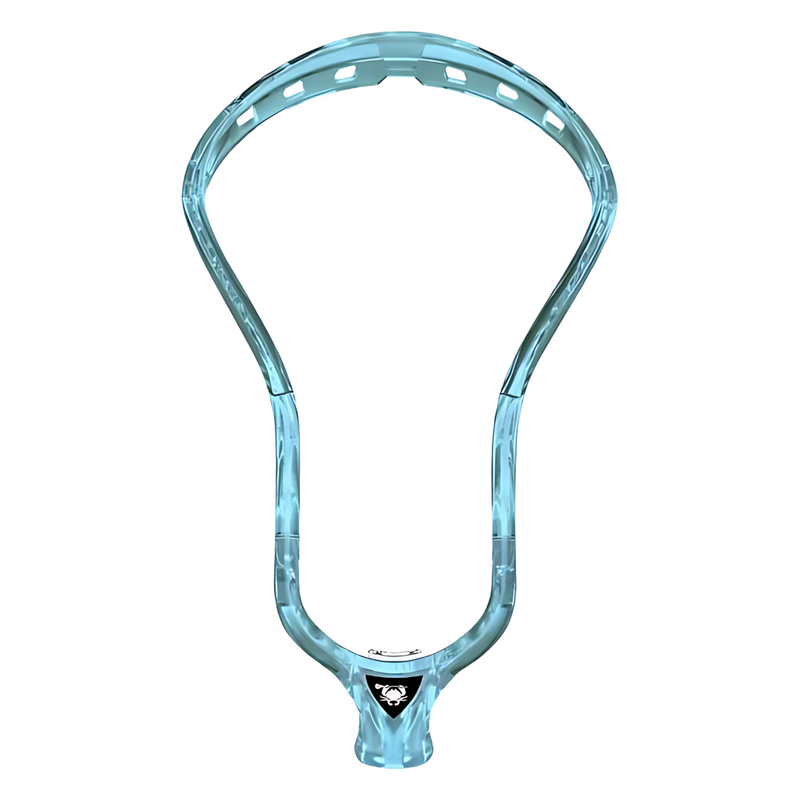
The head is made with Diamond Plastic, which ECD describes as ultra durable and semi transparent. The material is a big part of how they get the weight so low without making the head feel like a toy. Any time you go this light, there's a trade off in stiffness. A head in this weight range is going to feel more responsive than rigid, so if you're a hard shooting attackman who likes zero give in the head, you'll want to feel it in your hands first.
The scoop is built for attack play, and it handles well on ground balls. GBs for attackmen are about quick, clean pickups off the ground, especially in transition or on a riding play when the ball is loose. A lighter head lets you get in and out fast.
Stringing is where this head gives you a lot of room. It has 20 sidewall holes, so you can string almost any pocket setup you want. The head is designed around a low pocket, which fits what most attackmen want: a quick release and a ball that comes out clean. With that many holes, you can dial in your whip and hold exactly how you like it. I always tell players to string a pocket around how they shoot, not how the head looks on the shelf.
The look is the other big selling point. Diamond Plastic's semi transparent finish gives it a different look than a typical solid color head, and ECD offers it in eight colors. Galaxy and Lava stand out on the product page, and Clear is a clean option for guys who want the mesh and sidewall strings to show. It's Made in the USA, which a lot of players care about.
See it live
Want to see the Ion on the field and on the stringing bench? Here’s a review from YouTube.
Diamond Plastic is lightweight but marketed as durable
Eight color options
Made in the USA
Cons
$119.99 is on the higher end for a head
Lighter heads can feel less stiff than heavier options
Not a fit for midfielders who need a heavier head for checking
Better suited to intermediate and advanced players than beginners
Who is the ECD Ion for?
This head is made for attackmen, plain and simple. If you play behind the cage, dodge from X, or work the wing off a quick stick feed, the Ion fits how you play.
Offensive minded midfielders who run the box, play a lot of top side dodging, and don't need their head to take a beating could look at it too. Defensemen and LSMs should look elsewhere. You want more weight and a stiffer head when you're checking, sliding, and clearing.
If you're newer to the game, this head will work, but it's built for players who already have solid stick skills. A low pocket and a light head reward good hands. They won't hide bad ones.
Final Verdict
The ECD Ion does what it says. It's light, fast, and made for attack. If you play a quick, skilled game built on dodging and finishing, this is one of the better lightweight options available. The trade off is the usual one with ultralight heads: you're giving up some stiffness for speed.
At $119.99, you're paying for the weight and the look, and for most attackmen who want a head that disappears in their hands, that's worth it. Just be ready to string it right. Pair it with a light attack shaft like the Maverik A7 175 Attack Shaft ($99.99) or the ECD Carbon 4.0 Attack/Midfield Shaft ($124.99).
We may receive a commission if you make a purchase through a link on this page about the ECD Ion head review at no cost to you. This helps us keep this site free & we appreciate your support!
Overview
The elite attacker option from ECD. The ECD Ion is for the quick attackman who loves to look good and play good.
Picture the kid running behind the cage at X, the one who lives on a one-handed cradle around the crease and finishes on the doorstep. That’s who this head was built for, whether he’s doing it in a Virginia Beach summer tournament, a Section III playoff game in upstate New York, or bringing box-lacrosse hands from Ontario to the field.
Key Details
Brand
ECD (East Coast Dyes)
Position
Attack
Cost
$119.99
Level
Intermediate | Advanced
Legality
All levels of play
Year released
2022
Colors
White
Clear
Midnight
Ruby
Frost
Spec
Details
Weight
4.7 oz
Plastic
Diamond Plastic
Pocket
Low (built around the offset)
Stringing holes
6 top, 20 sidewall per side, 4 bottom
Face shape
Pinched, narrowest at the middle, flares toward the scoop
Shape, Material, & Scoop
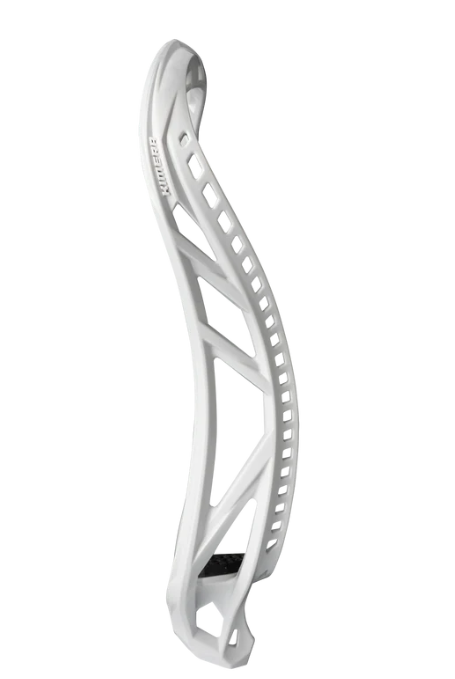
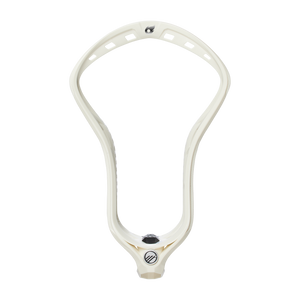
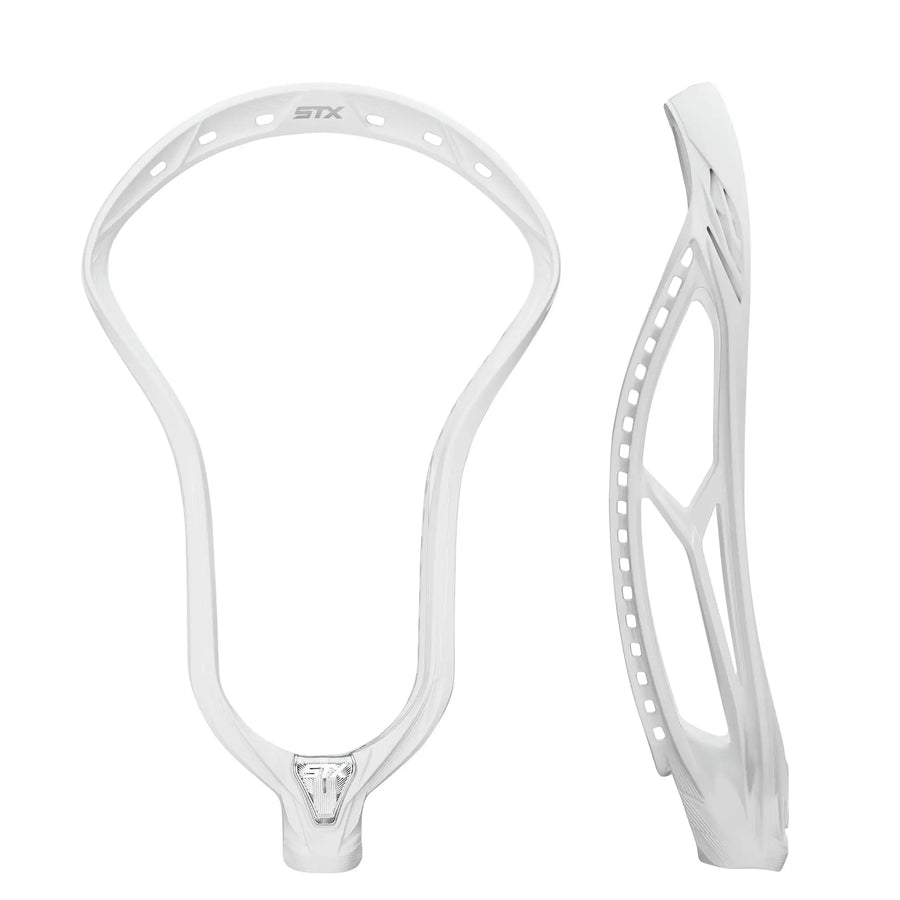
It’s a fairly pinched head, which makes sense for an attackman. The pinch gets narrower towards the middle of the head, then flares out somewhat aggressively.
The head is incredibly light at 4.7 oz. ECD designed it to be very aerodynamic, so it cuts through the wind much better than other heads do. Quick attackmen would love this head. (Want to compare? See the lightest lacrosse heads and shafts.)
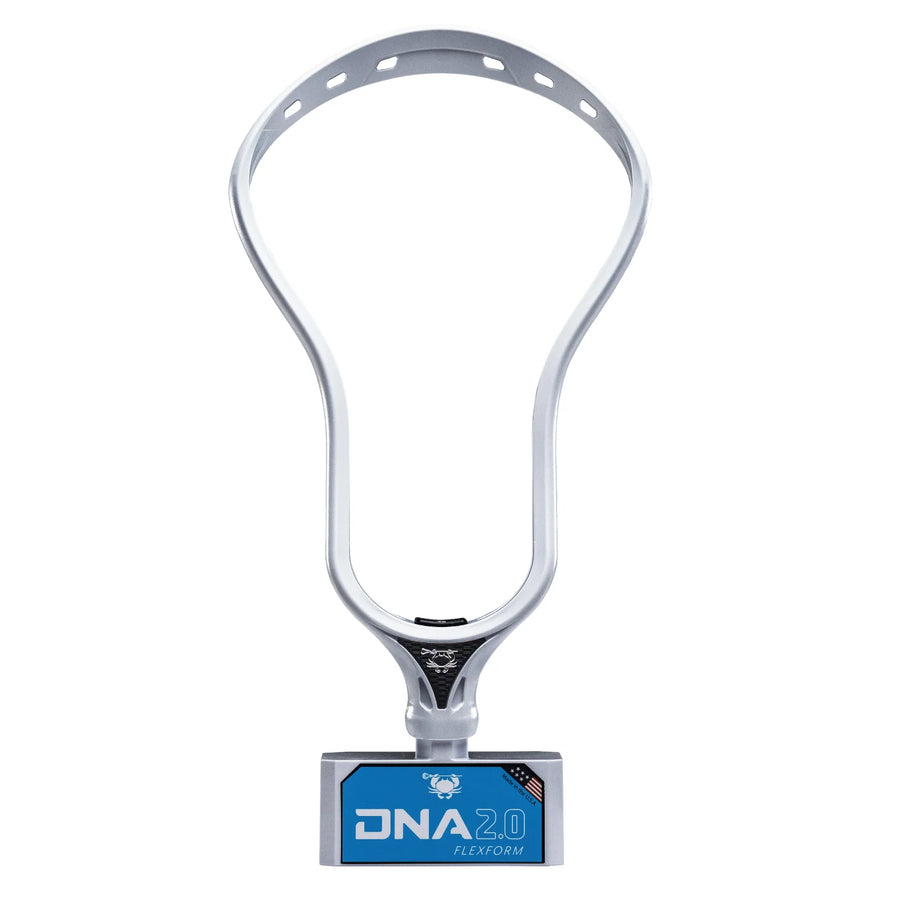
The scoop is solid and very much like the DNA 2.0. You don’t have to get down very low to pick up a ball, which is something that I like.
The Diamond Plastic doesn’t really add many practical features that I’m aware of. It looks great, but the head breaks fairly often, which could be due to the amount of plastic or the plastic itself. There’s no telling which one it is unless ECD makes a heavier version.
The Ion’s stringing holes are the same as all of ECD’s new heads, with 6 top string holes, 20 sidewall holes per side, and 4 bottom string holes.
It’s tailored pretty much exclusively to a low pocket because of the offset. Attackmen typically prefer lower pockets for one-handed cradling, and that’s who the head was designed for. It would be tough to run even a mid pocket in this, but it is doable (ECD has a mid-pocket tutorial in the See it live section). Here’s more on the different types of lacrosse pockets.
Aesthetics
The Diamond Plastic looks really good and really stands out on the field. There is nothing else like it on the market, so it’s very unique.
The black and silver medallion on the throat looks good. Another color might have popped a little more, but the head pops enough already.
Pros & Cons of the ECD Ion
Pros
Plenty of sidewall holes: there are many options to string this stick, with 20 sidewall holes available.
Light: the head is super light and one of the lightest heads on the market.
Cons
Not very durable: some players have commented on the lack of durability. That will happen with light heads because there’s less material.
Cost: because the Diamond Plastic is fairly new, it’s an expensive head, coming in around $20 more than many other elite heads.
Who is the ECD Ion for?
This head is made almost exclusively for attackmen. Offensive middies can use this head, but it’s more likely to break if they get stuck on defense, and it doesn’t work great with a mid pocket.
If you play defense in any capacity, I would not recommend this head at all. The lack of plastic in the head makes it more fragile than a midfield or defensive head, so it breaks more easily. Poles, check out our best defensive lacrosse heads, and middies, see our best heads for middies.
See it live
Want to see the Ion on the field? Here’s a full review from YouTube.
If I were an attackman, I would definitely consider using this head. The light weight allows for quicker movement and shooting, and the head is designed for a low pocket, which attackmen love.
I would be worried about the durability, especially at the $119.99 price point, but many other attack heads have the same issue. I would like to see the head become a little stronger, especially at that price.
The Diamond Plastic looks amazing and is definitely going to stand out on the field. It’s a very specialized head, so defensive personnel should not be buying it. Overall, it’s a great attack head but wouldn’t be great for other positions. Compare it against our best attack lacrosse heads.
We may receive a commission if you make a purchase through a link on this page about the ECD DNA 2.0 head review at no cost to you. This helps us keep this site free & we appreciate your support!
Overview
The “Swiss Army knife” of the ECD head line. Designed to be effective for any position on the field (other than faceoff and goalie).
That’s the kind of head every two-way middie wants: one stick you can trust taking a run down the alley, picking up a ground ball in a scrum, and sliding to a dodger on the back end. Whether you’re running the box for a Section III team in upstate New York, playing summer ball around Virginia Beach, or bringing box-lacrosse hands from Ontario to the field, a head like this doesn’t make you pick a side of the field.
Key Details
Brand
ECD (East Coast Dyes)
Position
Midfield
Cost
$99.99
Level
Intermediate | Advanced
Legality
All levels of play
Year released
2023
Colors
White
Black
ECD Blue
Spec
Details
Weight
5.5 oz
Plastic
FlexForm
Pocket
Best for mid (max offset in the middle)
Stringing holes
6 top, 20 sidewall per side, 4 bottom
Face shape
Versatile, slightly tighter than the original DNA
Heads up: the DNA 2.0 was showing out of stock at Battle Lax when we last checked. If it’s still sold out, the ECD Delta ($109.99) is the in-stock ECD option for poles, and the Maverik Tactik 3.0 ($109.99) is a strong two-way middie head.
Shape, Material, & Scoop
The face shape is not super tight because of the versatile nature of the head, but ECD made some adjustments to make the face shape a little tighter than the previous DNA. This, along with the decrease in weight from the first DNA, makes this head slightly more offensive minded.
The head is still on the heavier side of elite heads, weighing in at 5.5 oz. As a two-way middie myself, I personally like my heads to be a little heavier, as I get more durability when checking and little to no flex when shooting. It’s probably a little heavy for an attackman, but it can still be used if you like a heavier head.
The scoop is good. It seemed like you could scoop well at many different angles of attack.
The new FlexForm plastic passed the ECD “torture test” with flying colors. You can watch it on ECD’s YouTube channel (it’s in the See it live section below).
Stringing
The DNA 2.0 has a good amount of stringing holes. With the head being versatile, pocket customization is really important, as different positions like different pocket shapes. There are 6 top string holes, 20 sidewall holes per side, and 4 bottom string holes.
The top sidewall holes are rectangular and pretty large, so you can fit multiple wraps to tighten the mesh to the top. The other sidewall holes are oval-shaped and a good size to easily fit a sidewall string through.
The head’s shape is more tailored to a mid pocket, as the max offset is in the middle of the head, but with so many stringing holes, any pocket can be used well. (Here are the different types of lacrosse pockets and our pick for the best lacrosse mesh.)
The look of the head is great. It’s sleek and glossy, which looks really good in all 3 colors. The ECD Blue was a new color for this release, and a lot of players were excited about it.
The throat is very eye-catching. The design is modern, and the crab medallion on the front really draws attention to it.
Pros & Cons of the ECD DNA 2.0
Pros
Plenty of sidewall holes: there are many options to string this stick, with 20 sidewall holes available.
Durable: the head is ultra durable. Most heads don’t do well in the “torture test,” but ECD’s new FlexForm plastic is incredibly durable.
Cons
Heavy: it’s on the heavier side of elite heads. This could be perfect for an offensive-minded defenseman, a defensive middie, or an offensive player who likes a little heft to their head (like me).
Who is the ECD DNA 2.0 for?
This head is made for pretty much every field position. It’s tailored for the more all-around player, so two-way middies, defensive middies, and LSMs would thrive with this head.
This is a great head with a great look. It’s definitely an all-around head with a good mix of offensive and defensive qualities. That can make it relatively niche, as it’s good at many things but master of none.
It’s a very durable head, as shown by the torture test in the ECD video, so it should last you a while. Overall, I’m a fan of the head and would definitely use it in a game myself.
We may receive a commission if you make a purchase through a link on this page about the ECD Mirage 3.0 lacrosse head at no cost to you. This helps us keep this site free & we appreciate your support!
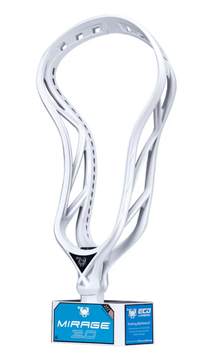
Soon after the announcement of the ECD Mirage 3.0 lacrosse head release date, players rushed to order it online. Well, I got my hands on one too, and here are the details of my ECD Mirage 3.0 lacrosse head review.
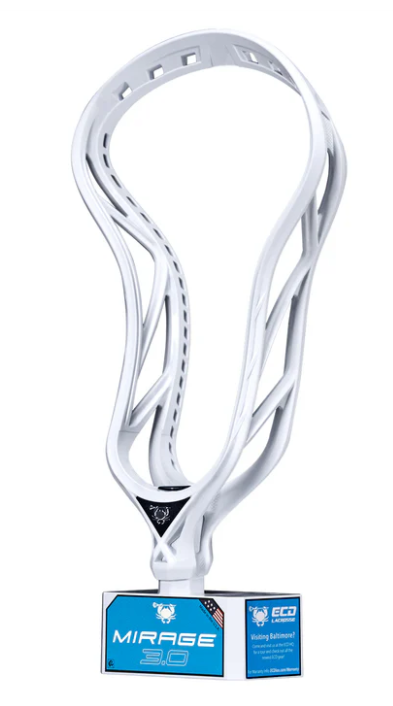
ECD claims the Mirage 3.0 lacrosse head is 10% more durable than its predecessor. It has thicker side rails and an even stronger scoop, but it weighs the same. Although it retains the perfect shooting face of its predecessor, I have seen the thicker rails slow down the ball release.
I put it through the same reps I’d run with any attackman before game day: time-and-room shots from up top, quick sticks on the doorstep, and live one-on-ones with a pole hacking at my hands. Whether you’re shooting through humid July tournaments around Virginia Beach, a raw March practice in upstate New York or bringing box hands from Ontario to the field game, a head has to hold its shape. Let’s find out if the extra stiffness of the Mirage 3.0 keeps the balanced control and power of its predecessor.
Key Features and Specifications of the ECD Mirage 3.0 Lacrosse Head
Here are the key specifications for a quick overview of the ECD Mirage 3.0 lacrosse head.
Brand
ECD (East Coast Dyes)
Position
Attack | Offensive Midfield
Cost
$109.99
Weight
5.1 oz
Legality
NCAA & NFHS
Year released
2025
Colors
White
Black
Graphene Grey
Spec
Details
Pocket Location
Mid-High
Face Shape
Tight, pinched mid-walls, narrow throat
Sidewall
Three diagonal struts
Sidewall Holes
20, evenly spaced
Scoop
Tighter, pointed, slight forward cant
Durability
10% more durable than the Mirage 2.0 (per ECD)
Variants
Standard, Graphene, BOX
Pros & Cons
Pros
Extremely durable and maintains its shape in summer
I rate the ECD Mirage 3.0 head an 8.1/10 on the Drip Meter.
Category
Bar
Score
Overall Drip MeterElite shooting and summer-proof durability. Docked for its smaller catching area and no faceoff flex.
8.1
Who’s This Head Made For?
ECD designed the Mirage 3.0 specifically for attackmen who value long-range shooting. The stiffer plastic and aggressive offset also make it a suitable head for offensive middies and two-way players who like to shoot on the run. (Middies, compare it with our best lacrosse heads for middies.)
Moreover, it features a redesigned Mirage 3.0 ball stop and a matte finish that gives it a clean, modern look. The sharper cuts along the bottom rails and thicker mid-rails keep it light while making it one of the most durable heads of 2025. However, it’s not the lightest attack head on the market, weighing 5.1 oz.
Besides, it’s also available in a Graphene variant, which is lighter and even more robust than the standard white and black versions.
Accuracy of Shot and Pass
High-speed shooting is the highlight of this ECD Mirage 3.0 lacrosse head review. I brought the pre-strung Romar Dennis shooting replica, the ECD Custom Color Pro Replica, and it has a clean mid-high pocket that offers accurate and consistent shooting. It feels like ECD has once again hit the sweet spot between power, hold, and stiffness.
It has a narrow throat that channels the ball perfectly, helping me hit passes downfield and pick corners with confidence. The wide face shape with pinched walls in the middle locks in the ball for on-the-run shots without any rattle.
Its mid-high pocket also provides added whip for long-range shooting. However, it doesn’t feel great for quick low-angle feeds. (Here’s how the different types of lacrosse pockets compare.)
Compared to the Mirage 2, shot speed feels slightly better thanks to the stiffer plastic. However, that stiffness also means less flex on release. Thus, if you value a quicker release over perfect shooting, go for the StringKing Mark 3V (read our Mark 3V review).
Catching and Cradling
The Mirage 3.0 has a tight face shape and a narrow throat that are excellent for keeping the ball locked in when cradling through traffic. However, it has less surface area to snag the ball. I noticed that I missed some misdirected catches, especially when reaching for passes outside my head’s frame.
Moreover, its mid-high pocket holds the ball snugly during two-handed cradles and protects it well on dodges. Its rigid and pinched sidewalls with three diagonal struts easily absorbed checks.
Still, this ECD Mirage 3.0 lacrosse head review wouldn’t mark it as the best for one-handed loose cradling. So, if you want the ball to sit naturally low for one-handed cradling, you should opt for a mid-low pocket. It has 20 evenly spaced sidewall holes for pocket customization.
Checking
Checking is another strong section of this ECD Mirage 3.0 lacrosse head review, thanks to its aggressive offset. It lets me press the head right onto an opponent’s hands and disrupt their cradle without slipping off. Its narrow scoop and pinched face shape efficiently dig into tight passing lanes and knock the ball loose.
The shorter throat delivers smooth checks without the annoying vibration you get from lighter heads. Its three diagonal struts support the stiff sidewalls and significantly reduce flex on contact, giving me confidence it won’t warp mid-season.
Even though it weighs only 5.1 oz, the weight distribution feels balanced enough to absorb checks and snap back into shape instantly. After weeks of physical play, it hasn’t shown any warping or plastic fatigue even in hot weather. Compared to the Mirage 2.0, this version is far more durable for summer play.
Ground Ball Pick-Up and Face-Off
Unlike the Mirage 2.0, the scoop of the ECD Mirage 3.0 lacrosse head has a tighter, more pointed shape with a slight forward cant. I could easily scoop ground balls without resistance. It holds its shape well, so even in heavy traffic or on turf, I didn’t feel the scoop flex. Besides, the aggressive offset cleanly funnels the ball into the pocket once you’re under it.
Yet, I had to drop lower to pick up ground balls because of its rounded angle. Thus, if you are a beginner or prefer a flatter scoop, choose the StringKing Mark 3V.
For this ECD Mirage 3.0 lacrosse head review, I also tested it in face-off battles. However, it’s a pure shooting head with no flex to win face-offs. The Graphene version is even stiffer around the rails, so it doesn’t bend for clamps. FOGOs, check our best faceoff heads instead.
Comparison with Mirage 2.0
I have seen the ECD Mirage 2.0 warp in the Florida heat, but the Mirage 3.0 has better stiffness and durability. Although ECD didn’t modify the face shape, the stiffness improves the performance.
The rails and scoop are thicker and easily absorb powerful checks. The head doesn’t flex or whip like the ECD Mirage 2.0. It also gave me better control over the ball while cradling. However, I suggest sticking with the Mirage 2.0 if you prefer a slight whip when shooting.
Besides, the ECD Mirage 3.0 lacrosse head is more aesthetically designed than the Mirage 2.0. The stylish ball stop and premium color options give it a high-end look.
When Was the ECD Mirage 3.0 Lacrosse Head Released?
The ECD Mirage 3.0 lacrosse head was released in 2025, offering upgraded durability, a redesigned ball stop, and stiffer rails compared to its predecessor, the Mirage 2.0.
What Colors Is the ECD Mirage 3.0 Available In?
The ECD Mirage 3.0 comes in White, Black, and Graphene Grey. The Graphene variant is lighter and more robust than the standard versions.
How Much Does the ECD Mirage 3.0 Lacrosse Head Weigh?
The ECD Mirage 3.0 weighs 5.1 ounces. Despite its added stiffness and thicker rails, it maintains the same weight as the previous Mirage 2.0 model.
What Position Is the ECD Mirage 3.0 Designed For?
The Mirage 3.0 is built for attackmen and offensive midfielders who prioritize long-range shooting and ball control in high-contact situations. See more of our best attack lacrosse heads.
Is the ECD Mirage 3.0 Legal for High School and College Play?
Yes, the ECD Mirage 3.0 conforms to both NCAA and NFHS rules, making it legal for use in high school and college lacrosse games. Here’s what makes a lacrosse stick illegal.
Final Word
My ECD Mirage 3.0 lacrosse head review marks it as one of the best shooting heads of the year so far. The high-speed shooting and accurate short-range passing make it suitable for elite PLL players.
Some players will need time to adjust to the stiff feel and slightly narrow face. Otherwise, it offers excellent control of the ball while cradling. The pinched sidewalls prevent the ball from popping out of the head on the opponent’s checks.
Still, if you want a flatter scoop and slight flex, you can opt for the StringKing Mark 3V or the Mirage 2.0.
The successor to the Optik 3.0: lighter, stiffer and dressed up with a honeycomb ball stop. A week of testing on attack and in the alley.
CSConnor Stifel · Updated July 29, 2025 · 7 min read
Drip score9.2/ 10
LaxDrip verdict: a polished upgrade over the Optik 3 with a shorter throat, added durability and consistent long-range accuracy. A perfect attack head.
We may receive a commission if you make a purchase through a link on this page about the Maverik Optik Force lacrosse head at no cost to you. This helps us keep this site free & we appreciate your support!
I have seen famous players like Asher Nolting using Maverik heads. Thus, when I heard that Maverik had released the successor of the Optik 3.0 after 3 years, I had to get the limited edition of the Optik Force. After a week of testing it, I am here with a Maverik Optik Force lacrosse head review.
Maverik’s design team has worked hard to make it super light with amazing styling at the ball stop and side rails. So, let’s see if this stylish lacrosse head for attack and midfield offers the best performance.
I put it through what I’d put any new attack head through before a kid takes it into a game: wall ball with both hands, time-and-room shots from up top, quick sticks on the doorstep, and live one-on-ones with a pole hacking at my gloves. Same drills you’d see at a Virginia Beach summer clinic, a Section III practice in upstate New York, or a box session in Ontario.
Key Features and Specifications
Before we move on to the Maverik Optik Force lacrosse head review, I would like to share its key features first.
Brand
Maverik
Position
Attack | Midfield
Cost
$109.99
Level
Intermediate | Advanced
Legality
NCAA & NFHS
Year released
2024
Colors
White
Grey
Black
Hyperlite Blue
Grey Splatter
Navy Blue Splatter
Spec
Details
Weight
4.85 oz
Pocket Location
Mid-Low
Stiffness
Extremely stiff (Force Tech)
Sidewall Holes
20
Sidewall
Three struts with honeycomb texture
Throat
Short, narrow, one screw hole
Ball Stop
Honeycomb-style 3D hollow
Predecessor
Maverik Optik 3.0
Pros & Cons
Pros
Lightweight and stiff
Accurate long-distance shooting
Multiple sidewall holes for pocket customization
Better ground-ball control and cradling
Amazing honeycomb ball stop
Cons
Needs pocket customization to mid-low for better control
I would rate the Maverik Optik Force lacrosse head a 9.2/10 on the Drip Meter.
Category
Bar
Score
Overall Drip MeterLightweight, extremely stiff and accurate from distance. Docked slightly for faceoff rigidity and raw shot speed.
9.2
Who’s This Head Made For?
Maverik has released the Optik Force, one of the most stylish attack heads of 2024. It features a clean white look with a unique honeycomb texture along the side rails and throat. This design isn’t just aesthetic; it improves the grip and looks amazing, especially after dyeing. Also, Maverik has launched a limited edition with a splatter effect in gray and navy.
This Maverik Optik Force lacrosse head review for young players includes another surprise: the head has a honeycomb-style 3D hollow ball stop. It’s not as out there as the RC1 attack head, but the design is pretty cool.
Besides, the Maverik Optik Force has a shorter throat and a unique bottom rail design. While it’s primarily for attack, I think it’s also suitable for the midfielder who loves transitioning the ball up field. (Middies, see our best lacrosse heads for middies.)
Accuracy of Shot and Pass
Shooting speed is the most important part of the Maverik Optik Force lacrosse head review because it’s important for attack positions. The Maverik Optik Force is lighter and stiffer than the Optik 3 to offer higher shooting speed.
At 4.85 ounces, it’s one of the lightest Optik models I’ve used. It’s because the updated honeycomb design in the throat and sidewalls shaves off a lot of weight.
Besides, the narrow and shorter throat design provides better hand placement to generate power. The mid-low pocket offers better control, resulting in a smooth, quick release.
It’s not the most powerful head I’ve used, but it makes up for that with consistent accuracy. Even if I am taking a long-distance shot, the ball hits the target without spreading off. However, you can go for the Nike Surge Elite lacrosse head if you rely on speedy short-distance shots.
With the shorter throat, I appreciate the balance between the top and bottom rails. The top rail’s wider profile helps make catching easy, especially when securing passes on the run. It easily directs the ball to the sweet spot.
Most Maverik Optik Force lacrosse head reviews suggested creating a low pocket for better cradling. However, I lost the ball to strong checks more than once when playing with the low pocket.
Thus, using the 20 sidewall holes, I strung a mid-low pocket with StringKing Type 5s performance mesh, and it worked well with the head design. The mid-low pocket depth gave me extra security during checks. (Here’s more on the different types of lacrosse pockets.)
Moreover, the pinched bottom rail provided extra pocket control. It’s fantastic for quick stick handling while dodging defenders. The offset is also deep enough to cradle comfortably while keeping the ball secure.
Yet, the tapered edges of the scoop cause slight difficulty when approaching the ball from an angle. Thus, if you rely on the side-catching technique, try the StringKing Mark 3V (read our Mark 3V review).
Checking
Attack heads usually don’t deliver stronger checks because they are lightweight. However, the Maverik Optik Force lacrosse head is strong enough to throw powerful checks.
Although most Maverik heads are lightweight, the added Force Tech material makes it impressively stiff without sacrificing weight. At just 4.85 ounces, it’s light enough to keep your hands quick but solid enough to stand against hard checks or consistent use.
Besides, I liked the stiff side rails with three struts featuring a honeycomb texture. This stiffness improves contact play, providing confidence during checks. The head smoothly absorbs impact while transferring minimal rattle despite having only one screw hole.
The mid-low pocket securely scoops the groundballs, perfect for transitioning from defense to offense as a midfielder.
Ground Ball Pick-Up and Faceoff
The scoop on the Maverik Optik Force has an aggressive angle that works beautifully for ground balls. The wide scoop lets me attack the ball confidently, even when fighting for possession against two or three opponents.
It has the right shape to slide under the ball without getting caught up on the turf, which is a huge plus during tight, high-pressure moments.
However, the lack of flexibility makes it difficult to win loose balls during a faceoff. The head holds its shape well and won’t warp easily, but that rigidity makes it less forgiving when trying to clamp during faceoffs.
Despite the amazing groundball scooping, my Maverik Optik Force lacrosse head review won’t suggest it to faceoff specialists. I think the StringKing Mark 3F and Nike CEO 3 can offer better options. See all our best faceoff heads.
When Was the Maverik Optik Force Lacrosse Head Released?
The Maverik Optik Force lacrosse head was released in 2024, marking it as a successor to the Optik 3.0 after three years.
What Is the Weight of the Maverik Optik Force Lacrosse Head?
The Maverik Optik Force lacrosse head weighs 4.85 ounces, making it one of the lightest heads for attack and offensive midfield positions. For more, see our lightest lacrosse heads and shafts.
What Colors Are Available for the Maverik Optik Force Lacrosse Head?
The Maverik Optik Force lacrosse head is available in White, Grey, Black, Hyperlite Blue, Grey Splatter, and Navy Blue Splatter.
What Are the Key Features of the Maverik Optik Force Lacrosse Head?
The Maverik Optik Force features extreme stiffness, a mid-low pocket, 20 sidewall holes, a honeycomb ball stop, a short throat design, and a lightweight build for quick releases and accurate shots.
Is the Maverik Optik Force Lacrosse Head Legal for NCAA and NFHS Play?
Yes, the Maverik Optik Force lacrosse head conforms to NCAA and NFHS rules, making it suitable for competitive play at intermediate and advanced levels. Here’s what makes a lacrosse stick illegal.
Final Word
The Maverik Optik 3 was solid, but the Optik Force feels like a polished upgrade, especially with its shorter throat and added durability.
I wouldn’t deny that it is extremely stiff and the tapered sides of the scoop have a learning curve. Yet, it’s a perfect attack head. I loved how easily it snatches up loose balls and delivers accurate shots.
Therefore, carefully consider the trade-offs from this Maverik Optik Force lacrosse head review and then buy it.
We may receive a commission if you make a purchase through a link on this page about the STX Magnet 2K lacrosse head review at no cost to you. This helps us keep this site free & we appreciate your support!
STX dropped the STX Magnet 2K lacrosse head on May 23, 2025, and it’s already getting attention from close defenders and LSMs who’ve been waiting for a worthy successor to the Hammer line. From the poles I’ve coached in upstate New York to the guys running Virginia Beach summer ball and the box d-men up in Ontario, the Hammer has been a staple for years, so this head has big shoes to fill.
At $109.99, it sits right in the intermediate-to-advanced price range, and STX is pitching it hard on one idea: ground ball dominance.
The Magnet 2K weighs approximately 5.5 oz, features a maximum Speed Scoop profile, and uses STX’s proprietary EnduraForm plastic. The same material made the Hammer 1K one of the most durable defensive heads on the market. This is a purpose-built defensive weapon, and it mostly delivers on that promise.
Key Features and Specifications of the STX Magnet 2K Lacrosse Head
The maximal Speed Scoop profile is genuinely one of the best low-to-ground scooping setups I’ve used on a D-head, making ground balls in traffic much cleaner
EnduraForm plastic holds its shape even after repeated hard checks and in high heat, exactly what you want over a full season
18 side holes give enough stringing flexibility to dial in a defined channel with good hold, even if it falls slightly short of the 20-hole options you get on the Havok 2
Hammer-inspired Y-Strut adds real rigidity without adding dead weight, keeping poke checks sharp and controlled
Limited Edition Blue Hero and Special Colored variants add some personality if you want to stand out on the field
Cons
The tighter face shape reduces the catching surface, which can make handling off-target passes harder in a fast break
At 5.5 oz, it’s heavier than the Maverik Havok 2 (5.2 oz), which LSMs who prioritize transition speed will notice
Players who prefer maximum pocket customization may feel limited compared to the 20-hole sidewall configurations on some competing heads
Not the right call for beginners, the defined channel and stiff feel require solid mechanics to get the most out of it
STX Magnet 2K Performance Rating
Based on its on-field performance, I would rate the STX Magnet 2K 7.8/10.
Attribute
Bar
Rating
Accuracy of Shot and PassStiff sidewalls and a defined narrow channel create a consistent release point for precise shots and accurate feeds.
8.5
CheckingReinforced Y-Strut and EnduraForm material absorb contact well, allowing controlled checks without unwanted flex.
8
Ball SecurityPinched sidewalls and a mid-to-low pocket keep the ball secure during dodges and cradling.
8
CatchingTight face shape improves control but reduces the catching surface on off-target passes.
7.5
Ground Ball PickupAggressive Speed Scoop design performs well in traffic and at low angles, though technique matters.
8
Faceoff PerformanceNot built for faceoffs: stiff rails and scoop lack flexibility for clamping.
5
StringingMultiple stringing holes allow high customization for a defined channel and consistent pocket.
9
DurabilityEnduraForm material and reinforced structure maintain shape over time, even under heat and heavy play.
9
Aesthetics / DesignClean matte finish with modern design and premium color options, including limited editions.
8
CostPremium pricing, but justified for intermediate to advanced players seeking durability and control.
7.5
OverallA ground ball-focused defensive head built for close defenders and LSMs who prioritize possession and physical play.
7.8/10
Who’s This Head Made For?
The STX Magnet 2K lacrosse head was built for close defensemen and long-stick middies at the intermediate to advanced level who want to win the ground ball battle and check with authority.
If you’re the type of defender who prioritizes possession first, transition second, this head fits your game. It works particularly well for:
Close defenders who need durability and checking power over multiple seasons
LSMs who play a physical, possession-first style and want a reliable, clear option after the takeaway
D-middies looking for something stiffer and more ground-ball-specific than a two-way head like the STX Stallion 1K
If you’re an LSM who spends a lot of time in transition and wants to cut weight, you might lean toward the lighter Maverik Havok 2. But if your game starts and ends with ground ball battles and physical defending, the Magnet 2K belongs on your short list.
The Limited Edition Blue Hero is the same head in a sharp colorway. No performance difference, just a clean look if you want something that stands out. The Special Colored variant is worth checking out, too, if you’re particular about matching your setup.
Given the Magnet 2K’s stiff frame and defensive purpose, I’d pair it with something durable and weighted toward power. The STX Sc-Ti Defense shafts are a natural fit, particularly the O or X+ shape if you’re a close defender who’s putting force into every check. For LSMs who want a carbon option with durability to match, the ECD Carbon Pro 3.0 Defense is another solid choice, as covered in our best defense lacrosse shafts guide. Battle Lax currently stocks its successor, the ECD Carbon 4.0 Defense.
Accuracy of Shot and Pass
When I ran the Magnet 2K through passing and shooting drills, the first thing that stood out was how consistent the release felt. The defined channel created by the tight sidewalls and mid-high pocket gives you a predictable release point on both shots and feeds, which matters when you’re clearing under pressure or making a 35-yard outlet.
The 6 top holes and 18 side holes give you enough to build that channel properly. I set up a mid-high pocket with a tight channel, and the hold on hard passes was exactly what I wanted, no rattle, no unexpected fliers.
Compared to the STX Stallion 1K, which has only 16 side holes, the Magnet 2K’s extra 2 holes per side give you a little more pocket shaping flexibility. That might seem minor, but when you’re trying to optimize release consistency at the D-mid level, it actually matters.
If you prioritize pinpoint outlet passes over pure defensive utility, you might find the ECD Delta’s wider face shape more forgiving. But for a defenseman who wants control on the clear, the Magnet 2K delivers.
Catching and Cradling
The Magnet 2K’s tighter face shape is a clear trade-off. Ball security during cradling is noticeably solid, especially one-on-one when an attackman is slapping at your shaft. The pinched sidewalls do their job in keeping the ball seated in the pocket.
But catching, especially on off-target passes, takes a hit. The narrower catching window means you’re penalized for passes that aren’t perfectly placed. In a game situation, when you’re receiving an outlet or trying to intercept a redirect, that tighter face can be a liability.
I’d give the edge here to something like the ECD Delta (see our ECD Delta review), which has a wider face profile that makes intercepting passes from variable angles significantly easier. The Magnet 2K trades that wider catching surface for better hold and security, which is the right trade for a close defender. For an LSM running with the ball in transition, it’s worth being aware of.
Checking
This is where the Magnet 2K earns its reputation. The reinforced Y-Strut and EnduraForm plastic combination handles impact without deforming in the way softer heads can over a season. Hard poke checks, slap checks, and lift attempts consistently felt controlled and sharp.
There’s no unwanted flex when you’re throwing checks at full force. That’s what you want as a close defender. The Hammer 1K had the same DNA here, and the Magnet 2K carries it forward without regressing.
Where it particularly shines is on repeated contact over the course of a game. I’ve played with heads that start to feel slightly mushy after heavy use in hot weather. The EnduraForm material doesn’t do that. One parent reviewing it online noted that after stringing it up, it quickly became their son’s main stick, with the stiffness immediately reminding them of the Hammer line.
For comparison, the Maverik Havok 2 uses Duratough material and a 4-strut design that also holds up well. The Havok 2 has a slight weight advantage at 5.2 oz, but the Magnet 2K’s Y-Strut architecture distributes force more evenly, which I think gives it a marginal edge on checking stiffness.
Ground Ball Pick-Up and Face-Off
Ground balls are the whole pitch of this head, and it mostly backs it up. The Speed Scoop geometry is aggressive and flat-to-the-ground, channeling the ball into the pocket without requiring you to get your butt end all the way down to the turf. In contested ground ball situations, that angle makes a real difference.
I ran through ground ball pickup drills on both turf and grass surfaces, and the Magnet 2K was consistent. In traffic, the aggressive scoop geometry makes scrambles more reliable. The one caveat: if your technique is off, particularly if you’re coming in at a steep angle, you’ll lose the ball more than you’d expect. The scoop rewards proper body positioning.
Faceoff use is essentially off the table. The stiff rails and rigid scoop don’t have the flex needed for effective clamping. If you’re a FOGO looking for a versatile head, check our best faceoff heads guide instead.
For ground ball performance among competitors, the Magnet 2K’s Speed Scoop stacks up well against the Havok 2’s Ground Control scoop. Both are aggressive. The Magnet 2K’s slightly wider scoop aperture at the tip gives it a small edge in pure ground ball vacuuming, though the Havok 2’s lighter weight means faster ground-to-clear speed for transition-focused LSMs.
See it live
Want to see the Magnet 2K up close and on the stringing bench? Here’s a review from YouTube.
The Havok 2 is currently one of the top-rated defensive heads on LaxDrip, and it’s the most direct comparison for the Magnet 2K. Both target the same player: the hard-nosed, close defender or two-way LSM who wants to control possessions and check with authority.
Attribute
STX Magnet 2K
Maverik Havok 2
Weight
~5.5 oz
~5.2 oz
Stiffness
Very High (EnduraForm + Y-Strut)
High (Duratough + 4-strut XRAIL)
Side String Holes
18
20
Scoop
Maximal Speed Scoop (aggressive flat)
Ground Control (sharp angle)
Face Shape
Moderate pinch, widens to scoop
Tighter throughout, opens near scoop
Pocket Location
Mid to Mid-High
Mid-High
Best For
Close D, possession-first LSM
Two-way LSM, transition-focused D
Price
$109.99
~$109.99
Where the Magnet 2K wins: Stiffness and EnduraForm durability. If you check hard repeatedly and want a head that doesn’t soften over a season, the Magnet 2K has an edge. Its Speed Scoop is also marginally more aggressive at the tip.
Where the Havok 2 wins: Weight and stringing flexibility. At 5.2 oz, the Havok 2 is noticeably lighter, which matters on long poles over a full game. The extra 2 side holes also give you more pocket customization options.
Verdict: If your game centers on winning physical ground ball battles and you’re a close defender who rarely runs with the ball, take the Magnet 2K. If you’re an LSM who needs to shift into transition mode after takeaways, the Havok 2‘s weight advantage matters more.
Both are also worth comparing to the ECD Delta, which brings a wider face shape and X-strut durability that gives you more surface area for intercepting passes. The Delta is built for defenders who prioritize shutting down the passing lanes as much as winning loose balls.
The StringKing Mark 3V is another option for players who want maximum stringing control and a wider clearing feel (here’s our Mark 3V review), while the ECD DNA 2.0 is the call for a player who genuinely needs a head that crosses over between defensive and offensive responsibilities.
Yes, but with a caveat. The Magnet 2K is built for possession-first LSMs who play a physical, ground-ball-heavy style. If you’re an LSM who spends more time running in transition than grinding, the Maverik Havok 2’s lighter 5.2 oz frame might serve you better. The Magnet 2K rewards LSMs who dominate the midfield battle, not those who live in open space.
How Does the STX Magnet 2K Compare to the STX Hammer 1K?
The Magnet 2K is essentially STX’s modern answer to the Hammer line. Both use EnduraForm plastic and share the same stiff, aggressive DNA. The Magnet 2K updates the frame with a Y-Strut design and a refined Speed Scoop geometry, making ground ball pickups even more consistent than the Hammer 1K. If you loved the Hammer 1K, the Magnet 2K is the natural upgrade.
What Shaft Pairs Best With the STX Magnet 2K Lacrosse Head?
For close defenders, the STX Sc-Ti Defense shaft (O or X+ shape) is a natural fit, durable, powerful, and built for hard checking. LSMs who want a carbon option should look at the ECD Carbon Pro 3.0 Defense, which adds a lightweight feel without sacrificing durability. Both are covered in our best defense lacrosse shafts guide.
Is the STX Magnet 2K Lacrosse Head Legal for High School and College Play?
Yes. The STX Magnet 2K is legal under both NCAA and NFHS rules. As with any head, confirm your pocket depth meets your league’s requirements before game day.
What Are the Color Options for the STX Magnet 2K?
The Magnet 2K comes in White, Black, and a Limited Edition Blue Hero colorway. There are also Special Colored variants. No performance differences between colorways.
How Many Stringing Holes Does the STX Magnet 2K Have?
The Magnet 2K has 6 top holes and 18 side holes per side. That’s enough to build a well-defined channel with solid hold, though it falls 2 holes short of the Maverik Havok 2’s 20-hole sidewall if maximum pocket customization is a priority for you.
Final Verdict
The STX Magnet 2K is a focused, well-built defensive head that does exactly what STX designed it to do: win ground balls and take checks without complaint. At $109.99, it’s priced at the top of the intermediate range, but the EnduraForm durability and Speed Scoop performance justify the cost for intermediate-to-advanced defenders.
If you’re a close defender looking for a ground ball weapon with Hammer-level stiffness, this is your head. If you’re an LSM who spends more time running than grinding, the lighter Maverik Havok 2 might suit your game better.
We may receive a commission if you make a purchase through a link on this page about the Gait Faceoff Stiff lacrosse head review at no cost to you. This helps us keep this site free & we appreciate your support!
Gait doesn’t usually make faceoff-specific heads. So when they dropped the Gait Faceoff Stiff lacrosse head in collaboration with PLL and NLL pro TD Ierlan, the most dominant faceoff specialist in NCAA history, I paid attention. Anybody who’s watched him take draws for the Toronto Rock knows exactly why.
This isn’t a midfield head with a repositioned scoop. It’s purpose-built from the ground up for one thing: winning draws. The Stiff version is designed for power-first players who grind out 50/50 battles with physicality rather than finesse.
At $119.99, it’s priced like a serious piece of gear, so let me tell you whether it actually performs like one.
Key Features and Specs of the Gait Faceoff Stiff Lacrosse Head
Based on its on-field performance, I would rate the Gait Faceoff Stiff a solid 7.5.
Attribute
Bar
Rating
Accuracy of Shot and PassStiff sidewalls and a defined narrow channel create a consistent release point, leading to precise shots and accurate feeds. Ideal for players with refined mechanics.
8.5
CheckingReinforced structure and cold water-quenched plastic absorb contact well, allowing controlled checks without unwanted flex or warping.
8
Ball SecurityPinched sidewalls and proper pocket placement keep the ball secure during dodges and cradling, though one-handed cradle feel is slightly restricted.
8
CatchingTight face shape improves control but reduces the catching surface, making off-target passes harder to handle under pressure.
7.5
Ground Ball PickupImproved scoop design performs well in traffic and at low angles, though it requires proper technique for best results.
8
Faceoff PerformancePurpose-built from the ground up for the X. Pinch-and-pop mechanics, narrow bottom edge, and hand-close attachment system give physical faceoff specialists a real edge.
9
StringingFaceoff-specific stringing is recommended. Setup flexibility is solid, though fewer data points exist given the head’s newness to the market.
7.5
DurabilityCold water quenching and proprietary plastic maintain shape after hard clamps and repeated heavy contact.
8.5
Aesthetics / DesignChampionship Gold colorway looks sharp. The Flex version also comes in special colored options worth checking out.
8
Cost$119.99 is a premium ask in a competitive FO head market. Justified for dedicated specialists; harder to recommend for casual use.
7
OverallA power-forward faceoff head that excels at physical draws. Best for FOGOs and FOSOs who win with strength and body position rather than speed and finesse.
7.5/10
See it live
Here’s an overview of the product, plus a walkthrough of putting the head together. It ships with a full assembly kit: ball stops, screws, drill tips and a drill bit.
This head was built for one type of player: the physical, power-first faceoff specialist. If your game at the X is about raw strength, body leverage, and grinding through 50/50 scrums, the Gait Faceoff Stiff lacrosse head was made with you in mind.
It suits intermediate-to-advanced players at the high school and collegiate levels who have already developed consistent technique and want a head that matches their physicality without breaking down.
FOGOs will love the quick exit mechanics. The inside handle system puts your hand unusually close to the ball, which shortens your reaction window off the whistle in a meaningful way.
FOSOs who stay on to play field positions will want to evaluate whether the tight face shape fits their offensive needs. It can work, but the head’s best attribute is clearly at the X.
If you prefer speed and finesse, the Gait Faceoff Flex is the better pick. That version prioritizes oblique flex and quick-clamp engagement, and TD Ierlan confirmed that the Flex is the suggested starting point for newer faceoff players. The Stiff is for players who already know what they need.
The head was co-designed with TD Ierlan, who holds every major NCAA faceoff record, including 1,245 career faceoff wins, the most in NCAA history, at a 75.1 percent clip. That’s not a celebrity co-sign for marketing. Ierlan reportedly put real hours into tuning both versions. That design credibility matters.
Shot and Pass Accuracy
I ran the Gait Faceoff Stiff through some field work after a few faceoff reps to test whether it was worth anything as a field head post-draw. Honestly, it holds up better than I expected.
The narrow bottom edge and tight face shape create a defined channel that produces a consistent release point. Shot accuracy from settled positions felt clean, and passes on the run tracked well without a ton of wobble. The proprietary plastic keeps sidewall shape locked in, so you don’t get the pocket drift that kills accuracy in softer faceoff heads mid-season.
That said, this is not an offensive head. Players with refined mechanics will get more out of it than players still developing their throw. If you’re a FOSO looking to shoot off transition, you’ll find the tight face shape limits your margin for error on contested catches, something I’ll cover below.
For context, the ECD Weapon X 2.0 has a slightly wider face profile that gives FOSOs more catching surface post-win (see our Weapon X 2.0 review). The Gait Stiff trades that margin for better pinch mechanics at the X. Worth knowing before you buy.
This is where the Gait Faceoff lacrosse head shows its limitations as a dual-use option. The narrow, pinch-optimized face shape that makes this head great for clamping makes it less forgiving on catch. Off-target passes from wing defenders or midfielders hit in transition are harder to handle under pressure.
If you’re a FOSO who works consistently in settled offense, you’ll notice the reduced catching surface after a few games.
Cradling is fine in two-handed situations. The pinched sidewalls keep the ball seated well enough, and the proprietary plastic doesn’t let the pocket sag the way cheaper heads do after repeated flex cycles. One-handed cradling under contact felt a little restrictive; the tight channel grips the ball, which sounds good until you need to transfer it quickly.
For pure FOGOs who never need to play field position, none of this matters. For anyone staying on, I’d compare this directly to the STX X-IT Flex (here’s our STX X-IT Flex review), which gives you a softer, lower sidewall that’s easier to manage in field situations while still performing at the X.
Checking
The cold water quenching process is one of the more interesting technical details on this head, and it pays off in checking situations. Most plastic lacrosse heads distort or flex unpredictably after hard contact. The Gait Faceoff Stiff’s quenched plastic absorbs impact better than I expected, the head doesn’t warp on contact, and it snaps back cleanly after bump checking or being checked through a scrum.
The stiff construction means you’re not losing sidewall shape after a season of hard play. The narrow bottom edge also gives you leverage in body checking situations at the X, specifically in tie-ups where you’re grinding for position. The head’s rigidity, combined with the handle attachment system placing your hand lower, gives you better torque when pushing through contact.
This is one area where the Gait Faceoff lacrosse head Stiff version clearly outperforms the Flex. If you’re playing physical draws against older, stronger opponents at the varsity level or above, the added stiffness keeps the head from becoming a liability when things get rough.
Ground Ball Pick-Up and Faceoff Performance
This is where the head earns its price tag. The improved scoop shape is one of the best things about the Gait Faceoff Stiff lacrosse head. It glides under the ball cleanly at low angles, even in traffic on turf, without catching on the surface. I found ground balls easier to recover on the move, which matters enormously in transition play after a contested draw.
At the X itself, the pinch-and-pop mechanics are the highlight. The head loads into the clamp position quickly and springs back with real force. Forward and backward move sets both felt natural, and the snap-back consistency from the proprietary plastic means the head doesn’t get sluggish between reps the way some heads do mid-game.
The inside handle attachment system is something I want to specifically call out. Most lacrosse heads attach to the shaft in a way that leaves a gap between your hand and the ball. The Gait Faceoff’s system eliminates a meaningful portion of that gap. In faceoffs, that proximity translates to faster reaction time off the whistle, not in a way that’s dramatic the first time you pick it up, but in a way you notice after 50 reps. Pair it with one of the best faceoff shafts and you’ve got a real FO setup.
For FOGOs: this is one of the better-performing faceoff-specific heads in its price range. For FOSOs: it works at the X and the scoop is excellent, but evaluate the catching trade-off honestly before committing.
Comparison: Gait Faceoff Stiff vs. Gait Faceoff Flex
The most natural comparison for the Stiff is its own sibling: the Gait Faceoff Flex, which retails alongside it and also came in limited special colored options.
Both heads share the same DNA, same inside handle system, same scoop design, same cold water quenched plastic, and same TD Ierlan development process. The differences come down to flex profile and who each one benefits.
Attribute
Gait Faceoff Stiff
Gait Faceoff Flex
Price
$119.99
$119.99
Stiffness
More rigid construction
Ultra-flexible profile
Best For
Power, physical draws
Speed, finesse, quick clamps
50/50 Battles
Clear advantage
Less dominant in prolonged scrums
Pinch-and-Pop
Strong
More responsive to quick-hand technique
Face Flex
Moderate
High: best for picking up on top of ball
Ideal Player
Intermediate-Advanced FOGO/FOSO
Newer FO players and quick-handed specialists
Warp Resistance
Higher
Slightly lower
Gait’s own guidance is that the Flex is the better starting point for newer faceoff players. The Stiff is for guys who already have their mechanics dialed in and want a head that matches their physical approach.
If you’re between the two and unsure, go Flex first. It’s more forgiving. If you’ve used multiple FO heads and know you play power-first, the Stiff is the right call.
Neither head is a substitute for the other. They serve different styles, and Gait was smart to release both simultaneously rather than forcing players to choose one profile for the whole position.
People Also Ask
Is the Gait Faceoff Stiff Lacrosse Head Legal?
Yes. The head meets current field lacrosse regulations when properly strung. Gait recommends faceoff-specific stringing to get the most out of it, but it’s legal for organized play at both the high school and college level.
Who Helped Design the Gait Faceoff Stiff?
It was co-designed with TD Ierlan, a PLL and NLL professional and the most decorated faceoff specialist in NCAA history. Ierlan holds every major NCAA faceoff record and won 75.1 percent of his faceoffs over his college career.
What’s the Difference between the Gait Faceoff Stiff and the Flex?
The Stiff has a more rigid construction built for physical, power-based faceoff play. The Flex has a more responsive, ultra-flexible profile better suited to quick-handed players who rely on speed and finesse. Gait recommends the Flex as the starting point for newer FO players.
Is the Gait Faceoff Stiff Good for FOSOs?
It can work. The scoop and exit mechanics are excellent. The trade-off is a tighter face shape that makes catching off-target passes harder. FOSOs who plan to stay on in settled offense should weigh that honestly.
How Does Cold Water Quenching Affect the Head’s Durability?
Cold water quenching is applied after injection molding. It increases the plastic’s strength and helps the head snap back to its original shape faster after flexing. In practice, this means better warp resistance over a full season of heavy use.
Final Verdict
The Gait Faceoff Stiff lacrosse head is a purpose-built faceoff tool that delivers where it counts: pinch-and-pop performance, ground ball recovery, and durability through physical play. TD Ierlan’s fingerprints are all over this design, and the inside handle system alone sets it apart from adapted midfield heads masquerading as FO gear.
Buy it if you’re a power-first FOGO or FOSO who wins draws with strength and body position. Skip it if you’re a finesse player or just getting started at the position; the Gait Faceoff Flex is the better entry point.
We may receive a commission if you make a purchase through a link on this page about the Maverik Kimera lacrosse head review at no cost to you. This helps us keep this site free & we appreciate your support!
Maverik released the Kimera as their answer to a question every two-way midfielder asks: Why can’t I have one head that does everything well? I’ve heard that same question from middies in Ontario box leagues, on summer turf in Virginia Beach, and on rides all over upstate New York.
The Maverik Kimera lacrosse head pulls design DNA from three of Maverik’s most respected heads, the Tactik, the Kinetik, and the Havok, and attempts to fuse them into a single, versatile option for middies who never leave the field.
Priced between $109.99 and $149.99, it sits squarely in intermediate-to-advanced territory. After putting it through its paces, I think it largely delivers on that promise, with a few honest trade-offs worth knowing before you buy.
Based on its on-field performance, I would rate the Maverik Kimera a solid 7.5.
Attribute
Bar
Rating
Accuracy of Shot and PassStiff sidewalls and a defined narrow channel create a consistent release point, leading to precise shots and accurate feeds. Ideal for players with refined mechanics.
8.5
CheckingReinforced reverse strut and Duratough material absorb contact well, allowing controlled checks without unwanted flex or warping.
8
Ball SecurityPinched sidewalls and a mid-to-low pocket keep the ball secure during dodges and cradling, though the one-handed cradle feel is slightly restricted.
8
CatchingA tight face shape improves control but reduces the catching surface, making off-target passes harder to handle under pressure.
7.5
Ground Ball PickupTrigger throat and upward draft angle perform well in traffic and at low angles, though proper technique still matters.
8
Faceoff PerformanceNot designed for faceoffs. Stiff rails and scoop lack the flexibility needed for effective clamping.
5
StringingMultiple stringing holes allow for high customization, making it easy to craft a defined channel and consistent pocket setup.
9
DurabilityDuratough material, X-Rail, and reverse strut structure maintain shape over time, even in heat and heavy play.
9
Aesthetics / DesignClean matte finish with modern design and premium color options, including limited editions.
8
CostPremium pricing, but justified for intermediate to advanced players seeking performance and durability.
7.5
OverallA versatile midfield head built for skilled two-way middies who need reliability on both ends of the field.
7.5/10
Who’s This Head Made For?
The Maverik Kimera lacrosse head is built for the true two-way midfielder. Not the guy who stays at midfield and gets one rotation a quarter. I mean the guy who sprints from the crease to the ride, scoops a ground ball, and immediately initiates the transition.
Skill-level-wise, this is intermediate to advanced territory. Beginners will find the narrow face shape unforgiving, and the tight channel demands some pocket consistency to perform at its best.
If you’re newer to the game, something like the ECD DNA 2.0 gives you more catching surface while you develop your mechanics.
For offensive-minded middies who want to dodge and finish, and defensive middies who need to check, ride, and scoop, the Kimera covers both without feeling compromised. It’s not a specialist head for pure attackers or pure defenders, which is exactly the point. Want to see how it stacks up against the rest of the field? Check our best lacrosse heads for middies.
If you want to go with the premium colorways, the Special Colored Maverik Kimera offers seasonal and splatter fade options that stand out on the field without changing anything about how the head performs. Worth the price bump if aesthetics matter to you. At Battle Lax, the step-up option is the Kimera Degree Series, built in a heat-resistant material that’s less likely to warp.
Accuracy of Shot and Pass
I ran the Maverik Kimera through shooting drills from distance and close range, and the results were consistent. The narrow bottom rail creates a tight channel that keeps the ball on a predictable path, and the Tension Lock makes it straightforward to set up a defined pocket that doesn’t shift between shots.
From the perimeter, I noticed clean, high-arc releases with low lateral spread. The Optimal Release Point technology does its job here. The ball loads into the mid-pocket and transfers energy efficiently, which adds velocity without asking for extra wrist whip.
For feeding, the release is slightly on the firmer side, meaning sloppy mechanics show up quickly. Experienced players will love the consistency. Those still developing their shooting form might find the tight channel punishes off-center releases more than a wider head would.
Compared to the Maverik Tactik 3, the Kimera leans a bit more toward shooting velocity and less toward pure passing precision, where the Tactik’s ControlCore technology gives it a slight edge for mid-range feeders (more in our Tactik 3.0 review). But for the outside shooter who also needs to feed the crease, the Kimera is a better all-in-one than either the Tactik or the Kinetik 3 alone.
Catching and Cradling
This is where I have to be straight with you. The Kimera’s tight face shape helps with control, but it shrinks the catching window. During practice, off-target passes that I’d normally snag on a wider head bounced off the frame a couple of times. Not every time, but enough to notice.
When the ball is on target, catching feels clean and the X-Rail structure keeps the head from flexing on impact. The pocket settles the ball quickly, which is important for a midfielder looking to make a quick decision after receiving.
Cradling is solid in two-handed situations. The mid-to-low pocket keeps the ball locked in during aggressive dodges. One-handed cradling is the one spot where the Kimera doesn’t shine as much as I’d like.
The throat geometry doesn’t give you the same top-hand control you get from something like the Maverik Optik 2.0 with its shortened throat and low offset. If one-handed cradling is a big part of your game, the Optik still has the advantage there. The Kimera makes up for it in everything else a midfielder needs.
Checking
The reverse strut architecture on the Kimera is one of its strongest selling points. After repeated physical play, including pocket checks, body checks, and stick-on-stick contact, the head held its shape with no warping.
The Duratough material handles this kind of abuse well, and the structural reinforcement keeps the face shape consistent over a full season. When throwing checks, the stiff build gives you that confidence that the head won’t flex mid-swing. For a midfielder who needs to throw lockdown checks on the ride, this matters. I’ve played on heads that started to give during a heavy defensive stretch, and the Kimera doesn’t do that.
One thing to note: the stiffness is an advantage for checking, but it means the head doesn’t absorb impact as softly. Some players prefer a touch of flex in the rails when throwing checks.
The Kimera doesn’t give you that. If you lean toward a slightly more flexible build for checking, something like the Warrior Burn Formula might suit you better (see our Burn Formula review). For most middies, though, the Kimera’s stiffness is an asset.
Ground Ball Pick-Up and Face-Off
The trigger throat with an upward draft angle is the Kimera’s most interesting feature, and it genuinely works. In traffic, the scoop catches the ball cleanly without requiring you to dig the butt end of your shaft into the turf.
The Ground Control scoop design handles a variety of approach angles, which matters when you’re battling for loose balls at odd positions. I found the GB pickup noticeably better than what I got from the Kinetik 3 in similar situations. The Kinetik’s narrow scoop works well going straight at the ball, but the Kimera’s trigger throat gives you a bit more margin for error on awkward angles.
For faceoffs, I wouldn’t recommend this head. The stiff build and non-flexible scoop make clamping inefficient. If you’re a FOGO or you’re regularly on the X, look at something purpose-built like the Maverik Logik Force (here’s our Logik Force review). The Kimera is a two-way middie head, and it makes no pretense of being anything else.
See it live
Want to see the Kimera on the field and on the stringing bench? Here’s a review from YouTube.
The Kinetik 3 is the most obvious comparison since it’s one of the three heads the Kimera draws from.
Attribute
Maverik Kimera
Maverik Kinetik 3
Primary Position
Midfield (two-way)
Attack / Offensive Midfield
Face Shape
Narrow bottom rail, mid-width
Very narrow throughout
Stiffness
High (Force Tech + X-Rail)
Very High (X-Rail, 9% stiffer vs K2)
Ground Ball
Trigger throat, upward draft angle
Standard Ground Control scoop
Faceoff
Not recommended
Not recommended
Pocket Location
Mid to mid-low
Mid-high
Stringing
Tension Lock, multiple holes
Tension Lock, 20 sidewall holes
Best For
Versatile two-way middies
Outside shooters, attacking middies
Price
$109.99–$149.99
$99.99–$149.99
The Kinetik 3 is the better head if shooting velocity and perimeter scoring are your primary concerns. Its 9% stiffness increase over the Kinetik 2.0, updated narrow face, and mid-high pocket bias make it ideal for players who live on the outside and shoot hot.
The Kimera wins when you need to do more than just shoot. The trigger throat gives it a ground ball edge, the reverse struts handle defensive play better, and the overall design philosophy is built around a midfielder who has to be good at everything rather than great at one thing.
If you’re a pure scoring middie who wants maximum shot speed, go Kinetik 3. If you’re playing both ways and need a head that holds up on the ride, wins GBs, and still lets you score, the Maverik Kimera lacrosse head is the smarter pick.
FAQs about Maverik Kimera Lacrosse Head
Is The Maverik Kimera Lacrosse Head Good For Middies?
Yes. It’s built specifically for two-way middies, combining durability, ground ball ability, and shooting accuracy into one versatile package suited for intermediate and advanced players.
What Is Force Tech On The Maverik Kimera?
Force Tech is Maverik’s construction system that optimizes the strength-to-weight ratio, keeping the head stiff and lightweight without adding bulk during physical play.
How Does The Maverik Kimera Compare To The Kinetik 3?
The Kimera is more versatile for two-way play. The Kinetik 3 is narrower and better suited for pure outside shooters who prioritize shot velocity over ground ball performance.
Can You Use The Maverik Kimera For Faceoffs?
No. The stiff rails and rigid scoop aren’t designed for clamping. FOGO players should look at purpose-built options like the Maverik Logik Force instead, or browse our best faceoff heads.
Is The Maverik Kimera Worth The Price?
At $109.99 to $149.99, it’s priced fairly for what it offers. Intermediate and advanced middies who play both ways will get solid value from its durability and versatility.
Final Verdict
The Maverik Kimera lacrosse head is a well-executed midfield head for players who are serious about playing both ways. It brings together real structural improvements, namely the reverse strut durability, trigger throat scoop, and Force Tech stiffness, without sacrificing shooting accuracy.
The tight face shape and mid-to-low pocket will suit intermediate and advanced players best. It’s not the right call if you’re a one-position specialist. Pure attackers who want maximum shot velocity should look at the Maverik Kinetik 3, and faceoff specialists need to look elsewhere entirely.
But for the midfielder who runs for 40 minutes, wins his ground balls, and still needs to create offense, this is one of the better options Maverik has put out in this price range.
A purpose-built attack head with a reinforced Y-Strut sidewall and a face shape dialed in for shooting and feeding. Built for precision, not forgiveness.
ADAnson Decker · Updated July 23, 2026 · 8 min read
Drip score7.8/ 10
LaxDrip verdict: a precision-focused offensive head for skilled attackmen and offensive middies who put control and consistency first.
We may receive a commission if you make a purchase through a link on this page about the STX Surgeon 2K lacrosse head review at no cost to you. This helps us keep this site free & we appreciate your support!
The STX Surgeon 2K lacrosse head dropped as one of the most anticipated offensive heads of the 2025–2026 season, and I was eager to see whether STX delivered on the hype. The STX Surgeon 2K lacrosse head review starts here: this is a purpose-built attack head engineered around the same EnduraForm material and Speed Scoop tech that made the 1K a fan favorite, but with a reinforced Y-Strut sidewall and a refined face shape dialed specifically for shooting and feeding.
If you play attack or offensive middie and want a head that rewards precise hands, this one belongs on your radar. Whether you came up on box floors in Ontario, summer ball down in Virginia Beach, or a Section III program in upstate New York, you know the type: the kid who lives behind the cage and wants every rip to come off the same way.
Key Features and Specs of the STX Surgeon 2K Lacrosse Head
Attribute
Details
Position
Attack / Offensive Midfield
Weight (oz)
4.6 ounces – Ultra-lightweight
Pocket Location
Mid to low (customizable, sold unstrung)
Stiffness
High: reinforced Y-Strut sidewall pattern
String Holes
Top Holes: 6 | Side Holes: 18
Face Shape
Defined, narrow offensive profile optimized for shooting and feeding
Y-Strut sidewall adds real stiffness without the bulk you’d feel on a standard strut design
EnduraForm construction keeps the head light while holding up to repeated checks and impact
Defined face shape delivers consistent pocket placement for shooters who rely on a tight channel
Aggressive Speed Scoop angle scoops ground balls at awkward angles with less effort than most offensive heads
Available in multiple colorways, including the Limited Edition Mint/Purple Marble and Special Colored versions for players who want to stand out
Cons
Strictly built for offensive players; midfielders who split time on defense will want something more versatile
Premium pricing puts it out of reach for newer players who haven’t committed to the attack position yet
Limited initial availability, several colorways are already backordered or selling out fast
STX Surgeon 2K Performance Rating
After putting the STX Surgeon 2K through real on-field testing, here’s how it performs across the metrics that actually matter for attackmen and offensive middies.
Overall Rating: 7.8 / 10. A high-performance offensive head built for precision, not forgiveness.
Attribute
Bar
Rating
Accuracy of Shot and PassStiff sidewalls and a defined narrow channel create a consistent release point, leading to precise shots and accurate feeds. Ideal for players with refined mechanics.
8.5
CheckingReinforced Y-Strut and EnduraForm material absorb contact well, allowing controlled checks without unwanted flex or warping.
8
Ball SecurityPinched sidewalls and a mid-to-low pocket keep the ball secure during dodges and cradling, though one-handed cradle feel is slightly restricted.
8
CatchingTight face shape improves control but reduces the catching surface, making off-target passes harder to handle under pressure.
7.5
Ground Ball PickupAggressive Speed Scoop design performs well in traffic and at low angles, though it requires proper technique for best results.
8
Faceoff PerformanceNot designed for faceoffs. Stiff rails and scoop lack the flexibility needed for effective clamping.
5
StringingMultiple stringing holes allow for high customization, making it easy to craft a defined channel and consistent pocket setup.
9
DurabilityEnduraForm material, thick rails, and reinforced structure maintain shape over time, even in heat and heavy play.
9
Aesthetics / DesignClean matte finish with modern design and premium color options, including limited editions.
8
CostPremium pricing, but justified for intermediate to advanced players seeking performance and durability.
7.5
OverallA precision-focused offensive head built for skilled attackmen and offensive middies who prioritize control and consistency.
7.8/10
Who’s This Head Made For?
The STX Surgeon 2K lacrosse head is built for one type of player: an attackman or offensive midfielder who lives and dies by precision. If you’re a dodger who finishes from tight angles, a feeder who needs clean releases on the run, or a shooter who demands consistency on every rip, this head was designed for you.
It’s best suited for intermediate to advanced players at the high school, club, and collegiate level, players who actually have the stick skills to benefit from a defined, narrow face shape.
If you’re earlier in your development or play a two-way middie role, I’d point you toward something with more versatility. Check out our best lacrosse heads for midfielders guide for options that work on both ends.
For the player who wants to stand out on the field, the Special Colored Surgeon 2K and the Limited Edition Mint/Purple Marble are worth grabbing before they sell out. The Mint/Purple Marble in particular is already going fast across retailers. The standard Mint colorway is the cleanest option for players who want a sharp look without going to a limited edition.
I put the STX Surgeon 2K lacrosse head through a full shooting session, and the thing that stands out most is how consistent the pocket sits. The defined, narrow face shape creates a natural channel that keeps the ball in the same position every time I wind up. That translates directly to shot placement.
When I’m ripping corners from up top or finishing from behind the cage, I’m not second-guessing where the ball is going to come out.
Passing with the 2K is where the narrow profile really pays off. I was threading feeds on the run, over-the-shoulder passes to cutters, and quick stick transfers that all came off clean. The release is fast, the tight channel doesn’t grip the ball as long as a mid-pocket setup, so skilled feeders get exactly what they want here. (Not sure which setup fits you? Here’s our breakdown of different types of lacrosse pockets.)
Compare this to something like the ECD Mirage 3.0, which offers a slightly wider face shape and more pocket flexibility. The Mirage 3.0 is forgiving in the pocket; the Surgeon 2K is demanding. If your hands are sharp, the 2K rewards you. If you’re still building that consistency, the Mirage might suit you better right now.
Catching and Cradling
Catching with the Surgeon 2K isn’t the head’s strongest suit and STX isn’t trying to hide that. This is a shooting and passing head. The defined, narrow profile means the catching window is tighter than a wider offensive head like the best lacrosse heads for attack.
If you’re snagging bad passes on the run or absorbing skip passes under pressure, you’ll feel the margin more than you would on a head with a flared face shape.
That said, once the ball is in the pocket, cradling is solid. The Y-Strut sidewall keeps the head rigid through contact, so the pocket doesn’t shift or warp when you’re taking checks mid-cradle. I didn’t notice any flex or warping even after extended use, which is exactly what you want from a head you’re running at defenders.
The EnduraForm material holds the head’s shape under physical stress better than softer plastics. Players who hate re-stringing because their head warped after two months of play will appreciate that consistency here.
Checking
The Surgeon 2K is an offensive head, so I didn’t put it through a defensive gauntlet and neither should you. But in the course of normal offensive play, you’ll get checked, and occasionally you’ll have to throw one.
The Y-Strut sidewall reinforcement gives the head real rigidity where it matters. I took some checks on the stick without feeling that sickening flex that low-end heads give you.
The EnduraForm plastic is STX’s calling card for durability. The Surgeon 1K held up well under physical play, and based on early use, the 2K carries that same toughness forward. STX backs it with a limited warranty for products that fail under normal playing conditions, which says something about their confidence in the material.
If you’re a midfielder who checks regularly or a defender who grabbed this head thinking it’d double up, it won’t. Grab one of the best defensive lacrosse heads instead. The Surgeon 2K is built to take punishment, not dish it out consistently over a season.
Ground Ball Pick-Up and Face-Off
The Speed Scoop technology on the Surgeon 2K is one of the more practical additions to an offensive head in recent memory. The scoop angle is deliberately aggressive, more so than what you’d expect on a standard attack head.
I was picking up ground balls at awkward angles, low bounces in traffic, and one-handed scoops where I’d normally lose the race. The Speed Scoop design also protects the top strings from repeated hits on the ground, which extends the life of your stringing setup.
This isn’t a face-off head, don’t even consider it for the X. If you’re a FOGO, look at our best faceoff heads instead. But for attackmen who need to win 50/50 balls in tight spaces near the crease or in transition, the ground ball performance here is above average for an offensive head.
I’d put it ahead of some heads at a similar price point that treat ground ball scooping as an afterthought.
If you’re looking for a comparison in this area, the Surgeon 1K’s Speed Scoop was solid, but the 2K’s more aggressive angle noticeably improves the pick-up at low approach angles. That’s a real upgrade, not just a spec sheet change.
See it live
Want to see the Surgeon 2K on the field and on the stringing bench? Here’s a review from YouTube.
STX Surgeon 2K vs. STX Surgeon 1K: How Do They Compare?
The Surgeon 1K was a well-respected offensive head when it launched. The 1K hit 4.83 oz, genuinely light and attackmen who used it noticed the improved channel shape and maximum offset combination right away. It was one of the better shooting heads STX produced for pure attack players, and it’s worth hunting down if you want a proven option at a likely reduced price.
The STX Surgeon 2K lacrosse head builds directly on that foundation, same EnduraForm material, same Speed Scoop concept, same attack-first design philosophy. But the 2K adds meaningful structural changes that aren’t just cosmetic.
Feature
STX Surgeon 1K
STX Surgeon 2K
Material
EnduraForm™
EnduraForm™
Sidewall Design
Standard strut pattern
Reinforced Y-Strut
Face Shape
Updated channel, max offset
Defined, refined for shooting
Scoop
Speed Scoop™
More aggressive Speed Scoop™ angle
Stiffness
High
Higher (Y-Strut reinforcement)
Colorways
White, Black, Mint
White, Black, Mint, Mint/Purple Marble, Special Colored
Status
Current (clearance pricing available)
New release: 2026
The Y-Strut sidewall is the biggest functional difference. The 1K was already stiff by most players’ standards, but the 2K’s Y-Strut adds a level of rigidity that you feel most when you’re taking or throwing checks and when the pocket is under physical stress.
The face shape on the 2K also appears more intentionally tuned for quick-release shooting, the defined structure gives less room for error, which is the right trade-off for advanced players.
If you’re currently gaming the 1K and it’s working for you, the 2K is an upgrade worth making if you can find stock. If you’re on a budget, the 1K at a reduced price remains a very capable offensive head, and our cheap lacrosse heads guide has more value picks.
FAQs About STX Surgeon 2K Lacrosse Head
1. Is The STX Surgeon 2K Good For Beginners?
Not really. The narrow face shape and precision-focused design make it better suited for intermediate to advanced players with solid stick skills. Newer players should start with our best beginner lacrosse sticks.
2. What Position Is The Surgeon 2K Best For?
It’s built specifically for attackmen and offensive midfielders who prioritize shooting accuracy, quick releases, and tight ball control.
3. How Does The Surgeon 2K Compare To The Surgeon 1K?
The 2K is stiffer and more refined, thanks to the Y-Strut sidewall and improved face shape, offering better consistency and durability over the 1K.
4. Can You Use The Surgeon 2K For Faceoffs?
No. The head is too stiff for clamping and not designed for faceoff specialists.
5. Is The STX Surgeon 2K Worth The Price?
Yes, if you’re a serious offensive player. The performance, durability, and consistency justify the cost for competitive play.
Final Verdict
The STX Surgeon 2K lacrosse head is a purpose-built offensive weapon that earns its spot among the top attack heads available right now. The Y-Strut sidewall adds real stiffness, the EnduraForm keeps it light, and the refined face shape rewards players with clean mechanics and quick hands.
It’s not a head for everyone. If you’re not an offensive specialist, you’ll find more value elsewhere. But for the attackman who demands precision, it delivers. If you’re budget-conscious, the Surgeon 1K remains a strong alternative, and check out our best attack lacrosse heads roundup for the full picture.
STX's elite defense head: very stiff, very durable and built for the take-away defender. Here's how it plays and what to buy at BattleLax.
ADAnson Decker · Men's Heads · Updated October 24, 2026 · 5 min read
Best forDtake-away defenders
LaxDrip verdict: a stiff, durable, wide-faced defense head that holds up to check after check. The scoop and stringing holes could be better. BattleLax doesn't stock it, so we point you to the StringKing Mark 3D.
We may receive a commission if you make a purchase through a link on this page at no cost to you. This helps us keep this site free & we appreciate your support!
Overview
STX's elite defender head. It's very stiff and durable, perfect for the take-away defender.
Coach's note: Every great close D I've coached, from upstate New York to Virginia Beach, wants the same thing out of a head: no flex on the check and a wide face to jump passing lanes. Ontario box defenders want it even stiffer, because they're cross-checking all night. If your head folds on a lift check, you're playing from behind. The Hammer line has always been built to hit.
Heads up: BattleLax doesn't carry the Hammer 1K right now. The closest stiff defense head in stock is the StringKing Mark 3D Unstrung Head ($119.99).
The Hammer 1K is a defensive head through and through. It's a real departure from the Hammer 900, with struts that add more support toward the lower end of the head. STX was able to add stiffness, which is huge for defenders. The face is wide to give you as much area as possible for picking off passes.
At about 5.6 oz, it's a pretty standard weight for a defensive head. The EnduraForm plastic is very durable and holds its shape well. The struts are in good spots to keep the head stiff, an improvement over the Hammer 900, where the struts weren't in great places and stiffness suffered.
The Speed Scoop is decent but could definitely use some work. It didn't perform as well at higher angles as some other heads, mainly the StringKing Mark series. But it still does very well at most other angles.
The head is built for a mid-high pocket. Defenders usually like a mid-high pocket for ground balls, so the ball gets into the pocket quickly.
With 6 top string holes, 16 sidewall holes per side and 4 bottom string holes, it has a lot fewer stringing holes than other elite defense heads, but it doesn't give you many problems stringing. More holes would be nice, but it's not a deal breaker.
All the holes are fairly big, so you won't have trouble getting string through. That can affect the pocket, though, since the string has a lot of wiggle room in each hole. Grab some ECD Hero 4.0 Semi-Hard Mesh ($24.99) and dial it in.
Aesthetics
It isn't the prettiest head, but what it lacks in looks it makes up for in function. It only comes in white, which is a little unfortunate but not a big deal, especially since a lot of players dye their heads.
The struts are in good spots for stability, and it's a beefy head. The throat looks decent and is smaller than on previous Hammers. I'm not sure why, since defenders don't usually put their hand near the head unless they face off, and this is definitely not a faceoff head. Maybe it has to do with cracking, but I'm not sure.
Pros & Cons of the Hammer 1K
Pros
Durable: The EnduraForm plastic holds its shape after many games and checks.
Stiff: The head is very stiff, an upgrade over the Hammer 900.
Cons
Needs more sidewall holes: It could use more, smaller sidewall holes.
Colors: More color options would be nice, but white is the only one.
The Hammer 1K is best for any defender. D-middies and LSMs can definitely use it, but I'd recommend a slightly more offensive-minded head for them, since there are plenty on the market built for that, like the Maverik Tank 2.0 Head ($109.99).
Yes. It's very stiff and durable, with a wide face for picking off passes, which makes it a top-level head for take-away defenders.
How much does the STX Hammer 1K weigh?
About 5.6 oz, which is pretty standard for a defensive head.
What pocket is best for the Hammer 1K?
It's built for a mid-high pocket, which most defenders like for quick ground balls.
What colors does the Hammer 1K come in?
Only white, though it's easy to dye.
Does BattleLax carry the STX Hammer 1K?
Not right now. The closest defense heads at BattleLax are the StringKing Mark 3D, Maverik Tank 2.0 and ECD Delta.
Conclusion
The Hammer 1K is a defensive head through and through. It has great stiffness and should hold up to a ton of checks. It's not the best-looking head, but it's very functional and a top-level defensive head. The scoop could be a little better, but it'll get the job done. I'd definitely recommend it to any defender. Want a stiff D head you can grab today? Go with the StringKing Mark 3D Unstrung Head.