Category: Uncategorized

  • Cascade XRS Pro Review

    Cascade XRS Pro Review: Player Tested (2026) | LaxDrip
    Independent lacrosse gear reviews/Men’s · Women’s · Goalie

    Cascade XRS Pro Review

    The helmet most of the PLL wears, tested on protection, fit, ventilation, vision and customization by an attackman who's worn every Cascade since the R.

    Cascade XRS Pro review cover
    Drip score9.5/ 10
    LaxDrip verdict: a perfect fit, top-notch protection, the best vision of any Cascade and ventilation that handles Texas heat. The only knock is the price.
    Buy at BattleLax ($339.99)

    LaxDrip is reader supported. When you buy through links on this page we may earn a commission at no extra cost to you. How we review.

    As an attackman, I've always gone with the best protective gear I can get, because lacrosse is a game where you take high-intensity hits all day. You have to avoid concussions at all costs, so reviewing the Cascade XRS Pro was a no-brainer.

    Best lacrosse helmets ranked

    Where the XRS Pro stacks up against the rest.

    There's hardly anything better than Cascade's helmet lineup. I started wearing the Cascade R when it came out and upgraded to the S, the XRS and now the XRS Pro.

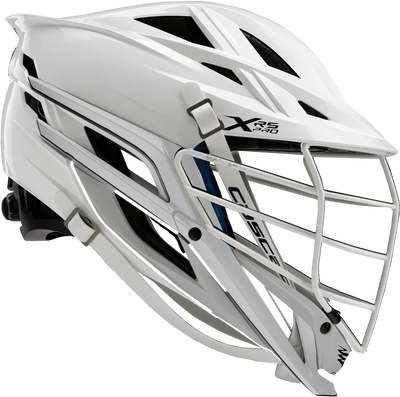
    Cascade XRS Pro lacrosse helmet

    The Cascade XRS Pro.

    The XRS Pro came out in 2023 as an upgraded version of the original XRS. There are only a few upgrades, but they make this helmet a 10/10 for me.

    It works for every position and any player. It comes in one universal size, 21½ to 24 inches around, which fits players from high school to the pros. So is it worth the high price tag? I'll walk you through how every feature performed on the field and let you decide.

    Coach's note: From the youth fields of Virginia Beach to upstate New York high schools to the box guys in Ontario who take a cross-check to the cage every shift, the lid is the one piece of gear you never cheap out on. Whatever you buy, get it fitted right and check the chin strap before every game.

    View on Battle Lax ($339.99)

    Key Features and Product Specs

    [wpdatatable id=50]
    Position
    All positions
    Level
    High school to pro
    Size
    One size, 21½" to 24"
    Fit
    360 Pro-Fit, SPR-Fit
    Venting
    XFlow
    Warranty
    1 year
    Price
    $339.99
    Built with
    • Supermono X Shell
    • Tri-Liner
    • EAFX foam
    • Quick Clip magnetic chin strap

    Drip Score: 9.5/10

    There's nothing I don't love about this helmet. It fits perfectly, keeps me protected and feels premium. Until a better helmet comes along, the XRS Pro is the best lacrosse helmet for me.

    Pros
    • Magnetic clip chin strap
    • Pro Vision for peripheral vision
    • Pro-Fit for a snug fit
    • Pro Liner for comfort
    • Excellent ventilation
    • Tons of customization
    • Great protection coverage
    • 1-year warranty
    Cons
    • Expensive

    View on Battle Lax ($339.99)

    Protection and Safety

    A ton of PLL players wear the XRS Pro, and that alone says a lot about its protection. The PLL is the last place you want to be underprotected.

    I wore the original XRS for a couple of seasons, and the construction is the same. It's a light frame, but Cascade's Supermono X Shell handles hits from every direction. The X Shell means the shell and visor are one piece, while a lot of helmets have a separate visor.

    Cascade XRS Pro protection

    The one-piece Supermono X Shell.

    I like that Cascade extended the neck panel by half an inch. On the field, it protected me from slashes and hard contact and kept the helmet snug with my neck supported. The anatomical fit and sturdy cage bars worked like a charm for absorbing shock and protecting my face.

    The Tri-Liner combines three liner technologies to handle different kinds of impacts, all built protection-first. The Gen 5 EPP and Seven Tech+ pads sit in the key impact zones. When you take a hit, they compress to spread the force out sideways and reset within seconds.

    EAFX is a high-performance impact foam that protects the crown of your head. It connects the shell and the liner, and even after all the hits I took, it held its shape and stayed comfortable.

    LaxDrip rating: Protection and safety: 9.5/10

    View on Battle Lax ($339.99)

    Comfort and Fit

    Comfort and fit are the XRS Pro's biggest upgrades. The 360 Pro-Fit and SPR-Fit make the whole helmet more comfortable. It's perfectly balanced, with the center of gravity at the crown of your head and the weight spread evenly, so I never had to readjust it after sprints or hits.

    Cascade XRS Pro comfort

    The 360 Pro-Fit and SPR-Fit system.

    The Quick Clip is a winner. It's a two-point magnetic chin strap you can adjust on the go with a quick snap. Keep a spare chin strap ($9.99) in your bag just in case.

    Since it only comes in one size, fit could be an issue if your head is under 21½ inches or over 24 inches around. Younger players should look at the Cascade XRS Youth Helmet ($270.00).

    The Tri-Liner, Seven Tech+ pads and molded EAFX make it more comfortable than the helmets before it, and the back panel gave me great comfort, security and extra coverage on the back of my head.

    LaxDrip rating: Comfort and fit: 9.5/10

    Ventilation and Breathability

    The ventilation is amazing. I play in the Austin heat, and sweat has always been a problem. It either drips into my eyes or pools on my forehead, which is the worst.

    XFlow venting fixed that. The original XRS ventilated well, but there was room to improve, so Cascade made the vents bigger on the XRS Pro. Cool air flows in, and hot air gets pushed out the back through the XFlow exhaust.

    Cascade XRS Pro ventilation

    Bigger XFlow vents on the XRS Pro.

    XFlow and the moisture-wicking Pro Liner work really well together. If you play somewhere hot, whether that's Texas or a Virginia Beach summer tournament, I'd pick the XRS Pro every day of the week.

    LaxDrip rating: Ventilation and breathability: 10/10

    Materials and Construction

    Maybe the folks at Cascade believe, "If it ain't broke, don't fix it." The materials are the same as the XRS. There's no drop in build quality or durability, but I think an upgrade here would have taken the XRS Pro to a whole new level.

    Cascade XRS Pro construction

    Same proven build as the original XRS.

    LaxDrip rating: Materials and construction: 9/10

    Vision Depth

    Your field of vision is one of the most important things in any helmet. With its VIXION technology, the XRS Pro gave me the best peripheral vision I've had out the sides of a mask.

    Cascade XRS Pro vision

    The second vision bar and flat bars.

    The XRS Pro adds a second vision bar and switches all the bars from round to flat. Cascade says that boosts your field of vision by 22%, and I can vouch for it. The difference between the XRS and XRS Pro is easy to notice. I could see wide and clear, which helped me read quick moves and cut down on eye strain.

    LaxDrip rating: Vision depth: 10/10

    Customization Options

    If anything, the XRS Pro is a customization paradise. With 5 base finishes, Cascade says there are 9.6 million combinations, from the visor decal all the way to a goalie throat guard (like the Cascade TP-S Throat Guard). You can even preview your design in real time in Cascade's online customizer.

    LaxDrip rating: Customization: 10/10

    View on Battle Lax ($339.99)

    Cascade XRS vs. XRS Pro

    The XRS Pro brings cosmetic and feature upgrades, but there isn't a huge difference between the two.

    Cascade XRS vs XRS Pro

    The XRS (left) and XRS Pro (right).

    Still, tons more customization, better comfort and protection, flat cage bars and 22% more peripheral vision make the XRS Pro a clear winner. For a full breakdown, check out our guide to the Cascade R, S and XRS. Comparing brands? See our Warrior Burn X review, STX Aero review and best lacrosse helmets.

    Shop the Cascade XRS Pro and alternatives at BattleLax

    BattleLax carries the XRS Pro, plus the youth version, Cascade's newest flagship and a few add-ons.

    GearWhy it's herePrice
    Cascade XRS Pro Lacrosse HelmetThe helmet reviewed here$339.99
    Cascade XRS Youth HelmetThe XRS for younger players$270.00
    Cascade Z Lacrosse HelmetCascade's newest flagship helmet$449.99
    Cascade SL Lacrosse HelmetA lighter, cheaper Cascade$279.99
    Warrior Burn X Lacrosse HelmetWarrior's BOA-fit rival$309.99
    Cascade Helmet Chin StrapSpare Cascade chin strap$9.99
    Cascade TP-S Throat GuardGoalie throat guard$39.99

    View on Battle Lax ($339.99)

    People also ask

    What is the best Cascade lacrosse helmet?

    The Cascade XRS Pro was the top of the Cascade line after the R, S and XRS, thanks to its protection, comfort and customization. Cascade has since released the Cascade Z as its newest flagship.

    What size is the Cascade XRS Pro?

    It comes in one universal size that fits head circumferences from 21½ to 24 inches, which covers most players from high school to the pros.

    What is the difference between the Cascade XRS and XRS Pro?

    Both protect really well, but the XRS Pro adds a more comfortable fit, about 22% more peripheral vision from a second vision bar and flat bars, and a ton more customization options.

    Is the Cascade XRS Pro worth the price?

    For us, yes. It's expensive, but you shouldn't compromise on protection and vision. Customizations add to the cost, so a basic finish keeps the price down.

    Final Verdict

    The price is higher than it should be, but you shouldn't compromise on protection and vision, and for me, the XRS Pro is worth every penny. Keep in mind each customization adds to the cost, so if you want to save, go with a basic finish.

    There's a reason PLL, college and high school teams pick the XRS Pro over everything else.
    Get the Cascade XRS Pro at Battle Lax

    Cascade XRS Pro · $339.99Drip 9.5/10
    Buy now
  • ECD Ion Head Review

    ECD Ion Head Review: Lightest ECD Attack Head (4.7 oz)
    Independent lacrosse gear reviews/Men’s · Women’s · Goalie

    ECD Ion Head Review

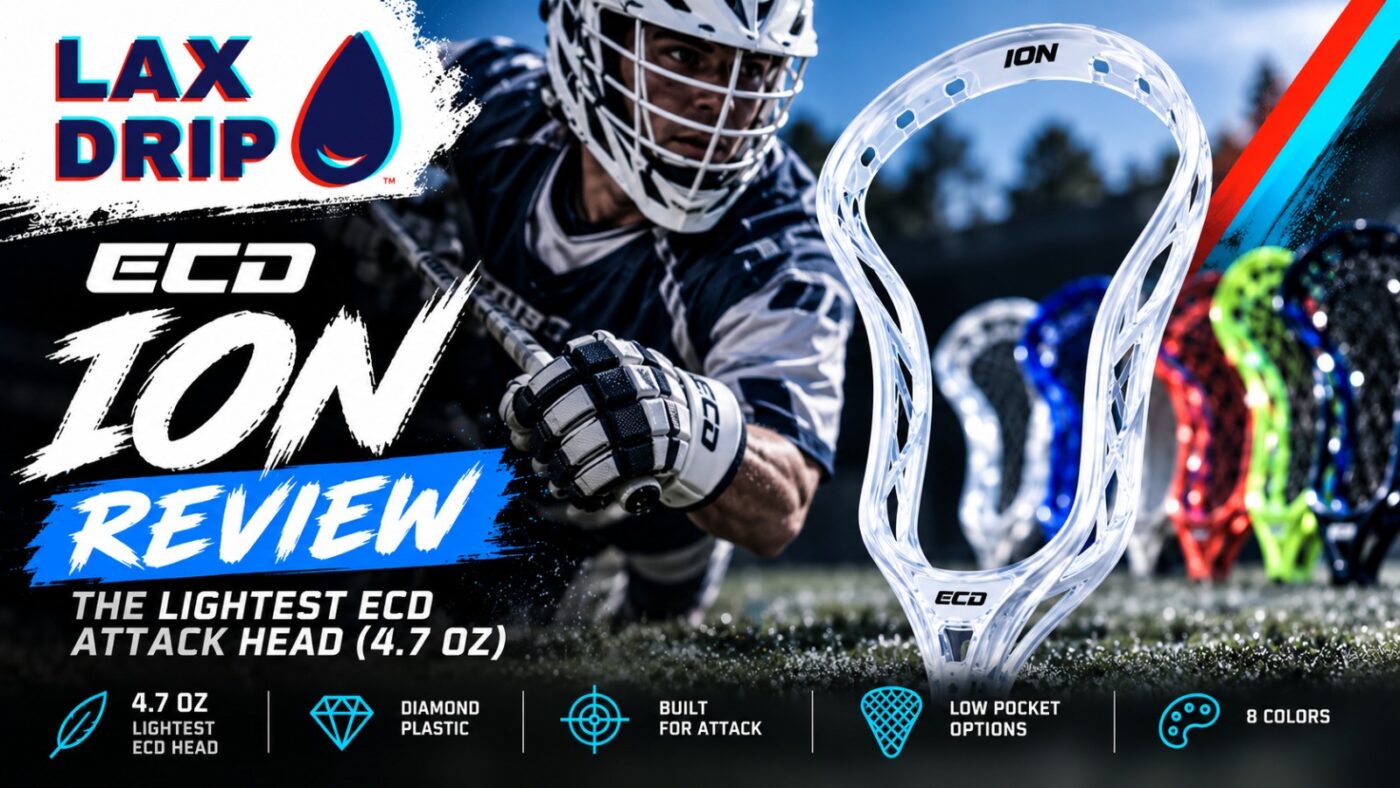
    The lightest head in the ECD lineup, built for attackmen who live on quick dodges, tight stick protection, and fast releases.

    Coach’s take: this is a finisher’s head. Light in the hands, quick off the stick, and built for the kid who wants the ball at X with the game on the line.

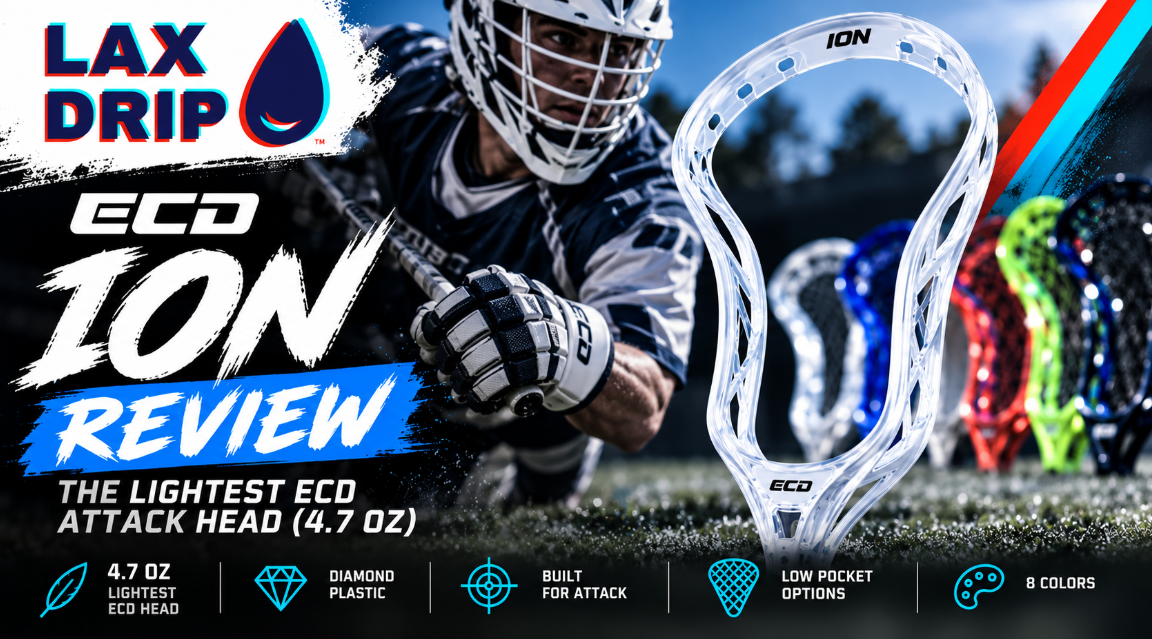
    ECD Ion head review cover
    Drip score9.5/ 10
    LaxDrip verdict: light, fast and made for attack. One of the better lightweight options for skilled finishers.
    Buy at BattleLax

    We may receive a commission if you make a purchase through a link on this page about the ECD Ion head review at no cost to you. This helps us keep this site free & we appreciate your support!

    Shape, Material, & Scoop

    Most attackmen I've coached fall into one of two camps. Either they want a head that feels like an extension of their hand, or they want something with enough beef to hold up when a pole is hacking at their top side hand. The ECD Ion is built for the first camp, and it doesn't hide it.

    At 4.7 oz, this is the lightest head ECD makes and one of the lightest on the market. Light heads are fast through the air. When you're snapping off a split dodge or rolling back from X, a lighter head gets through the motion quicker and takes less effort to cradle through a full 60 minutes. It also helps your hands in tight spaces when you're feeding off the crease or hitting a cutter in the alley.

    The face shape is tight, which is what you want on attack. A narrow face gives you better ball control and makes it harder for a defender to get a clean check on the ball. It also helps with accuracy. When you only get a half second look at the cage, a head that tracks where you point it matters.

    The head is made with Diamond Plastic, which ECD describes as ultra durable and semi transparent. The material is a big part of how they get the weight so low without making the head feel like a toy. Any time you go this light, there's a trade off in stiffness. A head in this weight range is going to feel more responsive than rigid, so if you're a hard shooting attackman who likes zero give in the head, you'll want to feel it in your hands first.

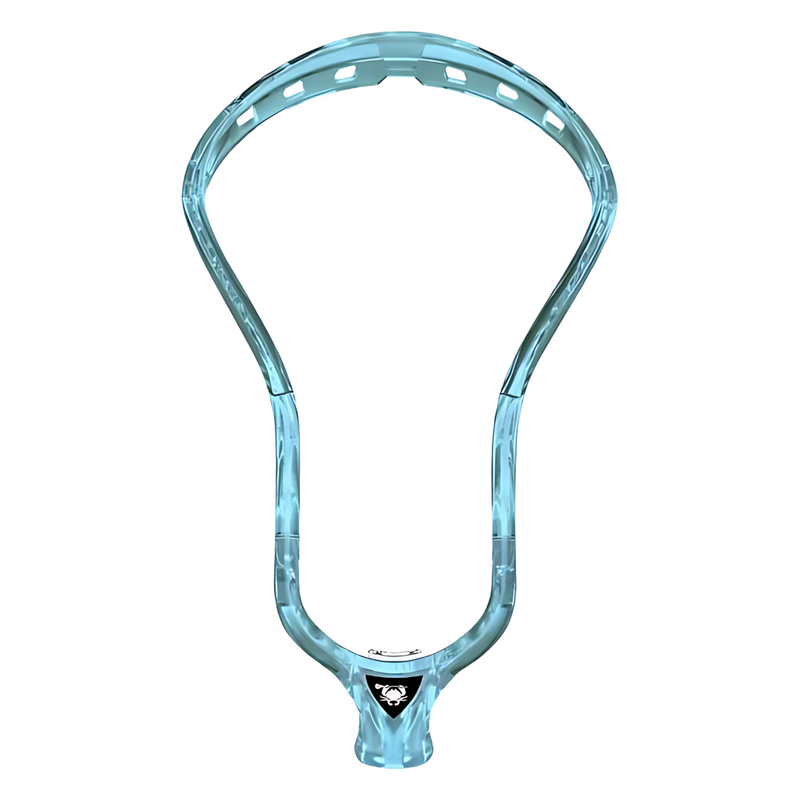
    ECD Ion unstrung lacrosse head

    The ECD Ion unstrung, before you put a stitch of mesh in it. See all eight colors at BattleLax.

    The scoop is built for attack play, and it handles well on ground balls. GBs for attackmen are about quick, clean pickups off the ground, especially in transition or on a riding play when the ball is loose. A lighter head lets you get in and out fast.

    Stringing is where this head gives you a lot of room. It has 20 sidewall holes, so you can string almost any pocket setup you want. The head is designed around a low pocket, which fits what most attackmen want: a quick release and a ball that comes out clean. With that many holes, you can dial in your whip and hold exactly how you like it. I always tell players to string a pocket around how they shoot, not how the head looks on the shelf.

    The look is the other big selling point. Diamond Plastic's semi transparent finish gives it a different look than a typical solid color head, and ECD offers it in eight colors. Galaxy and Lava stand out on the product page, and Clear is a clean option for guys who want the mesh and sidewall strings to show. It's Made in the USA, which a lot of players care about.

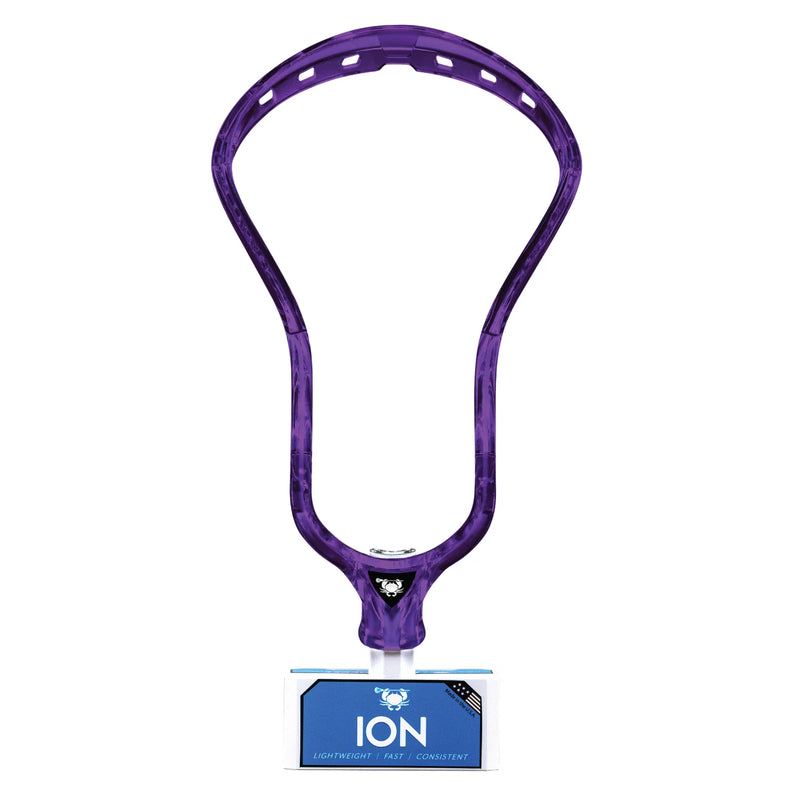
    ECD Ion lacrosse head in the Galaxy colorway

    The Galaxy colorway, one of eight. Pick your color at BattleLax.

    See it live

    Reading about a head only gets you so far. You want to see it on the stringing bench and getting whipped around in a shooting line. Here’s a solid breakdown from Top String Lacrosse.

    More Ion videos:

    Pros & Cons of the ECD Ion

    Pros
    • 4.7 oz, one of the lightest heads on the market
    • Tight face for ball control and stick protection
    • Low pocket setup suited to quick releases
    • 20 sidewall holes for pocket customization
    • Diamond Plastic is lightweight but marketed as durable
    • Eight color options
    • Made in the USA
    Cons
    • $119.99 is on the higher end for a head
    • Lighter heads can feel less stiff than heavier options
    • Not a fit for midfielders who need a heavier head for checking
    • Better suited to intermediate and advanced players than beginners

    Who is the ECD Ion for?

    This head is made for attackmen, plain and simple. If you play behind the cage, dodge from X, or work the wing off a quick stick feed, the Ion fits how you play.

    Offensive minded midfielders who run the box, play a lot of top side dodging, and don't need their head to take a beating could look at it too. Defensemen and LSMs should look elsewhere. You want more weight and a stiffer head when you're checking, sliding, and clearing.

    If you're newer to the game, this head will work, but it's built for players who already have solid stick skills. A low pocket and a light head reward good hands. They won't hide bad ones.

    Coach’s note: If your kid is a young attackman still learning to protect his stick, put the Ion on the wish list for next season and work the wall ball first. If he’s already putting up numbers and wants something that gets the ball off his stick a hair quicker, this is a legit upgrade.

    Final Verdict

    The ECD Ion does what it says. It's light, fast, and made for attack. If you play a quick, skilled game built on dodging and finishing, this is one of the better lightweight options available. The trade off is the usual one with ultralight heads: you're giving up some stiffness for speed.

    At $119.99, you're paying for the weight and the look, and for most attackmen who want a head that disappears in their hands, that's worth it. Just be ready to string it right.

    Key details

    Position
    Attack
    Level
    Intermediate/Advanced
    Legality
    All levels of play
    Cost
    $119.99
    Year released
    2022
    Weight
    4.7 oz
    Colors
    • Galaxy
    • Clear
    • Ruby
    • Lime
    • Frost
    • Sapphire
    • Lava
    • Midnight

    ECD Ion Drip Score

    CategoryBarScore
    Stiffness0.8
    Durability0.9
    Material1.0
    Scoop0.9
    Stringing (20 sidewall holes)1.0
    Weight1.0
    Pinch0.9
    Name / Brand Name1.0
    Colors1.0
    Overall Look1.0
    Drip score9.5/10

    Check the ECD Ion Lacrosse Head at Battle Lax

    ECD Ion · $119.99Drip score 9.5/10
    Buy now
  • Fogo


    What Does FOGO Mean in Lacrosse? The Faceoff Specialist Explained
    Independent lacrosse gear reviews/Men’s · Women’s · Goalie

    What Does FOGO Mean in Lacrosse?

    The faceoff specialist explained: what a FOGO does, why the faceoff matters, the best in the game, and how the position got here.

    Lacrosse faceoff at the X
    The quick answer
    FOGOFace Off, Get Off

    A faceoff specialist who wins possession, then subs off.

    FOSOFace Off, Stay On

    Takes the faceoff and keeps playing.

    Every game has its MVP, the one who can flip the script and leave everyone cheering or groaning. In lacrosse, that game changer is the FOGO. But what does FOGO mean in lacrosse? That sounds like a weird Gen Z term, right? Well, it's a lacrosse term for “Face Off, Get Off.”

    Lacrosse is a dynamic sport, with tradition and strategy, involving different positions that contribute uniquely to the game. If you're a lacrosse fan or want to know the sport, understanding this term is essential to appreciate the game.

    In this article, I'll tell you what FOGO means in lacrosse, the role of a FOGO, some notable faceoff specialists, and how faceoffs have evolved.

    What is FOGO in lacrosse?

    FOGO, in lacrosse, stands for “Face Off, Get Off.” It refers to a player who excels in faceoffs. The main role of a FOGO is to win possession of the ball after the initial faceoff, which is crucial to start the game strong.

    After winning the faceoff, the FOGO leaves the field to allow other players to take over. It takes more than physical strength to excel as a FOGO; strategic thinking, pressure handling, and agility are also crucial.

    The role of a FOGO in the game

    A faceoff may last less than a minute in an hour long lacrosse game, but its impact leaves a mark. In lacrosse, possession is everything. A perfectly executed faceoff shifts momentum, leading to a quick score.

    Let me tell you, playing as a FOGO can bring a lot of pressure. When a faceoff specialist is having a good day, it eases the burden on the defense and goalie, allowing the team to dominate. But when they're off their game, that pressure shifts, putting the entire team on edge.

    In lacrosse, possession is everything. A perfectly executed faceoff shifts momentum.

    During a lacrosse game, the FOGO's quick pass to a midfielder after winning the faceoff sets up the offense. That quick decision making makes the FOGO an indispensable part of lacrosse.

    The importance of FOGO in modern lacrosse

    The evolution of lacrosse has seen the FOGO position become increasingly focused. In high school, college, and professional levels, teams often have dedicated FOGO players who train rigorously to master the art of the faceoff.

    FOGO players study their opponents' tendencies, practice different faceoff techniques, and work closely with their teammates to ensure seamless transitions after gaining possession.

    So far you’ve learned what FOGO means in lacrosse. Now let me talk about some of the best FOGOs.

    Notable FOGO players and their achievements

    In recent years, the FOGO position has completely changed the game. A few outstanding players have redefined what it means to dominate at the faceoff. Trevor Baptiste and Jake Withers aren't just names in lacrosse. They're legends.

    78.6%Jake Withers faceoff win rateRegarded as the most dominant FOGO as of 2024 (NLL)
    ~70%Trevor Baptiste career faceoff win rateRecord setter in the NLL

    As of 2024, Jake Withers is regarded as the most dominant faceoff specialist in lacrosse. Withers has an incredible faceoff win rate of 78.6%, making him nearly unstoppable at the faceoff dot.

    His dominance is further highlighted by multiple games where he won over 90% of his faceoffs. Withers is a pro at creating turnovers and moving the ball down the field (NLL).

    Trevor Baptiste is another top contender, known for his versatility and near 70% career faceoff win rate. Baptiste has set records in the NLL and continues to be a formidable force on the field (NLL).

    Comparing FOGO across different levels of lacrosse

    The role of a FOGO varies depending on the level at which you’re playing.

    [wpdatatable id=212]

    The evolution of the FOGO position

    The FOGO position has evolved significantly over the years. Initially, faceoffs were taken by any midfielder or attacker. They didn't leave but stayed on the field and contributed to the rest of the game.

    However, as the game grew more competitive, teams needed a specialist. The FOGO position emerged as a response to that need, with players dedicating themselves entirely to mastering faceoffs.

    Today, FOGOs are considered specialists. Rules like the shot clock in professional lacrosse have emphasized the importance of winning faceoffs quickly, making the FOGO's role even more crucial.

    Challenges and limitations of playing FOGO

    While being a FOGO comes with its share of glory, it also has challenges.

    [wpdatatable id=213]

    Shop more: Faceoff shafts at BattleLax

    People also ask

    What is the FOGO position in lacrosse?

    The FOGO position in lacrosse refers to a specialist who excels at faceoffs, winning possession quickly, and then immediately leaving the field to allow other players to take over.

    What does FOGO mean in lacrosse?

    FOGO stands for “Face Off, Get Off,” a term used in lacrosse to describe players who specialize in winning faceoffs and then quickly exiting the field.

    What is a FOSO in lacrosse?

    FOSO, similar to FOGO, stands for “Face Off, Stay On.” It refers to players who take the faceoff and continue playing on the field rather than exiting.

    What is a FOGO?

    A FOGO is a lacrosse player specializing in faceoffs, aiming to win ball possession quickly and then leave the field, making them crucial to the game's momentum.

    How has the FOGO position evolved in lacrosse?

    The FOGO position has evolved from a generalist role to a specialized one, with players dedicating themselves solely to mastering faceoffs, which is critical in modern competitive lacrosse.

    So now you understand what FOGO means in lacrosse. FOGOs use their skills and strategy to win faceoffs, give their team an advantage, and then leave the field, unlike a FOSO, who stays on.

    FOGO pick · Drip 9.3Maverik Logik Force
    Buy now
  •  ECD Ion Head Review: Lightest ECD Attack Head (4.7 oz)

     ECD Ion Head Review: Lightest ECD Attack Head (4.7 oz)

    ECD Ion Head Review: Lightest ECD Attack Head (4.7 oz)
    Independent lacrosse gear reviews/Men’s · Women’s · Goalie

    ECD Ion Head Review

    The lightest head in the ECD lineup, built for attackmen who live on quick dodges, tight stick protection, and fast releases.

    ECD Ion head review cover
    Drip score9.5/ 10
    LaxDrip verdict: light, fast and made for attack. One of the better lightweight options for skilled finishers.
    Buy at BattleLax

    We may receive a commission if you make a purchase through a link on this page about the ECD Ion head review at no cost to you. This helps us keep this site free & we appreciate your support!

    Shape, Material, & Scoop

    Most attackmen I've coached fall into one of two camps. Either they want a head that feels like an extension of their hand, or they want something with enough beef to hold up when a pole is hacking at their top side hand. The ECD Ion is built for the first camp, and it doesn't hide it.

    At 4.7 oz, this is the lightest head ECD makes and one of the lightest on the market. Light heads are fast through the air. When you're snapping off a split dodge or rolling back from X, a lighter head gets through the motion quicker and takes less effort to cradle through a full 60 minutes. It also helps your hands in tight spaces when you're feeding off the crease or hitting a cutter in the alley.

    The face shape is tight, which is what you want on attack. A narrow face gives you better ball control and makes it harder for a defender to get a clean check on the ball. It also helps with accuracy. When you only get a half second look at the cage, a head that tracks where you point it matters.

    The head is made with Diamond Plastic, which ECD describes as ultra durable and semi transparent. The material is a big part of how they get the weight so low without making the head feel like a toy. Any time you go this light, there's a trade off in stiffness. A head in this weight range is going to feel more responsive than rigid, so if you're a hard shooting attackman who likes zero give in the head, you'll want to feel it in your hands first.

    ECD Ion unstrung lacrosse head

    The ECD Ion unstrung head. See all eight colors at BattleLax.

    The scoop is built for attack play, and it handles well on ground balls. GBs for attackmen are about quick, clean pickups off the ground, especially in transition or on a riding play when the ball is loose. A lighter head lets you get in and out fast.

    Stringing is where this head gives you a lot of room. It has 20 sidewall holes, so you can string almost any pocket setup you want. The head is designed around a low pocket, which fits what most attackmen want: a quick release and a ball that comes out clean. With that many holes, you can dial in your whip and hold exactly how you like it. I always tell players to string a pocket around how they shoot, not how the head looks on the shelf.

    The look is the other big selling point. Diamond Plastic's semi transparent finish gives it a different look than a typical solid color head, and ECD offers it in eight colors. Galaxy and Lava stand out on the product page, and Clear is a clean option for guys who want the mesh and sidewall strings to show. It's Made in the USA, which a lot of players care about.

    See it live

    Want to see the Ion on the field and on the stringing bench? Here’s a review from YouTube.

    More Ion videos:

    Pros & Cons of the ECD Ion

    Pros
    • 4.7 oz, one of the lightest heads on the market
    • Tight face for ball control and stick protection
    • Low pocket setup suited to quick releases
    • 20 sidewall holes for pocket customization
    • Diamond Plastic is lightweight but marketed as durable
    • Eight color options
    • Made in the USA
    Cons
    • $119.99 is on the higher end for a head
    • Lighter heads can feel less stiff than heavier options
    • Not a fit for midfielders who need a heavier head for checking
    • Better suited to intermediate and advanced players than beginners

    Who is the ECD Ion for?

    This head is made for attackmen, plain and simple. If you play behind the cage, dodge from X, or work the wing off a quick stick feed, the Ion fits how you play.

    Offensive minded midfielders who run the box, play a lot of top side dodging, and don't need their head to take a beating could look at it too. Defensemen and LSMs should look elsewhere. You want more weight and a stiffer head when you're checking, sliding, and clearing.

    If you're newer to the game, this head will work, but it's built for players who already have solid stick skills. A low pocket and a light head reward good hands. They won't hide bad ones.

    Final Verdict

    The ECD Ion does what it says. It's light, fast, and made for attack. If you play a quick, skilled game built on dodging and finishing, this is one of the better lightweight options available. The trade off is the usual one with ultralight heads: you're giving up some stiffness for speed.

    At $119.99, you're paying for the weight and the look, and for most attackmen who want a head that disappears in their hands, that's worth it. Just be ready to string it right.

    Key details

    Position
    Attack
    Level
    Intermediate/Advanced
    Legality
    All levels of play
    Cost
    $119.99
    Year released
    2022
    Weight
    4.7 oz
    Colors
    • Galaxy
    • Clear
    • Ruby
    • Lime
    • Frost
    • Sapphire
    • Lava
    • Midnight

    ECD Ion Drip Score

    CategoryBarScore
    Stiffness0.8
    Durability0.9
    Material1.0
    Scoop0.9
    Stringing (20 sidewall holes)1.0
    Weight1.0
    Pinch0.9
    Name / Brand Name1.0
    Colors1.0
    Overall Look1.0
    Drip score9.5/10

    Check the ECD Ion Lacrosse Head at Battle Lax

    ECD Ion · $119.99Drip score 9.5/10
    Buy now