Category: general-lacrosse

  • Why Is Lacrosse The Best Sport In The World?

    Why Is Lacrosse the Best Sport in the World? 6 Reasons | LaxDrip
    Independent lacrosse gear reviews/Men’s · Women’s · Goalie

    Why Is Lacrosse the Best Sport in the World?

    The speed of soccer, the hands of basketball and the stick skills of hockey, all in one game. Here are six reasons lacrosse is the best sport you can play.

    Why is lacrosse the best sport in the world
    The quick answer
    3 in 1Soccer + hoops + hockey

    Lacrosse blends the running of soccer, the hand-eye skills of basketball and the stick skills of hockey.

    6Reasons to play

    Strength, safety, heart health, decision-making, discipline and a better head space.

    Most outdoor sports use a ball, but each has its own rules, style and feel. Lacrosse is different. It blends three games into one: the running endurance of soccer, the hand-eye coordination of basketball for passing and catching, and the formations and stick handling of hockey. And that's not the only reason it's the best sport.

    You get the benefits and experience of several sports in one. It's also the oldest sport in North America, with deep Indigenous roots, and it's still one of the fastest-growing team sports in North America.

    Plenty of athletes who starred in other sports grew up playing lacrosse, like Pat Spencer, who went from Loyola lacrosse star to the NBA, Chris Hogan, who played in the NFL, and Jordan Faison, who has played both football and lacrosse at Notre Dame. Paul Rabil has talked about what the game builds in people, too (watch here). There's a reason lacrosse is called the Creator's Game.

    We may receive a commission if you make a purchase through a link on this page at no cost to you. This helps us keep this site free & we appreciate your support!

    Overview: why lacrosse is the best sport

    Here are six reasons that should convince you to pick up a stick and give it a try:

    1. It builds muscle strength because it uses so many different movements.
    2. It has fewer serious injuries than other major contact sports.
    3. It's great for your heart, with constant running and sprinting.
    4. It sharpens your decision-making, because the game moves so fast.
    5. It builds discipline through tough training.
    6. It relieves stress and boosts your mental health through goals, wins and the bond with your teammates.

    Lacrosse improves muscle strength

    Doctors and trainers often recommend sports for building muscle strength. But a lot of sports only work a specific group of muscles.

    Muscle strength in lacrosse

    Lacrosse isn't just legs or just hands. You use almost every major muscle group. Your shoulders and rotator cuff work when you cradle, and your quads and hamstrings power your shooting and dodging.

    Because you're moving in so many different ways, you're less likely to overuse one set of muscles, which cuts down the risk of strains and injuries.

    Lacrosse also works as cross-training, improving your overall muscle balance and coordination. It builds lower-body strength so you can generate power from different angles. That's one of the big reasons lacrosse is the best sport for building strength and endurance.

    Here are the main movements, the muscles they use and the benefits.

    [wpdatatable id=187]

    Lacrosse is safer than other contact sports

    Contact sports are great for building balance, reflexes and the ability to read a play before you react. You develop instincts for staying on your feet and protecting yourself when you take a hit. But they also come with injury risk.

    Most sports injuries aren't life-threatening, but they can still keep you off the field. The good news is that serious injuries are less common in lacrosse than in some other contact sports. Canadian injury surveillance data (CHIRPP), as cited by Ontario lacrosse programs, shows lacrosse with fewer injuries than hockey, rugby and football, and the American Orthopaedic Society for Sports Medicine tracks high school lacrosse injury rates that come in well below football.

    Unlike football, lacrosse has strict rules about checking and hitting, and women's lacrosse doesn't allow body checking at all. Players also wear helmets, gloves and pads to cut down on impact injuries, and fitting a helmet properly is one of the best ways to protect against concussions.

    If you're looking for a sport for your kid, lacrosse is a great choice with less risk of serious injury than many contact sports. For more, check out this research on lacrosse injuries.

    Read more: Is lacrosse dangerous?

    Lacrosse is good for cardiovascular health

    Lacrosse means constant running, and that builds a stronger heart. All that footwork boosts your endurance and conditioning, and regular exercise like this lowers your risk factors for heart disease.

    Cardiovascular health in lacrosse

    Sprinting also gets your heart pumping more blood through your body, delivering more oxygen to your muscles and organs.

    Over time, that improves your stamina and conditioning, so you're less likely to get winded climbing stairs or running long distances.

    Read more: How long is a lacrosse game?

    Lacrosse improves decision-making skills

    Lacrosse is a team sport, and it punishes selfish, impulsive plays. As the saying goes, "If you want to go fast, go alone. If you want to go far, go together." That teamwork is another reason lacrosse is the best sport.

    Quick decision making in lacrosse

    The game is all about strategy and calculated risks, and the results of your decisions show up right away: a goal or a miss. So players learn to anticipate their opponent's moves, read the flow of the game and react.

    For example, a smart middie won't charge blindly into a double team. You decide in a split second whether to dodge, pass or shoot, knowing your choice could mean a goal or a turnover. That builds real thinking skills: reading the situation, making a plan and acting with a clear head.

    Read more: Rules of lacrosse

    Lacrosse builds discipline through tough training

    Lacrosse takes a lot of physical and mental discipline. From the first day of practice, players learn the importance of consistency, showing up on time and giving full effort. Tough training builds habits that last well beyond the field.

    On my first day of practice, my coach told us not to miss a single practice, because "showing up is half the battle."

    We had to be on the field by 5 a.m. every morning, rain or shine. Anybody who's done early-morning spring practice in upstate New York knows what that feels like. That routine built a foundation of discipline that's helped me in all parts of life.

    That's why lacrosse is the best sport for building disciplined, active habits. It teaches you to show up on time, whether it's an early class or a job interview, and to stay consistent instead of putting things off.

    Coach's note: The best way to find out if your kid loves lacrosse is to put a stick in their hands and find a wall. A youth stick and a few balls cost less than a season of most travel sports, and you'll know in a week.
    Read more: Lacrosse positions

    Lacrosse offers stress relief and mental well-being

    Lacrosse is one of the best sports for relieving stress and boosting your mental health. The intensity of the game releases endorphins, your body's natural mood boosters, which help lower anxiety and stress.

    The focus and strategy the game demands also give you a mental escape. You have to act fast but think clearly, not on impulse, and that helps you stay calm and level-headed.

    The best bonds are made on the field.

    Some people box to blow off steam. Lacrosse burns off stress in a way that leaves you calmer, and it lets you set your worries aside and lose yourself in the game for a while.

    The teamwork and friendships that come with it build a strong sense of belonging and support. As a lacrosse player, I can tell you the best bonds are made on the field.

    A good lacrosse locker room is a supportive place where you can share your struggles and your wins, and that builds resilience and helps your mental health.

    Read more: Lacrosse terms and slang

    People also ask

    Why is lacrosse better than other sports?

    Lacrosse combines the running of soccer, the passing and catching of basketball and the stick skills of hockey, so you get the benefits of all three. It builds strength, conditioning and decision-making, and it has fewer serious injuries than sports like football and hockey.

    Why do people love lacrosse?

    People love lacrosse for its mix of speed, physicality, strategy and teamwork. It keeps you fit, sharpens your mind and builds tight bonds with your teammates.

    Is lacrosse the toughest sport?

    It's one of the toughest. Lacrosse demands endurance, strength, coordination and quick decision-making all at once, which makes it as challenging as it is rewarding.

    Why is lacrosse a hard sport?

    You have to run, cradle, pass, catch and shoot, often all in the same possession and usually with someone trying to knock the ball loose. It also demands quick decisions and teamwork.

    Compared to many contact sports, lacrosse gives you more benefits with less risk of serious injury. It sharpens your decision-making and reading of situations, builds strength and conditioning, and helps your mental health. The habits you build on the field stick with you long after your last game.

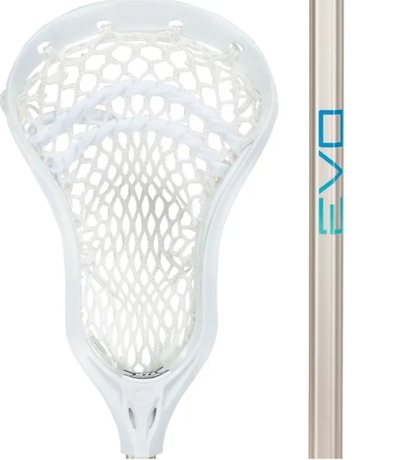
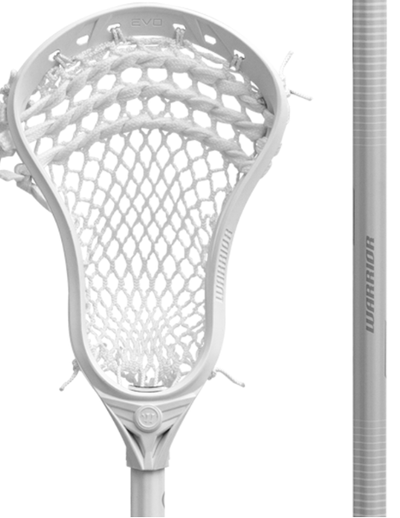
    Get startedWarrior EVO Complete Stick
    Buy now
  • How To Tape A Lacrosse Stick

    How to Tape a Lacrosse Stick: Step-by-Step Spiral Grip | LaxDrip
    Independent lacrosse gear reviews/Men’s · Women’s · Goalie

    How to Tape a Lacrosse Stick

    Strip the old tape, clean the shaft and wrap a clean spiral grip that lasts, plus the tapes worth using.

    How to tape a lacrosse stick
    The quick answer
    Spiral8 to 10 inches

    Lock the butt end, then spiral up the shaft with about a ⅓-inch overlap at a 45-degree angle.

    Lock itElectrical tape

    Finish with two flat wraps and two turns of electrical tape so the end never peels.

    Taping your stick the right way can make a real difference in your game. But it's trickier than it looks. Tape too much and your stick gets heavy. Too thin and it wears out fast. That's why so many young players ask how to tape a lacrosse stick.
    Some players do a full wrap, while others tape just a small section. Either way, a balanced, consistent tape job is key for better grip and muscle memory. I like to tape my stick in a spiral so both hands fit perfectly.

    Here's how to tape a lacrosse stick in a spiral, with some tips and tricks to keep your tape job consistent.

    How to tape a lacrosse stick

    We may receive a commission if you make a purchase through a link on this page at no cost to you. This helps us keep this site free & we appreciate your support!

    Overview of the guide to taping a lacrosse stick

    • Remove the old tape and clean off the residue
    • Tape your lacrosse stick in a spiral
    • Why taping your stick matters

    Read more: Best lacrosse shafts

    Removing the old tape

    Getting the old tape off is the messiest part of the job. I used to hate re-taping my stick because the old tape stuck to everything, until I figured out a trick. Don't worry, I won't keep it a secret.

    Here's how I take off old tape so it doesn't end up stuck to everything and clean-up stays quick and easy:

    • Grab a popsicle stick or any small stick about an inch and a half long.
    • Peel one end of the tape off your shaft and stick it to the popsicle stick.
    • Start rolling the popsicle stick. It peels the tape off the shaft and wraps it up so you can toss it.

    Cleaning the residue

    Taking off the old tape leaves your shaft sticky, so the next step is cleaning off that residue.

    Mix a little dish soap or hand soap with warm water and a splash of vinegar and wipe down the shaft. Then rinse it with lukewarm water and pat it dry.

    That works fine, but I usually reach for Goo Gone or another tape adhesive remover to make the job easier.

    Prepare and collect the materials

    Before you start taping, make sure you have:

    • Lacrosse grip tape (at least 1 inch wide)
    • A pair of scissors
    • Electrical tape

    Securing the butt end

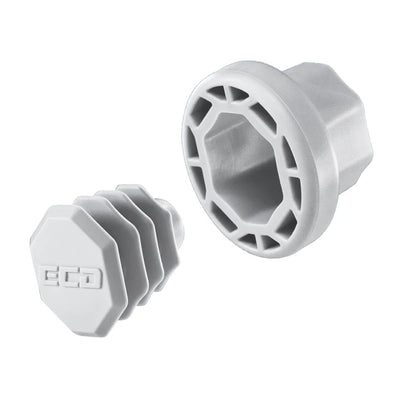
    Start at the butt end. Overlap the tape and make two or three full wraps around the shaft to lock it down. You might see a few wrinkles at first, and that's okay. If your end cap is cracked or worn, swap in a new one like the ECD Sliding End Caps ($9.99) before you tape.

    Next, angle the tape slightly downward and keep steady tension as you wrap. That smooths out the wrinkles. Just don't over-pull the tape, or it'll stretch thin and lose strength.

    Read more: Inexpensive lacrosse shafts

    Creating a perfect spiral up to 8 to 10 inches

    As you keep wrapping, you'll see the tape start to flatten out. Keep it tight and keep the tension steady, building a pattern of an overlapped section followed by a flat section. Make sure the overlaps stay the same width all the way up the shaft.

    • Thinner overlap: Lighter but wears out faster.
    • Thicker overlap: Heavier but more durable.

    I keep my overlap about a third of an inch. It gives you a textured surface that's perfect for your fingers. To get it, follow this three-step process:

    1. Pull the tape tight at about 45 degrees.
    2. Turn the shaft about half a turn.
    3. Line up the overlap.

    Coach's note: Tape your stick the same way every time. Your hands learn where the ridges are, and that muscle memory is what lets you find your grip without looking when you're catching a feed with a defender on your hip.

    Read more: Lightest lacrosse heads and shafts

    Securing the end

    Finish with one or two flat wraps around the shaft, without spiraling, to build a slightly thicker grip spot. Then cut the tape and press the edge down. This is where most people stop, but the end peels off easily and gets annoying in games.

    That's why I lock the end down with electrical tape. It's sticky, stretchy, weatherproof and more durable than athletic tape. Here's how:

    • Wrap the electrical tape half on the tape end and half on the bare shaft, stretching it tight.
    • Go around twice and press it down.

    Best athletic tapes for lacrosse sticks

    Indigenous players originally wrapped their sticks with rawhide or leather strips. As the game grew, players switched to athletic tape for better grip, and today there are tapes made just for lacrosse that you can grab at any lacrosse shop.

    Here are the tried-and-tested tapes I use and recommend.

    Trainers Athletic Tape / Lacrosse Grip Tape

    Trainers Athletic Tape / Lacrosse Grip Tape
    [wpdatatable id=199]

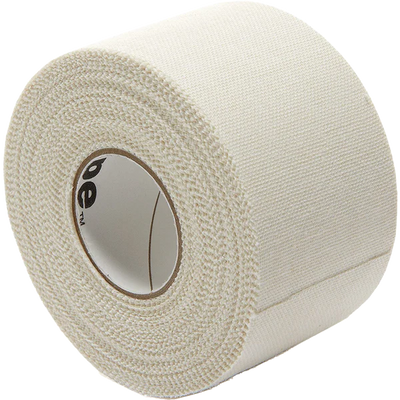
    Trainers athletic tape is made of durable poly-cotton with zinc oxide adhesive. I use it because it sticks really well, so it doesn't wear off quickly.

    BattleLax pick: BattleLax doesn't carry this one. For a grip tape you can grab there, try the Mueller Grip Tape ($3.99).

    Lizard Skins DSP V2 Lacrosse Grip Tape

    Lizard Skins DSP V2 Lacrosse Grip Tape
    [wpdatatable id=200]

    It's a textured, slip-resistant tape with strong adhesion, which makes it one of the longest-lasting tapes for adding grip to your shaft.

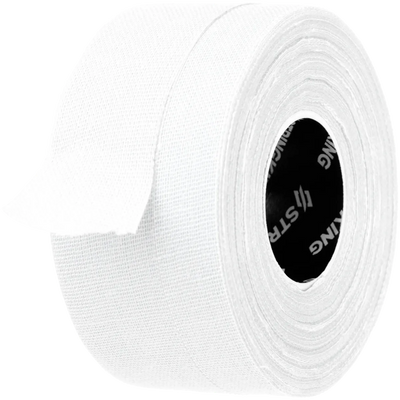
    BattleLax pick: BattleLax doesn't carry this one. For a grip tape you can grab there, try the StringKing Lacrosse Tape ($4.99).

    StringKing Pre-Cut Lacrosse Shaft Grip Tape

    StringKing Pre-Cut Lacrosse Shaft Grip Tape
    [wpdatatable id=201]

    StringKing's pre-cut tape has a rough texture but protects your palms from blisters (good lacrosse gloves help too) after a rough game. It sticks well to the shaft and leaves very little residue.
    BattleLax pick: BattleLax carries StringKing's StringKing Lacrosse Tape ($4.99).

    VukGripz Lacrosse Stick Grip Tape

    VukGripz Lacrosse Stick Grip Tape
    [wpdatatable id=202]

    VukGripz is a thicker tape for players who like a beefier wrap. Even though it's thick, it doesn't make your shaft heavy, and it wraps with balanced tension.

    BattleLax pick: BattleLax doesn't carry this one. For a grip tape you can grab there, try the StringKing Lacrosse Tape ($4.99).

    Lizard Skins CAMO DSP V2 Lacrosse Grip Tape

    Lizard Skins CAMO DSP V2 Lacrosse Grip Tape
    [wpdatatable id=203]

    Lizard Skins also makes a camo tape if you want to add some style to your shaft. It's dense, sticks well for a long time, and the slip-resistant material keeps your grip strong.

    BattleLax pick: BattleLax doesn't carry this one. For a grip tape you can grab there, try the StringKing Lacrosse Tape ($4.99).

    SportStop Hockey-Style USA Flag Grip Tape

    SportStop Hockey-Style USA Flag Grip Tape
    [wpdatatable id=204]

    This is a patterned cloth hockey-style tape that adds grip and protection to your stick. The textured, anti-slip surface gives you a secure grip and better stick handling.

    BattleLax pick: BattleLax doesn't carry this one. For a grip tape you can grab there, try the Mueller Grip Tape ($3.99).

    Importance of taping a lacrosse stick

    Taping your stick isn't just tradition. It makes a real difference in how your stick plays. Here are the benefits.

    [wpdatatable id=205]
    A good tape job is cheap. A stick that slips out of your hands on a hard shot is not.

    People also ask

    What is the best way to tape a lacrosse stick?

    Use a spiral wrap so both hands have a consistent grip, with an overlap of about a third of an inch. Lock the end down with a couple of wraps of electrical tape so it doesn't peel.

    What are the rules for lacrosse grip tape?

    You can tape your shaft however you like for grip, but the butt end of the shaft has to be covered with an end cap or tape, and tape can't change the legal dimensions of your head or pocket. Check your league's rulebook for specifics.

    Do girls tape their lacrosse sticks?

    Yes. Girls tape their sticks for grip, control and protection just like guys do, using the same taping techniques.

    Can hockey tape be used for lacrosse?

    Yes. Hockey tape gives you good grip and durability. Lacrosse-specific grip tape is a little more tacky and comfortable, but hockey tape gets the job done.

    How do you remove old tape from a lacrosse stick?

    Stick the end of the old tape to a popsicle stick and roll it off the shaft. Then clean off the residue with warm soapy water and a little vinegar, or use an adhesive remover like Goo Gone.

    That's it. Now you know how to tape a lacrosse stick. Give it a try, and you'll feel the difference in your stick handling, grip and control.

    Grip tape pickStringKing Lacrosse Tape
    Buy now
  • What Does FOGO Mean in Lacrosse? 

    What Does FOGO Mean in Lacrosse? The Faceoff Specialist Explained | LaxDrip
    Independent lacrosse gear reviews/Men’s · Women’s · Goalie

    What Does FOGO Mean in Lacrosse?

    The faceoff specialist explained: what a FOGO does, why the faceoff matters, the best in the game and how the position got here.

    Lacrosse faceoff at the X
    The quick answer
    FOGOFace Off, Get Off

    A faceoff specialist who wins possession at the X, then subs off.

    FOSOFace Off, Stay On

    Takes the faceoff and keeps playing the rest of the possession.

    Every game has its MVP, the one who can flip the script and leave the crowd cheering or groaning. In lacrosse, that game-changer is often the FOGO. But what does FOGO mean in lacrosse? It sounds like a Gen Z term, right? It's actually lacrosse shorthand for "Face Off, Get Off."

    Lacrosse is a fast, strategic sport with a lot of specialized positions, and the FOGO might be the most specialized of all. If you're a fan or just learning the game, understanding this role will help you appreciate what's happening at the X.

    In this article, I'll explain what FOGO means, the role a FOGO plays, some of the best faceoff specialists in the game and how the position has evolved.

    We may receive a commission if you make a purchase through a link on this page at no cost to you. This helps us keep this site free & we appreciate your support!

    What is FOGO in lacrosse?

    FOGO stands for "Face Off, Get Off." It refers to a player who specializes in faceoffs. The FOGO's main job is to win possession at the start of each quarter and after every goal, which sets the tone for the whole game.
    Once they win the faceoff, the FOGO usually heads to the sideline so the offense or defense can take over. It takes more than strength to be a great FOGO. Hand speed, technique, strategy and the ability to handle pressure all matter just as much.

    The role of a FOGO in the game

    A faceoff lasts only a few seconds, but its impact on a game is huge. In lacrosse, possession is everything, and a clean faceoff win can swing momentum and lead to a quick goal.

    Let me tell you, playing FOGO comes with a lot of pressure. When your faceoff guy is on, it takes the heat off your defense and goalie and lets your team dominate possession. When he's off, that pressure shifts and the whole team feels it.

    In lacrosse, possession is everything. Win the X, and you control the game.

    A FOGO's quick pass to a middie after winning the faceoff can set up a fast break before the defense gets set. That split-second decision-making is what makes a good FOGO so valuable.

    The importance of FOGO in modern lacrosse

    As the game has evolved, the FOGO role has become more and more specialized. At the high school, college and pro levels, teams often have dedicated FOGOs who train relentlessly to master the faceoff.
    FOGOs study their opponents' tendencies, drill different moves like clamps, rakes and plunges, and work with their wing players to make sure the ball gets out clean after the faceoff.

    Coach's note: The faceoff guys who last aren't the strongest kids on the team. They're the ones with the quickest hands and the best wing play. From box in Ontario to summer ball in Virginia Beach, I tell every young FOGO the same thing: your wings win half your faceoffs, so get them on the same page.

    If you're curious about the gear FOGOs use, I've reviewed the best faceoff heads for lacrosse players.

    Now that you know what FOGO means, let's look at some of the best FOGOs in the game.

    Notable FOGO players and their achievements

    In recent years, a few outstanding faceoff men have redefined what it means to dominate at the X. Jake Withers and Trevor Baptiste aren't just names in lacrosse. They're legends of the position.

    78.6%Jake Withers faceoff win rate2022-23 NLL season, nearly 10 points better than anyone else
    ~70%Trevor Baptiste NLL career faceoff ratePlus the NLL record for faceoff wins by a rookie

    Jake Withers

    The NLL ranked Jake Withers as its top faceoff man after he won 78.6% of his faceoffs in the 2022-23 season, nearly 10 percentage points more than the next closest player. That makes him close to unstoppable at the dot.

    He won 90% of his faceoffs in five games that season, including a perfect 15-for-15 night against the Rochester Knighthawks. He's also a ground ball machine, with 238 loose balls that season, the fourth-most in NLL history.

    Trevor Baptiste

    Trevor Baptiste is one of the most decorated faceoff men ever. He holds NCAA career records for faceoff wins and winning percentage from his days at Denver, won PLL MVP in 2022 and has two world championship gold medals with Team USA.

    Indoors, he's just as dangerous. He has a career faceoff win rate just under 70% in the NLL and set the league record with 362 faceoff wins as a rookie.

    Comparing FOGO across different levels of lacrosse

    The FOGO role looks a little different depending on the level you're playing.

    [wpdatatable id=212]

    The evolution of the FOGO position

    The FOGO position has come a long way. Faceoffs used to be taken by any middie or attackman, and they stayed on the field to play the rest of the possession.

    As the game got more competitive, teams needed a specialist. The FOGO grew out of that need, with players dedicating themselves completely to winning faceoffs.

    Today, FOGOs are true specialists. Shot clocks in college and the pros have made every possession more valuable, which makes winning the faceoff even more important.

    Challenges and limitations of playing FOGO

    Playing FOGO comes with its share of glory, but it has its challenges too.

    [wpdatatable id=213]

    Read more: Best faceoff shafts. Ready to buy? BattleLax carries the StringKing Composite 3 Pro Faceoff Shaft ($159.99).

    People also ask

    What is the FOGO position in lacrosse?

    A FOGO is a faceoff specialist. They take the faceoff, try to win possession, and then usually sub off so the offense or defense can take over.

    What does FOGO mean in lacrosse?

    FOGO stands for "Face Off, Get Off." It describes players who specialize in winning faceoffs and then head straight to the sideline.

    What is a FOSO in lacrosse?

    FOSO stands for "Face Off, Stay On." It describes a player who takes the faceoff and keeps playing, usually a middie who can run the field after the faceoff.

    What is a FOGO?

    A FOGO is a lacrosse player who specializes in faceoffs. Their job is to win possession at the X, which gives their team momentum and more chances to score.

    How has the FOGO position evolved in lacrosse?

    It went from a job any middie could do to a true specialist role. Today, FOGOs train year-round on technique, hand speed and strength, and shot clocks have made every faceoff win even more valuable.

    So now you know what FOGO means in lacrosse. FOGOs use skill, speed and strategy to win the faceoff, give their team the ball and then get off the field, unlike a FOSO, who stays on to keep playing.

    FOGO pick · Drip 9.3Maverik Logik Force
    Buy now
  • Are Lacrosse Cleats and Football Cleats The Same? 

    Are Lacrosse Cleats and Football Cleats the Same? | LaxDrip
    Independent lacrosse gear reviews/Men’s · Women’s · Goalie

    Are Lacrosse Cleats and Football Cleats the Same?

    They look alike, but they're built for different movements. Here's how lacrosse and football cleats differ, what to look for, and the cleats worth wearing.

    Are lacrosse cleats and football cleats the same
    The quick answer
    LacrosseBuilt to cut

    Lacrosse cleats are made for agility, quick cuts and lateral movement, usually in low or mid cuts.

    FootballBuilt to drive

    Football cleats focus on straight-line power and stability, with ankle height that changes by position.

    Cleats are a big part of both lacrosse and football. They're sold as separate categories, but they look so alike that people wonder: are lacrosse cleats and football cleats the same?

    Plenty of players and parents have asked me that, so let me clear it up. They look similar at first glance, but each one is built for a specific purpose.

    Lacrosse cleats and football cleats are not the same. Both give you solid traction on grass, but lacrosse cleats are built for fast lateral movement, while football cleats have a sturdier design built for straight-line acceleration and stability.

    Are lacrosse cleats and football cleats the same

    Keep reading for the full answer and the key differences between the two, including design, stud placement and performance.

    We may receive a commission if you make a purchase through a link on this page at no cost to you. This helps us keep this site free & we appreciate your support!

    Purpose and history of lacrosse cleats

    There's more to cleats than studs and grip. Here's what goes into designing them:

    • Preventing injury: Cleats are built to be durable and supportive to cut down the risk of ankle injuries.
    • Materials: Cleats keep getting lighter and more durable so they move naturally with your body.
    • Position-specific needs: Different positions have different needs, and cleats are designed with those in mind.
    History of lacrosse cleats

    Cleat designs have changed a lot over the years. Cleats used to be one-size-fits-all across sports, but now they're much more sport-specific.

    [wpdatatable id=214]

    The first cleats were just leather boots with nails hammered through the sole. Over time, the designs evolved for specific sports and positions. Since they grew out of the same roots, it's no wonder people still ask whether lacrosse and football cleats are the same.

    Read more: Newest lacrosse cleats for all positions

    Similarities and differences between lacrosse and football cleats

    At first glance, the two look the same. They actually have a lot in common, with a few small but important differences.

    Lacrosse vs football cleats side view
    [wpdatatable id=215]

    So now you've got your answer. Next, let's look at the features that make each cleat sport-specific.

    Read more: Best lacrosse cleats for all positions

    Lacrosse-specific features

    Lacrosse cleats are all about helping you move fast, stay agile and change direction quickly. Here's what makes them lacrosse-specific:

    • Toe cleat: Most lacrosse cleats have a stud at the very front of the sole that helps you dig in and explode out of a dodge or off the faceoff whistle.
    • Molded toe cap: A molded toe cap protects your feet in intense plays and helps prevent injuries.
    • Durable upper: The upper is made of tough synthetic material to handle the demands of the game.
    Lacrosse vs football cleats stud view

    Football-specific features

    Here are the features that make football cleats football-specific:

    • Stiffer plate: Positions like linemen need a big push off the ground, so football cleats often use a stiffer plate in the sole.
    • Reinforced toe box: Football cleats have a reinforced toe box to protect against collisions.
    • Position-specific height: Linemen often go with high tops for ankle support, while skill players usually wear low or mid cuts.
    Lacrosse vs football cleats top view

    Coach's note: Every fall in upstate New York, I see a kid show up to box tryouts or fall ball in his football cleats. They'll get you through a practice, but the first time you plant and split dodge, you feel the difference. If you play lacrosse seriously, get lacrosse cleats.

    Which lacrosse cleats are the best fit?

    If you're shopping for a new pair, make sure they check these boxes:

    • Enough toe room to move comfortably
    • Good arch support
    • Heel lockdown to keep your foot from slipping
    • Ankle support for balance and mobility

    Recommendations for the best lacrosse cleats

    To make things easier, here are my top 6 lacrosse cleats on the market, with where you can grab them or the closest match at BattleLax.

    #CleatAt BattleLax
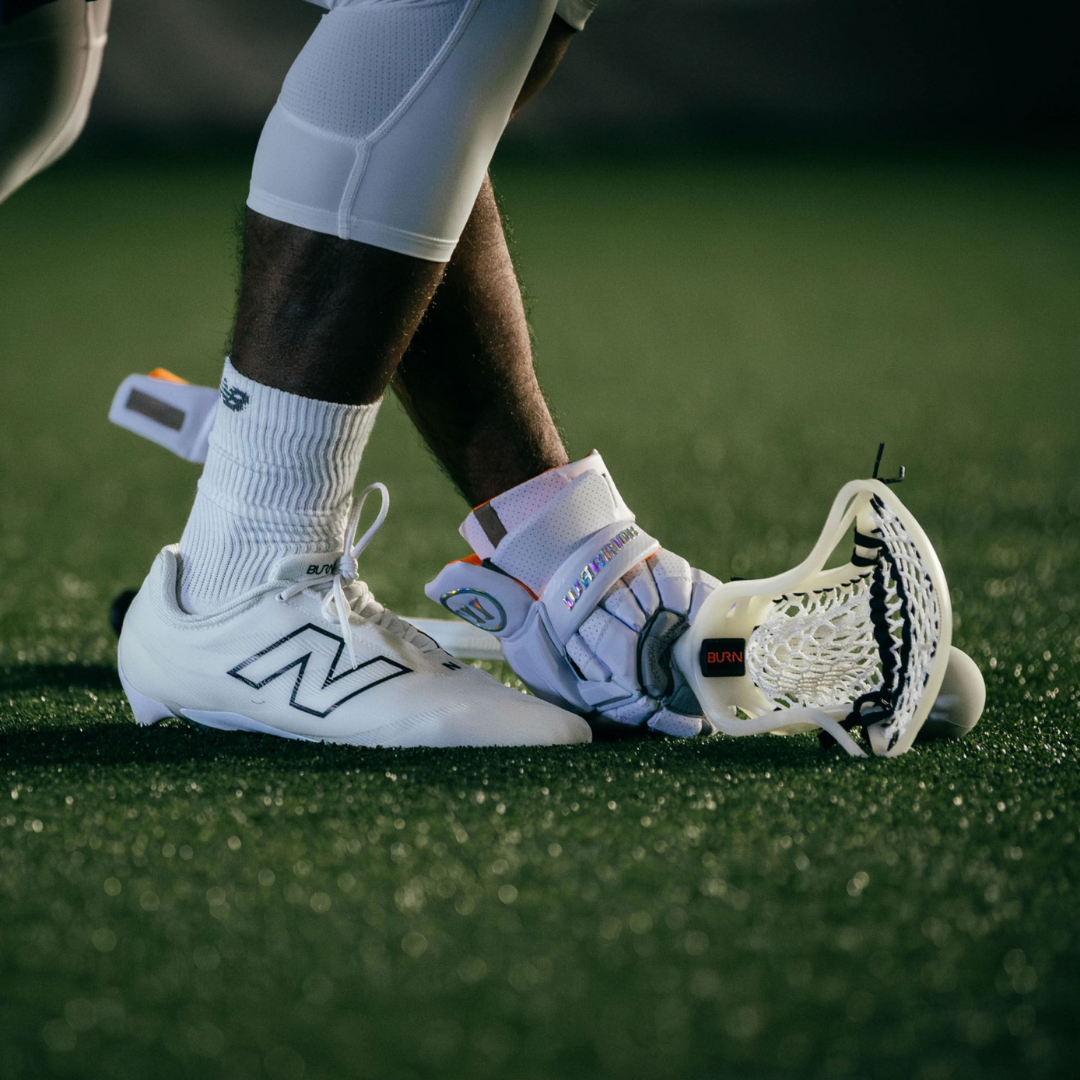
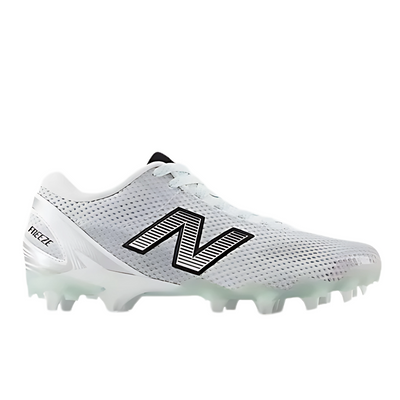
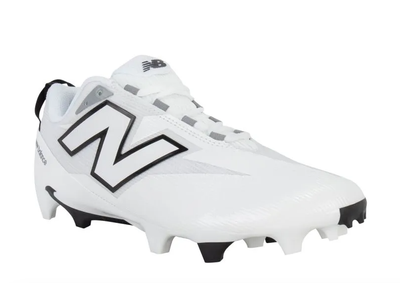
    1Nike Alpha Huarache 8 EliteClosest at BattleLax: New Balance FreezeLX v5 Low ($119.99)
    2Nike Alpha Huarache 9 LowClosest at BattleLax: New Balance FreezeLX v5 Low ($119.99)
    3Nike Alpha Huarache 8 ProClosest at BattleLax: New Balance Burn X5 Low ($124.99)
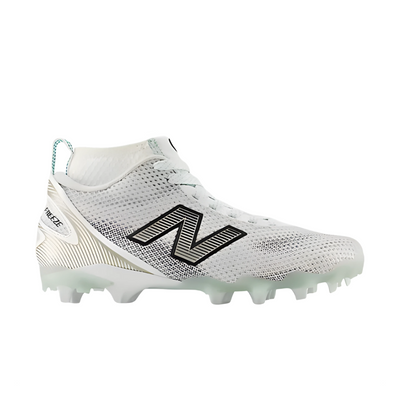
    4Under Armour Command Pro MCClosest at BattleLax: New Balance FreezeLX v5 Mid ($129.99)
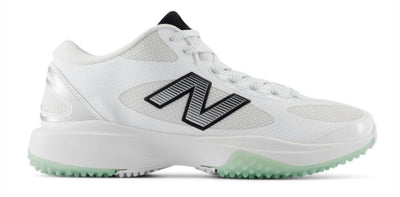
    5Under Armour Command TurfClosest at BattleLax: New Balance FreezeLX v5 Turf ($119.99)
    6New Balance FreezeLX v4 LowIn stock: $49.99

    BattleLax doesn't carry Nike or Under Armour cleats right now, so I've listed the closest New Balance pair for each. The FreezeLX v4 Low is in stock and on sale. Shopping for a younger player? Check out the New Balance FreezeLX v5 Youth ($84.99). I've also put together a list of the best women's lacrosse cleats.

    Regulations and guidelines for lacrosse cleats

    Lacrosse rulebooks don't spell out cleat specs the way football rulebooks do, but player safety still comes first. Here's what to keep in mind:

    • Stud length: High school football rules cap cleats at ½ inch. Standard molded lacrosse cleats are well within that, and short molded studs are what you want anyway.
    • No metal spikes: Stick with molded rubber or plastic studs. Metal spikes are unsafe for other players and can damage turf fields, and officials can rule any equipment they see as dangerous out of the game.
    • Turf rules: A lot of turf facilities only allow molded cleats or turf shoes, so check before you show up.

    Always check your league's rules, including the NFHS boys' lacrosse rules, before game day.

    People also ask

    Can you wear football cleats in lacrosse?

    Yes, in most leagues you can wear football cleats for lacrosse. They just aren't built for the quick cuts and lateral movement lacrosse demands, so they can hold back your game.

    Are lacrosse cleats allowed in soccer?

    Usually not. Most lacrosse cleats have a toe cleat at the front of the sole, and a lot of soccer leagues don't allow cleats with a toe stud. Check with your league before you try.

    Are soccer and lacrosse cleats similar?

    They share some design elements, but soccer cleats skip the toe cleat and focus on ball touch, while lacrosse cleats are built for traction, agility and lateral movement.

    What kind of cleats do lacrosse players wear?

    Lacrosse players wear molded cleats built for agility, usually in low or mid cuts, with a toe cleat for quick starts and plenty of support for sharp changes of direction.

    Are lacrosse and football cleats the same?

    No. They look similar, but they're built differently: lacrosse cleats focus on agility and lateral movement, while football cleats focus on straight-line power and stability, with ankle height that varies by position.

    So, are lacrosse cleats and football cleats the same? No. They might look alike, but they're different in a lot of ways. If you play lacrosse, a pair built for lacrosse will help you cut, dodge and play your best.

    Top lacrosse cleatNB FreezeLX v5 Low
    Buy now
  • What is the Fastest Lacrosse Shot

    What Is the Fastest Lacrosse Shot? Top 5 Records | LaxDrip
    Independent lacrosse gear reviews/Men’s · Women’s · Goalie

    What Is the Fastest Lacrosse Shot?

    From Paul Rabil's 111 mph to Nick Diegel's reported 127.4 mph, here are the five fastest shots in lacrosse history and how these guys generate that kind of heat.

    Fastest lacrosse shot
    The quick answer
    127.4Fastest reported (mph)

    Nick Diegel's shot from a March 2020 training session is the fastest ever reported.

    119.9Guinness record (mph)

    Patrick Luehrsen holds the official Guinness record, set in 2015. The PLL record is Jarrod Neumann's 121 mph.

    Watching guys fly down the field is fun, but nothing gets the adrenaline going like a shot that leaves the goalie grabbing at air. If you know that feeling, you've probably wondered: what is the fastest lacrosse shot ever?

    The power behind some of the fastest shots in lacrosse is nothing short of electric.

    In this article, I've listed the top 5 fastest lacrosse shots, the players behind them and what makes them so fast.

    We may receive a commission if you make a purchase through a link on this page at no cost to you. This helps us keep this site free & we appreciate your support!

    Top 5 fastest lacrosse shots

    Here are the fastest lacrosse shots in the history of the sport, from pros and amateurs alike.

    Fastest lacrosse shots
    #PlayerSpeedWhere
    1Nick Diegel127.4 mphTraining session, March 2020 (reported)
    2Jarrod Neumann121 mphPLL All-Star Weekend, July 2023
    3Patrick Luehrsen119.9 mphGuinness record, Libertyville, Ill., Sept. 2015
    4Zack Dorn116 mphMLL All-Star Game, 2014
    5Paul Rabil111 mphMLL All-Star Game, 2009

    1. Nick Diegel: 127.4 mph

    Nick Diegel
    [wpdatatable id=216]

    Nick Diegel sits at the top of the charts with a reported 127.4 mph shot. He posted it from a training session in March 2020, beating his own mark of 123.1 mph from LaxCon the year before.

    It happened in a radar-measured session rather than a live game, which let him put everything he had into it without a defender in his face. It hasn't been officially certified like a Guinness record, but it's the fastest shot anyone has reported.

    Read more: Best attack lacrosse heads

    2. Jarrod Neumann: 121 mph

    Jarrod Neumann
    [wpdatatable id=217]

    The second-fastest shot belongs to Jarrod Neumann, who ripped a 121 mph shot in the fastest-shot competition at the 2023 PLL All-Star Weekend in Louisville. It's the fastest shot in PLL history.

    Neumann's shot ranks just below Diegel's, and it's even more impressive because he's a defenseman. He proved shooting heat isn't just for the offensive guys. He even forgot his sticks for the event and set the record with a borrowed stick.

    And his story should fire up any late bloomer. As he put it, "I picked up a stick at 18 years old, it's never too late."

    Read more: Best lacrosse heads for all positions

    3. Patrick Luehrsen: 119.9 mph

    Patrick Luehrsen
    [wpdatatable id=218]

    Patrick Luehrsen shot 119.9 mph at the Libertyville Sports Complex in Illinois on September 29, 2015. That shot made him one of the top speed record holders in the game.

    It's the shot Guinness World Records lists as the fastest lacrosse shot, and USA Lacrosse has covered lacrosse's Guinness records too.

    Read more: Best lacrosse shafts by position

    4. Zack Dorn: 116 mph

    Zack Dorn
    [wpdatatable id=219]

    The amazing part of Zack Dorn's story is that he wasn't a pro when he did it. Dorn clocked a 116 mph shot at the 2014 Major League Lacrosse (MLL) All-Star Game, right in front of the pros at their own event.

    The shot made him famous overnight, and later that year he became the first non-professional player to sign an endorsement deal with a lacrosse manufacturer, Epoch Lacrosse.

    Read more: Best lacrosse cleats for all positions

    5. Paul Rabil: 111 mph

    Paul Rabil
    [wpdatatable id=220]

    Paul Rabil is one of the most influential figures in lacrosse history. You've probably heard his name tossed around as a legend of the game.

    Rabil clocked a 111 mph shot at the 2009 MLL All-Star Game. Plenty of players have topped that since, but his shot set the bar that everyone else chased.

    In 2018, Rabil co-founded the Premier Lacrosse League (PLL) with his brother Mike. He's considered one of the best midfielders ever, and a lot of people know him as "lacrosse's million-dollar man."

    Now that you know the fastest shots in lacrosse, let's talk about why speed matters and how you can shoot harder yourself. If you want to build your shot, check out our list of the best lacrosse goals for practice.

    Read more: Lacrosse bounce backs for training

    Importance of speed in lacrosse

    In a game as fast as lacrosse, speed is everything. A faster shot gives the goalie less time to react, so you're more likely to score. Fast players and fast shots make the game more unpredictable for the defense.

    127.4Fastest reported shotNick Diegel, March 2020 (mph)
    121PLL recordJarrod Neumann, 2023 All-Star Weekend (mph)

    Techniques for shooting faster

    So what lets these guys shoot that hard? It's not just raw power. Shooters use a mix of strength, technique and equipment to get the most out of every shot.

    • Rotate fully. Power comes from the ground up. Use your hips and torso to drive momentum into the shot.
    • Snap your wrists. Finishing the rotation with a wrist snap launches the ball out of the pocket faster.
    • Follow through. A full follow-through transfers the most energy into the ball.

    It sounds simple on paper, but these guys spent years refining it. Most top shooters also put serious time into strength training, especially their core and upper body.

    Coach's note: Speed means nothing if you miss the cage. Every kid I've coached from Virginia Beach to upstate New York wants to rip it, but pick corners first and add heat second. Put targets in the corners of your goal and make every rep count.

    Pick your corner first. The heat comes later.

    Want more? Check out our best lacrosse training aids for building your shot.

    People also ask

    What is the fastest men's lacrosse shot?

    The fastest reported shot is 127.4 mph by Nick Diegel, from a training session in March 2020. The fastest official record recognized by Guinness is Patrick Luehrsen's 119.9 mph from 2015.

    What is the fastest shot in the PLL?

    The PLL record is 121 mph, set by defenseman Jarrod Neumann in the fastest-shot competition at the 2023 PLL All-Star Weekend in Louisville.

    How fast can a man throw a lacrosse ball?

    The fastest reported shot is 127.4 mph by Nick Diegel. Most elite pros in shooting contests land somewhere between 100 and 120 mph.

    What is a good lacrosse shot speed?

    It depends on age and level. A lot of high school players shoot in the 70s to 80s mph, strong college and pro shooters are in the 90s, and the hardest shooters in the world top 100 mph.

    Who holds the record for the fastest lacrosse shot?

    Guinness World Records lists Patrick Luehrsen at 119.9 mph, set in 2015. Nick Diegel has the fastest reported shot at 127.4 mph, and Jarrod Neumann holds the PLL record at 121 mph.

    From Paul Rabil's 111 mph to Nick Diegel's reported 127.4, every one of these shooters left a mark on the game, no matter what position they played. As the sport keeps growing, so will the records. The question is, who's next to break the speed barrier?

    Shooter's headStringKing Mark 3A
    Buy now
  • How To Break In Lacrosse Mesh

    How to Break In Lacrosse Mesh: 5 Proven Methods | LaxDrip
    Independent lacrosse gear reviews/Men’s · Women’s · Goalie

    How to Break In Lacrosse Mesh

    Five ways to turn stiff new mesh into a pocket that holds the ball and throws clean, plus the mistakes to avoid along the way.

    How to break in lacrosse mesh
    The quick answer
    StretchSoak & pound

    Stretch it by hand, soak it in warm water for 15 to 20 minutes and pound the pocket with a ball to shape it.

    RepsThen play

    Finish the job on the wall and in games. Check your pocket depth as you go so it stays legal.

    So you've got a brand-new stick, but something's off. The mesh is stiff, and your passes aren't as crisp as you'd like. That's because new mesh needs to be broken in before it plays its best. Here are five ways to break in your mesh the right way.

    Breaking in your mesh is key to controlling the ball. I'll walk you through methods like pocket pounding and soaking that turn rigid mesh into a well-formed pocket.

    In this article, I'll give you step-by-step instructions, useful tips and advice on avoiding the most common mistakes.

    How to break in lacrosse mesh

    We may receive a commission if you make a purchase through a link on this page at no cost to you. This helps us keep this site free & we appreciate your support!

    What is lacrosse mesh?

    Mesh is the net in your stick. It's usually made from nylon or other synthetic materials, and its job is to cradle, hold, shoot and pass the ball. New mesh is stiff and tight, which makes catching and throwing a struggle.

    Breaking it in means softening and stretching the mesh fibers to form a "pocket" where the ball sits comfortably.

    Why is breaking in lacrosse mesh necessary?

    Stiff new mesh gives you less control. The ball bounces around unpredictably, so your catching and throwing are inconsistent.

    Breaking in your mesh softens it and forms a pocket that holds the ball, so you get smooth catches, powerful throws and better accuracy. And a properly broken-in mesh lasts longer too.

    Methods for breaking in lacrosse mesh

    There are lots of ways to break in mesh. Here are a few easy, reliable methods that experienced players use.

    1. Stretching and flexing

    Stretching and flexing is the easiest method I've found. Grab the mesh at the top and bottom, hold it stretched for a few seconds, then let go. Repeat 10 to 15 times to speed things up.

    2. Soaking and wringing

    Another method I find effective is soaking the mesh in warm water for 15 to 20 minutes. After soaking, gently wring out the extra water and stretch the mesh. I also work a little hair conditioner into the mesh to soften it while I shape the pocket with a lacrosse ball.

    The water and conditioner help soften the mesh threads. Let it dry with a ball sitting in the pocket so it holds its shape.

    3. Using a mesh breaker

    There are tools made just for this, called mesh breakers. They look like a lacrosse ball on a stick, and you use them to pound the pocket and break down the fibers.

    4. Pocket pounding

    For this method, you'll need your stick with the new mesh, a mesh breaker (or a baseball bat or the butt end of another stick) and a lacrosse ball. Take out any shooting strings that might get in the way first.

    Decide where you want your pocket to sit before you start, since that's where you'll focus the pressure. Then use the mesh breaker or ball to apply firm pressure across the pocket area.

    Don't be too gentle. Mesh is built to handle 100+ mph shots, so some force won't hurt it. Just don't go so hard that you tear the diamonds or bag out the pocket.

    5. Playing with it

    Nothing breaks in mesh like actually using it. Wall ball, practice and games in all kinds of weather, from wet spring days in upstate New York to humid summer ball in Virginia Beach, work the mesh into a pocket that fits your game.

    The best mesh breaker is a wall and a few hundred reps.

    Tips for breaking in lacrosse mesh

    • Overstretching can weaken the mesh. Take it slow and steady and break it in over a few sessions.
    • When you stretch your mesh, follow a sequence: stretch it vertically first, then horizontally, then diagonally.
    • Pay attention to how the mesh feels. If it's getting soft too fast, you might be overdoing it.
    • Check your pocket depth as you go. If the top of the ball sits below the bottom of the sidewall, your pocket is illegal and you'll lose possession on a stick check.
    • Once your mesh is broken in, clean it now and then with warm water and mild soap to get rid of dirt and sweat.

    Coach's note: Don't break in a new pocket the night before a game. Give it a week of wall ball first. Every kid I've coached who restrung on game day spent the first half fighting his stick.

    Read more: Best lacrosse heads for all positions

    Common break-in blunders (and how to avoid them)

    When you're learning to break in mesh, it's easy to make mistakes that hurt how your stick plays. Here's what to watch out for.

    [wpdatatable id=232]

    Different types of lacrosse mesh

    There are a few types of mesh out there, and how you break it in depends on which one you're using. Softer mesh breaks in faster, while harder mesh takes more work but holds its shape longer.

    [wpdatatable id=231]

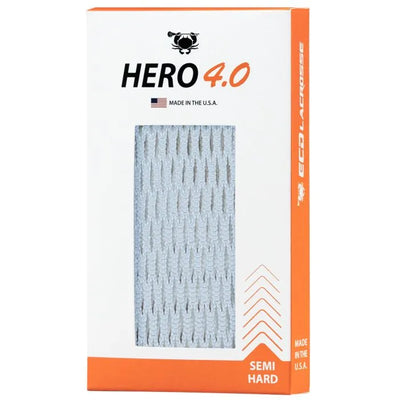
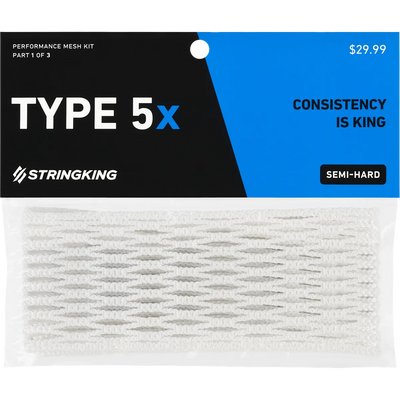
    If you're shopping for new mesh, the ECD Hero 4.0 Semi-Soft Mesh ($24.99) breaks in fast, while the StringKing Type 5x Semi-Hard Mesh ($29.99) takes a little more work but holds its shape all season. I've also put together a list of the best lacrosse mesh. Want to make sure your pocket meets the rules? Check out USA Lacrosse.

    Read more: Review of the best lacrosse sticks

    People also ask

    How do you break in lacrosse mesh fast?

    Soak it in warm water for 15 to 20 minutes, stretch it by hand, and pound the pocket with a ball or mesh breaker. Then get it on the wall and play with it. Nothing breaks in mesh like reps.

    How do you stretch out lacrosse mesh?

    Pull it in opposite directions: vertically, then horizontally, then diagonally. Repeat 10 to 15 times with steady, even pressure, and check your pocket depth as you go.

    How do you break in lacrosse gloves fast?

    Wear them as much as you can, at practice and around the house, and keep flexing your hands and wrists. Skip high heat like hair dryers on high or ovens, which can dry out and crack the palm.

    How long does lacrosse mesh last?

    Anywhere from a few months to over a year, depending on the mesh, how much you play and how well you take care of it. Keeping it clean and dry helps it last longer.

    What are the best methods for breaking in lacrosse mesh?

    Stretching and flexing by hand, soaking it in warm water, pounding the pocket with a mesh breaker or ball, and getting plenty of reps on the wall and in games.

    Breaking in your mesh might feel like an extra step, but it's an investment in your game. Know how to do it right, and you'll play with more confidence every time you step on the field. Grab your stick, follow these tips, avoid the common mistakes and take care of your mesh.

    Breaks in fastECD Hero 4.0 Semi-Soft
    Buy now
  • Lacrosse Hard Mesh vs Soft Mesh

    Lacrosse Hard Mesh vs Soft Mesh: Which Is Better? | LaxDrip
    Independent lacrosse gear reviews/Men’s · Women’s · Goalie

    Lacrosse Hard Mesh vs Soft Mesh

    Hard, soft, semi-hard, semi-soft and hybrid mesh broken down by durability, feel and weather, so you can string the right pocket for your game.

    Lacrosse hard mesh vs soft mesh
    Coach's pickSemi-hard
    Short answer: hard mesh lasts longer and stays consistent in the rain; soft mesh breaks in fast and feels great. For most players, semi-hard is the sweet spot.
    Shop mesh at BattleLax

    We may receive a commission if you make a purchase through a link on this page about lacrosse hard mesh vs soft mesh at no cost to you. This helps us keep this site free & we appreciate your support!

    Every lacrosse player has to decide which mesh to put in their stick. You've got hard mesh, soft mesh, and in-between options like semi-hard, semi-soft and hybrid mesh. So what's the real difference between hard mesh and soft mesh?

    Each type lets you build a custom pocket for your style of play. I've gathered everything you need to know to pick the right one.

    In this article, I'll break down the pros and cons of each type of lacrosse mesh, what each one gives you, and how to choose the best one for your game.

    Lacrosse hard mesh vs soft mesh

    What is lacrosse mesh?

    Lacrosse mesh is the netting strung in the head of your stick, the part that actually touches the ball.

    The type of mesh you use has a direct impact on how your stick plays, from ball control to shot accuracy. That's why picking the right mesh is a big part of getting better. And make sure your pocket stays legal. Check out what makes a lacrosse stick illegal.

    Types of lacrosse mesh

    There are a few different types of mesh out there, and each has its own advantages depending on what you need. Here's a quick overview before we get into hard mesh vs. soft mesh.

    Lacrosse mesh types

    Heads up: Today, most mesh on the rack is sold as semi-hard or semi-soft. True "hard" and "soft" mesh sit at the ends of the scale, so think of them as the extremes when you're shopping.

    Lacrosse hard mesh

    If you want something durable, go with hard mesh. It holds its shape over time and doesn't stretch or wear out as fast as soft mesh.

    Hard mesh gives you consistency, especially in wet weather. New players can find it tough to use, but experienced players appreciate the control it gives you.

    Pros
    • Lasts longer than soft mesh
    • Consistent feel, especially in wet weather
    • Precise ball control for experienced players who can handle the stiffness
    Cons
    • Takes longer to break in than soft mesh
    • Feels too rigid for new players

    Lacrosse soft mesh

    If you want comfort and flexibility, soft mesh is the way to go. When I started playing, I found soft mesh easy to use. It's more forgiving than hard mesh and molds to the ball, so cradling and catching feel smoother.

    Soft mesh is a great choice for beginners or anyone who likes a softer feel on the ball. It doesn't last as long, though, especially in wet weather, when it can stretch and lose its shape.

    Pros
    • Breaks in easily
    • Comfortable feel that makes the ball easier to handle
    • Great for beginners who want control right away
    Cons
    • Wears out faster than hard mesh
    • Stretches in wet weather, so it's less consistent

    Lacrosse semi-hard mesh

    If you want a balance of durability and feel, semi-hard mesh is perfect. It's less rigid than hard mesh but has enough structure for good ball control.

    It breaks in easier than hard mesh and gives you more flexibility without giving up durability. It's a great choice if you want the benefits of hard mesh without spending weeks breaking it in. The ECD Hero 4.0 Semi-Hard Mesh ($24.99) and StringKing Type 5x Semi-Hard Mesh ($29.99) are two of the most popular semi-hard options.

    Pros
    • Balance of stiffness and flexibility
    • Easier to break in than hard mesh
    • Durable without giving up comfort
    Cons
    • Not as soft or flexible as soft mesh
    • Still takes longer to break in than soft mesh

    Lacrosse semi-soft mesh

    Semi-soft mesh has the softness of soft mesh with a bit more structure. It's the perfect middle ground: softer than semi-hard mesh but better at holding its shape than full soft mesh.

    It's ideal if you want a comfortable feel without giving up durability. Try the ECD Hero 4.0 Semi-Soft Mesh ($24.99) or StringKing Type 5s Semi-Soft Mesh ($29.99).

    Pros
    • Soft feel with better control
    • Handles wet weather better than soft mesh
    • Quick break-in
    Cons
    • Not as durable as semi-hard or hard mesh
    • Can still stretch in very wet weather

    Lacrosse hybrid mesh

    Hybrid mesh combines elements of hard and soft mesh. If you can't decide, this could be your answer. It mixes the durability of hard mesh with the comfort and flexibility of soft mesh.

    That makes it a valuable option that performs well in different conditions, giving you the best of both worlds.

    Pros
    • Durable and flexible
    • Works well in different weather
    Cons
    • Doesn't excel in any one area like specialized mesh
    • Still needs a break-in, depending on how it's built

    Coach's note: If you play spring ball in the rain and cold, like early-season games in upstate New York, lean toward semi-hard. If you're a young player or you just want a stick that feels good out of the box, start with semi-soft. You can always restring once you know your game.

    Comparison of hard mesh vs soft mesh

    Here's a full comparison of hard and soft mesh.

    [wpdatatable id=233]

    As you can see, both hard and soft mesh have their strengths and weaknesses. The right choice comes down to your style of play and the weather you play in.

    Which mesh type do different players prefer?

    Here's what different players tend to prefer, though it isn't limited to these picks.

    [wpdatatable id=234]

    Equipment manufacturers and options

    When you're shopping for mesh, you'll find plenty of brands making quality options. Here are some of the best.

    ECD Lacrosse

    ECD is known for its Hero mesh line, which comes in both semi-hard and semi-soft. The current version is the ECD Hero 4.0.

    StringKing

    If you want performance and durability, I suggest StringKing. Its current Type 5 line comes in a semi-hard Type 5x and semi-soft Type 5s, plus a full string kit.

    Jimalax

    My favorite budget pick is Jimalax. It's affordable and comes in a bunch of colors and styles, like the Jima 6 and Jima 10 semi-soft mesh ($9.99 each).

    These brands have options for every type of player, whether you prefer hard mesh, soft mesh or something in between. I've also put together a list of the best lacrosse mesh to make it even easier.

    Mesh in stock at BattleLax

    Ready to string a new pocket? Here's the mesh BattleLax carries right now, from semi-hard to semi-soft.

    MeshTypePrice
    ECD Hero 4.0 Semi-Hard MeshSemi-hard$24.99
    StringKing Type 5x Semi-Hard MeshSemi-hard$29.99
    ECD Hero 4.0 Semi-Soft MeshSemi-soft$24.99
    StringKing Type 5s Semi-Soft MeshSemi-soft$29.99
    Maverik Boost Semi-Soft MeshSemi-soft$29.99
    Warrior Semi-Soft MeshSemi-soft$19.99
    Jimalax Jima 6 Semi-Soft MeshSemi-soft, 6 diamond$9.99
    Jimalax Jima 10 Semi-Soft MeshSemi-soft, 10 diamond$9.99
    Maverik Airwire MeshPremium mesh$49.99
    StringKing Type 5x Semi-Hard String KitFull string kit$39.99

    Shop the ECD Hero 4.0 Semi-Hard at Battle Lax

    People also ask

    Is hard mesh or soft mesh better?

    It depends on what you need. Hard mesh gives you more durability and consistency, while soft mesh is more comfortable and easier to handle, which makes it better for beginners.

    Which type of mesh is better?

    The best mesh depends on your style of play. Hard mesh is durable and consistent, soft mesh is comfortable and flexible, and semi-hard and hybrid mesh balance both.

    What is hard mesh used for in lacrosse?

    Hard mesh is used for its durability and its ability to hold its shape. It's ideal for experienced players who want consistent control, especially when the weather changes.

    What mesh should I use in lacrosse?

    If you need durability, go with harder mesh. For comfort, choose softer mesh. Semi-hard, semi-soft and hybrid mesh give you a balance of both, which makes them the most versatile options.

    How does soft mesh impact gameplay?

    Soft mesh has a comfortable, easy feel that's great for beginners. It gives you better ball handling, but it stretches out faster, especially in wet weather, which can hurt consistency.

    The bottom line

    When you're choosing between hard mesh and soft mesh, go with the one that improves your game and feels right in your stick.

    Hard mesh is your best bet if you need durability and consistency in any weather. If you care more about comfort and ball feel, soft mesh is the better fit. And if you want a mix of both, semi-hard, semi-soft or hybrid mesh might be the perfect option.

    Coach's pickECD Hero 4.0 Semi-Hard
    Buy now
  • How Lacrosse Scoring Works? 

    How Does Lacrosse Scoring Work? Goals, Points & 2-Pointers | LaxDrip
    Independent lacrosse gear reviews/Men’s · Women’s · Goalie

    How Does Lacrosse Scoring Work?

    One goal, one point, with a twist in the pro game. Here's what counts as a goal, the types of goals, the PLL's 2-point arc and how overtime works.

    How lacrosse scoring works
    The quick answer
    1 pointEvery goal

    In college, high school and youth lacrosse, every goal counts for one point, no matter how it's scored.

    2 pointsPLL arc

    In the PLL, a goal shot from behind the 2-point arc, 15 yards from the cage, counts for two.

    How does a lacrosse team win? It's an obvious question: you win by scoring more than the other team. But have you ever wondered exactly how lacrosse scoring works?

    I have, so I'm here to answer your questions.

    Lacrosse scoring can seem confusing at first, but don't worry, I'll break it down. By the end of this article, you'll know how scoring in lacrosse works and the rules behind it.

    Let's look at how teams score and how many points they get.

    How lacrosse scoring works

    We may receive a commission if you make a purchase through a link on this page at no cost to you. This helps us keep this site free & we appreciate your support!

    What makes a goal in lacrosse?

    A goal is scored when the whole ball crosses the goal line into the other team's net. It's pretty simple, but there are a few things you should know:

    • The ball has to be shot with the stick. You can't kick it or throw it in with your hand.
    • There's a circle around the goal called the crease. Offensive players can't step into it, but they can reach in with their stick to play a loose ball. Think of it as the goalie's bubble.

    So as long as the ball crosses the goal line without a rule violation, it's a goal. Want a goal for the backyard? Check out our list of the best lacrosse goals.

    How many points is a goal in lacrosse?

    Unlike sports where different shots are worth different points, lacrosse keeps it simple. In college, high school and youth lacrosse, every goal is worth one point. There are still a few different types of goals, though.

    Types of goals in lacrosse

    Goals can come in a few different situations. Knowing them will help you follow the scoreboard.

    Field goals

    This is your standard goal, scored during regular play. Field goals come from individual skill, teamwork and sharpshooting, and they're worth one point.

    Extra-man goals

    Extra-man goals, also called man-up goals, happen when a team has a player advantage because the other team is serving a penalty. They're also worth one point.

    This is a big strategic moment. The offense has an extra player on the field, and good teams move the ball fast to find the open shooter before the penalty runs out.

    Free-position goals

    In the women's game, a major foul inside the scoring area can earn the fouled player a free-position shot from the 8-meter arc. A goal off a free position feels like a bonus, but it still adds one point to the scoreboard.

    [wpdatatable id=236]

    What about 2-point goals in lacrosse?

    Most goals are worth one point, but some pro leagues use a 2-point goal to add excitement. Major League Lacrosse used a 2-point line for years, and today the Premier Lacrosse League (PLL) does it with its 2-point arc.

    In the PLL, a goal shot from behind the arc, 15 yards from the goal, counts for two points. The rule rewards long-range shooters and makes outside shooting a real weapon.

    15 ydsPLL 2-point arcDistance from the goal for a 2-point shot
    1 ptCollege & high schoolEvery goal, no matter where it's shot from

    College, high school and youth lacrosse don't use the 2-point goal. In the pro game, though, it changes how the game flows, especially when a team is down and needs to make up ground fast.

    Read more: Who shot the fastest lacrosse shot?

    How does lacrosse scoring work?

    Scoring in lacrosse is straightforward. Each goal is worth one point, and the team with the most points at the end of the game wins.

    Most goals come from attackmen and middies shooting the ball into the other team's cage, and the ball has to fully cross the goal line to count. The goalie on the other end plays a huge part in the final score too.

    Sharp shooting, smart ball placement and strong teamwork lead to more goals. But some things, like an offensive player stepping in the crease or a team being offside, are violations that can wipe a goal off the board.

    For official scorekeeping, check out the NFHS boys' lacrosse scorer guidelines.

    Every goal counts the same. That's why every possession matters.

    Gameplay scenarios that impact scoring

    What happens when the score is tied? This is the most exciting part. Here's how overtime and game-winners work.

    Sometimes the score is still tied after regulation. In those nail-biters, the game goes to overtime.

    The overtime format depends on the league, but it's usually short periods of sudden-victory play. The moment one team scores, the game is over.

    That goal is special. It's the make-or-break moment between winning and losing.

    Pro tip: If you're ever watching a close lacrosse game, keep an eye out for overtime. It's pure adrenaline, and nothing beats a packed rink in Ontario or a high school playoff game in Virginia Beach when it goes to sudden victory.

    Rules and regulations related to lacrosse scoring

    Like every sport, lacrosse has a few rules to keep scoring fair.

    1. An offensive player can't be in the crease when the ball crosses the goal line. If they are, the goal doesn't count.
    2. In the men's college and high school game, after a team gains possession in its defensive half, it has 20 seconds to clear the ball past midfield and 10 more seconds to get it into the offensive box. Failing to do so is a turnover. College men also play with an 80-second shot clock.
    3. Legal stick checks can knock the ball loose, but illegal checks like slashing are penalties.
    4. An attacker has to put the ball in with the stick. Kicking it in or throwing it in with a hand doesn't count.
    5. Technical fouls lead to 30-second penalties or turnovers, while personal fouls are 1 to 3-minute penalties in the box.

    Read more: Lacrosse terms and slang and What are the rules of lacrosse?

    How lacrosse scoring compares to other sports

    If you know soccer or hockey, you'll see lacrosse scoring has a lot in common with them, plus a few twists.

    Like soccer and hockey, lacrosse has goalies, a goal, and points scored when a player sends the ball (or puck) into the other team's net.

    What sets lacrosse apart is its pace and intensity. Goals come fast, and because each one is worth a single point, every goal matters.

    • Soccer usually has fewer goals, so each one feels huge.
    • Hockey scoring is similarly fast-paced, with added wrinkles like power plays and shootouts.

    Here's a quick comparison:

    Lacrosse scoring comparison
    SportPoints per goalTypical scoringTies
    Lacrosse1 (2 behind the PLL arc)Lots of goals, fast paceSudden-victory overtime
    Hockey1A handful of goalsOvertime, then shootouts in many leagues
    Soccer1Low scoringDraws, or extra time and penalty kicks in knockouts

    People also ask

    How do you score points in lacrosse?

    You score by shooting the ball into the other team's goal, with the whole ball crossing the goal line. Each legal goal is worth one point.

    How does scoring work in lax?

    Lacrosse keeps it simple: every goal is worth one point, and the team with the most goals at the end wins. The exception is the pro game, where the PLL awards two points for goals shot from behind its 2-point arc.

    Where is the 2-point line in lacrosse?

    In the Premier Lacrosse League (PLL), the 2-point arc sits 15 yards from the goal. College, high school and youth lacrosse don't use a 2-point line.

    How do you keep score in lacrosse?

    Track each legal goal as one point for the team that scored it. Official scorebooks also log who scored, who assisted, saves, penalties and timeouts.

    How does a team win in lacrosse?

    A team wins by scoring more goals than the other team. If the game is tied after regulation, it goes to sudden-victory overtime, and the first goal wins.

    Lacrosse scoring isn't just about putting the ball in the net. It's about understanding the different types of goals and the rules that decide when one counts. Learn them, and you'll never be confused by the scoreboard again.

    Practice your shotMaverik Practice Goal
    Buy now
  • Can A Lacrosse Goalie Use His Hands

    Can a Lacrosse Goalie Use His Hands? Goalie Rules Explained | LaxDrip
    Independent lacrosse gear reviews/Men’s · Women’s · Goalie

    Can a Lacrosse Goalie Use His Hands?

    Yes, but only inside the crease, and the rules aren't the same for the men's and women's game. Here's exactly what a goalie can and can't do with his hands.

    Can a lacrosse goalie use his hands
    The quick answer
    Men'sBlock, don't catch

    Inside the crease, a goalie can block or bat the ball with his hand, but he can't catch it or pick it up.

    Women'sStop & place

    Inside the goal circle, a goalie can stop the ball with her hand and pick it up to place it in her stick.

    In sports like soccer and hockey, goalies can use their hands to stop, catch or even throw the ball. So what about lacrosse? Can a lacrosse goalie use his hands? Lacrosse has its own unique rules, and knowing them makes the game even more fun to watch and play.

    In this article, I'll break down the lacrosse goalie rules and whether goalies can use their hands.

    Can a lacrosse goalie use his hands

    We may receive a commission if you make a purchase through a link on this page at no cost to you. This helps us keep this site free & we appreciate your support!

    The role of a lacrosse goalie

    The goalie is the last line of defense, standing between the other team's offense and the cage.

    Their main job is stopping shots and running the defense, making sure everyone is in the right spot to protect the net. Any goalie who's stood in the cage for a Canadian box game or a Virginia Beach summer tournament will tell you: you're the loudest guy on the field for a reason.

    Field players rely completely on their sticks to catch, pass and shoot, but goalies get a few extra privileges. Are their hands one of them?

    Can a lacrosse goalie use their hands?

    The short answer is yes, but only inside the crease, and only in certain ways.

    It depends on whether you're playing men's or women's lacrosse. The two games have different rules for how a goalie can use their hands to stop the ball.

    Read more: What are the rules of lacrosse?

    Lacrosse goalie rules: can they use their hands?

    Under the official rules, goalies can use their hands inside the crease, with some specific limits:

    • Block, don't throw. Goalies can use their hands to stop the ball inside the crease, but they can never throw it with their hand. Every pass and clear has to come out of the stick, so goalies use a goalie stick built for the job.
    • Men can't catch it. In the men's game, a goalie can block the ball or bat it away with his hand, but he can't close his hand on it, catch it or pick it up.
    • Women can place it. In the women's game, a goalie inside the goal circle can pick the ball up with her hand and place it in her stick.
    • The crease is protected. Offensive players can't enter the crease or make contact with the goalie there.
    • The clock is running. Once a goalie has the ball in the crease, they have to get it out fast: 4 seconds in the men's game and 10 seconds in the women's game.

    For the full rule language, check the NCAA men's lacrosse rules and NCAA women's lacrosse rules.

    Lacrosse goalie rules: men vs. women

    Here are the main differences between men's and women's goalie rules. They're mostly similar, with a few key differences laid out in the table below.

    [wpdatatable id=238]
    4 secMen's crease countTime to pass or leave the crease after gaining possession
    10 secWomen's goal circle countTime to pass or leave the goal circle after gaining possession

    Hands vs. sticks for goalies

    Using your hands versus your stick changes a lot about how you play the position. Here's a breakdown.

    [wpdatatable id=239]

    Advantages and disadvantages of hand use

    Here are some pros and cons of letting goalies use their hands.

    Advantages

    • Hands give goalies quicker reactions on shots, especially the ones that sneak past the stick.
    • Batting a ball down with your hand can keep a rebound out of the slot.
    • It gives goalies the spotlight, with some highlight-reel saves.

    Disadvantages

    • Blocking shots with your hands can lead to injuries, especially to the thumb and fingers.
    • Misunderstanding the hand rules, like catching the ball in the men's game or touching it outside the crease, gives the ball to the other team.

    That's why good goalie gloves matter. I've put together a list of the best goalie gloves to help protect your hands.

    Your stick makes the save. Your hands clean up the ones that get past it.

    Comparing lacrosse goalies to other sports

    The hand rules are a lot simpler in sports like soccer and hockey. Here's how lacrosse goalies compare to similar positions.

    Hockey vs soccer vs lacrosse goalies

    Hockey goalies

    Hockey goalies get more freedom with their hands than lacrosse goalies. They can catch the puck in their glove and freeze it to stop play, but they still rely on their stick to pass and play the puck.

    Soccer goalies

    Soccer goalkeepers can use their hands anywhere inside the penalty area, but they have strict rules about it, like how long they can hold the ball and not handling a back-pass from a teammate.

    Coach's note: Young goalies love to reach with their hands. Teach them to save with the stick and body first, and use the hand only to clean up. Step to the ball, top hand out, and let your pads and gloves do the rest.

    People also ask

    Can lacrosse goalies use their hands?

    Yes, inside the crease. In the men's game, a goalie can block or bat the ball with his hand but can't catch it or pick it up. In the women's game, a goalie inside the goal circle can stop the ball with her hand and pick it up to place it in her stick. Either way, passes and clears come out of the stick, never a throw.

    Can you use your hands in lacrosse?

    Field players can't touch the ball with their hands. Only goalies get hand privileges, and only inside the crease.

    Can a goalie be hit in lacrosse?

    Goalies get special protection in the crease. Offensive players can't enter the crease or make contact with the goalie there, and illegal contact is penalized.

    Is goalie the hardest position in lacrosse?

    Many players and coaches think so. Goalies face high-speed shots, run the defense and need lightning-quick reflexes.

    What happens if a lacrosse goalie uses his hands outside the crease?

    Outside the crease, the goalie is treated like any other player. Touching the ball with a hand is a violation, and the other team gets possession.

    So, can a lacrosse goalie use his hands? Yes, under specific conditions. The goalie is the last line of defense and mostly uses the stick to make saves and clear the ball, but the hand rules add an exciting twist to the position.

    Protect your handsMaverik Max Goalie Gloves
    Buy now
  • Types Of Lacrosse Pockets

    Types of Lacrosse Pockets: Low, Mid & High Explained | LaxDrip
    Independent lacrosse gear reviews/Men’s · Women’s · Goalie

    Types of Lacrosse Pockets

    Low, mid-low, mid, mid-high and high: what each pocket does to your control and release, and which one fits your position.

    Types of lacrosse pockets
    The quick answer
    LowMore control

    Low and mid-low pockets hold the ball tight for cradling and dodging. Most attackmen live here.

    HighFaster release

    Mid-high and high pockets get the ball out quick for hard shots and clears. A mid pocket splits the difference.

    If you're new to lacrosse, you've probably stared at a wall of heads and gotten overwhelmed by all the different pockets. I felt the same way when I was getting into the game.

    Your pocket is like a second skin on the field. It cradles the ball, helps your passes and lets you shoot your shot. But with so many options, high, low, mid and everything in between, how do you tell them apart?

    Different types of lacrosse pockets

    You don't have to stay confused. I've laid out everything you need to know about the different types of lacrosse pockets and which ones fit each position.

    We may receive a commission if you make a purchase through a link on this page at no cost to you. This helps us keep this site free & we appreciate your support!

    What is a lacrosse pocket?

    The pocket is the mesh or stringing in the head of your stick where the ball sits. It's not just a net to hold the ball. It directly affects your ball handling, your control and how fast the ball comes out when you shoot or pass.

    Different types of pockets suit different positions and styles of play.

    Common types of lacrosse pockets

    There are several types of lacrosse pockets, each with its own pros and cons.

    Each one is built for different positions and styles, but there's no "right" or "wrong" choice. It's all about trying different options and finding the one that fits your game.

    [wpdatatable id=252]

    Impact on ball control and performance

    When you compare pocket types, think about ball control, release time and shooting accuracy.

    Ball control

    Pockets that sit lower in the head (like low or mid-low) hold on to the ball better. That's great for cradling and dodging, especially when you need to protect the ball weaving through defenders.

    Release time

    If speed is your priority, go with a high or mid-high pocket. The higher placement gets the ball out fast, which is ideal for quick transitions and hard shots.

    Shooting accuracy

    A mid pocket gives you a balanced approach. You keep control without giving up too much release speed, so it's great for players who need something that works in a lot of situations.

    Here's a quick chart of how each pocket type affects ball control and shooting:

    [wpdatatable id=253]
    Lower pockets hold the ball. Higher pockets let it go. Pick the trade-off that fits your game.

    Types of lacrosse pockets for different positions

    Each position benefits from certain pocket types. If you want to play better, pick the pocket that works best for your spot on the field. Here's how it breaks down.

    PositionBest pocketWhy
    AttackLow or mid-lowControl for dodging and cradling in tight spaces
    MidfieldMidBalance for passing, shooting and playing D
    DefenseMid-high or highQuick release for clears and outlets
    GoalieDeep, goalie-specificHold on to the ball after saves

    Attack

    Types of lacrosse pockets for attack

    Attackmen benefit from low or mid-low pockets because they give you good control for dodging and cradling, so it's easier to beat your defender and get to the cage. A head built for attack, like the StringKing Mark 3A Head ($119.99), makes a low pocket even easier to string.

    Read more: Best attack lacrosse heads

    Midfield

    Types of lacrosse pockets for midfield

    Middies switch between offense and defense, so a mid pocket is usually best. It lets you pass, shoot and defend equally well. The StringKing Mark 3V Head ($119.99) is a versatile middie head that holds a mid pocket well.

    Defense

    Types of lacrosse pockets for defense

    If you're a defender, go with a mid-high or high pocket. It gives you a quicker release for clearing the ball upfield after a turnover. Most D heads, like the Maverik Tank 2.0 Head ($109.99), are built for exactly that.

    Read more: Best defensive lacrosse heads

    Goalie

    Goalies can relax. Goalie heads use specially designed pockets that are usually deeper, so you can hang on to the ball after you make a save.

    Read more: Best lacrosse heads for all positions

    Common misconceptions about lacrosse pockets

    While researching pocket types, I came across a few myths that are worth clearing up.

    Myth 1: Deeper pockets are always better

    Deeper pockets can give you more control, but they also slow down your release, which isn't ideal when the game is moving fast. And go too deep and your stick can fail a pocket check, which costs your team possession.

    Myth 2: Pocket placement doesn't matter for beginners

    Even for beginners, pocket placement matters. A mid pocket gives you the right balance of control and release, so you can build your skills without getting frustrated.

    Myth 3: One pocket type works for every situation

    No pocket is perfect for every situation. Your choice should come down to your position and style of play.

    Read more: What makes a lacrosse stick illegal?

    Tips for choosing the right pocket

    Here are a few practical tips to help you pick the right pocket.

    • Think about what you do most at your position, and pick a pocket that fits that style.
    • Don't be afraid to try a few pocket styles before you settle on one. Personal preference plays a big role.
    • Ask your coach or experienced players what they run. They can give you a good idea of what might work for you.

    Coach's note: Every kid who walks into a shop in Virginia Beach or upstate New York wants the deepest pocket on the rack. Start with a mid pocket, put in a few hundred reps on the wall, and only then move it up or down. Your stick should fit your game, not the other way around.

    Also, learn what can make your stick illegal so you know what not to do. Check the NCAA men's lacrosse rules. Knowing the rules is always the safest bet.

    People also ask

    What are the 5 different types of lacrosse pockets?

    The five types of lacrosse pockets are low, mid-low, mid, mid-high and high pockets. Each has its own advantages for different styles of play and positions.

    What is the best lacrosse pocket?

    The best pocket depends on your position and style. Mid pockets are the most versatile, giving you a balance for players who switch between passing and shooting a lot.

    What is a mid pocket in lacrosse?

    A mid pocket sits in the middle of the head, balancing ball control and release speed. It's ideal for versatile players who need to adapt.

    What is a low pocket in lacrosse?

    A low pocket sits near the throat of the head and gives you great ball control, especially for cradling and dodging. Attackmen who rely on quick moves use it a lot.

    What is a high pocket in lacrosse?

    A high pocket sits near the top of the head for a quicker release and powerful shots. Shooters and defensemen who need fast outlets often use it.

    Now that you know the different types of lacrosse pockets, you can not only spot them but pick the right one for your game. Get it dialed in, and your stick will feel like an extension of your hands.

    Best for a mid pocketStringKing Mark 3V Head
    Buy now