What Are the Rules of Lacrosse?
A beginner's guide to the field, equipment, positions, game structure, scoring, penalties, faceoffs and more, from a coach who's taught the game from Ontario to Virginia Beach.

You move the ball only with your stick, and only the goalie can touch it with a hand, inside the crease.
Most high school, college and pro games run 60 minutes. Most goals count for one point, and the team with the most goals wins.
Lacrosse is a thrilling game packed with fun and excitement, and of course, a set of rules that make it even better.
As a beginner, it can be hard to learn all the rules at once. Don't worry. I put together this guide to cover the basics, including:
- The field and equipment requirements
- Players and their positions
- The overall game structure
- The key rules followed in most versions of lacrosse

Alright, players, time to learn the basics.
We may receive a commission if you make a purchase through a link on this page at no cost to you. This helps us keep this site free & we appreciate your support!
Field markings and equipment
Let's start with the field and the gear. Like any field sport, lacrosse has strict rules about field markings and legal equipment to keep the game fair.

Field dimensions and markings
- The field is a rectangle, 110 yards long and 60 yards wide for men's field lacrosse.
- There's a goal at each end. Each goal is 6 feet wide by 6 feet tall, and the goals sit 80 yards apart.
- Each goal sits inside a circle called the crease, about 18 feet across.
Equipment requirements
Lacrosse is a fast game, and you can't play it without the right gear. Men's field players need a helmet, shoulder pads, gloves, a stick (head and shaft) and, of course, a ball.

You'll also need a mouthguard and other pads like arm pads (things get nasty sometimes), depending on the version of the game, age group and league. Every helmet, shoulder pad and goalie chest protector also has to meet the NOCSAE standard for your level.
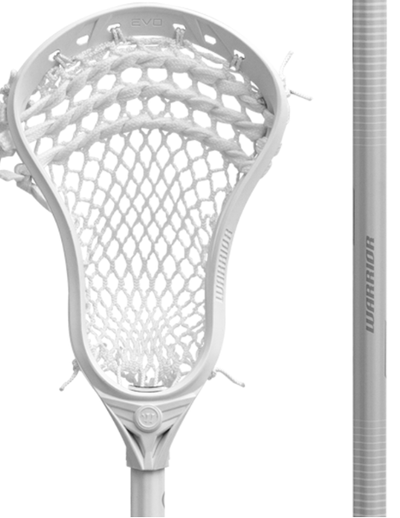 Complete stickWarrior EVO Complete Stick 2026$109.99 at BattleLax
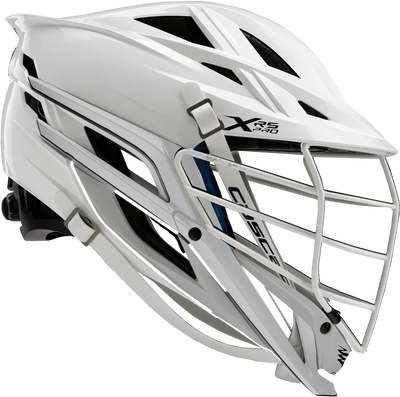 HelmetCascade XRS Pro Lacrosse Helmet$339.99 at BattleLax
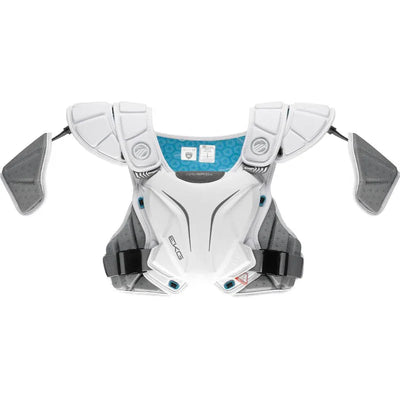 Shoulder padsMaverik Shift EKG Shoulder Pad$169.99 at BattleLax
 GlovesMaverik M6 Player Glove$115.99 at BattleLax
Players and positions
Each team has 10 players on the field, each with their own role and position.
You might be wondering why it's 10 when a lot of team sports play 11. It is what it is. Back in the day, games could have hundreds or even thousands of players a side, and it was more than just a sport. Pretty wild, right? Learn more about where lacrosse originated (timeline included).
Players on the field for each team
- 3 attackmen
- 3 midfielders
- 3 defensemen
- 1 goalie
Read more: Lacrosse positions explained
Goalie rules and equipment
Each team only gets one goalie, so the position comes with high stakes and strict rules:
- The goalie is the only player who can touch the ball with a hand, and only inside the crease.
- When the goalie has the ball in the crease, they get 4 seconds to pass it or carry it out (at the high school level).
- Once the goalie makes a save, the team has 20 seconds to clear the ball over the midfield line.
The goalie's stick has the biggest head on the field. Goalies have to wear a helmet, a throat guard, thick goalie gloves, a chest protector and a mouthguard, and most add a cup and padded pants for extra protection. Who wouldn't want the extra gear with 100+ mph shots coming at them?
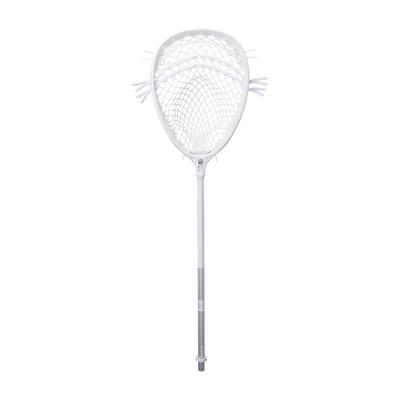
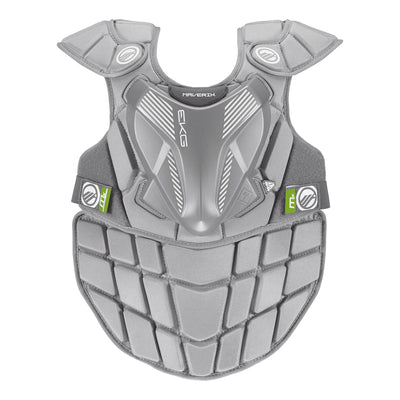
Read more: goalie heads, goalie shafts, goalie chest protectors, goalie helmets, goalie gloves and goalie gear
Substitution rules
Lacrosse lets you sub freely during play, called "substituting on the fly." The player coming off heads to the substitution box, and the sub comes on.
- The sub can't leave the box until the player coming off has reached it. If the sub jumps on early, it's a "too many men on the field" violation.
Game structure
Let me keep it simple. Here's how a typical game breaks down.
Game length and periods
- At the higher levels, a men's game is 60 minutes of game time.
- The game is split into four quarters. NCAA women's lacrosse switched from two halves to four quarters too.
- Each quarter is 15 minutes long.
- There's a short two-minute break between quarters and a halftime of about 10 minutes.
- Teams get a set number of timeouts (two per half in high school), taken when their team has the ball or during a dead ball.
Note: Times vary by level and version of the game. Here are a few:
Read more: How long is a lacrosse game?
Overtime rules
Lacrosse overtime is sudden victory. The first team to score wins. If neither team scores in an overtime period, they keep playing more overtime periods until someone does.
Basic gameplay rules
Every version of lacrosse shares the same basic rules both teams have to follow.
Scoring goals
- Teams score by shooting the ball into the other team's net.
- Each goal counts for one point.
- Any player can score.
- The team with the most goals at the end wins.
- In some leagues, like the PLL, goals from behind the two-point arc are worth two points.
Read more: How lacrosse scoring works
Possession
Players try to keep the ball within their team to score. Nobody but the goalie can touch the ball with a hand. Everyone else can only use their stick.
- Teams can't stall or hold the ball forever without trying to score.
- Once you're over midfield on offense, you can't pass or carry the ball back over it. That's an over-and-back violation.
- Offensive players can't step into the crease. That's a crease violation and a turnover.
Penalties
Now that you know how to score, let's cover penalties. They vary by version of the game, age group and level. Here are some of the common ones:
Read more: How to play lacrosse
Legal and illegal moves
Here are the legal moves players can use:
And here are the illegal moves that get you flagged, depending on how serious the foul is:
How to check the right way
- Keep both hands on your stick when you body check.
- Only check a player who has the ball or is within about 5 yards of a loose ball.
- Only make contact between the waist and the shoulders.
- Never hit a player from behind.
- If a player has a knee on the ground, you can't body check them until they're up.
Read more: Is lacrosse a contact sport?
Offside and restraining line rules
The restraining lines keep players in position, so there are a few rules to follow:
These rules keep things balanced on faceoffs and in transition between offense and defense. Break them and you're offside, which means a turnover or a time-serving penalty.
How faceoffs work
Here's a simple guide to the faceoff:
Read more: Best faceoff heads and best faceoff shafts
Lacrosse officials and their roles
Here are the officials and what each one does during a game:
Men's vs. women's lacrosse rules
Women's lacrosse is a little different. It doesn't allow body checking and only allows limited stick checking, while men's lacrosse is a full-contact game with tougher penalty and conduct rules.
The gear is different too. Women wear goggles and a mouthguard, with optional soft headgear, instead of a full helmet and pads, and their sticks have shallower pockets.
Read more: When is the lacrosse season?
Specific game situations
A lot of lacrosse rules apply to specific situations and levels. Here are some common ones to watch for:
Goals and assists
Players score by shooting the ball into the other team's net for one point each. They can only use their sticks to carry or pass the ball to teammates, and offensive players have to stay out of the crease when they shoot.
Sportsmanship and conduct
Lacrosse conduct guidelines set the standard for a game built on respect, fairness and sportsmanship. Good sportsmanship means:
- Respecting your coaches, teammates and opponents
- Playing fair, with honesty, humility and grace
- Never arguing, taunting, cheating or disrespecting the officials
- Putting every player's safety first
Coach's note: The game started with the Haudenosaunee as the Creator's Game, and whether I'm coaching box kids in Ontario, youth teams in Virginia Beach or high schoolers in upstate New York, I tell them the same thing: respect the game. Learn the rules, shake hands after, and never take a cheap shot. The refs will notice, and so will everyone watching.
Gear up
Got the rules down? Here's what you need to hit the field.
 Game ballsPearl X Lacrosse Balls (3-pack)$19.99 at BattleLax
 CleatsNew Balance FreezeLX v5 Mid Cleat$129.99 at BattleLax
Complete stickWarrior EVO Complete Stick 2026$109.99 at BattleLax
GlovesMaverik M6 Player Glove$115.99 at BattleLax
People also ask
What are the rules of lacrosse?
Lacrosse rules cover the field, the equipment, the players and positions, how the game is timed, how you score and what's a penalty. Teams play 10 a side, move the ball only with their sticks and score by shooting into the other team's goal.
What equipment do you need for lacrosse?
Men's field players need a helmet, shoulder pads, arm pads, gloves, a mouthguard, a stick and cleats. Goalies add a chest protector, throat guard, goalie gloves and a goalie stick. Women wear goggles and a mouthguard, with optional soft headgear.
What are the positions in lacrosse?
Each team has 10 players on the field: 3 attackmen, 3 midfielders, 3 defensemen and 1 goalie.
What are the goalie rules in lacrosse?
The goalie is the only player who can touch the ball with their hand, and only inside the crease. In high school, a goalie with the ball in the crease has 4 seconds to pass it or leave the crease, and the team has 20 seconds to clear the ball over midfield.
How long is a lacrosse game?
Most high school, college and pro men's games are four 15-minute quarters, about 60 minutes of game time. Youth games are shorter. NCAA women's lacrosse also plays four quarters.
Now that you know the rules of lacrosse, you're ready to learn more about the game. Gear up, grab your stick and get on the field. Play with heart, keep it fair, stay behind your restraining line and follow the rules. Have fun, and make every moment on the field count.