Why Are White Mouthguards Illegal in Lacrosse?
For years, white and clear mouthguards got you sent to the sideline. Here's why the rule existed, and why the answer is different in 2026.

White and clear mouthguards blend in with your teeth, so refs couldn't tell who was wearing one.
NFHS boys' rules dropped every color restriction for 2026. Girls' rules did in 2024, and the NCAA allows clear.
Ever wondered why white mouthguards were illegal in lacrosse? It seems like a tiny detail, but the rule was there for a real reason.
White and clear mouthguards practically disappear against a player's teeth. That created a blind spot for referees trying to make sure every player on the field was protected. If a kid wasn't wearing one and the ref missed it, that kid was one stick to the face away from a serious injury.
That's why governing bodies like the NCAA and NFHS required brightly colored mouthguards for years. But here's the part a lot of parents, players and even coaches haven't caught up on: those color rules have been rolled back. As of the 2026 high school season, a white mouthguard is legal in NFHS boys' lacrosse.
Let me walk you through why the rule existed, what changed, and what you actually need to wear this spring.
We may receive a commission if you make a purchase through a link on this page at no cost to you. This helps us keep this site free & we appreciate your support!
The role of mouthguards in lacrosse
Before we get into the rules, let's talk about why mouthguards matter in the first place.
Lacrosse is a contact sport. Between sticks, a hard rubber ball and collisions on every ground ball, your mouth takes a beating. A mouthguard is your best bet against chipped teeth and jaw injuries. It absorbs the shock that would otherwise go straight into your teeth, and trust me, missing front teeth won't look good in your senior pictures.
A mouthguard only protects you if it's actually in your mouth.
The color of your mouthguard doesn't protect you. Fit does. A mouthguard that's molded right and stays in place is what keeps your teeth where they belong.
Shop more: All mouthguards at BattleLax
Why were white mouthguards illegal in lacrosse?
The ban came down to one thing: visibility. It was all about player safety and fair play.
Refs are responsible for enforcing safety rules, including making sure every player has a mouthguard in during the game. But a white mouthguard blends right in with your teeth. From across the field, in the middle of a fast break, it was close to impossible for an official to spot one.
That led to confusion, missed checks and more players out there without protection. So the rulebooks stepped in. For years, NCAA and NFHS rules required a "readily visible" color and banned white and clear mouthguards outright. Most rulebooks also banned mouthguards with graphics of white teeth, for the exact same reason.
So are white mouthguards still illegal?
Not in most U.S. high school and college lacrosse. Over the last few seasons, the rule makers loosened up. When the NCAA allowed clear mouthpieces, it said it wanted more flexibility on color given what's available on the market, and the high school rules followed suit.
| Level | Color rule today | Changed |
|---|---|---|
| High school boys (NFHS) | No color restrictions. White and clear are legal. Purely decorative mouth attachments are banned. | 2026 season |
| High school girls (NFHS) | Color restrictions removed. Field players still can't wear a mouthguard with a protruding tab. | 2024 season |
| NCAA men | Clear mouthpieces are now permitted. | 2025 season |
| Youth, club, box & other leagues | Varies. Many follow NFHS, but check your league's rulebook. | Varies |
Bottom line: if you're playing high school ball in the States, the color police are gone. But if you play youth, summer club, box in Canada, or in a league with its own rulebook, don't assume. A bright mouthguard is legal everywhere, so it's still the safe call.
Rules for mouthguards in lacrosse
Color rules may be gone, but plenty of mouthguard rules are still on the books. Here's what the rulebooks still care about, with the exact details depending on your level.
- You must wear one. A mouthguard is required equipment at every level.
- It has to be in your mouth, covering your teeth. Hanging off your facemask or chewed on the side of your mouth doesn't count.
- It must actually protect. Don't cut it down or alter it so it protects less.
- No decorative attachments. NFHS boys' rules ban add-ons that serve no protective purpose.
- Girls' field players: no protruding tabs. Goalies may wear one attached to the helmet.
- Check your league on color. Some youth and independent leagues may still require a bright, visible color.
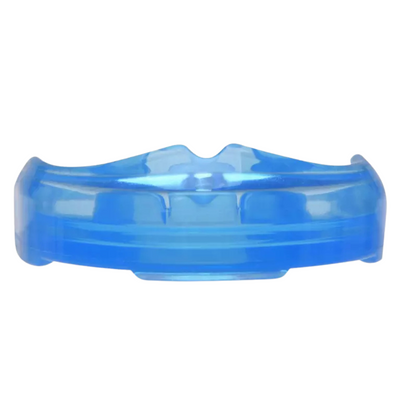
 MouthguardShock Doctor Gel Max Power$20.99 at BattleLax
 MouthguardShock Doctor MicroFit$25.00 at BattleLax
 For bracesShock Doctor Strapless Braces$14.99 at BattleLax
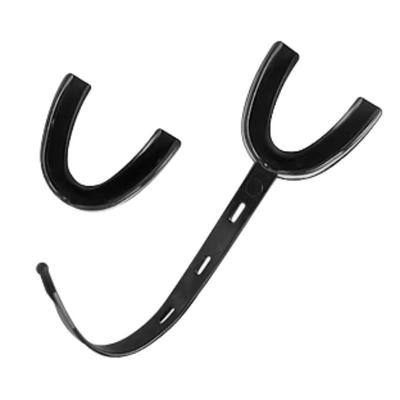 YouthMueller Youth Strapguard$3.00 at BattleLax
Coach's note: Girls' field players, skip the strap. A guard with a protruding tab is still illegal for you. A strapless guard like the Shock Doctor Strapless keeps you legal.
How the mouthguard color rule changed
The color rule isn't new. It was around for decades. Early on, the focus was just on getting players to wear mouthguards at all.
Once they were mandatory, refs needed a fast way to check. That's where the bright-color requirement came in. A yellow or orange mouthguard is easy to spot from the sideline, while a clear or white one isn't. So the rules got stricter and the less visible options got pushed out.
Then, over the last few seasons, the rule makers loosened up. A lot of the guards on the market come in clear or neutral colors, and the focus shifted from what color a mouthguard is to whether it fits and is actually being worn. Girls' high school rules dropped color restrictions in 2024, the NCAA allowed clear mouthpieces in 2025, and NFHS boys' rules removed every color restriction for 2026.
Read more: Is lacrosse hard? A coach's honest answer
Mouthguard colors and their visibility
Even with the color rules relaxed, some colors are a lot easier to see than others. If you want to make the ref's job easy, or you're playing in a league that still checks, go bright.
How does lacrosse compare to other sports? Hockey and football players wear mouthguards for the same reasons, and bright colors have long been popular across contact sports because they're easy to spot. Lacrosse was just one of the few sports that actually wrote color into the rulebook.
What happens if you break the mouthguard rules?
If you're not wearing your mouthguard properly, the ref can stop play, and you may have to come off the field until it's fixed.
In NFHS boys' lacrosse, an illegal or improperly worn mouthguard is a technical foul, which usually means your team gives up possession. Other levels handle it differently, and some can be tougher on repeat violations. The easy fix is simple: keep it in your mouth, not hanging off your facemask.
People also ask
Can you wear a white mouthguard in lacrosse?
In U.S. high school boys' lacrosse, yes. Starting in 2026, NFHS rules removed all mouthguard color restrictions, including white and clear. Girls' high school rules dropped color restrictions in 2024, and NCAA men's rules have allowed clear since 2025. Youth, club and other leagues can differ, so check your league's rulebook.
Can you play lacrosse without a mouthguard?
No. A mouthguard is required equipment at every level, and it has to be worn properly in your mouth. In NFHS boys' lacrosse an illegal or improperly worn mouthguard is a technical foul.
What are the rules for mouthguards in girls' lacrosse?
Girls' field players must wear a mouthguard with no protruding tabs, and goalies may wear one attached to the helmet. High school girls' rules removed color restrictions in 2024.
Why do lacrosse players wear mouthguards?
To protect against dental and jaw injuries from sticks, balls and collisions. A properly fitted mouthguard absorbs impact that would otherwise go straight to your teeth.
Why were white mouthguards illegal in lacrosse?
White and clear mouthguards blend in with your teeth, which made it hard for refs to confirm everyone was wearing one. Bright colors made that check quick and easy.
So, why were white mouthguards illegal in lacrosse? It was all about safety, making sure refs could see that every player was protected. Today most U.S. rulebooks have dropped the color rule, but one thing hasn't changed: wear it, wear it right, and keep it in your mouth.