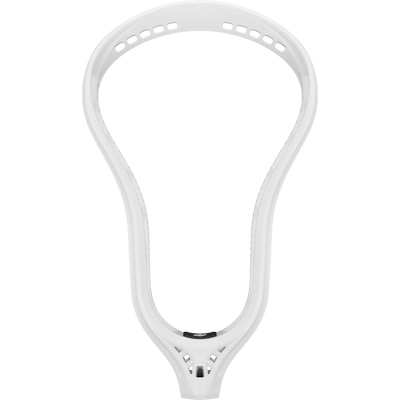
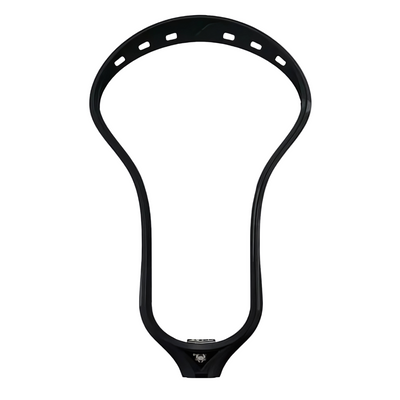
STX's elite defense head: very stiff, very durable and built for the take-away defender. Here's how it plays and what to buy at BattleLax.
ADAnson Decker · Men's Heads · Updated October 24, 2026 · 5 min read
Best forDtake-away defenders
LaxDrip verdict: a stiff, durable, wide-faced defense head that holds up to check after check. The scoop and stringing holes could be better. BattleLax doesn't stock it, so we point you to the StringKing Mark 3D.
We may receive a commission if you make a purchase through a link on this page at no cost to you. This helps us keep this site free & we appreciate your support!
Overview
STX's elite defender head. It's very stiff and durable, perfect for the take-away defender.
Coach's note: Every great close D I've coached, from upstate New York to Virginia Beach, wants the same thing out of a head: no flex on the check and a wide face to jump passing lanes. Ontario box defenders want it even stiffer, because they're cross-checking all night. If your head folds on a lift check, you're playing from behind. The Hammer line has always been built to hit.
Heads up: BattleLax doesn't carry the Hammer 1K right now. The closest stiff defense head in stock is the StringKing Mark 3D Unstrung Head ($119.99).
The Hammer 1K is a defensive head through and through. It's a real departure from the Hammer 900, with struts that add more support toward the lower end of the head. STX was able to add stiffness, which is huge for defenders. The face is wide to give you as much area as possible for picking off passes.
At about 5.6 oz, it's a pretty standard weight for a defensive head. The EnduraForm plastic is very durable and holds its shape well. The struts are in good spots to keep the head stiff, an improvement over the Hammer 900, where the struts weren't in great places and stiffness suffered.
The Speed Scoop is decent but could definitely use some work. It didn't perform as well at higher angles as some other heads, mainly the StringKing Mark series. But it still does very well at most other angles.
The head is built for a mid-high pocket. Defenders usually like a mid-high pocket for ground balls, so the ball gets into the pocket quickly.
With 6 top string holes, 16 sidewall holes per side and 4 bottom string holes, it has a lot fewer stringing holes than other elite defense heads, but it doesn't give you many problems stringing. More holes would be nice, but it's not a deal breaker.
All the holes are fairly big, so you won't have trouble getting string through. That can affect the pocket, though, since the string has a lot of wiggle room in each hole. Grab some ECD Hero 4.0 Semi-Hard Mesh ($24.99) and dial it in.
Aesthetics
It isn't the prettiest head, but what it lacks in looks it makes up for in function. It only comes in white, which is a little unfortunate but not a big deal, especially since a lot of players dye their heads.
The struts are in good spots for stability, and it's a beefy head. The throat looks decent and is smaller than on previous Hammers. I'm not sure why, since defenders don't usually put their hand near the head unless they face off, and this is definitely not a faceoff head. Maybe it has to do with cracking, but I'm not sure.
Pros & Cons of the Hammer 1K
Pros
Durable: The EnduraForm plastic holds its shape after many games and checks.
Stiff: The head is very stiff, an upgrade over the Hammer 900.
Cons
Needs more sidewall holes: It could use more, smaller sidewall holes.
Colors: More color options would be nice, but white is the only one.
The Hammer 1K is best for any defender. D-middies and LSMs can definitely use it, but I'd recommend a slightly more offensive-minded head for them, since there are plenty on the market built for that, like the Maverik Tank 2.0 Head ($109.99).
Yes. It's very stiff and durable, with a wide face for picking off passes, which makes it a top-level head for take-away defenders.
How much does the STX Hammer 1K weigh?
About 5.6 oz, which is pretty standard for a defensive head.
What pocket is best for the Hammer 1K?
It's built for a mid-high pocket, which most defenders like for quick ground balls.
What colors does the Hammer 1K come in?
Only white, though it's easy to dye.
Does BattleLax carry the STX Hammer 1K?
Not right now. The closest defense heads at BattleLax are the StringKing Mark 3D, Maverik Tank 2.0 and ECD Delta.
Conclusion
The Hammer 1K is a defensive head through and through. It has great stiffness and should hold up to a ton of checks. It's not the best-looking head, but it's very functional and a top-level defensive head. The scoop could be a little better, but it'll get the job done. I'd definitely recommend it to any defender. Want a stiff D head you can grab today? Go with the StringKing Mark 3D Unstrung Head.
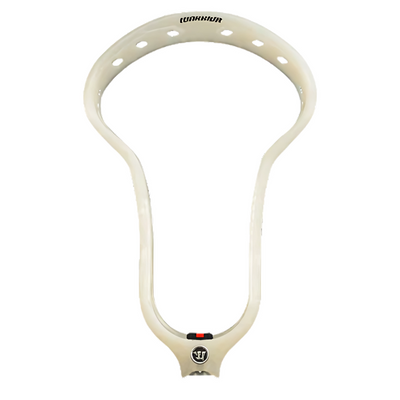
Warrior says the Burn Formula is a faceoff head that can actually shoot. I took it to the X and then down the field as a FOSO to see if the formula finally works.
CSConnor Stifel · Men's Heads · Updated October 23, 2026 · 7 min read
Drip score9.1/ 10
LaxDrip verdict: a durable, warp-resistant FOSO head with a great scoop and accurate shooting. Shot speed and checking power are just average.
LaxDrip is reader supported. When you buy through links on this page we may earn a commission at no extra cost to you. How we review.
Overview
I'm an offensive middie, but I've always loved stepping into the FOSO role. So when I heard Warrior was marketing the Burn Formula as a faceoff head that excels at shooting, I had to test that claim. Most faceoff heads struggle to shoot accurately because of their flex, so this review was overdue.
Warrior has been working on faceoff heads since the original Burn FO, but durability hasn't been their strong suit. So the question is: has Warrior finally found the right formula for a head that's durable, flexible and shoots well?
Coach's note: The FOSO is the most valuable guy nobody talks about. Win the draw, push it, and if the short-stick slides late, finish it yourself. I've seen it win games from upstate New York to Virginia Beach, and every Ontario box kid who takes draws already thinks this way. You need a head that clamps like an FO head and shoots like a middie head. That's the test.
I rate the Warrior Burn Formula a 9.1/10 on the Drip Meter.
[wpdatatable id=327]
Who's This Head Made For?
The Burn FO and Burn FO Recovery were more FOGO heads with very flexible profiles. The plastic looks similar, but Warrior made big design improvements. So I'd call the Burn Formula a FOSO head.
The Burn Formula is slightly thicker than the StringKing Mark 2F Head and has a wider scoop. It's stiffer, and it snapped right back into shape when I bent it.
The throat length is nearly identical to the OG Burn FO. But Warrior removed the throat plug and added two extra screw holes on each side for versatility.
I liked the throat plug, but the screws work better. It went right onto my ECD carbon shaft. If you need one, the ECD Carbon 4.0 Attack/Midfield Shaft ($124.99) is a solid match. The new scoop design impressed me too.
Now let's see if it wins the 50/50s.
See it liveGKL+ on YouTube
Shot and Pass Accuracy
The Burn Formula has a longer throat and a wider face that pinches in the center and runs down straight with very little curve at the throat. The sidewalls are also stiffer than the FO Recovery's.
That gave me better feedback and made it easier to aim. Playing FOSO, I could put the ball right where I wanted it. The face profile is solid for feeding and shooting.
The mid pocket gives you a good balance of control and quick release. It doesn't give you the lightning shot speed I get from a mid-high pocket in an attack head, though.
Still, I liked how consistent the release was. Every shot went right where I aimed it.
The sidewalls have 17 holes, so you can get creative with pocket depth. If you want a stiffer head for high-speed shooting, look at the StringKing Mark 2F Head or the Nike CEO 3, or the Burn Formula Stiff ($99.99).
For catching and cradling, I found it one of the best faceoff heads for elite players.
The pinched throat gives the ball a snug pocket feel, which is great for keeping control on quick moves and dodges. Once the ball is in, the stiffness and design give you strong, confident control. I felt secure even under heavy defensive pressure.
The wider face also gives you a good surface for scooping ground balls on the run. Unlike the Burn Recovery, it doesn't warp and slides the ball right into the pocket.
The rounded edges did deflect the ball sometimes, which made one-handed catches feel inconsistent. I had a few frustrating moments when the ball glanced off the sidewall instead of settling into the pocket.
So if you're a beginner or you rely on catching quick passes on the run, the Burn FO or a good attack head is a better fit.
Checking
The Burn Formula is stiffer than its predecessor, but it's not super stiff. So I didn't get powerful checks out of it. With its flex profile, I had to put more force into my checks.
Still, the sidewalls are sturdy enough to take a hit. Warrior added a strut to support the sidewalls and made them more horizontal than the Recovery's. That makes the side profile more durable and long-lasting, and the head holds its shape well.
Elite faceoff man and PLL star Trevor Baptiste has praised the durability of the Therma Loc+ construction, which holds up better than other nylon heads that break easily in faceoff battles. At about 5.3 oz, the Burn Formula took a beating without losing its shape.
So it may not be the ideal head for defensive or transition middies, but the durability of the flex profile is worth the money.
Ground Ball Pick-Up and Faceoffs
The scoop is the crowning glory of the Burn Formula. It's much more curved and rounded than the Burn FO's, which helped me a lot when making contact with the ball and using the scoop to flick it out from under my opponent.
The ball rails aren't just a gimmick, either. They add warp resistance, which makes the head sturdier in tough tie-ups and faceoff battles. The Burn Formula never over-flexed or felt flimsy. It gave me the confidence to clamp hard without worrying about losing control.
The slight stiffness also lets the head snap back quickly after it flexes. So I could transition smoothly into controlling the ball or running an exit even when I wasn't in an ideal position against my opponent.
Some players may still miss the flex and smooth twisting of the Recovery. If that's you, compare it with the ECD Weapon X 2.0 Head ($99.99) too, and read our Weapon X 2.0 review.
When was the Warrior Burn Formula lacrosse head released?
In 2024, with better durability, flex and accuracy for faceoff players and offensive middies.
What colors does the Warrior Burn Formula come in?
White and clear.
How much does the Warrior Burn Formula weigh?
About 5.3 oz, so it's light but durable for intermediate and advanced players.
What's special about the Burn Formula's scoop?
It's much more curved and rounded than the Burn FO's, which makes ground balls and faceoff battles easier to win.
Why is the Warrior Burn Formula good for FOSO players?
A longer throat, a pinched face, stiffer sidewalls than the Recovery and a mid pocket give you accurate shooting and controlled cradling after you win the draw.
Final word
The Warrior Burn Formula is a FOSO head that pairs a durable build with elite features. The longer throat and pinched face help your accuracy, and the mid pocket balances control and quick release.
The scoop is excellent for ground balls and winning faceoff battles, and the ball rails help guide the ball into the pocket for a secure hold when you're dodging defenders.
Shot speed and checking power are a bit lower, but it gives you accurate shooting and controlled cradling.
If you want more flex, try the Warrior Burn FO Recovery. If you want a stiffer head for high-speed shooting and strong checks, go with an offensive head like the StringKing Mark 3V Head ($119.99).
The top of STX's elite midfield lineup, used by Nakeie Montgomery and built for the two-way middie. Here's how it plays from a two-way middie's point of view.
ADAnson Decker · Men's Heads · Updated October 23, 2026 · 5 min read
Best for2-waymiddies
LaxDrip verdict: a light, stiff, durable midfield head with a deep offset. The scoop and the number of stringing holes could be better. BattleLax doesn't stock it, so we point you to the StringKing Mark 3V.
We may receive a commission if you make a purchase through a link on this page at no cost to you. This helps us keep this site free & we appreciate your support!
Overview
The Stallion 1K continues the top of STX's elite midfield lineup. Nakeie Montgomery uses it, and it's a great fit for the two-way midfielder.
Coach's note: The two-way middie is the hardest-working guy on the field. From upstate New York to Virginia Beach to the Ontario box leagues, I tell every middie the same thing: you need a head that can win a ground ball in the defensive end, take a check without folding, and still let you rip one on the run. That's the job the Stallion 1K was built for.
Heads up: BattleLax doesn't carry the Stallion 1K right now. The closest two-way middie head in stock is the StringKing Mark 3V Unstrung Head ($119.99).
The Stallion 1K is built for two-way middies like Nakeie Montgomery, who uses this head. It's VERY similar to the Stallion 900, with a few differences. The face shape and stiffness are ideal for a two-way middie, and it has a deep offset for more control of the ball.
At about 4.7 oz, the Stallion 1K is light for a two-way middie head compared to the ECD DNA 2.0 and the StringKing Mark 2T and 2V. As a two-way middie myself, I usually like my heads a little heavier because I get more durability when checking. I haven't had any of those issues with this head so far, thanks to the EnduraForm plastic.
The Speed Scoop is decent but could definitely use some work. It didn't perform as well at higher angles as some other heads, mainly the StringKing Mark series. It still does very well at most other angles.
Since the head is built to be versatile, pocket customization really matters, because different positions like different pocket shapes. Unfortunately, the Stallion 1K doesn't have as many stringing holes as other elite heads. There are 6 top string holes, 16 sidewall holes per side and 4 bottom string holes. Most elite heads these days have 20 or more sidewall holes.
All the holes are fairly large, so you won't have trouble getting string through. That can affect the pocket, though, because the string has a lot of wiggle room in each hole. Still, I had little trouble getting the pocket I wanted. Could it use more stringing holes? Definitely. But you should be able to string just about any pocket in this head. Grab some ECD Hero 4.0 Semi-Hard Mesh ($24.99) and get to work.
Pros and Cons of the STX Stallion 1K
Pros
Durable: The EnduraForm plastic holds its shape game after game. It's a stiff head, and the extra material compared to the Stallion 900 seems to add some heft and stiffness.
Light: At about 4.7 oz, it's on the lighter side for midfield heads. If you want a lighter head, this one's for you.
Variety of colors: You get a choice of colors most other heads don't offer.
Cons
Needs more sidewall holes: It could use more sidewall holes, with smaller holes.
Scoop could be better: It's not bad by any standard, but it doesn't do well at higher angles.
This head is best for the two-way middie, the defensive middie or the offensive-minded LSM. The scoop isn't the best I've used, but it'll get the job done.
Offensive players can use it if they want a stiffer head that's still light. It could work for an attackman who likes a mid pocket, but other heads are better for a low pocket.
As a two-way middie myself, I'd definitely use this head on the field. I'd pair it with the STX Sc-Ti X+ shaft, or a concave shaft like the Maverik Caliber 2026 Shaft ($129.99) from BattleLax.
Nakeie Montgomery, the two-way midfielder, uses it.
How much does the STX Stallion 1K weigh?
About 4.7 oz, which is on the lighter side for a midfield head.
What position is the STX Stallion 1K for?
Two-way middies first, plus defensive middies and offensive-minded LSMs. Attackmen who like a mid pocket can use it too.
How many stringing holes does the Stallion 1K have?
6 top string holes, 16 sidewall holes per side and 4 bottom string holes.
Does BattleLax carry the STX Stallion 1K?
Not right now. The closest two-way middie head at BattleLax is the StringKing Mark 3V.
Final word
The STX Stallion 1K is a light, stiff, durable head built for the guy who plays both ends of the field. The scoop and stringing holes leave a little room to improve, but it'll handle just about any pocket and any role a middie throws at it. Want a two-way head you can grab today? Go with the StringKing Mark 3V Unstrung Head.
STX took the critiques of the Eclipse 2 and built a stiffer, squarer successor. It costs more, so here's how it actually plays in the cage before you upgrade.
CSConnor Stifel · Men's Heads · Updated October 23, 2026 · 7 min read
Drip score9.1/ 10
LaxDrip verdict: a stiff, sturdy, wide-face goalie head with a great bowl scoop and a longer throat. It's a bit heavy and tricky to string. BattleLax doesn't stock it, so we point you to the ECD Impact.
LaxDrip is reader supported. When you buy through links on this page we may earn a commission at no extra cost to you. How we review.
Overview
STX took the critiques of the Eclipse 2 and released a successor in 2023, claiming it's better and stiffer. It's also more expensive. So before you upgrade, check out this STX Eclipse 3 goalie head review.
Despite the higher price, the Eclipse 3 is an upgrade. It's sturdier, stiffer and has an updated face profile. Top-level goalies like Maryland's Emily Sterling and PLL keeper Kyle Bernlohr have been seen using it.
So let's see how it performs.
Important note: This review was written with an experienced lacrosse goalie to give you authentic insight and a practical evaluation.
Coach's note: I've coached keepers from upstate New York to Virginia Beach, and spent plenty of nights watching Ontario box goalies eat rubber. The good ones all say the same thing: they want a head that doesn't fold on a hard high shot and lets them rip a clear the length of the field. That's what STX was chasing with the Eclipse 3.
I rate the STX Eclipse 3 goalie head a 9.1/10 on the Drip Meter.
[wpdatatable id=330]
Who Is This Head For?
Most goalie heads have rounder faces, which limits surface area. The Eclipse 3 is the newer option for goalies who like a squarer face profile.
It's lighter, more rigid and sturdier than the Eclipse 2, which makes it a good fit for aggressive goalies. The Endura foam plastic is similar, but thicker walls and what STX calls 30% more stiffness make it better.
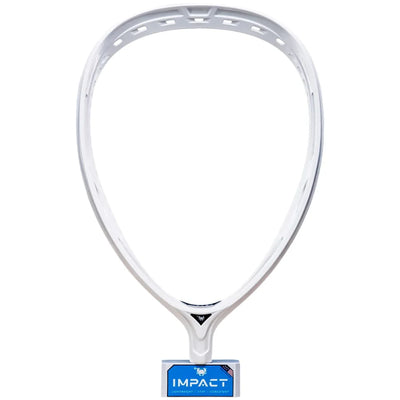
Even though it weighs less than the previous version, it's still heavier than most goalie heads today. If you prefer a lighter, more flexible, rounder head, try the ECD Impact Goalie Head ($109.99). Read our full ECD Impact review.
Now let's get into how it plays.
Face Shape, Shooting and Pocket Location
The Eclipse 3 sticks with the classic wide face goalies love, but it's tilted back slightly less than the Eclipse 2. That small change makes it feel sturdier, especially on hard saves.
I've had shots hit the top plastic, and instead of bouncing out like they did with the Eclipse 2, this head does a better job of keeping the ball in. A few balls still popped out on tougher angles, but it's more controlled than the old version.
Clearing passes felt very accurate thanks to the stiff top section. The turned-in plastic can make dialing in the pocket tricky, but the centered channel gave me consistent, smooth releases.
If you're used to rounder, more flexible goalie heads, though, I wouldn't upgrade from the Eclipse 2 to the Eclipse 3.
Cradling, Passing and Catching
The Eclipse 3 feels more balanced when cradling. The added stiffness gives you a steadier feel moving the ball in and out of the pocket. STX also tweaked the throat. It was rounder on the Eclipse 2, while the Eclipse 3 is squarer from the middle.
That helped ball retention, especially under pressure when I needed to cradle quickly to avoid attackmen. The front of the plastic has no give, which makes for fast passing and catching.
The new throat also gives you a longer stretch of plastic to grip. That extra length helps on quick outlet passes and lets you adjust your grip in fast transition.
The thicker plastic at the scoop does make it a little top-heavy, which took some getting used to when catching. Otherwise, the improved channel and bowl-shaped scoop give you a clean release on quick outlets and full-field clears.
Flexibility and Ground Ball Pick-Up
The stiffer scoop is the highlight of the Eclipse 3. It's wider and shaped more like a bowl than a flat shovel. When you go down for a ground ball, it sits flat on the ground and doesn't lean forward like its predecessor did.
The bigger surface area makes pick-ups easier from every angle. I even scooped ground balls from the side, and they funneled smoothly into the pocket.
The head also has minimal flex in big ground ball moments, and it's noticeably stiffer around the scoop.
That makes it great for low saves and stopping the ball dead, because the head stays on top of the ball.
The extra stiffness, especially in the scoop, makes a real difference when you're deflecting shots or controlling rebounds. The head is less likely to bend out of shape on saves, especially on shots off the top section.
With other heads, I've had a 15-yard side-high shot miss the mesh, hit the plastic and rebound out.
That doesn't happen as often with the Eclipse 3. It stays stiff enough to handle hard shots, so your clears start from a controlled save.
Stringing and Number of Holes
Stringing isn't the Eclipse 3's strong suit, because it's not straightforward. It has 18 sidewall holes and 7 top holes, but the plastic is slightly turned in, so the ball hit the plastic more than it did on the Eclipse 2.
I restrung it with Memory 12 diamond mesh for a deeper pocket, and after that it was the most channeled stick I've used in a long time. Want a goalie mesh you can grab today? Try the ECD Impact Semi-Soft Goalie Mesh ($39.99).
Material, Durability, Flexibility and Weight
At about 15 oz, the Eclipse 3 is slightly lighter than the Eclipse 2. STX trimmed material around the struts to cut weight, and that didn't hurt durability, so it holds up well over a long season.
The plastic is thicker, and the head doesn't warp or break easily, even with aggressive play. Most reviews say it's slightly stiffer at the top with the same flex in the middle.
Personally, I think the middle flex has dropped a bit too. Pair it with a sturdy goalie shaft and you've got a setup that won't budge.
Customization, Appearance and Aesthetics
The Eclipse 3 has a sleek, shiny, metallic-looking ball stop that gives it a modern, stylish touch. I love how it looks. The black STX logo and the ball stop are the cosmetic highlights.
The plastic surface is also smooth, which makes it much easier to dye. The Eclipse 2 had rough spots around the throat, but the Eclipse 3's finer plastic makes it a great goalie head for customizing.
Shop goalie gear at BattleLax
BattleLax doesn't carry the Eclipse 3, but these goalie heads and add-ons are in stock. Protect yourself too with one of the best goalie chest protectors.
In 2023, with upgrades like more stiffness, a squarer face profile and better ground ball pick-ups than the Eclipse 2.
What colors does the STX Eclipse 3 come in?
Classic black and white.
How much does the STX Eclipse 3 weigh?
About 15 oz. That's lighter than the Eclipse 2 but heavier than many goalie heads on the market.
How heavy is a goalie stick with the Eclipse 3?
It depends on your shaft and stringing, but expect a full goalie stick in the high 20s to low 30s in ounces.
Is the ECD Impact lighter than the STX Eclipse 3?
Yes. The ECD Impact is lighter and more flexible, so it suits goalies who want a lighter, rounder head.
Does BattleLax carry the STX Eclipse 3?
Not right now. The closest options at BattleLax are the ECD Impact and the Maverik Krease goalie heads.
Final word
The Eclipse 3 sets a new standard with its stiffness, precision and durability. It's ideal for aggressive goalies and gives you better control and accuracy on clears. It's a little heavy, but its strengths outweigh the cons.
ECD's second-generation faceoff head promises flex to win the clamp and durability to survive the grind. We ran it for two weeks of draws, ground balls and checks to see if it delivers.
CSConnor Stifel · Men's Heads · Updated October 22, 2026 · 7 min read
Drip score9.4/ 10
LaxDrip verdict: a light, durable FOGO-first head with great flex at the X and one of the best scoops out there. Shooting and checking are just average.
LaxDrip is reader supported. When you buy through links on this page we may earn a commission at no extra cost to you. How we review.
Overview
The ECD Weapon X 2.0 is the second head in the Weapon X series, following the original Weapon X from 2019. ECD has always put performance first when engineering heads, so I was excited to add it to my collection and bring you this review.
Faceoff heads usually give you the flex to dominate the clamp, but they lack durability and don't survive the grind.
I tested it for about two weeks to see if ECD got the balance between flex and durability right on the Weapon X 2.0.
Coach's note: Whether it's a spring game in Syracuse, a summer tournament down in Virginia Beach or a box night in Ontario, the faceoff guy sets the tone. Win the draw and your offense gets the ball. Lose it and you're playing defense all night. You want a head that clamps, flexes and comes back to shape every single draw. That's the test I put this one through.
Here are the key specs before we get into the review.
[wpdatatable id=291]
Brand
ECD Lacrosse
Position
Faceoff
Released
2024
Weight
About 5.15 oz
Material
FlexForm plastic
Variants
Stiffer (white/black) and softer (natural)
Price
$99.99 at BattleLax
Colors
White
Black
Natural
Pros & Cons
Pros
Durable: Tough, flexible FlexForm construction
Light: About 5.15 oz
50/50s: Engineered flex points help you win ground balls
Options: 2 variants with different flex
Cons
Accuracy: Shots spray from distance
Shot speed: Average
Checking: Not stiff enough for powerful checks
ECD Weapon X 2.0 Drip Rating
I rate the ECD Weapon X 2.0 a 9.4/10 on the Drip Meter.
[wpdatatable id=292]
Who's This Head Made For?
ECD markets the Weapon X 2.0 as a FOGO-first head. But its mix of flex and stiffness makes it work for players who stay on the field after the faceoff.
The hybrid-flex design and shorter throat let you get your hand right on the ball. That closer grip means faster reactions on the clamp, and the asymmetrical sidewalls flex just enough to twist out of tough locks without losing control.
The Weapon X 2.0 came out in 2024 in 2 variants. I liked the stiffer white one more than the natural one. ECD trimmed the number of sidewall stringing holes compared to the original Weapon X, but you can still string a similar low pocket. Pair it with the ECD Hero 4.0 Complete Kit ($34.99) if you're stringing from scratch.
It's made of FlexForm plastic, which is very durable and weather-resistant, but still light at about 5.15 oz.
See it liveGKL+ on YouTube
Shot and Pass Accuracy
The Weapon X 2.0 gives shooters a nice balance of control and speed. The updated flex profile and design tweaks help shot execution. Still, I wouldn't recommend it for transition players or attackmen.
It's a pure faceoff head with a slightly reduced offset that keeps the ball low in the pocket for quick releases. Shooting accuracy is solid, especially with a mid-low pocket. The ball channels smoothly and you get consistent follow-through.
Compared to heads like the StringKing Mark 3V, the Weapon X 2.0 has more whip potential because it handles a deep pocket well. But accuracy suffers if you string it too low, because the ball tends to hook on hard outside shots.
The thinner bottom rail adds some snap to shot speed, but the softer flex, especially on the natural variant, can take some power off your shot. If you want a stiff, explosive release, this head gives up some pop compared to stiffer heads like the StringKing Mark 3V Head ($119.99).
The scoop is nicely rounded and picks up ground balls easily after a clamp or in chaotic 50/50 scrums. Cradling securely is trickier, though, when you're transitioning straight out of a faceoff win, especially with a loose or low pocket.
The white version has a nice balance of flex and stiffness with specific flex points. It's stiff enough for clean releases on passes and flexible enough to absorb the ball when you're catching in tight spaces.
I also love its forgiving flex on quick moves when I got caught on the crease with an attackman. The gradual offset and short throat keep the ball secure after the initial clamp.
The natural version, though, feels too soft, especially when you're cradling under heavy pressure. A buddy of mine who runs one complained about a slingshot effect when cradling, especially when transitioning to offense.
I also had to adjust my stringing setup. The asymmetrical sidewalls create slightly uneven pocket tension, which sometimes affects ball hold when you're cradling fast.
Checking
At about 5.15 oz, the Weapon X 2.0 is lighter than the original, which cuts down on fatigue in long games. Despite the light weight and flex, the head is very durable.
The natural version takes a little time to snap back to shape, but the FlexForm plastic holds up. The head didn't bend or crack even after hours of practicing reverse clamps and sweeps. It also has a protective lip to keep the mesh secure at the top.
Where it falls short is impactful checking. The stiffer white version is a bit better, but I still needed extra force to throw a good check.
The narrow throat and softer sidewall flex, especially on the natural variant, limit how hard it checks. It absorbs some energy on contact, so aggressive poke checks are less effective than with stiffer defensive heads like the STX Duel 3 or Maverik Lock.
Smooth ground ball pick-ups are the highlight of this head, and it's one of the best faceoff heads of 2024. The inset design gives you a more natural grip on the shaft and more control on clamps and counters.
The rounded scoop makes loose-ball battles easier. Its smooth design cuts drag, so you scoop clean from almost any angle, and the concave profile sweeps the ball right into its low pocket on fast breaks.
The flexible throat and asymmetrical sidewall rails give it excellent response in clamp battles and on second-move counters. In 50/50s, the flex profile makes it easier to torque and secure the ball without overextending.
The natural version is super flexible at the X, which makes for smoother exits when you pop the ball forward or out to the wings. But if you rely on power clamps, it'll feel softer than competitors like the Nike CEO 3. Want something stiffer at BattleLax? Look at the Maverik Logik Force Head ($109.99). Finish the stick with a dedicated faceoff shaft like the StringKing Composite 3 Pro Faceoff Shaft ($159.99).
When was the ECD Weapon X 2.0 lacrosse head released?
It came out in 2024 in two variants with different flex, for faceoff specialists at every level.
What colors does the ECD Weapon X 2.0 come in?
White, black and natural.
How much does the ECD Weapon X 2.0 weigh?
About 5.15 oz, so it's light but still durable for long games.
What position is the ECD Weapon X 2.0 best for?
It's built for faceoff specialists, but the hybrid-flex design makes it usable if you stay on the field after the draw.
What makes the ECD Weapon X 2.0 unique?
A hybrid-flex design with engineered flex points, durable FlexForm plastic, a rounded scoop that excels on ground balls and a shorter throat for better clamp control.
Final word
The Weapon X 2.0's updated sidewall structure balances stiffness and flex better than the OG Weapon X. It feels responsive without giving up durability. The stiffer white version gives you the best mix of flex and snap for reverse clamps, sweeps and quick resets, while the softer natural version is more forgiving.
I prefer the stiffer version for its balanced flex points, and I'd recommend it for intermediate and advanced players. The natural version is the better pick for beginners. Either way, it's a 9.4/10 faceoff head that'll hold up all season.
An aggressive offset, a tight face, stiff construction and graphene-infused plastic. Here's why ECD's Mirage 2.0 Graphene became a go-to offensive head, and what to buy now that the 3.0 is out.
CSConnor Stifel · Men's Gear · Updated October 22, 2026 · 6 min read
Drip score9.6/ 10
LaxDrip verdict: a light, nearly unbreakable offensive head with a tight face and a big offset for power shots. BattleLax now carries the newer Mirage 3.0 Graphene, which is even stiffer.
LaxDrip is reader supported. When you buy through links on this page we may earn a commission at no extra cost to you. How we review.
Overview
The Mirage 2.0 Graphene from ECD Lacrosse is a game-changer for offensive heads. It has an aggressive offset, a tight face, a stiff build and graphene, one of the strongest and lightest materials in the world. It's a combo built to take your game up a level.
It launched at $124.99, and ECD has since followed it with the Mirage 3.0 Graphene, which BattleLax carries for $129.99.
Coach's note: Every attackman I've coached, from the upstate New York kids who grew up on Syracuse lacrosse to the Virginia Beach club guys to the Ontario box shooters who rip it top corner from 10 feet, wants the same thing: a head that holds the ball on the dodge and lets it go hot on the shot. The Mirage does both. String it right, and it'll do the rest.
The Mirage 2.0 Graphene lives up to the hype with an aggressive offset that turns into power-packed shots. You get a new level of precision and force on shots and passes. For players who want a real offensive edge, that offset is a game-changer.
See it liveTop String Lacrosse on YouTube
Unparalleled Control
The tight face gives offensive players unmatched control on dodges. Working through a tight defense becomes a lot easier when the head responds to every move. If you need top-notch control in tough conditions, this is the head for you.
Lightweight Dominance
Graphene makes this head lighter and seriously durable. Shedding weight doesn't cost you any strength, so the head stays quick in the heat of the game and gives you a real edge on the field.
Exceptional Durability
It's not just light. It's built to survive aggressive play. ECD says the graphene gives it 2x the impact strength of regular materials, so it holds up through the most physical games and gives you the trust you need when the stakes are high.
ECD's commitment to design shows in the Mirage 2.0 Graphene. The sleek, aggressive look is more than eye candy. It matches the performance it delivers on the field.
The minimalist design goes beyond looks, too. Every curve and contour serves a purpose, with no unnecessary frills. It's a great example of form and function working together.
Made in the USA
The Mirage 2.0 Graphene is made in the USA, and that's more than a tagline. It's a commitment to quality and American craftsmanship, and a big part of why ECD heads stand tall on the global stage.
Pros & Cons
Pros
Light: Remarkably light without giving up strength
Control: Unmatched control, especially on dodges
Durability: Graphene's strength means it lasts and stays consistent
Made in the USA: American craftsmanship
Cons
Price: It costs more than the standard Mirage, but it's worth it for serious players
Is the Mirage 2.0 Graphene right for you?
Pick your head based on how you play. The aggressive offset and tight face make the Mirage 2.0 Graphene ideal for offensive players who want powerful shots and precise control on dodges. If that's you, it's built to take your offensive game up a level. Need mesh to string it? Grab the ECD Hero 4.0 Complete Kit ($34.99).
It's ECD's offensive Mirage 2.0 head made with graphene-infused plastic, which makes it lighter and stronger than the standard version, with an aggressive offset and a tight face.
Is the Mirage 2.0 Graphene worth it?
For serious offensive players, yes. It costs more than the standard Mirage, but you get more durability and a lighter head. BattleLax now carries the newer Mirage 3.0 Graphene.
Who should use the Mirage 2.0 Graphene?
Attackmen and offensive middies who want powerful shots and tight control on dodges.
Where is the Mirage 2.0 Graphene made?
ECD makes its heads in the USA.
Conclusion
The ECD Mirage 2.0 Graphene lives up to the hype, with a perfect blend of innovation, performance and American craftsmanship. It's more than gear. It's a game-changer for offensive players who demand the best.
10 of the latest men's lacrosse cleats from New Balance, Nike and Under Armour, tested for traction, support, comfort and fit, plus the cleats you can order today at BattleLax.
CSConnor Stifel · Men's Lacrosse · Updated October 22, 2026 · 14 min read
Top pickV5
Coach's pick: the New Balance Freeze V5 for the best traction on this list, with no break-in. Like a low cut? The V5 Low is in stock too, and the limited edition V5 is on sale at BattleLax.
We may receive a commission if you make a purchase through a link on this page about the newest men's lacrosse cleats at no cost to you. This helps us keep this site free & we appreciate your support!
I've put together a list of the newest men's lacrosse cleats, built for top-notch traction, support and agility on the field.
Every cleat below has its own spec table so you can compare them side by side, plus my take on how they play, what I liked and what I didn't.
Coach's note: I've coached on wet April grass in upstate New York, sticky turf in Virginia Beach in July and frozen fields in Ontario when the box season ends. The cleat that works on all three is the one that grips on the plant and doesn't chew up your feet by the fourth quarter. Get the fit right first, then worry about the colorway.
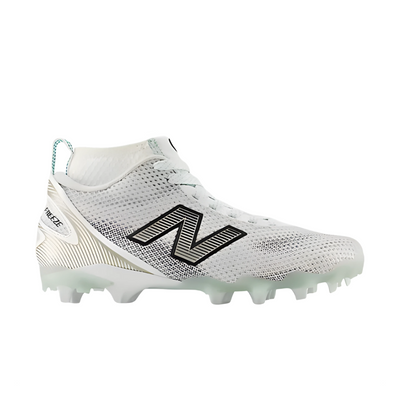
Heads up: BattleLax carries the Freeze V5 Mid, V5 Low, the limited edition V5 and the BurnX4. For the others, I point you to the closest cleat they stock, and you'll find the full list below.
"Buy" goes to the cleat on BattleLax. "Alt" goes to the closest cleat BattleLax has in stock.
Newest men's lacrosse cleat reviews
1. New Balance Freeze V5 Lacrosse Cleats Best traction
[wpdatatable id=509]
The New Balance Freeze V5 has the best traction on this list thanks to its QUIX rail outsole. The conical studs bite into the surface and keep me stable on quick cuts.
They're a little heavier than the Huarache 9 Elite at 13 oz, but the support and traction are excellent. The cushioned insole fits true to size, with no tightness in the toe box or heel.
I got mine in a 10.5, and there was no painful break-in. The breathable mesh keeps my feet dry at summer practices.
The back pull tab is a small but helpful touch that makes them easy to put on, and I like the slim tongue and locked-in heel cup that keep my foot secure.
2. New Balance Freeze V5 Low Lacrosse Cleats Best low cut
[wpdatatable id=510]
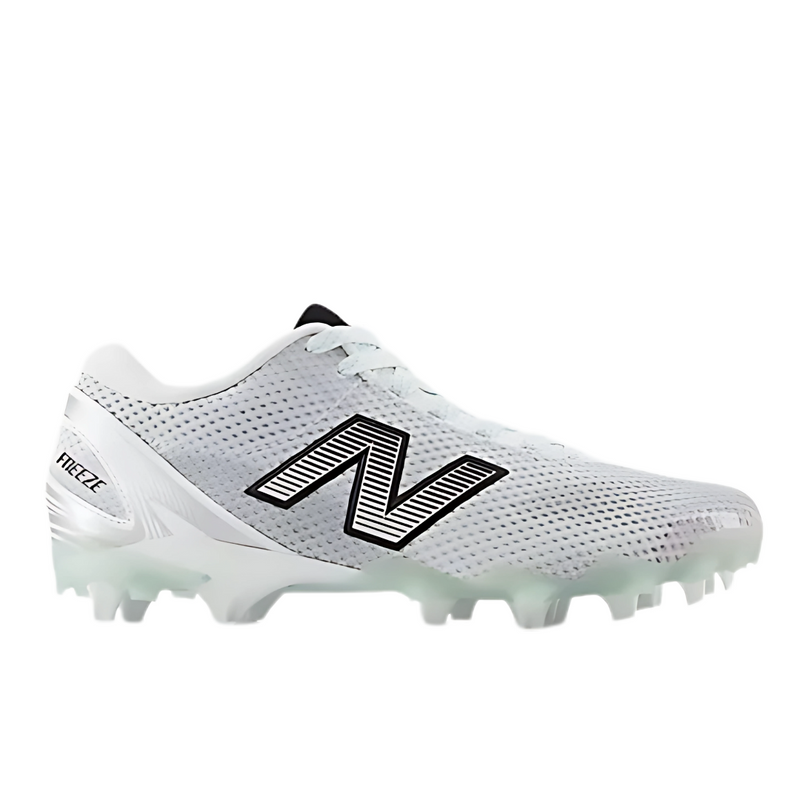
Next up is the New Balance Freeze V5 Low. It's best for players who want more speed without giving up traction.
It doesn't have the ankle support of the mid, and the QUIX rail studs nicked my ankle a couple of times. But the heel system kept my foot locked in and helped prevent rolled ankles.
The stud pattern grips great even with the lower cut. I never slipped running or dodging, and the dual lacing improves the fit and keeps my feet secure.
At 12.5 ounces, it's a little lighter than the mid. If you like a low cut for more mobility, these deliver excellent traction and comfort.
The Nike Huarache 9 Elite Low is one of the sleekest, best-looking lacrosse cleats out there. This version of the Huarache line is built for elite players who like a low-cut collar.
I usually prefer a higher cut, but I gave these a shot because of the buzz. As soon as I put them on, I noticed how much more flexible they were than other cleats.
I expected that flexibility with a low cut, but I worried it would cost me traction. To my surprise, the multidirectional traction was impressive. Digging deeper, I found the Huarache 9 Elite uses the traction system from Nike's Phantom soccer line, and Nike nailed it.
Even with their sleek, compact look, Nike didn't skimp on comfort. I liked the React foam cushioning underfoot and the secure feel from the internal Flywire in the midfoot.
A lot of cleats leave the bottoms of my feet burning, but I didn't have that problem with these. I liked the feel and response on aggressive strides.
The upper is light mesh with padding around the heel and the X-Fit heel system for support. The hybrid tongue doesn't slip, which I love, since a lot of cleats I've worn have tongues that slide to the side.
With just 10 studs, the pattern and design still give you excellent stability. The Huarache 9 Elite Low combines style, performance and comfort, making it a great pick for elite players who like a low build.
Pros
Sleek design
Low build
Internal Flywire in the midfoot
Phantom soccer traction
No-slip tongue
React foam
X-Fit heel
Cons
Limited colors
Needs to break in
BattleLax pick: BattleLax doesn't carry the Nike Huarache 9 Elite Low LAX. For a low-cut lacrosse cleat with great multidirectional traction, go with the New Balance FreezeLX v5 Low ($119.99), or the newer New Balance Burn X5 Low ($124.99).
The Nike Huarache 9 Elite LAX is one of the sleekest cleat lines around. It's built for elite players who like a mid-cut collar loaded with Nike's premium tech.
I usually wear mids, so I gave these a try after all the hype. Right away, I noticed they were more flexible than other mids I've worn.
With a mid cut, I worried about giving up flexibility and traction, but they delivered impressive multidirectional flexibility and grip. Like the low, they use the traction system from Nike's Phantom soccer line.
Even though they look as compact as soccer cleats, Nike didn't sacrifice comfort. React foam cushions underfoot, and internal Flywire locks in the midfoot.
Compact cleats often cause discomfort and blisters, but I didn't have any issues. They were comfortable and responsive on aggressive strides.
The light mesh upper has padding around the heel and the X-Fit heel system for support. The no-slip hybrid tongue kept the tongue from sliding to the side, and the stretchy inner sleeve improved the fit.
With only 10 studs (4 on the heel and 6 up front), the smart placement and sharp design gave me excellent stability. Other than the cut, it's pretty much identical to the low.
The Huarache 9 Elite LAX combines style, performance and comfort, making it a great pick for elite players who like a mid cut.
Pros
Sleek design
Mid build
Internal Flywire in the midfoot
Phantom soccer traction
No-slip tongue
React foam
X-Fit heel
Cons
Not great for wide feet
Needs to break in
BattleLax pick: BattleLax doesn't carry the Nike Huarache 9 Elite LAX. For a mid-cut lacrosse cleat with great traction and support, go with the New Balance FreezeLX v5 Mid ($129.99).
5. New Balance Freeze V5 LE Lacrosse Cleats Best limited edition
[wpdatatable id=513]
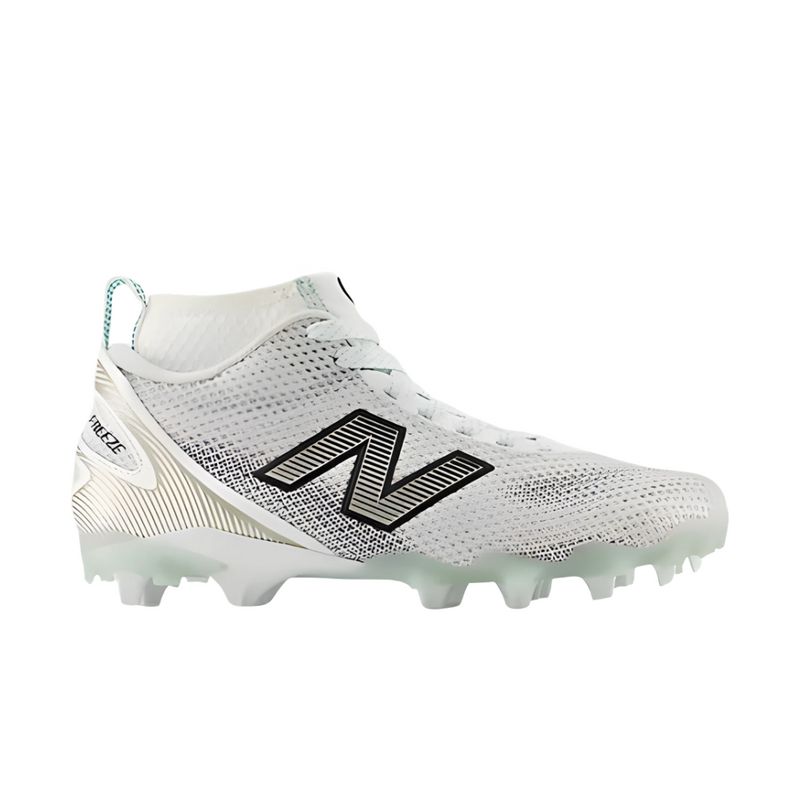
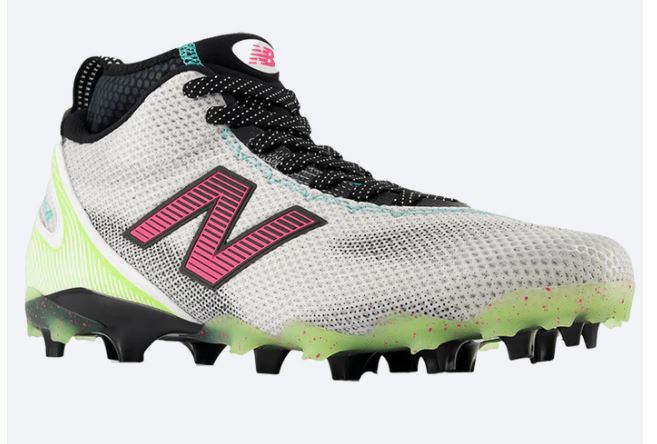
The New Balance Freeze V5 LE has an eye-catching design, with a black-and-white upper and a greenish heel that looks great. If you want a high-quality cleat with premium features and a unique colorway, grab the V5 LE.
The QUIX rail is the highlight. The outsole is really flexible, with 14 studs of different sizes. The flatter ones keep you from slipping on the run, and the pointed ones help prevent rolled ankles on quick changes of direction.
They're on the heavy side, but the comfortable sock liner and breathable mesh make for a great fit, and I loved that there was no break-in.
6. New Balance Burn X4 Lacrosse Cleats Most durable
[wpdatatable id=514]
Even with its ultra-light build, the New Balance Burn X4 is one of the most durable lacrosse cleats out there. I've worn mine for a year, and they haven't worn out yet.
They took longer to break in than I expected, but I love the snug fit, and the stiff heel cup softened up after a couple of workouts.
The improved fit and flex zones gave me unrestricted foot movement, especially on quick cuts. The light plate with X-frame coring makes a real difference. I felt quicker on my first step.
The longer studs give solid traction on fast breaks, and the low cut gives your ankles plenty of mobility, which is ideal for players who rely on speed.
7. New Balance X Unltd LE Gold USA Burn X4 Lacrosse Cleats Best limited Burn
[wpdatatable id=516]
The New Balance X Unltd LE Gold USA Burn X4 is an exclusive, upgraded take on the Burn X4. This limited edition is a unisex, low-cut cleat with solid performance and a unique look.
Nike has long been known for top-class low-cut lax cleats, but with the Burn X4 line, New Balance has closed the gap. I'd say they're about 90% of the way there.
One big improvement is the light, durable build. I definitely noticed how light they are, and the aggressive design feels sturdy.
Low cuts often skimp on padding and ankle support, but New Balance added ankle-locking padding that makes these feel as comfortable and secure as a mid.
New Balance says the gold chrome outsole is inspired by the shock diamond phenomenon, and I'm not totally sure what that means. Either way, the aerodynamic upper cuts drag and feels smooth.
These have longer studs and run narrow, so they may not work for wide feet. The laces and hybrid tongue add stability, but I found the insole comfort to be average.
Because of the narrow fit, they felt tight even after several wears, and they were hard to fully break in. If you have standard or narrow feet, they could be a good fit. If you have wide feet, try something like the Nike Huarache 9 Elite Low.
Pros
Light and durable
Extra ankle padding
Plenty of flex
Aerodynamic design
No-slip tongue
Chrome-plated outsole
Limited edition
Cons
Plain look for a limited edition
May not fit wide feet
BattleLax pick: BattleLax doesn't carry the New Balance X Unltd LE Gold USA Burn X4 Lacrosse Cleats. For the newest low-cut Burn they stock, go with the New Balance Burn X5 Low ($124.99), or grab the regular New Balance BurnX4 Lacrosse Cleats ($49.99) on sale.
8. Nike Alpha Huarache 8 Elite Lacrosse Cleats Best value Nike
[wpdatatable id=517]
The Nike Alpha Huarache 8 Elite is still a solid pick even with newer Huaraches out. It's built for lacrosse and football players, and the sleek design, compact look and lower price keep it relevant.
The Huarache 9 brings upgrades, but the 8 is still the real OG. It comes in plenty of unique colors, and the comfort and traction are what make it great for lacrosse.
I tried the 9 first, but I found the 8's performance and tech just as impressive. On the field, I couldn't tell much difference between them.
I tested them on turf and grass, and the comfort and stability stayed consistent. Nike React foam in the midsole adds comfort, and the hybrid no-slip tongue, laces and mid-cut collar kept my feet stable and flexible on aggressive moves.
The X-Fit heel kept my ankles locked in with the right amount of give, and the molded TPU plate with 13 studs gave me excellent traction and range of motion. Like the 9, the toe box lets you push into aggressive, accelerating strides.
If you want a mid-cut cleat that balances price with premium performance and feel, the Huarache 8 Elite is a reliable choice.
9. Under Armour Command Mid Lacrosse Cleats Most ankle support
[wpdatatable id=518]
The Under Armour Command Mid is another durable yet light cleat in my collection. I've worn it for plenty of games and practices, and there's barely any wear in the high-contact spots.
The simple laces and traditional tongue lock in, and the molded mid-cut collar gives excellent ankle support. My foot never shifted inside, which helped my stability dodging or playing one-on-one D.
The conical studs make stopping feel controlled, and the secondary studs give extra grip when you accelerate out of a dodge. I never felt like I was losing my footing.
They aren't as breathable as the New Balance V5, even with the warp knit upper and TPU overlays. If you play somewhere hot, go with the Huarache 9 or Freeze V5.
Pros
Molded collar for ankle support
Flexible outsole for quick footwork
Back pull tab
Light and durable
Cons
Knit upper can get damaged
Less breathable
BattleLax pick: BattleLax doesn't carry the Under Armour Command Mid Lacrosse Cleats. For a durable mid-cut cleat with more breathability, go with the New Balance FreezeLX v5 Mid ($129.99).
10. New Balance Burn X3 Lacrosse Cleats Best for beginners
[wpdatatable id=519]
New Balance has always been a go-to brand for reliability, and the Burn X3 is no exception. These unisex cleats are built for beginner to intermediate players who want performance and speed.
The comfort is on par with high-end cleats at a lower price. I noticed better strides with no discomfort or tightness, and they were easy to break in, so I could run laps right away.
What I liked most was the knit upper with Kinetic Stitch. It lets your foot flex freely while still supporting it, so you don't twist or strain your feet and ankles. The hybrid tongue and laces kept everything stable.
The Burn X speed plate improved my stability on turf, and I could feel the cleat respond on aggressive moves like throwing checks or winning faceoffs. The molded TPU outsole and toe gave good traction.
Padding around the heel and ankle is one of the biggest signs of a quality shoe, and the Burn X3 has Achilles pads plus a mid-cut collar for extra ankle support.
I liked the value and performance. I could wear them for hours without discomfort, though the inside cushioning could be better.
The newest men's lacrosse cleats are built for the demands of today's game while keeping you comfortable and healthy. Investing in a new pair gives you the tools to make every stride count on the field.
Prices, sizes and stock change, so check the product page before you order.
People also ask
What are the newest men's lacrosse cleats?
The New Balance FreezeLX v5 (mid, low and limited edition), the New Balance Burn line and the Nike Huarache 9 Elite are the latest lacrosse-specific cleats. BattleLax carries the FreezeLX v5 Mid and Low, the Burn X5 Low and the BurnX4.
Which lacrosse cleat has the best traction?
The New Balance Freeze V5, thanks to its QUIX rail outsole and conical studs that grip on quick cuts.
Are New Balance Freeze V5 cleats true to size?
In our testing, yes. The cushioned insole fit true to size with no tightness in the toe box or heel.
Should I get low or mid-cut lacrosse cleats?
Low cuts give you more speed and ankle mobility. Mids give you more ankle support. If you've had ankle issues, go mid.
Are Nike Huarache 9 cleats good for wide feet?
Not really. They run on the narrow side. Wide-footed players may be more comfortable in a New Balance Freeze V5.
We may receive a commission if you make a purchase through a link on this page about the newest men's lacrosse gloves at no cost to you. This helps us keep this site free & we appreciate your support!
I put together this list of the newest men's lacrosse gloves, the ones on the cutting edge of design and tech, built to help you play better and stay protected.
These gloves have the latest upgrades in comfort, grip and durability. Read on for how each one held up on the field.
Coach's note: I've coached kids in upstate New York who wore their gloves till the palms had holes, box players up in Ontario who tape every finger, and middies in Virginia Beach who sweat through a pair in a single summer. Here's what I tell all of them: your gloves are the only thing between your hands and your stick. If you can't feel the shaft, you can't play. Get a pair that fits snug, check them every season, and replace the palms before they replace you.
Heads up: BattleLax carries several of these gloves, including the Evo V, M6, Max, Charger and Nemesis QS. For the rest, I point you to the closest glove they do stock, and you'll find the full in-stock list below.
"Buy" goes to the glove on BattleLax. "Alt" goes to the closest glove BattleLax has in stock.
Newest men's field gloves
1. Warrior Evo V Lacrosse Gloves Premium pick
[wpdatatable id=524]
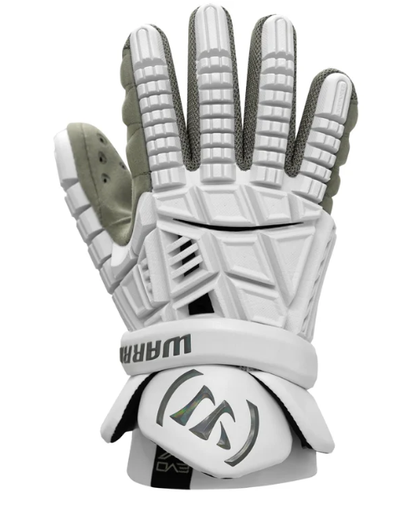
The Warrior Evo V is Warrior's premium glove from 2024, loaded with their latest tech. It's a bigger, beefier glove and on the heavier side, but the WarTech mesh liner breathes great and keeps it comfortable.
I loved the 9-segment finger design and the split at the knuckles. You get great finger mobility and a free, natural grip on the stick. The cuff is thick, but I still felt protected and had plenty of wrist movement.
Warrior's IMPAX LT foam is thick enough to spread out the impact without making the glove stiff. I took a slash right on the back of the hand, and it ate the hit.
They look bulky, but the Maverik Shift gloves are seriously light. The extended finger breaks and Power Flex design give you a ton of flexibility.
The Connekt Palm gave me a no-slip grip, even in rain-soaked practices, and I didn't have to break them in at all. The open cuff lets your wrist move freely. I did miss having a wrist strap, though. On thinner wrists, the glove doesn't feel as locked in.
FlowCool venting keeps your palms dry through long sessions, and I liked the snug fit and sectioned backhand. It's a great fit for a high-level defender who wants a lighter glove.
The Nike Vapor Elite is another new men's glove that players love for its fit. It gave me the most secure, responsive fit around the fingers and wrist of any glove here.
Once they're broken in, the stretch gussets and thumb zone make stick control feel effortless. The Ax Suede palm gives you a strong, no-slip grip, even when your hands are sweaty.
There's a mesh section on the palm for airflow, but the backhand padding doesn't breathe as well as other gloves.
Still, they're light and let you move your fingers freely without giving up protection. The flexible cuff gives you a full range of motion, too.
Pros
Snug, responsive fit
Thick shock-absorbing padding
Free wrist movement
Cons
Long break-in
Doesn't breathe well
BattleLax pick: BattleLax doesn't carry the Nike Vapor Elite. For a snug, premium glove they stock, go with the Maverik M7 Player Gloves ($149.99).
The STX Cell VI is an upgrade on the Cell V. It still has that signature long-finger fit, but it's more flexible than the last one. The updated finger joints and IsoFlex thumb give you free finger movement for stick handling.
The GeoFlex II padding soaks up checks and kept me from getting stingers. It's a bulky glove, but the dual ventilation system kept my hands dry instead of hot.
The C3 cuff system protects your wrist without limiting your movement in any direction. It also has a strap to clip your mouthguard to.
Pros
GeoFlex II padding absorbs impact
Sweat-wicking build
Mouthguard strap
Floating C3 cuff for wrist mobility
Cons
Bulky
BattleLax pick: BattleLax doesn't carry the STX Cell VI. For a protective glove with lots of finger breaks, go with the Maverik Max 2028 Player Glove ($189.99).
5. STX Stallion 75 Lacrosse Gloves Best for beginners
[wpdatatable id=528]
The STX Stallion 75 is a newer beginner glove with a flexible fit and solid protection. The vented palms and gussets make it breathe well, and new players like that. It doesn't trap sweat like a lot of cheap starter gloves do.
The polyester shell keeps the weight down without feeling flimsy. Some players say the fingers feel a little stiff out of the box, but they break in after a few practices.
The 3-piece thumb gives you decent control for basic cradling and passing. All in all, it's one of the better-looking, better-protecting gloves for new players.
Pros
Light
Breathable mesh-layered palm
Durable polyester build
Sharp design
Cons
A little stiff in the fingers at first
BattleLax pick: BattleLax doesn't carry the STX Stallion 75. For an affordable starter glove they stock, go with the Maverik MX Lacrosse Gloves 2026 ($75.00).
The newest Maverik Charger has been the talk of the youth fields the past season. Young players love how soft, light and flexible it is.
It feels a lot like Maverik's higher-end gloves, with a snug, protective fit. The dual-density foam on the backhand and fingers gives you decent protection from checks.
It's mesh-layered with FlowCool venting, so it stays comfortable even in the summer. The padding looks thick, but it's light and soaks up the hits.
The AX Suede palm is perfect for young players who struggle with grip. It holds the stick without being overly sticky.
The STX LZR is one of the best gloves for young attackmen. The skeleton-style backhand gives you great flexibility on quick dodges and fast stick work.
The AX Suede palm gives you a smooth, natural grip, even under pressure. The cuff gives you good protection, but some players found it stiff enough to limit wrist movement.
The premium AX Suede holds up to wear and tear from constant contact. I didn't have to keep adjusting the glove on fast hand switches, and it grips well even in the wet.
Pros
Good protection from checks
Durable AX Suede palm
Pre-broken-in fingers
Cons
Stiff wrist cuff
BattleLax pick: BattleLax doesn't carry the STX LZR. For a light, flexible attack glove they stock, go with the Warrior Evo Lite Glove ($109.99).
The Maverik Max is making a name for itself as one of the most flexible gloves out there. It has multiple finger breaks for a comfortable grip on the stick.
The cuff gives you a more natural wrist snap on passes and shots than a one-piece design. The synthetic suede palm feels soft but grippy, even wet, and the airflow design kept my hands drier than I expected in the summer.
The multi-density foam gave me great protection from slashes, especially around the fingers and thumb. I took a bunch of hits on the thumb with no stingers. It does feel a little bulkier than the Charger or the STX LZR.
Pros
Multi-density foam for impact
Adjustable floating cuff
Lots of finger breaks
Cons
Bulky
At BattleLax: BattleLax carries the newest version, the Maverik Max 2028 Player Glove ($189.99), with PowerFlex fingers and Air Core foam.
The Maverik M6 is part of Maverik's M Series. It came out in 2023 and is built for field players, especially middies and attackmen.
I used the M5 before this, and I can tell you the M6 is a step up in performance and comfort. DuraStretch, the Connekt Palm and FlowCool venting are exactly what I was looking for in a glove.
The DuraStretch panels make a big difference in flexibility, mobility and durability. I ran through my usual wrist flexion and extension work, and it never held me back. It also protected the impact zones well.
The M6 keeps a traditional fit, but Maverik added volume in the fingers and backhand, and they say it's 30% more comfortable. I believe it.
The Connekt Palm grips noticeably better. The suede has a slightly rough, velvety feel that gives you plenty of friction on the stick.
One of my favorite features is the quick-dry FlowCool venting. The vent holes on the fingers and palm keep sweat from building up, so the suede doesn't turn slick in the heat.
I also liked the adjustable cuff. You can snug it down for a tighter feel or leave it flared for more freedom. Both have their uses, but I like it snug.
The M6 is an excellent pick if you want a good balance of grip, flexibility and protection.
10. Warrior Burn XP2 Lacrosse Gloves Best low-profile
[wpdatatable id=535]
The Warrior Burn XP2 blends a minimalist look with real function. These LoPro gloves came out in 2023 and are made for field players who want light gear with protection where it counts.
What impressed me most is the slim Impax LT compression-molded foam. It doesn't give up mobility like bulky padding does, so you get a good mix of protection and flexibility. It looks sleek and performs.
Warrior's Authentic Pro Palm+ was another highlight. The spandex gussets combined with heavy-duty suede gave me a secure, comfortable grip.
There are no vent holes in the palm, but the TruVent on the fingers helps with sweat. A little might build up in the palm, but it's nothing compared to gloves with no venting at all.
On the field, they were excellent. My stick didn't move a centimeter through checks and ground balls, and the grip stayed tacky in the humidity.
My favorite part is the TotalFLX+ blooming cuff. It gets rid of cord loops and fussy closures, so you just strap in and your wrists move freely.
Pros
Light Impax LT foam
Pro Palm+ grip
LoPro build
TruVent fingers
TotalFLX+ cuff
Cons
Limited colors
Spandex gussets can wear out if you're rough on them
BattleLax pick: BattleLax doesn't carry the Warrior Burn XP2. For a low-profile Warrior glove they stock, go with the Warrior Burn Lacrosse Gloves ($74.99).
11. Nike Vapor Premier Limited Edition Lacrosse Glove Best custom
[wpdatatable id=536]
Nike released the Vapor Premier Limited Edition in 2023 off the success of the original Vapor Premier for field players.
It has over 30 articulated pads placed to protect your impact zones. I've used the original Vapor Premier, and the limited edition keeps the same features. The big difference is the colorways.
I liked the well-placed padding breaks at the stretch points. It's light, but it doesn't give up grip or range of motion. I could bend my fingers and rotate my wrist with no trouble.
Nike's Dri-FIT tech pulls sweat away fast. In humid weather, the sweat evaporated instead of pooling in my palm, partly thanks to the quality mesh in the palm.
There's some extra padding on the outside of the palm that helps defenders absorb the shock when they're throwing big checks. They're comfortable and pretty easy to break in.
On game day, the grip stayed tacky and secure, and my stick never slid. My favorite part is the customization. You can put your number on them, which adds a nice personal touch.
All in all, if you're a Nike guy like me, it's a great-looking glove that performs.
Pros
Sturdy build
Flexible articulated pads
Dri-FIT
Breathable palm mesh
Light
Customizable
Cons
Expensive
Holds sweat longer in heavy humidity
BattleLax pick: BattleLax doesn't carry the Nike Vapor Premier Limited Edition. For a premium, customizable-feel field glove they stock, go with the Maverik M7 Player Gloves ($149.99).
The STX RZR2 goalie gloves are built for flexibility and protection. The external thumb guard is tough and durable, which is what you want when you're seeing hard shots all day. The C3 cuff system gives you great wrist mobility for quick reactions and saves.
The tapered fit feels snug and comfortable, whether you're in the cage or stepping out to clear. That's a plus for goalies who play the field too.
The thumb takes a while to break in, and they're pricey. Even so, they perform great and hold up.
Pros
Layered cuff for wrist mobility
Ax Suede palm with good vents
Flexible, durable thumb
Comfortable tapered fit
Cons
Thumb takes time to break in
Squeaks a little
BattleLax pick: BattleLax doesn't carry the STX Surgeon RZR2 Lacrosse Goalie. For a goalie glove they stock, go with the Maverik M7 Goalie Glove ($149.99), with a 3-piece TorqueLoc 3 thumb.
13. Maverik Shift Lacrosse Goalie Gloves Most flexible goalie
[wpdatatable id=537]
The Maverik Shift goalie gloves give you a good mix of flexibility and protection. The TorqueLoc 2 thumb guards against hard shots and hyperextension, which is huge if you face a lot of outside rips.
The Power Flex design lets your hands react fast, so it's easier to clamp rebounds and adjust mid-save.
FlowCool venting keeps your hands cool through long games. The removable wrist cuff lets you choose between extra mobility and extra protection.
Pros
TorqueLoc 2 thumb protection
Power Flex for quick hands
FlowCool venting
Removable wrist cuff
Cons
Limited colors
Not many vent holes
BattleLax pick: BattleLax doesn't carry the Maverik Shift Lacrosse Goalie. For the newer Maverik goalie glove in stock, go with the Maverik M7 Goalie Glove ($149.99).
14. Nike Prime Elite Lacrosse Goalie Gloves Best thumb guard
[wpdatatable id=538]
The Nike Prime Elite goalie gloves are known for their full-coverage thumb guard, which is great if you're seeing hard shots every day. The premium suede palm grips the stick well and gives you good control.
They feel stiff at first but loosen up over time. Dri-FIT keeps them ventilated and cool in the heat, but if you have sweaty hands, they can get warm in extreme conditions.
The loose cuff gives you easy wrist movement in every direction, which is great for quick reactions and outlet passes.
Pros
Well-protected thumb
Flexible fingers
Comfortable, no-slip grip
Cons
A little loose
Less durable than other premium gloves
BattleLax pick: BattleLax doesn't carry the Nike Prime Elite Lacrosse Goalie. For a goalie glove with a fully protected thumb they stock, go with the Warrior Nemesis QS Goalie Gloves ($199.99).
15. STX Cell VI Lacrosse Goalie Gloves Most durable goalie
[wpdatatable id=539]
The STX Cell VI goalie gloves are built for protection and mobility. The LOCK BOX thumb guard feels secure and keeps your thumb protected, which helps you hold onto the stick.
The C3 cuff lets your wrist move freely for quick reactions and saves. The dual ventilation system boosts airflow and cuts down on sweat, so your hands stay fresh in the heat.
They're durable and well vented, but they feel stiff and don't break in easily. If you like a softer glove, they might not be for you.
Pros
LOCK BOX thumb guard
C3 cuff for wrist movement
Durable build
Vented palm
Cons
A little heavy for a high-end glove
Stiff
BattleLax pick: BattleLax doesn't carry the STX Cell VI Lacrosse Goalie. For a goalie glove they stock, go with the Maverik M7 Goalie Glove ($149.99).
The Maverik M6 goalie gloves are made for elite goalies who want top protection. The TorqueLoc system protects the thumb with two flex points, so it moves better without giving up safety.
The Anaform ridges spread the force across your fingers, protecting you from shots at all kinds of angles. That's a big deal if you're facing heavy shooters.
They're a little bulky with all that padding, but they breathe well thanks to the mesh-layered sections and quick-dry liner. They're for goalies who put protection ahead of a light feel.
Pros
Secure thumb protection
Flexible finger padding
Good impact distribution
Breathable
Cons
Not for beginners
A little bulky
BattleLax pick: BattleLax doesn't carry the Maverik M6 Lacrosse Goalie. Its successor, the Maverik M7 Goalie Glove ($149.99), is the one they stock now.
The Warrior Nemesis QS, or quick-save, is one of the top goalie gloves out there, with more than 30 padded synthetic leather compartments. It came out in 2020 and is built for both reactive shot-stoppers and positional goalies.
Unlike field gloves, a goalie glove's main job is protection and coverage. The Nemesis QS has a bigger profile, and I liked how it protects the impact zones, especially with the Lock Thumb+. The hard padding over the whole thumb shields it from the nastiest shots.
It's not just protection, either. The feel and flexibility are great. The 30+ padded compartments let me move my fingers freely.
The knuckle padding absorbs shock well, but what really stood out was the inside padding protecting the index and pinky fingers. I could put my hands in front of anything without worrying about getting hurt.
It also has Warrior's Authentic Pro Palm+ grip, so the feel keeps up with the protection. Even with the bigger size, the open elastic cuff left my wrists free.
My only knock is the venting. There aren't many holes, and I'd like to see some in the palm to keep sweat from building up. Still, the Nemesis is the glove that gives you the confidence to make saves, block shots and control rebounds without worrying about getting hurt.
Pros
Sturdy build
Bigger profile
Great shock absorption
Inside padding on index and pinky
Lock Thumb+
Authentic Pro Palm+
Cons
Limited colors
Not much venting
At BattleLax: BattleLax carries the Warrior Nemesis QS Goalie Gloves ($199.99). Sizes and colors are limited, so check the page.
Want a pair you can order today? These are the gloves BattleLax carries right now. Sizes sell out fast in the spring, so check the product page for your size.
These are the newest men's lacrosse gloves, with the latest upgrades in comfort, grip and durability to help you push your game further. If you're a field player who wants the best, go with the Warrior Evo V. If you want the most glove for the money, the Maverik M6 is tough to beat, and goalies should look hard at the Warrior Nemesis QS.
ECD's newest defense head is lighter, stiffer and built to eat ground balls. Here's how the Delta held up after a few months of close D, checks and clears.
CSConnor Stifel · Men's Heads · Updated October 21, 2026 · 7 min read
Drip meter8.5/ 10
LaxDrip verdict: a light, rigid close D head with a ground ball scoop that does the work for you. It checks hard and holds its shape, but there's not much whip on long outlet passes.
LaxDrip is reader supported. When you buy through links on this page we may earn a commission at no extra cost to you. How we review.
ECD doesn't drop a new head unless they think the game needs one. So when they launched the ECD Delta for defense, I had to get my hands on it. Their first D head, the Rebel D, was already light, and they somehow made the Delta even lighter.
It's also stiffer, with a more aggressive scoop. On paper, it looked like the perfect close D head. So I took it out to the field and put together this ECD Delta lacrosse head review to tell you if it really is the better close D head.
Before we get into the review, here are the key specs.
[wpdatatable id=197]
Position
Close D, LSM, SSDM
Weight
About 5.6 oz
Stiffness
Very stiff
Pocket
Mid-high
Released
2024
Price
$109.99 ($129.99 Graphene)
Colors
White
Black
ECD Blue
Graphene
Pros & Cons
Pros
Very durable and stiff
Aggressive scoop for quick ground balls
Throws hard, effective checks
Light, with optimized struts for rigidity
Cons
Not much flex or whip
Long-range shots are slower and can come off center
ECD Delta Lacrosse Head Ranking
I rate the ECD Delta lacrosse head an 8.5/10 on the Drip Meter.
The ECD Delta's Drip Meter rating.
[wpdatatable id=198]
Who's This Head Made For?
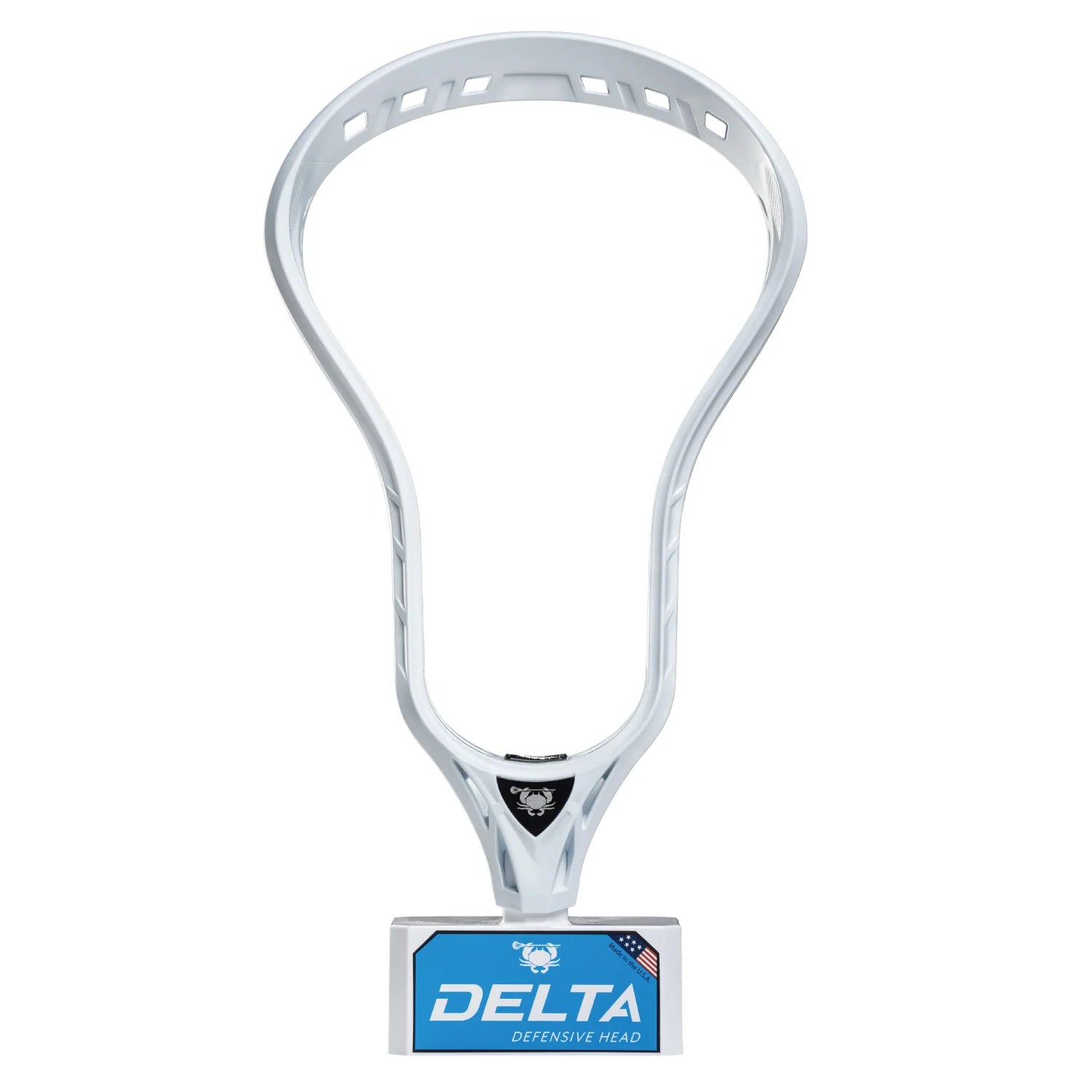
The Delta came out in 2024 as ECD's newest defense head after the Rebel D. ECD optimized the strut placement for rigidity and got the weight down to about 5.6 ounces, which makes it one of the lightest D heads they've made.
The stiffness is what sold me on trying it, and it lives up to the hype for close defensemen, LSMs and SSDMs. It throws seriously hard checks, perfect for knocking the ball loose and scooping it right off your man's stick.
But that's not all a defenseman needs. You've got to win ground balls too. So I ran it for a few months to see if that aggressive scoop was forgiving enough for quick pickups.
Not sure which ECD head fits your game? ECD breaks down their whole lineup here.
See it liveECD Lacrosse on YouTube
Accuracy of Shot and Pass
The Delta has a wider face that tapers into a tighter throat, which helps you start the fast break and hang onto the ball. The angled sidewalls create a slight pinch in the middle, and that gives you a stiff mid pocket built for quick, hard throws. I loved how fast it released on short outlet passes after a ground ball.
The redesigned scoop on the ECD Delta.
I had a few off-center throws at first because the pocket was stiffer than I like, but it got better after the break-in. The moderately wide face also gave me a good balance of speed and accuracy.
It has 6 top holes and 18 sidewall holes, so I could easily string a mid-high pocket for a lot more zip on my throws. My teammates were impressed with how accurate my feeds were.
That said, the long-distance shooting speed was slower than other heads I've used. If you're a two-way guy who pushes in transition a lot, check out the ECD DNA 2.0 or the Maverik Tank 2.0 ($109.99).
Catching and Cradling
Unlike the Rebel D, the Delta has a wider face profile that's ideal for defense. It caught better for me, especially hard passes in tight spaces.
The bigger surface area for picking off passes made my catching a lot more consistent. And the tighter throat keeps the ball snug when you're getting checked, so you're less likely to cough it up under pressure.
The ECD Delta strung with a mid-high pocket.
I also like the taller sidewalls for ball control while cradling. At first, I thought the ball would get stuck in the pocket and slow my release. But the Delta's design made for smooth cradling and quick releases.
So if you're a newer player who struggles with cradling and losing ground balls to the other team, this one's for you. The stiff pocket takes some getting used to, but it'll really tighten up your ball control while you cradle.
Checking
The Delta is a light defense head with a very stiff build. That stiffness let me throw hard checks, strong enough to pop the ball right out of my man's stick. I did have to put more force behind my checks than usual, though, because it doesn't flex or whip much.
The strut layout supports the sidewalls well and soaks up the impact when someone checks you back. It doesn't warp, either. The scoop held its shape all season.
ECD optimized the strut placement for rigidity.
The stiffness and wider face made it a little tougher to control the ball in traffic, but I loved how well it held its shape. I ran it through long summer practices with no signs of damage.
ECD also makes the Delta in Graphene for extra strength. Considering how tough the standard Delta already is, though, I wouldn't pay the extra $20 for the Delta Graphene ($129.99) unless you're breaking heads every season.
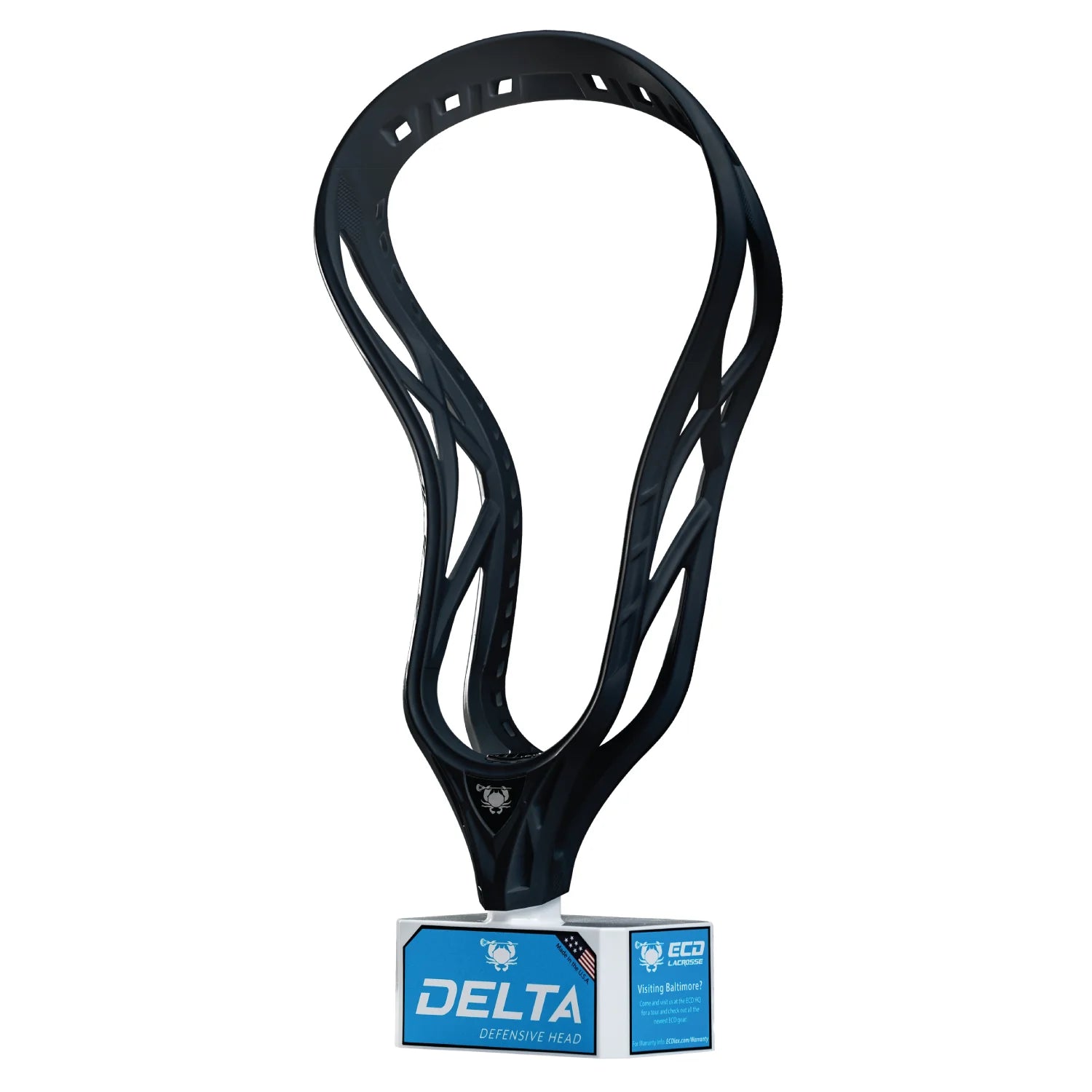
The ECD Delta comes in White, Black, ECD Blue and Graphene.
The Delta isn't a faceoff head, but it's unreal on ground balls. ECD calls it a ground ball machine, and they're not wrong. The scoop is curved with a flatter surface that funnels the ball right into the pocket. That stiffness is what makes it a poor fit at the X, though.
Because of the aggressive scoop and protective lip, I tried it at the faceoff anyway, and it didn't meet my expectations. Ground balls were easy, but the head got stuck in tight spaces on loose draws.
Coach's note: From the box guys up in Ontario to the poles I coached in upstate New York and the kids running clinics in Virginia Beach, the best defensemen I've seen all had one thing in common: they won ground balls. A stiff head like the Delta will hold up to a season of slashes, but it won't scoop the ball for you. Get low, run through it, and keep your top hand choked up. Do that and this head will make you look like an all-star.
Shop the ECD Delta and alternatives at BattleLax
BattleLax carries the ECD Delta in every color, plus the gear I'd pair it with and a couple of alternatives if your game is different.
What are the key features of the ECD Delta lacrosse head?
The ECD Delta is a light (about 5.6 oz), very stiff defense head with an aggressive scoop for ground balls, a wide face that tapers to a tight throat, and a sidewall layout that strings up nicely with a mid-high pocket. It's built for close D, LSMs and transition defensemen.
How does the ECD Delta perform on ground ball pickups?
It's a ground ball machine. The redesigned scoop has a great return angle and funnels the ball straight into the pocket, even on choppy grass.
When was the ECD Delta lacrosse head released?
ECD launched the Delta in 2024 as its newest defense head after the Rebel D.
What makes the ECD Delta ideal for defense?
It's light and rigid, so you can throw hard checks without the head bending, and the aggressive scoop gets you on ground balls quickly. It holds its shape through a full season of contact.
How does the ECD Delta perform for catching and cradling?
Really well. The wide face gives you a big target on hard passes, and the tighter throat and taller sidewalls keep the ball locked in while you cradle under pressure.
Is the ECD Delta Graphene worth the extra money?
For most players, no. The standard Delta is already tough. The Graphene version costs $20 more at BattleLax for extra strength, so it's worth it mainly if you're cracking heads every season.
Final Verdict
The ECD Delta is one of the best defense heads out there, with serious stiffness for quick, hard outlet passes. I would have liked a little more flex, but the aggressive scoop makes ground balls easy.
The strong sidewalls throw powerful checks, and the mid pocket keeps the ball locked in while you cradle. It's a tough head that soaks up contact and holds its shape, so it's a great fit for close D, LSMs and SSDMs.
Maverik's first new faceoff head in years, with DuraFlex plastic that snaps back after every clamp. Here's how the Logik Force held up after four weeks at the X.
CSConnor Stifel · Men's Heads · Updated October 21, 2026 · 7 min read
Drip meter9.3/ 10
LaxDrip verdict: a pure FOGO head with great shape retention, a grippy honeycomb rail and quick exits. The hole spacing is awkward, and it only comes in bone.
LaxDrip is reader supported. When you buy through links on this page we may earn a commission at no extra cost to you. How we review.
The hype for the Maverik Logik Force had been building for months, so when it dropped, I had to try it. Like most faceoff guys, I wanted to know if it holds its shape, gives you leverage at the X and stands up to pressure.
After four weeks with it, I can say with confidence that it snaps back into shape fast. It only comes in bone, though, and Maverik's detailed design makes it tough to dye.
Before we get into the review, here are the key features.
[wpdatatable id=372]
Position
Faceoff (FOGO)
Level
Intermediate to advanced
Material
DuraFlex
Released
Early 2025
Color
Bone only
Price
$109.99 at BattleLax
Built with
Honeycomb rail texture
FlexRail
Force Tech bottom rail
Three struts
Pros & Cons
Pros
Balanced flex points to dominate the faceoff
Light, durable DuraFlex build
Flatter, less aggressive scoop for easier ground balls
Three-strut design resists warping
Narrow throat for excellent control
Cons
Widely spaced sidewall holes
Not great with a high pocket
Maverik Logik Force Lacrosse Head Ranking
I rate the Maverik Logik Force a 9.3/10 on the Drip Meter.
The Logik Force's Drip Meter rating.
[wpdatatable id=373]
Who's This Head Made For?
Maverik built the Logik Force to dominate faceoffs, with FOGOs in mind. After the Maverik LOCK, Maverik went years without a new faceoff head until the Logik Force came along as its successor.
A few reviews I read said the design is a lot like the StringKing Mark 2F. Honestly, most faceoff heads share the same basic pinched shape. It's the flex profile that makes each one unique.
The Logik Force has a textured honeycomb pattern on the inside of the rails. It's not just for looks. It adds grip on the clamp, and the balanced flex points help you win more loose balls.
The hollowed-out ball stop is another smart touch. It's soft and slightly recessed, which gives you better feel when the ball is sitting in the pocket. Little details like these make it clear Maverik focused on function.
That detail is bad news if you like to dye your heads, though, because it's going to be tough. Otherwise, it's one of the best faceoff heads for men.
Accuracy of Shot and Pass
The Logik Force has a narrow throat that still meets the minimum head width rules, so you get tight ball control on passes and shots. I loved how consistent my accuracy was threading passes and on quick-release shots.
The narrow face makes clamping feel effortless, especially in 50/50 battles, and once I had the ball, the tight face kept it locked in. I strung it with a mid pocket, and the release point felt perfect. I could shoot with decent power and still keep my passes consistent.
The sidewall holes are spaced out more near the throat, which makes it a little harder to string. I also tried a higher pocket, which gives you more whip on power shots but costs you control on quick passes.
So it's not the fastest shooter out there. But the DuraFlex material snaps right back into shape, so your shot speed and accuracy stay consistent.
If you need a head for all-around offense, I'd go with the Maverik Optik Force ($109.99), which is stiffer and gives you more stringing options. See also my Maverik Optik 2.0 review.
Catching and Cradling
The narrow throat and face make catching in traffic tougher. I had a hard time with mishandled or off-target passes during quick resets after a faceoff win. If you're a beginner still working on hand-eye coordination, go with the Nike CEO 2 or CEO 3 (see our best Nike heads).
The tight face does funnel the ball into the pocket easily and keeps it secure through hard checks. The pinched sidewalls lock the ball in on S-cuts or when I'm fending off a long pole on the clear.
The Logik Force's side profile.
The sidewalls are flexible, but three well-spaced struts keep the head from warping when you're fighting off defenders after a win, so the ball didn't pop out even with regular checks.
I did notice the ball shifting a little in a high pocket, especially cradling one-handed on the run. A mid pocket gave me a good balance of control and cradling, and the 17 sidewall holes let you customize your pocket.
So I wouldn't recommend it for offensive middies. They're better off with the StringKing Mark 2F ($99.99) or the Nike CEO 2.
Checking
The Logik Force is less rigid than defense-focused heads like the ECD Rebel. The sidewalls aren't wide enough to throw the kind of checks that knock the ball loose.
The flex points do give you lightning-quick exits once you win possession, so you can get into transition with very little resistance. That responsiveness gave me an edge in fast faceoff battles.
The sidewall design, with the honeycomb pattern and fins, keeps the head from flexing too much, so it doesn't warp or lose its shape over time. The asymmetry is subtle, but it gave me enough rigidity to overpower opponents without losing the flex.
The head holds its shape on aggressive checks but still has enough give for counters like the plunger or reverse clamp. It's less stiff than the Maverik LOCK, which was prone to snapping under heavy pressure.
The Logik Force also feels a little lighter than the Nike CEO 2. I saw some stress marks near the throat after about 20 faceoff wins, but the DuraFlex material gives you a good mix of stiffness and flex.
Curious how different head plastics flex? ECD breaks it down here.
See it liveECD Lacrosse on YouTube
Ground Pick-Up and Face-Off
The faceoff performance is the highlight of the Logik Force, and it's impressive for intermediate to advanced players. The scoop is slightly rounded with a subtle point in the center. It's not overly curved, but it has enough angle to slide under the ball smoothly, even on bumpy turf.
It doesn't catch the turf, either, so it was easier to rake or push through in scrappy battles. I would have liked some ridges inside the scoop for more grip when dragging the ball, though.
Its flex profile handles the torque of a clamp battle while staying rigid enough to pop the ball out clean. The short throat let me get my hands close for better control on scoops and quicker exits from tie-ups.
It snapped right back into shape after intense clamp battles, thanks to the DuraFlex material, and a mid-low pocket gave me a consistent hold and release going from a ground ball to a quick pass or shot.
It's a well-designed head built to win you faceoffs. It's a pure FOGO head for intermediate and advanced players.
Coach's note: I've watched faceoff guys from upstate New York to Ontario to Virginia Beach chase the newest head every season. A good head like this one helps, but string it for your hands and your moves, then live with it for a while. Fifty reps a day on the clamp and the rake will win you more draws than any plastic will.
Shop the Logik Force and alternatives at BattleLax
BattleLax carries the Logik Force, along with the other top faceoff heads it gets compared to.
Maverik released the Logik Force in early 2025. It was Maverik's first new faceoff head in years, following the Maverik LOCK.
What colors does the Maverik Logik Force come in?
It only comes in bone. The detailed design, including the honeycomb texture on the rails, also makes it tough to dye, so customization is limited.
Is the Maverik Logik Force legal for NCAA and NFHS play?
It's built for high school and college faceoff specialists. Head rules change from time to time, so check your league's current rulebook before game day.
What pocket setup works best for the Maverik Logik Force?
A mid or mid-low pocket works best, giving you good control and a quick release. A high pocket adds whip but costs you control on quick passes.
Final Verdict
I'd rate the Maverik Logik Force as one of the best faceoff heads out there, with excellent shape retention and flex. I loved the rounded scoop for smooth ground balls and rakes.
The textured honeycomb rails are another smart upgrade that adds grip on the clamp, and the narrow throat and mid pocket give you tight control and a consistent release.
It's flexible enough for quick exits and still holds up against warping in intense faceoff battles. It doesn't have the stiffness for defensive checks, but it's a top choice for intermediate and advanced players who want precision and speed at the X.