Maverik Lacrosse Rebounder Review
A steel-frame bounce back with a high-tension target and an adjustable angle, built for players who want to put in their wall ball reps without a wall.

We may receive a commission if you make a purchase through a link on this page at no cost to you. This helps us keep this site free & we appreciate your support!
Every good player I've ever coached had one thing in common: they did their wall ball. Hundreds of reps a day, both hands, quick sticks, catches on the run. The problem is not every kid has a brick wall, and the ones who do usually have a neighbor who's sick of the noise. That's where a good rebounder earns its spot in the backyard.
I've seen bounce backs set up in driveways up in Canada where kids practice box moves all winter, in backyards around Virginia Beach and on club fields across upstate New York. The Maverik Lacrosse Rebounder is one of the names I see most. It's built on a steel frame with a high-tension rebound surface and an adjustable angle, so you can work on everything from ground balls to high passes without a partner.
Below, I break the Maverik Rebounder down the way I would for one of my own players: specs, how it plays, how it holds up and how it compares. If you're still shopping around, our best lacrosse rebounders guide covers the field.
The Maverik Lacrosse Rebounder. Check stock at Battle Lax.
Key Details
- Frame
- Sturdy, adjustable steel frame
- Rebound surface
- High-tension surface for a consistent return
- Target area
- 4 ft x 3 ft
- Height
- About 7 ft tall assembled
- Angle
- Adjustable, from ground balls to lofted returns
- Best for
- Beginners to experienced players
- Use
- Outdoors: backyard, driveway or field
- Cost
- $204.99
- Color
- Black, with Maverik red on black
Pros & Cons of the Maverik Lacrosse Rebounder
- Sturdy steel frame built to handle the elements
- High-tension surface gives a true, consistent return
- Adjustable angle for ground balls, line drives and high passes
- Tall 7 ft frame works for players of all sizes
- Great for solo reps, no partner or wall needed
- Clean Maverik red-on-black look
- 4 ft x 3 ft target is smaller than jumbo rebounders
- Heavier than some alternatives, so it's not a grab-and-go
- Best used outdoors because of its size
- Often sells out, so you may have to wait for a restock
Maverik Lacrosse Rebounder Drip Score
I'd put the Maverik Rebounder at a 7.8/10 on the Drip meter. It's built tough and returns the ball true, and gives back points on target size and portability.
| Category | Bar | Score |
|---|---|---|
| Rebound consistency | 8.5 | |
| Build & durability | 8.5 | |
| Adjustability | 8.0 | |
| Value | 7.5 | |
| Target size | 7.0 | |
| Portability | 7.0 | |
| Drip score | 7.8/10 |
Who Is the Maverik Lacrosse Rebounder For?
The Maverik Rebounder is built for players who want to put in reps on their own time. It works for a youth player learning to catch and throw, and for a varsity middie grinding through 500 wall balls a day.
- Great fit: Youth and high school players without a good wall at home. Pair it with a stick from our best beginner and youth lacrosse sticks guide.
- Great fit: Players working on their off hand. The consistent return means every rep counts.
- Good fit: Defensemen and goalies who want to work on ground balls and quick outlets with the angle set low.
- Not the best fit: Players who need to haul a rebounder to the field every day, or who want a giant target for erratic throwers. A larger or lighter rebounder will suit them better.
Not sure what to work on? Our guide to lacrosse positions breaks down the skills each spot needs.
Rebound & Return
This is what you're paying for. The high-tension rebound surface sends the ball back true and consistent, so you're not chasing wild bounces every third rep. That matters, because the whole point of wall ball is rhythm. Catch, cradle, throw, repeat, hundreds of times.
The return feels lively, a lot like throwing against a good brick wall, which makes it great for quick sticks and catch-and-release work. A consistent return is also how you find flaws in your release. If the ball keeps coming back to your left, the problem is your throw, not the net.
Adjustable Angle
The steel frame adjusts so you can change the return angle. Set it low and you get ground balls rolling back at you, which is great for defensemen and middies working on scoops. Set it upright and you get line drives for passing and catching. Tilt it back for lofted returns to practice catching over your shoulder.
That range is why I like a rebounder over a plain wall. One piece of gear covers ground balls, passing, catching and reaction work.
Build & Durability
Maverik built this rebounder with a sturdy steel frame meant to withstand the elements. That's important if you live somewhere like upstate New York, where it's going to sit through rain, snow and the occasional errant shot. A good steel frame doesn't wobble when you're ripping passes into it, and it stays put on the grass.
The one trade-off is weight. LaxDrip's own rebounder roundup noted it's slightly heavier than some alternatives. That's great for stability, but it's not something you'll want to carry to the field every day.
Target Size & Space
The target area is 4 ft x 3 ft, on a frame that stands about 7 ft tall. That's plenty for a player with decent accuracy, and it forces you to hit your spots. Younger players with wilder throws might miss more often, so set it up in front of a fence or a lacrosse backstop to save yourself some ball chasing.
Because of its size and rebound strength, it's best used outdoors. A backyard, a driveway or the side of a field all work.
Drills to Run on the Maverik Rebounder
A rebounder is only as good as the reps you put into it. Here's a simple routine I give my players. Run it every day for a month and you'll see the difference.
- Two-hand basics (50 each hand). Overhand passes from 5 to 7 yards. Focus on hands away from your body and a clean follow-through.
- Quick sticks (50 each hand). Move in closer and catch and release in one motion. No cradle.
- Off-hand only (100 reps). Your weak hand is your weak spot. Make it a strength.
- Ground balls (25 each side). Drop the angle low, attack the ball, scoop through and get your head up.
- Catch on the move (25 each direction). Throw, then shuffle or jog a few steps, and catch on the run like you're dodging.
For the best feel, use quality balls. Our guides on lacrosse balls and textured vs. non-textured balls can help, and a lacrosse ball bag keeps them all together. Want more ideas? Check our lacrosse training aids guide.
See it live
Want to see the Maverik bounce back in action? Here's a look from YouTube.
More rebounder videos:
Maverik Rebounder vs. Other Bounce Backs
| Rebounder | Frame | Target | Price |
|---|---|---|---|
| Maverik Lacrosse Rebounder | Adjustable steel | 4 ft x 3 ft | $204.99 |
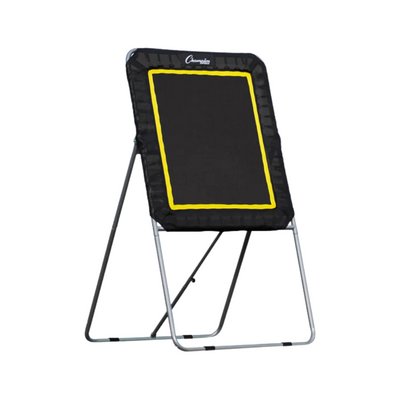
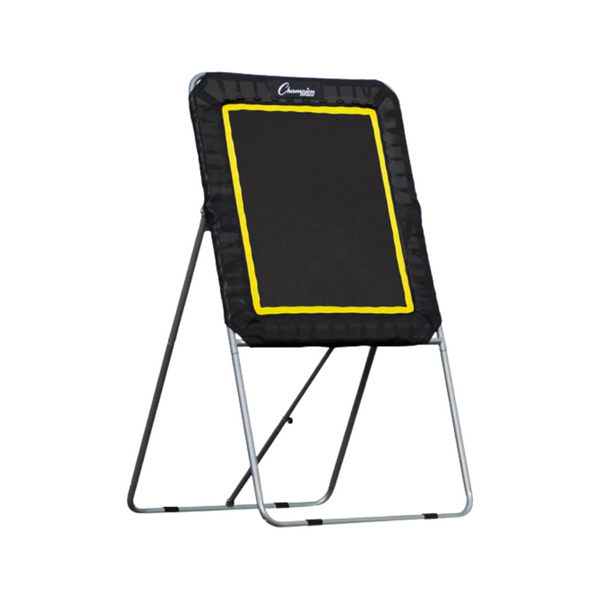
| Champion Sports Deluxe | Heavy-duty steel | Large | $270.00 |
| Champion Sports Extra Large Deluxe | Adjustable steel | 6 ft x 4 ft | $422.99 |
Maverik vs. Champion Sports Deluxe: The Champion Deluxe has a larger rebound surface, which gives younger players more room for error, and it costs about $65 more. If accuracy is still a work in progress, the bigger target helps. If you want a tighter target that makes you hit your spots, go Maverik.
Maverik vs. Champion Sports Extra Large Deluxe: The Extra Large is a 6 ft x 4 ft rebounder with a dampened surface for a more controlled return. It's great for team practices and partner drills, but it's more than double the price. For a single player in the backyard, the Maverik gives you more value.
Rebounder vs. a wall: A brick wall is free, but it doesn't give you angle control, and not every house has one. A rebounder lets you work ground balls and lofted returns, and you can set it up anywhere. You can browse every option on the Battle Lax bounce backs page, and our best lacrosse bounce back guide covers more picks.
People Also Ask
Is the Maverik Lacrosse Rebounder worth it?
Yes, for most players. It has a sturdy steel frame, a high-tension surface that returns the ball consistently and an adjustable angle, all for $204.99. If you need a bigger target, look at a larger rebounder.
How big is the Maverik Lacrosse Rebounder?
The rebound target area is 4 ft x 3 ft, and the frame stands about 7 ft tall when assembled.
Can you adjust the angle on the Maverik Rebounder?
Yes. The steel frame adjusts, so you can set it low for ground balls, upright for line drives or tilted back for lofted returns.
Can I use the Maverik Rebounder indoors?
It's best used outdoors. Because of its size and rebound strength, a backyard, driveway or field is the right spot.
Is a lacrosse rebounder better than a wall?
A rebounder gives you something a wall can't: angle control. You can practice ground balls and high catches, and set it up anywhere. A good wall is still great for basic reps if you have one.
Is the Maverik Rebounder good for beginners?
Yes. It works for beginners through experienced players. Younger players may want to set it up in front of a fence or backstop since the target is a little smaller.
Final Thoughts
The Maverik Lacrosse Rebounder is a tough, reliable bounce back for players who are serious about getting better on their own time. The steel frame holds up to weather, the high-tension surface gives a true return, and the adjustable angle lets you train ground balls, passing and catching all in one spot. The target is smaller than the jumbo models, but that just means you'll learn to hit your spots.
If you're ready to turn your backyard into a wall ball station, grab the Maverik Lacrosse Rebounder at Battle Lax. If it's sold out, check the Battle Lax bounce backs page for the Champion Sports options.
Keep reading: Best lacrosse rebounders · Lacrosse training aids · Best portable lacrosse goals