Is a Textured Lacrosse Ball Better Than Non-Textured?
Grip, greasing, weather, cost and legality. Here's how textured and smooth lacrosse balls really compare, and which one belongs in your bucket.

A slightly rough surface gives you more control and holds off that slick greaser feel longer.
NOCSAE allows textured balls for game play, as long as the texture stays shallow.
I've heard players argue about this a hundred times: is a textured lacrosse ball better than a non-textured one? For most players, yes. Textured balls hold off greasing longer, give you more grip and improve your control.
If you've played for any length of time, you know not all balls are made the same. Some feel perfect in your stick, and others seem determined to slip out at the worst possible moment.
So let's settle this once and for all with a breakdown of textured vs non-textured lacrosse balls.
We may receive a commission if you make a purchase through a link on this page at no cost to you. This helps us keep this site free & we appreciate your support!
What are textured and non-textured lacrosse balls?
Before we get into the details, let's get the basics straight.
Non-textured lacrosse balls
This is your traditional, smooth rubber lacrosse ball. It's been the standard for years and is used in games and practices everywhere.

Textured lacrosse balls
Textured balls are a newer innovation. In 2019, Guardian Sports released the Pearl LT, the first textured lacrosse ball certified for game play. Textured balls have a slightly rough or patterned surface designed to improve grip and control.

Grip and control: does texture make a difference?
If you've ever tried throwing a lacrosse ball in humid or wet weather, you know the struggle is real. One second your shot's perfect, and the next the ball slips out like it just took a bath in butter.
That's where textured balls make their move.
The slightly rough surface gives your pocket more to grab, which helps you make more precise passes and shots.
You'll also notice smooth rubber balls develop that annoying slick layer, known as grease, which makes them harder to control. Textured balls delay that, so they keep their grip longer.
In my opinion, and plenty of players agree, textured balls take the lead on handling and control, especially in tough conditions.
Durability: which ball lasts longer?
Lacrosse balls take a beating, from high-speed shots to endless wall ball. But which one holds up better?
Textured balls keep their grip longer, so you'll replace them less often and deal with fewer surprise drops in a game. Keep in mind that a rubber textured ball still greases eventually. The texture just slows it down.
Read more: How hard are lacrosse balls?
Performance in different weather
Ever played lacrosse in the rain? I used to love it, getting muddy and making memories. But it turns into a different sport, more like slip-and-slide dodgeball.
Textured balls outperform smooth ones in:
- Wet conditions: Better grip means less slipping.
- Cold weather: They keep their traction even when it's freezing.
- Hot weather: They hold up without turning slick.
So far, the textured ball is winning on every front.
Cost and availability
Let's get real and talk about the price tag.
Textured balls cost a little more, but I'd rather have quality gear that lasts than a cheap ball I have to keep replacing.
If a textured ball lasts twice as long as a smooth one, spending a little extra up front saves you money in the long run. Plus, nobody likes constantly swapping out greasy, slippery balls.
Both types are easy to find. For more buying options, see where to buy lacrosse balls, in bulk or cheap.
What do lacrosse players say?
I talked to some players, both casual and competitive, and their answers were interesting:
- "I switched to textured balls last year, and my passes feel much more accurate."
- "Textured balls don't get as greasy, which is a game-changer in wet games."
- "Honestly, I didn't think it would make a difference, but now I can't go back to non-textured."
Plenty of players love the extra control of textured balls. Others still prefer the feel of smooth balls and say grip should come from your skills, not the ball. Bold take, but hey, to each their own.
Read more: Why are lacrosse balls so bouncy?
Want to see the difference in action? Check out this comparison.
See it live ECD Lacrosse on YouTube
Rules and regulations: are textured balls legal?
Lacrosse equipment has to meet specific standards for safety and consistency, and textured balls are no exception. Here's what makes them legal for play.

NOCSAE standards
The National Operating Committee on Standards for Athletic Equipment (NOCSAE) sets the specs for lacrosse balls. Under the NOCSAE standard:
- Surface: Balls can be smooth or slightly textured, with no seams and a texture depth of no more than 0.007 inches (0.17 mm).
- Material: Solid rubber or another elastomeric material.
- Weight: 5.0 to 5.25 ounces (about 142 to 149 grams).
- Circumference: 7.75 to 8.0 inches (19.7 to 20.3 cm).
Ball color is set by each league's rules. NCAA, NFHS and World Lacrosse rules allow white, yellow or orange. To be approved for official games, the ball's packaging has to carry the NOCSAE seal.
SEI certification
Beyond NOCSAE, look for Safety Equipment Institute (SEI) certification. It shows the ball has passed independent safety and performance testing, and manufacturers highlight it so players and leagues know the ball is legit.
Grip should come from your hands. But a little help from the ball never hurt.
Lacrosse balls at BattleLax
BattleLax doesn't carry textured balls right now. If greasy balls are your problem, though, the best fix they stock is the Pearl X, Guardian's elastomer ball that's built to never grease or harden. It's the official ball of the NCAA championships.
Coach's note: I've run practices in sideways rain in upstate New York, sticky humidity in Virginia Beach and cold April mornings in Ontario. Whatever ball you use, keep a fresh bucket for games and retire the greasy ones to the wall-ball pile. Nothing kills a practice faster than balls that won't stay in the pocket.
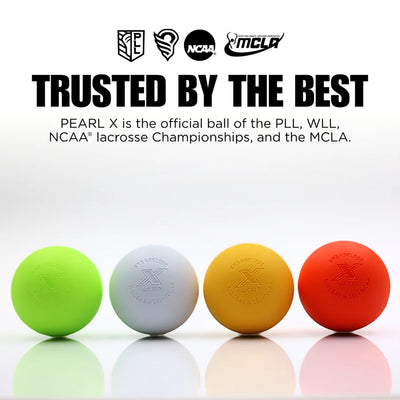 Never greasesPearl X Greaseless Balls (3-pack)$19.99 at BattleLax
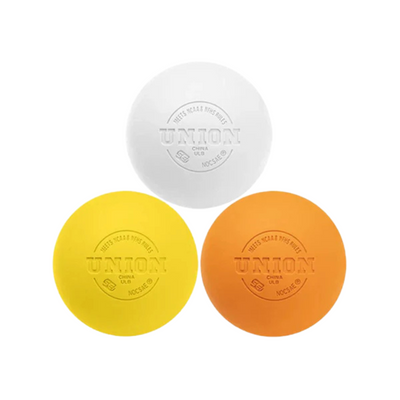 Classic smooth ballUnion Lacrosse BallsFrom $5.00 at BattleLax
 Indoor trainingUnion Soft Training Balls (6-pack)$11.99 at BattleLax
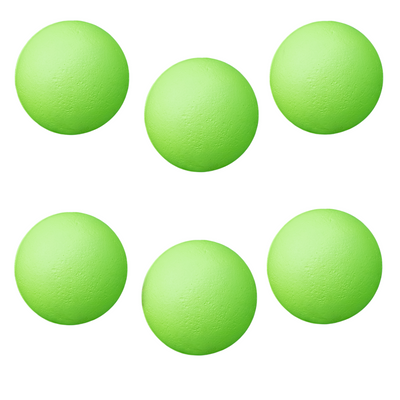 Stick skillsHackees Mini-Balls (6-pack)$18.00 at BattleLax
People also ask
Are textured lacrosse balls better?
For most players, yes. Textured balls give you better grip and control, and they hold off greasing longer than smooth rubber balls, so they play more consistently in all kinds of weather.
What is the best lacrosse ball?
It depends on what you want. Textured balls give you more grip and last longer before greasing, smooth balls give you the traditional feel, and elastomer balls like the Pearl X are built to never grease at all.
Are textured lacrosse balls legal?
Yes, as long as they meet the NOCSAE standard, which allows a slight texture up to 0.007 inches deep. Look for the NOCSAE seal and SEI certification on the packaging.
What type of ball is used in lacrosse?
A solid ball made of rubber or another elastomer, either smooth or slightly textured. Only NOCSAE-certified balls are allowed in official games.
Do textured lacrosse balls last longer?
Generally, yes. The texture delays the slick "greaser" effect, so a textured ball keeps its grip longer, though a rubber textured ball will still grease up eventually.
So, is a textured lacrosse ball better than a non-textured ball? For most players, yes. But it comes down to your preferences and where you play. If you want better grip and control, hate greasy balls and play in wet or unpredictable weather, a textured ball is worth it. If you prefer the traditional feel and don't mind replacing balls more often, smooth balls still get the job done.