8 women's and girls' lacrosse shafts, from ultralight composites to 10° offset handles, plus a buying guide and the shafts you can order today at BattleLax.
ADAnson Decker · Shafts · Updated October 23, 2026 · 12 min read
Drip level5/5
Coach's pick: a light carbon shaft that matches your head's offset. At BattleLax, the Maverik Ascent Pro Carbon is a great straight shaft for any position, and the ECD Halo is a premium carbon option.
We may receive a commission if you make a purchase through a link on this page at no cost to you. This helps us keep this site free & we appreciate your support!
Women's heads have made a massive leap forward in recent years, and shafts have kept pace with stronger, lighter materials and designs built for the growing offset trend.
Staying up to date on shafts matters as much as upgrading your head every few years. Shaving a few ounces here and there, or investing in a more durable option, pays off in your game.
This guide covers the best women's lacrosse shafts on the market and what to think about when you choose one.
Coach's note: I've coached girls from upstate New York clinics to Virginia Beach club teams, and the number one shaft mistake I see is a mismatch: a 10° head on a straight shaft or the other way around. Get the offset right first, then worry about weight and grip. A dialed-in stick is what wins draws and ground balls.
Heads up: BattleLax only stocks a few women's shafts right now, so under each pick I point you to the closest one they carry. You'll find the full list below.
Our top picks
We scoured the girls' shaft market for the best options available. We researched specs, checked customer reviews and visited local stores to feel them in our own hands.
"Alt" goes to the closest women's shaft or stick BattleLax has in stock.
Best women's lacrosse shafts
1. TRUE Helios Composite Women's Shaft Best lightweight
Drip level5/5
Best forOffense
MaterialComposite
Diameter⅝"
OffsetNone
ColorsWhite/Gold
Warranty6 months
TRUE released its lightest composite handle with the Helios at just 3.5 oz, and TRUE calls it the lightest shaft available that doesn't give up strength.
POWERFLX technology adds velocity to every shot and pass by flexing with the natural motion of the ball. It also helps the shaft absorb incoming checks.
A Soft Touch texture along the shaft adds grip, so you don't need extra tape (which adds weight).
It's a great shaft for offensive players who live in the middle of the chaos: ready to shoot at any moment, and durable under constant pressure.
BattleLax pick: BattleLax doesn't carry the TRUE Helios Composite Women's Shaft. For a light, premium women's shaft you can order today, go with the ECD Halo 32" Women's Lacrosse Shaft ($124.99).
2. StringKing Composite Pro Women's Shaft Best 1" straight shaft
Drip level4.9/5
Best forHigh-impact players
MaterialComposite
Diameter1"
OffsetNone
ColorsWhite, Black
Warranty6 months
StringKing enters the fray with the Composite Pro, an ultra-stiff, ultra-durable option for any player in a high-intensity, high-impact role.
The Composite Pro is unique because you can choose your weight to fit your strength and needs. The heavier the shaft, the more durable and consistent it is, and consistency is the name of the game here.
It also comes with five drill holes, which gives you a ton of options for heads to pair it with.
Even better, it's cheaper than most of the other shafts on our list, so it's well worth a look.
BattleLax pick: BattleLax doesn't carry the StringKing Composite Pro Women's Shaft. For a durable, budget-friendly women's shaft, go with the Maverik Ascent Pro Carbon Women's Shaft ($99.99).
3. STX Fortress 700 Women's Shaft Best for defenders
Drip level4.8/5
Best forDefense
MaterialComposite
Diameter1"
Offset10°
ColorsBlack/Gold, White/Black
Warranty6 months
STX makes its first appearance on our list with the Fortress 700, the upgrade to the Fortress 600.
The Fortress 700 is built for elite defenders who want to turn defense into offense. A GRIP coating at the base of the handle gives you extra stability when you throw checks.
The 10° offset pairs well with the Crux Pro, the Fortress or any other 10° head. That offset is a huge help on accurate outlet passes, so you can get your team in transition before the other team knows what hit them.
As with any offset shaft, make sure your handle and head fit together. Also keep in mind that the 700 carries a little extra weight thanks to its wider profile and added grip.
BattleLax pick: BattleLax doesn't carry the STX Fortress 700 Women's Shaft. BattleLax doesn't stock a 10° offset shaft right now. If your head takes a straight shaft, the ECD Halo 32" Women's Lacrosse Shaft ($124.99) is a strong, stiff option.
4. ECD Infinity Pro Women's Shaft Best grip and feel
Drip level4.8/5
Best forFeel and control
MaterialCarbon fiber
Diameter⅝"
OffsetNone
ColorsWhite, Black
Warranty6 months
Don't sleep on ECD. The Infinity Pro is built around one goal: optimizing feel from end to end.
A progressive shape, a soft-touch coating and subtle raised texturing give you unmatched control. It's perfect for any player who relies on quick stick work and stable checking.
The advanced carbon fiber design keeps it light enough to compete with other composite women's shafts. A high kick point gives you a quick, snappy release that matches how easy it is to maneuver.
STX builds on its popular Crux 600 line with the Crux Pro, a light composite shaft made for the Crux Pro head and other 10° heads.
It has a gradual flare, narrowing from 1" at the throat to ⅝" for most of the handle as you move toward the butt end. That gives it a unique, natural feel you won't find in most shafts.
Even with the light design, the Crux Pro is reinforced in key impact zones, which makes it durable and a smart investment for multiple seasons.
Before you buy, keep in mind this handle is made specifically for 10° offset heads, so only consider it if your head is one.
BattleLax pick: BattleLax doesn't carry the STX Crux Pro Handle. BattleLax doesn't stock a 10° offset shaft right now. If your head takes a straight shaft, go with the ECD Halo 32" Women's Lacrosse Shaft ($124.99).
Just like STX has a Crux Pro head and an Exult Pro head, it also makes shafts for both of its elite women's lines.
Like the Crux Pro handle, the Exult Pro has a gradual flare from 1" at the throat to ⅝" for most of the handle, plus the 10° angle to fit its STX head counterparts.
The Exult Pro uses 3D GRIP technology, which we've found grips great in any weather. The molded end cap also lets you slide your hands down the shaft without a separate end cap getting in the way.
The Exult Pro head is designed for midfielders, but we like the Exult Pro handle for any position. It's light, strong and feels amazing.
BattleLax pick: BattleLax doesn't carry the STX Exult Pro Handle. BattleLax doesn't stock a 10° offset shaft right now. If your head takes a straight shaft, go with the Maverik Ascent Pro Carbon Women's Shaft ($99.99).
7. Maverik Ascent+ Women's Shaft Best straight shaft
Drip level4.8/5
Best forStraight heads, any position
MaterialCarbon fiber
Diameter⅝"
OffsetNone
ColorsBlack, White
Warranty6 months
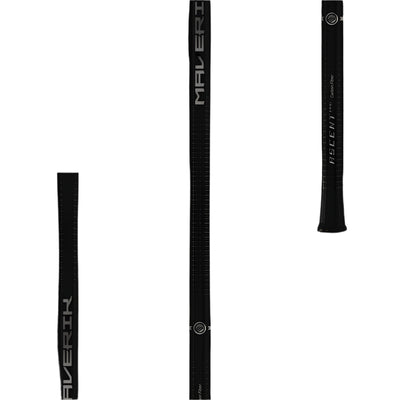
Maverik released the Ascent+, an updated version of its popular Ascent shaft.
If your head works with a straight shaft, the Ascent+ is a great option. It's light but strong and should last multiple seasons.
It has a soft-touch matte finish and a molded butt-end cap that feels great in your hands, and the ⅝" diameter gives you great control and leverage without giving up durability.
Every girl we've talked to who uses the Ascent+ says it's held up well, with no breaks or problems beyond a few minor dings.
Overall, the Ascent+ is an awesome match for any straight women's head, at any position.
8. Brine Warp Pro Minimus Carbon Handle Best hollow carbon
Drip level4.8/5
Best forOffense
MaterialCarbon composite
Diameter⅝"
OffsetNone
ColorsWhite, Black
Warranty6 months
Brine, now part of Warrior, brings us the Warp Pro Minimus, the lightest women's shaft in its lineup.
The Warp Pro Minimus is built around durability. Its carbon composite weave is strong enough for high-contact play but light enough to stay quick in tight spaces.
Its flex moves with the ball to add some whip and power to your shots, which makes it a great option for offense-minded players.
The one knock is a possible gap between the top of the shaft and the bottom of certain heads, so you may need to shim the fit to stop rattling.
You're far from limited to the 8 shafts above. To help you shop beyond this list, here's what to think about before you settle on a shaft.
1. Offset
The women's game has embraced offset sticks for more control, since deep pockets aren't allowed.
An offset stick helps the ball settle into a sweet spot in your head for more control and accuracy. It can make a shallow pocket feel like you're playing with a men's head.
If you're looking at offset shafts, remember they need to pair with an equally offset head. That matters most if you already have your head picked out or you're on a budget.
For example, if your head has a 10° offset, you need a shaft designed for 10° offset heads.
2. Diameter
Women's shafts usually fall between ⅝" and 1", and some use a progressive design (a thinner handle flaring into a wider throat).
Diameter matters for weight and durability. A wider shaft is usually heavier and more durable over the long run.
A narrower shaft is usually lighter and easier to maneuver, which tends to help offense-minded players.
If you're not sure what you like, try both. It's the only way to know what works best for you.
3. Material
Material is another big factor in weight and durability, so don't sleep on it.
Most women's shafts are some kind of carbon fiber composite. There are some metal options, but they're less common among elite women's shafts. Carbon fiber is light and durable, a big step up from the aluminum shafts of yesteryear.
The lightest, strongest girls' shafts use carbon fiber or other composites to get the most out of the shaft and strip away anything that weighs you down.
4. Weight and strength
That leads right into weight and strength.
You want a good balance of both in a shaft that stays productive and consistent over the long haul.
A heavier shaft is usually more durable. That's more appealing if you play defense, where a quick shot isn't a must.
That said, brands have made huge strides with composites that have great strength-to-weight ratios. You can find a strong, light shaft these days.
5. Customer reviews
It goes without saying, but always check customer reviews and player feedback before you buy. Many shafts on this list are newer and don't have as much feedback as you may be used to.
Still, check and double-check retail sites for feedback on the pros and cons. Do your own research, because a shaft is an investment you shouldn't take lightly.
And as always, pay it forward. Leave your own feedback on gear you buy, and update it as you use it more.
6. Budget
Sticking to a budget on a women's shaft is easier said than done. Shafts are pricey even at the affordable end.
That's why a shaft isn't the place to nickel-and-dime. What seems like a good price now can double if the shaft breaks way too soon.
Pricier shafts often earn their cost with durability measured in multiple seasons. Want to build strength between games too? The Power Shaft Lacrosse Trainer ($64.95) is a weighted trainer for wall ball and drills.
How we rate girls' lacrosse shafts
We take our ratings seriously and only recommend gear we'd use ourselves.
To rate each shaft, we test it ourselves whenever we can, review the specs (weight, strength, material, grip and so on), and read customer reviews and talk to players we know who use it.
When we test shafts, we feel the shape and the texture of the finish, shoot with them to see how they flex, check them with another stick to see how they hold up, and dump water on them to see how rain affects the grip.
When we can't test a shaft extensively, we spend extra time talking to players who've used it for a while. If you have feedback or want us to add a shaft, let us know!
Women's shafts in stock at BattleLax
Want a shaft you can order today? These are the women's shafts and complete sticks BattleLax carries right now.
Prices and stock change, so check the product page before you order.
People also ask
What is the best women's lacrosse shaft?
The TRUE Helios is our top pick for a light shaft. At BattleLax, the ECD Halo and the Maverik Ascent Pro Carbon are the women's shafts you can order today.
Do I need an offset women's lacrosse shaft?
Only if your head is built for one. A 10° offset head needs a 10° offset shaft, and a straight head needs a straight shaft.
What diameter is a women's lacrosse shaft?
Most are between ⅝" and 1". Some flare from 1" at the throat to ⅝" down the handle.
Are carbon fiber women's shafts worth it?
For most players, yes. Carbon and composite shafts are lighter and more durable than the aluminum shafts of the past, so they last multiple seasons.
Six layers of carbon, one layer of Kevlar and a budget price. We took the Mercury Carbon onto the field to see if a cheap carbon shaft can actually hold up.
CSConnor Stifel · Shafts · Updated October 23, 2026 · 6 min read
Drip score8.5/ 10
LaxDrip verdict: a tough, stiff, budget-friendly carbon shaft that shoots accurately and eats checks. It's heavy at 7 oz. BattleLax doesn't stock it, so the closest match there is the ECD Carbon 4.0.
LaxDrip is reader supported. When you buy through links on this page we may earn a commission at no extra cost to you. How we review.
Overview
I was looking for a budget shaft with premium quality. After reading Mercury Carbon reviews about durability, I took one onto the field. Multiple layers of carbon fiber plus a Kevlar layer for added strength sounded great on paper.
Most low-price shafts don't live up to claims like that, though. So I put together this detailed Mercury Carbon review to see if it really performs on the field.
Coach's note: I've seen a lot of kids, from upstate New York travel teams to Virginia Beach high school squads to Ontario box leagues, snap a cheap carbon pole on the first good slash of the season. A budget shaft is only a deal if it's still in one piece in May. That was the bar for this one.
Heads up: BattleLax doesn't carry the Mercury Carbon right now. If you want a Kevlar-reinforced carbon shaft in the same price range, the closest match is the ECD Carbon 4.0 Attack/Midfield Shaft ($124.99).
I rate the Mercury Carbon lacrosse shaft an 8.5/10 on the Drip Meter.
[wpdatatable id=299]
Who Should Buy This Shaft?
Kevlar-reinforced shafts are usually expensive. The Mercury Carbon is one of the best budget-friendly attack shafts out there.
Released in 2024, it has six layers of carbon fiber and one layer of tough Kevlar. So even at a low price, I wasn't worried about it breaking early.
When I first picked it up, it felt heavier than the STX Sc-Ti and the ECD Carbon Pro 3. It took me one practice to adjust, and once I was comfortable it wasn't a big trade-off. The weight could be a downside for younger players, especially paired with a lightweight head.
So I'd recommend it for intermediate and advanced players who can handle the weight. The concave profile and extreme shape also make it a good fit for attackmen, offensive middies and center-forward middies. See more options in our best attack shafts guide.
Shape, Material and Weight
Mercury is newer to this line, but the Kevlar reinforcement is there to give you durability and the confidence that this carbon shaft won't snap. I loved how smoothly it absorbed checks without the vibration you get from a lot of carbon shafts.
Alloy shafts stay bent once they bend, and many carbon shafts break easily, so I tested this one pretty aggressively. It didn't show any sign of damage.
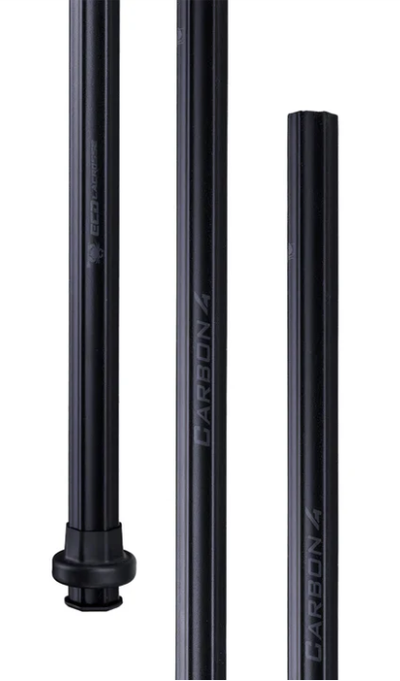
The seven-layer build does make it heavier, thicker and less flexible, but the durability is comparable to ECD's carbon-Kevlar shafts like the ECD Carbon Pro 4.0 Power Shaft ($159.99).
The aggressive octagonal shape with deep side grooves gives you a solid grip. It helped me stay consistent on my shot and gave me better control when dodging and cradling.
The matte, rubberized finish is grippy even in wet conditions. After a few intense games, though, it lost some of its initial tackiness.
At about 7 oz, you notice the weight next to lighter alloy shafts, especially on long runs or in long games. It's heavier than the STX Sc-Ti, ECD's alloy-core carbon shafts and the Maverik Range.
Honestly, I don't mind some weight behind my passes. I'm not a fan of shafts that feel weightless. The extra weight feels sturdy in your hands and gives you more stability against rough checks.
Flex matters a lot in this review because a flexy handle hurts shooting accuracy. The Mercury Carbon has balanced stiffness with minimal flex in the middle.
That slight flex tightens up your shot spread and lets you shoot hard without muscling it. I paired it with a quick-release offensive head and loved the passing speed.
The end cap at the bottom slides, so you can move it up or down to adjust your grip length without cutting the shaft. It's not as adjustable as Maverik's ABE butt end, but it works fine.
You can also swap in the butt end of your choice or tape it so your hand doesn't slip.
Overall, the weather-resistant rubberized grip lets you place your hands with confidence, and the end cap gives you real on-field confidence too.
Aesthetics
This shaft comes in seven bold colors, each with a shiny, metal-like finish and a detailed engraved logo that adds a premium touch. A distinct bird logo and a sleek line running along a third of the shaft give it a clean, layered look.
The bright colors like red and green look elite, and the all-white version is sleek and goes with just about any head.
Scrolling through Mercury Carbon reviews, I noticed most younger players pick the colored versions to match their dyed heads. They're a great way to move past standard black and white without paying extra for dye.
Despite the low price, the Mercury Carbon performs like a high-end shaft. The sleek design and strong performance make it a standout for players who want style and reliability.
Shop Mercury Carbon alternatives at BattleLax
BattleLax doesn't carry the Mercury Carbon, but these shafts cover the same ground, from budget to premium.
When was the Mercury Carbon lacrosse shaft released?
It came out in 2024, built with six layers of carbon fiber and one Kevlar layer for durability and performance.
What colors does the Mercury Carbon shaft come in?
Seven: white, black, red, yellow, blue, purple and green.
How much does the Mercury Carbon shaft weigh?
About 7 oz. That's heavier than many alloy shafts, but it adds sturdiness and stability.
What makes the Mercury Carbon shaft durable?
Six layers of carbon fiber plus one Kevlar layer give it high impact resistance and reliable performance in physical games.
Who should use the Mercury Carbon shaft?
Intermediate and advanced attackmen and offensive middies who want minimal flex, durability and better shooting accuracy. It's less suited to younger players because of the weight.
Does BattleLax carry the Mercury Carbon shaft?
Not right now. The closest match at BattleLax is the ECD Carbon 4.0 Attack/Midfield shaft.
Final word
The Mercury Carbon is an excellent choice for intermediate and advanced attackmen and offensive middies. Its blend of six carbon layers and one Kevlar layer gives you exceptional strength, stability and damage resistance.
15 shafts tested in live draws for leverage, grip, stiffness and durability at the X, plus how to choose, taping rules and the faceoff shafts you can order today at BattleLax.
DRDave Rathmanner · Shafts · Updated October 22, 2026 · 15 min read
FOGO pickSK3
Coach's pick: StringKing's faceoff-specific shaft, with an asymmetrical top that gives your top hand real leverage on the clamp. BattleLax has the newest Composite 3 Pro Faceoff in stock.
We may receive a commission if you make a purchase through a link on this page about the best faceoff shafts at no cost to you. This helps us keep this site free & we appreciate your support!
A solid faceoff man is essential to winning lacrosse these days. Playing "make it, take it" and starting every quarter with the ball is a massive advantage.
Plenty of great faceoff heads have come out in recent years, but what about faceoff shafts? Is there one that gives you the slight edge between winning the clamp and watching your opponent run toward your cage with the ball? This guide covers just that, with reviews of the best faceoff shafts out there and what to look for when you pick one.
As a faceoff guy myself, I know how important it is to have gear that gives you the best shot at every draw. I can also feel the small differences between shafts that help you clamp a little faster, win more tie-ups and play well at both ends.
To find the best, I tested 20 shafts I could get my hands on, including mine, my buddies' and my teammates', in live faceoffs. I took at least 20 draws with each one, focusing on the leverage it gave me and how the grip felt in my gloves. Then I narrowed it down to the 15 best.
Coach's note: I've watched FOGOs win games by themselves, from the summer leagues in upstate New York to Virginia Beach tournaments, and the box guys up in Ontario who'll win a draw with their bodies if the stick won't do it. The shaft matters, but your hands, your stance and your first move matter more. Find a shaft you trust, tape it the same way every time and take a hundred reps a week against the wall or a buddy.
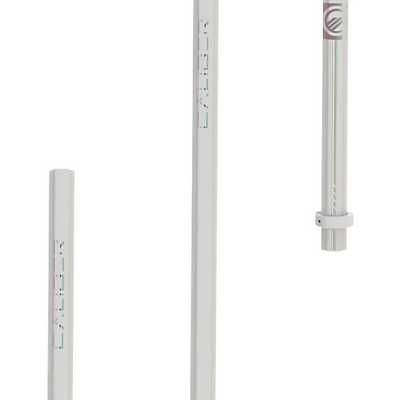
Heads up: BattleLax carries the Burn XP2, Apollo, Caliber and Evo V from this list, plus StringKing's newest faceoff shaft. For the rest, I point you to the closest shaft they stock, and you'll find the full list below.
"Buy" goes to the shaft on BattleLax. "Alt" goes to the closest shaft BattleLax has in stock.
Best faceoff shaft reviews
1. ECD Carbon Pro 3 Shaft Best overall
[wpdatatable id=581]
I've won plenty of faceoffs with the Carbon Pro 3, and it held up way better than I expected. The Kevlar layer adds durability for repeated clamps and counter battles.
It has a subtle flex, but it never felt soft or whippy. The raised grip gave my top hand enough texture to stay locked in without a ton of tape, though I felt a slight shift when I took hard digs against the poles.
It's not a light shaft, but the octagonal shape and sliding end cap make for comfortable hand placement and controlled passing after the draw.
BattleLax pick: BattleLax doesn't carry the ECD Carbon Pro 3 Shaft. ECD's newer ECD Carbon Pro 4.0 Power Shaft ($159.99) is the one they stock.
The Mission Blank is one of my favorite faceoff shafts because of its stiff scandium alloy and thick walls. It feels heavy at 7.1 oz, but that weight lets me drive more force straight into the ball on the clamp.
It stays stable when I power through an opponent, giving me the leverage I need to win the ground ball. The bead-blasted finish and ABE butt end cut down on slipping.
That sandpaper-like finish did smooth out after a season. Still, it's a perfect faceoff shaft for players who value force over flex.
BattleLax pick: BattleLax doesn't carry the Maverik Mission BLANK Shaft. For a stiff, thick-walled Maverik scandium-titanium shaft they stock, go with the Maverik Caliber 2026 Shaft ($129.99).
The Maverik A1 weighs 7.4 oz and has Maverik's signature ABE butt end, but its scandium alloy is less stiff than the Mission Blank.
It has a slight flex in the middle and a stiffer lower end for control and stability when you're cradling after the win. That's why it's my go-to when I have to play FOSO (faceoff, stay on).
The aggressive concave shape helps with thumb placement on the clamp. The rough texture wore on the palms of my gloves, but the grip was excellent, even in the rain.
BattleLax pick: BattleLax doesn't carry the Maverik A1 Shaft. For an affordable Maverik alloy shaft they stock, go with the Maverik A7 175 Attack Shaft ($99.99).
4. Warrior Evo Krypto Pro Shaft Most durable alloy
[wpdatatable id=584]
The Warrior Evo Kryptolyte is one of the best faceoff shafts, durable yet light. I usually don't like light alloy shafts because they dent and bend more easily, but this premium 7000-series alloy soaks up impact.
At 6.1 oz, it held firm through tie-ups, and the lower end didn't flex at the X. There was some give in the middle, though, so I had to fight to keep control on the run.
I really liked the diamond-grip texture over the octagonal shape. It gave me balanced stick control on exits without sticking to my gloves.
BattleLax pick: BattleLax doesn't carry the Warrior Evo Krypto Pro Shaft. For a durable Warrior alloy shaft they stock, go with the Warrior Alchemy STZ Attack Shaft ($124.99).
The Wonderboy is the newest shaft in my collection. I've only taken faceoffs with it a few times, and the flex profile surprised me. The titanium-blend alloy is more durable than most alloy shafts.
The concave edges allow better hand placement, and the TactileGrip doesn't slip. Just make sure you tighten the butt end before you take it on the field.
It's not the lightest shaft at 7.7 oz, but it didn't slow my exits one bit. I put max power into it on reverse clamps, and it didn't lose its shape.
BattleLax pick: BattleLax doesn't carry the Maverik Wonderboy Shaft. For a Maverik titanium-blend alloy shaft they stock, go with the Maverik Mag-Ti 145 Attack Shaft ($129.99).
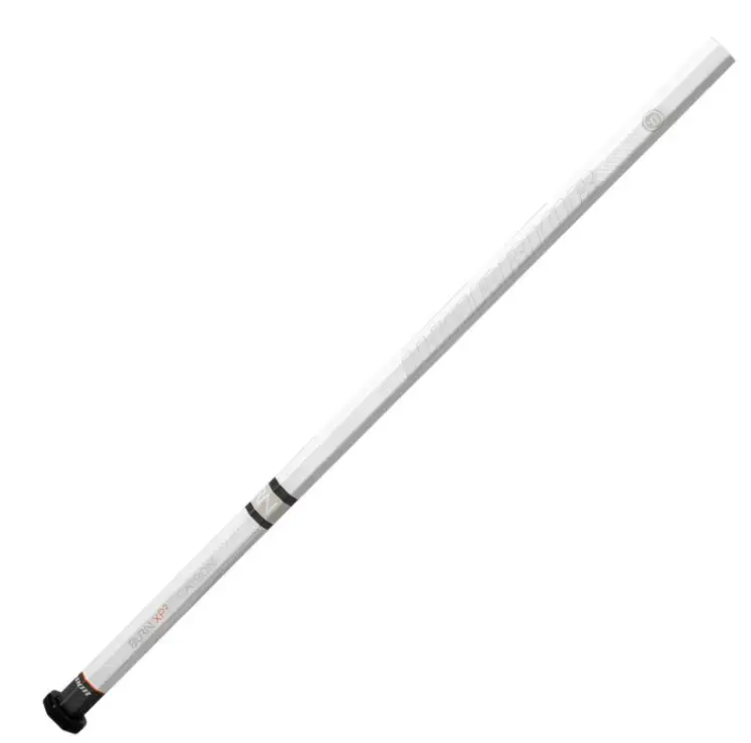
The Burn XP2 Carbon is one of the lightest shafts I've used at the X. At 4.4 oz, it helps me get off the line fast and stay quick on counters. It's not the longest-lasting shaft, though. Mine snapped after a season.
It doesn't flex much, but I felt some vibration absorbing checks. It never felt flimsy, but younger players should go with a stiffer shaft.
The octagonal shape and Star Matrix grip gave me great control on fast breaks, and the customizable end cap adds even more grip on exits.
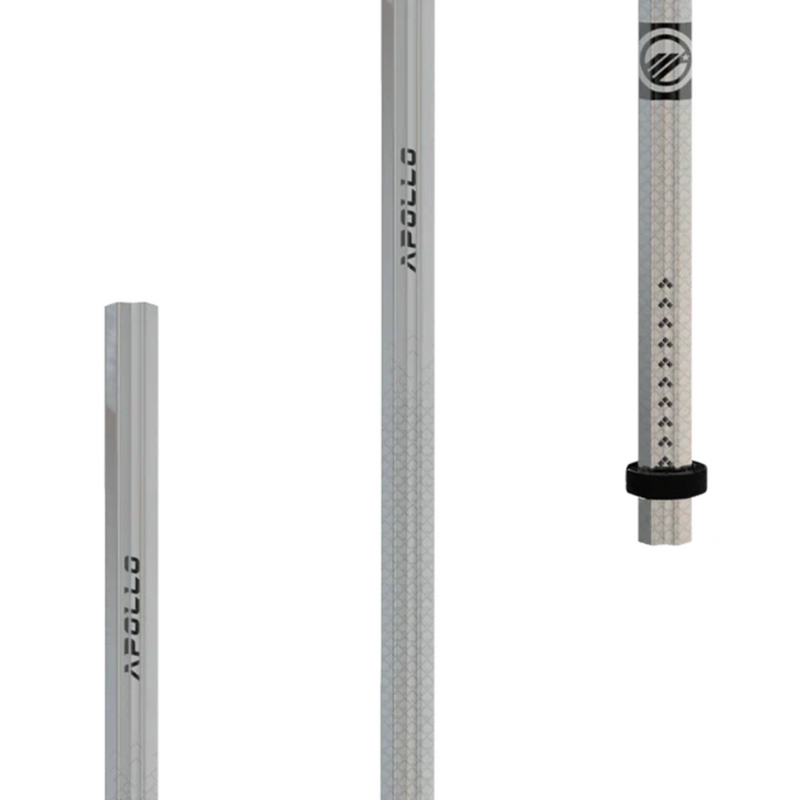
The Maverik Apollo is another great faceoff shaft. Its Dynamic Wall Taper and scandium-titanium alloy make it one of the few metal shafts built with faceoff middies in mind.
The stiffer lower section gives me control on the clamp and power on exits, while the thinner upper half has enough give to stay responsive in scrappy battles. At 5.2 oz, it's light but not flimsy.
The tactile grip and smooth speed shape kept me locked in without tape, and the flat facets give your thumb a comfortable spot.
The Maverik Caliber is built with premium scandium-titanium alloy, and it's one of the strongest shafts I've used. It's thick-walled with no flex along the length.
Even so, it only weighs 6.5 oz, with a great strength-to-weight ratio. The rough bead-blast finish adds stability and power on shots and passes.
I liked the stiffness for clamps and control in the battle, but I'd have liked a little flex in the middle for more snap when pushing the ball off the clamp.
The STX Sc-Ti series comes in four versions: R, O, X and X+. All of them use a scandium-titanium blend with a high strength-to-weight ratio, and all grip well, but each varies in shape, flex and weight.
The X+ is the heaviest and stiffest, with max strength for hard checks. The R is the lightest and built for quick moves.
I like the Sc-Ti O for faceoffs. It has a balanced feel that keeps me stable on the clamp while letting me snap out of it quickly, and it's responsive, so it's easier to win 50/50 balls. If you don't like the flex, go with the Sc-Ti X. It flexes more than the X+ but is more stable than the O.
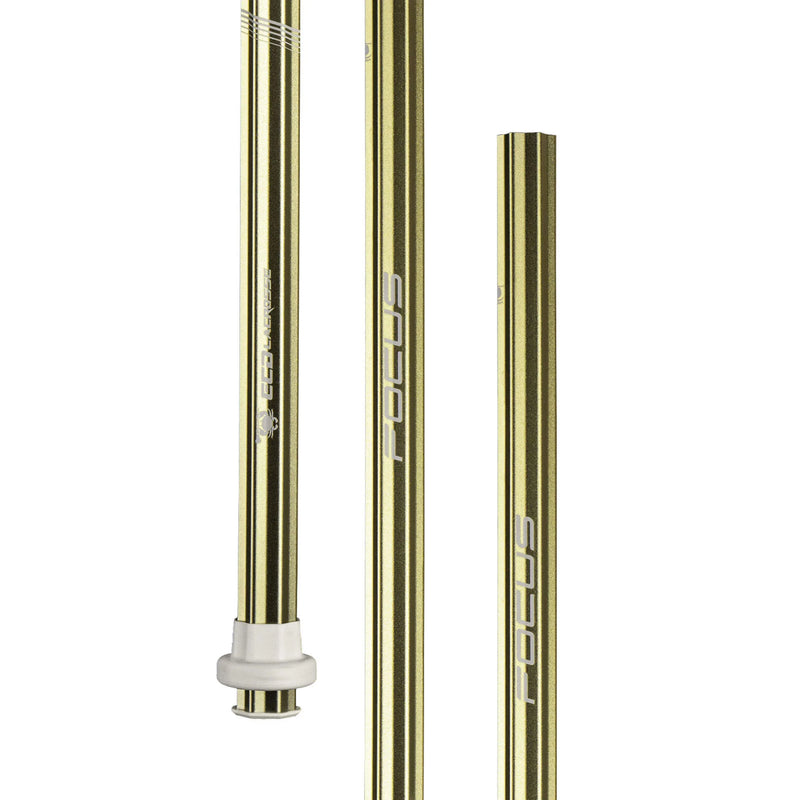
BattleLax pick: BattleLax doesn't carry the STX Sc-Ti Series (R, O, X and X+). BattleLax doesn't carry STX shafts. For a scandium-titanium shaft they stock, go with the ECD Focus Attack Shaft ($124.99).
The Maverik Hyperfuse is another good faceoff shaft for guys who want a stiff feel and a light build. It has Maverik's traditional concave shape, which feels familiar and comfortable on long shifts and transition runs.
It's a carbon shaft, but it plays more like a stiff alloy. I didn't get the whippy snap of some composite shafts. Instead, it gave me a sharp release and easier wins on the draw.
It has a matte finish, but it's not as aggressive as a bead blast, so I felt a slight shift when fighting for control.
BattleLax pick: BattleLax doesn't carry the Maverik Hyperfuse Shaft. For a light, stiff Maverik shaft they stock, go with the Maverik Flylite 150 Shaft ($164.99).
I've taken plenty of faceoffs with the Evo V Alloy Core Carbon, and it handles clean wins and scrappy ground ball fights well. At 6.8 oz, it's heavy for a carbon shaft.
The midsection has a little flex that gives me extra speed popping the ball out. It's the sturdiest hybrid shaft out there, with metal strength at the core and carbon's flex profile.
It has ridges on both ends instead of a rubberized texture, which gave me plenty of control and an easy grip to power through the X. The concave shape with smooth edges stays comfortable for hours.
12. StringKing Composite 2 Pro Faceoff Shaft Best faceoff-specific shaft
[wpdatatable id=592]
The StringKing Composite 2 Pro Faceoff is the updated version of the popular Composite Pro Faceoff, and StringKing's faceoff line is still one of the very few faceoff-specific shafts on the market.
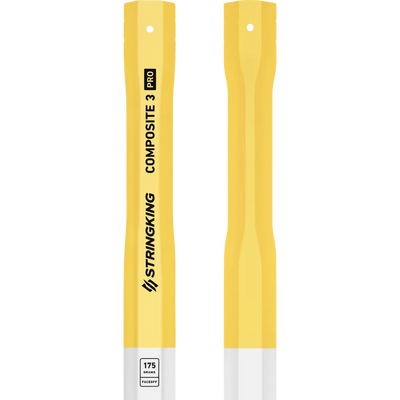
To make it, StringKing took its popular Composite 2 Pro and reshaped the top for a better top-hand grip at the X. The top fifth of the shaft has an asymmetrical shape that gives you more leverage on the clamp.
I've tested it myself, and it really does give you better grip and leverage than a normal shaft. It was also designed to pair with the StringKing Mark 2F, one of the best faceoff heads out there, and that combo is popular with college FOGOs.
It comes in two weights. StringKing recommends the 175 g for players 18 and up, but we think most high schoolers will find it manageable. The 155 g is great for younger players or anyone who wants a super light faceoff shaft. It also works with throat plugs, which most faceoff heads have now.
So what's the rub? Price. It sits at the high end of the shaft market. There's also a getting-to-know-you period while you get used to how it feels at the X and how it cradles.
All in all, StringKing's faceoff shaft is the best faceoff shaft out there by far. The extra shape at the throat gives you leverage nothing else matches. It's legal at all levels as of this writing, but always check your rulebook.
13. Maverik Hyperlite Shaft Best for FOGOs who stay on
[wpdatatable id=593]
The Maverik Hyperlite is for FOGOs who like to turn a faceoff at midfield into a break on the crease. It's stiff without the weight, coming in just under five ounces, a perfect balance of strength and speed.
An adjustable butt end gives your bottom hand extra control and leverage, making you a force when the whistle blows. That light weight gets you to the clamp quick, buying you those extra milliseconds to swing possession your way.
A matte finish gives it a natural feel without so much grip that it slows down quick hand adjustments. It's hollow at the top, so it should work with most throat plugs.
The catch is price. It's at the top end of the attack shaft market. Still, the Hyperlite is a great shaft, especially for middies who stay on after the faceoff.
BattleLax pick: BattleLax doesn't carry the Maverik Hyperlite Shaft. For a light, premium Maverik shaft they stock, go with the Maverik Flylite 150 Shaft ($164.99).
14. Warrior Burn XP Carbon Shaft Best for shooting
[wpdatatable id=594]
Almost no gear list is complete without a Warrior product, and here it's the Burn XP Carbon.
It's unique on our list because it flexes on purpose as an offensive weapon. It's built for max velocity, especially from distance, which is great for any FOGO who likes to rip one from the top of the box and catch a goalie napping.
Otherwise, it's traditional in every way, from its profile to its head fit (throat plugs should work). A dot-matrix grip gives you consistent handling box to box.
The big question is durability through the wear and tear of faceoffs. It's built to flex, so constant pressure could leave you with a warped shaft, and we've heard some reports of it breaking easily. It comes with a 6-month warranty, but you want a shaft you know will hold up in a game.
Still, the Burn XP is a solid pick for FOGOs who like to create their own looks from the centerline to the opponent's box.
15. StringKing Metal 3 Pro Shafts (4 options) Most weight options
[wpdatatable id=595]
We finish with the same company we started with, StringKing.
Like the Composite Pro Faceoff, the Metal 3 Pro comes in several weights to match your style.
Its premium alloy body came out of two generations of warranty claims and customer feedback, which helped StringKing reinforce the problem spots. The result is a durable shaft built to survive the wear and tear of life as a FOGO.
It isn't faceoff-specific, but StringKing will drill holes for its faceoff heads if you buy direct. Like the Composite Pro Faceoff, fitting throat-plug heads takes a little extra force and maneuvering.
All in all, the Metal 3 Pro is a solid shaft, literally and figuratively, and well worth a look for faceoffs.
BattleLax pick: BattleLax doesn't carry the StringKing Metal 3 Pro Shafts (4 options). For a thick, durable alloy shaft they stock, go with the Warrior Fatboy Alchemy Attack Shaft ($134.99).
Now that you've got some solid options, here's what to look for if you go with something else.
1. Faceoff-specific features
StringKing's Composite Pro Faceoff line is still one of the only true faceoff-specific shafts on the market. We hope that changes, with this shaft serving as the guinea pig that becomes the playbook for other brands.
Its main faceoff feature is the first thing you'll notice: a knob at the throat that sticks out with a long angle on one side. That gives your top hand the leverage and torque to speed up your clamp and shave valuable milliseconds off the whistle.
Also make sure your shaft works with throat plugs, which most faceoff heads have now. A lot of FOGOs like these heads because they bring the top hand closer to the head without losing stability. The main reason a throat plug won't fit is if the shaft isn't hollow. Almost all metal shafts are, but some carbon shafts aren't. Need a head? BattleLax has the Gait Faceoff Stiff Head ($119.99) and Gait Faceoff Flex Head ($119.99), and check out our best faceoff heads.
2. Grip and finish
This comes down to how much hold you like. Some players like a smooth finish so they can slide their hands quickly when they adjust on the fly, and so they can tape it exactly how they like. Others want built-in grip for more control and force on the clamp.
If you're already quick on the clamp and have a hand placement you love, a smooth shaft may be the move. If you're a step slow or you like raking to your wings, something textured may suit you better so you always have control.
3. Weight
Faceoff shafts are a balancing act between weight, speed and durability. The ideal FOGO shaft is light, but shaving ounces usually costs you durability. If you don't want to be shopping for a new shaft every other month, don't just buy the lightest shaft out there. Look for a good mix of weight and strength. Our best attack and middie shafts guide has a lot of shafts that fit the bill.
4. Durability
Durability matters even more for a faceoff shaft. The main issue for FOGOs isn't the usual dent or break from a well-placed check. It's the shaft warping over time from the pressure you put on it every trip to the X. Do your homework and see what other players say about warping and overall durability.
How we rate faceoff shafts
We take our ratings seriously and only recommend gear we'd use ourselves. To rate each shaft, we test it ourselves whenever we can, dig into the specs (weight, strength, material, grip and so on), and read reviews and talk to players we know who use it.
When we test shafts, we weigh them, feel them in gloves (for both the shape and the finish), shoot with them to see how they flex, and check them with another stick to see how they hold up. With faceoff shafts, we go the extra mile and test them in live draws (shoutout to my buddy Andrew for taking hundreds of live reps with me). If you have feedback or want us to add a shaft, let us know!
Taping your faceoff shaft: rules and best practices
For most FOGOs, it's not a question of whether to tape your shaft. It's where, and what's legal.
Where to tape
In my humble opinion, the best spot is a good serving along the top third of the shaft, as close to the head as possible. That gives your hands plenty of grip without forcing them to land in one exact spot, and it can win you a few milliseconds on the clamp.
Another good serving at the bottom, where your bottom hand lands, gives you a steady grip and extra leverage. That little bit of grip could be the extra force you need to slide the ball out to your wings. The StringKing Lacrosse Tape ($4.99) does the job.
Tape rules
Before you tape up your whole shaft, keep these rules in mind. They vary by level, so always check your league's rulebook.
Your tape can't touch any part of the head, even the throat. That's why a lot of faceoff guys use throat-plug heads, to make up for the stability they lose by not taping the connection.
Your tape should be a different color from the shaft where it's taped. If you have a black shaft, don't use black tape. On a two-tone shaft, say yellow and white, don't use yellow tape on the yellow part or white tape on the white part.
You can't build up multiple layers of tape at the top of your stick. That rule prevents a multi-layered tape "knob" near the throat that would give you an unfair advantage.
Is a faceoff shaft really necessary?
I mean, we wrote a whole article about them, so they must be necessary, right? Eh, not necessarily.
A faceoff-specific shaft is more of a luxury in a FOGO's arsenal than a must. It can give you a slight edge over a regular shaft, but success at the X comes down to your reaction time and technique. If you don't go with StringKing's faceoff shaft, check out our best attack and middie shafts guide for some of our favorite short sticks. Want to shave weight too? See our lightest heads and shafts.
Faceoff shafts and gear in stock at BattleLax
Want a shaft you can order today? These are the shafts from this guide, or their closest match, that BattleLax carries right now, plus a couple of faceoff heads.
Prices and stock change, so check the product page before you order.
People also ask
What is the best faceoff shaft?
For a faceoff-specific shaft, StringKing's Composite Pro Faceoff line is the best by far, thanks to its asymmetrical top section for top-hand leverage. BattleLax carries the newest version, the Composite 3 Pro Faceoff. For a regular shaft at the X, the ECD Carbon Pro, Maverik Apollo and Warrior Evo V Alloy Core are great picks.
Should a faceoff shaft be stiff or flexible?
Most FOGOs want a stiff lower end for control and power on the clamp, with a little give up top to stay responsive in scrums. Very flexible shafts can warp under the constant pressure of faceoffs.
Do faceoff shafts work with throat plugs?
Most hollow shafts do, which covers almost all metal shafts. Some carbon shafts aren't hollow at the top, so check before you buy if your faceoff head uses a throat plug.
Where should I tape my faceoff shaft?
Most FOGOs tape the top third of the shaft close to the head for the clamp, plus a section near the bottom for the bottom hand. Tape rules vary by level, so check your league's rulebook.
Do I need a faceoff-specific shaft?
No. It's more of a luxury than a must. It can give you a slight edge, but success at the X comes down to reaction time and technique.
8 goalie shafts compared on length, weight, durability, shape and grip, plus a buying guide and the goalie gear you can order today at BattleLax.
DRDave Rathmanner · Shafts · Updated October 21, 2026 · 11 min read
Drip level5/ 5
Coach's pick: the Maverik Hyperlite Goalie, a light, no-flex carbon shaft with an adjustable butt end. Ready to play today: the Maverik Krease complete goalie stick at BattleLax.
We may receive a commission if you make a purchase through a link on this page about the best lacrosse goalie shafts at no cost to you. This helps us keep this site free & we appreciate your support!
Goalies aren't ripping shots or laying checks all game, but your shaft is still a huge part of your stick.
A goalie shaft has to be light enough to move fast, but strong enough to hold up when hard shots deflect off it. The problem is, there are tons of options, so it's hard to pick. To make it easier, I dug through the market to find the best goalie shafts available today.
I built a database of every goalie handle on the market, with as much info as I could find on each: price, weight, material and more. Then I read customer reviews and hit my local lax shop to see how strong they were, how they felt and how they looked in person. From there, I narrowed it down to the 8 best below.
Coach's note: I've worked with keepers from upstate New York to Virginia Beach, and up in Ontario, where box goalies see more rubber in one night than most field goalies see in a week. The great ones don't care much about what shaft they're holding. They care that their top hand can get to the ball. Pick a shaft that's light enough to snap across the cage and grippy enough to hold when your gloves are soaked, then get in the cage and take shots.
Heads up: BattleLax doesn't stock any of these goalie-specific shafts right now. Under each one, I point you to the closest option they carry, either the Maverik Krease complete goalie stick or a 30-inch shaft, which is legal and popular with goalies. The full list is below.
"Alt" goes to the closest option BattleLax has in stock.
Best lacrosse goalie shaft reviews
1. Maverik Hyperlite Goalie Shaft Best overall
Drip level
5/5
Material
Carbon fiber
Shape
Slight concave
Grip/finish
Smooth matte
Colors
Black, white
Flex
None
Warranty
6 months
First up is the Maverik Hyperlite. It's one of the lightest shafts on the market and one of the lightest Maverik has ever made.
A light shaft is a must for goalies. The lighter your shaft, the faster your hands get to the ball. That, plus its strength, makes the Hyperlite our top goalie shaft.
Unlike some carbon shafts, the Hyperlite is built not to flex. If you're used to metal but want to try carbon, it's a smart first step instead of jumping straight to a whippy shaft.
It has a slight concave shape and a matte finish for a smooth feel. It comes in black and white, both with blue accents and a checkered pattern.
One of my favorite parts is the adjustable butt end, which you can slide wherever you like it.
If you want a light carbon goalie shaft, the Hyperlite checks every box, and there's a reason so many pro and college keepers use it.
BattleLax pick: BattleLax doesn't carry the Maverik Hyperlite Goalie. For a Maverik goalie setup they stock, grab the Maverik Krease Complete Goalie Stick ($199.99), which comes with the Krease head on a goalie shaft.
If you're a goalie who likes composite, you can't go wrong with ECD's Carbon Pro 3.0 Goalie.
It's very light and should have no trouble holding up to the hardest shots. If it does break, the 6-month warranty gets you a replacement.
It has a mid kick point and Flex8 technology, so your outlet passes come off easy.
It also has a textured grip on the top third of the shaft for better control on saves. That's one of our favorite things about it compared to other shafts. You won't need tape for your top hand.
BattleLax pick: BattleLax doesn't carry the ECD Carbon Pro 3.0 Goalie. BattleLax stocks ECD's newer Carbon Pro 4.0 in 30 inches: the ECD Carbon Pro 4.0 Speed 30" Shaft ($159.99). Plenty of goalies play a 30-inch shaft, and the complete stick only has to measure 40 to 72 inches.
It's rare for one company to make two elite shafts for the same position, especially goalie, but the Maverik A1 is another great option for the keepers.
If you like metal over carbon, the A1 is our top pick. The scandium alloy gives you great durability without adding much weight.
The GritGrip finish gives you a great feel on the shaft in any weather. We tested it in the rain, and it was still easy to control with no slipping.
Like the Hyperlite, it has Maverik's adjustable butt end so you can set the end cap where you like it.
If you're a metal goalie shaft guy, the A1 makes a strong case for the best option out there.
BattleLax pick: BattleLax doesn't carry the Maverik A1 Goalie. For a Maverik goalie setup they stock, grab the Maverik Krease Complete Goalie Stick ($199.99).
Another great metal goalie shaft is the StringKing Metal 3 Pro. StringKing has made a real push to be one of the best shaft makers in the game, and this one shows it.
It comes in two weights based on your level. StringKing recommends the 142-gram option for players 15 and under and the 162-gram option for older players.
Both are durable and lighter than a lot of goalie shafts. The concave shape gives you a great grip, and the sandblasted finish adds a little grit.
Besides how it plays, my favorite thing about StringKing shafts is the clean, minimal look, with a small logo on one side and subtle shaft info on the other.
BattleLax pick: BattleLax doesn't carry the StringKing Metal 3 Pro Goalie. For a tough scandium shaft they stock, go with the Maverik Caliber 2026 Shaft (30") ($129.99). Plenty of goalies play a 30-inch shaft, and the complete stick only has to measure 40 to 72 inches.
5. StringKing Composite 2 Pro Goalie Smoothest grip
Drip level
4.6/5
Material
Carbon fiber
Length
36"
Weight
5.01 to 5.71 oz
Shape
Slight concave
Grip/finish
Smooth
Colors
Black, white
Warranty
6 months
StringKing also makes a composite line, and the goalie version is our favorite. The Composite 2 Pro improves on the original.
It comes in the same weights as the Metal 3 Pro: 142 grams for younger players and 162 grams for older ones. You can get it in black or white, with the same clean decals as the Metal 3 Pro.
If you like a smoother grip, the Composite 2 Pro is a great pick. It's smoother than most of the shafts on this list.
Smart Taper Technology adds strength where shafts take the most abuse and break most often, while keeping the weight down. Go with the Composite 2 Pro Goalie and you can trust it'll hold up without slowing you down.
BattleLax pick: BattleLax doesn't carry the StringKing Composite 2 Pro Goalie. For a durable composite they stock, go with the ECD Carbon 4.0 Attack/Midfield Shaft (From $124.99). Plenty of goalies play a 30-inch shaft, and the complete stick only has to measure 40 to 72 inches.
STX's Sc-Ti line is one of the longest-running and best advanced shaft lines out there. I played with an STX Sc-Ti Pro all through high school and college, and I loved it.
They're made from a light but tough scandium-titanium alloy with a finish that grips well. The Sc-Ti O Goalie has an octagonal shape that STX built specifically for keepers.
On the downside, it's a little heavier than other shafts. When we tested it, though, we didn't notice the extra weight or feel slowed down.
It's also 40 inches instead of the more common 36. If you want a 40-inch metal goalie shaft, it's a great pick.
BattleLax pick: BattleLax doesn't carry the STX Sc-Ti O Goalie. For a scandium-titanium shaft they stock, go with the ECD Focus Attack Shaft ($124.99). Plenty of goalies play a 30-inch shaft, and the complete stick only has to measure 40 to 72 inches.
Another carbon shaft on the list is the Epoch Dragonfly Elite, Epoch's most advanced shaft.
It has a concave shape with a Slip/Grip top coat that gives you great control, plus a subtle checkered design with "Dragonfly" lettered down the shaft.
It's rated 2/10 for flex on Epoch's scale, so it's stiff, which helps you throw long outlet passes accurately and consistently. Epoch used a bunch of advanced tech to keep it strong but super light.
Like the Sc-Ti O, it's 40 inches. If you want a 40-inch carbon goalie shaft, it's the best option in our opinion.
BattleLax pick: BattleLax doesn't carry the Epoch Dragonfly Elite Goalie. For a carbon shaft they stock, go with the ECD Carbon Pro 4.0 Power 30" Shaft ($159.99). Plenty of goalies play a 30-inch shaft, and the complete stick only has to measure 40 to 72 inches.
If you want something cheaper that's still good, the STX Outlet is a classic worth a look. It's one of the first goalie-specific shafts I can remember seeing, and there's a lot to like.
The textured grip and ergonomic teardrop shape give you great control no matter how far or fast you're moving your stick around the cage. It's made from a strong, light alloy that won't break or slow you down.
It's also shorter than any other shaft on this list. You can cut any metal goalie shaft down to this length, but if you want a 34-inch shaft out of the box, the Outlet is your best bet.
Just because it's usually cheaper doesn't mean it's not a good shaft. If you go with the Outlet, I bet you'll be happy with it.
BattleLax pick: BattleLax doesn't carry the STX Outlet. For an affordable alloy shaft they stock, go with the Maverik A7 175 Attack Shaft ($99.99). Plenty of goalies play a 30-inch shaft, and the complete stick only has to measure 40 to 72 inches.
Prices and stock change, so check the product page before you order.
How to choose a lacrosse goalie shaft
Can't decide? Here's what to compare.
1. Length
The first thing to think about is length. Most goalie shafts are 36 or 40 inches, but you can go as short as 30 inches, which is why you'll see some goalies playing attack shafts. The rule is on the complete stick, which has to measure 40 to 72 inches in high school and college.
There's no best length. Some goalies like a shorter, lighter shaft they can move faster, while others want the extra length for deflections and outlet passes. Read more: Lacrosse shaft lengths.
2. Weight
You don't want a stick that slows down your reactions. A few ounces can be the difference between getting your stick across the cage for that doorstep save and fishing the ball out of the back of the net.
I recommend staying under 7 ounces. You won't feel slowed down by anything that light. If you really like a light shaft, there are options closer to 5 ounces, or look at attack shafts if you want 30 inches. Read more: Lightest lacrosse shafts and heads.
3. Durability
A light shaft is great, but not if it breaks the first time a shot deflects off it or an attackman checks your stick. You have to balance weight and strength. They usually work against each other, but a lot of top goalie shafts, like the ones above, use advanced materials that are strong and light. The best way to judge strength is to read and watch reviews and talk to other goalies about how theirs held up.
4. Material
The two main types are metal and composite (carbon fiber). Honestly, it doesn't matter much which you pick. If you're comfortable with it and like how it feels, you're good.
Carbon shafts flex a little, while metal is pretty stiff. That matters more for shooters, but some goalies notice it on hard outlet passes. Metal shafts dent more easily than carbon, but a dented metal shaft still works. A shattered carbon shaft doesn't. See our best carbon lacrosse shafts.
5. Shape
Goalie shafts come in all kinds of shapes, including traditional octagonal, concave, ridged and asymmetrical. Which is best comes down to what you like. It's worth testing different shapes, especially as a goalie, since your grip matters so much. Pick one that feels good with your gloves on and gives you enough leverage to move your stick around the cage fast.
6. Grip and finish
The finish is the other half of your grip. You don't want a shaft slipping in your gloves when you're trying to make a save. Metal shafts usually have a sandblasted finish that makes them a little rougher. Composites are usually smoother but may have extra texture for goalies. You can always add tape, but it's nice to have a finish you like so you still have control when your hands slide out of their usual spots.
7. Cost
Last but not least, think about your budget. Top shafts are lighter and stronger than a lot of cheaper ones, but a more affordable shaft won't hold you back much, and there are solid options for around $100 or less.
If you have to choose between saving on your head or your shaft, save on the shaft. The best goalie heads are lighter, stronger and have more stringing holes and better scoops than cheap ones. And if you want a cheaper shaft, look at older models. They often go on sale when the new version comes out, even though there's not much difference between generations.
How we rate goalie lacrosse shafts
We take our ratings seriously and only recommend gear we'd use ourselves. To rate each product, we test it ourselves whenever we can, dig into the specs (weight, strength, material, grip and so on), and read reviews and talk to players we know who use it.
When we test shafts, we weigh them, feel them in our gloves (for both the shape and the finish), throw with them to see how they flex, and check them with another stick to see how they hold up. When we can't fully test a product, we spend extra time talking to players who've used it for a while.
In most cases, yes. Almost any head fits on any shaft, even across brands. You may have to drill a new hole so the screw holes line up, but that's usually it.
Can I cut down a D-pole to goalie length?
Yes, if it's metal. Just make sure the complete goalie stick stays legal, which is 40 to 72 inches in high school and college. Never cut a carbon fiber shaft. It'll splinter and be useless.
What is the standard goalie shaft length?
There isn't one. Most goalie shafts are 36 or 40 inches, but plenty of goalies play a 30-inch attack shaft. The rule is on the complete stick, which has to measure 40 to 72 inches in high school and college. More in our lacrosse shaft lengths guide.
More lacrosse goalie guides
Here are some other goalie buying guides you might like:
13 D poles compared on durability, weight, flex, shape and grip, plus two budget picks, a buying guide and the defense shafts you can order today at BattleLax.
DRDave Rathmanner · Shafts · Updated October 21, 2026 · 15 min read
Top pickEVO
Coach's pick: the Warrior Evo Krypto Lite for its tough 7000 alloy and diamond grip. In stock at BattleLax: the Maverik Caliber Defense and the ECD Carbon 4.0 Defense.
We may receive a commission if you make a purchase through a link on this page about the best defense lacrosse shafts at no cost to you. This helps us keep this site free & we appreciate your support!
With so many options out there, picking a new D pole can be tough.
There are metal and carbon options, different shapes, different grips and a lot more to think about. To make it easier, I dug through the market to find the best defense shafts available today.
I started by building a database of every handle on the market, with as much info as I could find on each: price, weight, material and more. Then I read customer reviews and hit my local lax shop to see how strong they were, how they felt and how they looked in person. From there, I narrowed it down to the 13 best D shafts below, plus 2 budget options if you want a cheaper pole.
Coach's note: I've coached poles from upstate New York to Virginia Beach, and up in Ontario, where the box guys learn to defend with a short stick and a lot of attitude. The best defensemen all knew one thing: your pole is a tool, not a weapon. A shaft that's too heavy turns you into a slasher. A shaft that's too light gets you beat on the lift. Find one you can move fast for 48 minutes, keep your top hand loose, and let your feet do the defending.
Heads up: BattleLax carries the Maverik Caliber from this list. For the others, I point you to the closest D pole they do stock, and you'll find the full in-stock list below.
"Buy" goes to the shaft on BattleLax. "Alt" goes to the closest D pole BattleLax has in stock.
Best defense lacrosse shaft reviews
1. Warrior Evo Krypto Lite Defense Shaft Best overall
[wpdatatable id=381]
The Warrior Evo Krypto Lite is a solid pick for defenders who want durability and control. The 7000-grade alloy stands up to heavy checks and rough play without denting, and at about 14.7 ounces, it has a sturdy feel that experienced poles will like.
The diamond-textured grip gives you great control without being too rough, so it's ideal for precise pokes and lifts. I also liked the slight flex, which soaks up impact and cuts down on hand fatigue over a long game.
The graphics near the top felt a little sticky, though, so I needed some tape for comfort. The weight might also be a bit much for beginners.
Pros
Exceptional durability
Slight flex absorbs impact
Diamond-patterned grip for control
Sleek, pro look
Cons
Sticky graphics near the top
Heavier than beginner-friendly poles
BattleLax pick: BattleLax doesn't carry the Warrior Evo Krypto Lite Defense. For a tough 7000-series alloy D pole they stock, go with the Maverik A7 350 Defense Shaft ($129.99).
2. Maverik Wonderboy Defense Lacrosse Shaft Lightest metal
[wpdatatable id=382]
The Maverik Wonderboy is a great pick for poles and D-middies who want a mix of durability and quickness. It's made from tough 9000-series alloy with a silky-smooth feel that slides easily in your gloves.
The classic octagonal shape has curved grooves that give you a secure grip in any weather. The adjustable butt end lets you set your bottom hand where you want it for better control on checks.
It's really light, as little as about 12 ounces, but the paint can chip over time, and the finish isn't fully weatherproof. Those are small things given how well it plays and holds up.
Pros
Very durable 9000-series alloy
Light for quick sticks
Octagonal shape with grooves for grip
Adjustable butt end
Cons
Paint chips over time
Finish isn't fully weatherproof
BattleLax pick: BattleLax doesn't carry the Maverik Wonderboy Defense. For a light, premium Maverik D pole they stock, go with the Maverik Mag-Ti 395 Defense Shaft ($199.99).
The Warrior Burn XP2 Carbon Defense is a light but durable option for defenders who want control and precision. It's light for a D pole, and the engineered flex adds power to your shots and clears without feeling unstable on checks.
The octagonal shape and Dot Matrix grip give you a secure hold, even in the wet, without chewing up your gloves. I really liked the rubberized feel, which gave me great control on quick transitions and ground balls.
It's stiffer than the earlier models, so it's more reliable in heavy contact. You'll feel a little vibration taking hard checks, though, and that may bother some players. The swappable end caps let you set it up the way you like.
Pros
Very light for quick handling
Engineered flex for more power
Stiffer than past models
Dot Matrix grip
Cons
A little vibration on hard checks
Not for players who like a heavy pole
BattleLax pick: BattleLax doesn't carry the Warrior Burn XP2 Carbon Composite Defense. For a carbon D pole they stock, go with the Adrenaline Admiral Carbon 60" Shaft ($224.99).
4. StringKing A Series Defense Lacrosse Shaft Best value
[wpdatatable id=393]
The StringKing A Series Defense is a versatile, reliable pole for defenders who want a balance of strength, weight and price. It's made from a tough scandium-titanium alloy that's stiff and durable, so it's great for throwing hard checks and knocking down passes.
I went with the heavier 13.4-ounce version, which gave me more control around the crease and more pop on my checks. The matte finish feels smooth and doesn't wear out your gloves, but it gets slick in the rain, so you'll want some tape.
It's a little stiffer than some players like, but between how it plays and the 6-month warranty, it's a dependable pick.
Pros
Strong scandium-titanium alloy
Great strength-to-weight ratio
Glove-friendly matte finish
6-month warranty
Cons
Needs tape in the wet
A little stiff for some players
BattleLax pick: BattleLax doesn't carry the StringKing A Series Defense. For a scandium alloy D pole they stock, go with the Warrior Alchemy STZ Defense Shaft ($199.99).
The Warrior Evo QX2 Carbon Defense is a top pick for poles who want a light, durable shaft. It's one of the lightest D poles out there, and the Minimus Carbon build keeps it stiff for precise, consistent checks.
Unlike a lot of composites, the QX2 has very little flex, so you get a quick, accurate release without the whip. The updated tactical slide grip has a rubberized coating and subtle ribs, so you don't need tape and you get great control in any weather.
The traditional octagonal shape helps your stick work in tight matchups. If you like some flex, the stiffness might not be for you, and the warranty is on the short side, but the swappable end caps add some versatility.
Pros
Very light but stiff carbon
Tactical grip, no tape needed
Swappable end caps
Consistent, accurate release
Cons
Too stiff for some players
Short warranty
BattleLax pick: BattleLax doesn't carry the Warrior Evo QX2 Carbon Composite Defense. For a stiff carbon D pole they stock, go with the ECD Carbon 4.0 Defense Shaft ($199.99).
6. STX Sc-Ti Defense Series (Multiple Shafts) Best metal line
If you like metal, you can't go wrong with an STX Sc-Ti Defense. They're durable and pretty light.
The Sc-Ti line has been around for more than 10 years and is still one of the best and most popular options out there, thanks to its light weight and strength.
There are 4 weights and shapes to choose from depending on how you play: the X (extreme concave, 13.4 oz), R (ridge, 13.76 oz), S (shift, 14.11 oz) and O (octagon, 14.11 oz).
The Sc-Ti Defense shafts have a clean, minimal design and come in a bunch of colors. The thin butt end fits inside the shaft.
Here's a look at each of the 4 shapes:
X: extreme concave
R: ridge profile for extra feel and grip
S: asymmetrical, octagonal on one side and concave on the other
O: concave octagonal (traditional feel)
BattleLax pick: BattleLax doesn't carry the STX Sc-Ti Defense Series. For a scandium-titanium D pole they stock, go with the Warrior Alchemy STZ Defense Shaft ($199.99).
Released in 2021, the Warrior Burn XP Carbon Defense is one of the best poles out there for both defensemen and LSMs.
It's built to flex in the right spots for more power on shots, long passes and checks. If you like the feel of a pole that bends, which you usually only get with carbon, you'll love the Burn XP Carbon.
The dot-matrix grip gives you good feel in your gloves without tearing them up like rougher shafts. That means less tape, which keeps the pole lighter.
It comes with two end caps you can swap based on what you like: a bigger one for more leverage on checks, passes and shots, and a lighter one if you don't want the extra weight. If you love light, flexible carbon D poles, it's a phenomenal choice.
BattleLax pick: BattleLax doesn't carry the Warrior Burn XP Carbon Defense. For a carbon D pole they stock, go with the Adrenaline Admiral Carbon 60" Shaft ($224.99).
ECD took the best parts of the Carbon Pro 2.0 and added new features to make the 3.0 even better.
The Carbon Pro 3.0 Defense is now reinforced with Kevlar, which makes it even stronger while keeping a great strength-to-weight ratio. It also comes with a sliding end cap you can set right where you like it.
It has a low kick point that gives you a little extra flex on clears and shots, which isn't something many D poles offer.
Both the white and black versions have clean designs with subtle text and logos, in a good way. There's also a raised texture near the bottom for extra grip, so you can skip the tape that weighs your stick down.
Overall, it's a great, durable pole for any defenseman or LSM who likes carbon, and it's been a favorite with pro poles.
The STX Fiber O Defense is STX's elite carbon D pole. It has a more traditional octagonal shape with targeted grip zones that give you better feel and cut down on tape.
It's not the lightest out there, but it holds up very well over time and isn't prone to splintering like some carbon shafts. That makes it a great pick for defensemen who are laying checks all day and LSMs who carry the ball in transition.
It has a moderate amount of flex. It's not as noticeable as the Burn XP Carbon, but you'll feel it a bit on hard passes and shots.
BattleLax pick: BattleLax doesn't carry the STX Fiber O Defense. For a carbon D pole they stock, go with the ECD Carbon 4.0 Defense Shaft ($199.99).
10. StringKing Metal 3 Pro Defense (2 Shafts) Best looking
[wpdatatable id=102]
The StringKing Metal 3 Pro Defense comes in two weights and strengths to fit your age and skill level.
Both are pretty light and durable. To get there, StringKing studied warranty claims on its older metal shafts to find the exact spots that needed reinforcing. You also get a 6-month warranty if your shaft breaks, bends or picks up major dents or cracks.
The slight concave shape gives you good feel in your gloves, and the sandblasted finish grips better than a smooth shaft.
It comes in silver and black, and it's one of the best-looking poles out there, with a small logo on one side and the shaft info on the other.
BattleLax pick: BattleLax doesn't carry the StringKing Metal 3 Pro Defense. For a light alloy D pole they stock, go with the Maverik Mag 375 Defense Shaft ($159.99).
The Maverik Caliber is a tough metal pole made from a military-grade scandium-titanium alloy that holds up in just about any conditions.
The current 2026 version comes in silver, white and black with a clean, almost blank look.
Besides being strong and fairly light, the Caliber has a nice concave shape that feels great in your gloves. Compared to rounder shafts, you can really feel the edges, which gives you extra leverage on checks and quick stick moves for ground balls and picking off passes.
Another cool feature is the bead-blasted finish. Instead of adding a bunch of material for texture, it's a subtle grip that doesn't add weight.
It also has the adjustable butt end Maverik puts on most of its new shafts, so you can set it wherever it feels best. A nice touch on an already great shaft.
If you don't like a ton of graphics on your shaft, the Maverik Mission Blank Defense is right up your alley. "Blank" means just that. The shaft is literally blank.
There's something about having no logos, and no way to tell what you're playing with besides maybe Maverik's adjustable butt end, that makes you feel like part of an exclusive club.
It plays well, too. The scandium alloy gives it a great strength-to-weight ratio that feels great on the field, and the bead-blasted finish gives you a subtle but effective grip.
If you like clean metal shafts, the Mission Blank is an awesome option.
BattleLax pick: BattleLax doesn't carry the Maverik Mission Blank Defense. For a clean Maverik scandium pole they stock, go with the Maverik Caliber 2026 Defense Shaft (60") ($199.99).
13. StringKing Composite 2 Pro Defense Shaft Stiff carbon pick
[wpdatatable id=105]
If you're a StringKing fan but want carbon, the Composite 2 Pro Defense is a solid choice, literally. It has very little flex for a composite and great impact resistance.
The update to the popular Composite Pro Defense still has Smart Taper technology, which balances the shaft and adds strength where shafts usually break.
Like the original, it comes in two weights: 360 g and 400 g. If you're 15 or under, go with the lighter one. If you're 16 or older, go heavier.
Unlike a lot of shafts, it doesn't have much grip. It's smoother, and it has the same clean, minimal design as the Metal 3 shafts.
StringKing has pushed to the front of the pack on shafts, and the Composite 2 Pro Defense is no exception. If you want a clean carbon pole without much flex, you can't go wrong.
BattleLax pick: BattleLax doesn't carry the StringKing Composite 2 Pro Defense. For a durable carbon D pole they stock, go with the ECD Carbon 4.0 Defense Shaft ($199.99).
Need a cheaper D pole? These two are great for younger players and backyard work. Find more in our cheap lacrosse shafts guide.
14. STX Hammer 7000 Defense Budget pick
[wpdatatable id=106]
The STX Hammer 7000 Defense is a favorite with younger players just learning to play with a pole.
Even though it's a cheaper option, it's one of the lighter D shafts at just over 13 ounces. It also has a nice sandblasted finish that feels like a much more expensive shaft.
It comes in black and silver, both with accent lines on about half the shaft. It has pretty good strength and durability, and it comes with a 6-month warranty in case it breaks.
BattleLax pick: BattleLax doesn't carry the STX Hammer 7000 Defense. For an affordable D pole they stock, go with the Maverik A7 350 Defense Shaft ($129.99).
The STX 6000 Defense is made for beginners, so it's a great first shaft for new poles. It's fairly light, and you can easily cut it down for shorter players.
It has a traditional octagonal shape and a smooth finish, plus "Memory Marker" graphics that help young players learn where to put their hands.
I don't recommend it for higher levels since it's not as durable as more advanced shafts. But if you just want a cheap D pole to mess around with in the backyard, it's not a bad option.
BattleLax pick: BattleLax doesn't carry the STX 6000 Defense. For a beginner pole they stock, grab the Warrior Burn Next Complete Defense Stick ($84.99), which comes with a head already on it.
Prices and stock change, so check the product page before you order. D poles usually ship at 60 inches. Want carbon? See our best carbon lacrosse shafts.
How to choose a defense lacrosse shaft
Can't decide? Here's what to compare.
1. Durability
As a defenseman, you're laying checks all game, so the most important thing is a pole that'll last the season. Attackmen and middies can get away with weaker shafts. Poles and LSMs can't.
It's hard to judge strength just by looking at a shaft or holding it, though. Read and watch reviews, like I did for this guide, to see whether a pole holds up. Higher-end shafts are usually very tough to break, dent or crack.
2. Weight
You also want a pole light enough that it won't slow you down. A super heavy shaft makes checks, picks and even your footwork harder because you can't move your stick as fast.
The trick is balancing weight and durability, since most ultra-light shafts are a little weaker. Most of the poles on this page are light and still tough, thanks to better materials.
3. Material
Over the past decade or so, a lot of brands started making carbon shafts alongside traditional metal ones. People ask me all the time which to get. The honest answer is it comes down to what you like.
Carbon shafts usually have a better strength-to-weight ratio and flex more than metal, which takes some getting used to if you've always played with metal.
Metal shafts don't flex much, so switching between them feels natural. They dent more easily than carbon, but a dented metal pole still works. A cracked carbon pole doesn't.
Carbon is more prone to catastrophic failure because it shatters instead of picking up a few dings. So while the average carbon shaft may hold up better, once it breaks, it's done.
4. Shape
Think about what shape you like, too. There's octagonal (the traditional shape), concave (an octagon with the angled sides curved in), ridged (multiple curves on each side) and asymmetric (octagonal on one side and concave or another shape on the other).
There's no best shape. Try your teammates' poles with your gloves on and see what feels right. Always test with gloves, because that's how you'll play.
5. Grip and finish
The finish changes how a shaft feels in your hands, too. Most metal shafts have a sandblasted finish that makes them a little rougher. Carbon shafts are usually smoother, but some, like the ECD Carbon Pro line, have a raised texture for extra grip. Test it with your gloves on.
6. Cost
Like any gear, you have to think about your budget. The good news is you can get a quality D pole without spending a ton. Most shafts are about the same shape and size, and there's not a huge difference between a mid-level shaft and a top-tier one.
If you're saving money on your stick, go with a cheaper shaft and a nicer head. The best lacrosse heads are noticeably better than average ones, with better face shapes, more stiffness and durability, and better scoops. If you want a cheaper shaft, look at older models. They often go on sale when the new version comes out, even though there's not much difference between generations.
We take our ratings seriously and only recommend gear we'd use ourselves. To rate each product, we test it ourselves whenever we can, dig into the specs (weight, strength, material, grip and so on), and read reviews and talk to players we know who use it.
When we test shafts, we weigh them, feel them in our gloves (for both the shape and the finish), shoot with them to see how they flex, check them with another stick and lay checks with them to see how they hold up. When we can't fully test a product, we spend extra time talking to players who've used it for a while.
Most heads fit on just about any shaft, even across brands. You may have to drill a new hole for the screw, but that's usually it. The one catch is a head with a throat plug on a solid (not hollow) composite shaft. In that case, go with a hollow shaft or a head without a plug. Not many D heads have throat plugs, though. They're mostly on faceoff heads.
What is the standard defense shaft length?
Almost every new D shaft is 60 inches, which is what most high school and college poles use. The rules are on the complete stick: a long crosse has to measure 52 to 72 inches in high school and college. Younger and shorter players can cut their pole down for more control. A good rule of thumb is that your whole stick should be about as tall as you, and since most heads are about 10 inches, your shaft should be about 10 inches shorter than you. More in our lacrosse shaft lengths guide.
Are there shafts made specifically for LSMs?
I've never seen one. LSMs may want a lighter pole that's easier to handle in transition and on offense, but there's no specific "LSM shaft." Most carbon poles give LSMs some flex that can add shot speed.
How do you play better defense in lacrosse?
Work on your positioning and your stance, talk to your teammates, throw smart, controlled checks and read your man's next move. Footwork and agility work every week makes a huge difference.
What is a D pole in lacrosse?
A D pole is the long stick defensemen and long-stick middies (LSMs) use. The shaft is usually 60 inches, which gives you extra reach for checks and picking off passes.
What is different about a defensive stick in boys lacrosse?
A defensive stick is much longer than an offensive one. A D shaft is usually 60 inches versus about 30 for attack, and the full stick runs 52 to 72 inches versus 40 to 42 for a short stick. That gives you more reach and leverage.
What is Flex iQ on a lacrosse shaft?
Flex iQ is Epoch's flex rating. It tells you how much the shaft bends, and a higher number means more flex for extra power on shots and clears.
A scandium-titanium D-pole with thicker walls, a grippy matte finish and Maverik's concave shape. Here's how the Caliber held up on checks, clears and ground balls.
CSConnor Stifel · Shafts · Updated October 21, 2026 · 6 min read
Drip meter9.0/ 10
LaxDrip verdict: a light, tough D-pole with a no-slip grip and just enough give to absorb checks. The aggressive concave shape takes a week to get used to.
LaxDrip is reader supported. When you buy through links on this page we may earn a commission at no extra cost to you. How we review.
Maverik updates the Caliber regularly, replacing the older versions. Because defense poles are so long, plenty of alloy poles start to bend after a season of hard checks. When I saw that the Caliber 2024 had thicker walls than the Caliber S23, I decided to test it and put together this detailed review.
At first glance, and through the first hour of play, the Caliber looked really durable. I wasn't sure about the long-term durability, though.
It feels like Maverik upgraded the alloy for a better strength-to-weight ratio. So let's see if it's worth the price.
BattleLax pick: BattleLax carries the current version, the Maverik Caliber 2026 ($199.99 for the 60" defense pole, in silver, white and black). Maverik updated the grip texture and balance for 2026.
Key Features of the Maverik Caliber Defense Shaft
Let's check out the key features before we get into the details.
[wpdatatable id=305]
Position
Defense / LSM
Length
60"
Material
Scandium-titanium alloy
Weight
About 12.6 oz (tested)
Shape
Maverik concave
Price
$199.99 at BattleLax
Built with
Dual-taper walls
Bead-blasted matte finish
Adjustable butt end
Pros & Cons
Pros
Durable and lightweight
Bead-blasted matte finish for a no-slip grip
Maverik's signature shape for great control
A little flex for smoother transition play
Weather resistant
Cons
Aggressive concave shape takes some getting used to
I rate the Maverik Caliber defense shaft a 9/10 on the Drip Meter.
The Caliber's Drip Meter rating.
[wpdatatable id=306]
Who Should Buy This Shaft?
I'm not a full-time defender, so for this review I leaned on a buddy who plays close D and ran it at LSM myself. Maverik did a great job upgrading the Caliber. It's one of the best shafts for D-poles, and the grip is excellent.
Both the 2024 model and the Caliber S23 use Maverik's dual-taper wall technology, but the 2024 has even thicker walls. It's also lighter and stiffer, with minimal flex points.
Maverik's signature concave shape, with its angled grooves, fits defensemen's and LSMs' hands for controlled checks, cradling and clearing. Most intermediate and advanced players are used to this shape and love the grip.
Newer players who haven't used Maverik shafts will need time to adjust to the aggressive shape, about a week of practice to get a natural feel. Once you're used to it, you get exceptional control.
If you don't like the concave shape, look at a more traditional shape like the Epoch Dragonfly Elite or StringKing Metal 3 Pro. At BattleLax, the Warrior Alchemy STZ Defense ($199.99) is a good alternative.
Shape, Material, and Weight
I ran it for about a week before writing this review. The concave shape felt natural in my hands once I got used to it.
The deep concave facets along the shaft and the bead-blasted matte finish gave me great fingertip control. The grip wasn't too slick or too tacky, and I didn't slip, even in the rain.
It let me push upfield and start the clear as an LSM while keeping control through hard checks. The dual-taper wall technology makes it tough enough to take a beating without adding extra weight.
At about 12.6 ounces, it's on the lighter side for a defense pole, but it still feels solid and balanced. I could throw accurate, powerful checks without slowing down my recovery.
Even though it's light, the scandium-titanium alloy resists dents and bends really well. It's dependable for tough defensive plays and high-impact situations, and it should hold up to a lot of hard checks.
The Caliber strikes a great balance between stiffness and flex. I threw strong poke checks with no problem. It's not a flexy shaft, but it does have a little give.
That meant I sometimes felt a bit of vibration in my hands taking direct checks. The slight give worked in my favor, though. It absorbed impact and cut down on the strain on my hands over long games.
That flex also added a little whip on long clears and helped me deliver accurate passes under pressure. It let me snap checks with control while staying stiff enough for real impact.
The stiffness felt natural and responsive, which helped me transition smoothly from defense to the clear. In my experience, it's stiffer than the Maverik Mission Black but has more flex than the STX Sc-Ti X.
It also has an adjustable butt end, so you can customize your hand placement for the best leverage. It stayed locked in place without shifting, even in ground ball scrums and on hard checks.
I set it about a half inch below the standard position, and it felt just right. The silicone liner needed a little readjusting in humid weather, though.
Aesthetics
Maverik Caliber colorways.
The Caliber has a sleek, minimalist design that reflects its premium build, and the matte finish gives every colorway a clean, modern look.
The "Caliber" logo sits near the end where the shaft meets the head, printed in a bold, blocky font that adds some personality. It's minimal but sharp.
On the other side, about a third of the way down, there's a rounded Maverik logo in a gray-silver emblem. It's subtle but stands out against the matte finish.
Overall, it has enough detail to stand out without being flashy, which will appeal to players who want performance, durability and a clean, professional look.
Coach's note: I've watched poles bend in half in February practices in upstate New York and in hot July tournaments in Virginia Beach. Slashing poles on frozen ground is tough on any alloy, and heat and humidity wreck your grip. A thick-walled pole with a grippy finish like this one handles both. Tape the bottom, set your butt end once and leave it alone.
Shop at BattleLax
BattleLax carries the current Caliber, plus a few other defense poles worth a look.
What is the Maverik Caliber defense shaft made of?
The Caliber is made from scandium-titanium alloy, which gives it great strength for its weight and helps it resist dents and bends.
What colors does the Maverik Caliber defense shaft come in?
The current 60" Caliber 2026 defense shaft comes in silver, white and black at BattleLax.
How much does the Maverik Caliber defense shaft weigh?
The one I tested weighed about 12.6 ounces, which is on the light side for a defensive pole while still feeling solid on checks.
What is the warranty on the Maverik Caliber defense shaft?
Maverik backs its shafts against manufacturing defects. Check Maverik's current warranty terms when you buy, since coverage can change from year to year.
When was the Maverik Caliber defense shaft released?
The model I tested came out in 2024 with thicker walls and a better strength-to-weight ratio. Maverik has since released the Caliber 2026 with an updated grip texture and balance.
Final Verdict
The Maverik Caliber defense shaft gives you a great mix of durability, control and versatility, which makes it a top choice for defensemen and LSMs. The scandium-titanium alloy and bead-blasted finish are built to last.
The flex can cause some vibration on hard checks and takes a little off your shot, but it's great for throwing strong checks and absorbing impact. If you want a stiffer, lighter pole, try a carbon option like the ECD Carbon Pro line.
Bottom line: it's a reliable shaft for LSMs and defensemen with a great strength-to-weight ratio.
An 8000 series alloy attack shaft that takes a beating and keeps shooting straight. Here's how the Maverik Range held up after six-plus months of practices and games.
CSConnor Stifel · Shafts · Updated October 21, 2026 · 6 min read
Drip meter8.8/ 10
LaxDrip verdict: a tough, affordable attack shaft with a no-slip grip and great shooting accuracy. It's a little heavy, and the traditional shape isn't for everyone.
LaxDrip is reader supported. When you buy through links on this page we may earn a commission at no extra cost to you. How we review.
The Maverik Range attack shaft has been out for about a year and has built a solid reputation. It's made from Maverik's 8000 series alloy, which Maverik says balances durability and performance. So I put together this detailed review to test that claim.
I used it for more than six months to see if it really delivers elite durability at this price. Most stiff shafts trade speed for durability, after all.
So let's see what I found.
BattleLax pick: BattleLax doesn't carry the Range right now. The closest match they stock is the Maverik A7 175 Attack Shaft ($99.99), another durable Maverik alloy attack shaft at a similar price. I've listed more alternatives at BattleLax below.
Key Features of the Maverik Range Attack Shaft
Before I get into my experience, here are the key features.
[wpdatatable id=347]
Position
Attack / middie
Level
Beginner to intermediate
Material
8000 series alloy
Weight
About 6.5 oz (30")
Shape
Traditional
End cap
Adjustable (ABE 3)
Built with
GritGrip finish
8000 series alloy
Color-splash graphics
Pros & Cons
Pros
Sturdy and long-lasting
Great strength-to-weight ratio for the price
Aggressive GritGrip for no-slip control
Absorbs checks well
Held up for well over six months of use
Cons
A little heavy
Traditional shape won't suit everyone
Maverik Range Attack Lacrosse Shaft Ranking
I rate the Maverik Range attack shaft an 8.8/10 on the Drip Meter.
The Range's Drip Meter rating.
[wpdatatable id=348]
Who Should Buy This Shaft?
Maverik built the Range as an attack shaft with a great balance of quality material and flex. It's durable enough that you can cradle through traffic without worrying about checks.
In my opinion, if you found the Maverik Wonderboy too pricey and too stiff, and the Maverik Caliber a little too flexible, the Range hits the sweet spot. It's stiffer and tougher than the Caliber and cheaper than the Wonderboy, thanks to its 8000 series alloy.
Most reviews say it has a great strength-to-weight ratio for two-way middies and offensive players.
The balance of durability and price makes it a practical choice for players who want reliable performance without the high cost.
The 8000 series alloy is the star of the Range. It's strong enough to absorb cross-checks without costing you stick control.
I found that especially useful dodging through traffic. I could take the hit and still get my shot or pass off cleanly. The traditional octagonal-style shape didn't give me the easy hold I usually like, though.
The GritGrip finish keeps it from slipping, but the shape sometimes feels less natural than shafts with more defined contours. I had to grip it tighter to stay in control.
At about 6.5 ounces, it leans more toward durability than speed. Some offensive players won't love it, since the extra weight can slow down quick transitions, but my shot speed and accuracy were right where I wanted them.
If you want a lighter shaft and don't mind giving up some durability, try the Warrior Evo V shaft ($169.99) or the ECD Carbon MTX, which put speed and agility ahead of sturdiness. BattleLax carries ECD's newer Carbon 4.0.
Flex & End Cap
The Range has very little flex, just a slight give when you shoot or pass. It's not as stiff as some defensive shafts, but it doesn't flex too much either, so your control stays consistent on hard passes and quick releases.
That balance feels right for two-way players. It's stable enough for defensive checks without feeling rigid on offense, and that bit of flex adds a little extra power to your shot without hurting your accuracy.
Maverik's adjustable end cap (ABE 3) is another highlight. At first I wasn't sure how much I'd use it, but being able to adjust it without re-taping is really convenient.
You do have to lock it in place with the screw, though. Otherwise it can slide at the wrong time, especially in intense play. It stays secure once it's locked, but I still like to wrap tape over it for extra grip and peace of mind.
The Range stands out with its color-splash design. On the black version, the blue and white splash on both ends gives it some dimension and a fun, funky look.
The teal accents and Maverik logo add to the look, too. It doesn't feel as clean or sleek as the Maverik Apollo, though.
I think it's a better fit for players who like a newer style, especially younger players, than for anyone who wants a traditional, minimalist shaft. Some might find it too flashy, but it definitely won't blend into the crowd.
Coach's note: I've watched plenty of kids from upstate New York to Virginia Beach to Ontario go through a shaft a season because they bought the lightest thing on the wall. If you're a young attackman still taking a lot of checks, a tough alloy like this will save your parents money. Go light later, once your hands are good enough to keep the ball out of trouble.
Alternatives at BattleLax
BattleLax doesn't carry the Maverik Range, but these are the closest options they stock right now.
The Maverik Range came out in 2024, built with Maverik's 8000 series alloy for a balance of durability and performance.
What colors does the Maverik Range attack shaft come in?
Retailers list it in black, blue and silver, with Maverik's color-splash graphics.
How much does the Maverik Range attack shaft weigh?
My 30" Range weighed about 6.5 ounces, which is a little heavier than most attack shafts. You trade a bit of speed for durability.
What grip does the Maverik Range attack shaft have?
It has Maverik's GritGrip finish, which gives you a no-slip hold, even in the rain.
What level of player is the Maverik Range for?
Maverik rates it for beginner and intermediate players. It's a durable, affordable shaft for attackmen, middies and two-way players moving up from an entry-level stick.
Final Verdict
A lot of players want the strength of the Maverik Wonderboy, but it's expensive. The Range gives you a lot of that toughness at a much more affordable price.
It's heavier than some attack shafts, but its toughness, feel and shooting accuracy make it worth the price. It may feel a little slow at first because of the shape and weight, but once you get used to it, it plays great.
After a few days, I was snapping off some of my quickest passes, and the aggressive grip gave me better control in the rain.
All in all, I'd rank the Maverik Range as one of the best value shafts for attack and middies.
We may receive a commission if you make a purchase through a link on this page about the best lacrosse shafts at no cost to you. This helps us keep this site free & we appreciate your support!
Most advanced players buy their heads and shafts separately so they can build a stick exactly the way they like it. There are way more head-and-shaft combinations out there than complete sticks, which are usually aimed at beginner and intermediate players.
The problem is that all those options make it hard to decide, especially with shafts that all look about the same. Whether you learned the game on a box floor in Ontario, at a fall ball tournament in Virginia Beach or on a frozen field in upstate New York in March, the handle you trust matters.
So I put together this guide to the best lacrosse shafts for every position. Later on, you'll also find what to look for when you're shopping.
Note: This guide covers men's shafts. Looking for a defense pole specifically? Check out our full guide to the best lacrosse defense shafts.
To find the best shafts, I built a database of the shafts on the market and researched weight, material and durability to find the pros and cons of each. I read customer reviews, watched videos and checked the manufacturers' sites, then went to my local shops to get as many as I could in my own hands. From there, I narrowed it down by position.
Heads up: BattleLax doesn't stock every shaft on this list. When one isn't available, I point you to the closest shaft they do carry.
"Buy" goes straight to the product at BattleLax. "Alt" goes to the closest shaft BattleLax has in stock.
Attack & midfield shafts
Attack and middie shafts live and die on two things: how fast the ball comes off your stick and how well you hold onto it with a pole on your hands. Here are 15 we'd trust.
1. Warrior Dolomite Attack Top pick
Material Altium alloyWeight 6.1 oz
[wpdatatable id=312]
I've been running the new Warrior Dolomite for a few months, and it's built for players who want strength without giving up speed. Warrior made it from Altium alloy, which is newer on the market but gives you titanium-level strength.
At 6.1 oz without the end cap, Warrior says it's 50% stronger than the Krypto Pro, and it feels light and responsive deep into long games. The weight is well balanced between speed and control, so it's easy to handle on quick dodges and cuts.
It responds well when you're taking checks or dodging defenders. There's no flex, so it's great for hard shots, and I could snap quick feeds in tight spaces without losing anything on the release.
The Altium alloy is seriously durable. Even after hard checks on the crease and plenty of ground ball battles, it stayed dent-free.
The finish is smooth with a little roughness to it, so you get a slip-free grip in the rain. The basic end cap shifted on me, though, so I'd tape it for a secure fit. Either way, it's one of the best shafts for attackmen who need a reliable handle for quick moves and fast shots.
The Warrior Evo V is a game-changer for serious players. It pairs the durability of an alloy core with the light feel of carbon, and it weighs just 6.0 oz.
It's built for attack and offensive middies. The lined grip finish gives you great control, and I could handle the stick with confidence even in bad weather.
The octagonal shape locks your hands in during fast-paced plays, so you can cradle and scoop without hesitating. It's on the stiff side, which can be a learning curve for beginners, but I liked the balance between flex and rigidity. You get a quick release on your shot and a controlled feel when you're dodging.
The Evo V is a great choice for intermediate and advanced players looking to step up their game. Read our full Warrior Evo V review for more.
The Maverik Caliber attack shaft is a great option if you want elite durability and performance. I put it to the test against a high school team, paired with a Nike Surge Elite head.
The scandium-titanium alloy held up great through hard checks, and I scored two goals with it that night. One game isn't enough to judge a shaft, though, so I used it for a month.
At 6.5 oz, the Caliber is on the heavier side for an attack shaft, but it makes up for it with toughness. The bead-blasted finish gives you a reliable grip, even when it's wet.
The concave shape is comfortable through long practices, and I liked the shot speed it gave me. It's stiff, which may not suit beginners, but experienced players will love the strength and control. BattleLax carries the 2026 Caliber, which Maverik updated with better grip texture and a molded butt end.
The Maverik Apollo is built for players who want speed and accuracy. I hadn't tried the Apollo before, so I was curious how its smooth concave shape with flat knurls compared to traditional shafts.
After a lot of time with it, the tactile grip and light weight stood out most. At 5.2 oz, the scandium-titanium build is durable without feeling heavy, and Maverik calls it the lightest metal shaft in its lineup.
The dynamic wall taper adds strength while cutting weight at the key break points, so you get quick changes of direction and fast shots. It may not absorb impact as well as some heavier shafts, though.
With no flex, power transfers efficiently on your shot, but it can vibrate on hard checks. The Apollo is perfect for offensive players who want a light shaft for quick moves and accurate shots.
The Maverik Range has been a reliable option since it came out, built with Maverik's 8000 series alloy for a mix of durability and performance.
After more than six months with it, I can say it lives up to its reputation. At 6.5 oz, it balances sturdiness and control, so it works for both offensive middies and two-way players.
The Grid Grip finish gives you excellent slip resistance, so you can handle it with confidence in wet weather. The traditional octagonal shape isn't for everyone, but it gives you a solid grip.
It absorbs impact well, so I could take checks and keep control of the ball. It's a little heavier than some alternatives, but it's a dependable, durable attack shaft.
BattleLax pick: BattleLax doesn't carry the Maverik Range Attack right now. The closest match in stock is the Maverik A7 175 Attack (alloy, $99.99).
The Mercury Carbon shaft is a great budget-friendly option if you want quality and durability. It's built with six layers of carbon fiber reinforced with a Kevlar layer.
At 7 oz, it feels heavier than some other options, but once I got used to it in practice, it was easy to manage. The aggressive concave shape gives you solid control for attack and offensive middies.
It absorbed checks really well without showing damage. The rubberized grip held up in wet conditions, though it lost some tackiness after a few games.
The minimal flex gave me great shooting accuracy, especially paired with a quick-release head like the Nike Surge Elite. It's a strong option for intermediate and advanced players.
BattleLax pick: BattleLax doesn't carry the Mercury Carbon Shaft right now. The closest match in stock is the ECD Carbon 4.0 Attack/Midfield (carbon composite, $124.99).
7. Gait Carbon GCX-SSDM Short Stick D-Middie Best for SSDMs
Material Carbon compositeWeight 7.3 oz
[wpdatatable id=317]
I bought my buddy the Gait Carbon GCX-SSDM, and he's a big fan now. It has a less aggressive concave shape than ECD shafts but still feels secure in your hands, so handling is smooth.
At 7.3 oz, it felt a little heavy in quick transitions. Younger players who rely on speed may need time to adjust. But that extra weight gives you enough strength to deliver real checks and break up the other guy's cradle.
It gives you great control when you're jamming a dodging attackman or fighting for ground balls as a D-middie. The moderate flex strikes a good balance between stiffness and responsiveness, with enough pop on your shot when you push into the offense. The thick walls absorb checks, so it's not the kind of carbon shaft that snaps in a few months.
The gritty, fine-sandpaper texture means you don't need much tape, even in the rain, and it helps you scoop ground balls in traffic. It can wear down glove palms faster, so pair it with good gloves.
Through high school and college, I almost always played with an STX Sc-Ti Pro. They were light and held up incredibly well. I don't think I ever broke one or even put a major dent in one.
STX now offers five versions of the Sc-Ti, which vary by shape and weight. That variety is a big plus, because you can find a shape that fits your preference and know it's going to perform.
The Sc-Ti shafts are STX's top-tier metal shafts, made from a scandium-titanium alloy with a steel shot finish for better grip and control. If you prefer metal over composite, you'd have a hard time finding a better option.
The five shapes: X (extreme concave), X+ (extreme concave with extra thickness), O (concave octagonal, traditional feel), R (ridge profile for extra feel and grip) and S (asymmetrical, octagonal on one side and concave on the other).
BattleLax pick: BattleLax doesn't carry the STX Sc-Ti Series right now. The closest match in stock is the Warrior Alchemy STZ Attack 30″ (scandium-titanium-zinc, $124.99).
ECD took the best features of the Carbon Pro 2.0 and added new ones to make the 3.0 even better. It comes in two versions: Speed and Power.
The Speed version, made mainly for attackmen, has a higher flex point for a quicker release. It also has a raised texture grip near the top of the shaft for better control when you're cradling one-handed.
The Power version, made mainly for middies and outside shooters, has a lower flex point for more power on outside shots. Its raised texture sits toward the bottom of the shaft to give you more control on those outside bombs.
Both are reinforced with Kevlar, so they're stronger while keeping a good strength-to-weight ratio, and both come with a sliding end cap. The more concave shape gives a better grip than the 2.0 and most other shafts. The downside: they're a bit heavier than some attack shafts. BattleLax carries the newer Carbon Pro 4.0 Speed and Carbon Pro 4.0 Power.
BattleLax pick: BattleLax doesn't carry the ECD Carbon Pro 3.0 (Speed & Power) right now. The closest match in stock is the ECD Carbon Pro 4.0 Speed (carbon composite, $159.99).
The Maverik Hyperlite is one of the lightest shafts on the market and the lightest shaft Maverik has ever made, at just 4.8 oz. Maverik updated the design in 2022 while keeping the same great performance.
Unlike some carbon fiber shafts, the Hyperlite is designed not to flex. If you're used to metal and want to try carbon, it's a good way in before jumping to a shaft built to flex.
It has a slight concave shape and a matte finish for a smooth feel, in black or white/black with blue accents. One of my favorite parts is the adjustable butt end, which you can slide wherever you like it.
If you want a light carbon attack shaft, the Hyperlite checks all the boxes, and there's a reason so many college and pro players use it.
BattleLax pick: BattleLax doesn't carry the Maverik Hyperlite right now. The closest match in stock is the ECD Carbon 4.0 Attack/Midfield (carbon composite, $124.99).
Another carbon fiber shaft on the list is the StringKing Composite 2 Pro, released in 2022. Like past models, it comes in four versions that differ in weight.
It has Smart Taper technology, which adds extra material where shafts usually break. In our testing, it's been very strong.
The biggest downside is the weight of the versions built for advanced players (175 g and 195 g). They're not super heavy, but there are lighter carbon shafts out there.
If you want a carbon shaft that will last a long time and you don't mind a little extra weight, the Composite 2 Pro is a great option.
BattleLax pick: BattleLax doesn't carry the StringKing Composite 2 Pro right now. The closest match in stock is the ECD Carbon 4.0 Attack/Midfield (carbon composite, $124.99).
The Warrior Burn XP Carbon makes the list for its durability, light weight and great feel.
If you like a flexible shaft, the Burn XP Carbon is probably your best bet. XP stands for "extreme power," and you can really feel it flex when you shoot, which adds shot power.
There's a dot matrix grip on the bottom half of the shaft that cuts down on tape. A lot of players have to tape their shafts for grip, which adds weight, so the built-in grip is a big plus.
It comes with two end caps: a Warp end cap for more leverage on your shot (my favorite) and a smaller, lighter end plug. If you like light, flexible carbon shafts, the Burn XP Carbon is a great choice. BattleLax carries the newer Burn XP2.
BattleLax pick: BattleLax doesn't carry the Warrior Burn XP Carbon right now. The closest match in stock is the Warrior Burn XP2 Carbon Attack (carbon composite, $149.99).
The Warrior Burn XP2 felt amazing the first time I picked it up in 2023. It has an octagonal shape with a star matrix grip. The points aren't aggressive, but the subtle texture gives you a strong grip.
I loved the feel of the rubberized surface. It's perfect for cradling in tight spaces, and it never slipped out of my sweaty hands, whether I was feeding from X or snapping off a quick finish on the inside.
I'm not a big fan of overly flexible sticks, and the XP2 has minimal flex. It does vibrate when you take a check, but it gives you a clean, snappy release on your shot. It's stiffer than earlier models and strong enough to handle hard checks.
You can also customize the end, switching between the insert and the cap. I went with the cap for better control, and it felt great in ground ball scrambles.
The Nike Surge Elite is one of the best attack shafts out there. This 4.8 oz shaft came out in 2023, and its light, long-lasting carbon build has held up great in fast-paced, high-level play.
It combines stiffness and flex points for high-velocity plays. It's so light that I didn't have to put much behind my shots to get the same speed, and I loved it for quick passes on the run.
It's durable too. I've taken some pretty hard checks with it, and it held up really well. The composite absorbs the impact, so my arms didn't feel it after long practices.
It has a nice textured grip, but I didn't love the end cap. The edge pressed against the side of my palm and started wearing down my glove over time. Otherwise, it grips well in all weather and shows no wear and tear.
BattleLax pick: BattleLax doesn't carry the Nike Surge Elite Composite right now. The closest match in stock is the ECD Carbon Pro 4.0 Speed (carbon composite, $159.99).
The ECD Focus marked ECD's return to metal handles after an eight-year break. Unlike the original Focus, which was pure scandium, the new Focus blends scandium and titanium, so you get a nice balance of light handling and durability.
At 5.35 oz with just the end cap insert and 5.7 oz with the full sliding end cap, it's light. I've always liked a light shaft for quick cuts and fast releases, and this is one of the best attack shafts I've used.
It's made for attack and midfield, so it only comes in 30". If you like a shaft with no flex for consistent, accurate shots, you'll love it. If you're used to carbon with a little flex, the rigid feel may take some getting used to.
The sandblasted grip is smooth and subtle. It's not as gritty as Epoch's sandpaper-style grip, but it was comfortable even in wet weather. The Control shape has subtle finger indents for better grip and hand placement, and it reminded me of the ECD Carbon 3.0 Speed, so it's an easy switch if you want a similar feel with no flex and better durability.
Poles need strength first, weight second. These 10 handle hard checks, long clears and a whole season of cross-checks.
1. Maverik Caliber Defense Top pick
Material Scandium-titaniumWeight 12.6 oz
[wpdatatable id=318]
The Maverik Caliber defense shaft took big steps in durability and performance with its 2024 upgrade. It's scandium-titanium and weighs 12.6 oz, which is light for a pole.
I tested it a lot, and the thicker walls compared to the older Caliber S23 did a great job resisting bends and dents.
The bead-blasted matte finish gives you a slip-free grip, which helped a lot in intense games. The extreme concave shape gives you a controlled cradle and clean throws, though newer players may need time to adjust to it.
It has minimal flex, which can cause a little jitter on impact, but it absorbs checks well and keeps the strain off your hands over long games. It's a solid investment for intermediate and advanced defenders. BattleLax carries the current 2026 Caliber in 60".
If you prefer metal, you can't go wrong with an STX Sc-Ti defense shaft. They're durable and relatively light.
The Sc-Ti line has been around for more than 10 years and is still one of the most popular options because of its light weight and high strength.
There are four weights and shapes to choose from: the X (extreme concave, 13.4 oz), R (ridge profile for extra feel and grip, 13.76 oz), S (shift, octagonal on one side and concave on the other, 14.11 oz) and O (concave octagonal, traditional feel, 14.11 oz).
They have a clean, minimal look and come in a variety of colors, with a thin butt end that fits inside the shaft.
BattleLax pick: BattleLax doesn't carry the STX Sc-Ti Defense Series right now. The closest match in stock is the Warrior Alchemy STZ Defense (scandium-titanium-zinc, $199.99).
Released in 2021, the Warrior Burn XP Carbon Defense is still one of the best shafts for defensemen and LSMs.
It's designed to flex strategically for more power on shots, long passes and checks. If you like the feel of a pole that flexes, which usually only happens with carbon, you'll like the Burn XP Carbon.
The dot matrix grip gives you a good feel in your gloves without tearing them up like rougher grips, and it cuts down on tape that weighs your pole down.
It comes with two end caps: a bigger one for more leverage on checks, passes and shots, and a lighter one if you don't want the extra weight. If you like light, flexible carbon poles, it's a great choice.
BattleLax pick: BattleLax doesn't carry the Warrior Burn XP Carbon Defense right now. The closest match in stock is the ECD Carbon 4.0 Defense (carbon composite, $199.99).
ECD took the best features of the Carbon Pro 2.0 and made the 3.0 Defense even better. It's reinforced with Kevlar, so it's stronger while keeping a great strength-to-weight ratio, and it has a sliding end cap you can set where you like it.
It has a low kick point, which gives you a little extra flex on clears and shots. Not many D poles have that.
The white and black versions both have clean designs, and there's a raised texture toward the bottom of the shaft for extra grip without tape.
It's a great, durable pole for any defenseman or LSM who likes carbon, and pros like Matt Dunn were using it before it was even released. BattleLax now carries the newer ECD Carbon 4.0 Defense.
BattleLax pick: BattleLax doesn't carry the ECD Carbon Pro 3.0 Defense right now. The closest match in stock is the ECD Carbon 4.0 Defense (carbon composite, $199.99).
STX makes a second appearance on the defense list with its elite carbon shaft, the Fiber O Defense.
It has a traditional octagonal shape with targeted grip zones that give you a better feel and reduce the need for tape.
It isn't the lightest pole available, but it holds up very well over time and isn't prone to splintering like some carbon shafts. That makes it a great option for defensemen who are always throwing checks and for LSMs who carry the ball in transition.
It has a moderate amount of flex. It's not as noticeable as the Warrior Burn XP Carbon, but you'll feel it a little on hard passes and shots.
BattleLax pick: BattleLax doesn't carry the STX Fiber O Defense right now. The closest match in stock is the Adrenaline Admiral Carbon 60″ (carbon fiber, $224.99).
The StringKing Metal 3 Pro Defense comes in two weights and strengths to fit your age and skill level.
Both are relatively light and durable. To get there, StringKing studied warranty claims from its older metal shafts to find exactly where they needed reinforcement. It also comes with a 6-month warranty if your shaft breaks, bends or gets major dents or cracks.
The slight concave shape gives you a good feel in your gloves, and the sandblasted finish gives you a better grip than a smooth shaft.
It comes in silver and black and is one of the best-looking poles out there, with a small logo on one side and shaft info on the other.
BattleLax pick: BattleLax doesn't carry the StringKing Metal 3 Pro Defense right now. The closest match in stock is the Maverik Mag-Ti 395 Defense (magnesium-titanium, $199.99).
The Nike Alpha 7075 is one of the best shafts for defensive middies and poles. Its traditional design and durable 7075 alloy build make it a reliable choice.
It's heavier than some other shafts, especially carbon ones, but that weight gives it a solid, substantial feel. The extra weight helps in ground ball battles.
At 15.8 oz, it's built to handle rough games and big checks. The traditional shape gives you a strong hold, and I popped the ball loose plenty of times with hard checks.
It fits almost every head without loosening up, so you don't have to worry about your head rattling when you're scooping on the run. I also liked the low-profile end cap. It's one of those little details that improves your control and cuts down on glove wear.
BattleLax pick: BattleLax doesn't carry the Nike Alpha Select 7075 Defense right now. The closest match in stock is the Maverik A7 350 Defense (7000 series alloy, $129.99).
I picked up the Epoch Dragonfly Elite III XL C60 iQ2 because I liked its balance of flex and stiffness. After about six months, it's perfect for D-middies, poles and LSMs, and it comes with a one-year warranty.
The extra material in the XL version adds durability, so it easily absorbs a hard check. At 60", it weighs 15.8 oz. I also noticed its reactive technology adds power on quick adjustments, like cutting off a lane or making fast passes.
The Pro Grip coating gives you elite control without feeling too sticky, so I could slide my hands easily even in the rain. If you're moving from alloy to composite, it's a great pole to start with.
The iQ2 flex rating is stiffer than the iQ8, which is perfect for hard checks, but it can feel a little rigid when you're cradling or passing. If you go back and forth between D-middie and attack, look at Epoch's Dragonfly Integra X Transition shaft instead.
BattleLax pick: BattleLax doesn't carry the Epoch Dragonfly Elite III XL C60 iQ2 right now. The closest match in stock is the ECD Carbon 4.0 Defense (carbon composite, $199.99).
The Nike Alpha Elite Sc-Ti is my go-to pole for rough practices. It's the newest addition to my collection, and it's been my best defense shaft.
After a year of practice in rough weather, it shows no damage other than a few scratches. The scandium build makes it durable at 15.1 oz.
The thicker walls absorb impact and keep strain off your arms without hurting your checks. Because it's stiff, I struggled with high-speed shots at first.
The sandblast finish gives you great grip, even in wet or muddy conditions, and it helped me with quick passes in tight spaces. The shot speed is lower than the Epoch Dragonfly Elite III, but it does well on short-range throws, and the middle flex point gives you some whip on ground ball pickups.
BattleLax pick: BattleLax doesn't carry the Nike Alpha Elite Sc-Ti Defense right now. The closest match in stock is the Warrior Alchemy STZ Defense (scandium-titanium-zinc, $199.99).
The Warrior Burn XP2 Carbon Defense gives you the same quality as its attack version, but it's built for defenders.
Right away I liked how light it feels for a pole at 12.3 oz. The grip means you don't need tape, which keeps it light.
The octagonal shape and Star Matrix grip give you great control with no palm abrasion. My hands didn't slip or stiffen up when I was moving my feet against a dodger.
Despite the usual worries about composite durability, it held up to intense cross-checking with no damage. The slight flex absorbs impact and reduces arm fatigue, and it's really responsive in ground ball scrambles. That reduced stiffness does give a little on long throws, though. If accuracy is your priority, the ECD Carbon line is worth a look.
BattleLax pick: BattleLax doesn't carry the Warrior Burn XP2 Carbon Defense right now. The closest match in stock is the ECD Carbon 4.0 Defense (carbon composite, $199.99).
Goalies need a light, strong shaft so their hands get to the ball faster. BattleLax doesn't carry standalone goalie shafts right now, but plenty of goalies run a 30" attack shaft, and BattleLax has a complete goalie stick if you need the whole setup.
1. Maverik Hyperlite Goalie
Material Carbon fiberWeight Ultralight
[wpdatatable id=118]
We start our goalie list with the Maverik Hyperlite. It's one of the lightest shafts on the market and the lightest shaft Maverik has ever made.
A light shaft is huge for goalies. The lighter your shaft, the faster your hands get to the ball. That, plus its strength, makes the Hyperlite our top goalie shaft.
Unlike some carbon shafts, it's designed not to flex, which makes it a great first carbon shaft if you're coming from metal. It has a slight concave shape, a smooth matte finish and an adjustable butt end you can slide wherever you like.
BattleLax pick: BattleLax doesn't carry the Maverik Hyperlite Goalie right now. The closest match in stock is the Maverik Krease Complete Goalie Stick (complete goalie stick, $199.99).
If you're a goalie who likes composite, you can't go wrong with the Carbon Pro 3.0 Goalie from ECD, released in 2022.
It's very light and holds up even when you're deflecting the hardest shots. If it does break, there's a 6-month warranty.
It has a mid kick point and Flex8 technology for easy outlet passes. It also has a textured grip on the top third of the shaft for better control on saves. That's one of the best parts of this shaft, and you won't need tape on your top hand.
BattleLax pick: BattleLax doesn't carry the ECD Carbon Pro 3.0 Goalie right now. The closest match in stock is the ECD Carbon 4.0 Attack/Midfield (carbon composite, $124.99).
It's rare for one company to make two elite shafts for the same position, especially goalie, but the Maverik A1 is another great option between the pipes.
If you prefer metal over carbon, the A1 is our top recommendation. It uses a scandium alloy that's durable without adding much weight.
Its GritGrip finish gives you a great feel in any weather. We tested it in the rain and it was still easy to control with no slipping. Like the Hyperlite, it has Maverik's adjustable butt end.
BattleLax pick: BattleLax doesn't carry the Maverik A1 Goalie right now. The closest match in stock is the Maverik Mag-Ti 145 Attack (magnesium-titanium, $129.99).
Another great metal goalie shaft is the StringKing Metal 3 Pro. StringKing has made a real push to be one of the best shaft makers in the game, and this shaft shows it.
It comes in two weights based on your level. StringKing recommends the 142 g option for players 15 and under and the 162 g option for older players.
Both are durable and lighter than a lot of goalie shafts. The concave shape gives you a great grip, and the sandblasted finish adds a bit of grit. I also love the clean, minimal look.
BattleLax pick: BattleLax doesn't carry the StringKing Metal 3 Pro Goalie right now. The closest match in stock is the Maverik Mag-Ti 145 Attack (magnesium-titanium, $129.99).
The StringKing Composite 2 Pro is the newest goalie shaft in my collection. Its Smart Taper technology keeps the shaft strong in high-impact areas while cutting down vibration at the head. I've taken some hard shots on it, and it held up great.
Its uniform stiffness, with no weird flex zones, is perfect for goalies. I could react quickly to shots from every angle and felt confident making saves, even on shots from the corner of the crease.
The ultra-stiff build also helped me make accurate passes and clears under pressure.
It doesn't have an extreme concave shape, but the traditional smooth finish is consistent, and I didn't lose my grip even in sweaty summer sessions. The finish itself isn't weather-resistant, though.
BattleLax pick: BattleLax doesn't carry the StringKing Composite 2 Pro Goalie right now. The closest match in stock is the ECD Carbon 4.0 Attack/Midfield (carbon composite, $124.99).
Not sure what to look for? Here are the seven most important things to think about.
1. Size and position
Start with the size you need, which mostly comes down to your position and maybe your age. Attackmen and middies (other than LSMs) use 30" shafts. Defense shafts are 60" when they're new, though some players cut a few inches off for more control. Goalie shafts run anywhere from 30" to 40" depending on your preference, and if you like a 30", any attack shaft works.
Younger players, around 12 and under, often use shorter shafts. Many youth shafts are a few inches shorter and sometimes thinner so kids can control them. Young defensemen especially often use shorter poles. A good rule of thumb: don't use a stick that's taller than you. If you're 5 feet tall, your shaft shouldn't be longer than about 4'2", since most heads are around 10" long.
2. Durability
Durability is hard to judge from a picture or even in your hands, but it matters. The best way to gauge it is to read customer reviews and watch videos from players who've used the shaft for a while. If a shaft has lots of complaints about breaking, bending or denting, look elsewhere.
3. Weight
Almost as important as durability is weight. A light shaft lets you move your stick faster, which helps your shot speed, quickness, dodging and checking. Weight and durability usually work against each other, but over the past decade, companies have developed metals and composites that are strong and light. That's often the biggest difference between the best shafts and cheaper ones that are either light and weak or strong and heavy.
4. Material
There are two main types: metal and composite. Historically, most shafts were metal (besides the old-school wooden ones). Over the last decade or so, companies have developed composite shafts, usually carbon fiber, that perform as well as or better than metal.
Which is better? It depends on you. Carbon shafts usually have a higher strength-to-weight ratio and flex more than metal, and that flex takes some getting used to. Many brands offer different flex points so you can match the shaft to your game. Metal shafts don't flex much, so switching between them feels natural. They dent more easily, but a dent doesn't make them unusable. Composite shafts are more likely to fail all at once, because they crack instead of denting, and once they break, they're done.
5. Shape
Common shapes include concave, rounded and ridged. The STX Sc-Ti series alone has five: concave (X), ridge (R), shift (S), octagon (O) and extreme concave (X+). There's no single best shape. Try a few different ones, in a store or with your teammates' sticks, and do it with your gloves on, since that's how you'll play.
6. Finish and grip
The finish is what the outside of the shaft feels like. Most shafts aren't perfectly smooth, and that's a good thing. Some use a sandblasted finish for traction, while others use a rubber grip. Try a few to see what feels best in your gloves.
7. Cost
Top-of-the-line shafts can cost well over $100, and D poles push $200. But there are plenty of quality shafts for every position under $100.
If you're trying to save on your stick, I'd go with a cheaper shaft and a better head. I think there's a bigger difference between the best lacrosse heads and cheaper ones than there is with shafts. In my career, I think I've broken one shaft, and a slightly heavier shaft hasn't made a big difference for me. At the end of the day, shafts share the same basic shape, and weight doesn't vary as much as it does with heads.
Standard lacrosse shaft sizes
Here are the most common shaft sizes by position. "Adult" means high school and up.
Position
Adult shaft
Youth (12U and under)
Attack
30"
Often a few inches shorter
Midfield
30"
Often a few inches shorter
Defense / LSM
60" (can be cut down)
Shorter pole sized to the player
Goalie
30"–40"
Shorter shaft sized to the player
Always check your league's rulebook for exact legal stick lengths before you cut a shaft down.
How we rate lacrosse shafts
We take our ratings seriously and only recommend gear we'd use ourselves. Whenever possible, we test the product ourselves, review its specs (weight, strength, material, grip and more), and read customer reviews and talk to players we know who use it.
With shafts specifically, we weigh them, feel them in gloves for both the shape and the finish, shoot with them to understand how they flex, and check them with another stick to see how they hold up. When we can't test something extensively, we spend extra time talking to players who've used it for a while. If you have feedback on anything here or a shaft you think we should add, let us know.
People also ask
How do you play better defense in lacrosse?
Work on your positioning and stance, talk to your teammates, use controlled stick checks and anticipate your man's next move. Footwork and agility drills pay off more than anything.
What is a D pole in lacrosse?
A D pole, or defensive pole, is the long stick used by defensemen and long-stick midfielders (LSMs). The shaft is typically 60" long, giving you extra reach for checks and interceptions.
What is different about a defensive stick in boys' lacrosse?
Defensive sticks are longer, with a 60" shaft compared to the 30" shaft on offensive sticks. That gives you more reach on checks and more leverage on defense.
What is Flex iQ in a lacrosse shaft?
Flex iQ is Epoch's flex rating, which tells you how much the shaft bends. A higher iQ number means more flex. For example, an iQ8 flexes more than an iQ2.
Complete your stick
Need a new head to go with your new shaft? These guides will help you find the right fit:
Alloy, scandium and carbon poles tested on the field, with what each one does well, where it falls short, and who should play it.
CSConnor Stifel · Shafts · Updated October 15, 2026 · 12 min read
Top pick in stockCaliber
Coach's pick: the Maverik Caliber gives you scandium-titanium strength at 12.6 oz with a grip that locks in on checks. It's the pole on this list you can grab at BattleLax today.
We may receive a commission if you make a purchase through a link on this page about the best lacrosse defense shafts at no cost to you. This helps us keep this site free & we appreciate your support!
You need more than skill to win games on defense. You need a pole you can trust. The right defense shaft lets you put everything you know into every check, slide and clear.
For a defender, the weight, strength and grip of your shaft change everything: how hard your checks land, how accurate your outlets are, and how much you have left in the fourth quarter. The problem is the market is crowded with defense shafts, and they don't all hold up.
Don't worry, you don't have to sort through all of them. I've done that for you. Whether you grew up playing box in Ontario, poles-only clinics in upstate New York or summer ball on the turf around Virginia Beach, these are the 15 defense shafts I'd trust, with honest takes on what each one does well and where it falls short.
Heads up: BattleLax doesn't stock every pole on this list. When one isn't available, I point you to the closest defense shaft they do carry, so you can always find something comparable in stock.
"Buy" goes straight to the product at BattleLax. "Alt" goes to the closest defense shaft BattleLax has in stock.
The best lacrosse defense shafts, reviewed
1. Warrior Evo Krypto Lyte Defense Best for D-middies
Material 7000 alloyWeight 14.7 ozBest for Short-stick D-middies
[wpdatatable id=381]
The Warrior Krypto Lyte is one of the sturdiest defense shafts out there at 14.7 oz. Its 7000 alloy stays dent-free no matter how much abuse you throw at it, which makes it a great fit for short-stick D-middies.
I loved the smooth texture too. The area with the graphics feels a little sticky, so I added some tape there, but the diamond-patterned grip is spot on. It's not too rough and doesn't peel like heavier finishes, so you get great control.
It's really responsive on quick poke checks and controlled lifts. There's a slight flex that gives a little on impact, which cuts down on hand fatigue over a long game. Even with that bit of flex just below center, it still delivers checks hard enough to rattle the guy you're covering.
Pros
Durable
Minimal flex, so no rattle
Diamond-pattern finish for great grip
Clean look
Cons
Graphics at the player end are sticky
Heavy for beginners
BattleLax pick: BattleLax doesn't carry the Warrior Evo Krypto Lyte Defense right now. The closest match in stock is the Maverik A7 350 Defense (7000 series alloy, $129.99).
Material 9000 series alloyWeight ~12 ozBest for LSMs, quick poles
[wpdatatable id=382]
The '25 Maverik Wonderboy is built from 9000 series alloy and has a smooth, almost silky feel. There's barely any friction even with gloves on, so handling is effortless. It's tough too. I put a lot of weight on it and it didn't bend.
The paint can chip a little over time, but it's easy to touch up if you like a clean stick. It uses Maverik's classic octagonal shape with curved grooves, so you keep a strong grip even in the rain.
The adjustable butt end lets you set your hand placement for better control on checks. At about 12 oz, it's a light pole that works great for long-stick middies. I paired mine with a Warrior Evo QX defense head and a high pocket, and it was excellent on ground balls and kept the fatigue down late in games.
Pros
Durable 9000 series alloy build
Lightweight
Classic octagonal shape with finger grooves
Cons
Finish isn't weather-resistant
Paint can chip
BattleLax pick: BattleLax doesn't carry the Maverik Wonderboy Defense right now. The closest match in stock is the Maverik Mag 375 Defense (alloy, $159.99).
Material Scandium-titaniumWeight 12.6 ozBest for Quick-footed D-middies, LSMs
[wpdatatable id=390]
Maverik built the Caliber defense shaft from a thick-walled scandium-titanium alloy, which makes it really sturdy in high-impact play.
At 12.6 oz, it felt strong and stayed dent-free, so you get a great strength-to-weight ratio.
The extreme concave shape gave me a locked-in grip, especially when I was setting up for a check or pushing upfield in transition. The bead-blasted matte finish adds enough texture for control without feeling too sticky.
I did notice some flex on heavy hits. It's plenty durable for regular practice, but it's better suited to quick-footed defensive middies than crease defenders. The adjustable butt end stays locked in, which helps you keep your hands in the same spot on checks and ground balls. BattleLax carries the current 2026 Caliber, which Maverik updated with improved grip texture and a molded butt end.
4. StringKing Metal 3 Pro Defense Light & responsive
Material Scandium-titaniumWeight 2 weight optionsBest for Aggressive poles who push upfield
[wpdatatable id=391]
StringKing took its upgraded alloy and made the Metal 3 Pro lighter and stronger than the models before it. It comes in two weight options, and it feels lighter and more responsive than the bulkier defense shafts out there.
The design team reinforced the key impact zones, including the midshaft and both ends, so it holds up to checks without adding extra weight. After a full season with it, I can tell you this scandium-titanium shaft will disrupt your man without a scuff.
There's a subtle flex that causes a little vibration on hard hits, but I liked how it soaked up some of the shock and kept my hands fresh. The moderately concave shape helps your stick handling too. I found it easier to push upfield after a caused turnover and got more zip on my outlet passes. I would have liked some texture at the bottom hand for a better grip, though.
Pros
Reinforced at high-impact areas to avoid dents
Light and responsive
Highly durable
6-month warranty
Cons
Flex near the far end can cause rattle
Lacks texture, so it can slip in the rain
BattleLax pick: BattleLax doesn't carry the StringKing Metal 3 Pro Defense right now. The closest match in stock is the Maverik Mag-Ti 395 Defense (magnesium-titanium, $199.99).
Material 7075 alloyWeight 15.8 ozBest for Experienced poles and LSMs
[wpdatatable id=392]
The Nike Alpha Select 7075 is one of the heaviest defense shafts on my list at 15.8 oz, but that 7075 alloy also makes it the most durable. It's been in my bag for two years and only has a few dents.
It's a thick-walled concave shaft that creates a natural groove for your fingers, so your grip is secure and comfortable. The rough, textured finish keeps your stick handling consistent when you're battling for ground balls and jumping passing lanes.
I wouldn't hand it to a beginner because of the weight. It can make fast transitions harder. But for experienced poles and LSMs who are used to the weight, it's a tank, and it doesn't take much force to check the ball out of an attackman's stick.
Pros
Rough texture for a slip-free grip
Durable and strong
Traditional concave shape with finger grooves
Checks land without much effort
Cons
Heavy
BattleLax pick: BattleLax doesn't carry the Nike Alpha Select 7075 Defense right now. The closest match in stock is the Maverik A7 350 Defense (7000 series alloy, $129.99).
6. StringKing A Series Defense Great for young poles
Material AlloyWeight 13.4 oz (heavier option)Best for Young defenders
[wpdatatable id=393]
I gifted a StringKing A Series defense shaft to a young player I coach, and he loved it. It comes in two weight options, and I went with the heavier one at 13.4 oz. The extra weight helped with harder checks and better control around the crease.
It doesn't take much force to knock down passes, and the heavier build disrupts attackers with a well-timed check. The balanced stiffness absorbs contact and keeps your stick right where you want it.
The matte finish over the alloy gives you a smooth but solid grip in tight matchups. The slick finish did need extra tape in wet weather, though. He told me the grip slipped on him in the rain.
Pros
Good strength-to-weight ratio
Easy to deliver hard checks
6-month replacement warranty
Smooth matte finish won't chew up glove palms
Cons
Needs tape for grip in the rain
On the stiff side
BattleLax pick: BattleLax doesn't carry the StringKing A Series Defense right now. The closest match in stock is the Maverik F7 360 Defense (alloy, $144.99).
Material Carbon compositeWeight Light for a poleBest for Poles who want a stiff composite
[wpdatatable id=394]
I usually prefer metal, but the Warrior Evo QX2 has been my favorite composite pole because it's light and stiff.
It doesn't have the whippy flex a lot of composite shafts have, so your release is consistent and fast. If you like a little flex in the middle, look at a composite like the ECD Carbon line instead.
Warrior's tactical grip has a rubberized coating with small ribs running down the shaft, so you don't need tape. I had a firm grip in every kind of weather. The traditional octagonal shape gave me great control when I was riding attackmen away from the crease, and I could land poke checks without losing my stick.
It also comes with two end cap options: a standard plug and a smooth-edged doughnut, so you can set your bottom hand where you want it.
Pros
Durable and lightweight
Great grip
Doughnut end cap option
Cons
Stiff
Only a 2-month warranty
BattleLax pick: BattleLax doesn't carry the Warrior Evo QX2 Carbon Defense right now. The closest match in stock is the ECD Carbon 4.0 Defense (carbon composite, $199.99).
Material Composite (HD wall)Weight 14.3 ozBest for Intermediate and advanced poles
[wpdatatable id=189]
I tested the Hzrdus Heavy Duty composite defense shaft for a full season, and it earned its spot on this list. The HD construction with a thicker wall makes it incredibly strong and resistant to impact. It takes every slap and slash check without any rattle.
The slight concave shape and fine-texture grip give you a secure hold in any weather, rain included. It's a 60" composite shaft, so rust is never an issue. It's easy to hold, but it's less flexible for quick movements when you're scooping and shooting.
The targeted constrictor grip gives you more control cradling and throwing, and the extra tack grip at the bottom keeps your hands from slipping even when you're sweating through your gloves.
At 14.3 oz it's on the heavier side, but that weight adds stability and power. It's a lot for a new player, but it's one of the best defense shafts for intermediate and advanced players who want great grip.
Pros
Highly durable
Great grip
Stiff
Absorbs impact with no rattle
Cons
Slightly heavy
Expensive
BattleLax pick: BattleLax doesn't carry the TRUE Hzrdus Heavy Duty Composite right now. The closest match in stock is the Adrenaline Admiral Carbon 60″ (carbon fiber, $224.99).
Material Scandium-titaniumWeight Light for a metal poleBest for Elite defensemen, LSMs
[wpdatatable id=190]
After I broke a few shafts in aggressive practices, my coach told me to try the STX Sc-Ti X. This extremely concave pole came out in 2020 and has been a favorite of aggressive young defenders ever since.
The scandium-titanium construction is strong and durable, and it's one of the lighter metal poles you can find. That makes it great for quick changes of direction and gives it a strong strength-to-weight ratio.
The extreme concave shape gives you a secure grip, but it can be uncomfortable for players with smaller hands, like me. I had to adjust my grip a lot, and my hands slipped when I was sweating. In normal weather, I liked the sandblast finish.
The elite end cap is a nice touch and a durable alternative to tape. It adds to the overall feel and balance of the stick. Despite the trade-offs, I'd recommend it to elite defensemen and LSMs who want quality. If grip is your priority, go with a more textured shaft.
Pros
One of the lighter metal poles
High durability
Good strength-to-weight ratio
Cons
Slippery in summer because it lacks texture
Not great for smaller hands
BattleLax pick: BattleLax doesn't carry the STX Sc-Ti X Defense right now. The closest match in stock is the Warrior Alchemy STZ Defense (scandium-titanium-zinc, $199.99).
10. ECD Carbon Pro 3.0 Defense Great value composite
Material Carbon with KevlarWeight LightweightBest for Defenders who want stability on checks
[wpdatatable id=191]
Next up is the ECD Carbon Pro 3.0, reinforced with Kevlar. As a defender, I'm absorbing checks, picking off passes and throwing hard checks all game, and the light design of the Carbon Pro 3.0 fits that style perfectly.
It has a lower kick point, which makes sense for a defense pole. I usually like a higher kick point, but I noticed better stability and control on checks and clears. I broke up plenty of plays with it.
ECD also upgraded the Pro 3.0 with a raised texture, so I didn't need tape. I had a secure hold in rain and sweat, unlike the STX Sc-Ti X.
It also has a sliding end cap. I like my butt end set higher for more leverage, and it gave me that position easily. Some players didn't love the end cap quality and taped it for a better fit. BattleLax now carries the newer ECD Carbon 4.0 Defense, which ECD rebuilt for more durability.
Pros
Kevlar reinforced for stability
Textured surface for grip
Low kick point built for defense
Good value
Cons
Low shot speed for attackers
Stiff
BattleLax pick: BattleLax doesn't carry the ECD Carbon Pro 3.0 Defense right now. The closest match in stock is the ECD Carbon 4.0 Defense (carbon composite, $199.99).
Material Scandium alloyWeight 12.4 ozBest for College poles and LSMs
[wpdatatable id=192]
The Maverik Mission Blank is a great defense shaft for college players thanks to its 12.4 oz weight and flexibility. I liked the whip, which added power when I was transitioning from defense to offense.
When I took checks, the shaft's strength reduced the impact so I could keep control. The concave shape and textured grip work well together, so it's easy to cradle and hold onto possession.
My throws got faster and more accurate too, thanks to the stable scandium build. Scandium is stronger than aluminum and lighter than titanium, so you get balanced strength and weight for fast-paced games.
The bead-blasted finish strengthened my hold, even with sweaty hands, and cut down on fatigue. The adjustable butt end also has a silicone lining for comfort. Some of my short-range shots were off-center, but it's perfect for hard checks and powerful clears. If you play close D or LSM, the Mission Blank is a great pick.
Pros
Strong and durable
Better power and shock absorption
Flexible for long-range throws
Cons
Short-range shots can be off-center
BattleLax pick: BattleLax doesn't carry the Maverik Mission Blank Defense right now. The closest match in stock is the Maverik Caliber 2026 (60″) (scandium-titanium, $199.99).
12. Epoch Dragonfly Elite III C60 iQ8 Best for close D
Material Carbon compositeWeight 14.6 ozBest for High school and college close defenders
[wpdatatable id=193]
As a close defenseman, I needed a shaft that could handle the ball in tight spaces and absorb contact without slowing me down. So I picked the Dragonfly Elite III with its C60 iQ8 technology.
It has an 8 flex rating and level 3 toughness. Even with carbon fiber construction, it strikes a great balance between flexibility and stiffness. It's strong, but the softer flex absorbs checks and helps you hold possession in physical matchups.
Compared to the Maverik Mission Blank and STX Sc-Ti X, I found it better for short passes. It's an excellent choice for high school and college close defenders who want speed and accuracy over flex.
At 14.6 oz, it's one of the heaviest composites on my list because of the advanced carbon layering (A.C.L.). It's more durable than any other composite I've used, but the extra weight did add some fatigue. Epoch's surface veil technology gives you great grip, which I appreciated when I was blocking shots and battling on the crease.
Pros
Great balance of flex and stiffness
Excellent ball control
Strong grip texture
Advanced carbon layering for longevity
Cons
Heavy
Expensive
BattleLax pick: BattleLax doesn't carry the Epoch Dragonfly Elite III C60 iQ8 right now. The closest match in stock is the Adrenaline Admiral Carbon 60″ (carbon fiber, $224.99).
Material ScandiumWeight Light for a poleBest for Aggressive defenders
[wpdatatable id=194]
It's an older model, but the Nike Alpha Elite Sc-Ti is still one of the best defense shafts around. I've used it for a couple of years because of its great balance of flex and stiffness when I want to play aggressive.
The rigidity helps me deliver strong checks, while the flex in the middle makes scooping ground balls easier and more controlled. There's no annoying rattle when I'm throwing checks or picking up loose balls.
The scandium construction holds up to the physical demands of playing D while keeping the weight down. I didn't need extra muscle for quick changes of direction, and I didn't feel worn out even after aggressive games. The grip texture is another highlight that keeps your hold secure in the rain.
It doesn't have the same shot power as the Epoch Dragonfly Elite III. The flex in the middle gives you some whip, but if long-range clears and shots are a big part of your game, look elsewhere.
Pros
Light with scandium strength
Good balance of rigidity and flex
Sandblast finish for a strong grip
Cons
Not great for long-range shooting
BattleLax pick: BattleLax doesn't carry the Nike Alpha Elite Sc-Ti Defense right now. The closest match in stock is the Warrior Alchemy STZ Defense (scandium-titanium-zinc, $199.99).
Material Carbon compositeWeight 12.7 oz (14.1 oz heavy)Best for Poles who push into the offense
[wpdatatable id=195]
The StringKing Composite 2 Pro is a great defense shaft for poles who like to push into the offense. StringKing listened to player feedback and added extra carbon at the weak points, so it's one of the most durable composites around, backed by a replacement warranty.
A year of hard use proved it. It has a balanced design and weight distribution, and the Composite 2 Pro adds a textured grip over its predecessor. You get a better hold, great impact absorption and minimal rattle.
Sometimes it felt too stiff, though, and that hurt my passing accuracy when I was feeding a teammate in tight spaces.
The standard version weighs 12.7 oz, and there's a heavier version at about 14.1 oz. It can be a little slow to accelerate, which makes it harder to keep up with fast attackmen. Its Smart Taper technology and reinforced high-impact areas help with quick dodges, and while some players said it got stuck in tight spaces, I didn't have that problem.
Pros
High-quality build with a replacement warranty
Butt end with a cap for better handling
Accurate on long throws
Cons
Too stiff for some
Slow to accelerate
BattleLax pick: BattleLax doesn't carry the StringKing Composite 2 Pro Defense right now. The closest match in stock is the ECD Carbon 4.0 Defense (carbon composite, $199.99).
15. Warrior Burn XP2 Carbon Defense Best through traffic
Material Carbon compositeWeight 13.01 ozBest for Poles who carry the ball
[wpdatatable id=196]
The Warrior Burn XP2 is another top-rated composite defense shaft. It's the upgraded version of the Burn XP with engineered flex, so it generates a lot of power for faster shots and more accurate passes.
The flex absorbs impact, which takes strain off your arms and helps your ground ball control during checks and dodges. It weighs 13.01 oz and uses an adjusted layup for more lateral stiffness. I didn't see any wear and tear even after playing in extreme weather.
What I liked most was the lightweight wrap end cap, which lets you adjust the stick to your liking. The star matrix grip made a big difference for me too. My hands sweat a lot, and normal textures wear out my gloves and slip. The star grip gives you a slip-free hold and cuts down on fatigue and glove wear.
It's great for carrying the ball through traffic. The shot speed is a little low, but the way it handles on a dodge makes it one of the best defense shafts for poles who like to push.
Pros
Comfortable to play with
Better grip for controlled throws
Good ball release and check absorption
Cons
Short-range shots can be off-center
Low shot speed
BattleLax pick: BattleLax doesn't carry the Warrior Burn XP2 Carbon Defense right now. The closest match in stock is the ECD Carbon 4.0 Defense (carbon composite, $199.99).
Weight. Heavier poles (14 oz and up) land harder checks but wear you down. Lighter poles move faster in transition. Younger players should start light.
Material. Alloys like 7000 series and scandium-titanium take a beating and dent less. Carbon composites are light, never rust, and usually stiffer.
Shape. Concave and octagonal shapes give your fingers a groove to lock into. If you have smaller hands, an extreme concave can feel awkward.
Grip. Textured, sandblasted or rubberized finishes hold up in the rain. Smooth finishes usually need tape.
Flex. A stiffer pole gives you more control on checks. A little flex absorbs contact and adds whip on clears.
People also ask
What are the best lacrosse defense shafts?
Our top picks include the Maverik Caliber, Warrior Evo Krypto Lyte, Nike Alpha Select 7075, TRUE Hzrdus Heavy Duty, Warrior Evo QX2 Carbon, STX Sc-Ti X, ECD Carbon Pro 3.0, Maverik Mission Blank, Epoch Dragonfly Elite III, StringKing Composite 2 Pro and Warrior Burn XP2.
What material is used in high-quality defense shafts?
High-end defense shafts use composites (carbon, Kevlar), scandium alloy, titanium alloy and advanced carbon layering. These materials give you durability and strength while keeping the weight down.
Which defense shaft offers the best grip?
The TRUE Hzrdus Heavy Duty and Warrior Burn XP2. The Hzrdus has a targeted constrictor grip with a tacky finish at the base, and the Burn XP2 uses Warrior's star matrix grip.
What is the lightest defense lacrosse shaft?
Among the metal poles on this list, the STX Sc-Ti X and Nike Alpha Elite Sc-Ti are two of the lightest. They're great for quick changes of direction and fast transition.
Which defense shaft is best for advanced players?
The TRUE Hzrdus Heavy Duty and Epoch Dragonfly Elite III. Both give you excellent control, durability and stability for intermediate and advanced defenders.
Final verdict
No matter how much you spend on your defense head, it won't help your game until you have the right pole to put it on.
If you're a young player still building skills, go lighter: the STX Sc-Ti X, ECD Carbon Pro 3.0 or Nike Alpha Elite Sc-Ti. They're durable and easy to handle. If you want a composite with a strong grip, look at the Warrior Burn XP2, Epoch Dragonfly Elite III or TRUE Hzrdus Heavy Duty.
The StringKing Composite 2 Pro is the stiffest pole on this list, and the Maverik Mission Blank is the most flexible. And if you want one you can order today, the Maverik Caliber is the pick at BattleLax.
For years, white and clear mouthguards got you sent to the sideline. Here's why the rule existed, and why the answer is different in 2026.
CSConnor Stifel · General Lacrosse · Updated October 14, 2026 · 5 min read
The quick answer
ThenBanned for years
White and clear mouthguards blend in with your teeth, so refs couldn't tell who was wearing one.
NowColor rules lifted
NFHS boys' rules dropped every color restriction for 2026. Girls' rules did in 2024, and the NCAA allows clear.
Ever wondered why white mouthguards were illegal in lacrosse? It seems like a tiny detail, but the rule was there for a real reason.
White and clear mouthguards practically disappear against a player's teeth. That created a blind spot for referees trying to make sure every player on the field was protected. If a kid wasn't wearing one and the ref missed it, that kid was one stick to the face away from a serious injury.
That's why governing bodies like the NCAA and NFHS required brightly colored mouthguards for years. But here's the part a lot of parents, players and even coaches haven't caught up on: those color rules have been rolled back. As of the 2026 high school season, a white mouthguard is legal in NFHS boys' lacrosse.
Let me walk you through why the rule existed, what changed, and what you actually need to wear this spring.
We may receive a commission if you make a purchase through a link on this page at no cost to you. This helps us keep this site free & we appreciate your support!
The role of mouthguards in lacrosse
Before we get into the rules, let's talk about why mouthguards matter in the first place.
Lacrosse is a contact sport. Between sticks, a hard rubber ball and collisions on every ground ball, your mouth takes a beating. A mouthguard is your best bet against chipped teeth and jaw injuries. It absorbs the shock that would otherwise go straight into your teeth, and trust me, missing front teeth won't look good in your senior pictures.
A mouthguard only protects you if it's actually in your mouth.
The color of your mouthguard doesn't protect you. Fit does. A mouthguard that's molded right and stays in place is what keeps your teeth where they belong.
The ban came down to one thing: visibility. It was all about player safety and fair play.
Refs are responsible for enforcing safety rules, including making sure every player has a mouthguard in during the game. But a white mouthguard blends right in with your teeth. From across the field, in the middle of a fast break, it was close to impossible for an official to spot one.
That led to confusion, missed checks and more players out there without protection. So the rulebooks stepped in. For years, NCAA and NFHS rules required a "readily visible" color and banned white and clear mouthguards outright. Most rulebooks also banned mouthguards with graphics of white teeth, for the exact same reason.
So are white mouthguards still illegal?
Not in most U.S. high school and college lacrosse. Over the last few seasons, the rule makers loosened up. When the NCAA allowed clear mouthpieces, it said it wanted more flexibility on color given what's available on the market, and the high school rules followed suit.
2026NFHS boys' rulesNo more color restrictions, including white and clear
2024NFHS girls' rulesColor restrictions removed from the rulebook
Level
Color rule today
Changed
High school boys (NFHS)
No color restrictions. White and clear are legal. Purely decorative mouth attachments are banned.
2026 season
High school girls (NFHS)
Color restrictions removed. Field players still can't wear a mouthguard with a protruding tab.
2024 season
NCAA men
Clear mouthpieces are now permitted.
2025 season
Youth, club, box & other leagues
Varies. Many follow NFHS, but check your league's rulebook.
Varies
Bottom line: if you're playing high school ball in the States, the color police are gone. But if you play youth, summer club, box in Canada, or in a league with its own rulebook, don't assume. A bright mouthguard is legal everywhere, so it's still the safe call.
Rules for mouthguards in lacrosse
Color rules may be gone, but plenty of mouthguard rules are still on the books. Here's what the rulebooks still care about, with the exact details depending on your level.
You must wear one. A mouthguard is required equipment at every level.
It has to be in your mouth, covering your teeth. Hanging off your facemask or chewed on the side of your mouth doesn't count.
It must actually protect. Don't cut it down or alter it so it protects less.
No decorative attachments. NFHS boys' rules ban add-ons that serve no protective purpose.
Girls' field players: no protruding tabs. Goalies may wear one attached to the helmet.
Check your league on color. Some youth and independent leagues may still require a bright, visible color.
Gear up: mouthguards that fit rightA guard that stays in and fits your teeth beats any color. These are solid picks for every level.
Coach's note: Girls' field players, skip the strap. A guard with a protruding tab is still illegal for you. A strapless guard like the Shock Doctor Strapless keeps you legal.
How the mouthguard color rule changed
The color rule isn't new. It was around for decades. Early on, the focus was just on getting players to wear mouthguards at all.
Once they were mandatory, refs needed a fast way to check. That's where the bright-color requirement came in. A yellow or orange mouthguard is easy to spot from the sideline, while a clear or white one isn't. So the rules got stricter and the less visible options got pushed out.
Then, over the last few seasons, the rule makers loosened up. A lot of the guards on the market come in clear or neutral colors, and the focus shifted from what color a mouthguard is to whether it fits and is actually being worn. Girls' high school rules dropped color restrictions in 2024, the NCAA allowed clear mouthpieces in 2025, and NFHS boys' rules removed every color restriction for 2026.
Even with the color rules relaxed, some colors are a lot easier to see than others. If you want to make the ref's job easy, or you're playing in a league that still checks, go bright.
[wpdatatable id=285]
How does lacrosse compare to other sports? Hockey and football players wear mouthguards for the same reasons, and bright colors have long been popular across contact sports because they're easy to spot. Lacrosse was just one of the few sports that actually wrote color into the rulebook.
What happens if you break the mouthguard rules?
If you're not wearing your mouthguard properly, the ref can stop play, and you may have to come off the field until it's fixed.
In NFHS boys' lacrosse, an illegal or improperly worn mouthguard is a technical foul, which usually means your team gives up possession. Other levels handle it differently, and some can be tougher on repeat violations. The easy fix is simple: keep it in your mouth, not hanging off your facemask.
People also ask
Can you wear a white mouthguard in lacrosse?+
In U.S. high school boys' lacrosse, yes. Starting in 2026, NFHS rules removed all mouthguard color restrictions, including white and clear. Girls' high school rules dropped color restrictions in 2024, and NCAA men's rules have allowed clear since 2025. Youth, club and other leagues can differ, so check your league's rulebook.
Can you play lacrosse without a mouthguard?+
No. A mouthguard is required equipment at every level, and it has to be worn properly in your mouth. In NFHS boys' lacrosse an illegal or improperly worn mouthguard is a technical foul.
What are the rules for mouthguards in girls' lacrosse?+
Girls' field players must wear a mouthguard with no protruding tabs, and goalies may wear one attached to the helmet. High school girls' rules removed color restrictions in 2024.
Why do lacrosse players wear mouthguards?+
To protect against dental and jaw injuries from sticks, balls and collisions. A properly fitted mouthguard absorbs impact that would otherwise go straight to your teeth.
Why were white mouthguards illegal in lacrosse?+
White and clear mouthguards blend in with your teeth, which made it hard for refs to confirm everyone was wearing one. Bright colors made that check quick and easy.
So, why were white mouthguards illegal in lacrosse? It was all about safety, making sure refs could see that every player was protected. Today most U.S. rulebooks have dropped the color rule, but one thing hasn't changed: wear it, wear it right, and keep it in your mouth.