Where Did Lacrosse Originate? (Timeline Included)
From the Creator's Game of the Eastern Woodlands to Montreal, St Andrews and the LA 2028 Olympics: the story of how lacrosse came to be.
Lacrosse comes from Indigenous nations of North America, especially the Eastern Woodlands, and dates back centuries.
Jesuit missionary Jean de Brébeuf described the game and the French name "la crosse" stuck.
So where did lacrosse originate? The game of lacrosse, more than a mere sport, has been woven into the tapestry of North American Indigenous culture since at least the 12th century. Across vast landscapes, under different skies, and with varied names like "stickball" or "little brother of war," its identity shifted with the land it graced.
There was the rhythmic dance of players, their bodies adorned with symbols of lineage and spirit. The sound of wooden sticks striking against wooden balls resonated with the heartbeat of their Indigenous communities. But where did it actually originate? Let's go through the legacy of lacrosse through history. Anybody who's coached the game in upstate New York or Ontario grows up knowing at least part of this story. It's worth knowing all of it.
The Indigenous origins
Historians agree that lacrosse has its deep roots in Native American cultures, particularly those of the Eastern Woodlands region of North America, including the Haudenosaunee nations of what is now New York and Ontario, who still call it the Creator's Game. For the Indigenous communities of North America, lacrosse was not just a sport. It held huge spiritual, social, and ceremonial significance. Lacrosse was woven into their rituals, celebrations, and was even used as a means of conflict resolution.
What is truly intriguing are the variations of lacrosse played by different nations. Each had its own set of rules and styles. Some matches were reportedly grand spectacles on fields stretching for miles, while others were played in smaller areas of around 500 yards. Teams could range anywhere from about 100 players to 1,000 or more.
From a bird's-eye view, it surely seemed like a war when hundreds of players wielding wooden sticks with deer-sinew pockets maneuvered a ball toward a goal marked by trees or natural landmarks to settle a dispute.
Long before it was a varsity sport, lacrosse was medicine, ceremony and a way to settle disputes between nations.
Historically, the game of lacrosse did not get outside recognition while it was played only in and for North America's Indigenous nations. That changed when European missionaries watched the Huron (Wendat) people play in 1636. French Jesuit missionary Jean de Brébeuf witnessed the game and, comparing the curved wooden sticks to a bishop's crosier, called it "la crosse." Thus, the earliest documentation of the word "lacrosse" came in the 17th century, describing a precursor to the modern lacrosse we know today.
Evolution of lacrosse
The transition of lacrosse from a traditional Indigenous game to a structured modern sport began in the mid-19th century. In 1834, a demonstration lacrosse match was played by Caughnawaga (Kahnawake) Mohawk players in Montreal. Based on the huge success and impact of the demonstration match, lacrosse got a major boost in exposure.
A Canadian dentist, William George Beers, played a pivotal role in standardizing the rules and equipment of lacrosse. The Montreal Lacrosse Club, founded in 1856 with Beers as one of its leading members, became one of the sport's early hubs. It acted as a catalyst in hosting exhibition games and fostering competition. In 1867, the National Lacrosse Association of Canada adopted Beers' rules, which laid the foundation for organized play.
Lacrosse quickly gained popularity across Canada and spread to the United States, where it attracted crowds eager to participate in this dynamic team sport. In 1876, an exhibition game was played in England before Queen Victoria, who called lacrosse "very pretty to watch" in her diary.
In the 1880s, the headmistress of St Leonards School watched a game in Canada and found it to be "graceful and beautiful." This officially marked the start of lacrosse in Scotland and of women's lacrosse. In 1890, the first women's lacrosse game was played at St Leonards in St Andrews. It would not be wrong to say that lacrosse is one of the few sports where women were a main driving force for establishing the game worldwide. (Curious how the women's game differs today? See why women lacrosse players don't wear helmets.)
Originally, the teams comprised 8 players and the game was played for one hour, excluding the 10-minute break to change goal sides. In 1895, the number of players per side was increased to 10. This number was further increased to 12 in 1913 but was later reverted to 10. St Leonards moved from intra-school lacrosse to inter-school lacrosse by playing Wycombe Abbey School in 1896 and Roedean School in 1902.
Because of the physical endurance demanded by lacrosse, the sport was officially included in the physical training colleges in the 1903–04 sessions. By the early 20th century, lacrosse had established itself as a national pastime in Canada, with leagues and associations formalizing the sport's structure and governance (today it's Canada's official national summer sport). Lacrosse was a medal sport at the 1904 St. Louis and 1908 London Olympic Games, showcasing its growing international appeal, and later returned as a demonstration sport in 1928, 1932 and 1948. (Here's the full story on lacrosse and the Olympics.)
Lacrosse was a sport that experienced a natural flow of growth. In women's lacrosse especially, it started in educational institutions and was followed by lacrosse clubs, whereas most other team sports start as club sports and then gradually trickle down to schools. The first-ever women's lacrosse club was the Southern Ladies' Lacrosse Club, founded in 1905.
Since then, there's been no turning back. The game evolved across the continents for men and women. In 1936, women's lacrosse arrived in Victoria, Australia. By the early 1960s, national lacrosse organizations were established, and international bodies like the International Lacrosse Federation and the IFWLA (which merged in 2008 into the Federation of International Lacrosse, now World Lacrosse) played a pivotal role in fostering the sport's expansion on a global scale. Countries like the United Kingdom, Australia, and various parts of Europe embraced lacrosse.
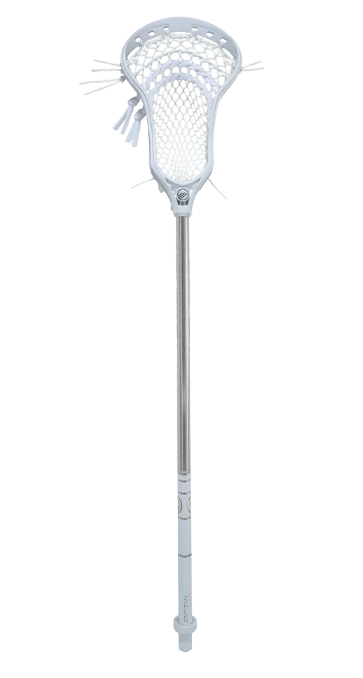 Complete stickMaverik Optik 2 Alloy Complete$99.99 at BattleLax
 Complete stickMaverik Tactik 2 Carbon Complete$149.99 at BattleLax
 BallsPearl X Greaseless Lacrosse Balls$19.99 at BattleLax
 BallsUnion Training Balls (6-Pack)$11.99 at BattleLax
Timeline
Lacrosse today
In the present era, a men's field lacrosse team puts ten players on the field: three attackmen, three midfielders, three defensemen, and one goaltender (women's teams play with twelve). Get the full breakdown in our guide to the 10 positions in lacrosse. The primary goal is to outscore the opposing team by shooting the ball into their net while defending one's own goal.
Lacrosse sticks were once crafted from wood but are now commonly made from synthetic and lightweight composite materials. These complete sticks are essential tools for catching, cradling, checking, passing, and shooting the lacrosse ball. (See the different types of lacrosse sticks.)
Now players equip themselves with protective gear, including helmets, gloves, shoulder pads, and arm pads, to ensure safety amid the physicality of the game. Our lacrosse equipment guide covers what you need.
The intricacies of lacrosse are governed by a set of rules that cover various aspects such as offside violations, checking guidelines, and penalties for rule infringements. Faceoffs at the start of each quarter and after goals inject strategic elements, demanding teams to win possession and momentum. (That's where the FOGO earns his keep.)
The influence of Native American culture on lacrosse
The influence of Native American culture on lacrosse resonates deeply within the sport's core values, traditions, and symbolism. Many aspects of modern lacrosse, from terminology to equipment design and strategic gameplay, draw direct inspiration from Indigenous practices and beliefs.
Take, for example, the design of lacrosse sticks, characterized by their distinctive netted pockets. These features reflect the traditional craftsmanship and materials historically used by Native American lacrosse players. Similarly, many players see face markings and patterns on team uniforms as a tribute to tribal artistry and the rich narrative woven through Indigenous storytelling. Today the Haudenosaunee Nationals still compete on the world stage, the only Indigenous nation to field teams in international lacrosse.
World lacrosse championships and major events
The inaugural Men's World Lacrosse Championship took place in 1967. Over the years, fourteen men's world championships have unfolded, with the United States dominating the field with eleven victories. Canada stands tall as the victor in the remaining three.
It was in 1982 when the inaugural Women's World Lacrosse Championship unfolded its story at Trent Bridge, Nottingham, England. There, amid the fervor of competition, the United States claimed victory with a resolute 10–7 scoreline. Since then, twelve women's championships have been played, with the United States winning ten, including a fifth straight gold in Tokyo in 2026, while Australia proudly holds two titles.
Yet, amid these accolades, lacrosse prepares for a historic return to the grand stage of the Olympic Games. The city of Los Angeles in 2028 will stage this illustrious comeback, promising to reignite the passion and spirit of this ancient sport on a global platform once more.
Other than men's field lacrosse, box lacrosse (indoor) and women's lacrosse are played with their own rules and settings. Read more on box lacrosse vs. field lacrosse. These variations add to the richness of lacrosse.
Challenges and innovations in lacrosse
Looking ahead, adaptive lacrosse programs are being designed specifically for players with disabilities. There is a growing emphasis on eco-friendly equipment designs, promoting sustainability within the sport by reducing environmental impact and fostering responsible practices.
Lacrosse organizations are implementing outreach programs in underserved areas, aiming to increase accessibility and participation among communities that may have limited exposure to the sport.
Lacrosse legends and Hall of Famers
The history of lacrosse is rich with tales of legendary players and esteemed Hall of Fame inductees, each leaving an indelible mark on the sport. Among the iconic figures in lacrosse history, here are some of the celebrated lacrosse legends:
- Jim Brown
- Gary Gait
- Paul Gait
- John Tavares
- Tom Marechek
- John Grant Jr.
- Dave Pietramala
- Chris Sanderson
- Casey Powell
Most of that list learned the game in a Canadian box, on Long Island or in upstate New York, which tells you everything about where the game's roots and its talent pipeline still run.
The future of lacrosse: trends and predictions
For the future, the sport of lacrosse is on the right track. The following trends will shape lacrosse for the decades to come:
- Increased media coverage
- Youth participation initiatives
- Technological advancements
- Cross-collaboration of lacrosse organizations
- International leagues and sponsorships
As lacrosse progresses and gains popularity globally, its reputation as an Indigenous, dynamic and inclusive sport remains unwavering.
Read more: Why lacrosse is the best sport · Lacrosse terms and slang · Lacrosse scoring
People also ask
Where did lacrosse originate?
Lacrosse originated with Indigenous nations of North America, especially in the Eastern Woodlands, including the Haudenosaunee in what is now New York and Ontario. It was played for centuries before Europeans first documented it in the 1630s.
How did lacrosse get its name?
French Jesuit missionary Jean de Brébeuf, who watched the Huron (Wendat) people play in 1636, compared the curved sticks to a bishop's crosier, or "la crosse" in French. The name stuck.
Who made the modern rules of lacrosse?
Montreal dentist William George Beers standardized the rules and equipment, and the 1867 rules of the National Lacrosse Association of Canada laid the foundation for organized play.
Has lacrosse been in the Olympics?
Yes. Lacrosse was a medal sport at the 1904 and 1908 Olympics, a demonstration sport in 1928, 1932 and 1948, and returns at the LA 2028 Olympic Games in the Sixes format.
Every time you pick up a stick, you're carrying on a game that's been played on this continent for centuries. Respect the roots, and go play.