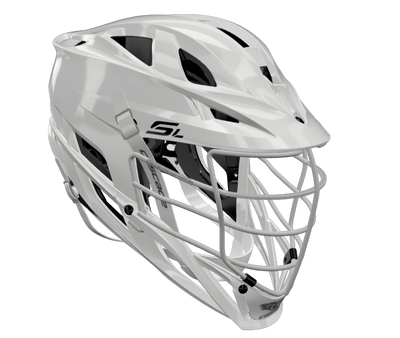
Expert STX Aero Lacrosse Helmet Review
STX's lightest helmet yet, with D3O padding, 11 AEROFLO vents and a FIT-SENSE strap. Here's how the Aero held up after a month of practices and games.

LaxDrip is reader supported. When you buy through links on this page we may earn a commission at no extra cost to you. How we review.
Even before STX officially announced the Aero, players were lining up to buy it. But not everybody trusts the hype, so here's my detailed STX Aero lacrosse helmet review.
Let's see if the lighter build and D3O padding deliver the protection you need. With a one-size shell, the FIT-SENSE strap system and 11 AEROFLO vents, the Aero promises breathability, impact absorption and comfort.
But does it hold up through hard shifts, checks and sprints? I wore it for a month in practices and games, and here's everything you need to know.
Heads up: BattleLax doesn't carry the STX Aero right now. The closest helmet they stock is the Cascade SL ($279.99), a light helmet at the same price, and you'll find the full list of alternatives below.
Comparing helmets? See our best lacrosse helmets ranked.
Key Features and Specs of the STX Aero
Here's a quick look at the Aero's key features and specs.
- Fit
- One size (max 24" head)
- Padding
- D3O above the forehead
- Vents
- 11 (AEROFLO)
- Strap
- FIT-SENSE click strap
- Released
- 2025
- Retail price
- $279.99
- Stock colors
- White
- Black
- Carolina
- Red
- Royal
- Navy
- Orange
Pros & Cons
- Very light without giving up protection
- D3O cushioning up front
- Liner repels sweat and stays fresher
- Stable fit that doesn't shift on contact
- Big CNVS zones for team decals
- One-size shell won't fit every head
- Thinner sides with more vibration on side hits
- Top bar sightline is a little narrow
STX Aero Lacrosse Helmet Rating
Here's a quick rating of the STX Aero.

The STX Aero's rating.
Protection and Safety
The Aero's shell is lighter than the Cascade XRS Pro, but it doesn't cut corners on safety. STX says it's more than 30% lighter than its old Rival. The D3O padding above the forehead is very effective at soaking up shock.
Even on a light check to the front, I could tell the hit was dulled a lot. I still felt the harder hits, but they were soft enough to make a real difference over a full game.

The D3O padding sits above the forehead.
The sides are a little thinner, with cutouts for ventilation, so it could be an issue if you take a lot of side contact. I felt more vibration on a blindside brush check, too. Still, the cushioning is the highlight of this helmet. It didn't let the impact ring through my head.
The chin guard gives you decent jaw coverage without being oversized. I took a few direct hits to the mask and lower jaw and felt only a fraction of the impact.
Comfort and Fit
I wore the Aero for about a month before writing this, and it's the most comfortable helmet I've worn for long games. The back sits lower than most helmets, which gives you extra stability on fast breaks and in ground ball scrums.
Once you click the FIT-SENSE strap into place, it doesn't move mid-play, even with contact from the side or back. For a one-size shell, the way it wraps around the base of your skull feels surprisingly secure.

The FIT-SENSE strap clicks in at the back.
I also liked how the comfort liner started molding to my head after just a few practices. It softens the fit without adding bulk. The cheek pads come out, and pulling one gave me a better seal without any pressure points.
One of my buddies didn't have the same experience, though. He found it tight and uncomfortable. STX lists a max head circumference of 24 inches, so if your head is bigger than that, go with a Cascade like the Cascade XRS Pro or the Warrior Burn X.
Ventilation and Breathability
For a fully enclosed helmet, the Aero breathes pretty well. The AEROFLO system has 11 well-placed vents, and I could feel air moving across the top and sides when I was running in open space.
Unlike the STX Rival, the liner doesn't soak up sweat. It repels it, so it stays drier through games. After practice, it didn't stink nearly as bad as usual, and it dried faster, too. The odor-resistant liner and multi-directional airflow help a lot.

The 11-vent AEROFLO system.
The airflow did feel limited when I was standing still, like on man-down defense or during timeouts. It clears out pretty quickly once you're moving again, though. I think STX found the right balance between airflow and sweat control.
Materials and Construction
Plenty of players on Reddit called it one of the best-looking helmets of the year, and I think it's built as good as it looks. The shell has a smooth, high-quality finish that's held up well after plenty of stick checks.
It's light, but it doesn't feel cheap in your hands or on your head. The sidewalls flex a little when you push on them, especially near the ear holes, but it never made me question the durability.

The Aero's shell and interior.
The D3O padding is built in well, and everything inside feels secure. I haven't seen any peeling or shifting of the liner like on older STX models. It's a durable helmet that costs less than the XRS Pro.
Vision Depth
At first, the sightline out of the top bar looked a little narrow. I respect brands trying new face mask designs, but I'd like a bit more vision through that space.
Once I got on the field, though, it didn't hold me back much. The angles are well designed, so your downward and side-to-side vision is clear.
I could track the ball without dropping my head too much when scooping ground balls at my feet. I wasn't constantly shifting my head or losing the ball in my blind spots.

The view out of the Aero's face mask.
The top bar could still use more room, especially for goalies and D-middies who catch high passes and need to see up the field. Otherwise, most attackmen and middies I've talked to say the sightline is open enough to stay locked in.
Customization Options
STX offers the Aero in a bunch of stock colors, including white, black, Carolina, red, royal, navy and orange, and it gives teams more room to customize. The expanded CNVS zones are a smart move, with noticeably more space for team logos and decals, especially on the sides and back.
I saw a fully decked-out Aero on one of the showcase teams, and it looked sharper, cleaner and bolder than helmets that limit your branding space.
The removable cheek and forehead pads also let you personalize the fit. I pulled the forehead insert on one side to let my contact lens breathe a little, and the liner still held everything in place. The chin strap and chin guard are sturdy and adjustable, too.
Coach's note: I've fitted helmets on kids from upstate New York to Virginia Beach, and up in Ontario where the box players take more shots to the head in one season than most field guys see in three. Here's the rule: a helmet only protects you if it fits. Snug all the way around, no wobble when you shake your head, chin cup sitting right on your chin. If you have to fight the fit, it's the wrong helmet, no matter how good it looks.
Comparison
The Aero is lighter and cheaper than both the Warrior Burn X and the Cascade XRS Pro, but it gives up some premium features.
The one-size design keeps things simple for teams, but you don't get the dialed-in fit of the Burn X's BOA system or the Cascade's tailored fit. If your head is narrower or bigger than average, the Aero's fit will feel generic.

The Aero next to the competition.
The AEROFLO system does a good job with airflow, especially around the crown. It can feel warm along the temples on long shifts, but it breathes better than the Warrior Burn.
The Burn X gives you more fit customization, though, with its BOA closure and heat-moldable inserts. The Aero keeps it basic with decal-friendly surfaces and fewer hardware options.
Want to know how the Cascades stack up? See our breakdown of the Cascade R, S and XRS.
Shop STX Aero alternatives at BattleLax
BattleLax doesn't carry the STX Aero right now, but they stock the helmets it gets compared to most.
| Gear | Why it's here | Price |
|---|---|---|
| Cascade SL Lacrosse Helmet | Light Cascade at the same price as the Aero, with removable side pads (fits 21.5" to 24") | $279.99 |
| Warrior Burn X Lacrosse Helmet | BOA fit system for a dialed-in fit | $309.99 |
| Cascade XRS Pro Lacrosse Helmet | Cascade's premium helmet the Aero gets compared to | $339.99 |
| Cascade CPV-R Lacrosse Helmet | Budget-friendly Cascade | $175.00 |
| Cascade Chin Strap (Black) | Spare chin strap | $9.99 |
Shop the Cascade SL at Battle Lax
People also ask
Who founded STX Lacrosse?
STX was founded in 1970 by Richard B.C. Tucker. It started out making lacrosse sticks before expanding into protective gear like helmets.
Does STX make helmets?
Yes. STX makes lacrosse helmets, including the Aero, which launched in 2025 with a lightweight shell, D3O padding and the AEROFLO ventilation system.
Is STX a good lacrosse brand?
Yes. STX is one of the most trusted names in lacrosse, and the Aero gets a lot of praise for its comfort, protection and price.
Does the Aero helmet make you faster?
Not directly. But its light weight and secure FIT-SENSE strap keep it stable and cut down on fatigue, which helps on the fast break.
Is the STX Aero helmet good for long games?
Yes. It's very comfortable for long games, with a stable fit, a moisture-repelling liner and solid airflow.
What size head does the STX Aero fit?
It's a one-size Universal Fit shell for most teens and adults, with a maximum head circumference of 24 inches. If you're over that, look at a Cascade or the Warrior Burn X.
Final Verdict
Before I wrap up this STX Aero review, here's my advice if you're upgrading from a Cascade XRS this year: try the Aero before the XRS Pro. It's cheaper, well protected, lighter and better ventilated.
The fit is generic, but it's extremely comfortable for long practices. It also gives you better peripheral vision and doesn't shift after hits. If the Aero doesn't fit your head and you want a custom fit, go with the Warrior Burn X ($309.99).