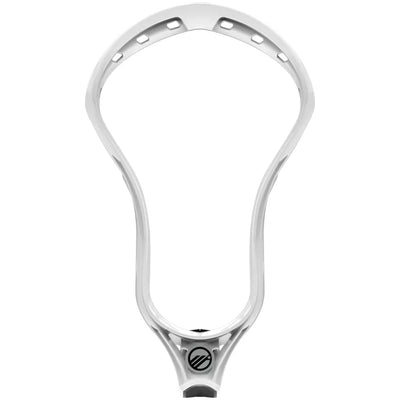
Best Lacrosse Heads for Middies Reviewed
16 heads that pass, shoot, scoop and check well enough to play both ends of the field, plus what to look for in a middie head.

We may receive a commission if you make a purchase through a link on this page about the best lacrosse heads for middies at no cost to you. This helps us keep this site free & we appreciate your support!
As a middie myself, I know how important it is to find a head that does everything well.
Middies are unique. We play both ends of the field and everything in between. Your head has to pass and shoot well, but it also has to be stiff enough to play defense and win ground balls. Whether you run the alley in Virginia Beach, play summer box in Ontario or take the wing on faceoffs in upstate New York, you need a head that can do it all.
To help my fellow middies, I put together this guide to the best middie heads out there, plus what to look for when you choose one.
To build the list, I started with 39 heads made for middies or for offense in general. Then I narrowed it down by reading customer reviews, looking at what's popular at the college and pro levels, and checking out as many heads as I could at my local shop. What I ended up with is the 16 best heads for middies, plus 4 budget options.
Heads up: BattleLax doesn't stock every head on this list. When one isn't available, I point you to the closest head they do carry, often the newer version of the same model.
Our top picks
- Tied best overall: Maverik Tactik 3.0 and STX Stallion 1K
- Best for O-middies: Maverik Optik Force
- Best for elite middies: StringKing Mark 3V
- Best FOSO head: Warrior Burn Formula
- Best for outside shooters: Maverik Kinetik and ECD Mirage
- Best for lower pockets: Warrior Evo QX2-O
Compare all 16 heads
"Buy" goes straight to the head at BattleLax. "Alt" goes to the closest head BattleLax has in stock.
The best lacrosse heads for middies
1. Maverik Optik Force Best for O-middies
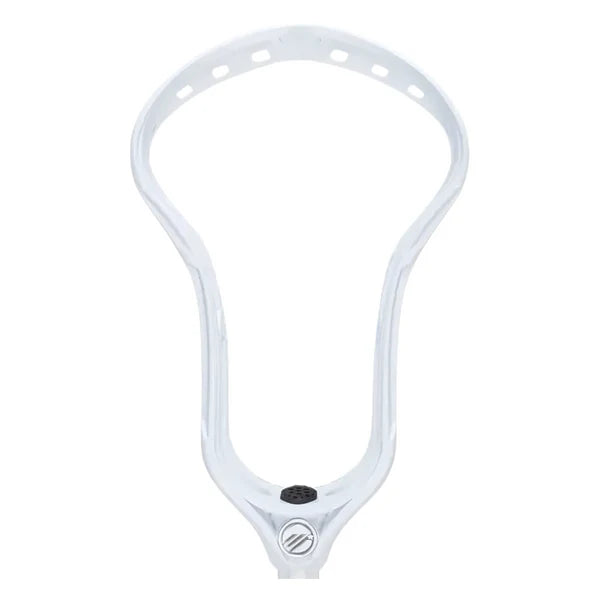
Maverik took three years to upgrade the Optik 3, and the Optik Force came out in 2024. It's the lightest and most durable head in the Optik line for offensive middies at just 4.8 oz.
Even with noticeably thinner sidewalls, the Force material held its shape. I cradled through traffic easily because the shorter throat with its honeycomb design resists warping and unwanted flex.
It also gave me better hand positioning than the Optik 3 for controlled passes and quick releases. The slightly tapered scoop takes some getting used to when you attack ground balls from an angle.
The mid-low pocket placement gives you smooth cradling and fast ball movement, so dodging and transition play feel effortless. You can customize the pocket with its 20 sidewall holes.
- Stiff, sharp-looking sidewalls
- Plenty of sidewall holes for pocket customization
- High shooting speed
- Great scoop
- Tapered scoop can miss some catches
- Less forgiving for beginners
2. StringKing Mark 3V Best for elite middies
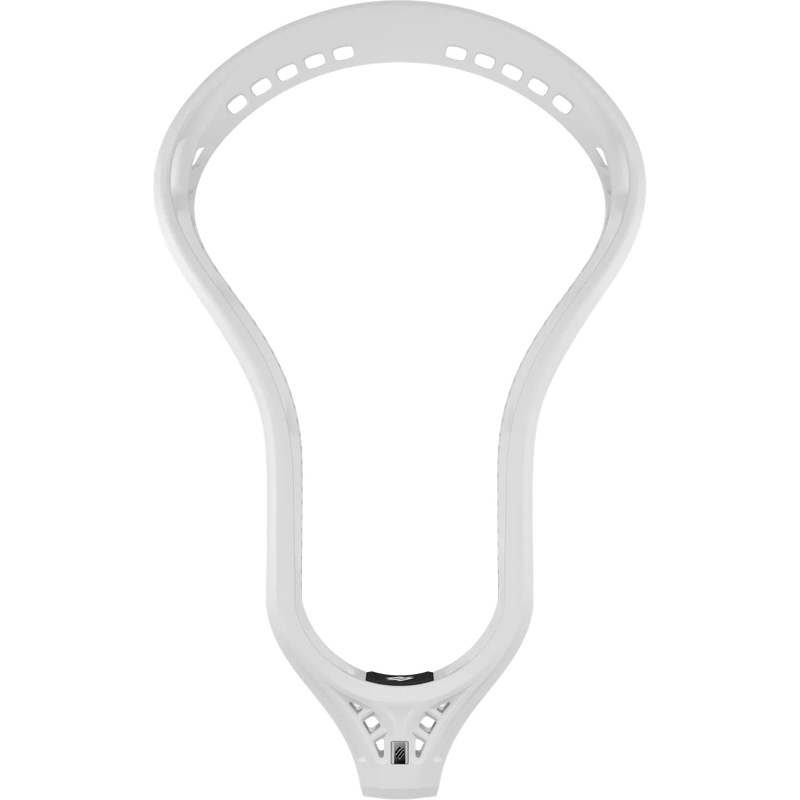
The StringKing Mark 3V keeps the wide face of its predecessor but trims down to just 4.5 oz, making it one of the lightest options for offensive middies.
It's extremely stiff, which gives you consistent ball control and accurate passing. The lack of flex makes it tougher for beginners to cradle in traffic, but the sidewalls don't warp and they absorb checks easily.
The wide face and pinched sidewalls give you fast shooting and accurate passing. Even shooting on the run, I didn't get any unwanted whip or drag on my release.
Its 32 sidewall holes let me string a mid pocket that cradled securely and helped me generate more power without extra effort. It's the perfect head for elite middies. Read my full StringKing Mark 3V review.
- Light and stiff
- Durable and warp-resistant
- Consistent shooting accuracy
- Expensive
- Not ideal for young players
3. STX Duel 3
The STX Duel 3 is built for faceoff specialists, but I wanted to see how it played after the draw. The short throat and deep offset handle quick clamps easily, and I could pop the ball out without trouble. The mid-pocket placement still let me cradle securely when dodging defenders.
STX engineered flex points that give you a subtle flex for a consistent release. Once I had possession, the slightly flared face gave me enough control to push in transition.
It doesn't have the tightest hold like a pure offensive head, but the stiff sidewalls kept it from wobbling. I loved the shot speed and accuracy, with enough stiffness to generate power without losing control.
At 4.9 oz it's durable, and it's a great head for middies who take the occasional draw.
- Quick clamps and clean exits
- Engineered flex points for a controlled release
- Stiff sidewalls for high-speed shooting
- Durable for occasional draws
- Doesn't have the tightest ball hold
- Limited stringing options
BattleLax pick: BattleLax doesn't carry the STX Duel 3 right now. For a faceoff head that holds up in transition, check out the Warrior Burn FO ($89.99).
4. ECD Weapon X 2.0 Best for transition
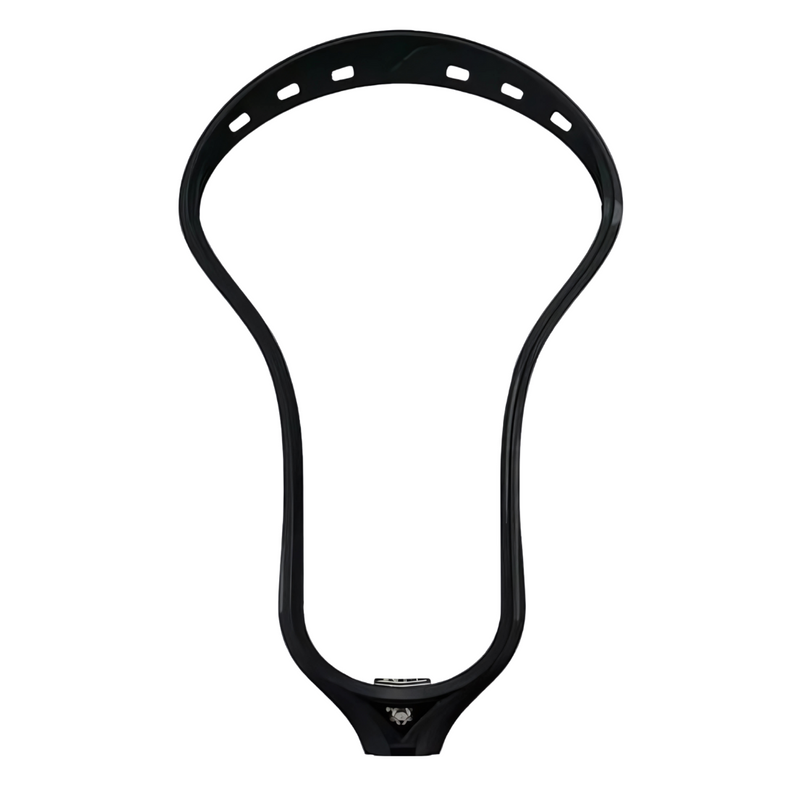
I've taken plenty of reps with the ECD Weapon X 2.0, and its Bone version is the better fit for transition middies.
It has enough flex to win clamps and handle 50/50s, but it's stiff enough to win ground ball battles. It's a little heavier at 5.1 oz, but the Flexform plastic holds its shape.
The asymmetrical sidewalls let you react quickly, and I had no trouble controlling the ball on exits. The mid-low pocket gave me quick releases on passes, with no awkward hold to slow down a break.
It's not the fastest shooter, but the release is consistent and I didn't have to change my mechanics. It's one of the best heads for middies who push transition.
- Durable Flexform plastic
- Asymmetrical sidewalls for better control
- Snaps back to shape after a clamp
- Consistent, quick release
- Fewer sidewall holes
- Slower long-distance shots
5. Warrior Burn Formula Best FOSO head
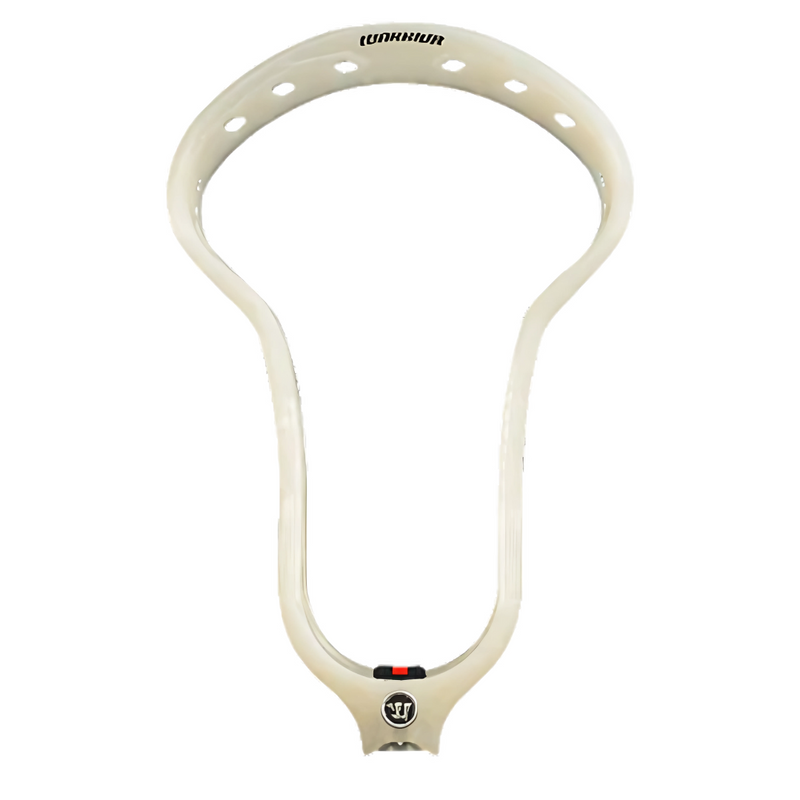
The Warrior Burn Formula surprised me as a true faceoff-and-stay-on (FOSO) head. Unlike most faceoff heads that give up shooting accuracy for flex, it has a balanced profile that resists warping.
I didn't love the sidewall hole pattern, but the stiffer sidewalls and mid-pocket design gave me solid control carrying the ball. Thanks to the Blade Rail technology, I cradled upfield easily and started fast breaks.
The ball settled into the mid pocket better than the Weapon X 2.0, which helped me go smoothly from clamp to pass. The rounded scoop reduces drag, so you can scoop cleanly on the run, even in tie-ups.
At 5.3 oz, it still generates power when you feed teammates, without an unstable release. The Therma-Loc+ plastic held up well, and I liked the extra screw holes for shaft security.
- Durable Therma-Loc plastic
- Holds its shape in summer heat
- Excellent shot speed and accuracy
- Fewer sidewall holes
- Slightly heavy
6. Maverik Logik Force Best faceoff middie
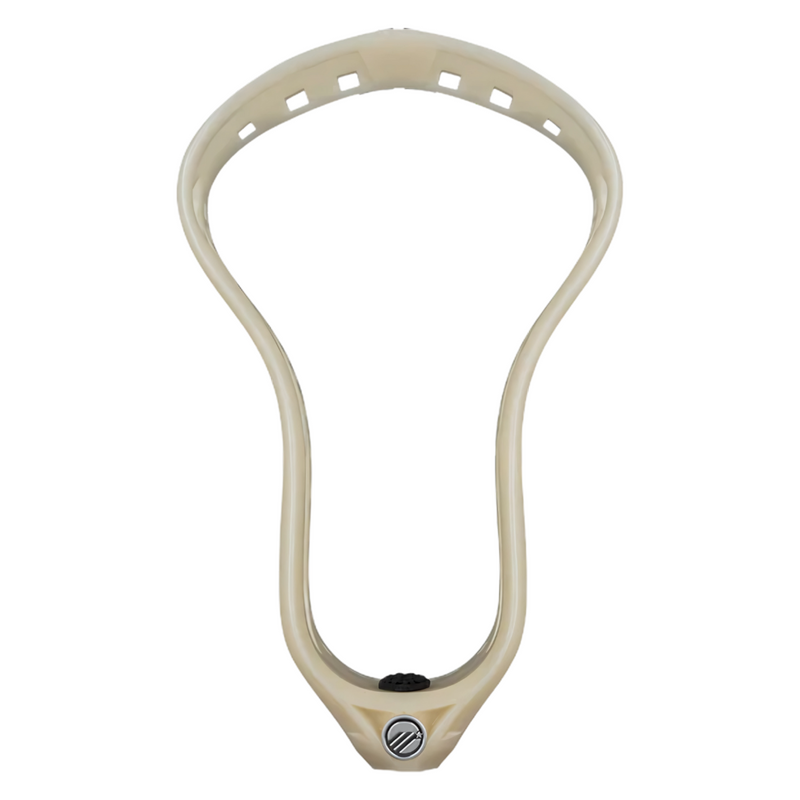
The Maverik Logik Force is another great faceoff middie head with a balance of flex and shape retention. Its honeycomb-textured rails gave me more grip on clamps and clean exits without excessive warping.
The narrow throat gives you great ball security, especially when you're taking checks. The wider spacing of the sidewall holes near the throat makes the first stringing job a little tricky, though.
I strung a mid-low pocket that released ground balls quicker than the Weapon X 2.0. Its subtle flex threw some of my passes off-center, but my short-range shots were accurate.
If you need more stiffness, try the StringKing Mark 2F Stiff or the Warrior Burn Formula Stiff. The smooth, rounded scoop gave me reliable ground ball pickups and held up to rough use, though I noticed some stress marks near the throat after a few months.
- Warp resistant
- Durable and light
- Narrow throat for secure cradling
- Stress marks after heavy use
- Passes can drift off-center
7. ECD Delta Graphene
The ECD Delta Graphene is one of the best heads for defensive middies. At 5.6 oz, it's one of the lightest defensive heads I've used, and the X-shaped strut design keeps it stiff and durable. It helped me throw some powerful checks.
The moderately wide face makes it easy to pick off passes and catch from every angle, and the curved scoop funnels ground balls smoothly, so you win more scrappy plays.
Its narrow throat gives you a secure hold, so it absorbs checks and keeps control under pressure.
It creates a stiff mid-high pocket that doesn't shift much, but the release is consistent. If you're a beginner, a slightly more flexible head might be easier to learn with.
- Light but extremely stiff
- Delivers powerful checks
- Funnels ground balls into the pocket
- Durable and weather-resistant
- Stiff pocket with little shift
- Less forgiving for beginners
BattleLax pick: BattleLax doesn't carry the ECD Delta Graphene right now. For a stiff, defensive-minded head, check out the Maverik Tank 2.0 ($109.99).
8. Maverik Tactik 3.0 Tied best overall
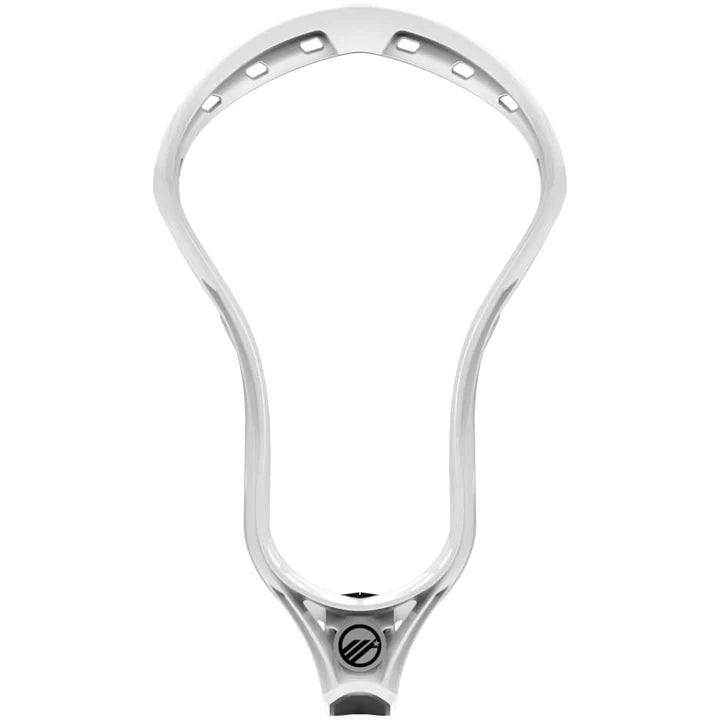
The Maverik Tactik 3.0 ties for the best overall head for middies, and for good reason. It's one of (if not the) best all-around midfield heads out there.
It's light, very stiff and has a ton of stringing holes so you can build your pocket exactly how you like it. It's an upgrade on our previous top-rated middie head, the Tactik 2.0.
The 3.0 uses Maverik's CoreControl technology, which puts weight where it matters most for more control, more stiffness and less weight. Its level 3 bottom rail makes it great for a mid-low to mid-high pocket, which is what a lot of middies want.
The great stiffness-to-weight ratio makes it work on both offense and defense, and the scoop makes ground balls a breeze. The face is more pinched than the Tactik 2.0, tighter toward the throat and opening up toward the middle of the head. You'll be very happy with this one.
- Very stiff
- Relatively light
- Tons of sidewall holes
- Great scoop
- Sidewall holes are a bit small
9. STX Stallion 1K
The STX Stallion 1K, released in 2023, ties the Tactik 3.0 as the best head for middies in our opinion.
Compared to the older Stallion Omega, the 1K is much less prone to breaking and much lighter, and you notice it when you shoot. Compared to the Stallion 900, it's stiffer and holds its shape better thanks to improved EnduraForm plastic.
It still has STX's Speed Scoop, which is great for ground balls and has a slight lip that covers the top string holes so they don't get in the way when you scoop. The face has a narrow pinch on the bottom half and gradually opens toward the scoop.
It only has an average number of stringing holes, but they're well placed, and Innerlock technology makes stringing the inside rail easier and more secure. The biggest downside is that it's not great for low or mid-low pockets, since the offset sits toward the middle and top of the head. It's an awesome option for middies who like higher pockets and shoot from outside or on the run.
- Stiff and durable
- Great Speed Scoop
- Lightweight
- Great face shape
- Not great for low pockets
BattleLax pick: BattleLax doesn't carry the STX Stallion 1K right now. For the other pick for best overall, check out the Maverik Tactik 3.0 ($109.99).
10. Nike L3
The Nike L3, the latest head in the popular Lakota line, quickly became one of the top choices for college midfielders.
It has a smooth face shape that isn't too pinched, which makes it a great option for offensive middies, D-middies and LSMs alike.
It's extremely easy to string even though it only has an average number of sidewall holes, thanks to the wider face and smooth flare. The offset sits toward the middle of the head, so it's great for anything from a mid-low to mid-high pocket.
The only real drawback is that it's not the best if you like a very tight face. If that's you, look at the Maverik Kinetik or the ECD Mirage. Otherwise, it's a versatile head you won't be disappointed in.
- Very light
- Easy to string
- Stiff
- Works for a variety of positions
- Wider face than some alternatives
BattleLax pick: BattleLax doesn't carry the Nike L3 right now. For a versatile, easy-to-string all-around head, check out the Warrior Evo V Head ($99.99).
11. Maverik Kinetik 2.0
If you're an outside shooter who likes a high pocket, the Maverik Kinetik 2.0 may be your best option. When I'm not facing off, it's my head of choice.
The first thing you'll notice is the unique shape: a tight pinch through most of the head and an aggressive flare toward the scoop. The scoop is still just over the 6" minimum, so it's narrow compared to others.
It has a gradual offset until about three-quarters of the way up, where it cants forward at a sharp angle. That's a big part of why it's so good for outside shots. I haven't used a radar gun to confirm it, but it feels like I get a few extra mph on my shot.
Compared to the original Kinetik, the 2.0 has a more rounded scoop, a slightly tighter face and is easier to string. BattleLax carries the newer Kinetik 3.
- Helps increase shot velocity
- Tight pinch through the head
- Great for high pockets
- Relatively light
- Not great for low or mid-low pockets
BattleLax pick: BattleLax doesn't carry the Maverik Kinetik 2.0 right now. For its successor, the Kinetik 3, check out the Maverik Kinetik 3 ($109.99).
12. STX Hyper Power
If you like the Proton Power, Super Power or Ultra Power, you'll love the STX Hyper Power, the next head in that series.
Like the Ultra Power, it uses Power Ramp geometry, with a traditional offset toward the throat that comes back forward toward the scoop to add power. It's designed to boost shot speed by pushing the ball down and forward, so you can wind up more and hold the ball longer. It's unique, so it may take some getting used to.
The Power Ramp also makes high-angle ground balls easier, since the scoop is already angled forward and you don't have to get your butt end as low.
Compared to the Ultra Power, it has a tighter face that's closer to a Stallion.
- Very stiff and durable
- Great for ground balls
- Power Ramp adds shot speed and accuracy
- Unique feel takes time to get used to
BattleLax pick: BattleLax doesn't carry the STX Hyper Power right now. For a stiff offensive head built for shooters, check out the Warrior Burn XP2-O ($119.99).
13. StringKing Mark 2V
The "V" in Mark 2V stands for versatile, and that's exactly what it is. It's designed mainly for middies but works at almost any position: attack, O-middie, D-middie, LSM or defense.
It's light, stiff and has more stringing holes than any other head on this list. It also has one of the most popular scoops in the game, with rounded edges that won't stab into the ground and pick up ground balls at all kinds of angles.
It has an amazing stiffness-to-weight ratio, one of the stiffer heads here at just 4.7 oz. If you like very pinched heads, look elsewhere. It isn't wide, but it's wider than some others on this list.
It also has a locking bolt to reduce head rattle, and customer reviews say it works well. StringKing has since replaced it with the Mark 3V.
- Tons of sidewall holes
- Very stiff but light
- Great scoop
- Locking bolt reduces head rattle
- Wider face than some options
BattleLax pick: BattleLax doesn't carry the StringKing Mark 2V right now. For its successor, the Mark 3V, check out the StringKing Mark 3V ($119.99).
14. ECD Mirage 2.0
ECD revamped the original Mirage to make the Mirage 2.0, arguably the best head for outside shooters out there.
Like the original, it has an aggressive face with a tight pinch through most of the head, and a higher offset than most middie heads, which makes it great for a mid-high to high pocket.
The biggest upgrade is the scoop. It used to be one of the main complaints about the original, and on the 2.0 it's one of the best features. The face is also slightly tighter, giving you a bit more control and hold, which matters a lot for dodging middies.
If you're an outside shooter, you'll love it. BattleLax carries the newer ECD Mirage 3.0.
- Great for mid-high pockets
- Aggressive face shape
- Lots of stringing holes
- Heavier than some alternatives
- Not the best for low pockets
BattleLax pick: BattleLax doesn't carry the ECD Mirage 2.0 right now. For its successor, the Mirage 3.0, check out the ECD Mirage 3.0 ($109.99).
15. Warrior Evo QX2-O
The Warrior Evo QX2-O is a member of the popular Evo family, and the "O" stands for offense.
It upgrades the original QX-O with a tighter face, more stiffness and a better scoop. Its face shape is similar to the Evo 5 and QX-O, with a pinched throat that opens up to a wide scoop, but it's slightly more pinched for better ball control.
Like the QX-O, it's very stiff, which makes it a great option for middies who play both ends. The Therma-Loc+ hybrid plastic and updated strut design make it even stiffer, and Warrior rounded the scoop and cut unnecessary material to make it lighter.
It's one of the few heads here built for a lower pocket, since its max offset sits toward the throat. There are plenty of stringing holes, though some players say the sidewall holes end early, which can make you tie off sooner than you'd like.
- Very stiff
- Nice face shape
- Throat lock eliminates head rattle
- Can be tricky to string
- Not great for mid-high to high pockets
BattleLax pick: BattleLax doesn't carry the Warrior Evo QX2-O right now. For the original Evo QX-O, check out the Warrior Evo QX-O ($99.99).
16. ECD Rebel Offense
The ECD Rebel Offense is a great choice for both attackmen and middies. It's stiff, light and has a great face shape.
It has a pretty narrow pinch at the throat and starts flaring out a little lower than many offensive heads. The scoop is slightly narrower than most too.
One of my favorite parts is the stringing versatility. The max offset sits toward the middle of the head, so you can run anything from a mid-low to mid-high pocket, and there are plenty of stringing holes.
The scoop picks up ground balls from all kinds of angles and has a slight lip so your top string doesn't get in the way. On the downside, some online reviews mention it breaking quickly. It doesn't seem common, but it's worth knowing.
- Good for a variety of pockets
- Stiff for an offensive head
- Lots of stringing holes
- A few reports of breaking
BattleLax pick: BattleLax doesn't carry the ECD Rebel Offense right now. For a stiff, light ECD offensive head, check out the ECD Ion ($119.99).
Budget middie heads
- STX Stallion U 550: An older Stallion with many of the same features and a similar face shape to the Stallion Omega, but much cheaper. It has a good stiffness-to-weight ratio and is durable.
- StringKing Mark 1: With the Mark 2 and Mark 3 lines out, the Mark 1 is much cheaper. It's a bit heavy but holds up well and has a ton of stringing holes for all kinds of pockets.
- Brine King 2: A popular head when it came out in 2017, and now you can often find it discounted. It has a nice face shape and is durable, but it's a little heavy at 5.2 oz.
- Epoch iD Vision: Designed for players around the U14 age group. Its face is a little wider than higher-level middie heads, but it's a better option than most youth and intermediate heads.
Looking for a budget head you can order today? BattleLax has the Warrior Evo V, Warrior Evo QX-O and Gait Torq 3, all at $99.99.
Middie heads in stock at BattleLax
These are the heads from this list, and the closest matches, that BattleLax carries right now.
| Head | Price |
|---|---|
| Maverik Optik Force | $109.99 |
| StringKing Mark 3V | $119.99 |
| Maverik Tactik 3.0 | $109.99 |
| ECD Weapon X 2.0 | $99.99 |
| Warrior Burn Formula | $99.99 |
| Maverik Logik Force | $109.99 |
| Maverik Kinetik 3 | $109.99 |
| ECD Mirage 3.0 | $109.99 |
| Warrior Burn XP2-O | $119.99 |
| Warrior Evo QX-O | $99.99 |
| Warrior Evo V Head | $99.99 |
| ECD Ion | $119.99 |
| Maverik Tank 2.0 | $109.99 |
| Gait Torq 3 | $99.99 |
| Warrior Burn FO | $89.99 |
What to look for in a midfield lacrosse head
With so many heads that work for middies, it can be hard to choose. It depends on your style and preferences, so here are seven things to consider.
1. Face shape
Most attackmen want very narrow heads and most defensemen want wider ones, but there's no single face shape most middies go for. Some heads on this list are pinched like attack heads, and others are wider. Less advanced players should go wider to help with catching, and D-middies often like wider heads for more surface area on checks. More advanced players should look for a narrower pinch for control and accuracy.
2. Weight
Assuming strength and durability are equal, lighter is usually better. A lighter head moves faster, which adds shot speed. For middie heads, anything under 5 oz is light, and heads over about 5.5 oz are noticeably heavier. Pair a light head with a light, strong shaft from our best lacrosse shafts guide and you've got a great middie stick.
3. Stiffness and durability
Even the lightest head won't work if it's a noodle or breaks all the time. Unless you take faceoffs, look for a stiff head that won't flex on scoops or checks, and one that stays stiff over time. A lot of heads start stiff but soften up in the heat.
4. Pocket placement
Find a head built for the pocket you want. The easiest way to tell is to look for the max offset, where the bottom rail sits lowest. Heads like the Kinetik have a high offset, great for high pockets. Heads with a lower offset, like the Warrior Evo 5, are better for low to mid-low pockets. Most middies, me included, like a mid to high pocket for a little more whip on the run and from outside, but it's personal preference.
5. Scoop
Middies spend a lot of time in transition and on the wings for faceoffs, so you pick up a lot of ground balls. Look for a nicely rounded scoop. Scoops that are more angled let you pick up the ball at a higher angle, while flat scoops make you bend over more and slow you down.
6. Stringing holes
Back in the day, heads often had 10 sidewall holes or fewer, which limited the pockets you could string. Most heads now have 15 or more, but it's still worth checking that there are enough and that their size and shape fit how you string.
7. Strung vs. unstrung
I used to always recommend unstrung so you could string it yourself or have a buddy do it. But brands like ECD and StringKing now offer much better factory string jobs, so strung heads are a real option. If you go strung, research whether players like the stringing, and avoid the shallow, low-quality factory pockets at all costs.
High school and college head rules
NFHS (high school) head dimension rules started matching NCAA (college) rules in 2018. Before that, high school heads could be narrower at the throat but had to be wider at the scoop, and vice versa for college. Now that both use the same rules, any head that meets NCAA specs is legal in high school too:
- Minimum width of 6" at the widest part of the head
- Minimum width of 3.5" on the front and back of the head at 5" up from the throat
- Minimum width of 3" at 3" up from the throat
- Minimum width of 3" at 1.25" up from the throat
If you buy a recently released head, you don't need to worry about these specs. If you're buying a head from 2017 or earlier, check that it meets NCAA specs. If it doesn't, it's likely illegal in both high school and college.
How we rate middie lacrosse heads
We take our ratings seriously and only recommend gear we'd use ourselves. Whenever possible, we test the product ourselves, review the specs (weight, number of stringing holes and more), and read customer reviews and talk to players we know who use it.
When testing heads, we take them to the field and test passing, catching, shooting, ground balls and checking, all with a standard pocket to cut down on variables. When we can't test a head extensively, we spend extra time talking to players who've used it for a while. If you have feedback or a head you think we should add, let us know.
People also ask
How do you pick a lacrosse head?
Look at face shape, weight, stiffness, pocket placement, scoop, stringing holes, and whether it's strung or unstrung. Then pick based on your position and style of play.
How do you become a good middie in lacrosse?
Work on passing, shooting, ground balls and defense, and build the speed and endurance to play both ends of the field.
When did the Stallion 1K come out?
The STX Stallion 1K was released in 2023.
How is a middie head different from heads for other positions?
Middie heads are built to be versatile, balancing offense and defense. They usually suit a mid to high pocket for quick releases and good ball control, while attack heads lean toward precision and defense heads toward durability and checking.
How do stringing holes affect a lacrosse head?
More stringing holes give you more ways to customize your pocket's depth, placement and channel, which can improve ball control and release speed.
Mesh and strings for your new head
If you go with an unstrung head, you'll need mesh and strings. Here are my top picks at BattleLax:
- Full string kits: ECD Hero 4.0 Complete Kit ($34.99), StringKing Type 5x Semi-Hard Kit ($39.99), StringKing Type 5s Semi-Soft Kit ($39.99)
- Just mesh: ECD Hero 4.0 Semi-Hard ($24.99), ECD Hero 4.0 Semi-Soft ($24.99), StringKing Type 5x Semi-Hard ($29.99), StringKing Type 5s Semi-Soft ($29.99)
Check out our other gear guides to take your game to the next level: