Best Lacrosse Shafts Reviewed
The best attack, midfield, defense and goalie shafts on the market, with what each one does well, where it falls short, and who should play it.

We may receive a commission if you make a purchase through a link on this page about the best lacrosse shafts at no cost to you. This helps us keep this site free & we appreciate your support!
Most advanced players buy their heads and shafts separately so they can build a stick exactly the way they like it. There are way more head-and-shaft combinations out there than complete sticks, which are usually aimed at beginner and intermediate players.
The problem is that all those options make it hard to decide, especially with shafts that all look about the same. Whether you learned the game on a box floor in Ontario, at a fall ball tournament in Virginia Beach or on a frozen field in upstate New York in March, the handle you trust matters.
So I put together this guide to the best lacrosse shafts for every position. Later on, you'll also find what to look for when you're shopping.
Note: This guide covers men's shafts. Looking for a defense pole specifically? Check out our full guide to the best lacrosse defense shafts.
To find the best shafts, I built a database of the shafts on the market and researched weight, material and durability to find the pros and cons of each. I read customer reviews, watched videos and checked the manufacturers' sites, then went to my local shops to get as many as I could in my own hands. From there, I narrowed it down by position.
Heads up: BattleLax doesn't stock every shaft on this list. When one isn't available, I point you to the closest shaft they do carry.
Our top picks
- Best attack shaft: Warrior Dolomite
- Best hybrid shaft: Warrior Evo V
- Best value attack shaft: ECD Focus
- Best for SSDMs: Gait GCX-SSDM
- Best defense shaft: Maverik Caliber Defense
- Best goalie shaft: Maverik Hyperlite Goalie
Compare all 30 shafts
"Buy" goes straight to the product at BattleLax. "Alt" goes to the closest shaft BattleLax has in stock.
Attack & midfield shafts
Attack and middie shafts live and die on two things: how fast the ball comes off your stick and how well you hold onto it with a pole on your hands. Here are 15 we'd trust.
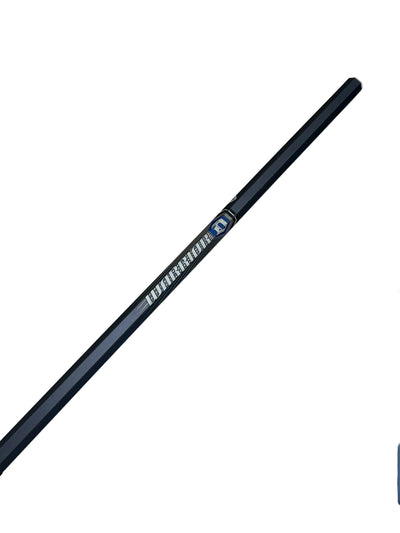
1. Warrior Dolomite Attack Top pick
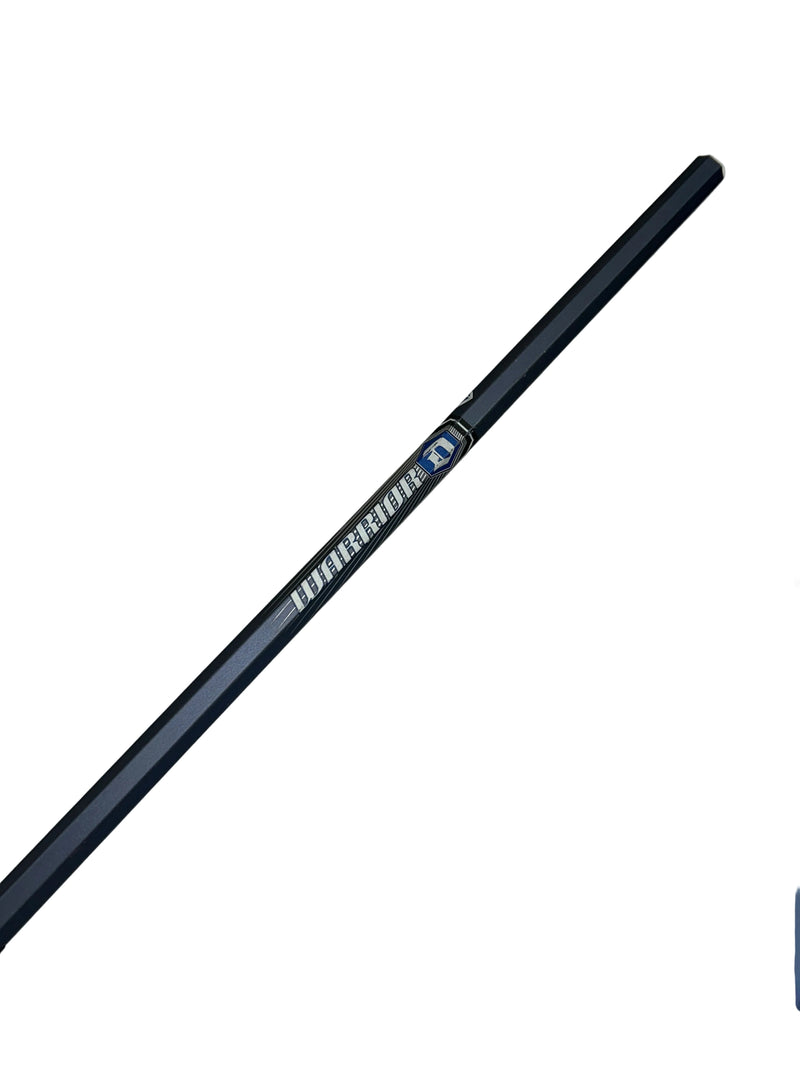
I've been running the new Warrior Dolomite for a few months, and it's built for players who want strength without giving up speed. Warrior made it from Altium alloy, which is newer on the market but gives you titanium-level strength.
At 6.1 oz without the end cap, Warrior says it's 50% stronger than the Krypto Pro, and it feels light and responsive deep into long games. The weight is well balanced between speed and control, so it's easy to handle on quick dodges and cuts.
It responds well when you're taking checks or dodging defenders. There's no flex, so it's great for hard shots, and I could snap quick feeds in tight spaces without losing anything on the release.
The Altium alloy is seriously durable. Even after hard checks on the crease and plenty of ground ball battles, it stayed dent-free.
The finish is smooth with a little roughness to it, so you get a slip-free grip in the rain. The basic end cap shifted on me, though, so I'd tape it for a secure fit. Either way, it's one of the best shafts for attackmen who need a reliable handle for quick moves and fast shots.
2. Warrior Evo V Alloy Core Carbon Best hybrid
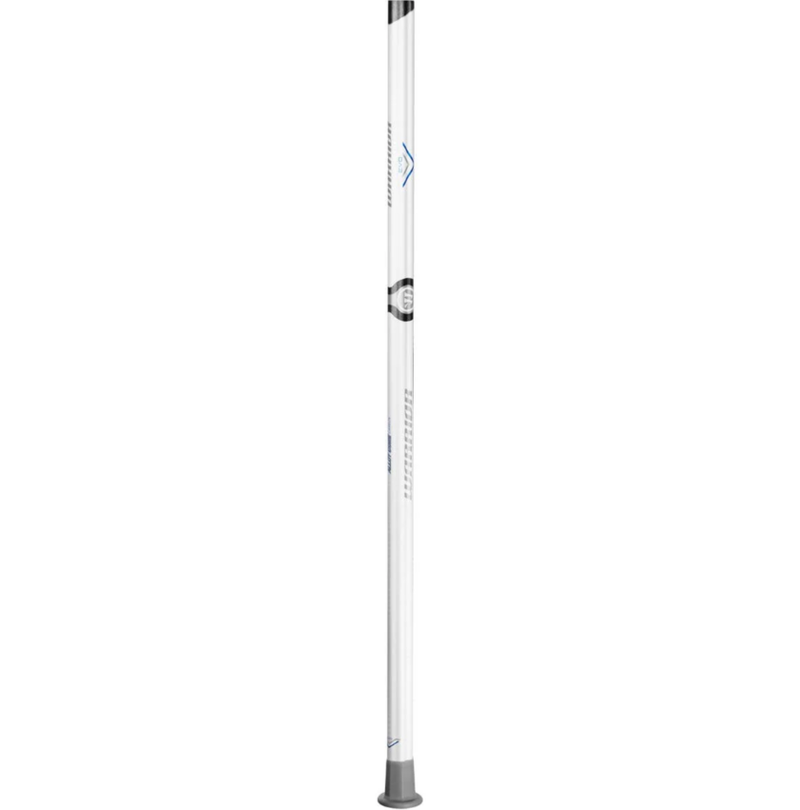
The Warrior Evo V is a game-changer for serious players. It pairs the durability of an alloy core with the light feel of carbon, and it weighs just 6.0 oz.
It's built for attack and offensive middies. The lined grip finish gives you great control, and I could handle the stick with confidence even in bad weather.
The octagonal shape locks your hands in during fast-paced plays, so you can cradle and scoop without hesitating. It's on the stiff side, which can be a learning curve for beginners, but I liked the balance between flex and rigidity. You get a quick release on your shot and a controlled feel when you're dodging.
The Evo V is a great choice for intermediate and advanced players looking to step up their game. Read our full Warrior Evo V review for more.
3. Maverik Caliber Attack Most durable
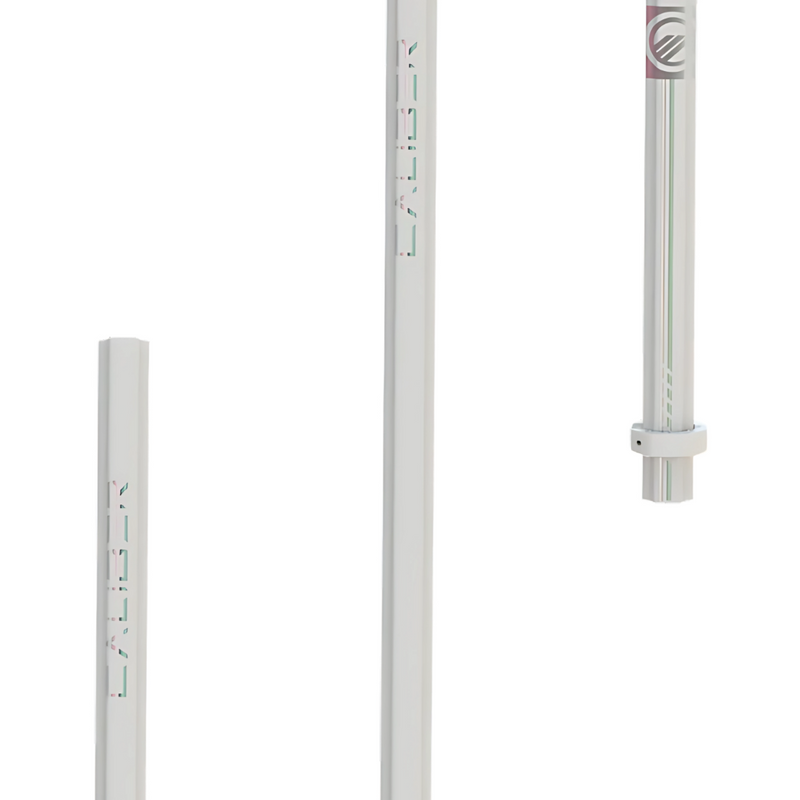
The Maverik Caliber attack shaft is a great option if you want elite durability and performance. I put it to the test against a high school team, paired with a Nike Surge Elite head.
The scandium-titanium alloy held up great through hard checks, and I scored two goals with it that night. One game isn't enough to judge a shaft, though, so I used it for a month.
At 6.5 oz, the Caliber is on the heavier side for an attack shaft, but it makes up for it with toughness. The bead-blasted finish gives you a reliable grip, even when it's wet.
The concave shape is comfortable through long practices, and I liked the shot speed it gave me. It's stiff, which may not suit beginners, but experienced players will love the strength and control. BattleLax carries the 2026 Caliber, which Maverik updated with better grip texture and a molded butt end.
4. Maverik Apollo Attack Lightest metal
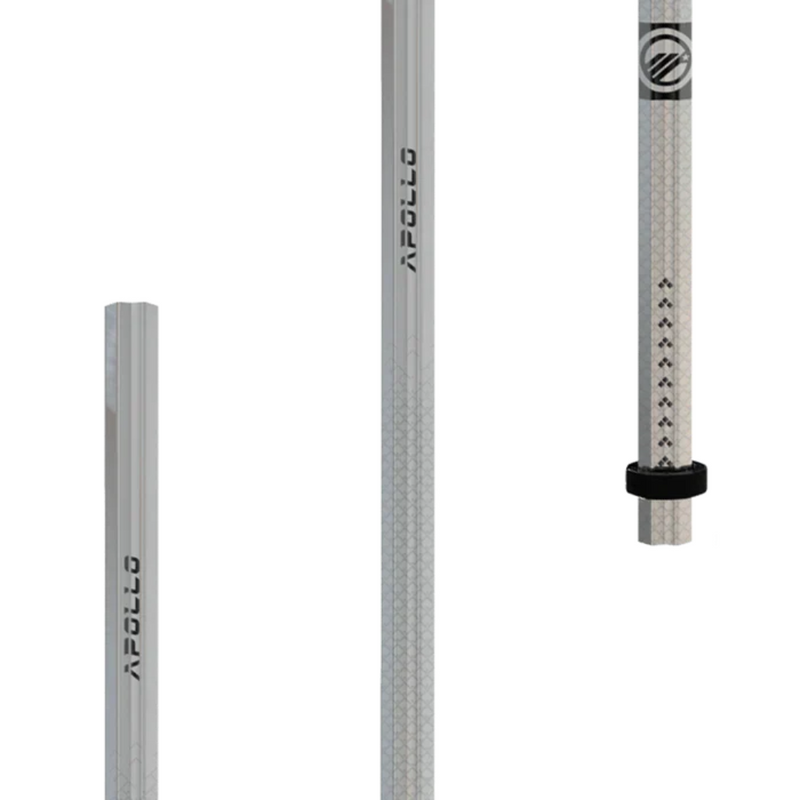
The Maverik Apollo is built for players who want speed and accuracy. I hadn't tried the Apollo before, so I was curious how its smooth concave shape with flat knurls compared to traditional shafts.
After a lot of time with it, the tactile grip and light weight stood out most. At 5.2 oz, the scandium-titanium build is durable without feeling heavy, and Maverik calls it the lightest metal shaft in its lineup.
The dynamic wall taper adds strength while cutting weight at the key break points, so you get quick changes of direction and fast shots. It may not absorb impact as well as some heavier shafts, though.
With no flex, power transfers efficiently on your shot, but it can vibrate on hard checks. The Apollo is perfect for offensive players who want a light shaft for quick moves and accurate shots.
5. Maverik Range Attack
The Maverik Range has been a reliable option since it came out, built with Maverik's 8000 series alloy for a mix of durability and performance.
After more than six months with it, I can say it lives up to its reputation. At 6.5 oz, it balances sturdiness and control, so it works for both offensive middies and two-way players.
The Grid Grip finish gives you excellent slip resistance, so you can handle it with confidence in wet weather. The traditional octagonal shape isn't for everyone, but it gives you a solid grip.
It absorbs impact well, so I could take checks and keep control of the ball. It's a little heavier than some alternatives, but it's a dependable, durable attack shaft.
BattleLax pick: BattleLax doesn't carry the Maverik Range Attack right now. The closest match in stock is the Maverik A7 175 Attack (alloy, $99.99).
6. Mercury Carbon Shaft
The Mercury Carbon shaft is a great budget-friendly option if you want quality and durability. It's built with six layers of carbon fiber reinforced with a Kevlar layer.
At 7 oz, it feels heavier than some other options, but once I got used to it in practice, it was easy to manage. The aggressive concave shape gives you solid control for attack and offensive middies.
It absorbed checks really well without showing damage. The rubberized grip held up in wet conditions, though it lost some tackiness after a few games.
The minimal flex gave me great shooting accuracy, especially paired with a quick-release head like the Nike Surge Elite. It's a strong option for intermediate and advanced players.
BattleLax pick: BattleLax doesn't carry the Mercury Carbon Shaft right now. The closest match in stock is the ECD Carbon 4.0 Attack/Midfield (carbon composite, $124.99).
7. Gait Carbon GCX-SSDM Short Stick D-Middie Best for SSDMs
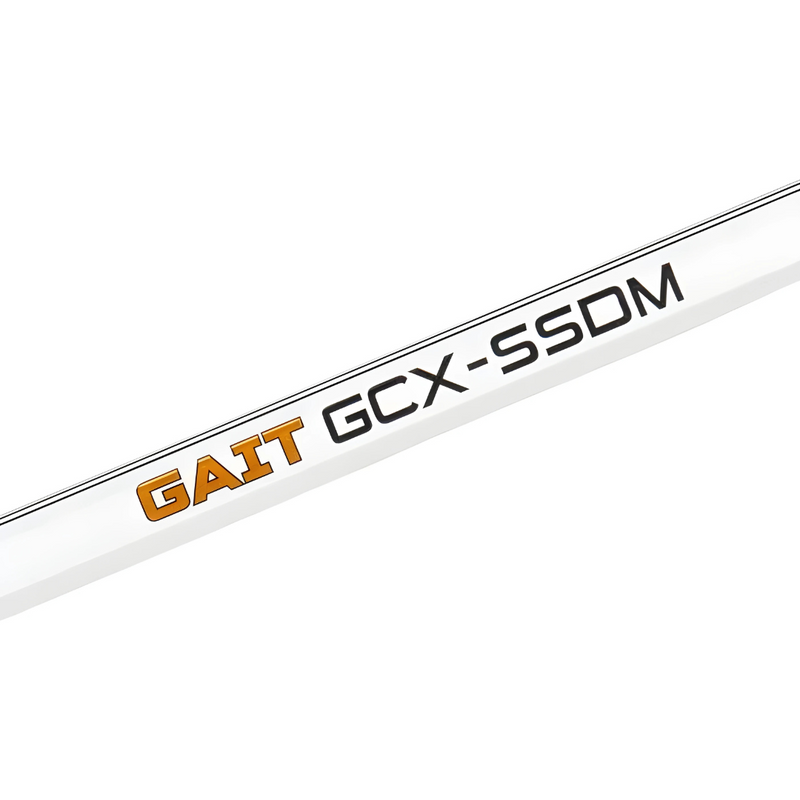
I bought my buddy the Gait Carbon GCX-SSDM, and he's a big fan now. It has a less aggressive concave shape than ECD shafts but still feels secure in your hands, so handling is smooth.
At 7.3 oz, it felt a little heavy in quick transitions. Younger players who rely on speed may need time to adjust. But that extra weight gives you enough strength to deliver real checks and break up the other guy's cradle.
It gives you great control when you're jamming a dodging attackman or fighting for ground balls as a D-middie. The moderate flex strikes a good balance between stiffness and responsiveness, with enough pop on your shot when you push into the offense. The thick walls absorb checks, so it's not the kind of carbon shaft that snaps in a few months.
The gritty, fine-sandpaper texture means you don't need much tape, even in the rain, and it helps you scoop ground balls in traffic. It can wear down glove palms faster, so pair it with good gloves.
8. STX Sc-Ti Series
Through high school and college, I almost always played with an STX Sc-Ti Pro. They were light and held up incredibly well. I don't think I ever broke one or even put a major dent in one.
STX now offers five versions of the Sc-Ti, which vary by shape and weight. That variety is a big plus, because you can find a shape that fits your preference and know it's going to perform.
The Sc-Ti shafts are STX's top-tier metal shafts, made from a scandium-titanium alloy with a steel shot finish for better grip and control. If you prefer metal over composite, you'd have a hard time finding a better option.
The five shapes: X (extreme concave), X+ (extreme concave with extra thickness), O (concave octagonal, traditional feel), R (ridge profile for extra feel and grip) and S (asymmetrical, octagonal on one side and concave on the other).
BattleLax pick: BattleLax doesn't carry the STX Sc-Ti Series right now. The closest match in stock is the Warrior Alchemy STZ Attack 30″ (scandium-titanium-zinc, $124.99).
9. ECD Carbon Pro 3.0 (Speed & Power)
ECD took the best features of the Carbon Pro 2.0 and added new ones to make the 3.0 even better. It comes in two versions: Speed and Power.
The Speed version, made mainly for attackmen, has a higher flex point for a quicker release. It also has a raised texture grip near the top of the shaft for better control when you're cradling one-handed.
The Power version, made mainly for middies and outside shooters, has a lower flex point for more power on outside shots. Its raised texture sits toward the bottom of the shaft to give you more control on those outside bombs.
Both are reinforced with Kevlar, so they're stronger while keeping a good strength-to-weight ratio, and both come with a sliding end cap. The more concave shape gives a better grip than the 2.0 and most other shafts. The downside: they're a bit heavier than some attack shafts. BattleLax carries the newer Carbon Pro 4.0 Speed and Carbon Pro 4.0 Power.
BattleLax pick: BattleLax doesn't carry the ECD Carbon Pro 3.0 (Speed & Power) right now. The closest match in stock is the ECD Carbon Pro 4.0 Speed (carbon composite, $159.99).
10. Maverik Hyperlite
The Maverik Hyperlite is one of the lightest shafts on the market and the lightest shaft Maverik has ever made, at just 4.8 oz. Maverik updated the design in 2022 while keeping the same great performance.
Unlike some carbon fiber shafts, the Hyperlite is designed not to flex. If you're used to metal and want to try carbon, it's a good way in before jumping to a shaft built to flex.
It has a slight concave shape and a matte finish for a smooth feel, in black or white/black with blue accents. One of my favorite parts is the adjustable butt end, which you can slide wherever you like it.
If you want a light carbon attack shaft, the Hyperlite checks all the boxes, and there's a reason so many college and pro players use it.
BattleLax pick: BattleLax doesn't carry the Maverik Hyperlite right now. The closest match in stock is the ECD Carbon 4.0 Attack/Midfield (carbon composite, $124.99).
11. StringKing Composite 2 Pro
Another carbon fiber shaft on the list is the StringKing Composite 2 Pro, released in 2022. Like past models, it comes in four versions that differ in weight.
It has Smart Taper technology, which adds extra material where shafts usually break. In our testing, it's been very strong.
The biggest downside is the weight of the versions built for advanced players (175 g and 195 g). They're not super heavy, but there are lighter carbon shafts out there.
If you want a carbon shaft that will last a long time and you don't mind a little extra weight, the Composite 2 Pro is a great option.
BattleLax pick: BattleLax doesn't carry the StringKing Composite 2 Pro right now. The closest match in stock is the ECD Carbon 4.0 Attack/Midfield (carbon composite, $124.99).
12. Warrior Burn XP Carbon
The Warrior Burn XP Carbon makes the list for its durability, light weight and great feel.
If you like a flexible shaft, the Burn XP Carbon is probably your best bet. XP stands for "extreme power," and you can really feel it flex when you shoot, which adds shot power.
There's a dot matrix grip on the bottom half of the shaft that cuts down on tape. A lot of players have to tape their shafts for grip, which adds weight, so the built-in grip is a big plus.
It comes with two end caps: a Warp end cap for more leverage on your shot (my favorite) and a smaller, lighter end plug. If you like light, flexible carbon shafts, the Burn XP Carbon is a great choice. BattleLax carries the newer Burn XP2.
BattleLax pick: BattleLax doesn't carry the Warrior Burn XP Carbon right now. The closest match in stock is the Warrior Burn XP2 Carbon Attack (carbon composite, $149.99).
13. Warrior Burn XP2 Carbon Attack Best grip
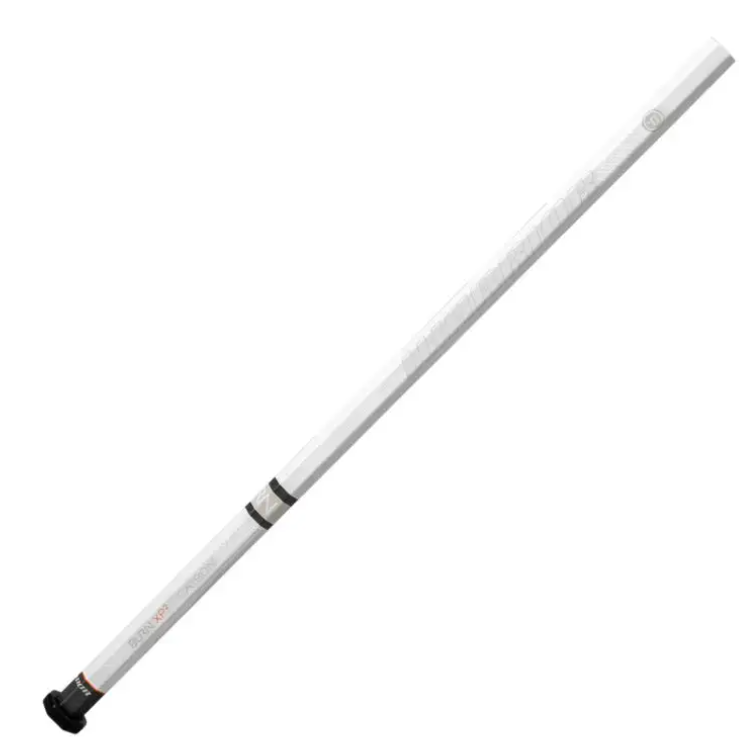
The Warrior Burn XP2 felt amazing the first time I picked it up in 2023. It has an octagonal shape with a star matrix grip. The points aren't aggressive, but the subtle texture gives you a strong grip.
I loved the feel of the rubberized surface. It's perfect for cradling in tight spaces, and it never slipped out of my sweaty hands, whether I was feeding from X or snapping off a quick finish on the inside.
I'm not a big fan of overly flexible sticks, and the XP2 has minimal flex. It does vibrate when you take a check, but it gives you a clean, snappy release on your shot. It's stiffer than earlier models and strong enough to handle hard checks.
You can also customize the end, switching between the insert and the cap. I went with the cap for better control, and it felt great in ground ball scrambles.
14. Nike Surge Elite Composite
The Nike Surge Elite is one of the best attack shafts out there. This 4.8 oz shaft came out in 2023, and its light, long-lasting carbon build has held up great in fast-paced, high-level play.
It combines stiffness and flex points for high-velocity plays. It's so light that I didn't have to put much behind my shots to get the same speed, and I loved it for quick passes on the run.
It's durable too. I've taken some pretty hard checks with it, and it held up really well. The composite absorbs the impact, so my arms didn't feel it after long practices.
It has a nice textured grip, but I didn't love the end cap. The edge pressed against the side of my palm and started wearing down my glove over time. Otherwise, it grips well in all weather and shows no wear and tear.
BattleLax pick: BattleLax doesn't carry the Nike Surge Elite Composite right now. The closest match in stock is the ECD Carbon Pro 4.0 Speed (carbon composite, $159.99).
15. ECD Focus Attack Best value
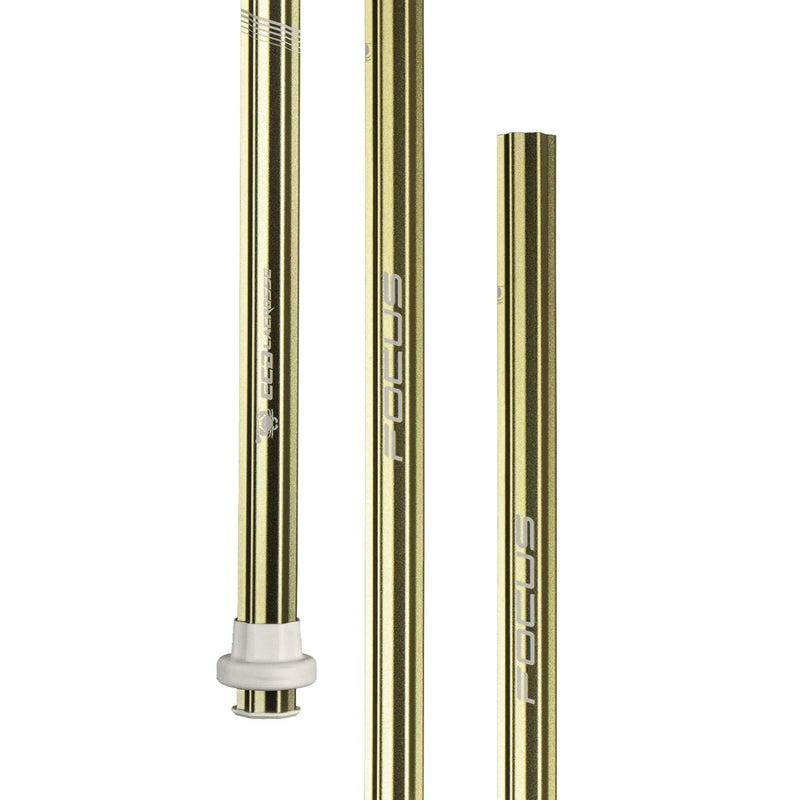
The ECD Focus marked ECD's return to metal handles after an eight-year break. Unlike the original Focus, which was pure scandium, the new Focus blends scandium and titanium, so you get a nice balance of light handling and durability.
At 5.35 oz with just the end cap insert and 5.7 oz with the full sliding end cap, it's light. I've always liked a light shaft for quick cuts and fast releases, and this is one of the best attack shafts I've used.
It's made for attack and midfield, so it only comes in 30". If you like a shaft with no flex for consistent, accurate shots, you'll love it. If you're used to carbon with a little flex, the rigid feel may take some getting used to.
The sandblasted grip is smooth and subtle. It's not as gritty as Epoch's sandpaper-style grip, but it was comfortable even in wet weather. The Control shape has subtle finger indents for better grip and hand placement, and it reminded me of the ECD Carbon 3.0 Speed, so it's an easy switch if you want a similar feel with no flex and better durability.
Defense shafts
Poles need strength first, weight second. These 10 handle hard checks, long clears and a whole season of cross-checks.
1. Maverik Caliber Defense Top pick
The Maverik Caliber defense shaft took big steps in durability and performance with its 2024 upgrade. It's scandium-titanium and weighs 12.6 oz, which is light for a pole.
I tested it a lot, and the thicker walls compared to the older Caliber S23 did a great job resisting bends and dents.
The bead-blasted matte finish gives you a slip-free grip, which helped a lot in intense games. The extreme concave shape gives you a controlled cradle and clean throws, though newer players may need time to adjust to it.
It has minimal flex, which can cause a little jitter on impact, but it absorbs checks well and keeps the strain off your hands over long games. It's a solid investment for intermediate and advanced defenders. BattleLax carries the current 2026 Caliber in 60".
2. STX Sc-Ti Defense Series
If you prefer metal, you can't go wrong with an STX Sc-Ti defense shaft. They're durable and relatively light.
The Sc-Ti line has been around for more than 10 years and is still one of the most popular options because of its light weight and high strength.
There are four weights and shapes to choose from: the X (extreme concave, 13.4 oz), R (ridge profile for extra feel and grip, 13.76 oz), S (shift, octagonal on one side and concave on the other, 14.11 oz) and O (concave octagonal, traditional feel, 14.11 oz).
They have a clean, minimal look and come in a variety of colors, with a thin butt end that fits inside the shaft.
BattleLax pick: BattleLax doesn't carry the STX Sc-Ti Defense Series right now. The closest match in stock is the Warrior Alchemy STZ Defense (scandium-titanium-zinc, $199.99).
3. Warrior Burn XP Carbon Defense
Released in 2021, the Warrior Burn XP Carbon Defense is still one of the best shafts for defensemen and LSMs.
It's designed to flex strategically for more power on shots, long passes and checks. If you like the feel of a pole that flexes, which usually only happens with carbon, you'll like the Burn XP Carbon.
The dot matrix grip gives you a good feel in your gloves without tearing them up like rougher grips, and it cuts down on tape that weighs your pole down.
It comes with two end caps: a bigger one for more leverage on checks, passes and shots, and a lighter one if you don't want the extra weight. If you like light, flexible carbon poles, it's a great choice.
BattleLax pick: BattleLax doesn't carry the Warrior Burn XP Carbon Defense right now. The closest match in stock is the ECD Carbon 4.0 Defense (carbon composite, $199.99).
4. ECD Carbon Pro 3.0 Defense
ECD took the best features of the Carbon Pro 2.0 and made the 3.0 Defense even better. It's reinforced with Kevlar, so it's stronger while keeping a great strength-to-weight ratio, and it has a sliding end cap you can set where you like it.
It has a low kick point, which gives you a little extra flex on clears and shots. Not many D poles have that.
The white and black versions both have clean designs, and there's a raised texture toward the bottom of the shaft for extra grip without tape.
It's a great, durable pole for any defenseman or LSM who likes carbon, and pros like Matt Dunn were using it before it was even released. BattleLax now carries the newer ECD Carbon 4.0 Defense.
BattleLax pick: BattleLax doesn't carry the ECD Carbon Pro 3.0 Defense right now. The closest match in stock is the ECD Carbon 4.0 Defense (carbon composite, $199.99).
5. STX Fiber O Defense
STX makes a second appearance on the defense list with its elite carbon shaft, the Fiber O Defense.
It has a traditional octagonal shape with targeted grip zones that give you a better feel and reduce the need for tape.
It isn't the lightest pole available, but it holds up very well over time and isn't prone to splintering like some carbon shafts. That makes it a great option for defensemen who are always throwing checks and for LSMs who carry the ball in transition.
It has a moderate amount of flex. It's not as noticeable as the Warrior Burn XP Carbon, but you'll feel it a little on hard passes and shots.
BattleLax pick: BattleLax doesn't carry the STX Fiber O Defense right now. The closest match in stock is the Adrenaline Admiral Carbon 60″ (carbon fiber, $224.99).
6. StringKing Metal 3 Pro Defense
The StringKing Metal 3 Pro Defense comes in two weights and strengths to fit your age and skill level.
Both are relatively light and durable. To get there, StringKing studied warranty claims from its older metal shafts to find exactly where they needed reinforcement. It also comes with a 6-month warranty if your shaft breaks, bends or gets major dents or cracks.
The slight concave shape gives you a good feel in your gloves, and the sandblasted finish gives you a better grip than a smooth shaft.
It comes in silver and black and is one of the best-looking poles out there, with a small logo on one side and shaft info on the other.
BattleLax pick: BattleLax doesn't carry the StringKing Metal 3 Pro Defense right now. The closest match in stock is the Maverik Mag-Ti 395 Defense (magnesium-titanium, $199.99).
7. Nike Alpha Select 7075 Defense
The Nike Alpha 7075 is one of the best shafts for defensive middies and poles. Its traditional design and durable 7075 alloy build make it a reliable choice.
It's heavier than some other shafts, especially carbon ones, but that weight gives it a solid, substantial feel. The extra weight helps in ground ball battles.
At 15.8 oz, it's built to handle rough games and big checks. The traditional shape gives you a strong hold, and I popped the ball loose plenty of times with hard checks.
It fits almost every head without loosening up, so you don't have to worry about your head rattling when you're scooping on the run. I also liked the low-profile end cap. It's one of those little details that improves your control and cuts down on glove wear.
BattleLax pick: BattleLax doesn't carry the Nike Alpha Select 7075 Defense right now. The closest match in stock is the Maverik A7 350 Defense (7000 series alloy, $129.99).
8. Epoch Dragonfly Elite III XL C60 iQ2
I picked up the Epoch Dragonfly Elite III XL C60 iQ2 because I liked its balance of flex and stiffness. After about six months, it's perfect for D-middies, poles and LSMs, and it comes with a one-year warranty.
The extra material in the XL version adds durability, so it easily absorbs a hard check. At 60", it weighs 15.8 oz. I also noticed its reactive technology adds power on quick adjustments, like cutting off a lane or making fast passes.
The Pro Grip coating gives you elite control without feeling too sticky, so I could slide my hands easily even in the rain. If you're moving from alloy to composite, it's a great pole to start with.
The iQ2 flex rating is stiffer than the iQ8, which is perfect for hard checks, but it can feel a little rigid when you're cradling or passing. If you go back and forth between D-middie and attack, look at Epoch's Dragonfly Integra X Transition shaft instead.
BattleLax pick: BattleLax doesn't carry the Epoch Dragonfly Elite III XL C60 iQ2 right now. The closest match in stock is the ECD Carbon 4.0 Defense (carbon composite, $199.99).
9. Nike Alpha Elite Sc-Ti Defense
The Nike Alpha Elite Sc-Ti is my go-to pole for rough practices. It's the newest addition to my collection, and it's been my best defense shaft.
After a year of practice in rough weather, it shows no damage other than a few scratches. The scandium build makes it durable at 15.1 oz.
The thicker walls absorb impact and keep strain off your arms without hurting your checks. Because it's stiff, I struggled with high-speed shots at first.
The sandblast finish gives you great grip, even in wet or muddy conditions, and it helped me with quick passes in tight spaces. The shot speed is lower than the Epoch Dragonfly Elite III, but it does well on short-range throws, and the middle flex point gives you some whip on ground ball pickups.
BattleLax pick: BattleLax doesn't carry the Nike Alpha Elite Sc-Ti Defense right now. The closest match in stock is the Warrior Alchemy STZ Defense (scandium-titanium-zinc, $199.99).
10. Warrior Burn XP2 Carbon Defense
The Warrior Burn XP2 Carbon Defense gives you the same quality as its attack version, but it's built for defenders.
Right away I liked how light it feels for a pole at 12.3 oz. The grip means you don't need tape, which keeps it light.
The octagonal shape and Star Matrix grip give you great control with no palm abrasion. My hands didn't slip or stiffen up when I was moving my feet against a dodger.
Despite the usual worries about composite durability, it held up to intense cross-checking with no damage. The slight flex absorbs impact and reduces arm fatigue, and it's really responsive in ground ball scrambles. That reduced stiffness does give a little on long throws, though. If accuracy is your priority, the ECD Carbon line is worth a look.
BattleLax pick: BattleLax doesn't carry the Warrior Burn XP2 Carbon Defense right now. The closest match in stock is the ECD Carbon 4.0 Defense (carbon composite, $199.99).
Goalie shafts
Goalies need a light, strong shaft so their hands get to the ball faster. BattleLax doesn't carry standalone goalie shafts right now, but plenty of goalies run a 30" attack shaft, and BattleLax has a complete goalie stick if you need the whole setup.
1. Maverik Hyperlite Goalie
We start our goalie list with the Maverik Hyperlite. It's one of the lightest shafts on the market and the lightest shaft Maverik has ever made.
A light shaft is huge for goalies. The lighter your shaft, the faster your hands get to the ball. That, plus its strength, makes the Hyperlite our top goalie shaft.
Unlike some carbon shafts, it's designed not to flex, which makes it a great first carbon shaft if you're coming from metal. It has a slight concave shape, a smooth matte finish and an adjustable butt end you can slide wherever you like.
BattleLax pick: BattleLax doesn't carry the Maverik Hyperlite Goalie right now. The closest match in stock is the Maverik Krease Complete Goalie Stick (complete goalie stick, $199.99).
2. ECD Carbon Pro 3.0 Goalie
If you're a goalie who likes composite, you can't go wrong with the Carbon Pro 3.0 Goalie from ECD, released in 2022.
It's very light and holds up even when you're deflecting the hardest shots. If it does break, there's a 6-month warranty.
It has a mid kick point and Flex8 technology for easy outlet passes. It also has a textured grip on the top third of the shaft for better control on saves. That's one of the best parts of this shaft, and you won't need tape on your top hand.
BattleLax pick: BattleLax doesn't carry the ECD Carbon Pro 3.0 Goalie right now. The closest match in stock is the ECD Carbon 4.0 Attack/Midfield (carbon composite, $124.99).
3. Maverik A1 Goalie
It's rare for one company to make two elite shafts for the same position, especially goalie, but the Maverik A1 is another great option between the pipes.
If you prefer metal over carbon, the A1 is our top recommendation. It uses a scandium alloy that's durable without adding much weight.
Its GritGrip finish gives you a great feel in any weather. We tested it in the rain and it was still easy to control with no slipping. Like the Hyperlite, it has Maverik's adjustable butt end.
BattleLax pick: BattleLax doesn't carry the Maverik A1 Goalie right now. The closest match in stock is the Maverik Mag-Ti 145 Attack (magnesium-titanium, $129.99).
4. StringKing Metal 3 Pro Goalie
Another great metal goalie shaft is the StringKing Metal 3 Pro. StringKing has made a real push to be one of the best shaft makers in the game, and this shaft shows it.
It comes in two weights based on your level. StringKing recommends the 142 g option for players 15 and under and the 162 g option for older players.
Both are durable and lighter than a lot of goalie shafts. The concave shape gives you a great grip, and the sandblasted finish adds a bit of grit. I also love the clean, minimal look.
BattleLax pick: BattleLax doesn't carry the StringKing Metal 3 Pro Goalie right now. The closest match in stock is the Maverik Mag-Ti 145 Attack (magnesium-titanium, $129.99).
5. StringKing Composite 2 Pro Goalie
The StringKing Composite 2 Pro is the newest goalie shaft in my collection. Its Smart Taper technology keeps the shaft strong in high-impact areas while cutting down vibration at the head. I've taken some hard shots on it, and it held up great.
Its uniform stiffness, with no weird flex zones, is perfect for goalies. I could react quickly to shots from every angle and felt confident making saves, even on shots from the corner of the crease.
The ultra-stiff build also helped me make accurate passes and clears under pressure.
It doesn't have an extreme concave shape, but the traditional smooth finish is consistent, and I didn't lose my grip even in sweaty summer sessions. The finish itself isn't weather-resistant, though.
BattleLax pick: BattleLax doesn't carry the StringKing Composite 2 Pro Goalie right now. The closest match in stock is the ECD Carbon 4.0 Attack/Midfield (carbon composite, $124.99).
Shafts in stock at BattleLax
Want a shaft you can order today? These are the picks and closest matches BattleLax carries right now.
| Shaft | Material | Price |
|---|---|---|
| Warrior Dolomite Diamond Attack 30″ | Altium alloy | $150.00 |
| Warrior Evo V Lacrosse Shaft | Alloy core carbon | $169.99 |
| Maverik Caliber 2026 (30″) | Scandium-titanium | $129.99 |
| Maverik Apollo 2026 Attack | Scandium-titanium | $129.99 |
| ECD Focus Attack Shaft | Scandium-titanium | $124.99 |
| Warrior Burn XP2 Carbon Attack | Carbon composite | $149.99 |
| ECD Carbon Pro 4.0 Speed | Carbon composite | $159.99 |
| ECD Carbon Pro 4.0 Power | Carbon composite | $159.99 |
| Gait GCX Carbon SSDM Shaft | Carbon composite | $149.99 |
| Maverik Caliber 2026 (60″) | Scandium-titanium | $199.99 |
| ECD Carbon 4.0 Defense | Carbon composite | $199.99 |
| Warrior Alchemy STZ Defense | Scandium-titanium-zinc | $199.99 |
| Maverik Mag-Ti 395 Defense | Magnesium-titanium | $199.99 |
| Maverik A7 350 Defense | 7000 series alloy | $129.99 |
| Maverik Krease Complete Goalie Stick | Complete goalie stick | $199.99 |
How to choose the best lacrosse shaft
Not sure what to look for? Here are the seven most important things to think about.
1. Size and position
Start with the size you need, which mostly comes down to your position and maybe your age. Attackmen and middies (other than LSMs) use 30" shafts. Defense shafts are 60" when they're new, though some players cut a few inches off for more control. Goalie shafts run anywhere from 30" to 40" depending on your preference, and if you like a 30", any attack shaft works.
Younger players, around 12 and under, often use shorter shafts. Many youth shafts are a few inches shorter and sometimes thinner so kids can control them. Young defensemen especially often use shorter poles. A good rule of thumb: don't use a stick that's taller than you. If you're 5 feet tall, your shaft shouldn't be longer than about 4'2", since most heads are around 10" long.
2. Durability
Durability is hard to judge from a picture or even in your hands, but it matters. The best way to gauge it is to read customer reviews and watch videos from players who've used the shaft for a while. If a shaft has lots of complaints about breaking, bending or denting, look elsewhere.
3. Weight
Almost as important as durability is weight. A light shaft lets you move your stick faster, which helps your shot speed, quickness, dodging and checking. Weight and durability usually work against each other, but over the past decade, companies have developed metals and composites that are strong and light. That's often the biggest difference between the best shafts and cheaper ones that are either light and weak or strong and heavy.
4. Material
There are two main types: metal and composite. Historically, most shafts were metal (besides the old-school wooden ones). Over the last decade or so, companies have developed composite shafts, usually carbon fiber, that perform as well as or better than metal.
Which is better? It depends on you. Carbon shafts usually have a higher strength-to-weight ratio and flex more than metal, and that flex takes some getting used to. Many brands offer different flex points so you can match the shaft to your game. Metal shafts don't flex much, so switching between them feels natural. They dent more easily, but a dent doesn't make them unusable. Composite shafts are more likely to fail all at once, because they crack instead of denting, and once they break, they're done.
5. Shape
Common shapes include concave, rounded and ridged. The STX Sc-Ti series alone has five: concave (X), ridge (R), shift (S), octagon (O) and extreme concave (X+). There's no single best shape. Try a few different ones, in a store or with your teammates' sticks, and do it with your gloves on, since that's how you'll play.
6. Finish and grip
The finish is what the outside of the shaft feels like. Most shafts aren't perfectly smooth, and that's a good thing. Some use a sandblasted finish for traction, while others use a rubber grip. Try a few to see what feels best in your gloves.
7. Cost
Top-of-the-line shafts can cost well over $100, and D poles push $200. But there are plenty of quality shafts for every position under $100.
If you're trying to save on your stick, I'd go with a cheaper shaft and a better head. I think there's a bigger difference between the best lacrosse heads and cheaper ones than there is with shafts. In my career, I think I've broken one shaft, and a slightly heavier shaft hasn't made a big difference for me. At the end of the day, shafts share the same basic shape, and weight doesn't vary as much as it does with heads.
Standard lacrosse shaft sizes
Here are the most common shaft sizes by position. "Adult" means high school and up.
| Position | Adult shaft | Youth (12U and under) |
|---|---|---|
| Attack | 30" | Often a few inches shorter |
| Midfield | 30" | Often a few inches shorter |
| Defense / LSM | 60" (can be cut down) | Shorter pole sized to the player |
| Goalie | 30"–40" | Shorter shaft sized to the player |
Always check your league's rulebook for exact legal stick lengths before you cut a shaft down.
How we rate lacrosse shafts
We take our ratings seriously and only recommend gear we'd use ourselves. Whenever possible, we test the product ourselves, review its specs (weight, strength, material, grip and more), and read customer reviews and talk to players we know who use it.
With shafts specifically, we weigh them, feel them in gloves for both the shape and the finish, shoot with them to understand how they flex, and check them with another stick to see how they hold up. When we can't test something extensively, we spend extra time talking to players who've used it for a while. If you have feedback on anything here or a shaft you think we should add, let us know.
People also ask
How do you play better defense in lacrosse?
Work on your positioning and stance, talk to your teammates, use controlled stick checks and anticipate your man's next move. Footwork and agility drills pay off more than anything.
What is a D pole in lacrosse?
A D pole, or defensive pole, is the long stick used by defensemen and long-stick midfielders (LSMs). The shaft is typically 60" long, giving you extra reach for checks and interceptions.
What is different about a defensive stick in boys' lacrosse?
Defensive sticks are longer, with a 60" shaft compared to the 30" shaft on offensive sticks. That gives you more reach on checks and more leverage on defense.
What is Flex iQ in a lacrosse shaft?
Flex iQ is Epoch's flex rating, which tells you how much the shaft bends. A higher iQ number means more flex. For example, an iQ8 flexes more than an iQ2.
Complete your stick
Need a new head to go with your new shaft? These guides will help you find the right fit: